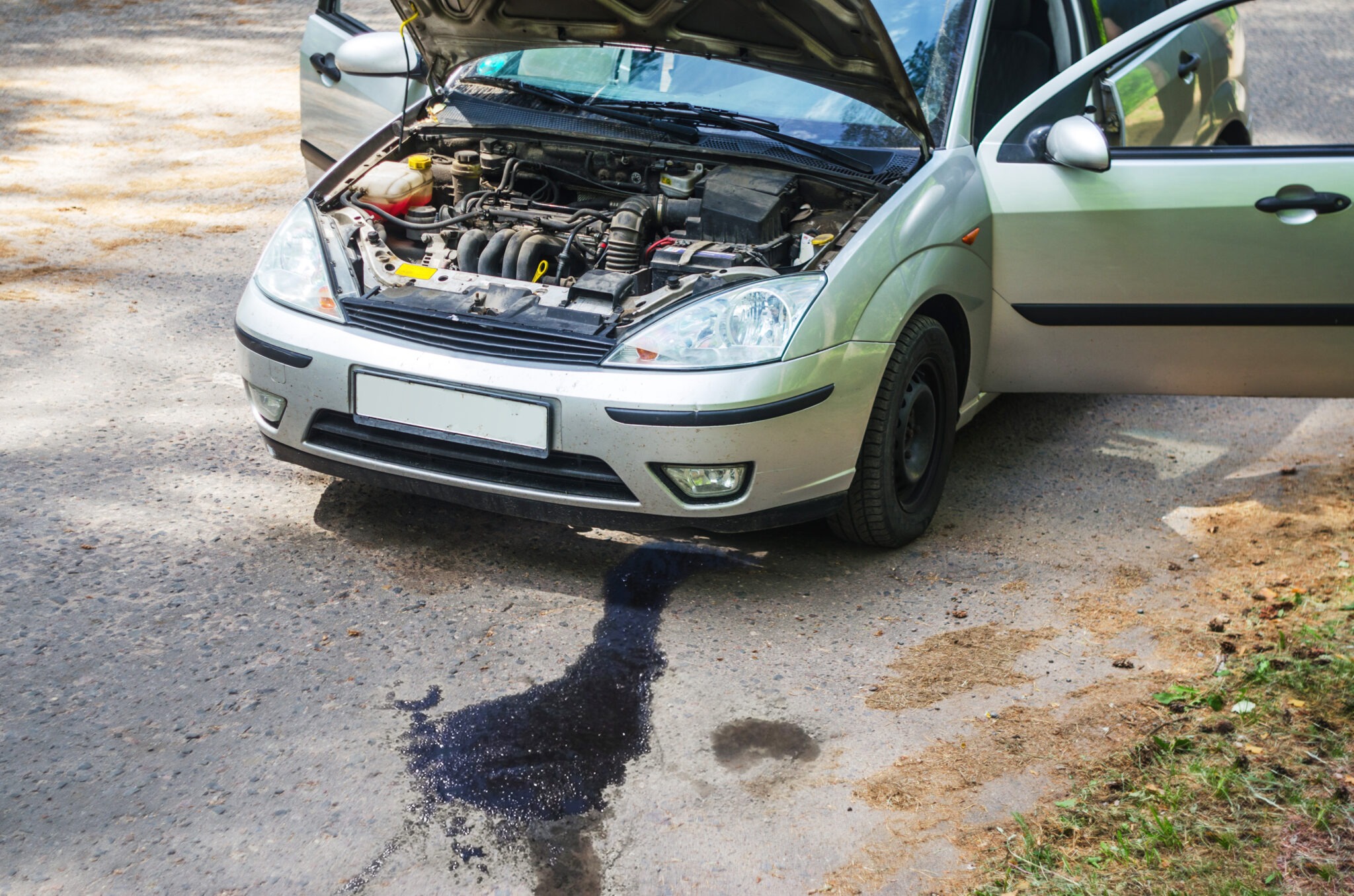
Finding a puddle underneath your parked car can be worrying, especially when you have no idea where it came from. Is it harmless water from the air conditioner, engine oil, or a fluid that requires immediate attention? Fortunately, the color of a leaking fluid can provide useful clues about its source. Different automotive fluids have distinct colors, ranging from dark brown and bright red to green, blue, and pale yellow.
Learning to recognize these colors can help you identify potential problems before they lead to expensive repairs. While color alone cannot confirm every leak, it gives you a helpful starting point. Here are 10 common car leaks you can identify by their color and what each one may mean for your vehicle.
1. Engine Oil: Amber, Brown, or Black
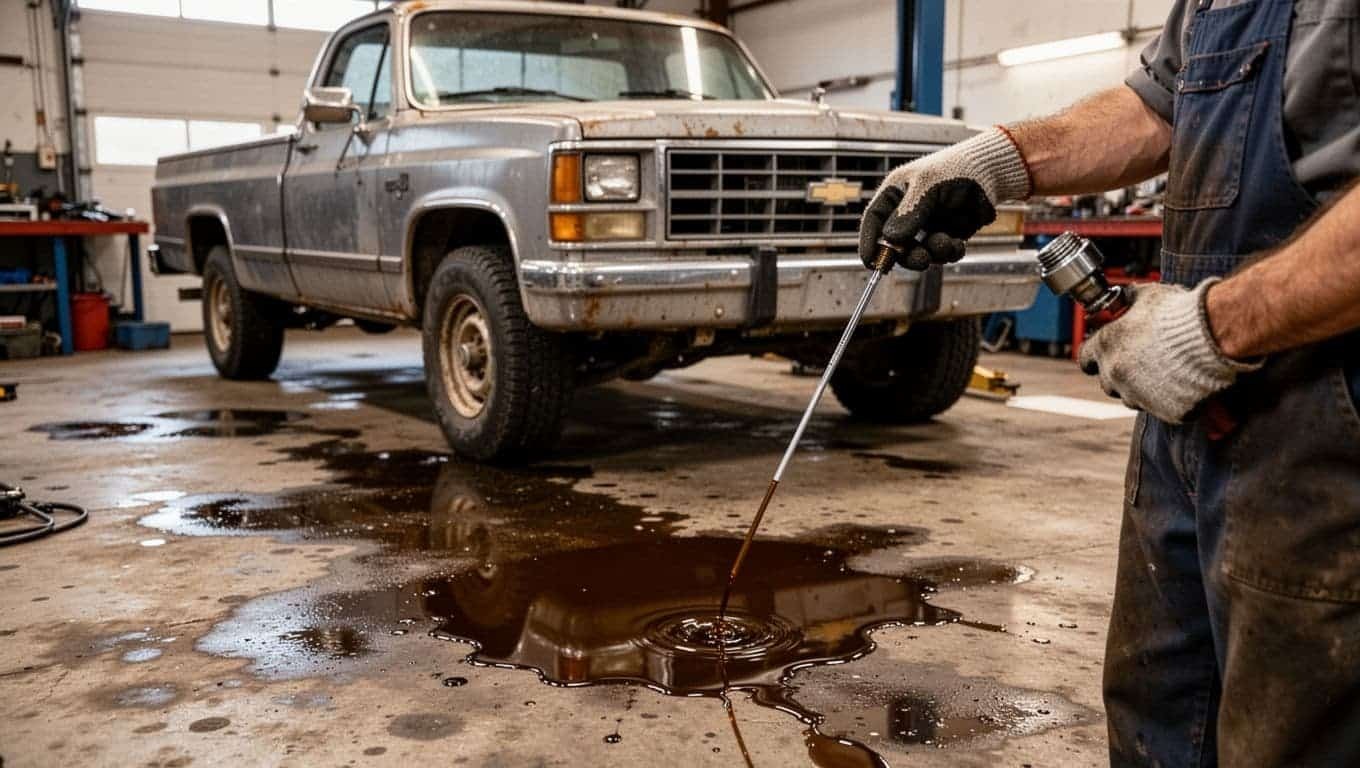
Engine oil is one of the easiest automotive fluids to recognize because its appearance changes as it circulates through the engine. Fresh engine oil typically has a golden amber color, giving it a clean, transparent appearance.
As it performs its job, however, it collects dirt, combustion residue, and other contaminants, gradually becoming darker brown or black. This color change is a normal part of oil usage, but a puddle beneath your parked vehicle may indicate a leak that needs attention.
If you spot dark brown or black liquid underneath your car, engine oil could be the source. Pay close attention to the area beneath the engine, particularly around the oil pan, drain plug, valve cover, and oil filter. Damaged gaskets, loose connections, or worn seals can allow oil to escape from these areas.
Engine oil generally feels slippery when touched, although you should avoid handling unknown automotive fluids directly. Remember that color alone cannot confirm the source of a leak or determine the oil’s condition.
An oil leak should never be ignored because the engine depends on proper lubrication to protect its moving components. When oil levels become too low, friction and heat can increase, potentially causing excessive wear or serious engine damage.
Check the dipstick when appropriate for your vehicle and monitor the oil level regularly. If you notice a leak or a dangerously low reading, stop driving and arrange a professional inspection.
2. Coolant (Antifreeze): Bright Green, Orange, Pink, Blue, or Yellow
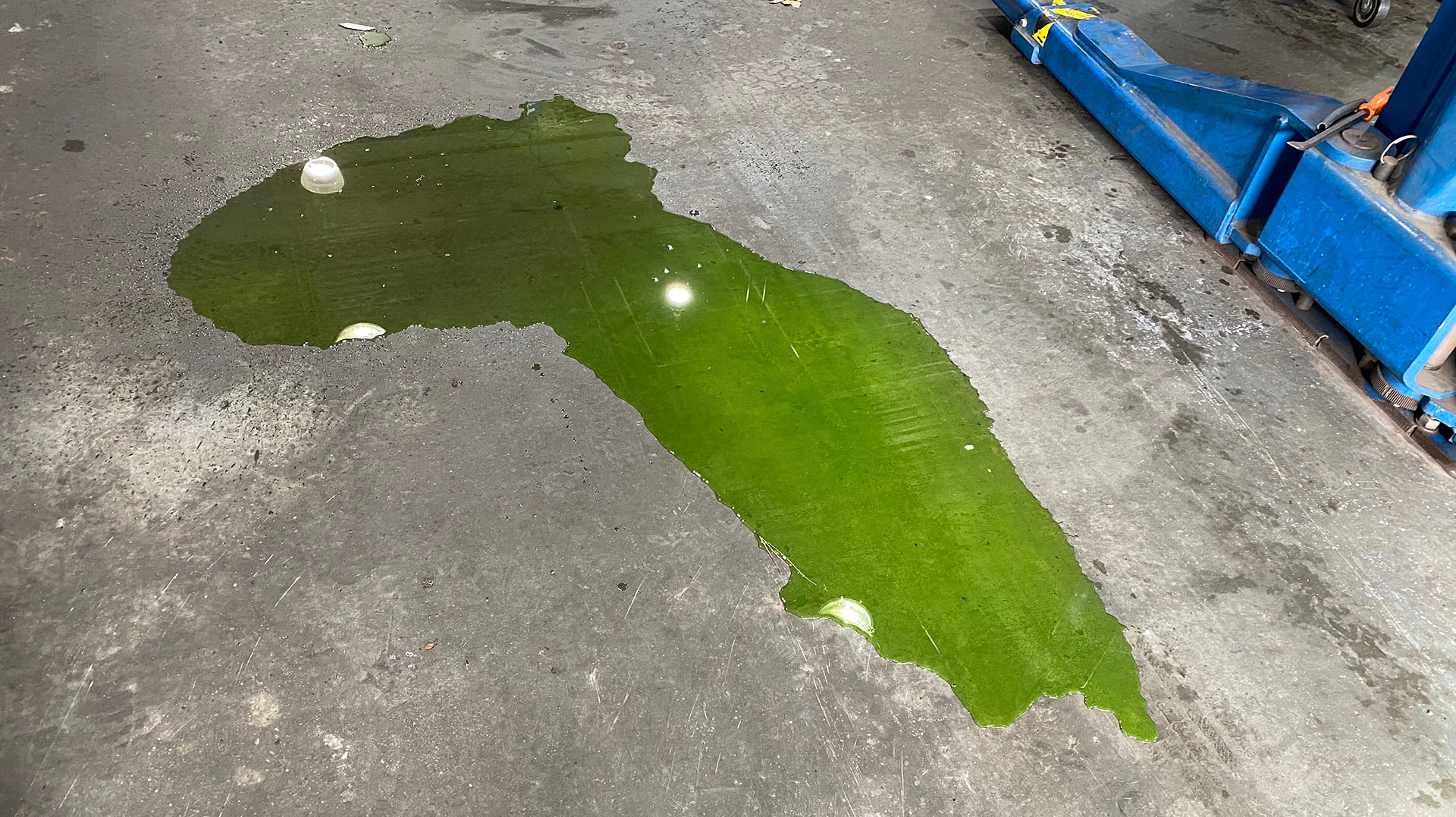
Coolant is among the most colorful fluids found in vehicles, making it easier to distinguish from many other automotive leaks. Depending on the formulation and manufacturer, antifreeze may appear bright green, orange, pink, blue, or yellow.
If you notice a colorful puddle beneath your vehicle, coolant could be escaping from the cooling system. Common leak points include the radiator, coolant hoses, water pump, reservoir, and radiator connections.
The fluid may feel slightly slippery and can sometimes have a sweet smell. However, never taste coolant or allow pets and children to come into contact with it. Many antifreeze products contain ethylene glycol, which is highly toxic when swallowed.
A coolant leak can cause your engine to overheat because the cooling system may no longer have enough fluid to regulate engine temperature. You might also notice a rising temperature gauge, a dashboard warning, or steam coming from beneath the hood.
Check the coolant reservoir only when the engine is completely cool. Never remove a hot radiator cap because pressurized coolant can cause severe burns.
If you discover a coolant leak, arrange an inspection promptly. Driving with insufficient coolant can result in expensive engine damage, including a damaged head gasket.
3. Transmission Fluid: Red or Pink (Darkens to Brown)
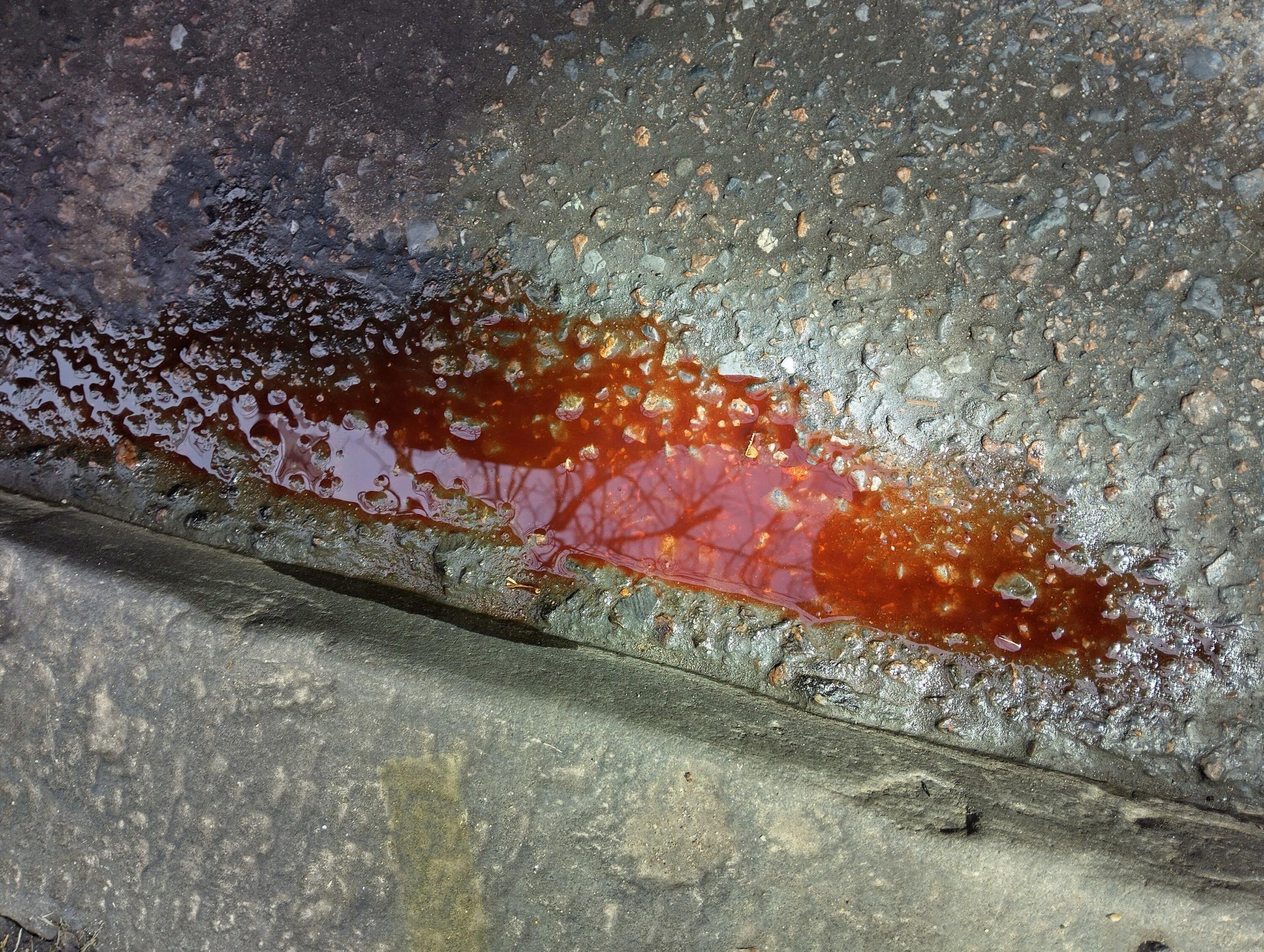
A red or pink puddle underneath your vehicle may indicate a transmission fluid leak, particularly if you drive an automatic vehicle. Fresh automatic transmission fluid is commonly red or pink, although its exact color depends on the product and manufacturer.
As the fluid ages, it can become darker, eventually taking on a reddish-brown or brown appearance. This change can make an older transmission leak look similar to an engine oil leak.
Transmission fluid performs several important functions. It lubricates internal components, helps manage operating temperatures, and provides the hydraulic pressure required for gear changes in automatic transmissions.
Common leak locations include transmission pan gaskets, cooler lines, seals, and connections around the transmission housing. You may notice fluid near the center of the vehicle, depending on the transmission layout.
Other warning signs include delayed gear engagement, slipping gears, unusual noises, or rough shifting. These symptoms suggest that the transmission may not be receiving adequate lubrication or hydraulic pressure.
Do not ignore a reddish puddle simply because the vehicle still drives normally. Continued fluid loss can cause internal transmission damage and lead to expensive repairs.
Have a qualified technician identify the leak, and use only the transmission fluid specified by your vehicle manufacturer.
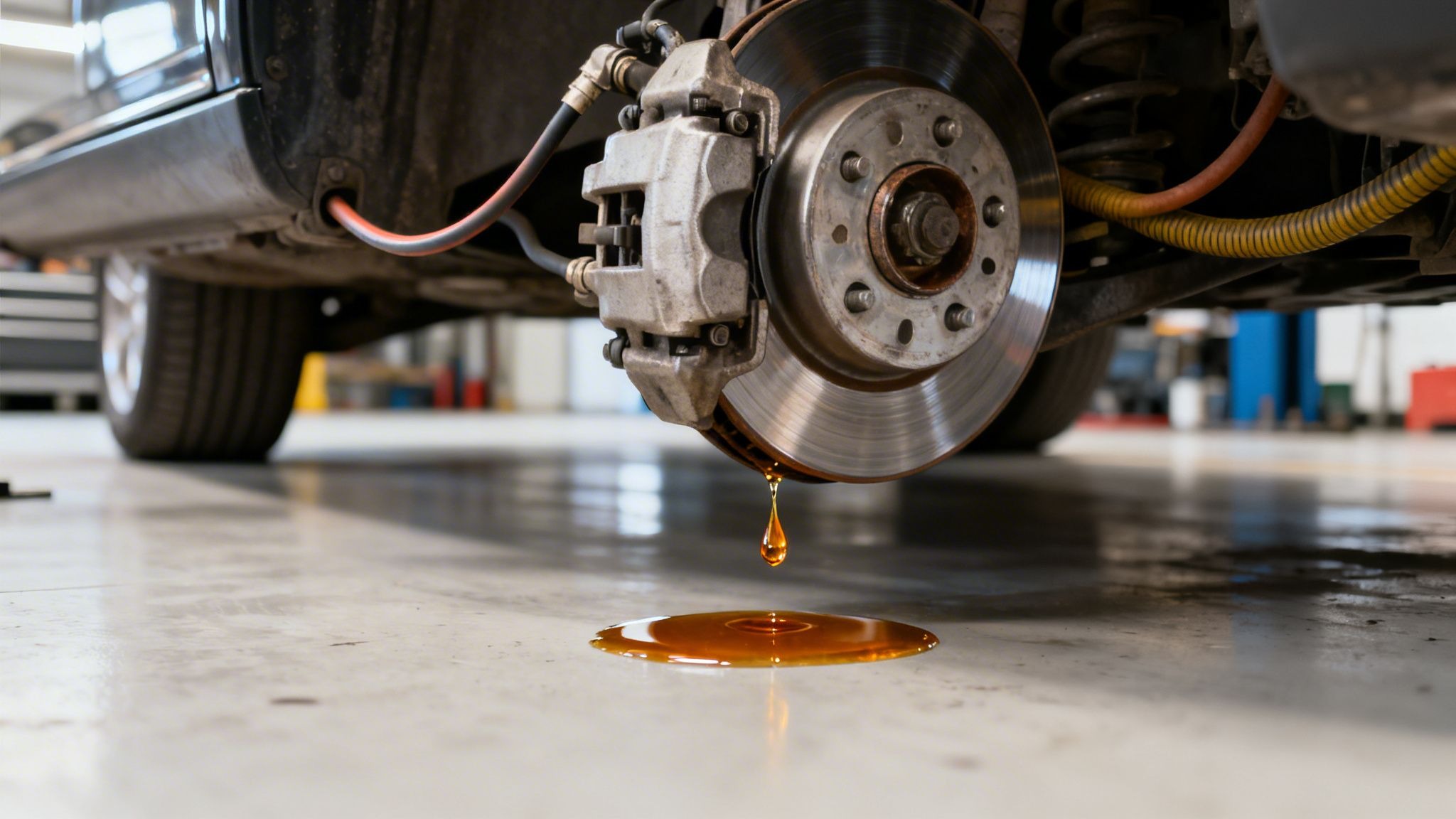
4. Brake Fluid: Clear to Light Yellow
Brake fluid is the quiet one, and that’s what makes it dangerous. It looks nearly clear or pale yellow, and it feels very slippery between the fingers. Old fluid can darken to a brownish tint.
Because it’s so subtle, a leak can hide on a wet driveway or blend into a spot of water. Pay attention to where it appears. Drips near the wheels, along the brake lines, or under the driver’s side near the master cylinder deserve a closer look.
Signs of trouble inside the car include a soft or spongy brake pedal, a pedal that sinks toward the floor, or a brake warning light on the dash. Any of those means stop driving.
Brakes are your most important safety system, and a leak can lead to sudden loss of stopping power. Check the fluid reservoir under the hood, and note whether the level is below the minimum line.
Do not simply top it off and carry on, because low fluid usually means a leak or worn brake pads, and both need professional attention. Have the car towed if the pedal feels wrong.
Brake repairs are far cheaper than the consequences of failure. If you suspect a leak, treat it as urgent, not as something to handle next weekend.

5. Power Steering Fluid: Red or Amber
Is your steering wheel becoming harder to turn, or have you started hearing unusual whining noises when maneuvering your vehicle? A power steering fluid leak could be responsible.
Hydraulic power steering fluid is commonly red or amber, although its exact appearance depends on the vehicle manufacturer and the type of fluid used.
Because it can resemble automatic transmission fluid, identifying the leak may require checking its location and looking for other warning signs.
Power steering leaks commonly occur near the front of the vehicle, around the steering pump, reservoir, hoses, connections, or steering rack. You may notice reddish or amber liquid beneath the engine compartment, particularly after parking your car for several hours.
Pay attention to how your steering wheel feels. A whining or groaning sound when turning, stiff steering, and jerky movement at low speeds can indicate that the system is losing fluid. These symptoms may become more noticeable when parking or making tight turns.
Open the hood and locate the power steering reservoir if your vehicle has a hydraulic system. Check the fluid level with the dipstick or the reservoir markings. Always follow the manufacturer’s instructions and use the recommended fluid specification.
Worn seals, cracked hoses, and loose fittings can allow fluid to escape. Ignoring the leak may cause the steering pump to run without sufficient lubrication, resulting in expensive damage.
Have the system inspected if you notice repeated fluid loss. Repairing a leaking hose or seal early can help maintain smooth steering and prevent further mechanical problems.
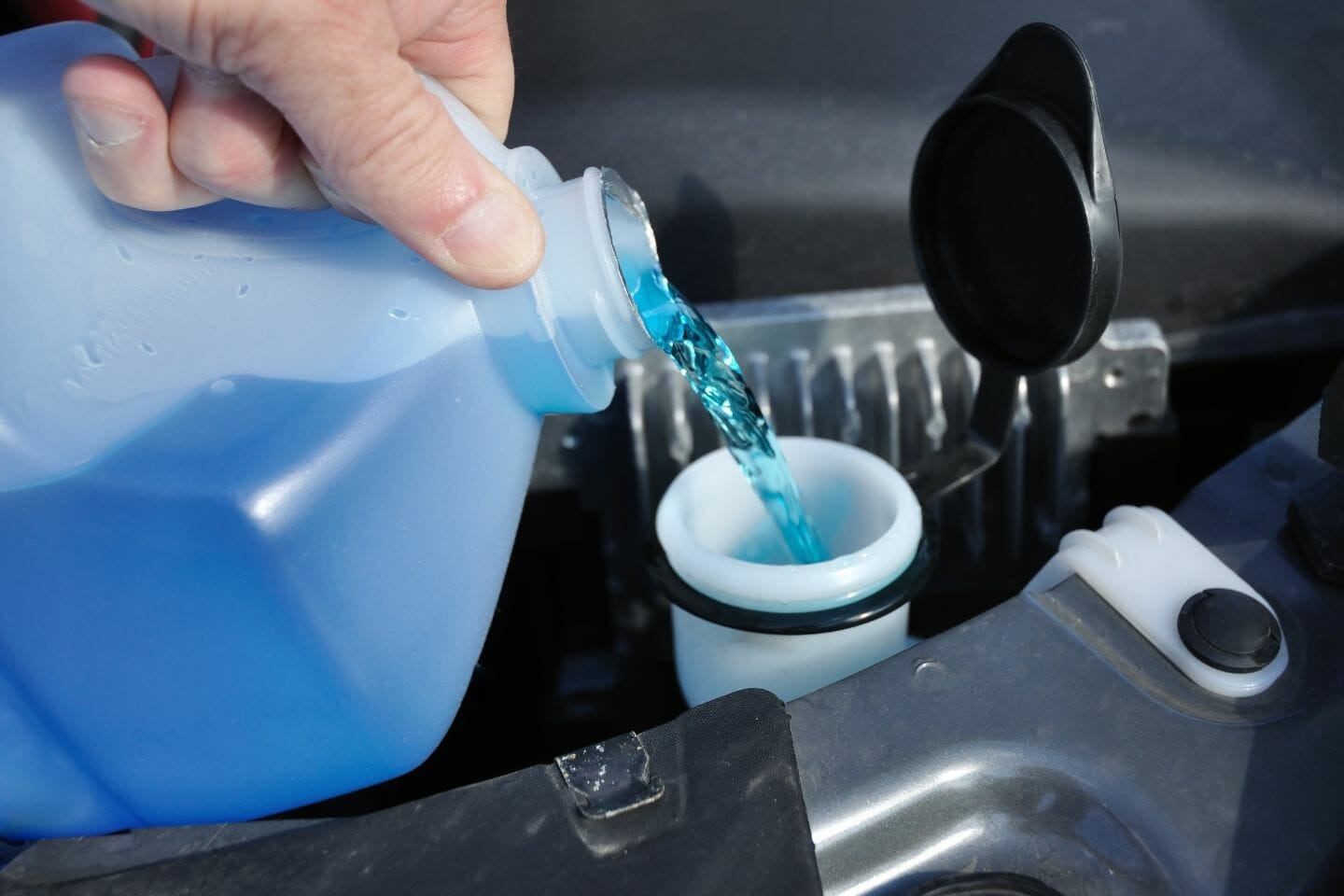
6. Windshield Washer Fluid: Blue, Green, or Orange
A colorful puddle beneath your parked vehicle does not always indicate an expensive mechanical problem. If the liquid is bright blue, green, or orange, windshield washer fluid could be responsible.
This fluid is designed to remove dirt, dust, insects, and other debris from your windshield, helping you maintain clear visibility while driving.
Most washer fluids have a thin, watery consistency and may produce a smell similar to household glass cleaner. Their colors vary depending on the manufacturer and formulation.
If you notice a brightly colored puddle near the front of your vehicle, particularly around the washer fluid reservoir, inspect the system for possible leaks.
Several components can cause washer fluid to escape. A cracked reservoir, damaged hose, loose connection, or worn pump seal may allow the liquid to drip onto the ground.
You might also notice that the reservoir becomes empty more quickly than usual or that the windshield spray nozzles produce weak streams.
Although a washer fluid leak rarely threatens engine operation, it should not be ignored. Driving with a dirty windshield can become dangerous, especially during heavy rain, dusty conditions, or when insects and road debris obstruct your view.
Check the reservoir and accessible hoses for visible damage. Refill the system with suitable windshield washer fluid rather than plain water, particularly in colder climates where freezing can damage the reservoir and connecting hoses.
If the leak continues, have the affected component replaced. Keeping an extra bottle of washer fluid in your vehicle is also a practical way to avoid running out when you need it most.
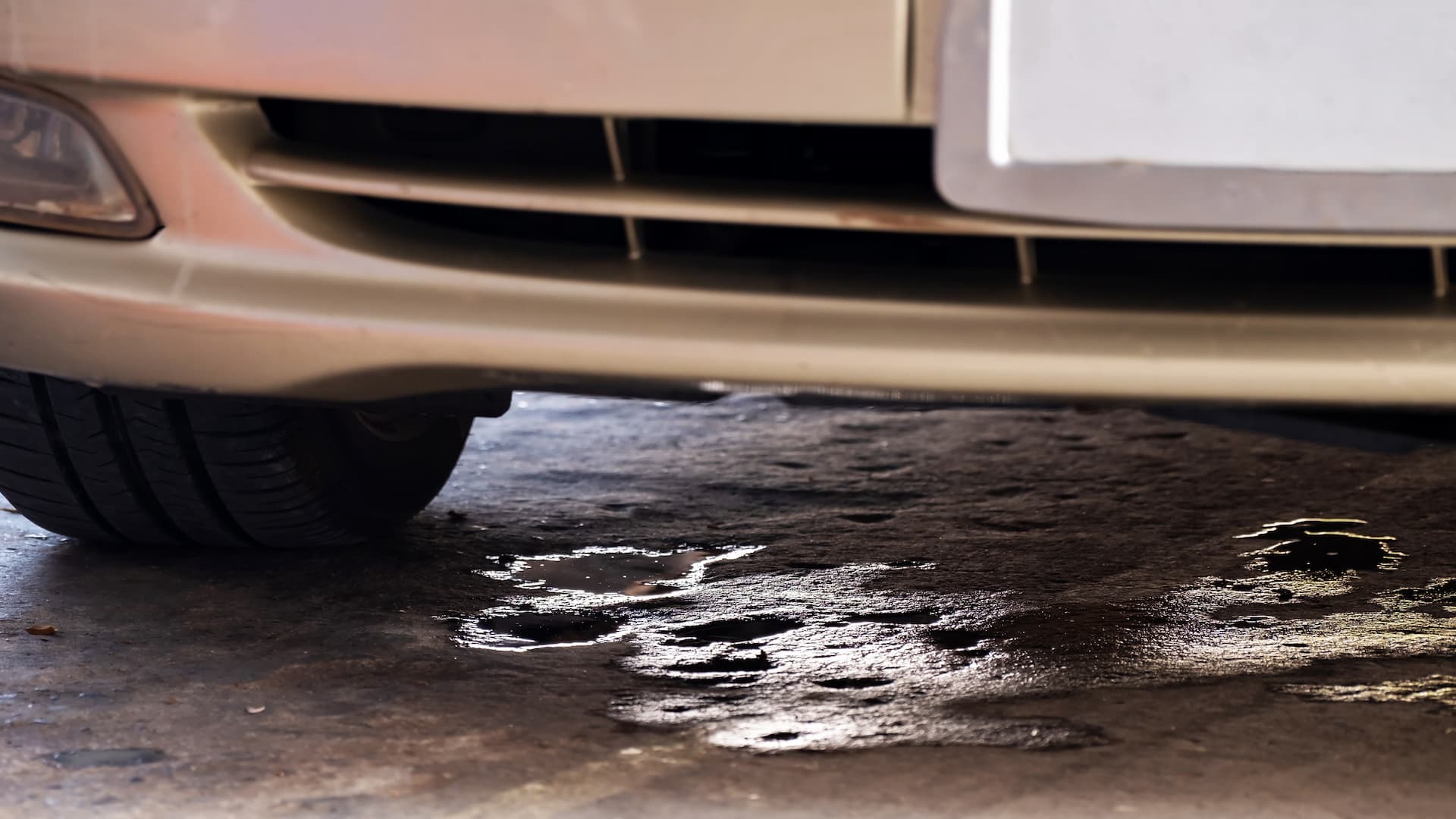
7. Water (A/C Condensation): Clear
Here’s a leak that isn’t a leak at all. Running your air conditioner pulls moisture out of the cabin air, and that moisture drains out under the car as clear, odorless water.
It usually drips near the front passenger side, and you may notice a puddle after a hot day of driving with the A/C on. This is completely normal. It’s the same thing that happens when a cold glass of lemonade sweats on a summer afternoon.
To confirm, touch the liquid. It should feel like plain water, with no oily slickness and no sweet or chemical smell. Rub it between your fingers, and check whether it leaves any residue on a paper towel. If it passes the test, you can relax.
Things change if the water is not clean, or if you notice dampness inside the car, especially on the passenger floor. That can mean a clogged drain tube, and the water is backing up into the cabin.
Musty smells and foggy windows are other warning signs. A blocked drain line is usually simple and inexpensive to clear. Meanwhile, if the puddle shows a color or feels slick, it’s not condensation.
Next time you see a clear puddle on a warm day, smile. It means your A/C is working exactly as designed.
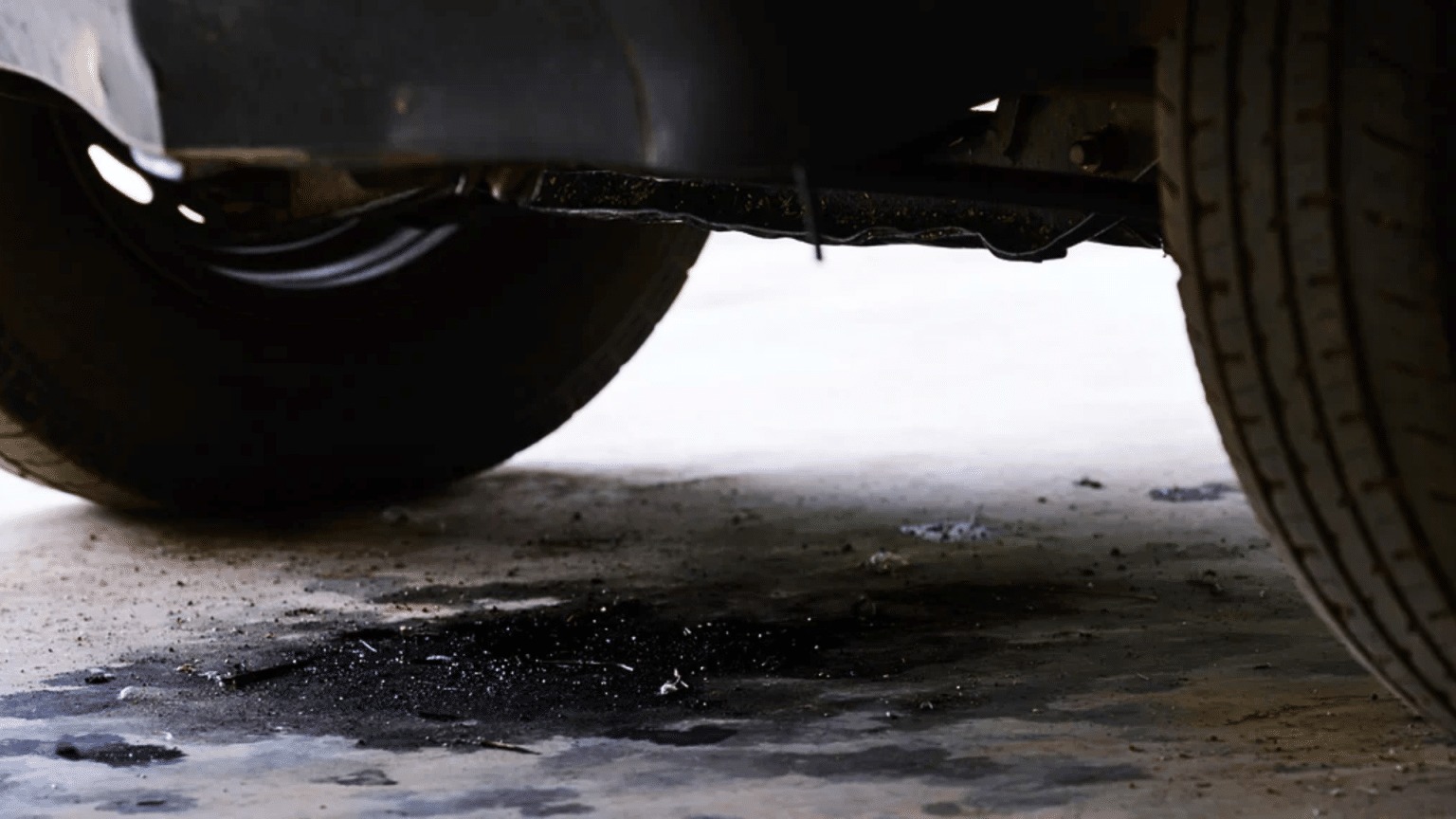
8. Fuel (Gasoline): Clear to Light Amber with Rainbow Sheen
Gasoline leaks require immediate attention because fuel is highly flammable and its vapors can ignite easily. Fresh gasoline is generally clear to pale yellow or light amber, depending on its formulation, storage conditions, and age.
One possible warning sign is a rainbow-like sheen on the surface of a puddle. Gasoline may also produce a strong, recognizable fuel odor.
Leaks can develop in several parts of the fuel delivery system, including fuel lines, connections, the fuel tank, and other components. You might notice a wet area underneath the vehicle or smell gasoline around the car even when the engine is switched off.
Unlike a minor washer fluid leak, a fuel leak should never be treated as an ordinary maintenance issue. Even a small amount of escaping gasoline can create a fire hazard, particularly near hot engine components or electrical ignition sources.
If you suspect a fuel leak, turn off the engine if it is safe to do so. Do not smoke, use open flames, or operate electrical equipment near the suspected leak. Move away from the vehicle and arrange professional emergency assistance.
Never attempt to identify a suspected fuel leak by touching, tasting, or deliberately smelling the liquid closely. The strong odor alone may be enough to raise concern.
Have the fuel system inspected and repaired before using the vehicle again.
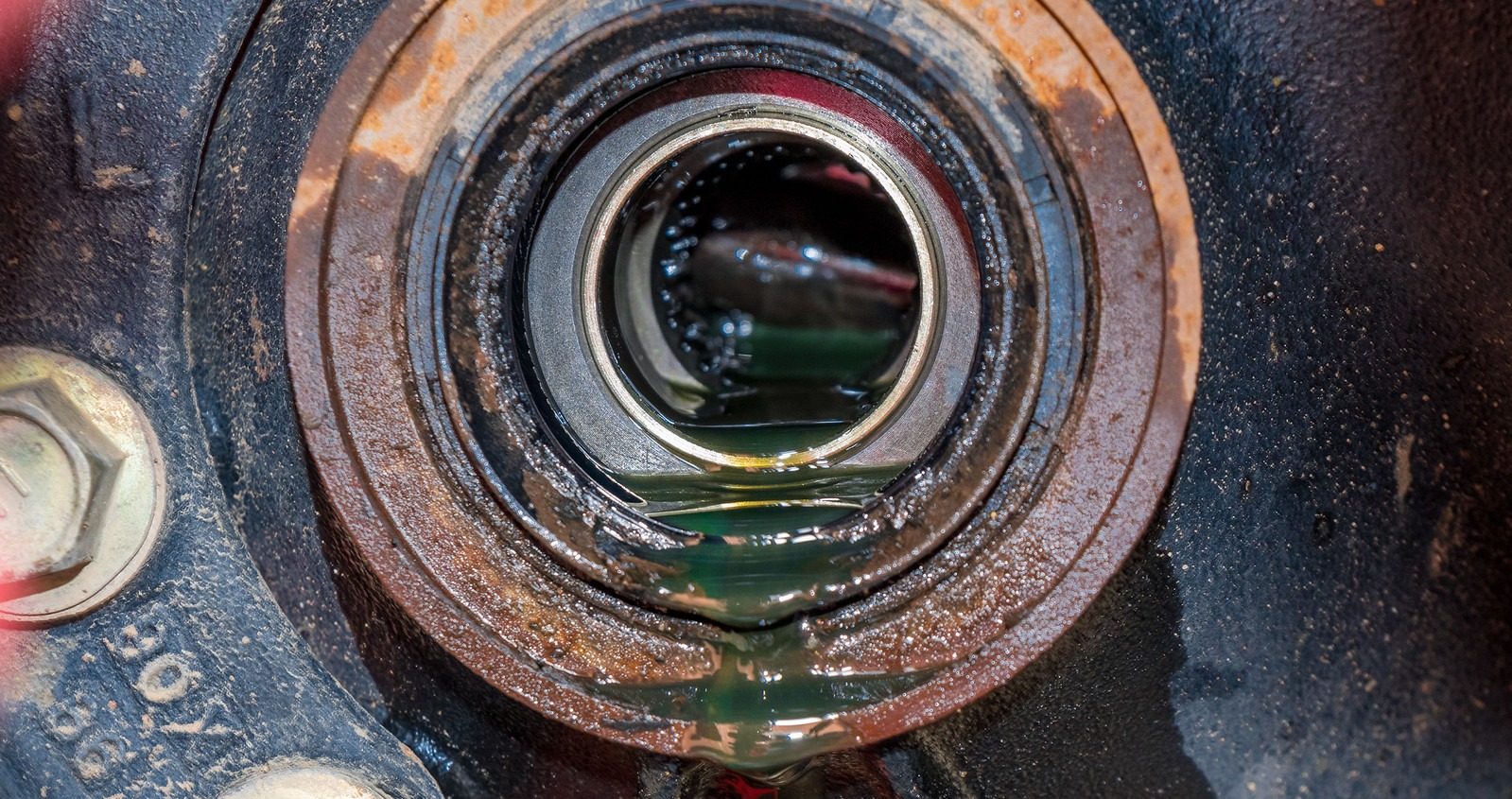
9. Gear Oil (Differential Fluid): Thick Amber or Brown
Thick, syrupy, and stinky. That’s gear oil in a nutshell. It lubricates the differential and, in some vehicles, the manual transmission or transfer case, and it has a heavier, honey-like texture compared with engine oil.
The color is usually amber or brown, and it often has a strong sulfur smell, like rotten eggs, which makes it easy to pick out. Leaks typically appear near the rear axle on rear-wheel-drive vehicles or beneath the middle of the car on all-wheel-drive models.
Common causes include worn pinion seals, axle seals, and cover gaskets. Because the fluid is so thick, you may see greasy buildup on the differential housing before you see a drip.
Listen for whining or howling noises that change with speed, since low gear oil can damage gears and bearings. That kind of damage is costly.
Trucks and SUVs that tow or haul heavy loads put extra strain on the differential, so check fluid levels more often if you use your vehicle that way. Most owners leave this job to a mechanic, since checking and refilling requires lifting the car and using the right fill plug.
If you spot thick brown streaks near the axle, schedule a visit soon. Catching a seal leak early can prevent a grinding, expensive failure down the road.
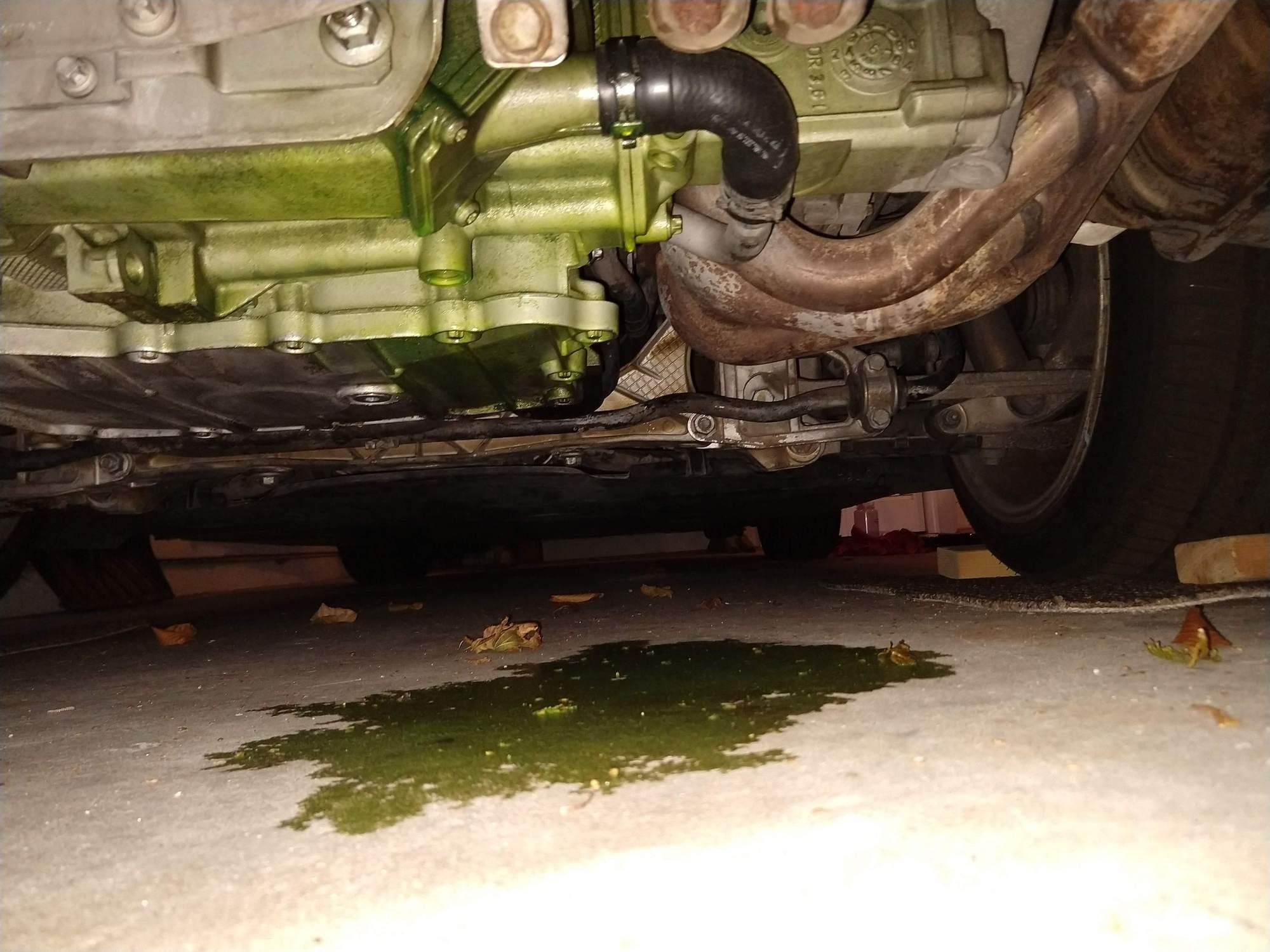
10. A/C Refrigerant (with Dye): Bright Yellow-Green
Last up is the sneaky one. Refrigerant itself is clear, and it turns into gas quickly when it escapes, so you rarely see an actual puddle. That’s why many air conditioning systems include a fluorescent yellow-green dye.
When the system leaks, the dye marks the spot, leaving a bright, glowing residue around fittings, hoses, the compressor, or the condenser. Technicians often use an ultraviolet light to make the dye stand out even more.
How do you know if your A/C is losing refrigerant? The air coming from the vents may feel warm or only slightly cool, and the system may take longer to cool the cabin. You might also hear the compressor cycling on and off more than usual.
Skip the cheap DIY recharge cans if you can, since adding refrigerant without fixing the leak only delays the problem, and overfilling can cause damage. Some products also contain sealants that may clog parts of the system.
A professional can find the leak, repair it, and refill the system to the correct amount. Refrigerants are regulated, so proper handling matters.
Now that you know all ten colors, grab that cardboard, check under your car this week, and let the drips tell you what your vehicle is trying to say.