
When a dealership finds a vehicle at another store that a customer wants to buy or needs to move inventory between its own locations, getting the car there becomes another business expense.
The cost can range from a relatively modest amount for a short local transfer to more than $1,000 for a long-distance shipment. The price depends on distance, vehicle size, carrier availability, delivery urgency, and whether the dealer moves one car or several together.
Dealerships can also arrange for an employee to pick up the vehicle instead of hiring a transport service. While this may seem like the less expensive option, labor costs, fuel, return trips, and additional mileage can quickly add up, making professional vehicle transport a more cost-effective choice.
The Typical Cost of Moving One Car
For a standard running sedan transported on an open carrier, a dealership might pay a few hundred dollars for a regional transfer and more than $1,000 for a long-distance move. There is no fixed national dealer-transport tariff. Prices are negotiated according to the route, available truck space, and delivery requirements.
A useful reference comes from Auto Hauler Exchange, which publishes live market estimates for dealer and auction vehicle shipments. Its October 22, 2026, sample rates for a running sedan on an open trailer included the following routes:
| Route | Distance | Standard carrier rate |
|---|---|---|
| New York to Philadelphia | 104 miles | $378 |
| Chicago to Detroit | 287 miles | $409 |
| Orlando to Charlotte | 523 miles | $658 |
| New York to Charleston | 774 miles | $921 |
| Los Angeles to Dallas | 1,443 miles | $1,110 |
| Los Angeles to New York | 2,798 miles | $1,584 |
These are market estimates paid to the carrier, not guaranteed quotes. The platform may charge an additional fee, and actual prices change with availability and timing. The figures nevertheless illustrate how a dealer’s transport bill can grow as the distance increases.
Another transport provider, A-1 Auto Transport, gives a broader dealer-to-dealer pricing estimate of approximately $0.60 to $1.50 per mile. That range reflects differences in routes, vehicle types, and shipment volumes.
It should not be treated as a universal rate because shorter trips can have minimum charges, while long-distance shipments often have lower costs per mile.
For a typical dealership planning its budget, a few hundred dollars is a reasonable starting point for a short regional transfer, while a shipment covering several states can run into four figures. A dealer moving a vehicle across the country may pay considerably more than one transferring a car between stores in the same metropolitan area.
Why Some Dealerships Pay More Than Others
Distance is only one part of the calculation. The type of vehicle can change the quote because carriers have limited space and weight capacity. A compact sedan is generally easier to accommodate than a full-size pickup, large SUV, or commercial van.
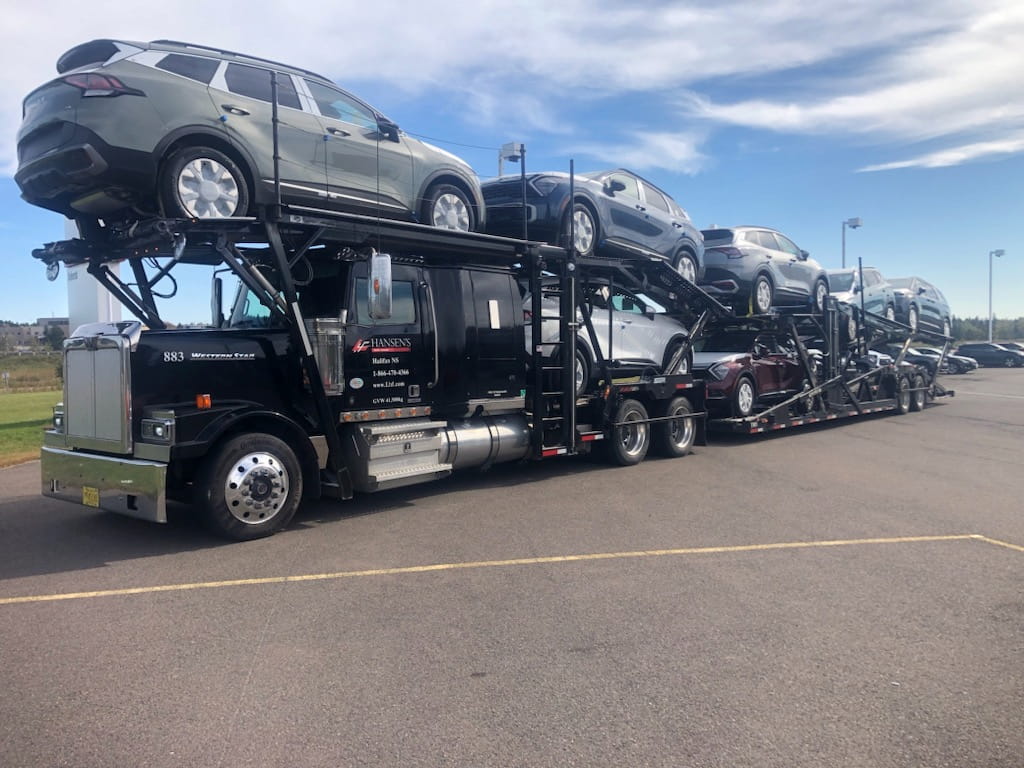
Oversized vehicles can reduce the number of other cars that fit on a trailer, increasing the cost assigned to that shipment.
The vehicle’s condition also matters. A running car can usually be driven onto a carrier, while a non-running vehicle may require winching or specialized loading equipment. A car with damaged wheels, steering problems, or severe accident damage can create additional handling requirements.
The transport method makes another difference. Most ordinary dealership inventory moves on open carriers because they are widely available and generally cheaper. Enclosed transport offers additional protection from weather and road debris, making it more appropriate for expensive sports cars, classics, exotic vehicles, or freshly restored inventory.
Ship a Car describes enclosed transport as carrying a typical premium of around 20% to 30% over open shipping, although the difference varies by vehicle and route.
Timing can be just as important. A dealership arranging a transfer for a customer who has already agreed to purchase a specific vehicle may need faster pickup. That urgency can limit the number of available carriers and increase the quote. By contrast, a dealership moving slow-selling inventory between locations may have the flexibility to wait for a cheaper carrier.
Volume is one of the biggest opportunities for savings. A full-size vehicle hauler can carry approximately seven to ten cars, according to Ship A Car. When a dealership moves several vehicles together, the transport cost can be divided among more units.
A dealer moving eight cars on one coordinated shipment will generally have a better opportunity to negotiate a lower per-car cost than a store booking eight separate single-car shipments.
For example, assume a dealership receives a $2,400 quote to move six vehicles on one coordinated shipment. The average transport expense would be $400 per vehicle. If it instead paid $550 for each car through separate bookings, the total would reach $3,300.
The $900 difference illustrates why larger dealer groups often coordinate transfers rather than arranging each shipment independently. These amounts are hypothetical, not a published carrier quotation.
Is Hiring a Carrier Cheaper Than Sending an Employee?
Dealerships do not always hire an outside transport company. For shorter distances, they may send a porter, salesperson, or other qualified employee to collect the vehicle and drive it back. This is commonly known as driveaway transport.
At first glance, DriveAway appears cheaper because the dealership does not have to pay for a professional car carrier. However, the calculation needs to include more than fuel. The employee must be paid for the trip, and someone may need to accompany them or arrange a return journey.
The dealership also has to consider insurance, vehicle registration and plate requirements, additional mileage, and the risk of damage during the drive.
Imagine a dealership needs to move a vehicle 100 miles between two locations. Sending an employee could involve fuel, several hours of wages, and the cost of arranging the return trip. If the employee needs another driver to bring them back, the labor expense increases.
A carrier might charge more upfront but deliver the vehicle without adding unnecessary miles to its odometer.
The trade-off becomes more significant with new or low-mileage vehicles. A dealership may be reluctant to put another 300 or 500 miles on a vehicle that it intends to advertise as having very low mileage. A professional carrier avoids most of that additional odometer use.
Ship A Car identifies driveaway as a practical option for shorter movements, while recommending truck transport when additional mileage could affect a vehicle’s value.
There are also logistical considerations. Before releasing a vehicle, dealerships should document its condition, photograph existing damage, and record the vehicle’s details. The receiving store should inspect it before signing the delivery paperwork.
A transport company should also be checked for appropriate operating authority and cargo insurance. The Federal Motor Carrier Safety Administration provides an online system for checking carrier registration and safety information.
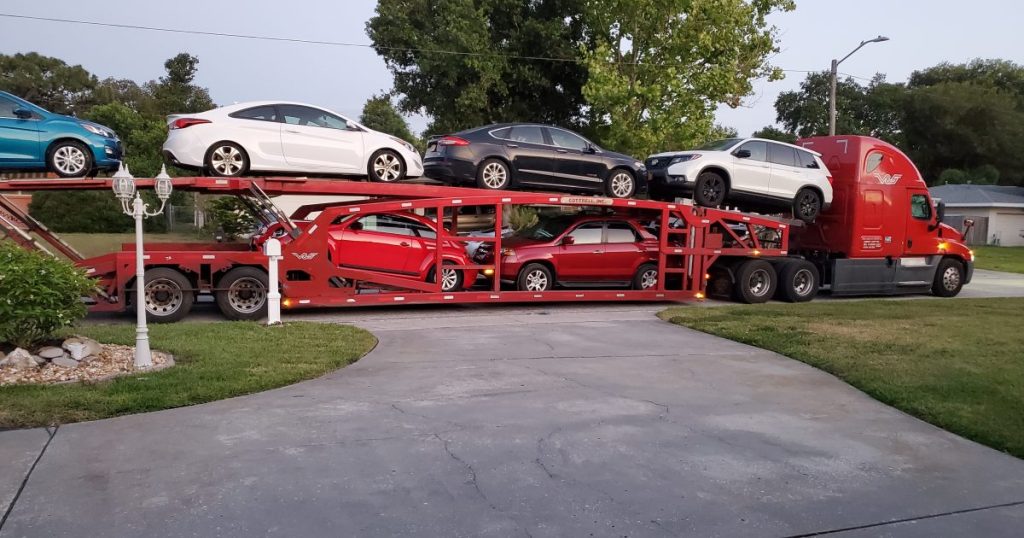
Transport time matters because a vehicle in transit cannot be displayed, test-driven, or sold from the destination dealership.
AHX’s October 2026 market examples showed typical delivery periods of one to two days for shorter routes and four to seven days for its cross-country Los Angeles-to-New York example. Those are estimates, not guaranteed delivery dates.
For most standard vehicles, a dealership can expect to spend several hundred dollars on a regional transfer and potentially $1,000 to $1,600 or more on a long-distance shipment. The exact amount depends on the route, vehicle, timing, and number of cars being moved.
Dealers can reduce the cost by using open carriers, coordinating multiple vehicles, and allowing flexible pickup dates.
Transporting a car is not just a delivery expense. It is part of the dealership’s inventory cost, and the decision to drive or ship a vehicle can affect its mileage, condition, availability, and eventual selling price.