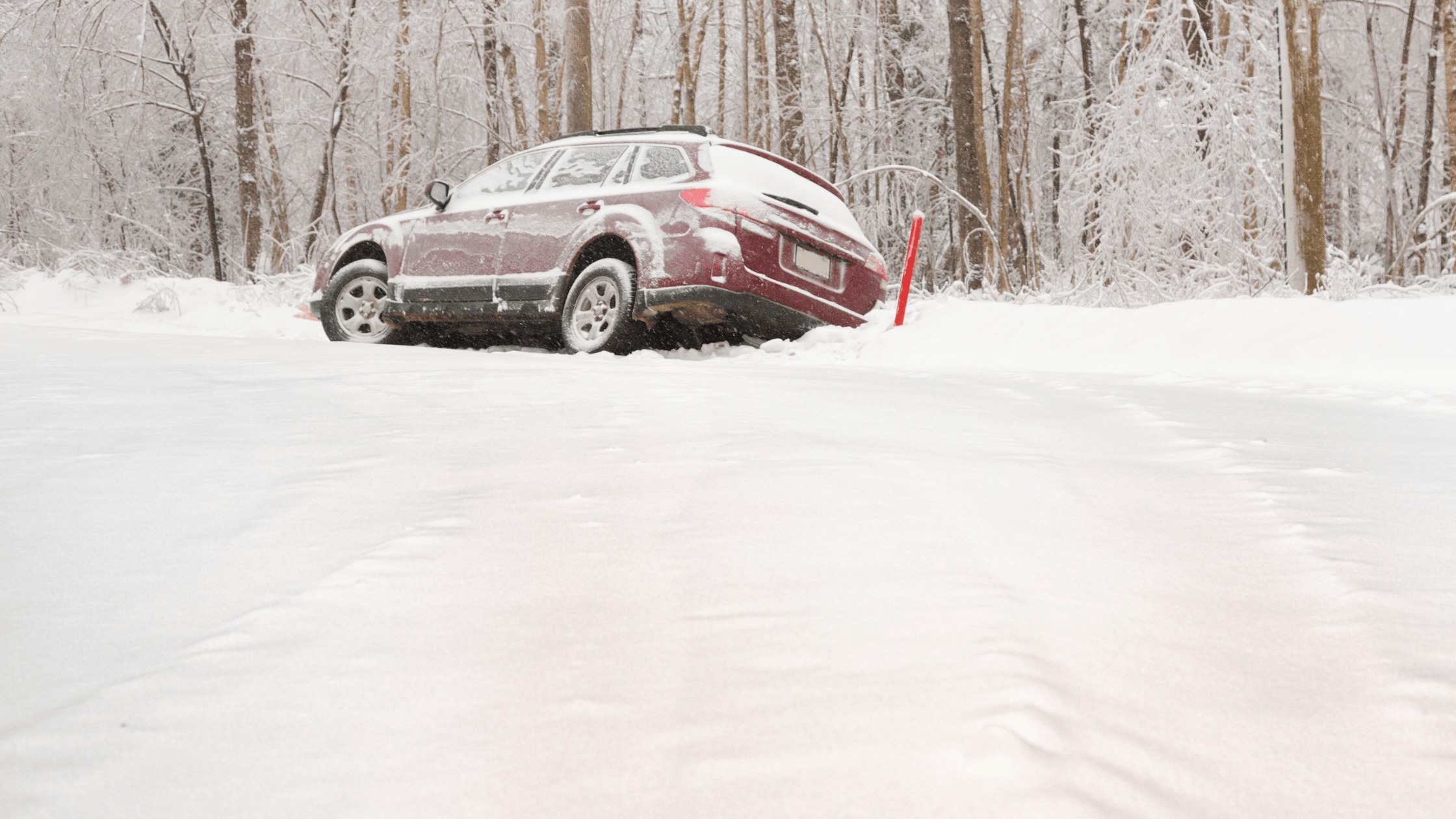
A used car may look immaculate during a spring or summer sale, but warmer weather can make it easier to overlook damage caused by months of freezing temperatures, snow, ice, road salt, and harsh winter driving conditions.
Problems that developed during winter may still be present, even if the seller has made a few cosmetic improvements before advertising the vehicle. From suspicious paintwork to unusual mechanical problems, small details can reveal that something is wrong.
A seller may replace damaged parts, apply fresh paint, clean the interior, or make temporary repairs to improve the car’s appearance without addressing the underlying problem. Knowing what to look for can help you ask better questions, avoid unexpected repair expenses, and make a more informed buying decision. Before agreeing to purchase a used vehicle, pay attention to these 12 signs that a seller may be hiding winter damage.
1. Freshly painted patches on the car’s body
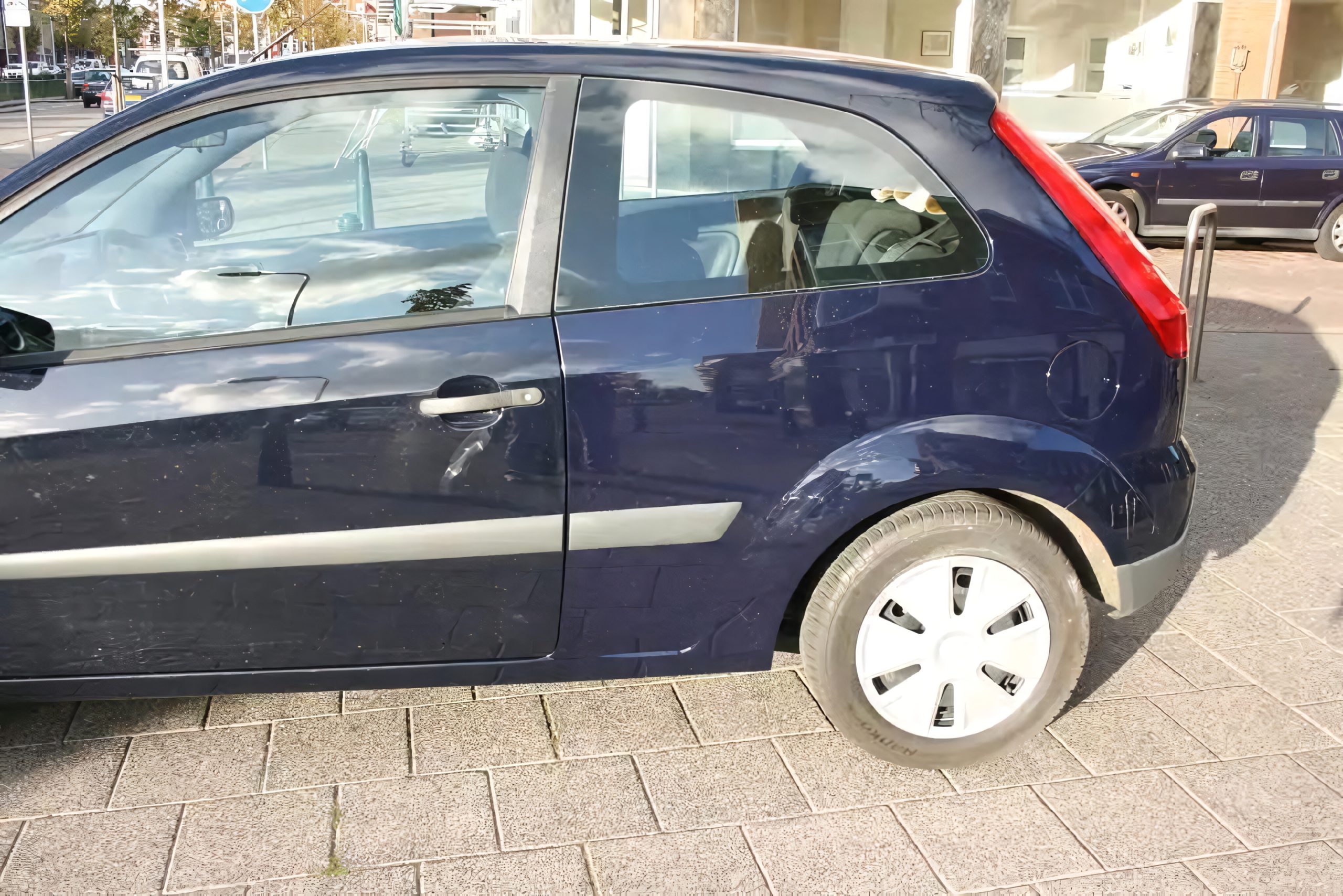
A section of a car that looks noticeably newer than the surrounding bodywork should make you pause. So should a freshly painted bumper, door, fender, or section of the hood, especially when the rest of the vehicle shows signs of age.
Although repainting is a normal part of preparing a used car for sale, isolated areas of fresh paint may indicate an attempt to conceal damage caused by winter driving.
Snow-covered roads, ice, road salt, and loose gravel can damage a vehicle’s paintwork, while minor collisions and scraping against frozen snowbanks can leave dents and scratches.
Pay attention to differences in paint color, texture, and shine. A repaired panel may appear brighter or smoother than the surrounding surfaces.
Look closely around door edges, wheel arches, bumpers, and the lower sections of the vehicle, where winter debris and road salt can cause considerable damage.
Also check for paint overspray on rubber seals, plastic trim, headlights, and window edges. Uneven paint lines or visible sanding marks may suggest that bodywork was recently completed.
Ask the seller when the vehicle was repainted and what prompted the work. Request repair invoices, photographs, or insurance records if available.
Remember that fresh paint does not automatically mean the car has serious damage. However, cosmetic repairs can sometimes conceal deeper rust, corrosion, or poorly repaired accident damage.
Consider hiring a qualified mechanic or automotive body specialist to inspect suspicious panels. A paint thickness gauge can also help identify areas that may have received additional layers of paint.
2. Musty odors or heavy air fresheners
Walk into a used car and immediately notice an unusually strong smell of vanilla, perfume, or several air fresheners? That deserves your attention.
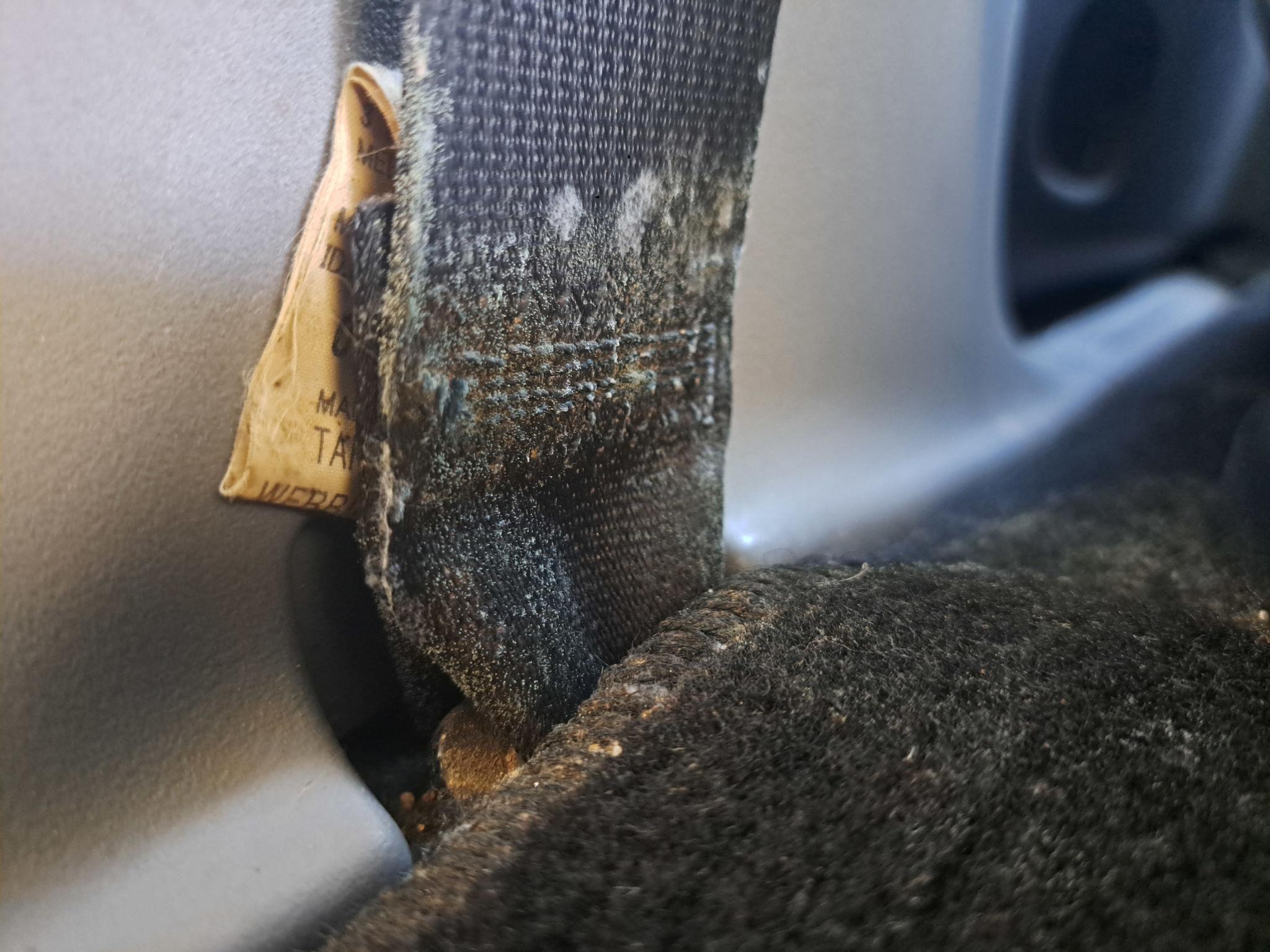
While some drivers enjoy keeping their vehicles pleasantly scented, excessive fragrances may be an attempt to conceal musty odors associated with water intrusion, mold, or damp carpets.
Winter weather can introduce moisture into a vehicle through damaged door seals, leaking windows, blocked drainage channels, and poorly sealed sunroofs.
Melting snow carried inside on shoes can also soak carpets and floor mats, particularly when the vehicle is parked in cold conditions without adequate ventilation.
Pay particular attention to the footwells, trunk, underneath the floor mats, and around the spare tire compartment. These areas can retain moisture long after the original leak has been addressed.
Open the doors and windows and allow fresh air inside. Check whether the carpets feel damp, whether the upholstery has unusual discoloration, and whether there are signs of mold around the seat rails or lower interior panels.
Also inspect the trunk carefully. Water can collect beneath the spare tire or inside hidden storage compartments without being immediately noticeable.
Your nose can help identify problems, but do not rely on smell alone. Some moisture-related problems may not produce an obvious odor.
Ask the seller whether the vehicle experienced flooding, leaking windows, or water damage during the previous winter. Find out whether any carpets, upholstery, or interior components were replaced.
If anything seems suspicious, arrange a professional inspection for hidden moisture and possible corrosion. A pleasant-smelling interior should never replace a proper investigation.
3. Warped or buckling interior flooring and carpets
Take your time when inspecting a used car, especially around the floor, footwells, and trunk. The condition of the interior flooring can reveal water damage that freshly cleaned seats and carefully arranged floor mats may conceal.
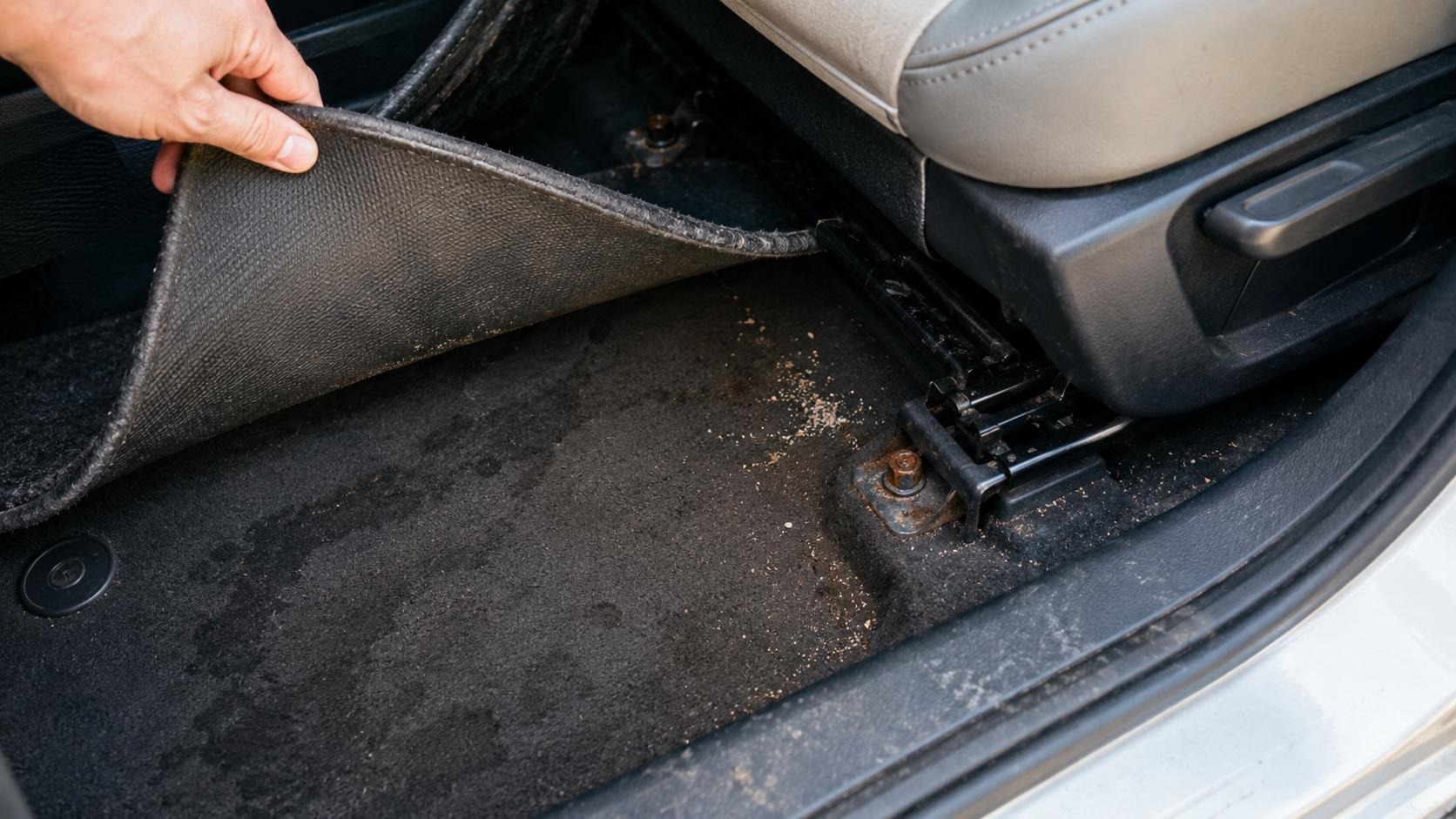
When carpets are exposed to excessive moisture, they may become swollen, discolored, loose, or develop an unpleasant smell.
These problems can result from leaking door seals, damaged window weatherstripping, blocked sunroof drains, or water entering the vehicle during heavy winter storms.
Start by lifting the floor mats and examining the carpet underneath. Look for unusual stains, damp patches, areas that feel spongy, or sections that appear newer than the surrounding material. Pay particular attention to the front passenger footwell and rear seating area.
Check whether the carpet fits properly around the center console and door edges. Loose carpeting or recently replaced floor mats may deserve additional attention, particularly if the rest of the interior looks considerably older.
Also inspect beneath the seats where possible. Water can collect around seat mounting brackets and electrical connectors, potentially causing corrosion and electrical problems.
Do not overlook the trunk. Lift the boot carpet and inspect the spare tire compartment for standing water, rust, and signs of previous moisture exposure.
Ask the seller whether the vehicle experienced water leaks or flooding during the previous winter. Find out whether any carpets or interior materials were replaced and why.
Remember that replacing visible carpeting does not automatically mean the underlying problem has been corrected. Moisture may remain trapped beneath the floor covering, damaging wiring, connectors, and metal surfaces.
Have a qualified mechanic inspect suspicious areas before purchasing the vehicle, particularly if there are signs of dampness or corrosion.
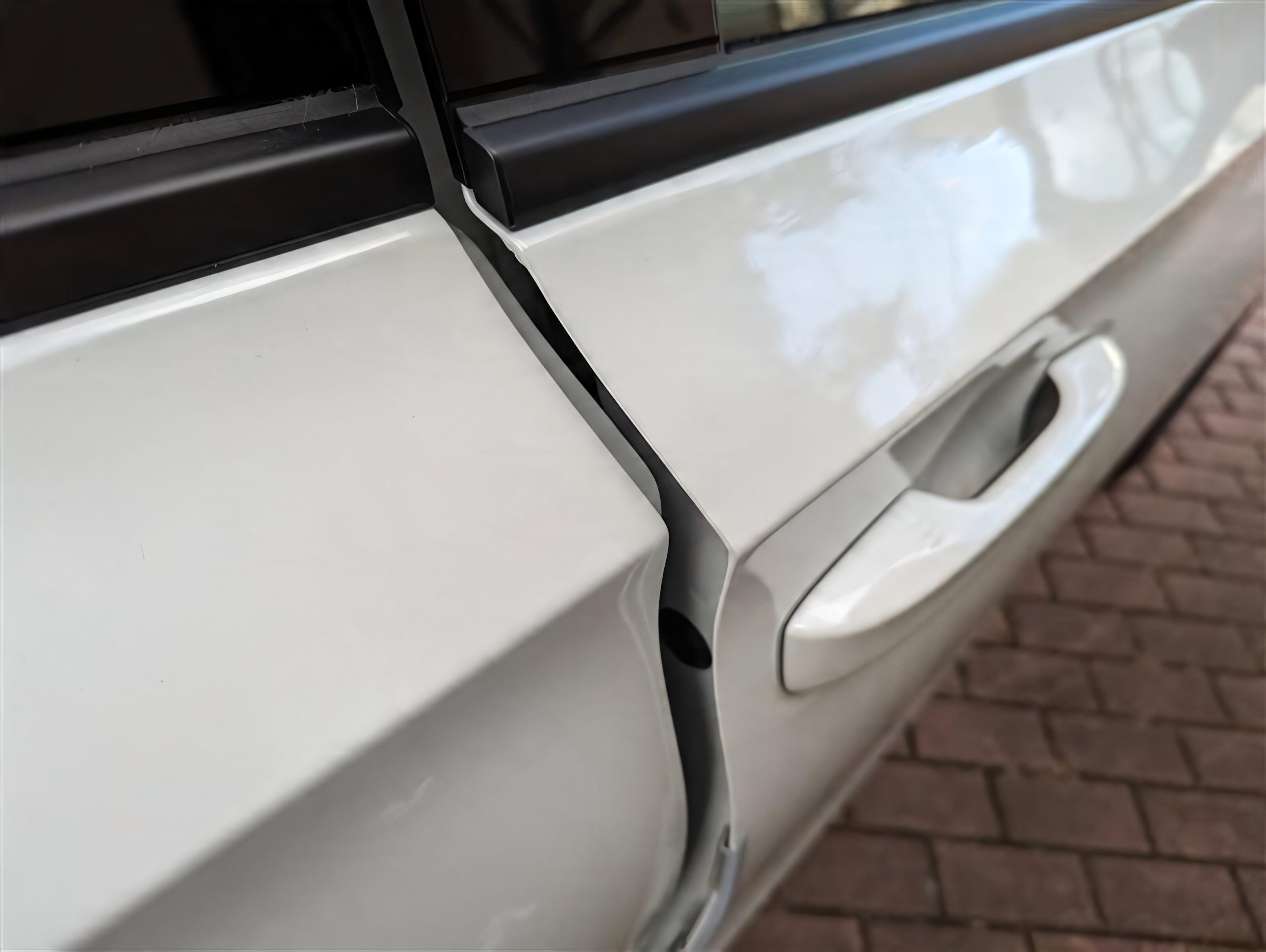
4. Sticky Doors and Windows
Car doors and windows should generally open, close, and operate without requiring excessive force. If several doors suddenly feel difficult to operate or the windows struggle to move, investigate before assuming they simply need lubrication or adjustment.
Freezing temperatures can affect door seals, window mechanisms, and locking components. Ice may cause rubber weatherstripping to stick to metal surfaces, while moisture entering door assemblies can contribute to corrosion and mechanical problems.
During your inspection, open and close every door several times. Notice whether the doors scrape against their frames, refuse to latch properly, or require unusual force to shut.
Test every electric window individually. Listen for grinding, clicking, or struggling noises when operating the switches. A window that moves unusually slowly may have a damaged regulator, worn motor, or corrosion affecting its mechanism.
Pay attention to the condition of the rubber seals around the doors and windows. Cracked, hardened, or damaged weatherstripping can allow rainwater and melting snow to enter the cabin.
Also check whether the doors appear properly aligned. Uneven gaps between body panels may indicate previous collision damage or structural repairs rather than winter-related problems alone.
One difficult window may have an ordinary mechanical fault. However, several sticking doors and windows, especially when accompanied by damp carpets or electrical problems, deserve additional attention.
Ask the seller whether any door locks, window regulators, or weather seals were replaced after winter. Request repair invoices where available.
A qualified mechanic can examine the door mechanisms, seals, and electrical components to identify problems that may require more than a simple adjustment.
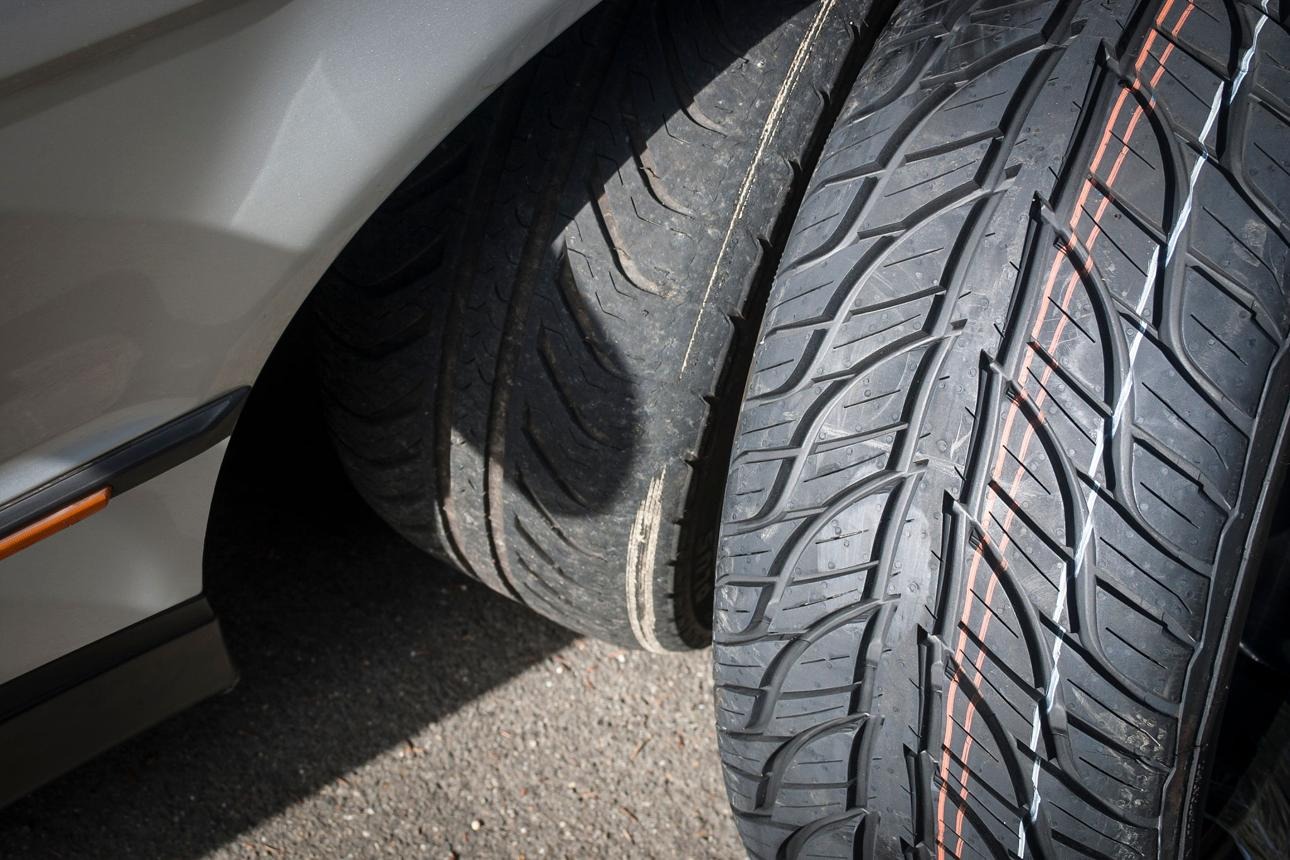
5. Brand New Tires on an Older Car
A set of brand-new tires may seem like a welcome improvement when purchasing a used vehicle. However, when the tires look unusually new while the rest of the car shows considerable wear, it is worth asking why the previous set was replaced.
Winter driving can place considerable stress on tires. Freezing temperatures, icy roads, potholes hidden beneath snow, and repeated contact with road salt can contribute to tire damage and uneven wear.
In some cases, a seller may replace damaged tires shortly before listing the vehicle without addressing the underlying suspension or alignment problems responsible for the wear.
During your inspection, examine all four tires carefully. Look for differences in tread depth, unusual wear patterns, sidewall cracks, bulges, and signs of previous repairs.
Pay particular attention to uneven wear along the inner or outer edges of the tires. This may indicate poor wheel alignment, worn suspension components, or other mechanical problems.
Also check whether all four tires are the same brand, size, and appropriate specification. A mixture of noticeably different tires may suggest that replacements were purchased individually rather than as part of a properly maintained set.
Ask the seller when the tires were installed and whether the previous set experienced unusual damage. Request alignment reports or tire replacement receipts if available.
Remember that new tires do not automatically mean the vehicle is in excellent condition. They may conceal an unresolved suspension problem or previous damage from hitting potholes during winter.
Have a mechanic inspect the suspension, steering, wheel bearings, and alignment before purchasing the vehicle. This can help you avoid replacing another set of tires shortly after taking ownership.
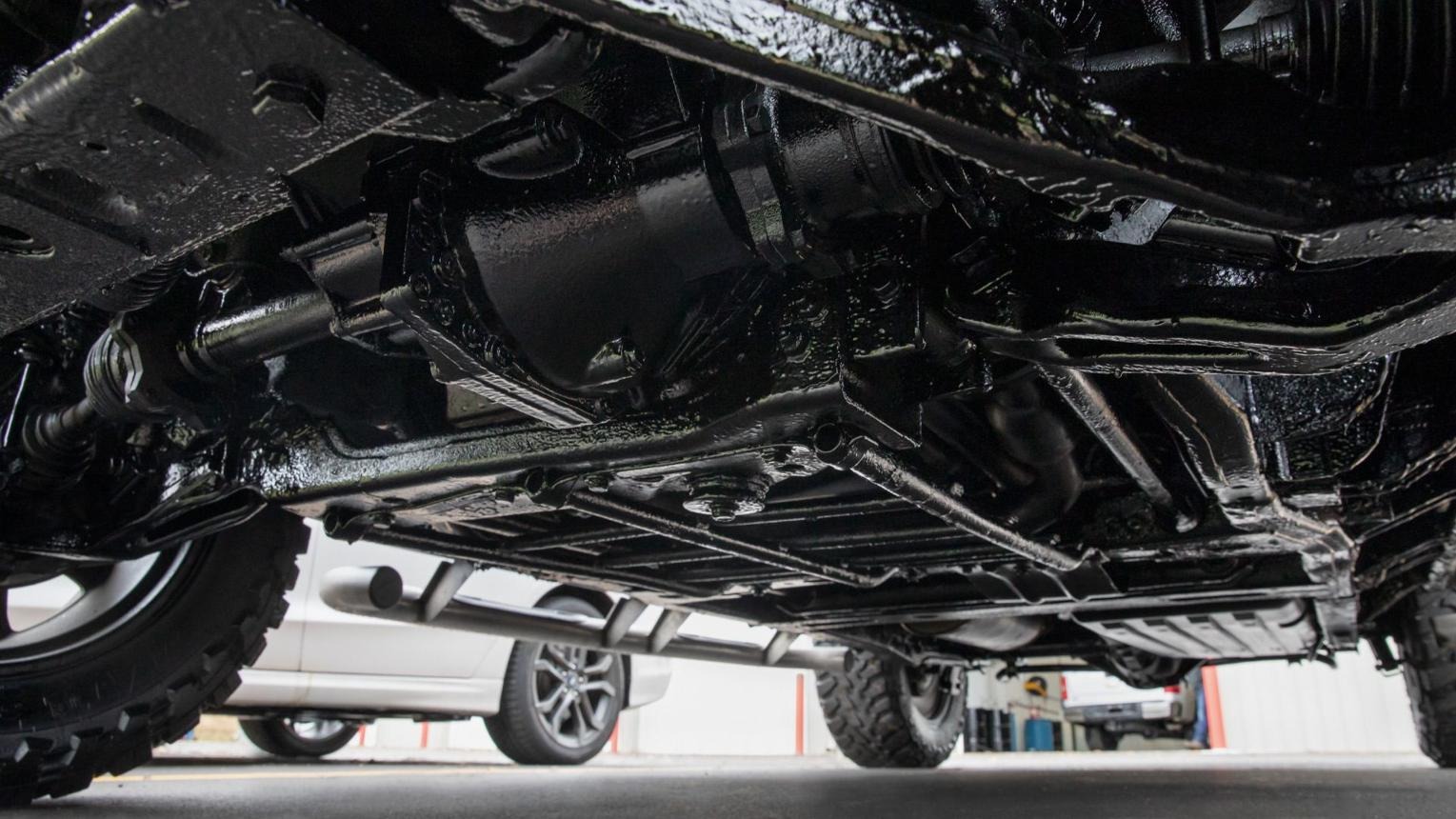
6. Fresh Undercoating or Paint Beneath the Car
The underside of a used car deserves just as much attention as its exterior bodywork. In fact, it can reveal some of the most important clues about how the vehicle survived winter driving.
Road salt, moisture, snow, and ice can accelerate corrosion, particularly on vehicles regularly driven in regions where roads are treated with salt during freezing weather.
When you notice unusually fresh black coating beneath an older vehicle, ask whether the previous underbody treatment was applied as routine maintenance or to conceal existing rust.
Although undercoating can protect metal surfaces when applied correctly, fresh material may sometimes hide corrosion, poorly repaired sections, or previous damage.
Ask the seller whether the vehicle recently received an underbody treatment and request photographs showing its condition before the work was completed.
During an inspection, examine the visible chassis components, suspension mounting points, exhaust system, floor pan, and wheel arches. Look for bubbling coating, flaking material, visible rust, and areas where the protective layer appears unusually thick.
Pay particular attention to seams and joints, where moisture and road salt can accumulate. Fresh coating over heavily corroded metal may prevent you from seeing how serious the underlying damage has become.
Also check whether the coating appears consistent across the vehicle. Recently treated sections surrounded by older, deteriorating surfaces deserve closer investigation.
Do not crawl underneath a vehicle supported only by a jack. Ask a qualified mechanic to inspect it using a proper vehicle lift.
A professional underbody inspection can identify structural corrosion that might affect safety, roadworthiness, and future repair costs.
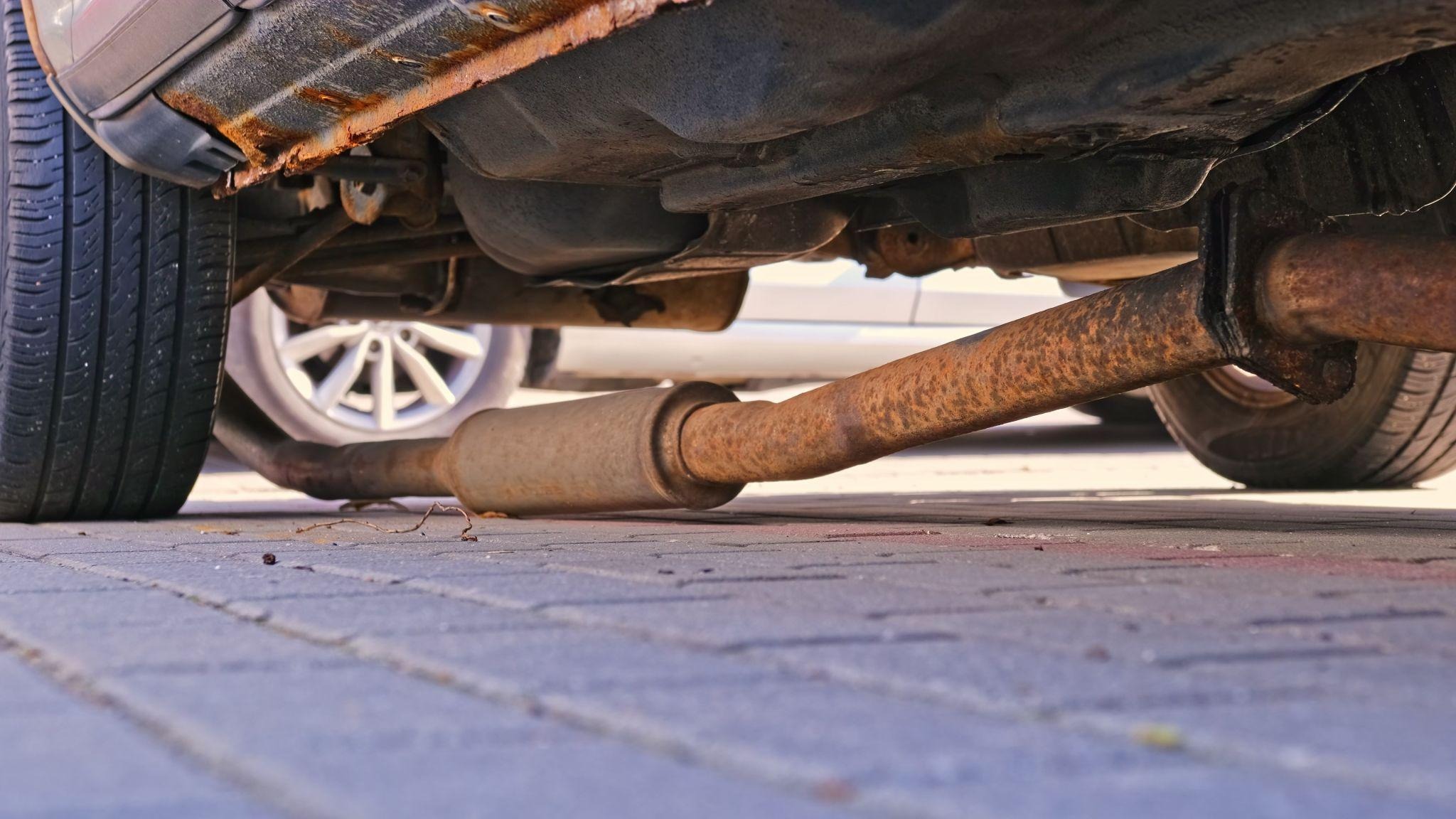
7. Displaced or Misaligned Exhaust and Underbody Components
The underside of a car contains several important components that are constantly exposed to road conditions. During winter, accumulated snow, hidden potholes, ice, and road debris can cause considerable damage.
The exhaust system is particularly vulnerable because it extends beneath the vehicle and can come into contact with obstacles when driving over deep snow or uneven surfaces.
Heavy impacts may bend exhaust pipes, loosen mounting brackets, damage heat shields, or disconnect sections of the exhaust system.
Walk around the vehicle and look beneath it for anything hanging unusually low. Pay attention to bent exhaust pipes, loose protective panels, missing fasteners, and components that appear recently replaced.
If possible, listen carefully while the engine is running. Unusual rattling, vibration, or excessively loud exhaust noise may indicate a damaged mounting point, loose heat shield, or leak.
Also examine the visible suspension components and protective covers. Winter potholes and icy roads can damage underbody panels, suspension arms, and other exposed parts.
Ask the seller whether the vehicle struck any large potholes, snowbanks, or road obstacles during the previous winter. Find out whether any exhaust or underbody repairs were completed.
Request receipts or workshop records if available. A seller who recently replaced an exhaust section should be able to explain why the work was necessary.
Remember that a loose heat shield may be a relatively inexpensive repair, but damage to suspension components or structural mounting points can be considerably more serious.
Have a qualified mechanic inspect the entire underside of the vehicle on a lift before agreeing to purchase it.
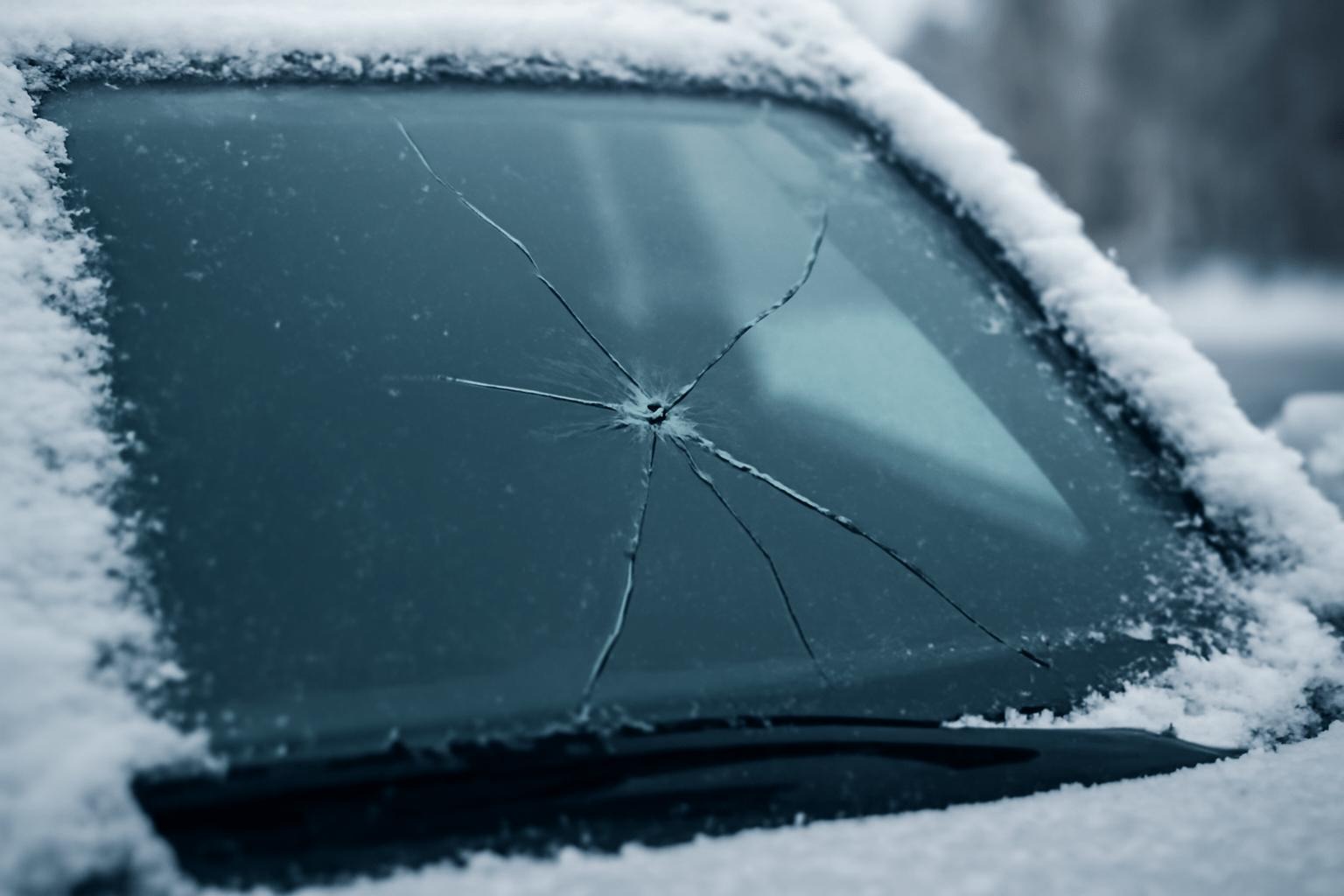
8. New Fascia or Soffit Panels
A car does not have fascia or soffit panels like a house, but its exterior trim and protective body panels can reveal similar signs of recently concealed winter damage.
Pay particular attention to the lower bumpers, wheel-arch liners, rocker panels, side skirts, and plastic underbody covers. These components protect vulnerable areas from road debris, moisture, ice, and salt.
During winter, compacted snow can become trapped around wheel arches and beneath bumpers. Ice and road debris may also damage plastic clips, loosen protective panels, or crack exterior trim.
When you notice unusually new sections of plastic trim on an older vehicle, ask whether the previous components were damaged during winter driving.
Stand back and examine both sides of the car. Look for mismatched colors, uneven gaps, fresh fasteners, different shades of plastic, and panels that do not sit flush against the body.
Pay attention to the edges around the wheel arches. Recently replaced liners may conceal previous impact damage, missing clips, or corrosion developing behind the panels.
Also examine the lower door edges and rocker panels for bubbling paint, scratches, and rust. These areas are particularly vulnerable to road salt and accumulated moisture.
Ask the seller when the replacement parts were installed and whether the vehicle suffered any underbody impacts or collision damage.
If the car has an accessible service history, request photographs or invoices showing the original repairs.
Replacing damaged trim can be a perfectly reasonable maintenance decision. However, installing new exterior panels without addressing the original damage may leave hidden problems behind.
A qualified bodywork specialist can examine the surrounding mounting points, metalwork, and protective components to determine whether the repairs were properly completed.
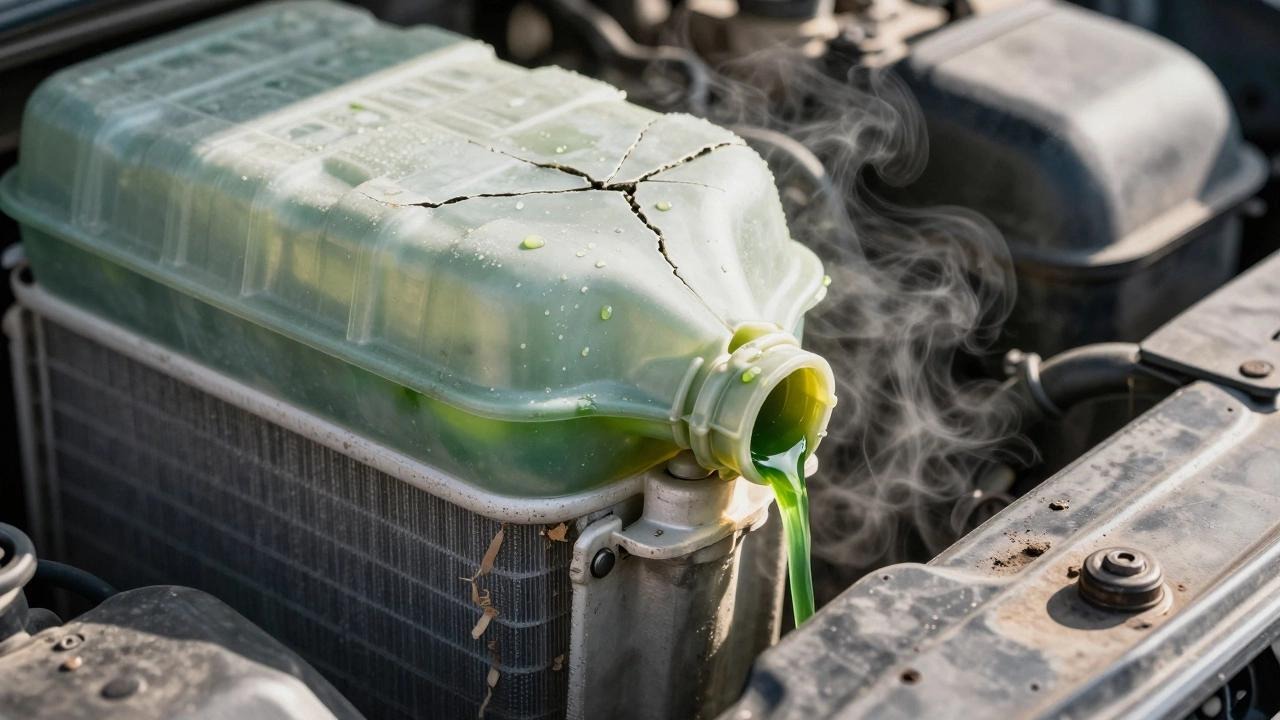
9. Low Coolant Levels or Signs of Leaking Coolant
Checking the coolant level may not be the first thing you think about when inspecting a used car, but the cooling system can reveal problems caused by freezing temperatures.
Coolant plays an important role in regulating engine temperature and protecting the cooling system from freezing.
However, if the wrong coolant mixture is used, or the vehicle has not received proper maintenance, extremely cold weather can contribute to cracked hoses, damaged radiators, and leaks.
During your inspection, look beneath the vehicle for unusual puddles or dried residue around the engine compartment. Coolant can leave colored deposits, although its appearance varies depending on the type of coolant used.
Open the hood and examine the visible radiator hoses, coolant reservoir, and surrounding connections. Look for cracks, swollen rubber, loose clamps, and signs of previous repairs.
Check the coolant reservoir level when the engine is completely cold. Never remove a radiator cap or pressurized coolant reservoir cap while the engine is hot.
Pay attention to the dashboard temperature gauge during a test drive. An engine that overheats, takes unusually long to reach operating temperature, or displays temperature fluctuations may have an underlying cooling system problem.
Ask the seller whether the vehicle experienced frozen coolant, overheating, or radiator repairs during the previous winter. Request maintenance records and invoices for any replacement parts.
Remember that low coolant does not automatically mean the vehicle suffered winter damage. However, repeated coolant loss should never be ignored because it may indicate a leak or more serious engine problem.
A qualified mechanic can pressure-test the cooling system, inspect the radiator and hoses, and check for evidence of internal coolant leaks before you complete the purchase.
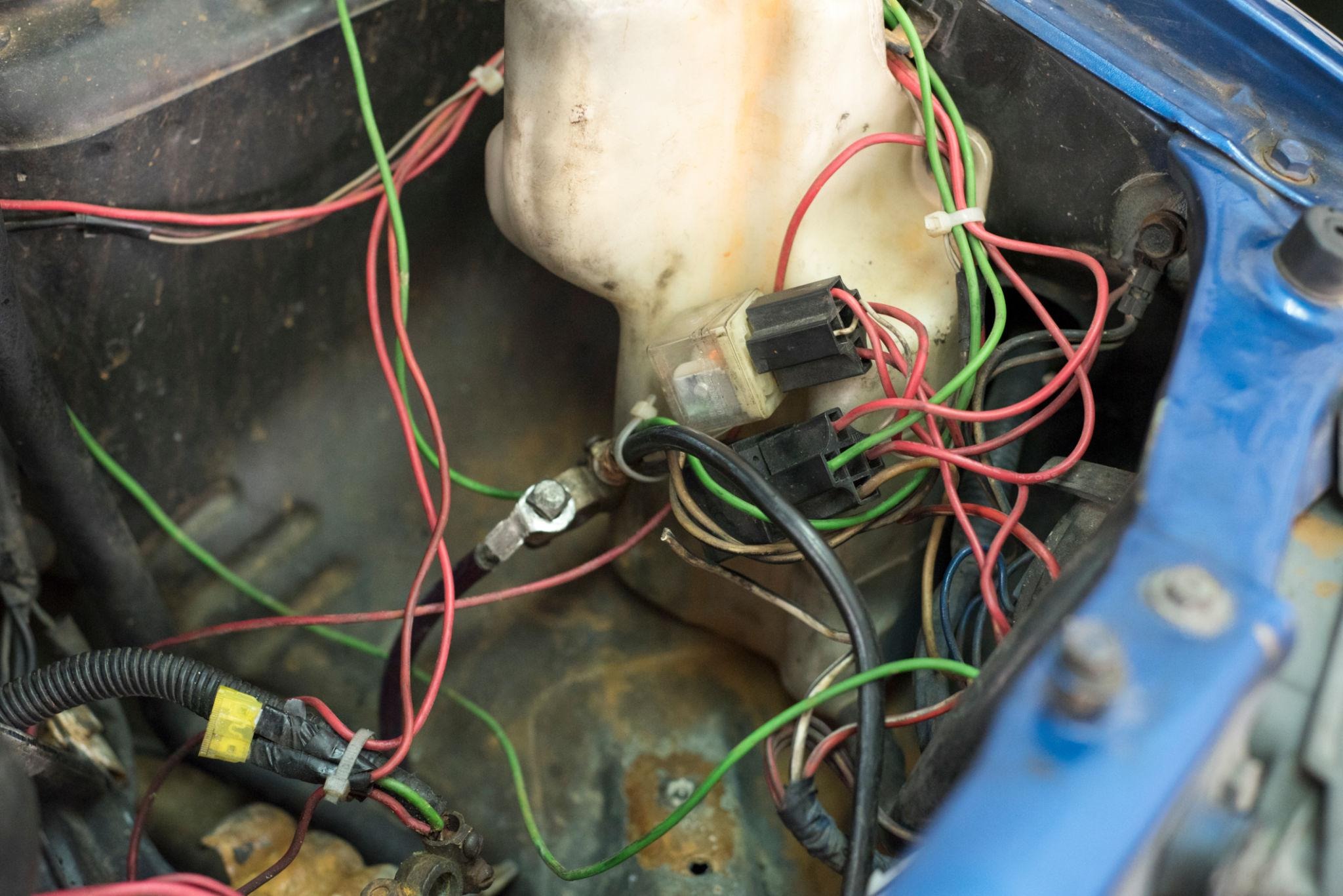
10. Freshly Repaired or Replaced Engine Bay Components
The engine compartment contains some of the most important systems in a vehicle, making it an essential area to inspect during a used-car purchase.
Pay particular attention to the battery connections, radiator, coolant hoses, wiring harnesses, alternator, and other visible components. If you notice several unusually new parts inside an otherwise older engine bay, ask what caused the replacements.
Freezing temperatures can place considerable stress on automotive components. Weak batteries may fail during cold starts, plastic hoses can become brittle, and neglected cooling systems may develop leaks.
Winter road conditions can also contribute to electrical problems when moisture and salt reach exposed connections and wiring.
Look closely at the engine bay rather than accepting its appearance at face value. Fresh bolts, mismatched components, unusually clean sections, and recently wrapped wiring may indicate previous repair work.
Check for corrosion around electrical connectors and battery terminals. Also examine the surrounding surfaces for dried coolant, oil residue, and signs of leaking fluids.
A freshly cleaned engine bay is not necessarily suspicious, but excessive cleaning may make it difficult to identify leaks that would otherwise be visible.
Ask the seller when the replacement components were installed, what problems they addressed, and whether the repairs were performed by a qualified technician.
Request workshop invoices, warranty information, and photographs if available.
Remember that replacing a damaged component does not automatically mean the original problem has been resolved. For example, installing a new radiator will not correct an underlying cooling system issue if the cause of repeated overheating remains.
Have a qualified mechanic examine the engine, electrical system, and recently replaced components before purchasing the vehicle.
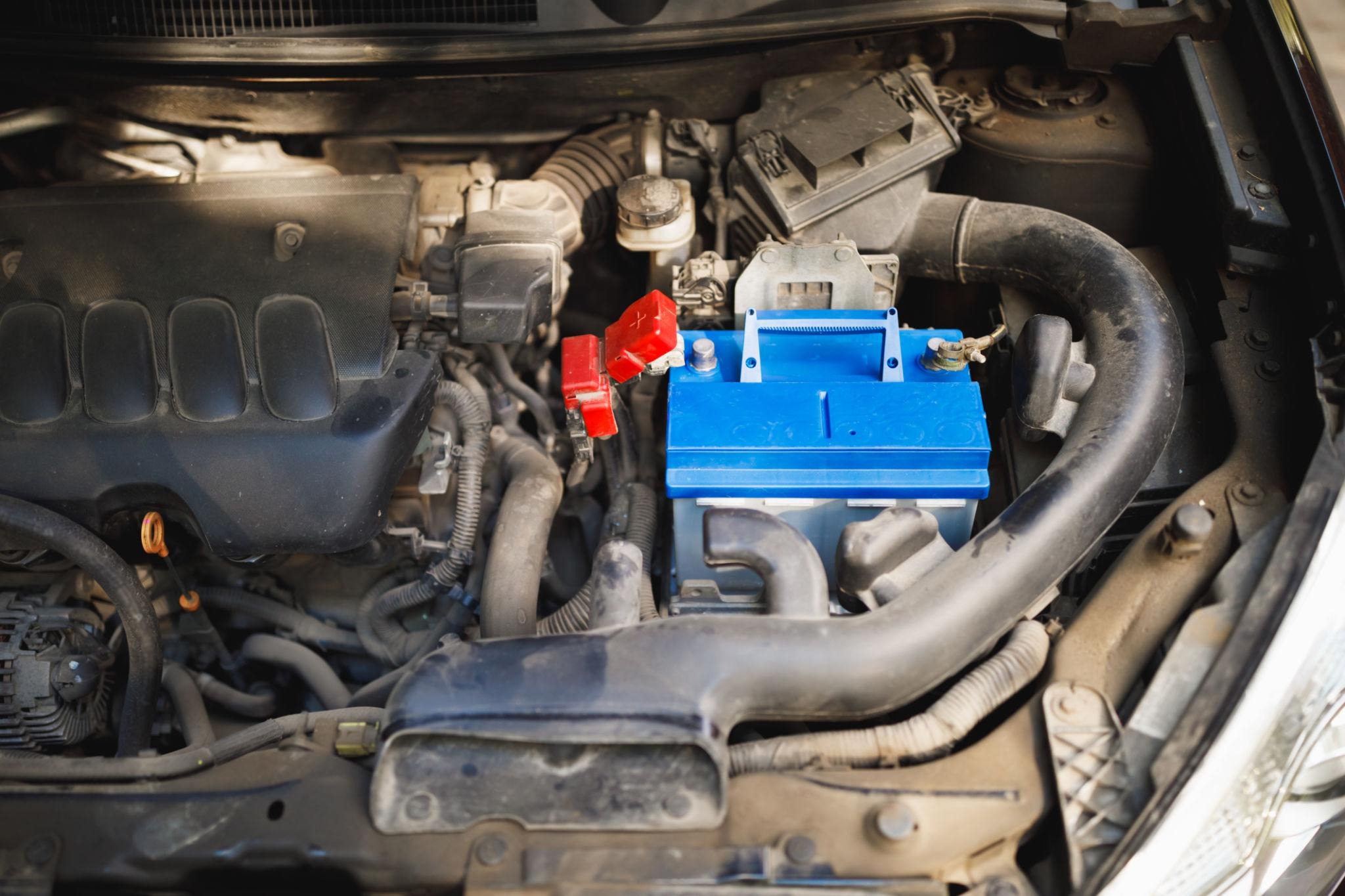
11. A Brand New Battery in an Older Car
A new battery may seem like an excellent improvement when purchasing a used car, particularly if the vehicle starts immediately during your inspection.
However, when an older car has a recently installed battery, it is worth asking what happened to the previous one. Freezing temperatures can place additional demands on automotive batteries.
Cold weather reduces battery performance while thickening engine oil, making it harder for the starter motor to turn the engine.
A weak or poorly maintained battery may struggle during winter, eventually failing to start the vehicle. In some situations, repeated starting attempts and charging problems may also reveal underlying electrical faults.
Start by examining the battery installation. Look for the manufacturing date, loose connections, corrosion around the terminals, and signs of recent replacement.
Check whether the battery is securely mounted and whether the surrounding cables appear damaged or poorly connected.
Ask the seller when the battery was installed and whether it replaced a failed unit after a particularly cold winter. Find out whether the alternator or charging system was tested at the same time.
A new battery can be a valuable improvement, but it should not replace a proper investigation into previous starting problems.
If the vehicle previously struggled to start, the problem may have involved more than the battery. A faulty alternator, parasitic electrical drain, damaged starter motor, or poor electrical connection could still be present.
Request the battery replacement receipt and any available electrical system test results.
Before purchasing, have a mechanic perform a battery load test and check the alternator’s charging performance. These checks can help establish whether the vehicle’s electrical system is functioning correctly.
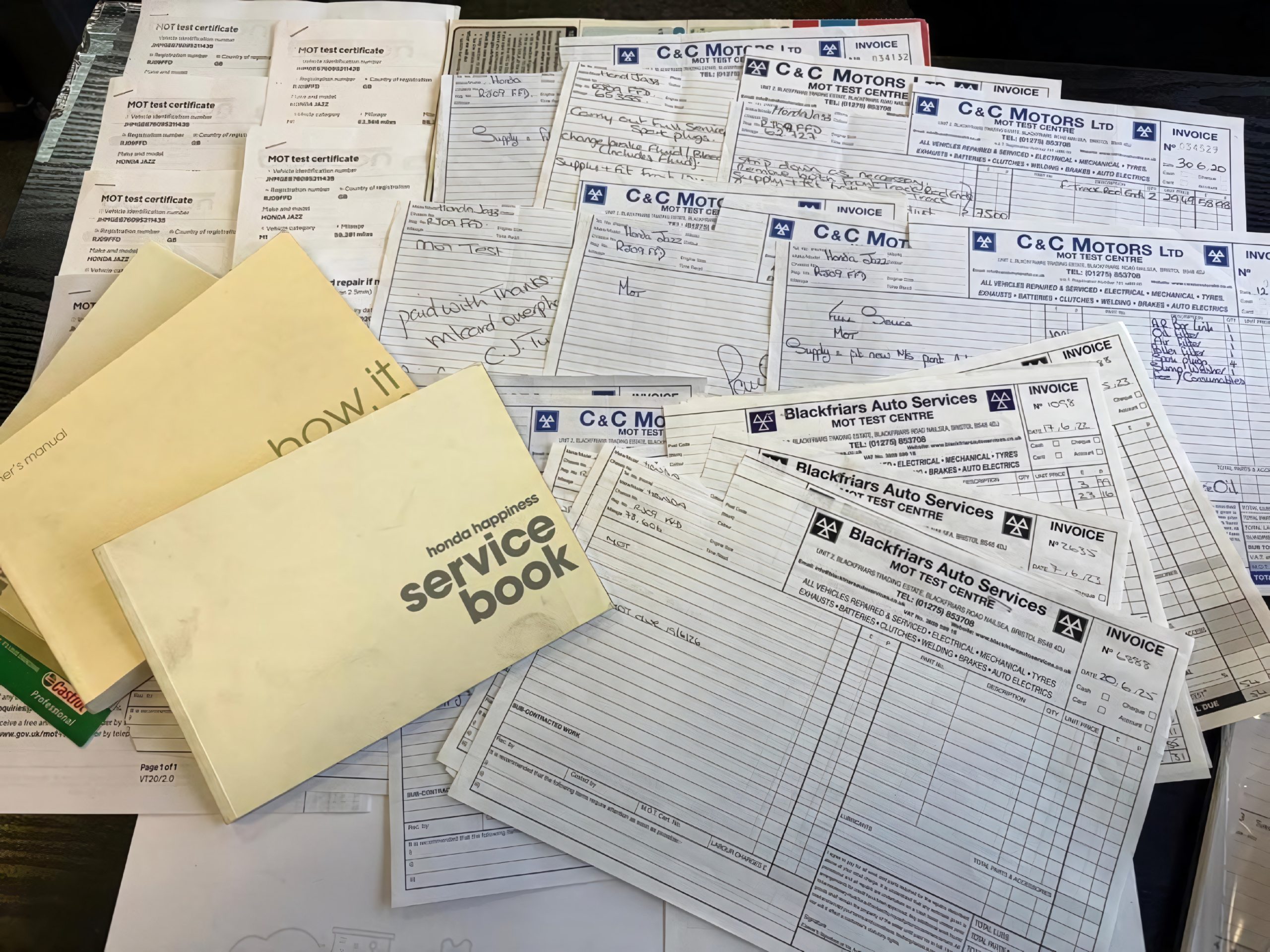
12. Delayed Utility Disclosures or Missing Maintenance Records
Paperwork can reveal problems that may not be obvious during a brief car inspection. Maintenance records, repair receipts, diagnostic reports, and previous inspection documents can help you understand how well the vehicle was maintained during winter.
Be cautious if the seller repeatedly delays providing these documents or struggles to explain recent repairs. Missing records may leave important questions unanswered about previous battery failures, frozen coolant, radiator damage, rust treatment, or underbody repairs.
Ask for documentation covering battery replacements, electrical repairs, cooling system maintenance, suspension work, wheel alignment, windshield replacements, and previous bodywork.
Also request records of any water leaks, interior repairs, or rust protection treatments. If the seller claims the documents are unavailable, contact the workshop or service center responsible for the repairs to see whether replacement copies can be obtained.
Pay attention to gaps in the service history, inconsistent mileage records, outstanding recalls, and unresolved dashboard warning lights. These details may indicate maintenance problems that deserve further investigation.
Before purchasing the vehicle, arrange an independent pre-purchase inspection. A qualified mechanic should examine the engine, transmission, brakes, suspension, electrical system, bodywork, and undercarriage.
Never rely entirely on the seller’s promises or recent servicing. Proper documentation and professional inspection can help you avoid expensive winter-related repairs after buying the car.