
Signing a car contract should be an exciting step, not an opportunity to pay for expenses you never expected. Unfortunately, the final paperwork at a dealership can contain several additional charges that make your vehicle much more expensive than the advertised price. While certain fees cover legitimate government requirements and administrative services, others are optional, negotiable, or simply unnecessary.
The tricky part is knowing which charges deserve your attention before you sign. A few minutes spent reviewing the contract could save you hundreds or even thousands of dollars. Whether you’re purchasing a brand-new vehicle or a used car, understanding these six common dealership fees can help you avoid unnecessary expenses and negotiate a better deal.
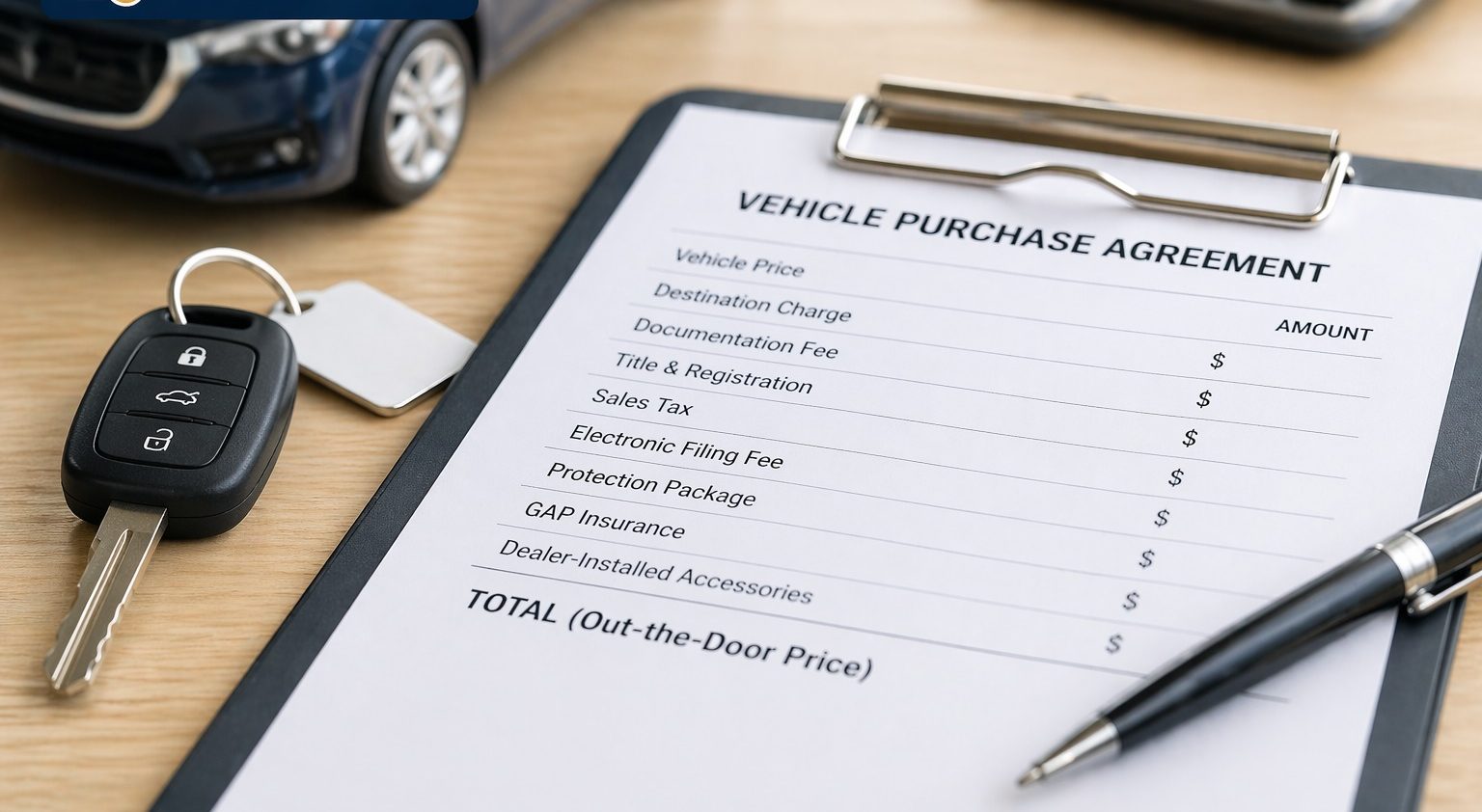
1. Documentation Fee (Doc Fee)
A documentation fee, commonly called a doc fee, covers the dealership’s administrative work involved in preparing and processing your vehicle purchase paperwork.
This may include handling registration documents, preparing sales agreements, and organizing other transaction records. Although dealerships commonly charge this fee, the amount can vary considerably.
Some dealerships charge relatively small fees, while others add $500 or more to the final purchase price. It is important to remember that although administrative fees are a normal part of dealership operations, this does not necessarily make every charge fair or justified.
A high documentation fee can increase your purchase price without providing any additional benefit to you. Before accepting the charge, ask the salesperson to explain exactly what it covers.
Find out whether the amount is negotiable and whether local regulations limit dealership documentation fees.
Some states regulate these charges, while others allow dealerships greater flexibility. If the dealer refuses to reduce the fee, consider negotiating a lower vehicle selling price to compensate for the additional expense.
Always request an itemized breakdown of the final contract. A dealership should be able to explain every charge rather than expecting you to accept unexplained administrative costs.
2. Dealer Preparation Fee (Prep Fee)
Imagine being asked to pay an additional fee because the dealership cleaned the car, checked its fluids, and prepared it for delivery. That’s essentially what a dealer preparation fee covers.
Dealerships may describe this charge as compensation for washing the vehicle, inspecting basic components, topping up fluids, or completing routine preparation before handing over the keys.
At first glance, these services might sound reasonable. After all, you expect a vehicle to arrive in clean, presentable condition. However, the concern is that manufacturers often compensate dealerships for certain vehicle preparation activities as part of their business arrangements.
Charging customers separately for services already covered by manufacturer payments can amount to paying twice for the same work.
When you notice a prep fee on your contract, ask the dealership to explain why it is being charged separately. Request clarification about which services were performed and whether the manufacturer already reimburses the dealer for them.
You can also ask for the charge to be removed entirely. If the salesperson insists that it cannot be waived, consider negotiating an equivalent reduction in the vehicle’s selling price.
Remember, basic vehicle preparation should not become an excuse for unexplained additional expenses. Review the contract carefully before agreeing to pay.
3. Extended Warranties & Service Contracts
Few things get pushed harder at the dealership finance desk than extended warranties and vehicle service contracts. These products are often presented as essential protection against expensive repairs, and the salesperson may make the offer sound urgent, as though you must accept it before signing the final paperwork.
Don’t let that pressure rush your decision. Extended warranties are optional in most vehicle purchases, and you generally do not need to buy one at closing.
Depending on the provider and vehicle eligibility, you may purchase coverage later through the manufacturer, an independent warranty company, or a credit union. Taking time to compare prices can help you avoid paying a dealership markup.
Before agreeing to any protection plan, read the contract carefully. What components are covered? What is the deductible? Are labor costs included? Which repair facilities can you visit?
Some plans exclude certain electrical systems, wear-and-tear items, or mechanical components that could become expensive to repair. Also, remember that a new vehicle already comes with a manufacturer’s warranty, so additional coverage may duplicate protection you already have.
Ask the dealership to provide the full price, coverage details, exclusions, and cancellation policy in writing. Take the documents home and compare them with other available offers.
Consider the vehicle’s reliability, repair costs, and remaining factory warranty before deciding. A genuinely useful protection plan should make financial sense without requiring you to make an immediate decision.
4. VIN Etching
Here’s a dealership charge that sounds like a clever security upgrade but can cost far more than the service itself is worth. VIN etching involves placing your vehicle identification number on its windows to help identify the vehicle if it is stolen.
The markings may discourage theft by making the glass less attractive to thieves who intend to resell stolen vehicle parts. While the idea has practical benefits, some dealerships charge hundreds of dollars for this relatively simple service.
You don’t necessarily need to pay that much. DIY VIN etching kits are available online for less than $30, allowing vehicle owners to apply the markings themselves by following the manufacturer’s instructions.
You can also contact a local automotive glass shop to request an installation estimate. Either option may cost considerably less than the dealership’s package.
Before accepting the charge, contact your insurance company and ask whether VIN etching is required under your policy or qualifies you for a discount.
Some insurers do not require it at all, so paying a premium for a feature that provides no additional insurance benefit may not make financial sense.
What if the dealership claims the etching has already been installed and cannot be removed from the contract? Ask for the charge to be waived or request an equivalent reduction in the vehicle’s selling price.
You can also consider walking away if the final deal no longer fits your budget. Never assume that an optional security feature deserves a premium price simply because the dealership recommends it.

5. Advertising Fees
You might reasonably assume that a dealership’s advertising expenses are already included in the vehicle’s selling price. After all, businesses spend money promoting their products, and those expenses are generally part of operating a company.
Yet some dealerships add separate advertising fees to their customers’ purchase agreements.
These charges are intended to cover marketing activities such as newspaper advertisements, television commercials, online campaigns, promotional events, and other efforts to attract potential buyers.
The concern is that you’re being asked to pay an additional amount for a business expense that should generally be accounted for in the dealer’s operating costs or vehicle pricing.
Before agreeing to this charge, ask the salesperson whether it comes from the manufacturer’s official invoice or represents a separate dealership expense.
Request a written explanation showing why the fee appears on your contract. If it is simply a dealer-imposed advertising charge, negotiate its removal or ask for an equivalent reduction in the vehicle’s selling price.
Keep in mind that manufacturer advertising assessments may be treated differently from separate dealer-added charges, and some advertised prices already account for certain fees.
The important thing is to understand exactly what you’re paying for. Don’t accept an additional advertising expense simply because it appears on a printed contract.
6. Fabric Protection / Paint Sealant
Fabric protection and paint sealant packages are common dealership add-ons designed to protect a vehicle’s interior upholstery and exterior finish. Salespeople may describe them as essential treatments that help preserve the vehicle’s appearance and make cleaning easier.
However, these products can come with surprisingly high prices.
Some dealerships charge between $500 and $1,500 for chemical applications that may cost considerably less when purchased independently.
Fabric treatments are generally marketed as protection against spills and stains, while paint sealants are intended to provide an additional protective layer against environmental contaminants.
Although these treatments can offer certain benefits, they are not automatically necessary for every vehicle. Modern cars already receive factory-applied paint finishes designed to protect their body panels. Adding an expensive dealership treatment does not guarantee better long-term protection.
Before accepting the package, ask which products will be applied, how long their protection is expected to last, and whether the dealership provides a written warranty.
You should also request the product name and compare its retail price with the amount being charged.
If the treatment is optional, you can decline it and purchase a suitable protection product independently if you decide you need one.
Never assume that a high-priced appearance package is essential simply because the dealership recommends it. A careful review of these charges can help keep unnecessary extras from inflating your final vehicle purchase price.