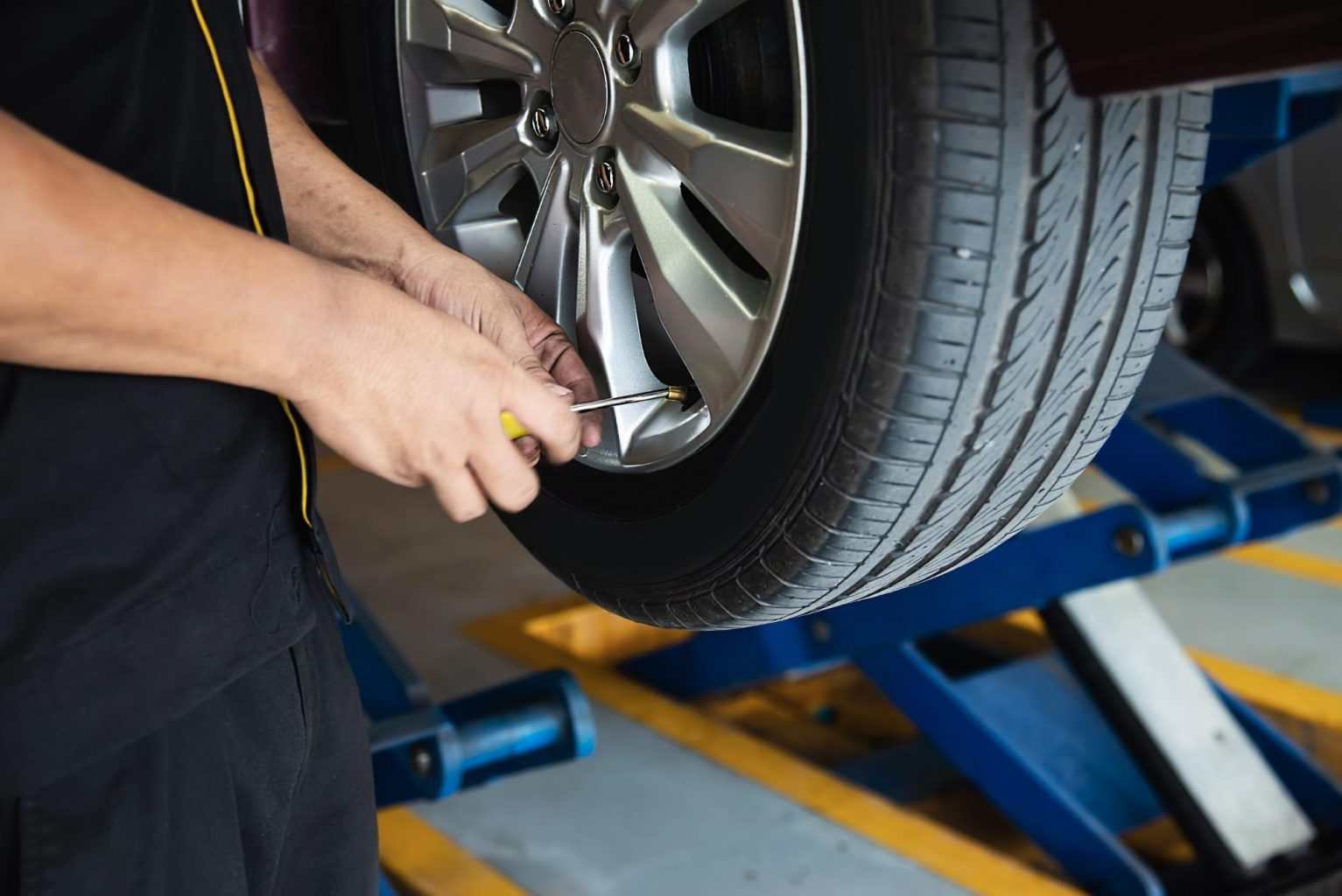
Your tires are the only parts of your vehicle that maintain direct contact with the road, making their condition essential for safe driving. Unfortunately, many motorists continue using worn or damaged tires because they appear inflated and still hold air.
That decision can become dangerous, particularly during heavy rain, sudden braking, or highway driving. Tire deterioration is not always obvious, and some warning signs require more attention than others.
From dangerously low tread depth to sidewall bulges and persistent pressure loss, recognizing these problems early can help prevent blowouts, improve handling, and avoid unexpected roadside emergencies.
1. Tread Depth Has Reached 2/32 of an Inch
Tire tread is responsible for maintaining traction, channeling water away from the contact patch, and helping your vehicle remain stable on different road surfaces. As the tread wears down, its ability to grip wet pavement decreases. Once it reaches 2/32 of an inch, replacement is no longer something you should postpone.
The National Highway Traffic Safety Administration (NHTSA) identifies 2/32 of an inch as the minimum tread depth at which tires should be replaced.
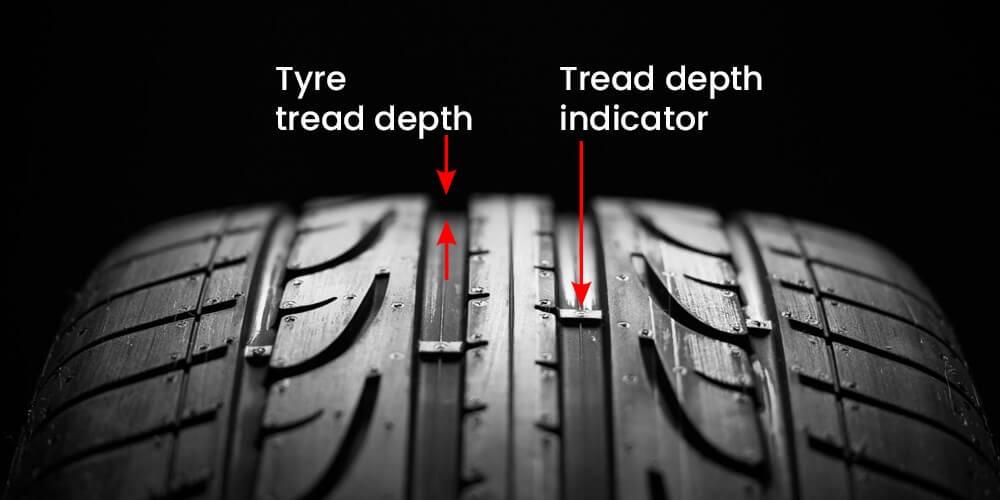
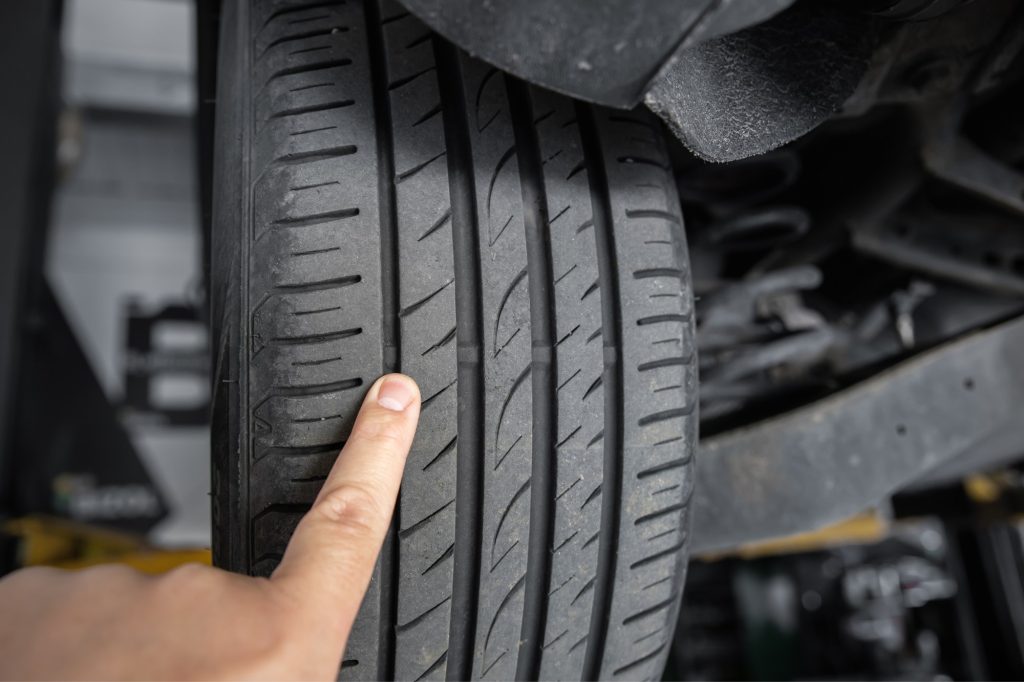
This measurement is also associated with the built-in treadwear indicators found in modern tires. These small raised rubber bars run across the main grooves. When the surrounding tread wears level with them, the tire has reached its replacement threshold.
You can perform a simple inspection using a US penny. Insert the penny upside down into a major tread groove, with Abraham Lincoln’s head facing you. If you can see the top of his head, the tread is too shallow, and the tire should be replaced.
A dedicated tread-depth gauge provides a more precise measurement, particularly when wear varies across the tire.
Do not assume that reaching 2/32 of an inch is the ideal time to begin shopping for replacements in every situation. Wet-weather performance can deteriorate before the legal minimum is reached.
Drivers who regularly encounter heavy rain may benefit from replacing tires earlier, based on professional advice and their tire manufacturer’s recommendations.
The US Tire Manufacturers Association also recommends monthly tread inspections. Check several positions across each tire rather than relying on one measurement.
If any major groove has reached the wear indicators, arrange replacement promptly. Waiting until the tire becomes visibly smooth leaves you with less traction when conditions become difficult.
2. A Bulge or Bubble Appears on the Sidewall
A visible bulge on a tire’s sidewall is one of the most serious warning signs a driver can encounter. Unlike ordinary tread wear, a bubble can indicate structural damage inside the tire. It often develops after an impact with a pothole, curb, or road hazard that damages the internal cords supporting the tire’s structure.
The sidewall flexes continuously as the wheel rotates, so it depends on its internal construction to maintain its shape. When those supporting materials become damaged, air pressure can push the weakened area outward, creating a noticeable lump or bubble. The tire may continue holding air initially, which can give drivers a false sense of security.
However, a damaged sidewall can fail suddenly, potentially causing a rapid loss of pressure or a blowout. The National Highway Traffic Safety Administration warns that bulges and other physical damage can indicate tire deterioration that requires replacement.
Its safety guidance recommends having damaged tires evaluated by qualified professionals rather than continuing to use them.
If you notice a bulge, do not attempt to repair it with a plug, sealant, or patch. Standard puncture repairs are limited to qualifying damage in the tread area, not structural sidewall damage. The US Tire Manufacturers Association specifically excludes sidewall injuries from normal passenger-tire repair procedures.
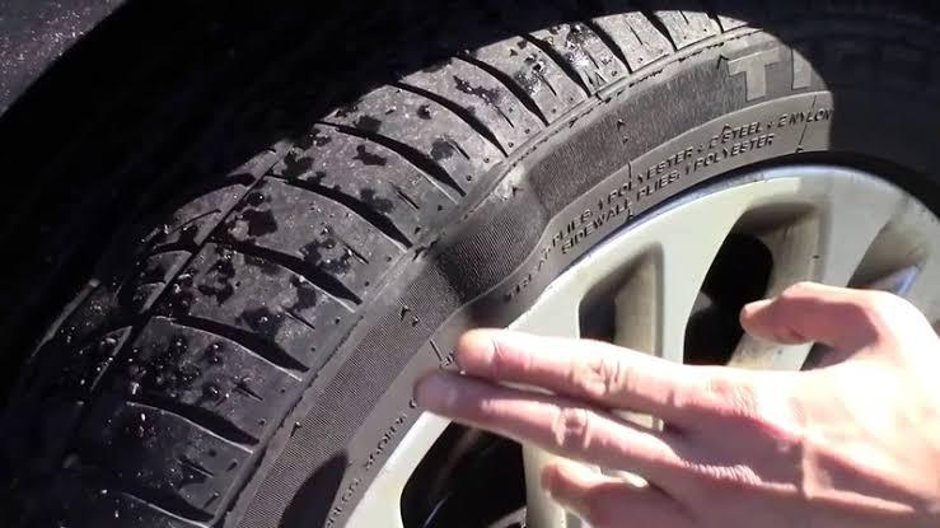
Avoid driving on a tire with a visible sidewall bulge. If it is safe to do so, arrange roadside assistance or have the vehicle transported to a tire facility. A temporary spare may be used according to the vehicle manufacturer’s instructions, provided it is in serviceable condition.
Also inspect the other tires after hitting a serious pothole. Impact damage is not always immediately visible, and a professional internal inspection may be necessary.
3. Cracks, Cuts, or Exposed Cords Appear on the Tire
A tire does not have to look completely worn out to become unsafe. Sometimes the most important warning signs appear along the sidewall or between the tread blocks. Deep cracks, significant cuts, splitting rubber, or exposed fabric and steel cords can indicate that the tire’s structural integrity has been compromised.
Cracking can develop as rubber deteriorates through aging, prolonged exposure to sunlight, heat, and environmental conditions.
Small surface imperfections do not automatically mean a tire must be replaced, but deep or spreading cracks deserve immediate professional attention. Cuts are equally concerning, particularly when they extend far enough to expose the internal reinforcement materials.
The National Highway Traffic Safety Administration advises drivers to inspect tires for cuts, cracks, bulges, and other visible damage. Its tire safety guidance identifies exposed cords and physical deterioration as reasons to remove a tire from service.
Federal vehicle inspection standards also identify exposed body-ply or belt material and certain types of tire separation as unacceptable conditions.
Pay particular attention to the sidewalls because damage in this area is generally not repairable using standard puncture-repair procedures. A small object penetrating the central tread may sometimes be repaired, but a cut reaching the shoulder or sidewall presents a different structural problem.
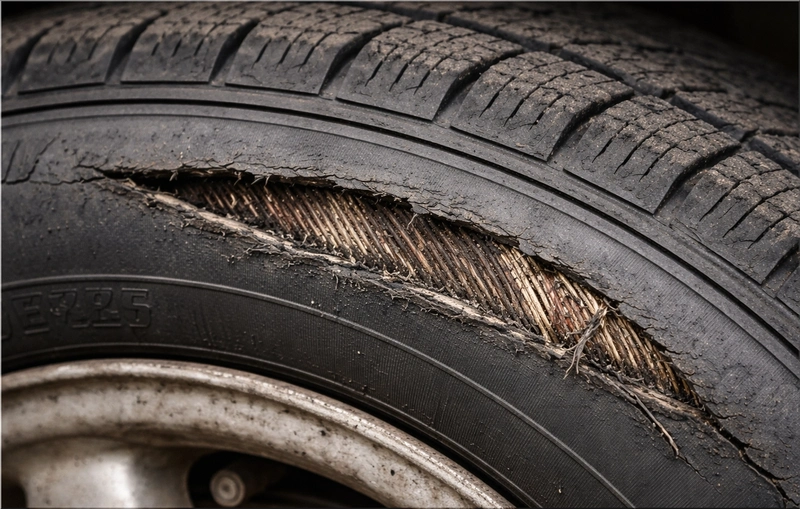
If you discover exposed cords, do not continue driving on the tire. The internal reinforcement is no longer adequately protected, and the possibility of a sudden failure becomes a serious concern. Arrange professional assistance and replacement rather than attempting a temporary repair.
Inspect the full circumference of each tire, including the portions normally hidden near the ground. Turning the steering wheel can make it easier to examine the front tires. If you notice significant cracking or damage but cannot determine its severity, have a tire specialist inspect it before returning to normal driving.
4. Your Tire Keeps Losing Air Pressure
Having to inflate the same tire repeatedly is not normal maintenance. If one tire consistently loses pressure while the others remain stable, there may be a puncture, leaking valve stem, damaged wheel, or problem with the tire bead. Continuing to add air without investigating the cause can allow an underlying problem to become more dangerous.
Underinflation changes how a tire makes contact with the road. It can increase heat buildup, affect handling, reduce fuel economy, and accelerate wear. In severe cases, prolonged operation with insufficient pressure can damage the tire internally, even if it appears usable from the outside.
The National Highway Traffic Safety Administration recommends monthly tire-pressure checks and advises drivers to respond promptly when the Tire Pressure Monitoring System (TPMS) warning appears.
For US passenger vehicles, federal requirements generally mean the TPMS warning activates when at least one tire is significantly underinflated, typically around 25% below the manufacturer’s recommended cold inflation pressure.
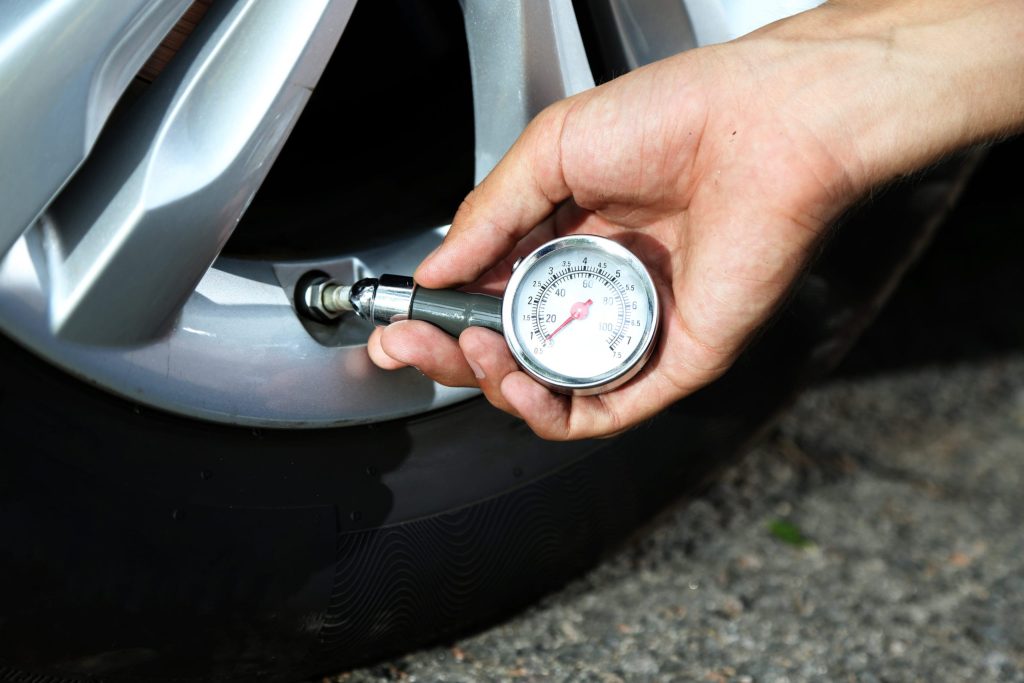
Start by checking the pressure with a reliable gauge when the tires are cold. Compare the readings with the recommended PSI on the driver’s-side doorjamb, not the maximum pressure printed on the tire sidewall. If one tire repeatedly loses pressure, arrange a professional inspection.
Importantly, pressure loss does not automatically mean replacement is necessary. The US Tire Manufacturers Association allows certain punctures to be repaired when they meet strict conditions.
Generally, qualifying damage must be confined to the tread area and no larger than 1/4 inch in diameter. The tire must also be removed from the wheel for an internal inspection and repaired using an appropriate plug-and-patch repair unit.
However, sidewall damage, unsuitable punctures, and tires with additional internal damage may require replacement. Never rely on repeatedly adding air as a permanent solution to a recurring leak.
5. Uneven Tread Wear Appears Across the Tire
Take a close look at all four tires rather than checking only how much tread remains in the center. If one shoulder is significantly more worn than the other, the center looks unusually smooth, or certain sections have developed irregular patches, your tires may be approaching replacement condition.
Uneven wear can develop for several reasons. Incorrect inflation pressure, poor wheel alignment, worn suspension components, and inadequate tire rotation can all contribute.
For example, underinflated tires commonly experience greater wear along their outer shoulders, while excessive inflation can contribute to faster wear in the center of the tread. Incorrect alignment can also cause one edge to wear considerably faster than the other.
The US Tire Manufacturers Association identifies irregular tread wear as an important warning sign during routine tire inspections. Its guidance recommends monthly checks and professional attention when drivers notice unusually smooth areas, high and low spots, or uneven tread patterns.
However, uneven wear does not automatically mean all four tires need immediate replacement. If sufficient tread remains and there is no structural damage, correcting the underlying alignment or inflation problem may allow the tires to remain in service.
A qualified technician should measure tread depth across the tire and inspect the suspension and alignment before recommending replacements.
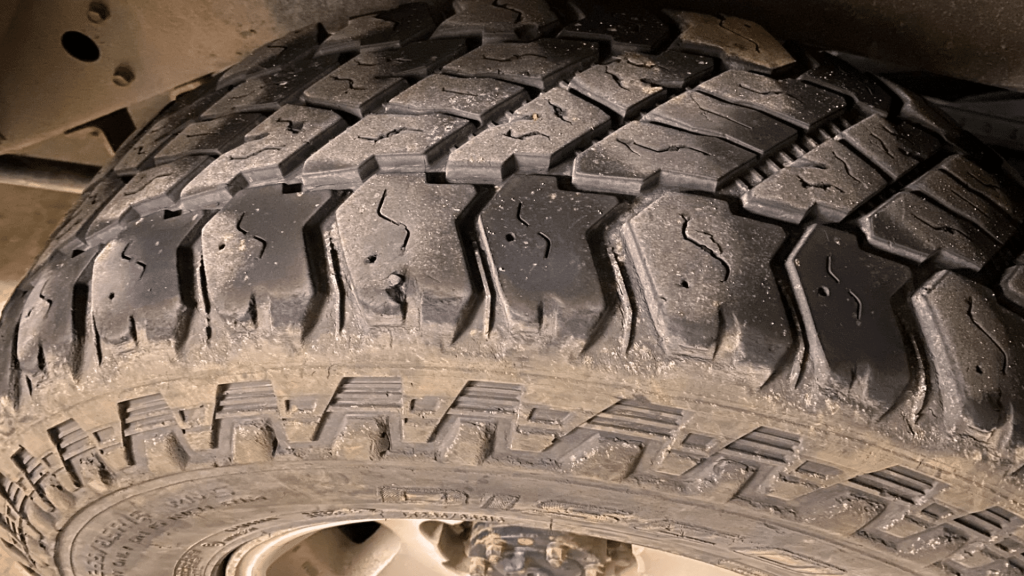
The important concern is how quickly the wear is progressing. A tire that has reached 2/32 of an inch in one section may already require replacement, even if other areas still have substantial tread. Do not judge its condition using the deepest remaining grooves.
Also ask the technician to check the other tires. If alignment or suspension problems are affecting one wheel, similar deterioration could eventually appear elsewhere. Replacing worn tires without correcting the underlying mechanical issue can simply lead to another expensive replacement.
6. Your Tires Are Too Old, Even Though the Tread Looks Good
A tire can become unsafe because of age, even when it has plenty of visible tread remaining. This is particularly important for vehicles that are driven infrequently, including collector cars, recreational vehicles, and second vehicles that spend extended periods parked in a garage.
Tire rubber gradually changes through exposure to heat, sunlight, oxygen, and environmental conditions. These changes can affect the flexibility and durability of the materials that make up the tire. Unfortunately, visual inspection alone cannot reliably determine whether an older tire has deteriorated internally.
The National Highway Traffic Safety Administration explains that some vehicle and tire manufacturers recommend replacing tires between six and ten years after manufacture, regardless of remaining tread. These recommendations differ by manufacturer, so drivers should check the specific guidance for their tires and vehicle.
Finding the manufacturing date is relatively simple. Look for the Department of Transportation Tire Identification Number on the tire sidewall. Its final four digits identify the production week and year. For example, a code ending in 1821 indicates that the tire was manufactured during the 18th week of 2021.
NHTSA also recommends regular professional inspections once tires have been in service for five years. Some manufacturers specify a firm replacement limit, so do not assume that every tire remains safe until its tenth anniversary.
Age is especially important for spare tires because they can remain unused for years while their rubber continues to deteriorate. A spare that looks almost new is not necessarily safe for extended use.
Check the manufacturing date on all four tires and the spare. If they are approaching the age limit specified by their manufacturer, arrange an inspection and plan for replacement. Do not wait for visible cracking or tread wear to become obvious before taking action.
7. Your Vehicle Vibrates or Makes Unusual Tire-Related Noises
A noticeable vibration through the steering wheel, unusual humming, or repetitive thumping while driving can indicate that one or more tires have developed a problem. These symptoms should not be ignored, particularly when they appear suddenly or become more noticeable as your speed increases.
Tire-related vibrations can develop because of uneven tread wear, internal structural damage, a separated belt, improper wheel balance, or a damaged wheel.
For example, a tire with an internal belt separation may develop an irregular shape that causes the vehicle to shake as it rotates. Continuing to drive without investigating the problem can increase the risk of tire failure.
The US Tire Manufacturers Association specifically advises drivers to pay attention to changes in vehicle performance, including unusual noise, vibration, and recurring air loss. These symptoms can indicate an internal tire condition that may not be visible during an ordinary inspection.
However, vibration does not automatically mean your tires need replacing. Unbalanced wheels, worn suspension components, damaged wheel bearings, and alignment problems can produce similar symptoms. A qualified technician should determine whether the problem originates in the tire, wheel, or another vehicle component.
Pay attention to when the vibration occurs. Steering-wheel shaking may indicate a problem affecting the front wheels, while vibration felt through the seat or floor can sometimes originate elsewhere. These are diagnostic clues, not definitive tests.
If the vibration starts immediately after hitting a pothole or road debris, arrange an inspection promptly. Do not continue highway driving when a tire appears damaged or the vehicle becomes difficult to control. If the shaking is severe, stop somewhere safe and arrange roadside assistance.
A tire that has developed structural damage or separation generally needs replacement rather than ordinary balancing. Identifying the cause early can prevent additional damage and help you avoid a dangerous roadside breakdown.