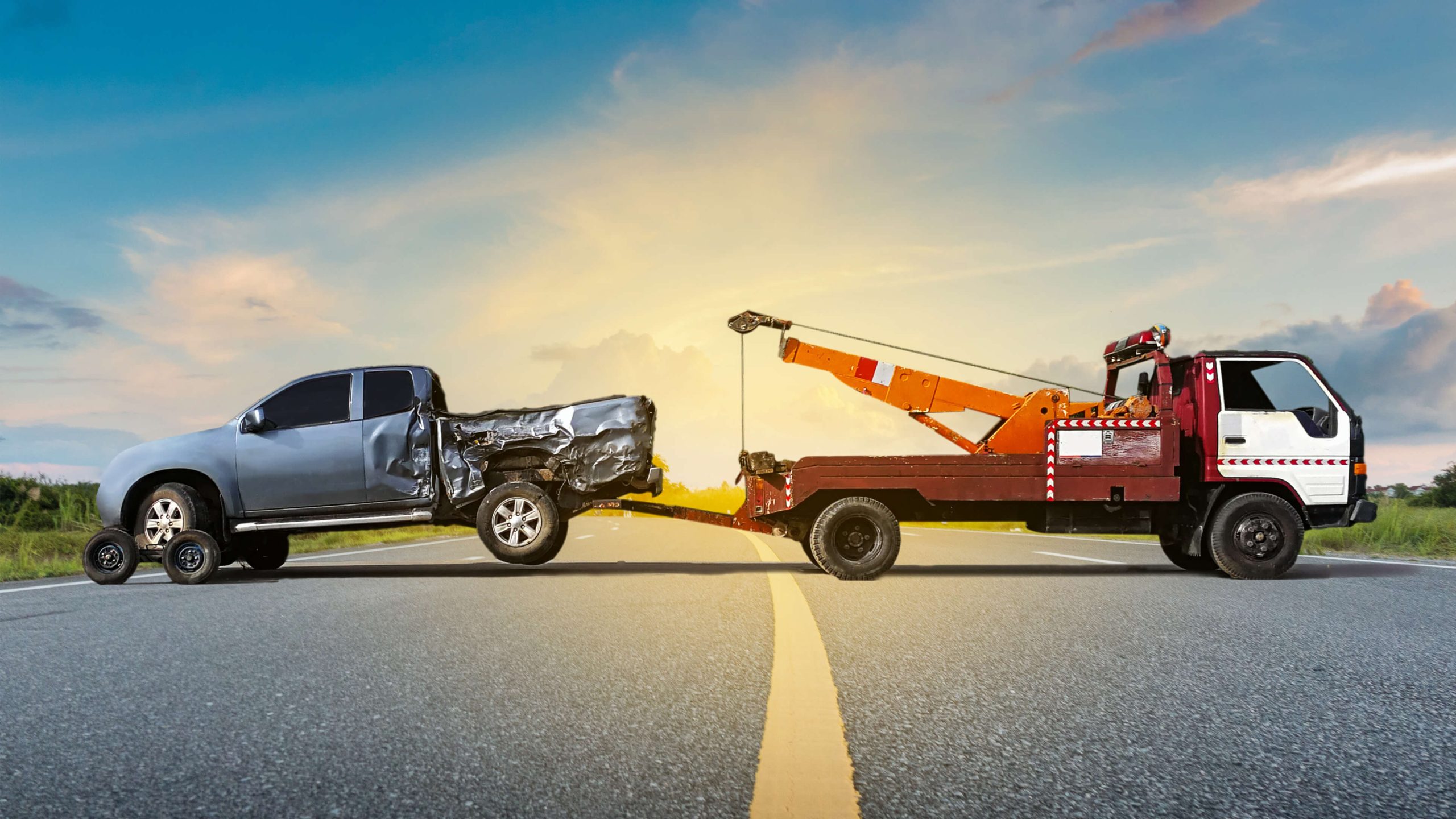
Getting involved in a car accident is stressful enough without worrying about being cheated by someone offering roadside assistance. Unfortunately, some dishonest towing operators target drivers immediately after collisions, taking advantage of confusion, damaged vehicles, and urgent situations.
These schemes can involve unauthorized towing, inflated bills, misleading repair shop recommendations, and even vehicles being held until owners pay unexpected charges.
The National Insurance Crime Bureau (NICB) reported an 89% nationwide increase in predatory towing claims between the beginning of 2022 and the end of 2024. Knowing these warning signs can help drivers protect their vehicles, money, and insurance coverage.
1. An Unrequested Tow Truck Suddenly Appears at the Accident Scene
One of the biggest warning signs of a potential towing scam is a tow truck arriving before you have requested assistance. After a collision, drivers are often shaken, dealing with insurance information or checking whether anyone is injured.
A stranger arriving with a truck and offering immediate help may seem like a convenient solution, but that assistance can come with serious financial consequences.
NICB identifies unsolicited, high-pressure towing as a major form of predatory towing. Some dishonest operators monitor police activity or patrol busy roads looking for accidents.
They arrive quickly, approach confused motorists, and attempt to secure permission to tow their vehicles before the owners have contacted their insurance companies or selected a service provider.
The problem is not simply that the truck arrives unexpectedly. It is what happens afterward. An operator may take the vehicle to an unfamiliar storage facility or repair shop, where the owner could face excessive towing and storage charges.
The California Department of Insurance specifically warned drivers in February 2025 about suspicious tow trucks appearing immediately after collisions as part of vehicle-hostage scams.
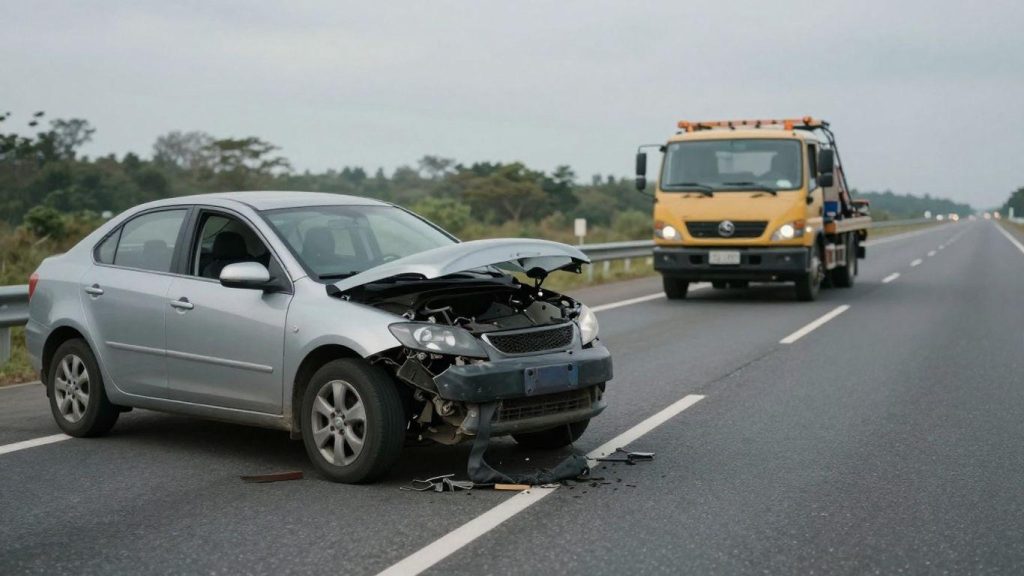
If someone arrives offering a tow you never requested, do not automatically agree. Contact your insurance company, roadside assistance provider, or local law enforcement to arrange an authorized service. If police have already dispatched a truck, independently verify its identity with the responding agency.
Remember, an unfamiliar tow truck arriving quickly does not automatically prove fraud. However, unsolicited assistance combined with pressure to hand over your vehicle is a serious warning sign.
2. The Driver Insists on Taking Your Car to a Specific Repair Shop
A tow truck driver who refuses to take your vehicle anywhere except one particular repair shop deserves extra scrutiny. After an accident, you may need to move your damaged car quickly, but that does not mean you should surrender control over where it goes.
Some predatory towing operations work with dishonest repair facilities to generate excessive charges and make it difficult for owners to recover their vehicles.
The Texas Department of Insurance describes a scheme in which an unsolicited tow truck driver recommends a particular repair shop after an accident. The vehicle is transported there, and the owner later receives substantial towing and storage bills. In some cases, the towing operator and repair facility may be working together.
California authorities have also documented vehicle-hostage schemes involving tow operators and body shops. In these cases, motorists were allegedly persuaded to send their vehicles to particular facilities before being confronted with large payments to retrieve them.
A legitimate towing operator should be able to explain the destination and follow your instructions, subject to applicable police directions, road restrictions, and local towing rules. You should not feel pressured into choosing a repair facility simply because the driver recommends it.
Before the vehicle is loaded, contact your insurer and confirm which repair facilities are approved or preferred under your policy. You can also select a reputable independent shop if your coverage and local requirements allow it.
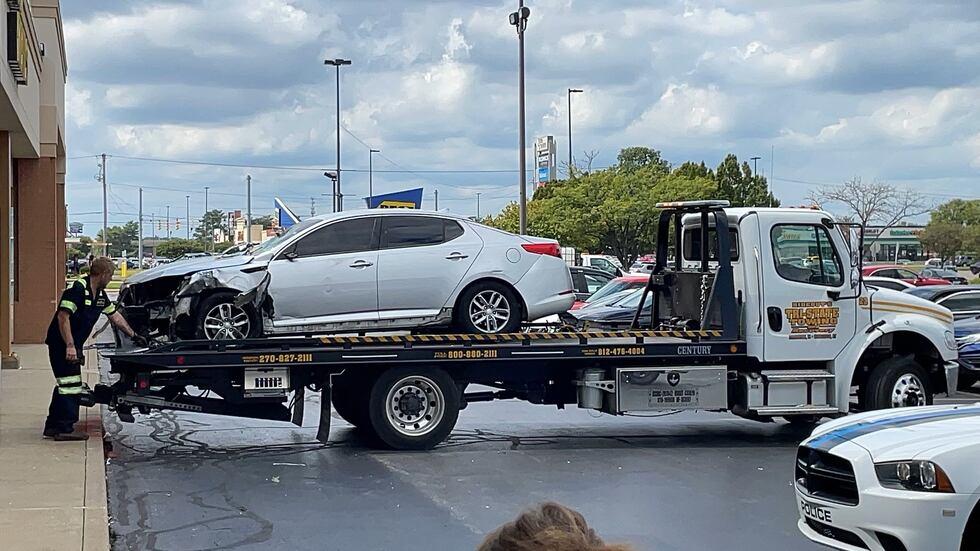
Ask the driver to identify the destination in writing and make sure it matches what you agreed to. Never assume that a recommendation from a tow truck operator is an endorsement from your insurance company.
Your damaged vehicle is still your property. Do not let someone else make expensive repair decisions on your behalf.
3. The Tow Truck Driver Demands Excessive Fees After Loading Your Vehicle
An unexpectedly expensive towing bill is another warning sign that something may be wrong. Some dishonest operators initially offer assistance without clearly explaining their charges.
Once the damaged vehicle has been loaded, however, the driver may suddenly discover additional fees for mileage, equipment, roadside services, or other expenses that were never discussed.
NICB has highlighted cases in which motorists faced extraordinarily high towing charges. In a February 2024 announcement, the organization reported examples of operators charging as much as $10,000 for a routine tow involving only a few miles.
These are reported extreme cases, not typical towing prices, but they demonstrate how financially damaging predatory towing can become.
The situation becomes particularly difficult when the vehicle is already secured to the flatbed. Drivers may feel pressured to pay simply because they want their damaged car returned or transported somewhere safe. Some operators may also introduce additional charges that make the original verbal estimate meaningless.
Before authorizing a tow, request a written estimate that clearly identifies the basic towing charge, mileage rate, storage fees, and any additional services. Ask whether the company charges separately for winching, after-hours service, or other equipment. Compare the estimate with your roadside assistance coverage and local regulations.
Maryland’s Insurance Administration specifically advises motorists to obtain written towing and storage estimates before agreeing to service.
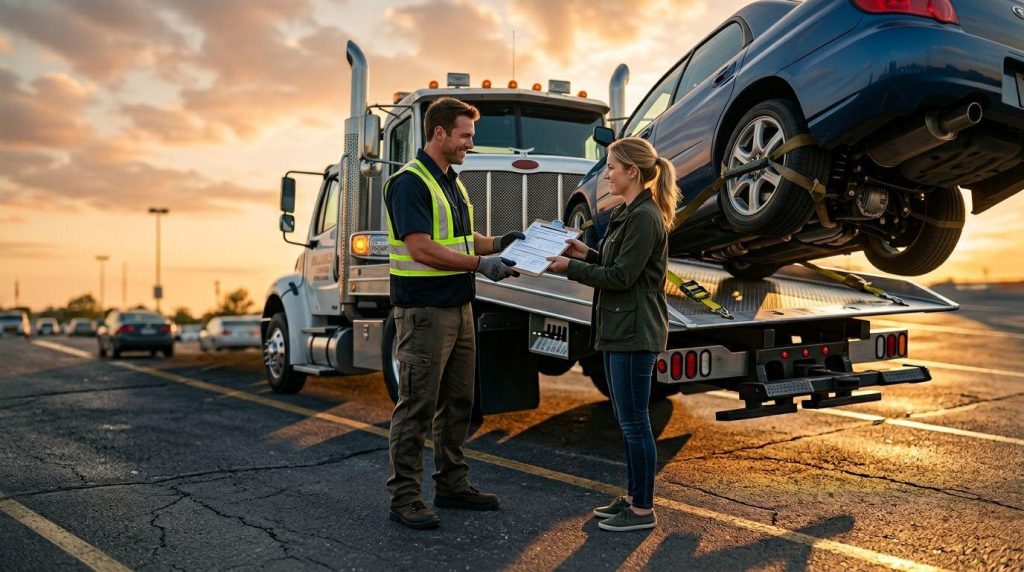
Do not assume that your insurance company will automatically cover every charge. Coverage depends on your policy, circumstances, and applicable rules. Contact your insurer before approving expensive services whenever possible.
A legitimate towing business should be willing to explain its pricing. If the operator refuses to provide clear charges or changes the agreed price without a reasonable explanation, reconsider the arrangement.
4. The Operator Pretends to Be Associated With Your Insurance Company or Police
A tow truck operator claiming to work with your insurance company or local police can make an already stressful accident appear easier to manage. Drivers may naturally trust someone who suggests that their arrival has been officially arranged.
Unfortunately, dishonest operators can exploit that trust by falsely presenting themselves as authorized service providers.
The Los Angeles County District Attorney’s Office has warned about tow truck bandits who allegedly mislead accident victims by claiming connections with insurance companies, law enforcement, or local government.
These operators may arrive unexpectedly, persuade motorists to sign documents, and transport vehicles to repair facilities they have selected themselves.
The danger is that drivers might hand over their vehicles without checking whether the company has actually been dispatched. Once the vehicle leaves the accident scene, finding out where it has been taken and challenging unexpected charges can become considerably more difficult.
A company logo, reflective uniform, identification badge, or confident explanation does not independently establish that a towing operator is authorized. Even a genuine towing company can be acting without your insurer’s approval.
Before agreeing to anything, call your insurance company using the number printed on your insurance card or its official website. Ask whether a towing provider has been dispatched and request the company’s name. If the driver claims to have been sent by police, verify that information with the responding officer or relevant agency.
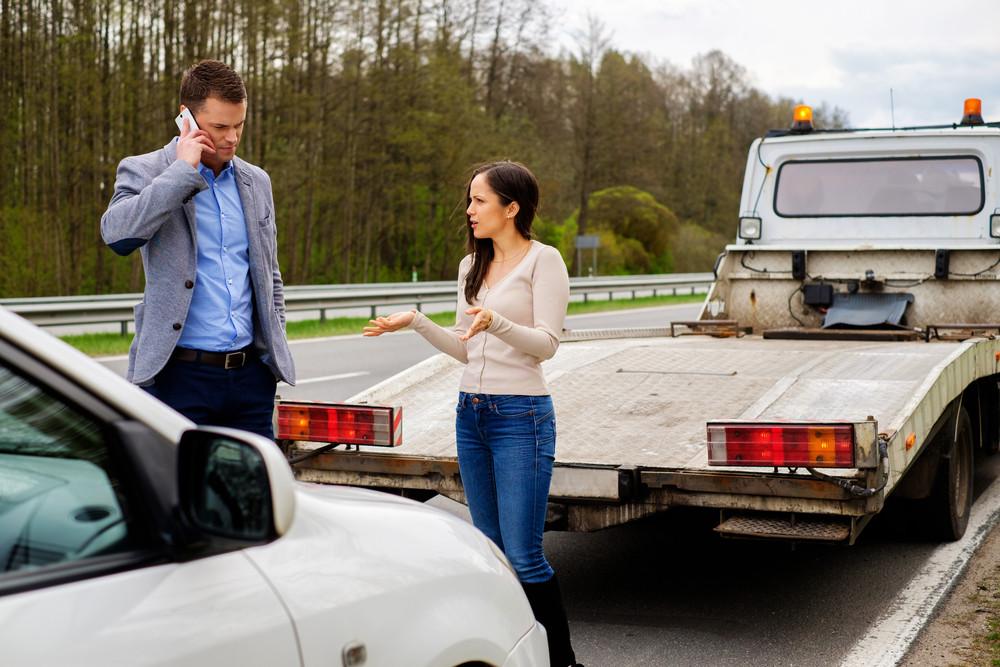
Do not provide sensitive insurance account credentials or sign paperwork simply because someone claims to represent an authority.
California’s Department of Insurance specifically recommends verifying suspicious towing operators with your insurer or the California Highway Patrol before allowing them to transport your vehicle. A genuine service provider should have no problem with you checking their identity.
5. You Are Pressured Into Signing Documents Before Understanding Them
After an accident, a tow truck operator may present paperwork and ask for your signature before moving the damaged vehicle. Some documents are legitimate authorizations, but others may contain terms that drivers do not fully understand. Signing without reading can create unexpected financial and legal complications.
The paperwork may authorize towing, storage, transportation to a particular facility, or additional services. Depending on the agreement and applicable state law, it could also contain provisions affecting payment responsibilities or the release of the vehicle.
California’s Department of Insurance specifically warned motorists about suspicious operators who ask them to sign documents immediately after a collision. Its February 2025 consumer alert advises drivers not to sign towing-related documents until they have spoken with their insurance company.
One common problem is confusion between a simple towing authorization and a broader agreement involving repairs or storage. A driver who believes they are approving transportation may unknowingly agree to additional services or charges.
Never sign an incomplete document, and do not allow someone to rush you through paperwork. Read every section, confirm the destination, and ask for a copy before the vehicle is moved. If the operator refuses to explain the terms or insists that you must sign immediately, stop the process and contact your insurer.
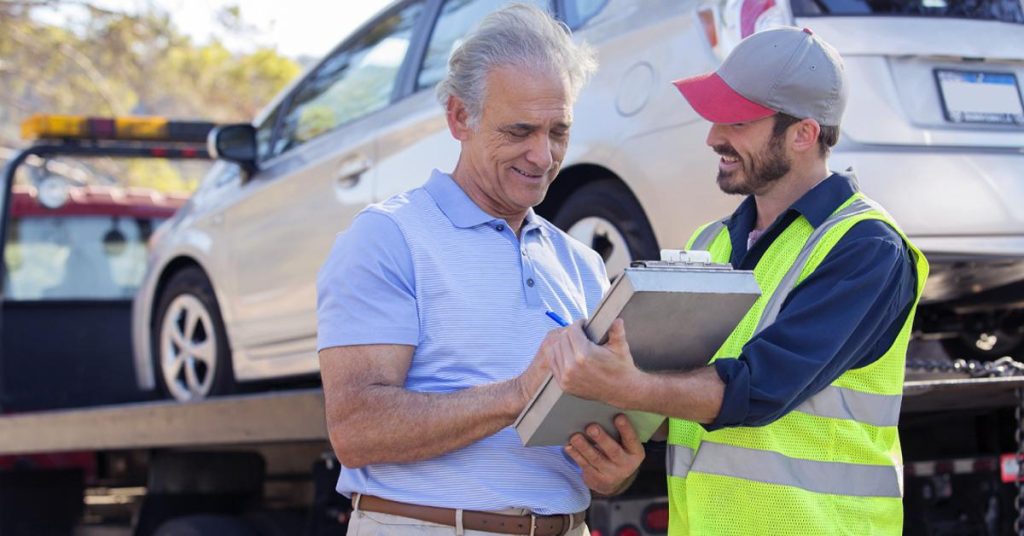
You should also photograph the paperwork and retain receipts, estimates, and communication records. These documents may become important if you later dispute a charge or report suspected misconduct.
The Texas Department of Insurance similarly advises motorists to read towing documents carefully and obtain a receipt identifying the towing fee and destination. A few extra minutes spent reading an agreement can prevent a much larger dispute later.
6. Your Vehicle Is Taken to an Undisclosed Storage Facility and Held for Payment
Imagine contacting a towing company to locate your damaged vehicle, only to discover that it has been taken to an unfamiliar storage facility. When you finally reach the operator, you are told that several days of storage charges have accumulated and payment must be made before the vehicle can be released.
This is one of the more serious forms of predatory towing because the owner can lose practical access to their own vehicle. NICB describes cases in which dishonest operators transport cars to repair facilities and then demand substantial payments, sometimes involving storage charges and insurance-related disputes.
Maryland’s Insurance Administration also warns that suspicious towing operators may take vehicles to undisclosed locations and refuse to release them until inflated charges are paid. Some may even restrict owners from retrieving personal belongings from their vehicles.
The first precaution is to establish the destination before authorizing transportation. Obtain the full business name, physical address, telephone number and expected arrival time. Ask for written confirmation of the storage rate and any applicable release fees.
If your vehicle has already been taken, contact the towing company in writing and request its location, an itemized bill and the legal basis for any disputed charges. Notify your insurer and local law enforcement if you suspect fraudulent activity.
Do not assume that every storage charge is illegal. Legitimate facilities may charge lawful fees under applicable state and local regulations. However, undisclosed destinations, unexplained costs and refusal to provide basic information are serious reasons for concern.
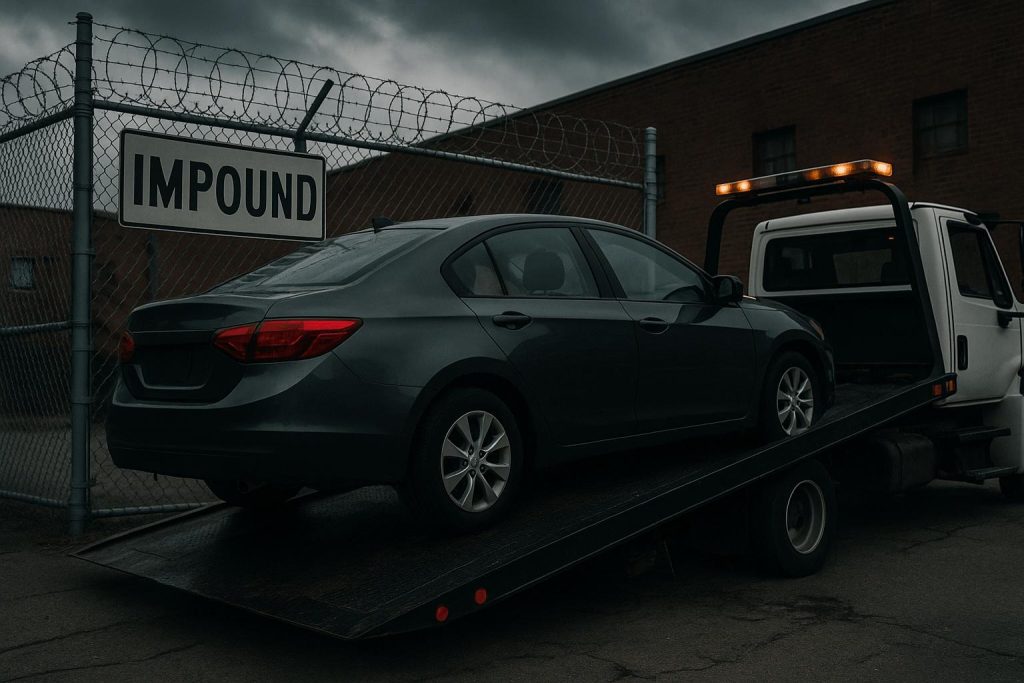
Photograph your vehicle and remove personal belongings before towing whenever it is safe and practical to do so.
The important thing is to maintain a clear record of where your vehicle is going and who has possession of it.
7. The Tow Truck Driver Offers You a Ride Away From the Accident Scene
One particularly unusual warning sign is when a tow truck driver offers to arrange a separate ride for you immediately after loading your damaged vehicle. Although transportation assistance can be legitimate, this offer deserves additional scrutiny when it comes from an unsolicited operator who is also pressuring you to approve a tow.
California’s Department of Insurance specifically identified requests to arrange a rideshare for accident victims as a warning sign associated with vehicle-hostage towing scams.
Its February 2025 alert explained that suspicious operators may appear immediately after a collision, direct the vehicle to a particular body shop and offer to arrange transportation for the driver.
Why is this concerning? Once you leave the accident location, you may have less opportunity to verify where your vehicle is being taken, speak with the responding officers, or check the towing company’s identity.
If the operator has already secured your signature, you could also find yourself dealing with unexpected transportation, storage, or repair charges afterward.
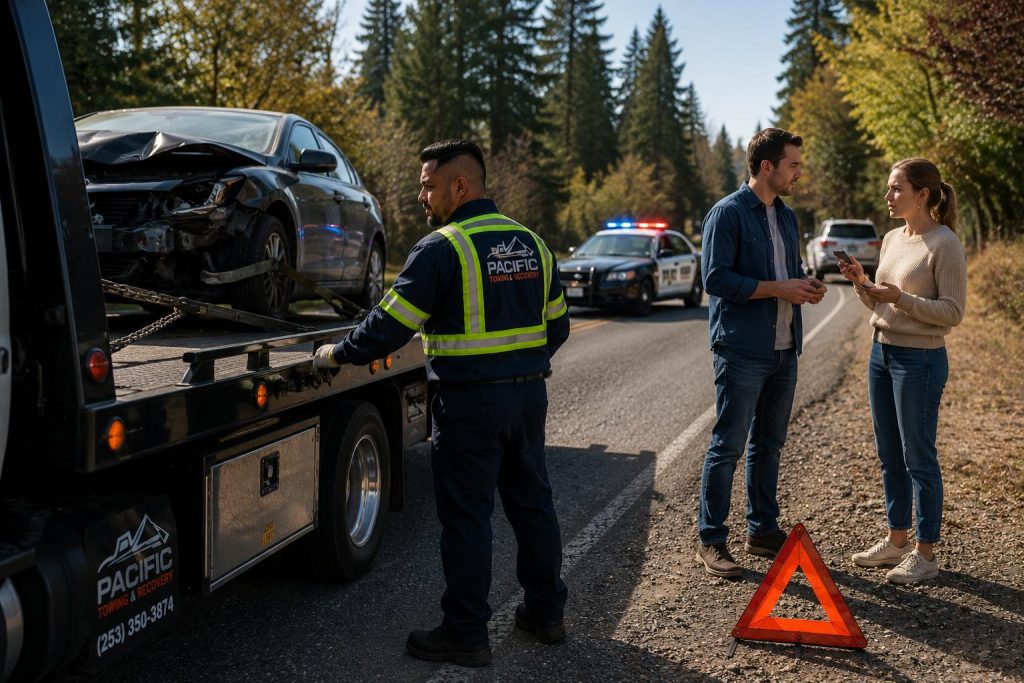
That does not mean every offer of a rideshare is fraudulent. A legitimate roadside assistance provider or insurance company may arrange transportation when a vehicle cannot be driven. The concern is the combination of unsolicited towing, pressure, unclear paperwork, and an attempt to separate you from your vehicle before the arrangements have been verified.
Before accepting a ride, contact your insurer and confirm the towing arrangements independently. Make sure you know the destination of your vehicle and obtain the towing company’s contact details.
If police are present, ask them to help verify the towing arrangements where appropriate. Never allow convenience to replace verification. Your safety comes first, but you should still know exactly who is transporting your vehicle and where it is going.