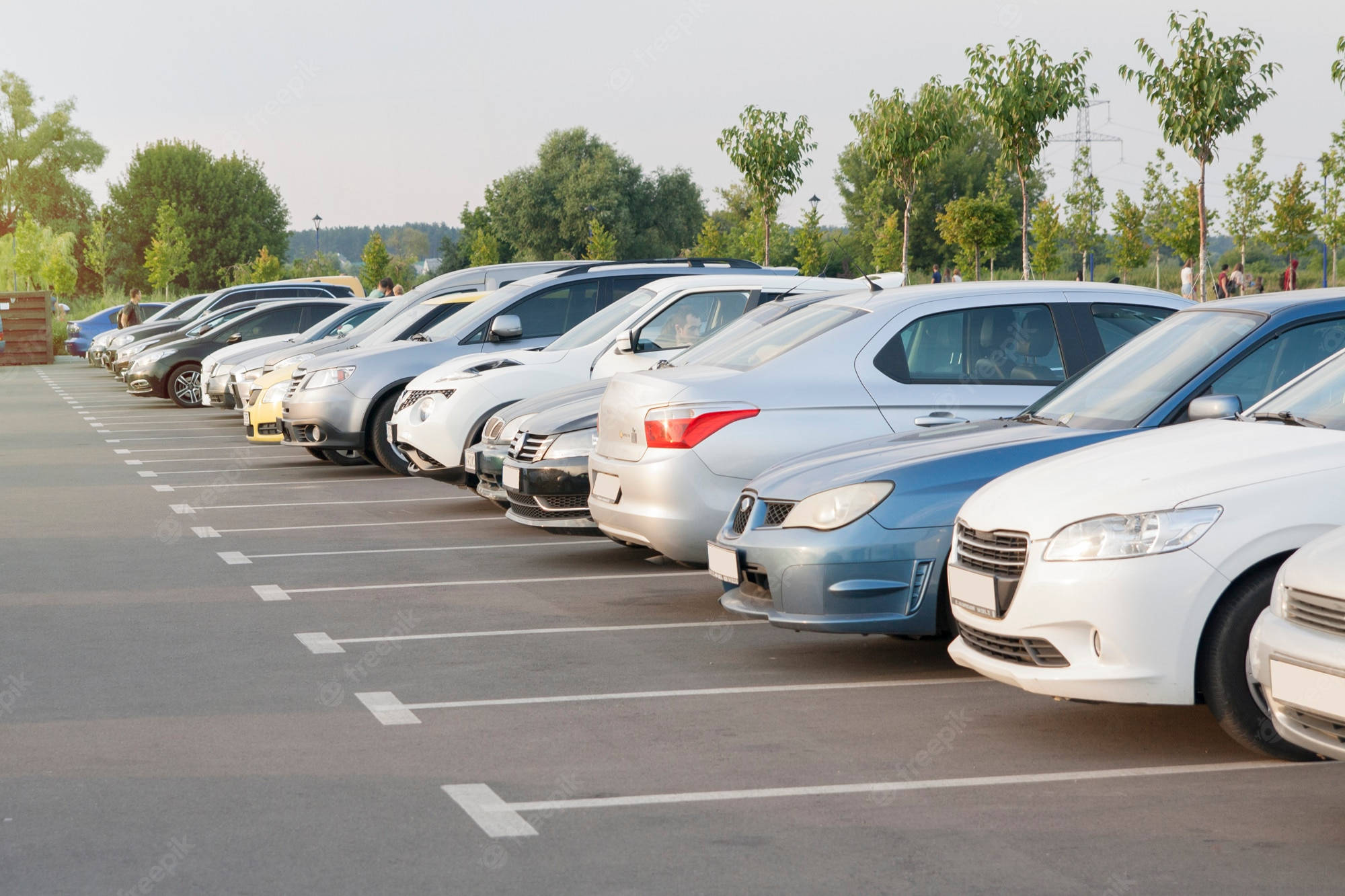
Parking lots are places where drivers expect to leave their vehicles, pay for a few hours of parking, and continue with their day. Unfortunately, criminals increasingly use these everyday situations to target unsuspecting motorists.
From fake parking attendants and fraudulent payment QR codes to staged accidents and distraction thefts, some scams are designed to look completely ordinary. The Federal Trade Commission (FTC), local police departments, and consumer protection organizations have issued warnings about several of these tactics.
Knowing what to look for can help drivers avoid losing money, exposing financial information, or becoming victims of theft while simply parking their vehicles.
1. Fake QR Codes on Parking Meters and Payment Signs
An emerging parking scam targets drivers by exploiting the widespread use of QR codes for convenient, cashless parking payments.
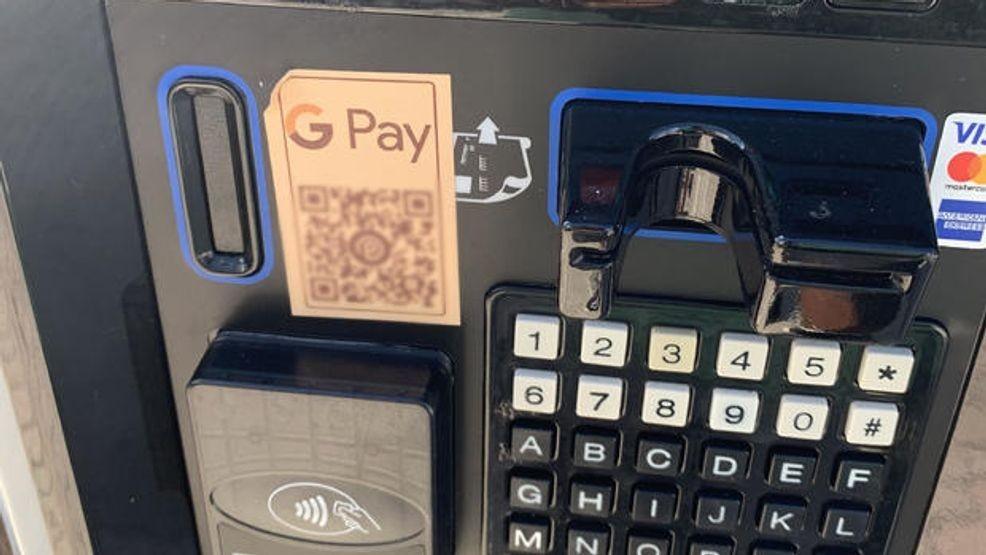
Instead of using a legitimate payment website or application, criminals place fraudulent QR code stickers over genuine payment instructions or attach them to nearby parking signs. The stickers can look convincing enough that drivers may not notice anything unusual.
The Federal Trade Commission issued a warning on September 3, 2026, explaining how criminals cover legitimate parking QR codes with their own stickers. When motorists scan these codes, they may be directed to imitation payment websites designed to collect credit card numbers, personal information, or login credentials.
In some cases, victims believe they are paying a small parking fee when they are actually providing their financial details to criminals.
The Better Business Bureau has also documented complaints involving fraudulent parking QR codes. Some consumers discovered unexpected recurring charges after entering their payment information on websites that appeared to be legitimate parking services.
This means the financial damage may continue long after the vehicle has left the parking space.
Drivers should inspect payment signs before scanning anything. Look for stickers placed over existing codes, unusual website addresses, spelling mistakes, and instructions that do not match the parking operator’s official information.
Whenever possible, use the payment machine directly or download the official parking application from a trusted app store.
If you have already entered your card details on a suspicious website, contact your bank immediately, review recent transactions, and consider replacing the compromised card. A convenient payment method should never come at the expense of financial security.
2. Fake Parking Tickets Left on the Windshield
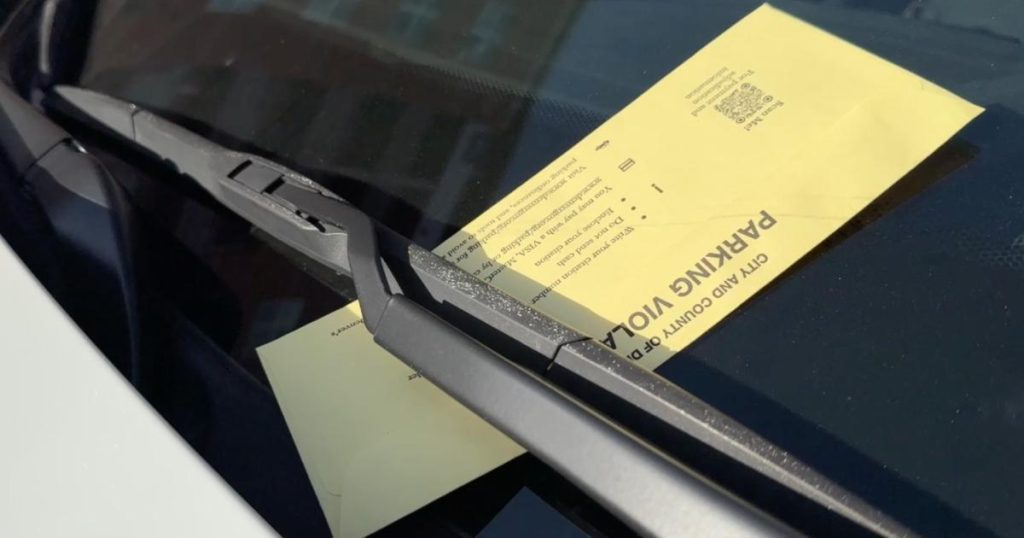
Returning to your vehicle and discovering a parking ticket under the windshield wiper can immediately create anxiety. Most drivers assume the notice is genuine, particularly when it contains an official-looking logo, a violation description, a payment deadline, and instructions for settling the fine.
Unfortunately, criminals sometimes use this familiar situation to collect money through counterfeit parking citations.
The Better Business Bureau issued a warning about fake parking tickets in January 2023. According to its report, scammers have used handheld printers to produce convincing-looking notices and leave them on parked vehicles.
These documents may instruct drivers to pay through a website, PayPal, or a QR code that directs them to a fraudulent payment portal.
The danger is not limited to losing the advertised fine. A fraudulent payment page may also collect credit card information, email addresses, and other personal details. Some fake notices even create urgency by suggesting that additional penalties will apply if payment is delayed.
There are several details worth checking before paying. Examine the issuing authority, citation number, license plate information, date, location, and alleged violation. Compare the payment instructions with the official website of the municipality or parking operator. A legitimate citation should be independently verifiable through the relevant authority.
A particularly useful precaution is to avoid scanning QR codes printed on unexpected tickets. Instead, manually visit the official government or parking authority website and look up the citation using its reference number.
If the notice appears suspicious, photograph it and contact the issuing authority directly. Do not rely on telephone numbers or website addresses printed on a questionable document.
A few minutes of verification can prevent a small parking dispute from turning into a much more expensive financial problem.
3. Impersonating Parking Attendants
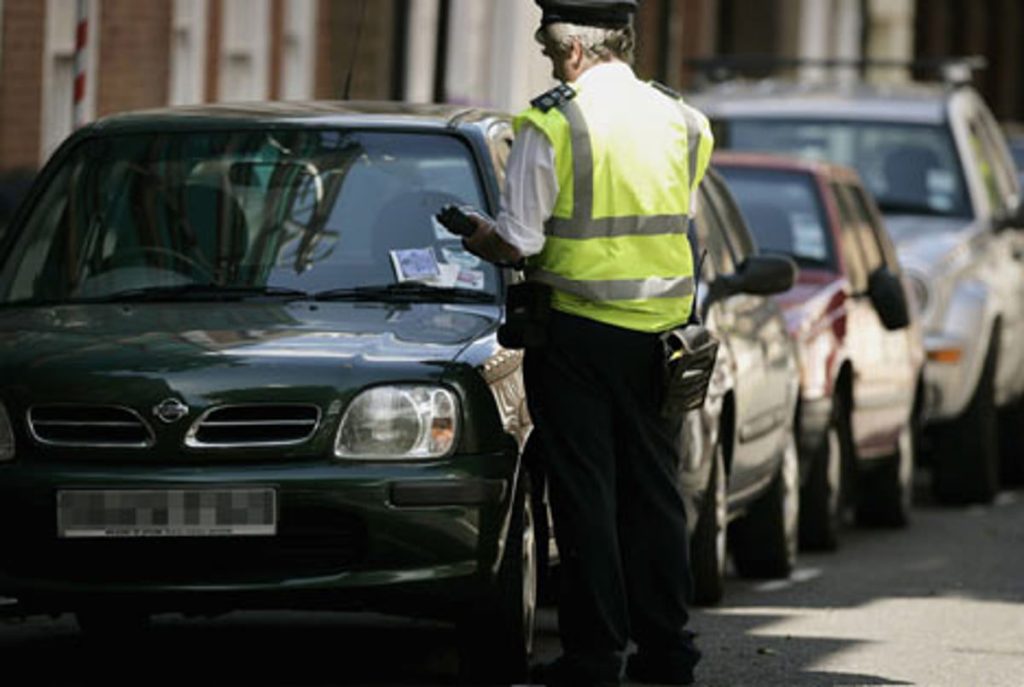
A person wearing a reflective vest, holding a flashlight, and directing vehicles into a parking space can easily appear to be an authorized parking attendant. However, criminals sometimes use this appearance to convince motorists to hand over cash or card information for parking they have no authority to sell.
This scam has been reported in several American cities. In October 2026, Nashville authorities arrested a man accused of posing as an attendant at a downtown parking lot. According to local reporting, the suspect allegedly collected $20 payments and distributed altered parking slips even though the facility did not accept cash payments through attendants.
Chicago experienced a similar warning in June 2025. The Fulton Market Association alerted visitors after reports of individuals charging motorists to use private lots and even free street parking spaces. Some suspects reportedly wore reflective clothing and directed vehicles as though they were legitimate employees.
The trick works because drivers are often unfamiliar with the area. After a long journey, finding an available parking space can be difficult, and someone offering immediate assistance may seem helpful. A convincing uniform or confident attitude can make the interaction appear legitimate.
Before handing over money, check the posted payment instructions and confirm whether attendants are actually employed at that location. Look for official identification, company branding, and clearly displayed contact information.
If the facility requires payment through a machine or authorized application, do not accept an alternative cash arrangement from an unfamiliar person.
If someone insists that you must pay them immediately, step away and contact the parking operator using an independently verified number.
Remember that wearing a safety vest does not automatically make someone an authorized parking employee. Always verify who is collecting your money.
4. The Fake Accident or Vehicle Damage Distraction
Imagine preparing to leave a shopping center when a stranger approaches and tells you that your vehicle has been damaged. They might point toward a supposed scratch, claim that you struck another vehicle, or offer to help inspect something near your tires. Although the situation may appear harmless, it can be a distraction designed to steal your belongings.
The Newport Beach Police Department issued a warning in August 2023 about distraction thefts occurring in shopping center parking lots. According to the department, suspects sometimes approach drivers as they prepare to leave and claim that something is wrong with their vehicle.
While one person distracts the owner, another accesses an unattended purse or wallet inside the vehicle.
A similar pattern was reported by Honolulu police in December 2025. In two incidents in Mililani, suspects allegedly approached drivers after they had parked and claimed that the victims had hit their vehicles. While the victims were distracted, another suspect stole belongings from their open vehicles.
The important warning sign is the sudden appearance of multiple strangers offering unsolicited assistance or insisting that you inspect a supposed problem immediately. This does not mean every person reporting damage is dishonest, but drivers should avoid leaving their vehicles unsecured during such interactions.
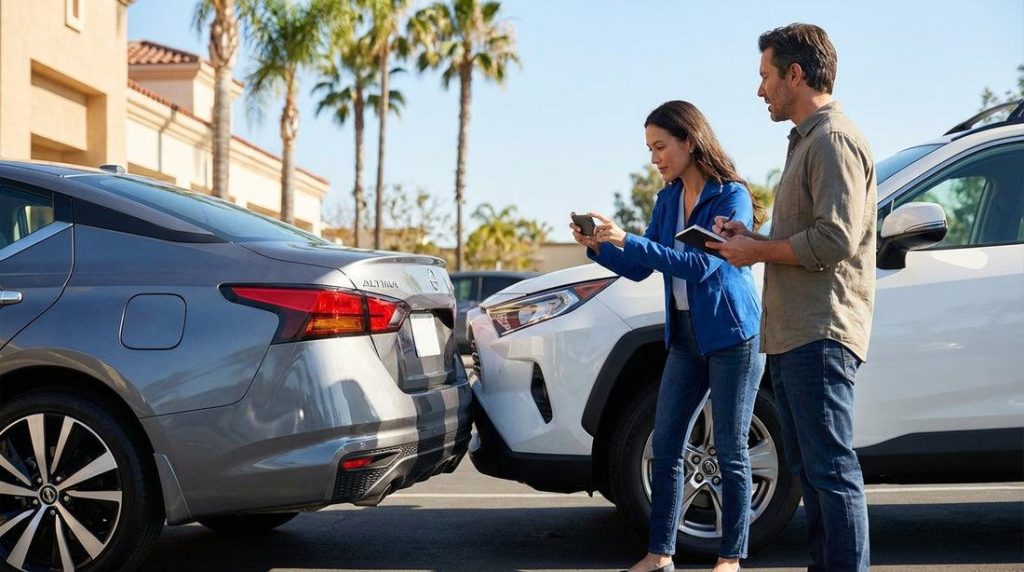
If someone claims that you caused damage, remain calm and inspect the situation from a safe position. Keep your doors locked, take photographs, and avoid leaving your purse, phone, or other belongings unattended. If a collision genuinely occurred, exchange information and follow the normal reporting procedure.
Never allow an unexpected conversation to distract you from securing your personal property. A few moments of divided attention can be enough for a thief to take advantage.
5. The Fake Jewelry or Gift Scam
Not every parking lot scam begins with a request for money or a demand for payment. Some criminals approach strangers with what appears to be a friendly gesture, offering inexpensive jewelry, claiming they have found a valuable item or pretending to give someone a gift. The actual objective may be to distract the victim long enough to steal something more valuable.
The Naperville Police Department issued a warning about this type of distraction theft in March 2026. According to local reporting, suspects approached people loading groceries or belongings into their vehicles and initiated friendly conversations.
They sometimes offered gold-colored necklaces, rings, or other supposed gifts. During the interaction, the criminals could use the distraction to remove jewelry or valuables already belonging to the victim.
The scam can involve more than one person. While one individual starts a conversation, another may stand nearby or approach from a different direction. Some incidents involve suspects offering jewelry that they claim is genuine gold in exchange for cash or financial assistance.
The Royal Canadian Mounted Police also documented a related distraction scheme involving people approaching motorists in parking lots and offering jewelry that was later discovered to be fake. Although that warning concerned Canadian incidents, the underlying tactic is relevant to American drivers as well.
The safest response is to avoid accepting unsolicited jewelry or allowing strangers to place anything around your neck, wrists, or fingers. Keep personal belongings secured while loading groceries and maintain enough distance to leave the interaction comfortably.

If someone insists that an item is valuable and pressures you to provide money, politely decline and walk away. Do not accompany strangers to an ATM or another location to complete a supposed transaction.
A friendly approach does not always indicate friendly intentions. Protect your personal space and belongings, especially when someone unexpectedly offers you something valuable.
6. Fake Tow Trucks and Predatory Towing
A vehicle breakdown or minor parking lot accident can leave drivers stressed and unsure about what to do next. Criminal towing operators sometimes take advantage of these situations by appearing unexpectedly, offering immediate assistance, and pressuring motorists into accepting expensive towing services.
The National Insurance Crime Bureau (NICB) identifies this practice as predatory or rogue towing. Its warning describes companies that use deceptive or coercive methods to take advantage of motorists.
These operators may monitor accident locations or busy roads and approach drivers before they have an opportunity to arrange assistance through their insurance company.
The problem is substantial enough to have attracted national attention. According to NICB, reported predatory towing claims increased by 89% nationwide between the beginning of 2022 and the end of 2024. The organization warns that these incidents occur in large cities, smaller communities, suburbs, and rural areas.
A suspicious operator may offer to tow a vehicle without being requested, insist that there is no time to contact another company, or refuse to explain the charges clearly. Some motorists may later discover additional fees for storage, mileage, equipment, or other services.
Drivers should contact their insurance provider, roadside assistance company, or local law enforcement to identify an authorized towing operator. Before agreeing to a service, ask for the company’s name, estimated charges, destination, and applicable storage fees. Check local licensing requirements where applicable and obtain written documentation.
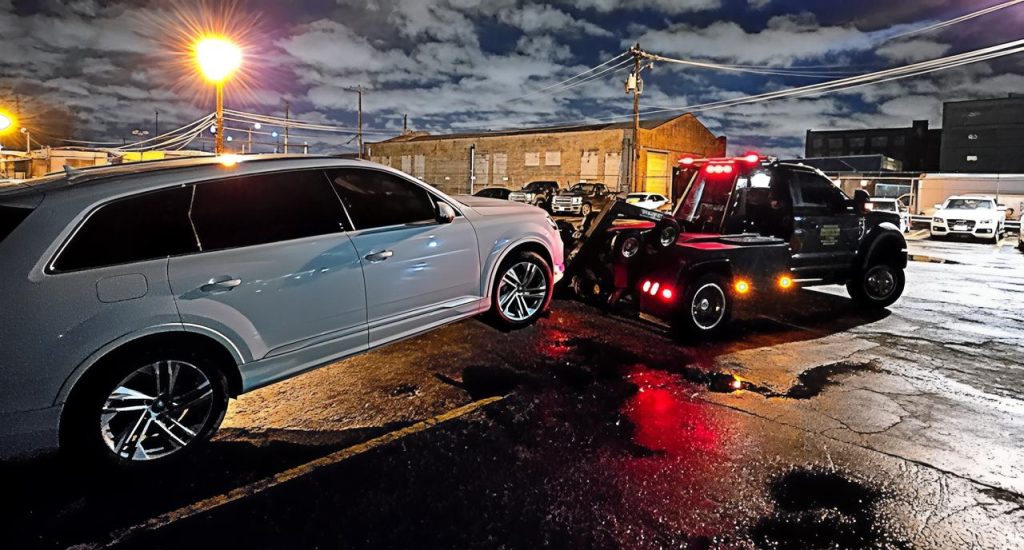
If your vehicle is being towed from private property, ask who authorized the tow and verify the facility’s rules.
A genuine emergency service should be willing to explain its charges and procedures. Never let someone use your stressful situation as an excuse to rush you into an expensive agreement.
7. The Staged Accident and Insurance Fraud Scam
A minor collision in a crowded parking lot may seem like an ordinary accident, but drivers should be aware that some incidents are deliberately arranged to generate fraudulent insurance claims. These schemes can involve multiple people, fabricated damage, misleading witnesses, or false descriptions of how a collision occurred.
The National Insurance Crime Bureau (NICB) identifies several categories of staged and caused accidents. One example is the drive-down scheme, in which a driver intentionally causes a collision after taking advantage of another motorist’s distraction.
Another involves the swoop-and-squat arrangement, where multiple vehicles coordinate movements to make an innocent driver collide with one of them.
Parking areas can also become locations for fraudulent accident claims. NICB’s investigative guidance identifies suspicious hit-while-parked claims as a significant area of concern. These cases can involve existing vehicle damage being falsely presented as damage from a recent incident.
The financial consequences can be serious. An innocent driver may face repair expenses, insurance complications, disputed liability, or an increased premium following an accident investigation. Even when the damage appears minor, agreeing to settle privately without documenting the incident can create additional problems.
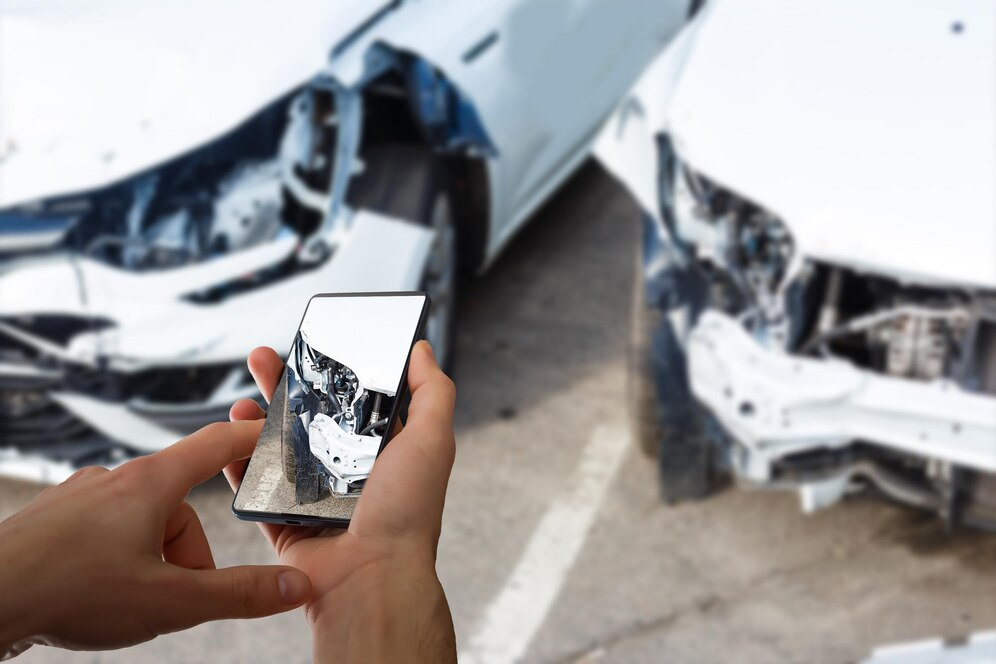
If another driver claims that you caused an accident, remain at the scene and follow your state’s reporting requirements. Photograph the vehicles, visible damage, license plates, surrounding area, and relevant road markings. Obtain contact and insurance information, and identify independent witnesses when possible.
Avoid admitting fault or making cash payments simply because someone is pressuring you. Contact your insurer and, when appropriate, local police.
A genuine accident deserves proper documentation. Staying calm, collecting evidence, and using official reporting procedures can help protect you from becoming involved in someone else’s insurance fraud.