

Car theft has become more sophisticated, with criminals combining traditional break-in techniques and modern electronic tools to target vehicles. A locked door is no longer the only obstacle thieves must overcome, particularly with the growing popularity of keyless entry, push-button ignition, and connected vehicle technology.
According to the National Insurance Crime Bureau (NICB), 659,880 vehicles were reported stolen across the United States in 2025, a 23.2% decrease from 2024.
Despite this improvement, hundreds of thousands of drivers still face the risk of losing their vehicles. Understanding how these crimes happen can help owners recognize vulnerabilities and take practical steps to protect their cars.
1. Relay Attacks on Keyless Entry Systems
One of the more concerning developments in vehicle theft involves exploiting the wireless communication between a car and its smart key. Relay attacks target vehicles equipped with passive keyless entry and push-button starting systems.
Unlike traditional theft, this approach may leave the vehicle’s doors, windows, and ignition area completely undamaged, making the crime difficult to recognize immediately.
In a typical incident, criminals use electronic equipment to relay communication between a vehicle and its legitimate key fob. If the vehicle incorrectly recognizes the relayed communication as the authorized key being nearby, it may unlock the doors and permit the engine to start.
The actual key can remain inside the owner’s home, sometimes just a short distance from the parked vehicle. According to INTERPOL, criminals can exploit this technology to steal vehicles within minutes.
The problem is particularly relevant to owners who leave their keys near front doors, windows, or other locations close to the vehicle. However, not every keyless vehicle is equally vulnerable. Security systems differ between manufacturers, and some models incorporate additional safeguards against relay attacks.
There are practical ways to reduce the risk. Drivers can store their key fobs in tested signal-blocking pouches or containers and keep spare keys away from exterior doors and windows. A physical steering-wheel lock adds another obstacle even if electronic security is compromised.
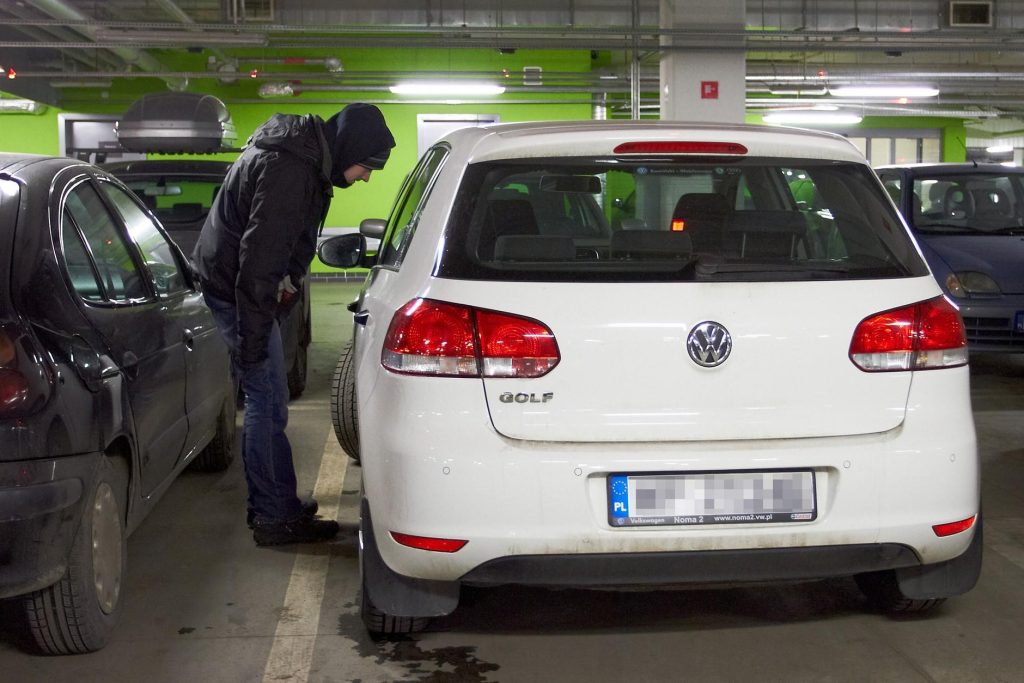
Owners should also ask their dealerships whether software updates or additional security features are available.
The absence of broken glass or damaged locks does not necessarily mean a vehicle is secure. Electronic theft can leave surprisingly little physical evidence.
2. Signal Jamming That Prevents Doors From Locking
Not every car theft begins with someone successfully unlocking a vehicle. Sometimes, the opportunity comes from preventing the owner from locking it in the first place. Signal jamming is a technique that interferes with the wireless communication between a remote key fob and the vehicle’s locking system.
The situation can occur in busy parking lots, shopping centers, and public parking garages. A driver exits, presses the lock button, and walks away, assuming the vehicle has secured itself. However, if the locking signal has been disrupted, the doors may remain unlocked. A criminal can subsequently enter the vehicle without breaking a window or visibly damaging the door.
This technique is particularly concerning because it takes advantage of ordinary driving habits. Many people press the remote button while walking away without checking whether the doors actually locked. Some drivers rely entirely on the familiar sound of the horn or the flashing lights, while others are distracted by traffic, conversations, or their phones.
It is important to distinguish this method from a relay attack. A relay attack attempts to make the vehicle recognize an authorized key, whereas signal jamming prevents the locking command from reaching the vehicle. Both exploit wireless communication, but their purposes are different.
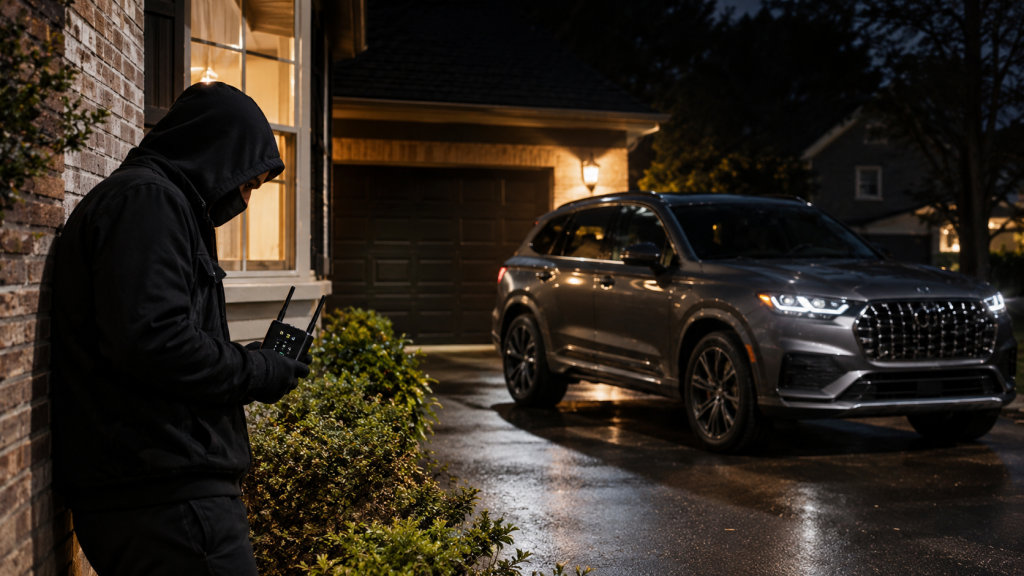
One of the easiest ways to avoid this problem is to manually check that all doors are securely locked before walking away. Look for the indicator lights, listen for the locking sound, and give the door handle a quick pull to confirm.
If the remote repeatedly fails, use the manufacturer’s recommended manual locking procedure and have the system inspected. A few seconds of checking can prevent an avoidable theft.
3. Breaking Windows for Quick Access
Breaking a vehicle’s window remains one of the most recognizable ways criminals gain access to parked cars. Unlike electronic attacks, this method relies on physical force rather than sophisticated equipment. A thief can target a side window, gain access to the cabin, and remove valuables before the owner or nearby pedestrians have time to react.
The primary motivation is not always stealing the entire vehicle. Laptops, smartphones, handbags, wallets, sunglasses, and shopping bags can attract criminals, particularly when they are visible through the windows.
In some cases, thieves may also search for vehicle keys, garage remotes, registration documents, or other items that could create additional opportunities for theft.
The National Highway Traffic Safety Administration (NHTSA) specifically warns American drivers against leaving valuables where they can be seen from outside. Its vehicle theft prevention guidance identifies electronic devices and personal belongings among the items commonly targeted by criminals.
This is an important distinction because a vehicle can become a target even when the owner has no intention of leaving it unattended for long.
Parking location also matters. Vehicles left in isolated areas, poorly lit parking spaces, or locations with limited visibility may present more opportunities for opportunistic crime. However, a busy parking lot does not guarantee complete protection.
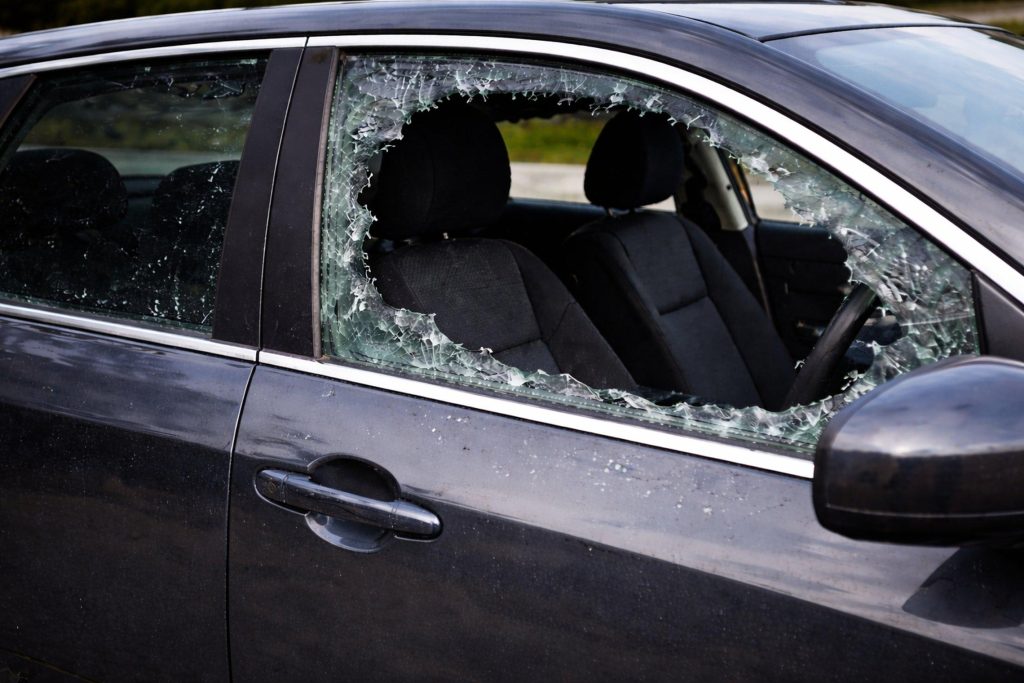
Drivers should remove valuables whenever possible rather than simply covering them with clothing or placing them on the seats. Locking the glove compartment and securing belongings in a concealed storage area can provide additional protection, although neither guarantees safety.
If a break-in occurs, avoid touching potential evidence and contact local law enforcement. A broken window can cost hundreds of dollars to replace, while stolen personal belongings may be considerably more expensive.
4. Forced Entry Through Door Locks and Handles
Traditional forced entry has not disappeared despite the growing use of electronic vehicle security. Some criminals still target door locks, handles, and surrounding bodywork to gain access to parked cars. These incidents can happen quickly, particularly when a vehicle has inadequate security or is left unattended in a vulnerable location.
Unlike a relay attack, forced entry generally leaves visible signs of damage. Owners may discover scratches around the door handle, damaged locking components, bent trim, or marks near the window frame. In more serious cases, the door may no longer close properly because the locking mechanism or surrounding structure has been damaged.
Not every damaged door lock indicates an attempted vehicle theft. Mechanical failures, previous repairs, and accidental damage can create similar marks. Nevertheless, unusual damage should not be ignored, especially if personal belongings have disappeared or the vehicle’s security system has been disturbed.
Older vehicles may have fewer electronic security layers than newer models, although age alone does not determine how easily a vehicle can be stolen. Factory-installed immobilizers, alarms, and updated locking systems can make unauthorized access more difficult. NHTSA identifies audible alarms and immobilizing devices as useful layers of vehicle theft protection.
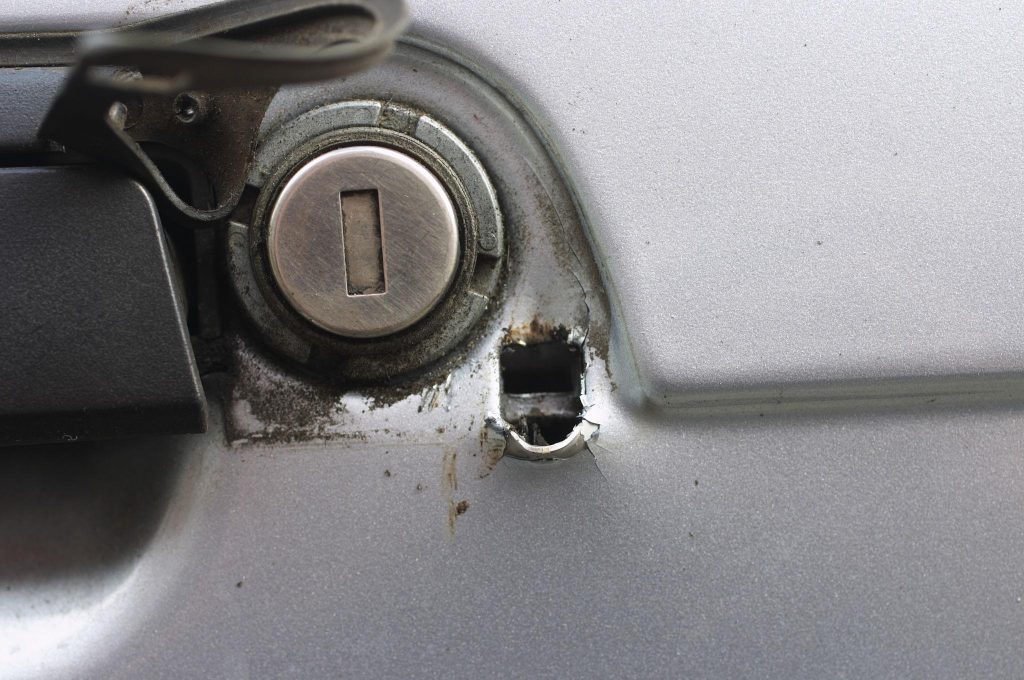
Owners can reduce their exposure by parking in secure, well-lit locations, keeping doors locked and checking that windows are completely closed. If a vehicle has suffered an attempted break-in, arranging a professional inspection is important because damaged locking components can create further security problems.
A damaged lock is not merely a cosmetic issue. It can leave the vehicle less secure the next time it is parked, making prompt repairs an important part of protecting it.
5. Using Electronic Tools to Program Unauthorized Keys
Modern vehicles increasingly rely on electronic keys and immobilizer systems to prevent unauthorized starting. However, the same technology can become a target when criminals gain access to a vehicle’s electronic systems. Unauthorized key programming is one method that has attracted attention from American law enforcement agencies.
Many vehicles have an onboard diagnostics port, commonly called the OBD-II port. It is primarily designed to allow technicians to communicate with vehicle computers, diagnose faults, and access certain maintenance information.
Depending on the vehicle and its security architecture, specialized equipment connected through this system can also be involved in legitimate key programming.
NICB has warned about criminals using programming equipment after gaining access to a vehicle. In some reported incidents, unauthorized equipment has been used to obtain vehicle security information or introduce an additional key.
Once a vehicle accepts an unauthorized key, the criminal may be able to start it without possessing the owner’s original remote.
The danger is not limited to luxury vehicles. Electronic key systems are now common across different price categories, although the level of protection varies considerably by manufacturer, model, and production year.
Vehicle owners can take several precautions without interfering with their car’s electronics. A professionally installed locking cover for the diagnostic port may provide an additional physical barrier. Owners should also avoid leaving vehicles unattended in insecure locations and ask authorized dealerships whether their model has received relevant security updates.
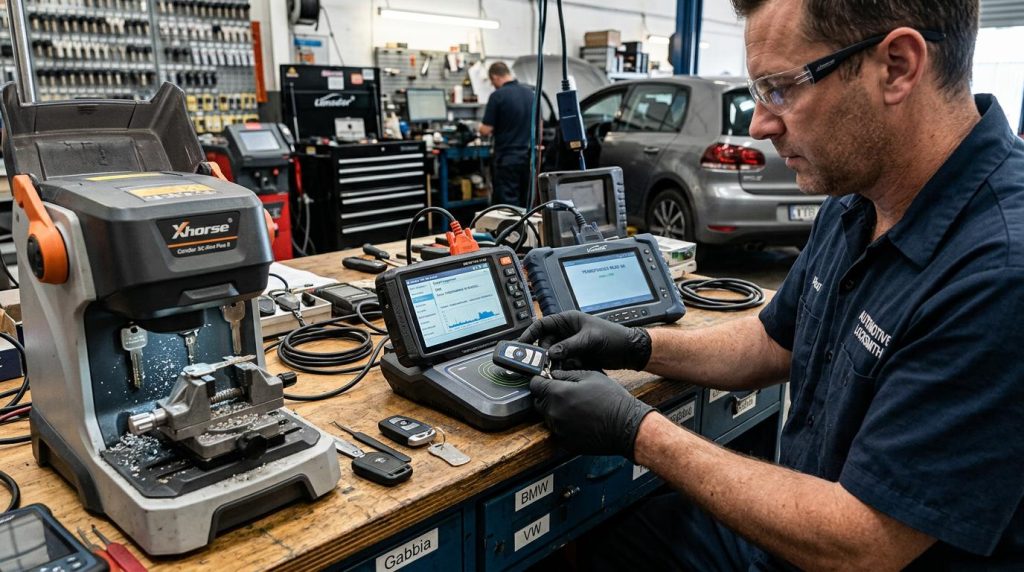
Buying a used vehicle deserves additional attention. Have the dealership or a qualified automotive locksmith verify the number of programmed keys and remove any unknown keys where the system permits it.
Electronic security is only effective when unauthorized access to the vehicle’s systems is properly controlled. A small diagnostic connection deserves more attention than many owners realize.
6. Stealing or Obtaining the Owner’s Actual Keys
Sometimes, criminals do not need to defeat a vehicle’s electronic security because they can obtain the legitimate key itself. This remains a significant concern for drivers who leave spare keys in predictable locations, keep them inside unattended vehicles, or fail to secure them when visiting public places.
One potential scenario involves a vehicle owner’s home being targeted. If criminals gain access to a house and locate the car keys, they may be able to take the vehicle without damaging its doors, windows or ignition system. Keys can also be stolen from bags, jackets, gym lockers and other places where owners temporarily leave personal belongings.
Another risk involves vehicles left running with the keys inside. Drivers sometimes do this while collecting food, warming up the cabin, or making a quick stop. NHTSA explicitly advises motorists never to leave keys inside their vehicles and not to leave an engine running unattended.
The consequences can extend beyond the value of the car. A stolen key may also provide access to a garage, personal documents, or other property if the owner keeps these items together. Losing a key therefore requires more attention than simply purchasing a replacement.
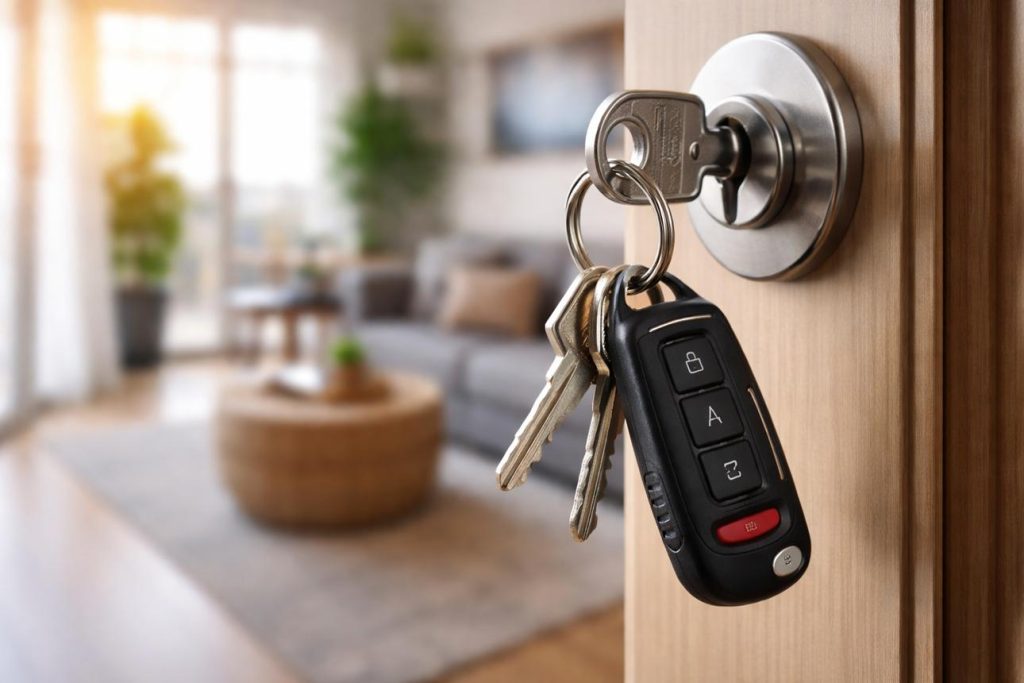
If a key fob disappears, contact the vehicle manufacturer or an authorized dealership promptly. Depending on the model, technicians may be able to disable the missing key and reprogram the vehicle to recognize replacement keys. Owners should also consider changing garage access codes if a stolen key was kept alongside a garage remote.
At home, keep primary and spare keys in a secure location away from exterior doors and windows. During travel, avoid leaving keys unattended in easily accessible bags.
The simplest way to defeat this type of theft is to prevent criminals from obtaining the original key in the first place.
7. Exploiting Vehicle Communication Networks
Modern vehicles contain sophisticated electronic networks that allow different components to communicate with one another. Engine management, security systems, lighting, braking, and other functions depend on electronic control modules working together.
Criminals have increasingly looked for weaknesses in these communication networks to gain unauthorized control of certain vehicle functions.
One method involves exploiting a vehicle’s Controller Area Network, commonly known as the CAN bus. This network allows electronic modules to exchange information without requiring each component to communicate independently with every other component.
When criminals find a vulnerability in a vehicle’s electronic architecture, they may attempt to interfere with these communications and compromise security functions.
Unlike conventional break-ins, this type of attack may not leave obvious damage around the driver’s door or ignition. Certain reported attacks have involved gaining access to vehicle electronics through external components, demonstrating that security weaknesses are not always limited to the cabin.
The Associated Press has reported on this emerging vehicle theft technique, explaining how criminals can target vehicle communication systems to bypass conventional security protections. However, these vulnerabilities are not universal. The risks depend on the vehicle’s design, software, electronic architecture, and security updates.
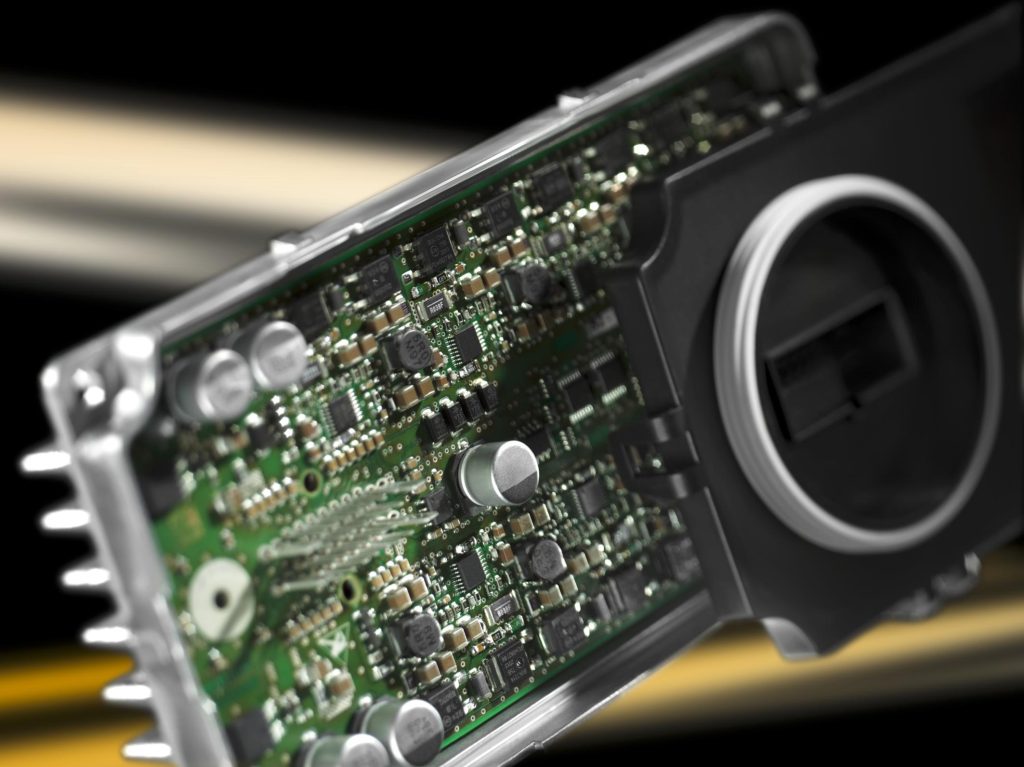
Manufacturers have been working to strengthen vehicle cybersecurity through improved authentication, software protections, and more secure electronic architectures. Owners should pay attention to manufacturer security recalls and software updates rather than assuming that a factory-installed security system can never be compromised.
For additional protection, a professionally installed aftermarket immobilizer or visible steering-wheel lock can provide another obstacle against unauthorized vehicle use.
As cars become increasingly connected, vehicle security is no longer just about protecting doors and windows. Protecting the electronics controlling the vehicle is becoming equally important.
