Taking your vehicle to a repair shop should solve a problem, not create a bigger financial headache. Unfortunately, some dishonest mechanics take advantage of drivers who lack technical knowledge or feel pressured to get their vehicles back on the road quickly.
From recommending repairs that are not actually needed to charging for parts that were never installed, these practices can turn an ordinary service visit into an expensive mistake.
Consumer protection agencies across the United States continue to warn motorists about deceptive automotive repair practices. Recognizing the warning signs can help you question suspicious recommendations and avoid paying for work your vehicle does not need.
1. Recommending Repairs Your Car Does Not Actually Need
One of the most common automotive repair scams involves convincing customers that their vehicles need expensive work when the recommended repairs are unnecessary, premature, or unrelated to the original complaint. This tactic works particularly well when drivers are unfamiliar with mechanical components and depend entirely on the technician’s explanation.
For example, someone visiting a shop for a routine inspection might suddenly be told that the vehicle needs new suspension components, brake assemblies, belts, and other expensive parts. Some of these recommendations may be legitimate, but dishonest operators can exaggerate the severity of ordinary wear to increase the repair bill.
The Texas Attorney General specifically identifies false or misleading statements about the need for replacement parts and repair services as prohibited deceptive practices under Texas consumer protection law. Its automotive repair guidance also recommends obtaining a second opinion when a shop recommends expensive work.
A particularly useful warning sign is a mechanic who refuses to explain why a component needs replacement. Instead of accepting a vague statement that something is dangerous, ask what has failed, how the problem was identified, and whether the repair is urgent.
Request photographs, inspection measurements, or a demonstration of the problem when practical. If the recommendation involves a major expense, consider visiting another qualified repair facility for an independent assessment.

The Federal Trade Commission also advises consumers to compare shop recommendations with the maintenance schedule in their owner’s manual. Some repair facilities suggest more frequent maintenance than the manufacturer requires, so additional services should come with a clear technical explanation.
A trustworthy mechanic should be able to explain the problem without relying on fear or unnecessary pressure.
2. Quoting a Low Price Before Adding Unexpected Charges
A surprisingly cheap repair estimate can make one workshop appear much more attractive than its competitors. However, some dishonest businesses use low initial prices to bring vehicles into their facilities before introducing additional charges that significantly increase the final bill. This practice is commonly described as a bait-and-switch tactic.
A driver might receive a verbal estimate for a brake repair, suspension replacement, or other mechanical job. Once the vehicle is already in the workshop, the price suddenly rises because the mechanic claims additional labor, parts, or services are required. In some situations, the original quote may have been deliberately incomplete to make the business appear cheaper.
The Texas Attorney General specifically warns motorists about repair shops that provide a verbal estimate and subsequently charge a higher amount. Its guidance recommends getting the original work order and repair authorization in writing before allowing work to begin.
State laws can provide additional protections. For example, Minnesota’s Truth in Repairs Act generally limits charges to 10% above an estimate, unless the customer authorizes a revised estimate or applicable exceptions apply.
Illinois also has specific requirements governing written estimates and additional repair authorizations. These protections should not be assumed to apply identically in every state.
Before approving a repair, request an itemized estimate showing parts, labor, and diagnostic charges. Ask the shop to contact you before exceeding the agreed amount.

If the mechanic discovers another problem, request an updated estimate rather than accepting an unexplained increase.
A low initial quote is not necessarily a bargain. The price that matters is the documented amount you actually authorize.
3. Charging for Repairs You Never Authorized
Imagine dropping your vehicle off for an oil leak and receiving a bill that includes new spark plugs, an air-conditioning service, and several additional repairs you never requested. This is a particularly frustrating situation because the customer may feel obligated to pay simply to get the vehicle back.
Unauthorized repair work occurs when a shop performs additional services without obtaining the required customer approval. Some facilities may claim that the extra work was necessary or that the mechanic discovered other problems during inspection.
While discovering additional faults is a normal part of automotive diagnosis, that does not automatically give a shop permission to perform every recommended repair.
The Georgia Attorney General’s Consumer Protection Division explains that mechanics should obtain permission before performing unrelated additional work. It advises motorists to request written estimates specifying the repairs and expected costs.
The Texas Attorney General also recommends obtaining separate written authorizations for inspection and repair work. This distinction is important because permission to inspect or diagnose a vehicle is not necessarily permission to carry out every repair the technician recommends.
Drivers can protect themselves by clearly stating which services are authorized and setting a maximum spending limit. For example, you can tell the shop to contact you before approving any additional work above the original estimate. Keep a copy of the signed authorization and save any text messages or emails discussing the repair.
When collecting the vehicle, compare the final invoice with the original work order. Look for unfamiliar labor charges, replacement parts, or services that were never discussed.

If you discover unauthorized work, request a written explanation and contact your state’s consumer protection agency if the dispute cannot be resolved.
A mechanic can recommend additional repairs, but customers should retain control over which services they approve.
4. Charging for New Parts Without Actually Installing Them
Paying for a replacement part that was never installed is one of the more serious forms of automotive repair fraud. A customer may receive an invoice showing a new alternator, catalytic converter, battery, or other expensive component, only to discover later that the original part is still fitted to the vehicle.
This type of deception can be difficult to recognize because most motorists cannot identify every component under the hood. A dishonest workshop may rely on that lack of technical knowledge, particularly when the vehicle is returned without obvious changes to its appearance or performance.
AARP published a documented example in October 2024 involving a Florida vehicle owner who said he paid $1,150 for two new catalytic converters.
When the engine warning light remained illuminated, another repair facility reportedly discovered that the promised replacements had not been installed. The owner alleged that the original components had simply been altered to look new.
The Texas Attorney General also identifies falsely representing that parts have been replaced when they have not as a prohibited deceptive practice under Texas law.
There are practical ways to reduce this risk. Ask the mechanic to list the manufacturer, part description, and whether the component is new, used, or remanufactured. You can also request that removed parts be returned to you when practical and permitted.
Some replacement parts are supplied through exchange programs, meaning the old component must be returned to the supplier.
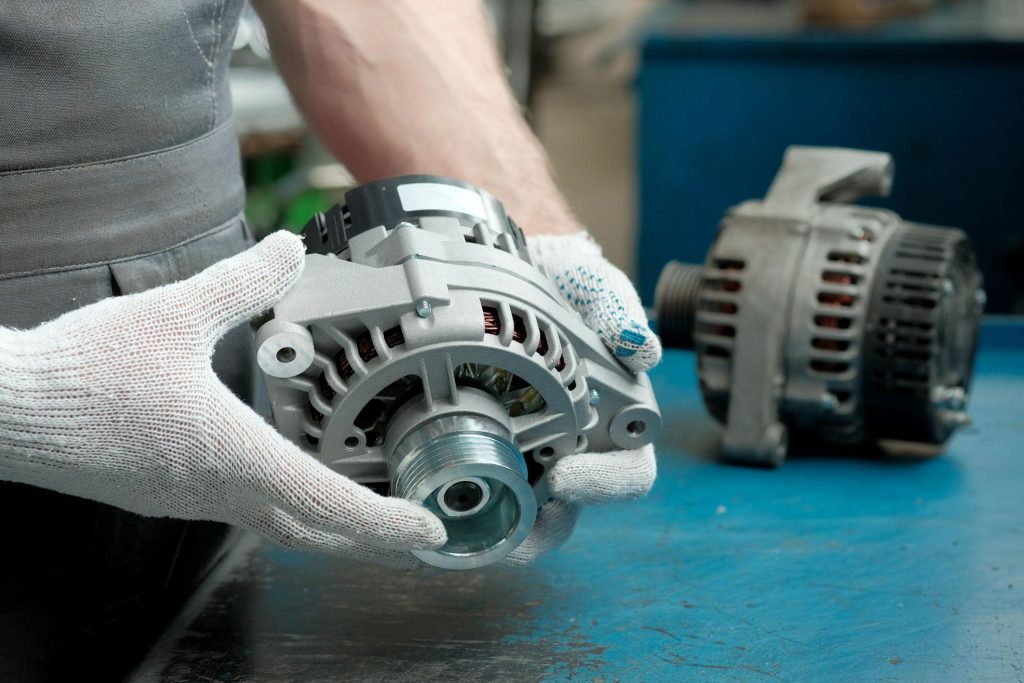
Before collecting your vehicle, review the invoice and check that the work performed matches the original authorization.
For particularly expensive repairs, consider having another qualified technician verify the installation.
Paying for a new component should mean receiving the replacement specified on your invoice, not simply a line item claiming that the job was completed.
5. Selling Unnecessary Engine Flushes and Add-On Maintenance
Engine flushes, fuel-system cleaning, transmission services, and other maintenance packages are frequently presented to drivers as ways to improve vehicle performance.
Some of these services can be appropriate under particular operating conditions, but problems arise when repair shops recommend them as mandatory maintenance without considering the manufacturer’s specifications.
A common sales approach involves telling a customer that the engine contains excessive sludge, the fuel system is badly contaminated, or the transmission requires immediate servicing.
The explanation may sound convincing, especially when accompanied by photographs of dirty fluid or an inspection report. However, the existence of dirty oil or fluid does not automatically prove that an expensive cleaning procedure is necessary.
The Federal Trade Commission advises motorists to compare a repair shop’s recommended maintenance schedule with the manufacturer’s maintenance requirements in the owner’s manual. It specifically warns that some shops recommend more frequent maintenance than the manufacturer specifies.
The Texas Attorney General also highlights misleading claims involving dirty transmission fluid and metal particles. Its guidance explains that the appearance of used transmission fluid alone does not necessarily establish that the transmission requires replacement.
Drivers should ask which manufacturer maintenance requirement the recommended service addresses. Request an explanation of the vehicle’s mileage, operating conditions and inspection findings that justify the procedure.
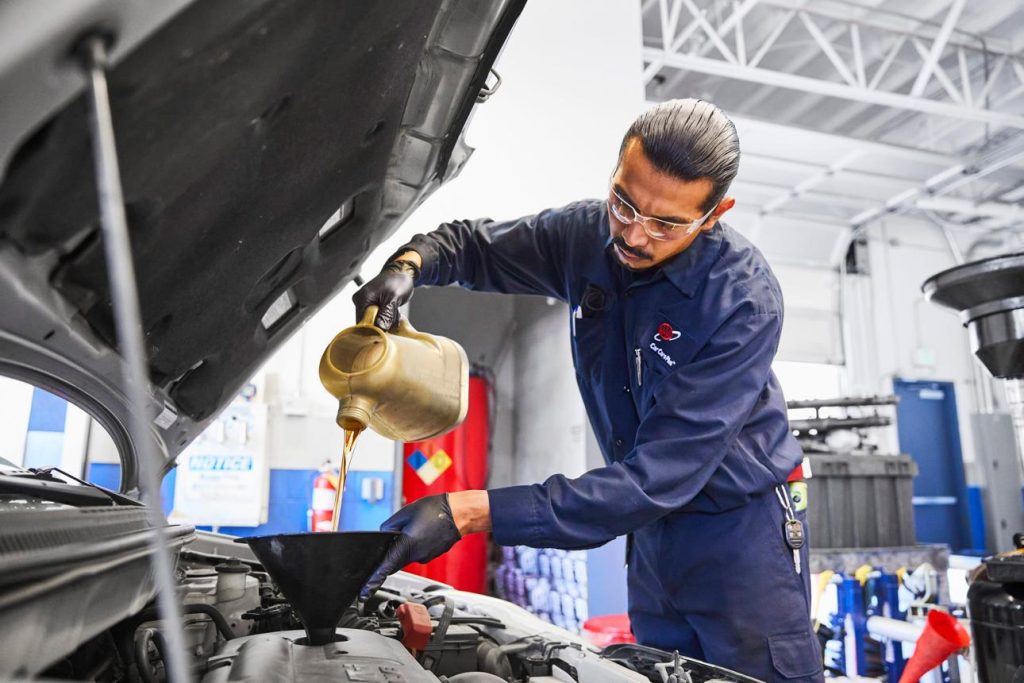
For example, a vehicle used frequently for towing, extreme temperatures or stop-and-go driving may have different maintenance requirements from one used mainly for highway commuting. However, the correct service interval should still be based on the manufacturer’s guidance for those conditions.
Do not automatically reject every maintenance recommendation, but do not approve expensive packages simply because someone says they are essential. A service recommendation should have a technical reason, not just an attractive sales pitch.
6. Charging Hidden Diagnostic Fees Without Explaining Them
Diagnostic charges can catch drivers by surprise, particularly when a repair shop advertises inexpensive inspections or promises to identify a problem before discussing its fees. Some motorists assume that checking an engine warning light or performing a computer scan will be free, only to discover a separate diagnostic charge on the final invoice.
Not every diagnostic fee is suspicious. Modern vehicles contain complex electronic systems, and identifying the cause of a warning light can require specialized equipment, technician time, and additional testing. A scan tool may retrieve fault codes, but interpreting those codes and confirming the underlying mechanical problem can involve considerably more work.
The problem occurs when a shop fails to explain its charges clearly or presents a diagnostic service as free before adding an unexpected fee.
The Georgia Attorney General’s Consumer Protection Division explains that Georgia does not generally require businesses to disclose diagnostic fees before providing estimates. However, it advises motorists to ask about diagnostic charges in advance and obtain a written estimate before authorizing repairs.
The FTC also recommends asking whether a shop charges for diagnostic work if you decide to have the repairs completed elsewhere. Some facilities may apply the diagnostic charge separately from the repair bill.
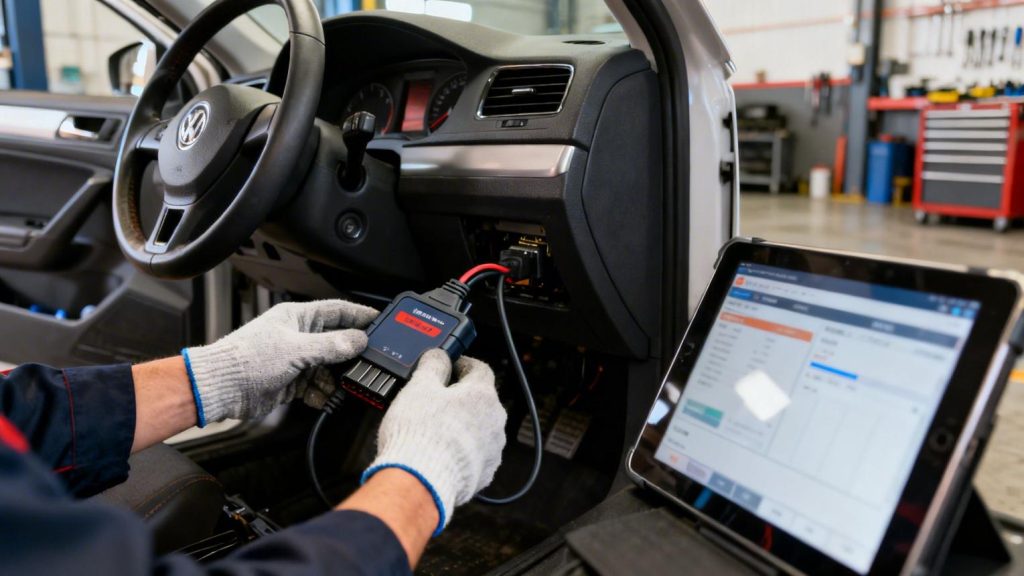
Before leaving your vehicle, ask whether the inspection includes a computer scan, physical testing or additional labor. Confirm the price and whether that amount will be credited toward an approved repair.
You should also request the diagnostic findings in writing. A trouble code alone does not always identify the exact component that has failed, so the mechanic should explain how the diagnosis supports the recommended repair.
Clear pricing makes it easier to compare workshops and avoid unexpected expenses. A diagnostic fee is reasonable when the service is properly explained and authorized.