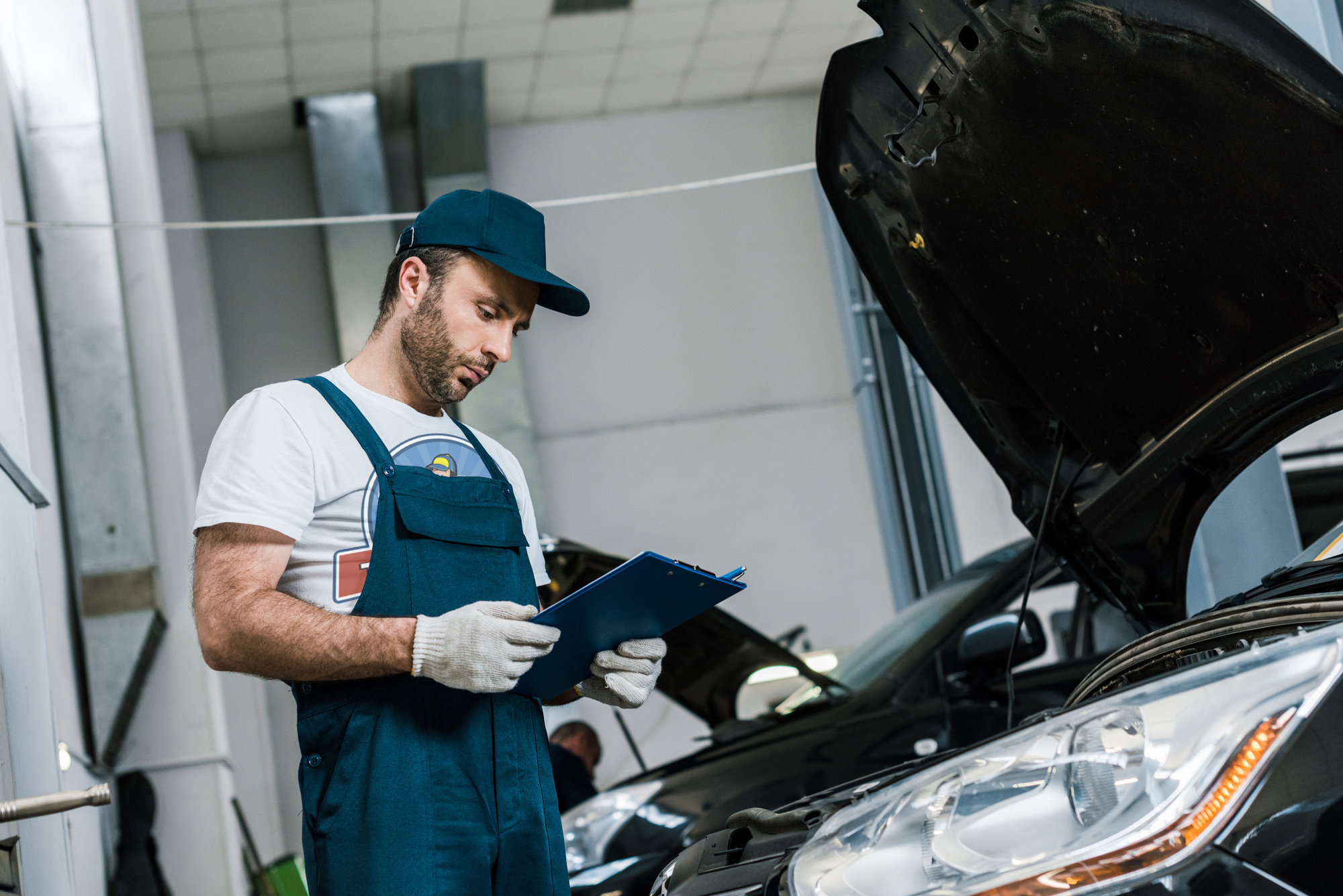
Buying a used car can save thousands of dollars compared with purchasing a new one, but an attractive asking price does not reveal the vehicle’s true condition. Hidden accident damage, worn mechanical components, neglected maintenance, and electrical problems can turn a seemingly good deal into an expensive mistake.
A professional pre-purchase inspection helps buyers understand what they are actually paying for before signing the paperwork. The service is not free, and prices vary between repair shops and inspection providers.
However, spending around $100 to $275 on an independent assessment can uncover problems that may justify negotiating a lower price or walking away.
How Much Does a Professional Used-Car Inspection Cost?
The cost of a pre-purchase inspection depends on the repair shop, vehicle, location, and depth of the assessment. Several automotive sources publish different estimates, so buyers should not assume there is one fixed national price.
RepairPal’s estimate, updated September 3, 2026, places the average cost between $186 and $273. It lists the entire estimated amount as labor, with taxes and additional fees excluded. The actual price can vary depending on location and vehicle-specific requirements.
Edmunds provides a lower general estimate of $100 to $200 for a typical pre-purchase inspection. It notes that many repair facilities offer the service, including independent garages, dealership service departments, and national repair chains.
Consumer Reports recommends budgeting approximately $100 to $150 for a thorough diagnosis and advises shoppers to confirm the price before scheduling an appointment. Its guidance emphasizes getting a proper mechanical assessment rather than relying on a quick visual check.
Cars.com has also published an estimate of $132 to $200, based on RepairPal figures cited in its October 2024 guidance. However, that is an older estimate.
Its June 2026 article cited a higher RepairPal range of $182 to $322, while RepairPal’s own September 2026 estimate is $186 to $273. These differences show why buyers should obtain a current local quote rather than depend on older published averages.
| Source | Inspection cost |
|---|---|
| RepairPal, September 2026 | $186-$273 |
| Edmunds | $100-$200 |
| Consumer Reports | $100-$150 |
| Cars.com, October 2024 guidance | $132-$200 |
These figures are estimates, not guaranteed prices. A basic inspection may cost less than a comprehensive examination involving additional diagnostic work. A specialist inspecting a luxury car, performance vehicle, diesel truck, or hybrid may charge more if the vehicle requires equipment or expertise beyond a standard assessment.
Buyers should also check exactly what the quoted price includes. RepairPal’s estimate lists labor costs but excludes taxes and additional fees. Some shops may charge separately for diagnostic scans or specialist assessments. If the mechanic discovers a problem requiring further investigation, additional work may also cost extra.
Before booking, ask the repair facility what its inspection covers, whether a road test is included, how long the assessment takes, and whether the mechanic will provide a written report. A cheaper inspection is not necessarily better if it skips important checks.
For an ordinary used-car purchase, setting aside around $150 to $275 is a reasonable starting budget based on the more recent estimates. The final amount will depend on the vehicle and local labor rates.
What Does a Used-Car Inspection Actually Cover?
A proper pre-purchase inspection involves much more than checking whether the engine starts and the air conditioning works. Edmunds says repair facilities commonly advertise inspection checklists covering more than 100 points. The exact number and procedures vary, so buyers should request the shop’s checklist before paying.
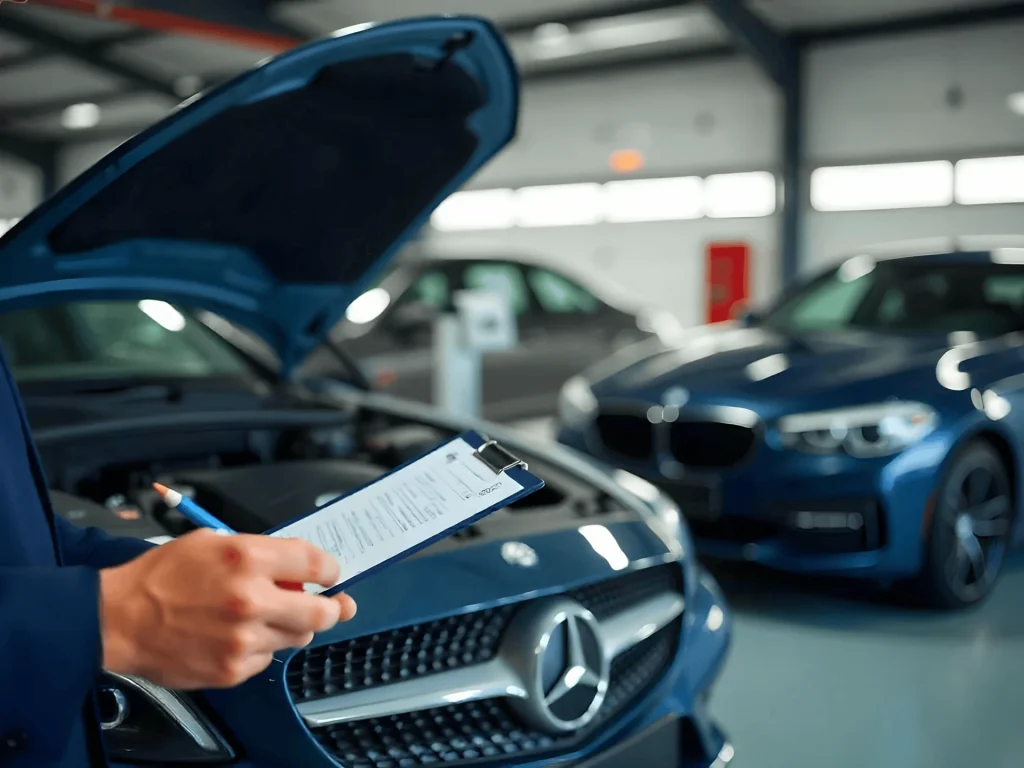
The mechanic generally begins by reviewing the vehicle’s available maintenance records. These documents can reveal whether the previous owner followed recommended service intervals, replaced important components, and addressed recurring problems.
Missing records do not automatically mean a vehicle was neglected, but they make it harder to establish how well it was maintained.
The exterior inspection looks for dents, scratches, rust, uneven panel gaps, and signs of previous repairs. Differences in paint color or texture may indicate that a panel was repainted after an accident. Where available, paint-thickness measurements can help identify areas that have received bodywork.
Doors, windows, glass, mirrors, lights, and other exterior components should also be examined. Doors should open and close properly, while the windshield and other glass should be checked for cracks. Headlights, brake lights, and turn signals need to work correctly. Uneven panel alignment can sometimes indicate previous collision damage.
Mechanical checks are equally important. The technician should examine the engine for leaks, unusual noises, damaged hoses, and signs of poor maintenance. The transmission should be assessed for abnormal operation, while the cooling system, belts, battery, and electrical components should also receive attention.
Diagnostic equipment can identify stored trouble codes that reveal problems not immediately visible during a test drive. The mechanic should also assess the braking and suspension systems.
Worn brake pads, damaged rotors, leaking shock absorbers, loose steering components, and uneven tire wear can indicate repairs that may soon be necessary.
A road test can help identify unusual vibrations, steering problems, suspension noises, or transmission behavior that is difficult to assess while the vehicle is stationary. Buyers should ask whether this is included in the inspection fee.
One of the most valuable parts of the process is checking for damage that cannot easily be seen from outside. Edmunds highlights hidden frame damage, previous poor-quality repairs, flood damage, fire damage, rust, and fluid leaks as problems a good inspection may uncover.
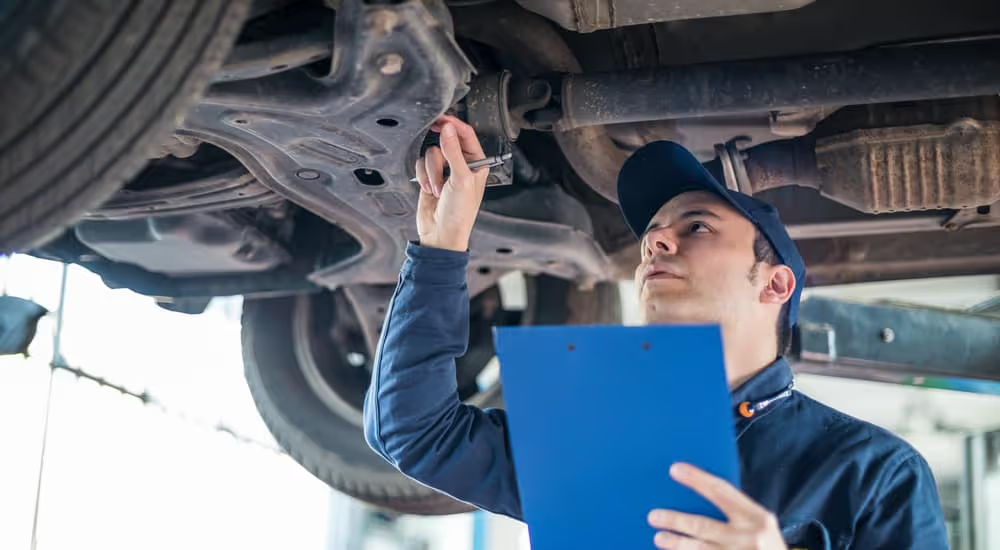
The underside deserves particular attention. A mechanic may find corrosion, damaged structural components, leaking fluids, exhaust problems, or evidence of previous repairs. A vehicle that looks clean after professional detailing can still have serious damage underneath.
The interior also needs attention. Inspectors can check seatbelts, dashboard warning lights, power windows, locks, infotainment equipment, and climate controls. Water stains, damp carpets, unusual odors, or corrosion in less visible areas may raise concerns about previous water exposure.
Consumer Reports recommends asking for a written inspection report listing the problems identified and estimated repair costs. This document is particularly useful during negotiations because it gives buyers specific evidence of potential expenses rather than relying on general concerns about the vehicle’s condition.
In-Shop vs. Mobile Inspections: Which One Should You Choose?
Prospective buyers typically have two ways to arrange a vehicle inspection. They can take the car to a repair shop or hire a mobile inspector to examine it at its current location. Both approaches have their advantages, although the level of access and detail they provide may differ.
An in-shop inspection is generally preferable when the seller agrees to let the vehicle travel to an independent repair facility. The mechanic can use a vehicle lift to examine the underside, suspension, exhaust, frame, and other components that are difficult to inspect from ground level.
A repair shop may also have specialized diagnostic equipment and tools available. If the mechanic discovers something unusual, there may be an opportunity to investigate it further. This makes an in-shop inspection particularly valuable when considering an older vehicle, a high-mileage model, or a car with an uncertain maintenance history.
A mobile inspection offers convenience because the technician travels to the dealership, private seller, or vehicle storage location. This is especially useful when the car is several hundred miles away or the seller does not want it driven to another location.
However, mobile inspections have limitations. The inspector generally cannot use a full workshop lift, so some areas underneath the vehicle may be difficult to examine. Access to specialized diagnostic equipment and additional testing can also vary between providers.
For a vehicle located far from home, a mobile inspection is still much better than purchasing it without an independent assessment. Buyers should confirm the inspector’s qualifications, request photographs, and make sure the report identifies any limitations caused by the inspection location.
The Federal Trade Commission provides particularly important advice about vehicle history reports. These reports can reveal recorded accidents, title information, and other available records, but they are not substitutes for independent mechanical inspections.
The FTC recommends paying an independent mechanic even when a vehicle history report appears clean.
This distinction matters because a history report cannot reveal every mechanical problem. An accident may never have been reported, maintenance records may be incomplete, and an engine or transmission issue may develop without appearing in a vehicle history database. A physical examination provides another layer of protection.
For buyers purchasing from a distant dealership, the FTC recommends asking for a mobile inspection if the vehicle cannot be taken to an independent shop. If the seller refuses to allow an independent inspection, buyers should consider walking away.
A seller’s refusal deserves serious attention, particularly when purchasing from a private individual. Offer a reasonable alternative, such as having a mobile mechanic inspect the vehicle at the seller’s location. If the seller refuses every independent inspection option, there is little reason to accept the risk of a major purchase without checking the car’s condition.
Finally, buyers should understand that an inspection cannot guarantee a trouble-free vehicle. Edmunds explains that findings are not guaranteed and that no inspection can identify every possible flaw.
Some intermittent problems may not appear during the appointment, while internal components can fail later despite appearing healthy at the time.
Nevertheless, the expense is small compared with the potential cost of buying a vehicle with hidden engine, transmission, structural, or electrical problems. A written report can help buyers request repairs, negotiate a lower price, or reject the vehicle entirely.
A pre-purchase inspection should be treated as part of the used-car buying budget, not an optional expense to skip because a vehicle looks clean. Spending around $150 to $275 can provide valuable information, reduce the risk of expensive surprises, and help buyers make a more confident purchasing decision.