
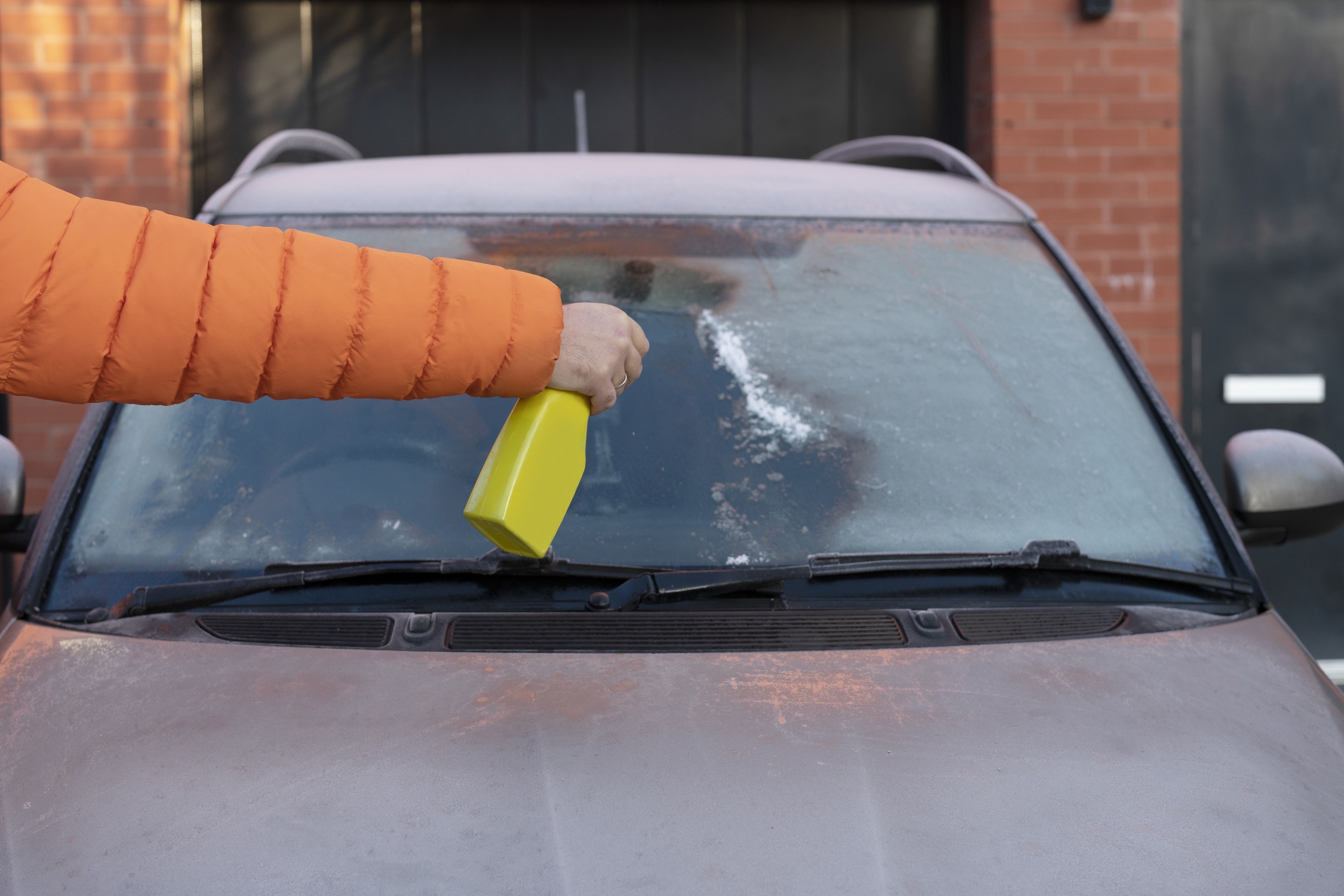
A frozen windshield can turn an ordinary winter morning into a frustrating battle with ice, especially when temperatures drop overnight. De-icer sprays offer a faster alternative to repeatedly scraping thick frost from vehicle glass, mirrors, and windows.
However, not every formula works equally well, and some products provide additional benefits such as frozen-lock removal, scraper attachments, and protection against refreezing.
Choosing the right spray depends on the severity of winter conditions, application method, and the manufacturer’s verified specifications. Here are eight de-icer sprays worth considering for American drivers preparing for freezing weather.
1. Prestone Windshield De-Icer AS244
Prestone Windshield De-Icer AS244 takes the top spot with its concentrated ice-melting formula and a practical feature that distinguishes it from many competing products, a built-in ice scraper.
Instead of carrying a separate tool alongside the spray can, drivers can use the scraper built into its cap to remove stubborn ice after applying the solution. This combination makes it particularly useful during early-morning commutes when time is limited.
The product comes in a 17-ounce aerosol container and uses a concentrated formula containing a high proportion of methanol, according to Prestone’s product information.
Methanol helps lower the freezing point of water, allowing the liquid to penetrate and loosen frost and ice from windshield surfaces. Prestone also states that its formula helps reduce refreezing after application.
Its application is straightforward. Spray the windshield evenly, allow the solution to work, and use the integrated scraper where thicker ice remains. The loosened material can then be cleared away before operating the vehicle.
One important consideration is chemical safety. Methanol is toxic, and this product should be handled according to its label instructions. Avoid inhaling the spray or allowing it to contact skin, and keep it away from children and pets.
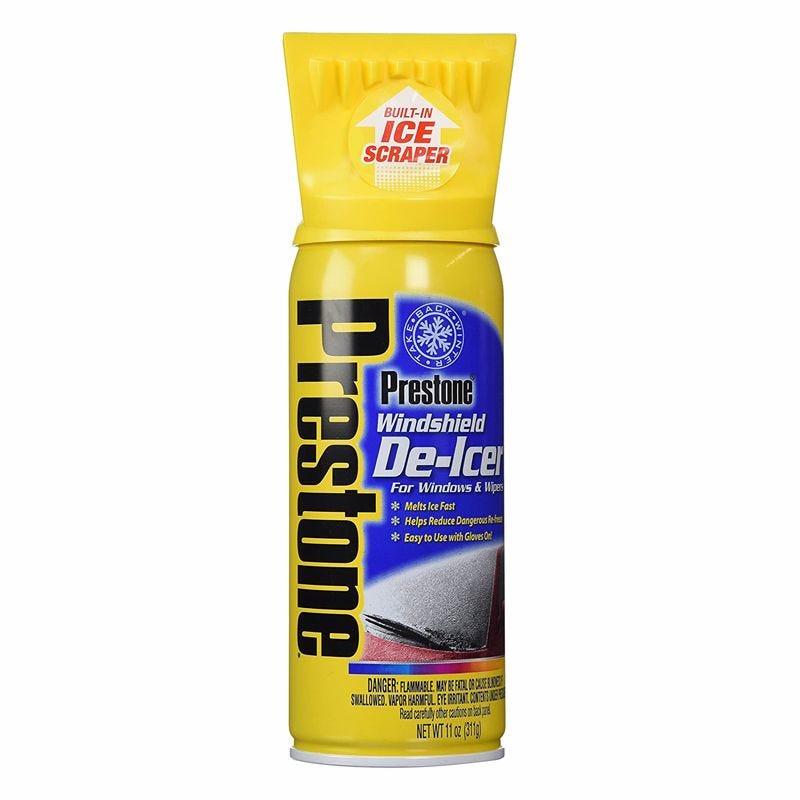
Prestone does not provide a clearly verified numerical minimum working temperature for this particular aerosol in the cited product information. Therefore, its performance should not be advertised as guaranteed at -40 degrees Fahrenheit.
For drivers who want a convenient spray-and-scrape combination from an established automotive brand, the AS244 is a strong first choice.
2. CRC Ice-Off Windshield Spray De-Icer
When frozen glass is accompanied by icy door locks, mirrors, and headlights, a specialized product that addresses more than just the windshield becomes particularly useful.
CRC Ice-Off Windshield Spray De-Icer is designed for these situations, making it one of the most versatile choices in this ranking. Its manufacturer specifically lists automobiles, headlights, locks, and windows among its intended applications.
The product is sold in a 12-ounce net-weight aerosol can under part number 05346. CRC states that its formula melts ice, snow, and frost on contact, thaws frozen locks, and is suitable for automotive finishes. Its technical specification sheet also identifies it as plastic-safe, an important consideration when treating areas around mirrors and exterior trim.
There are some unusually useful technical details available for this product. CRC lists carbon dioxide as its propellant and specifies a flash point of 54 degrees Fahrenheit. The manufacturer also classifies the aerosol as flammable. These details matter because the can should be kept away from flames, sparks, cigarettes, and other ignition sources.
Its compact container is convenient to store in a garage or winter emergency kit. However, a 12-ounce can may run out relatively quickly if several vehicles need treatment or a windshield is covered with thick ice.
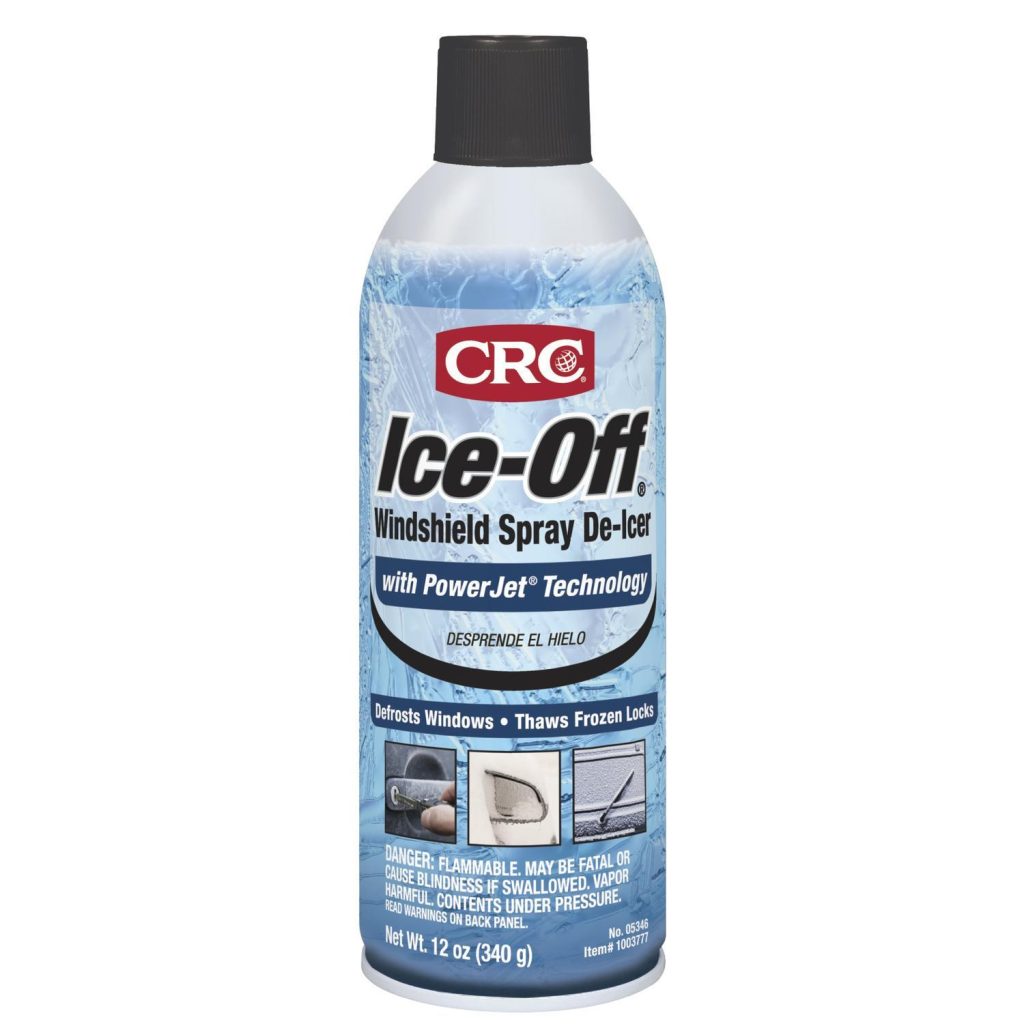
CRC describes the product as effective at sub-zero temperatures but does not publish a precise minimum working temperature in its product specifications. Drivers should therefore avoid assuming a specific extreme-cold performance limit.
For motorists who regularly deal with frozen locks and icy exterior glass, CRC Ice-Off offers a useful combination of applications and clearly documented technical specifications.
3. SPLASH Red Hot De-Icer Windshield Trigger Spray
Not every driver wants an aerosol can when clearing a frozen windshield. The SPLASH Red Hot De-Icer offers a trigger-spray format that provides more direct control over application.
Its 32-fluid-ounce bottle is considerably larger than several conventional aerosol de-icers, making it an interesting option for households that regularly deal with overnight frost and icy vehicle windows.
The trigger mechanism allows drivers to direct the liquid toward specific sections of the windshield instead of releasing it through a pressurized aerosol nozzle. This can be particularly convenient when treating smaller areas, such as side windows and exterior mirrors.
Its larger container also means drivers have more product available for repeated applications during the winter season.
The product is included in the 2026 de-icer comparison published by The Consumers Guide, which identifies it as a budget-oriented option. The publication lists its container size as 32 fluid ounces and distinguishes it from aerosol competitors because of its trigger-spray application.
However, it does not provide independently measured melting times or a verified minimum working temperature for this product.
That limitation is worth remembering. A larger bottle does not automatically mean stronger ice-melting performance, and the manufacturer does not provide enough independently verified information to establish that it outperforms concentrated aerosol formulas in extreme cold.
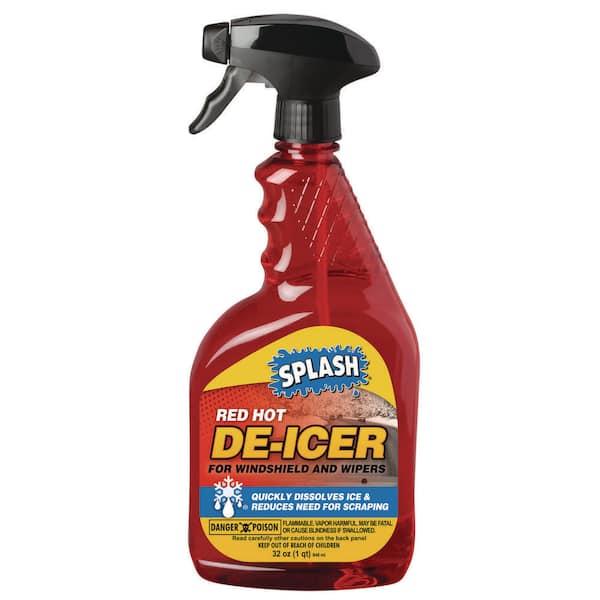
For drivers dealing primarily with light frost, thin ice, and routine winter mornings, its application format and larger container are attractive advantages. It is also worth considering for people who prefer a reusable trigger mechanism over a pressurized can.
Use it according to the bottle instructions, remove loosened ice with a suitable scraper, and wipe away remaining moisture to reduce the possibility of refreezing.
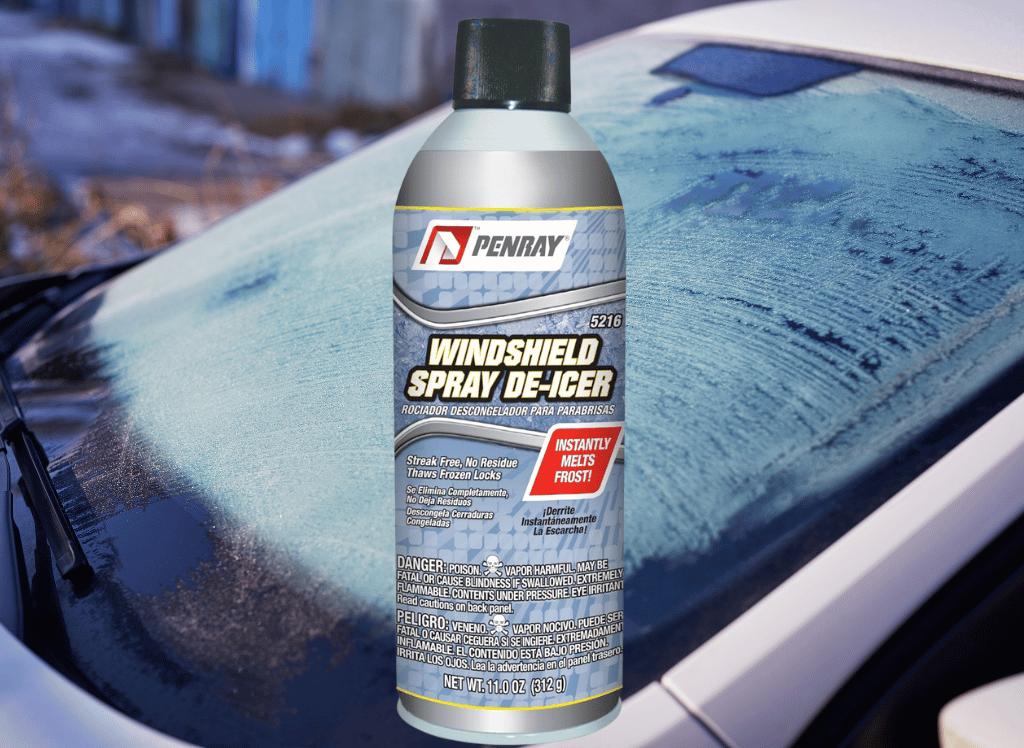
4. Penray 5216 Windshield Spray De-Icer
Penray 5216 is a particularly interesting option for drivers who experience temperatures considerably below the freezing point. Unlike several de-icer manufacturers that avoid publishing a specific cold-weather performance figure, Penray provides a stated operating temperature that makes this product easier to evaluate when preparing for winter.
The manufacturer lists the product as effective down to -25 degrees Fahrenheit. That figure gives buyers a more useful reference point than vague descriptions such as extreme-cold protection. It does not mean that every frozen windshield will clear instantly at that temperature, but it establishes a published operating benchmark for the formula.
Penray 5216 comes in an aerosol container listed at approximately 11 ounces in the product name, with some retailer listings identifying the net quantity as 12.3 ounces. Buyers should check the exact package specification because listings can differ.
The Consumers Guide includes it among its recommended American-market windshield de-icers and highlights its low-temperature rating.
Its aerosol delivery is useful when treating larger windshield sections because the spray can be distributed across the glass without repeatedly squeezing a trigger. That makes it convenient for drivers who need to clear frost before beginning a commute.
There is, however, a limitation in the available documentation. The published comparison does not provide an independent laboratory melting-time result for Penray 5216, so it would be misleading to assign it a specific number of seconds for clearing thick ice.
For motorists in northern states who regularly experience subzero mornings, its published -25-degree rating makes it worth considering. Always follow the label directions, avoid spraying toward your face, and keep aerosol containers away from ignition sources and excessive heat.
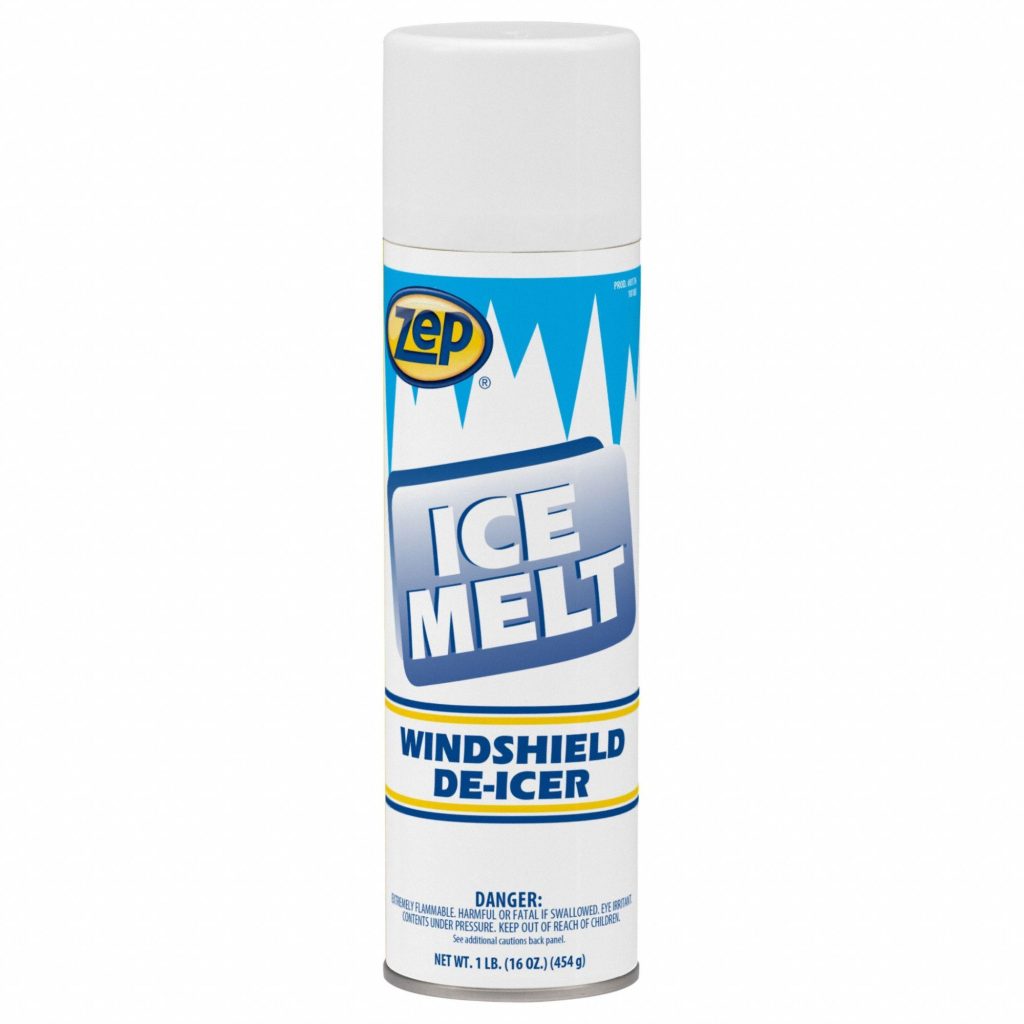
5. Zep Ice Melt Windshield De-Icer 17601
For drivers who worry about what a de-icer might do to surrounding vehicle surfaces, the Zep Ice Melt Windshield De-Icer deserves attention. Its biggest advantage is not an advertised extreme-temperature rating or an unusually complicated formula.
Instead, it stands out because Zep publishes specific surface-compatibility information that many competing products do not clearly provide.
The 17601 version comes in a container holding approximately 19.99 fluid ounces. Zep states that the formula is suitable for use on automotive paint, chrome, vinyl, and rubber.
The manufacturer also identifies a corrosion inhibitor in its formulation, intended to help protect ferrous metal surfaces. Another useful claim is that the product does not leave smeary residue on glass or windshield wipers.
These details matter because de-icer is not always applied with perfect precision. Overspray can reach windshield trim, rubber seals, wiper blades, and nearby painted panels. Having a published compatibility statement gives consumers more information when deciding which product to use around these areas.
Zep also identifies windshields, windows, headlights, and vehicle doors among its intended applications. This makes the product useful for more than simply clearing the main windshield.
However, the manufacturer does not publish a verified minimum working temperature or clearly identify the active ice-melting ingredient in the available product information. Consequently, it would be inaccurate to claim that Zep performs better than every competing formula during extreme freezes.
The product is particularly attractive for drivers who value documented surface compatibility and a larger container. Its corrosion-inhibitor claim is another useful distinction.
As with any chemical de-icer, follow the label directions and avoid unnecessary overspray. Published surface-compatibility claims should not replace proper application or routine vehicle care.
6. Polar De-Icer Spray
The Polar De-Icer Spray is worth considering for drivers who want a clearly stated temperature specification rather than relying entirely on broad manufacturer descriptions. Its most useful published figure is its effectiveness down to -4 degrees Fahrenheit, equivalent to -20 degrees Celsius.
That makes it easier to judge whether the product is appropriate for the winter temperatures commonly experienced in a particular region.
The product is sold in a two-bottle package, with each bottle holding 500 milliliters, approximately 16.9 fluid ounces. The trigger-spray arrangement gives users control over where the liquid is applied, particularly when clearing smaller windows, exterior mirrors, and other glass surfaces.
The manufacturer-referenced application instructions recommend removing loose snow first, shaking the bottle, and spraying from approximately 12 inches away. The treated surface should then be wiped to remove loosened ice and excess liquid. Its listed applications also include headlights, locks, and hinges.
The two-bottle arrangement can be convenient for households with multiple vehicles. One container can remain near the front door or in a garage, while the other is kept in a suitable storage location.
There is one important limitation for American buyers. Polar’s published temperature specification is -4 degrees Fahrenheit, so this should not be confused with products carrying substantially lower cold-weather ratings. It may not be the most appropriate choice for drivers regularly dealing with temperatures far below zero.
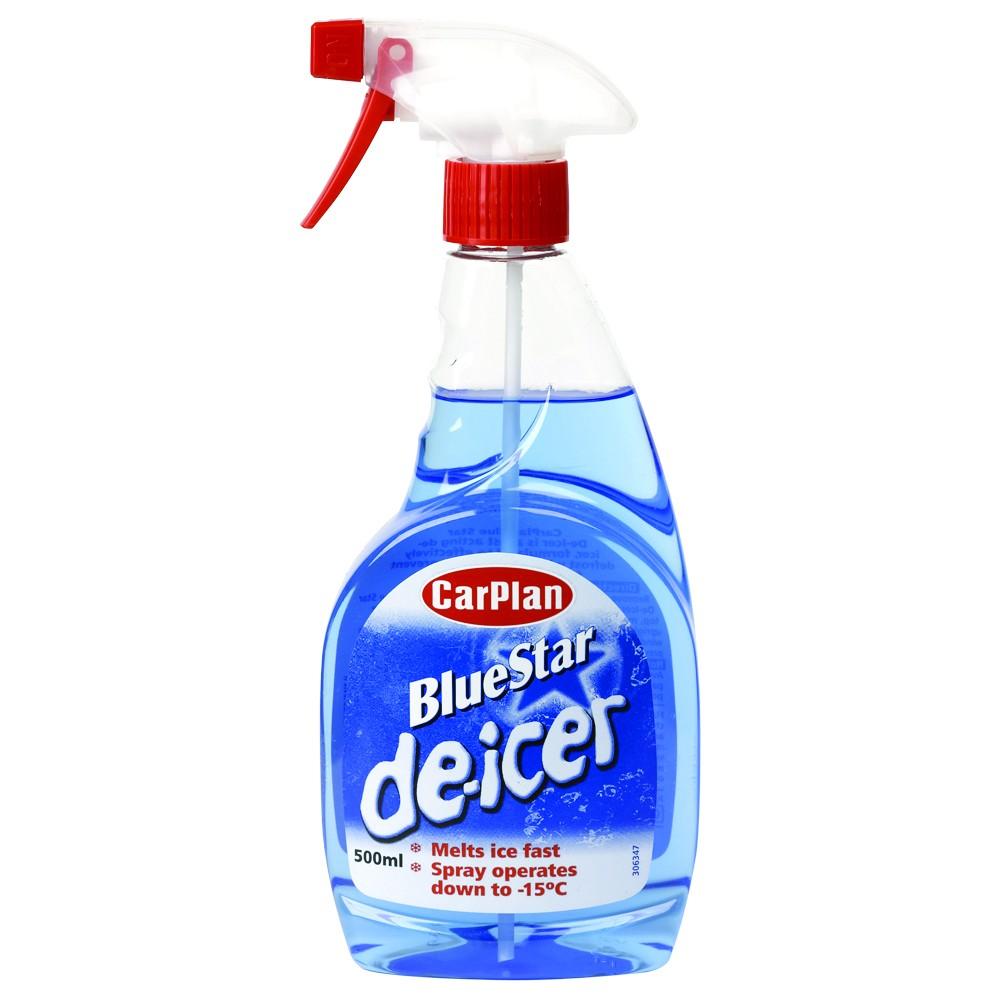
Its trigger bottle should also be stored according to the manufacturer’s instructions. If the liquid freezes inside the container, application becomes difficult.
For moderate winter conditions, Polar provides a useful combination of a stated temperature rating, straightforward application instructions, and a two-bottle package.
7. Prestone Ice & Frost Shield Vehicle Glass Treatment (AS246)
Prestone Ice & Frost Shield AS246 is a preventive windshield treatment designed to help reduce the accumulation of frost, light ice and snow on vehicle glass. Unlike conventional de-icer sprays that are applied after ice has formed, this product is intended for use before winter precipitation or overnight freezing conditions develop.
Its 32-fluid-ounce packaging provides a substantial quantity for repeated winter use, making it a practical option for households that maintain multiple vehicles or regularly park outdoors.
The main advantage of AS246 is its preventive application. Drivers apply the treatment to their vehicle’s exterior glass and windshield wipers before freezing conditions arrive. It helps reduce the amount of frost and ice that sticks to these surfaces, potentially making morning cleanup easier.
It is important not to confuse AS246 with Prestone AS244. The AS244 is a conventional aerosol windshield de-icer designed to melt existing frost and ice, whereas AS246 is marketed as an Ice & Frost Shield treatment. Their intended applications are different, so they should not be treated as interchangeable products.
The 32-fluid-ounce container also provides more product by volume than smaller aerosol alternatives. However, its larger size does not establish faster ice-melting performance or make it a substitute for an instant de-icer spray.
For drivers who want to prepare their vehicles before overnight frost develops, AS246 is worth considering. Its preventive approach can help reduce the effort required during cold mornings, particularly for vehicles parked outside.
However, buyers looking for a product that directly melts thick, already-formed windshield ice should choose a dedicated windshield de-icer instead. Always follow the manufacturer’s application instructions and check the current product label before use.
8. PEAK De-Icer with Anti-Frost Windshield Wash (PKA0F3)
Rounding out the list is PEAK De-Icer with Anti-Frost Windshield Wash, a winter windshield washer product designed for motorists who regularly encounter freezing temperatures. Its one-gallon packaging provides a substantial supply for repeated use during the winter season, particularly for drivers who frequently operate their windshield washer systems.
Unlike handheld aerosol de-icer sprays, this product is formulated for use in a vehicle’s windshield washer reservoir. It works through the vehicle’s washer system, helping remove winter road residue while providing de-icing protection to the windshield.
One of its key advertised specifications is its ability to perform in temperatures as low as -30°F. The manufacturer also promotes instant ice melting and anti-frost protection, making it relevant to motorists who regularly drive in severe winter conditions.
The one-gallon container is another practical advantage. Drivers who experience frequent snow, freezing rain and road-salt buildup may appreciate having a larger quantity available without repeatedly purchasing smaller bottles.
However, it is important to distinguish manufacturer performance claims from independently verified comparative testing. The -30°F specification is a manufacturer-listed performance claim, not evidence that the product has outperformed every competing windshield de-icer in controlled tests.
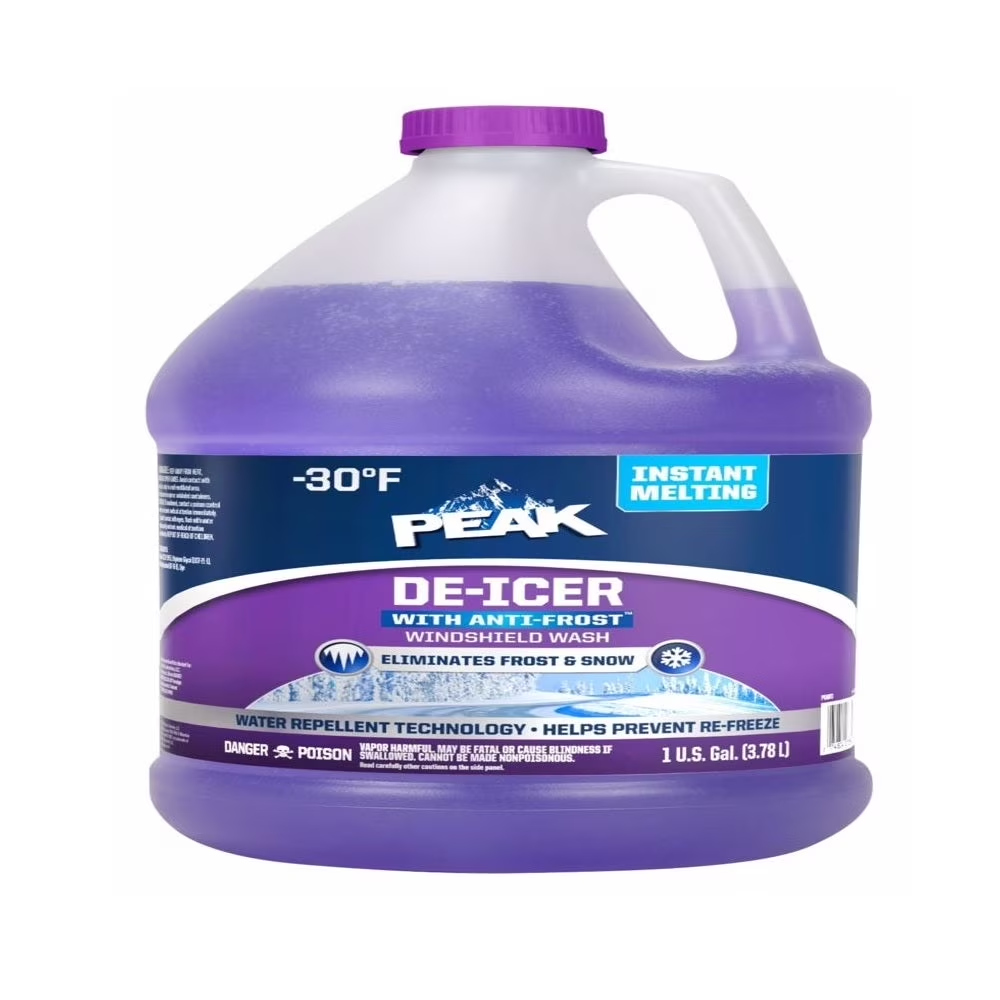
For motorists who want winter protection through their vehicle’s washer system, PEAK offers a useful alternative to conventional handheld de-icer sprays. Its advertised -30°F temperature performance makes it particularly relevant to drivers in regions that experience severe winter conditions.
Before purchasing, check the product label and vehicle manufacturer’s recommendations to confirm compatibility with the washer reservoir and system. This is windshield washer fluid, not a concentrate intended for direct application from a spray bottle.
Its large container and low-temperature performance claim make it a practical winter washer-fluid option, although it should be considered separately from conventional windshield de-icer sprays.
