
Water contamination in a vehicle’s fuel system is a problem drivers should never ignore. Even a small amount of water can interfere with fuel combustion, affect engine performance, and cause damage to important components.
The trouble is that the early symptoms can resemble ordinary mechanical problems, making them easy to overlook. From unexpected engine hesitation to unusual exhaust smoke, your vehicle may give you several warnings when moisture enters the fuel supply.
Recognizing these symptoms early can help you avoid expensive repairs and keep your engine running properly. Whether you drive a gasoline-powered car or a diesel vehicle, understanding what to watch for can make a real difference. Here are eight warning signs that may indicate water contamination in your vehicle’s fuel system.
1. Engine Sputtering or Misfiring
An engine that suddenly sputters, jerks, or misfires during acceleration may be dealing with contaminated fuel. Water does not burn like gasoline or diesel, so its presence interferes with the combustion process.
When water enters the engine alongside fuel, the cylinders may not receive a consistent supply of combustible material. This can cause irregular engine operation.
You might first notice the problem when pressing the accelerator. Instead of responding smoothly, the vehicle may hesitate, jerk, or produce brief interruptions in power.
Sometimes, the engine runs normally for a few seconds before sputtering again. These symptoms can become more noticeable when climbing hills or accelerating onto a highway because the engine requires a steady fuel supply.
Misfiring may also occur when water interferes with the proper ignition of the air-fuel mixture. Drivers sometimes mistake this behavior for faulty spark plugs, damaged ignition coils, or clogged injectors.
Although these components can produce similar symptoms, contaminated fuel deserves attention, especially if the problem started shortly after refueling.
Do not continue driving for long periods while the engine repeatedly misfires. Unburned fuel can damage the catalytic converter, while continued exposure to contaminated fuel may harm other engine components.
Have the fuel system inspected to identify the actual cause before replacing parts unnecessarily.
2. Rough Idling or Stalling
A healthy engine should maintain a reasonably steady idle when your vehicle is parked or stopped in traffic. If the engine begins shaking, vibrating excessively, or struggling to remain running, water contamination could be one possible explanation.
At idle, the engine needs a consistent supply of fuel to maintain its operating speed. When water enters the fuel system, combustion becomes irregular.
Some cylinders may receive enough combustible fuel to operate properly, while others experience incomplete combustion. The result can be an unstable idle that makes the entire vehicle feel uncomfortable.
Pay attention to what happens when you stop at a traffic light. Does the engine suddenly vibrate? Does the RPM reading move up and down without any input from the accelerator? These behaviors may indicate that the engine is struggling to maintain a steady operating speed.
In more severe cases, the engine may stall completely. This can happen while waiting in traffic, reversing into a parking space, or sitting in a driveway. Repeated stalling is particularly concerning because it can leave you stranded and create unsafe situations in heavy traffic.
Water contamination is not the only possible cause. Dirty throttle bodies, faulty sensors, vacuum leaks, and fuel delivery problems can produce similar symptoms.
A proper inspection can help distinguish between these issues and determine whether the fuel needs to be drained or replaced.

3. Hard or Impossible Starting
Turning the ignition and hearing the engine crank repeatedly without starting can be frustrating. When water contaminates the fuel, starting difficulties may become one of the first symptoms you experience.
For an engine to start, it needs the correct combination of air, fuel, and ignition. Water disrupts the combustion process because it cannot provide the energy needed to keep the engine running.
If contaminated fuel reaches the injectors or combustion chambers, the engine may struggle to ignite the mixture properly.
You may notice that the starter motor turns the engine for several seconds before it finally starts. In more difficult situations, the engine may crank continuously without firing. Sometimes, it starts briefly and then shuts off almost immediately.
Cold weather can make starting problems more noticeable. Lower temperatures can affect fuel vaporization, while moisture may create additional difficulties for an engine that already has trouble receiving clean fuel.
Diesel vehicles can experience particularly troublesome starting issues when water contaminates the fuel supply. Water can interfere with proper combustion and may also contribute to corrosion in sensitive fuel injection components.
If your vehicle suddenly develops starting problems after refueling, consider the possibility of contaminated fuel. Avoid repeatedly cranking the engine for extended periods, as this can place unnecessary strain on the starter and battery.
A qualified technician can inspect the fuel system, check for water, and recommend the appropriate corrective action.
4. Sudden Loss of Power and Sluggish Acceleration
You press the pedal to merge onto the highway, and the car barely responds. That sinking feeling is a classic symptom of water in the fuel system.
When moisture reaches the injectors in place of fuel, the engine receives less of what it needs to produce power. The car may feel weak on hills, slow to pick up speed, or oddly hesitant when you ask for more.
Passing another vehicle becomes a stressful decision rather than a simple move. Because this symptom affects safety, take it seriously. Reduced power can leave you stuck in the wrong lane at the wrong time.
If it appears suddenly, ease off the throttle, turn on your hazard lights if necessary, and move to a safe place. Avoid pushing the engine hard, since running on contaminated fuel can harm injectors and fuel pumps, which are costly to replace.
Keep in mind that sluggish acceleration also stems from other causes, including clogged air filters, failing sensors, and worn spark plugs. That is why paying attention to patterns helps.
If the power loss follows a recent fill-up or heavy rain, water becomes a likelier culprit. A mechanic can test the fuel quality and inspect the system. Do not treat weak performance as normal aging. Your car is trying to tell you something.
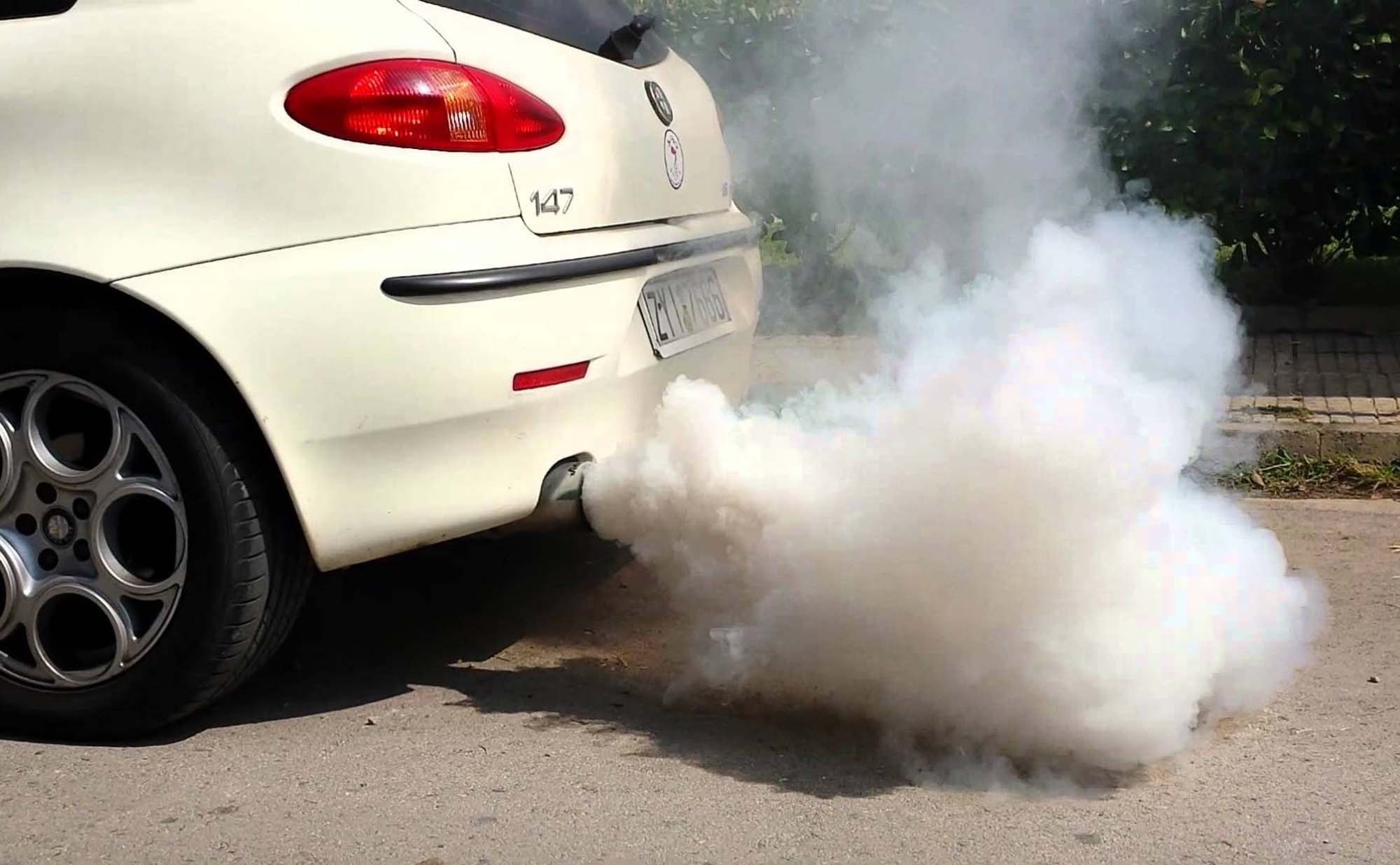
5. White or Light Grey Exhaust Smoke
The color of your vehicle’s exhaust can provide useful information about what is happening inside the engine. If you notice unusual white or light grey smoke coming from the tailpipe, it may deserve closer attention.
Water contamination can interfere with combustion and allow moisture to pass through the combustion process. When heated, this moisture becomes steam and may leave the exhaust system as a visible white vapor.
Depending on the amount of moisture and operating conditions, the exhaust may appear unusually cloudy. However, not every instance of white exhaust smoke indicates contaminated fuel.
A small amount of white vapor during a cold start is often normal. It usually disappears as the exhaust system warms up, particularly in cold or humid weather.
The warning sign is persistent or unusually heavy smoke, especially when it appears alongside other symptoms such as rough idling, engine misfiring, difficult starting, or reduced acceleration.
There is another important possibility to consider. Thick white smoke from a gasoline engine can indicate coolant entering the combustion chamber, potentially because of a damaged head gasket or another internal engine problem.
Diesel engines can also produce white smoke when fuel combustion is incomplete. Pay attention to when the smoke appears, how long it lasts, and whether the engine experiences other performance problems.
If the smoke continues after the engine warms up, have the vehicle inspected promptly. A technician can examine the fuel, cooling system, and engine condition to determine the source.
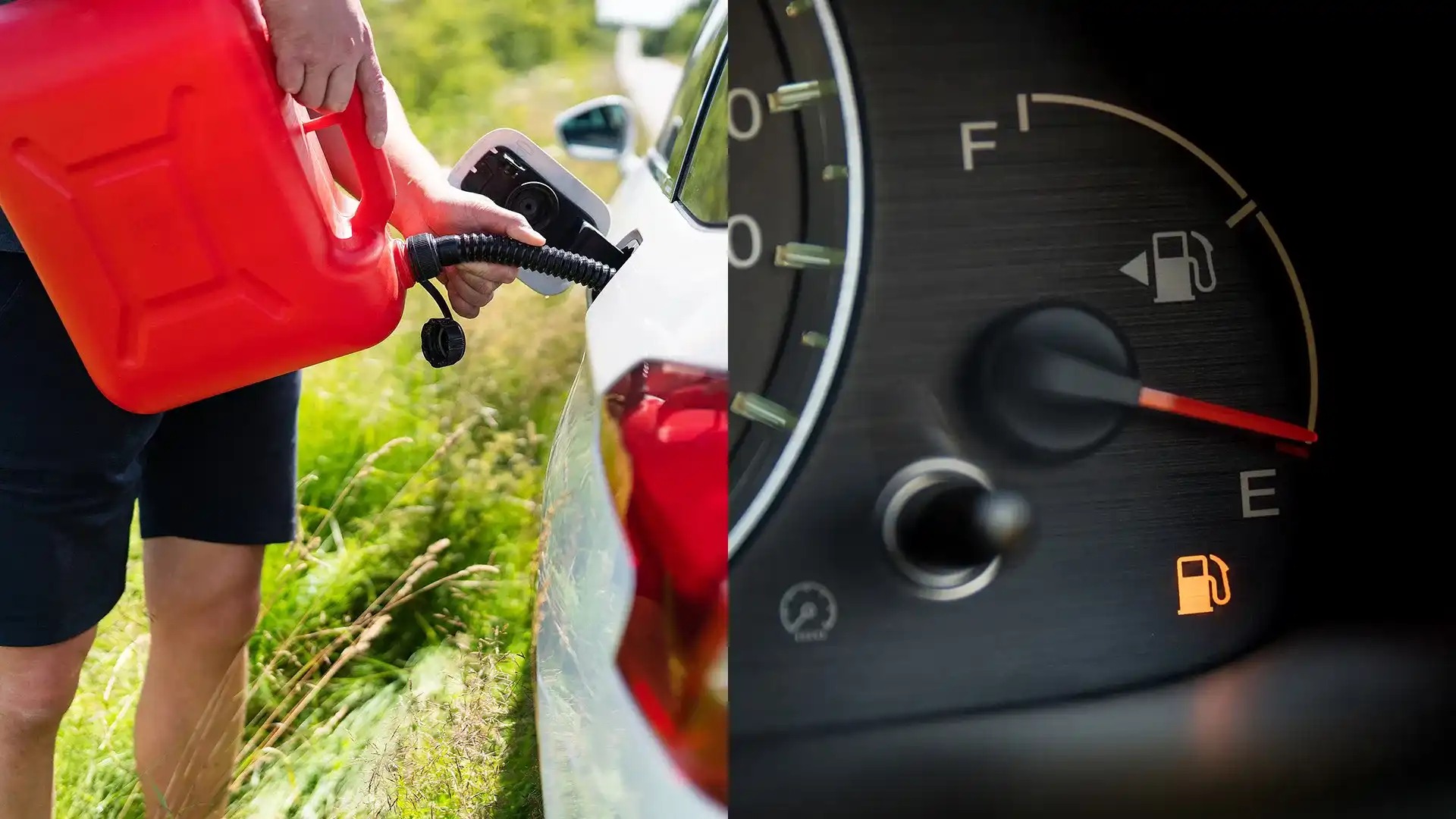
6. “Water in Fuel” Warning Light
Your vehicle’s dashboard is designed to communicate problems before they become serious. If a warning light indicating water in the fuel appears, take it seriously rather than treating it like an ordinary dashboard notification.
Many diesel vehicles have a dedicated water-in-fuel indicator. Its appearance varies between manufacturers, but it commonly resembles a fuel filter or fuel pump with droplets underneath.
The warning activates when a sensor detects water collecting in the fuel filter or another monitored part of the fuel system. Diesel fuel systems often include water separators because moisture can enter the tank during storage, transportation, or refueling.
These separators collect water before it reaches sensitive injection equipment. When enough water accumulates, a sensor may trigger the dashboard warning.
Once the light appears, check your owner’s manual for the manufacturer’s recommended procedure. Some vehicles require the water separator to be drained, while others need professional servicing. Do not assume the warning will disappear permanently after restarting the engine.
Ignoring this alert can expose fuel system components to corrosion and poor lubrication. Modern diesel injectors and high-pressure fuel pumps depend on clean fuel for reliable operation.
It is also worth remembering that a warning light can sometimes result from a faulty sensor or electrical connection. A diagnostic inspection can confirm whether water is present and whether the monitoring system is working correctly.
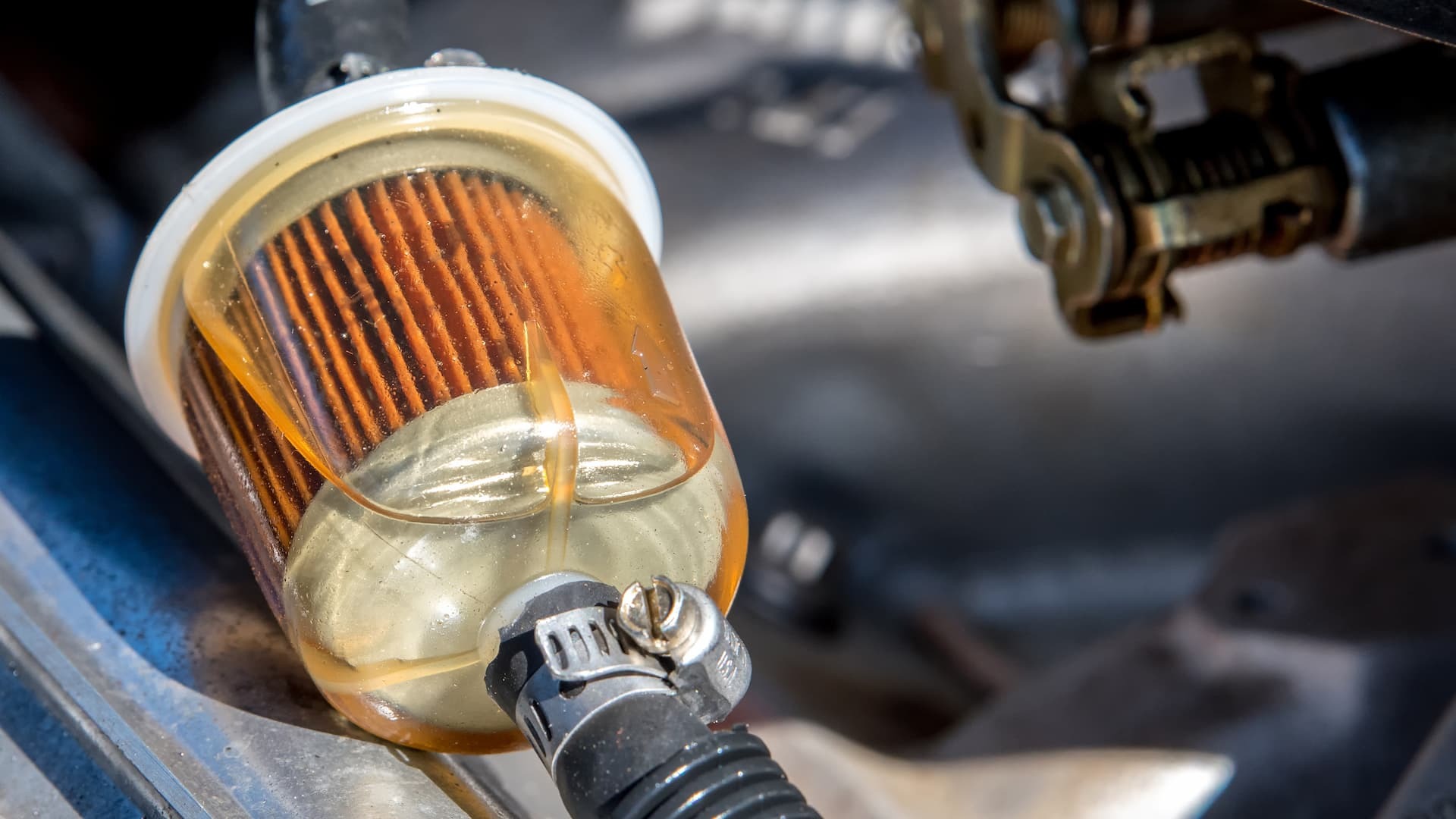
7. Clogged or Slimy Fuel Filters
A fuel filter helps protect the engine by trapping dirt, rust, and other contaminants before they reach critical components. However, when water enters the fuel tank, the filter can become clogged much sooner than expected.
Water creates conditions that can support microbial growth, particularly in diesel fuel systems. Certain microorganisms live at the boundary between fuel and water, producing waste materials and sludge as they grow. This material can accumulate inside the tank and eventually reach the fuel filter.
When the filter becomes contaminated, it may develop dark deposits, sticky residue, or a slimy appearance. Instead of allowing fuel to pass through freely, the accumulated material restricts fuel flow.
You may notice several related symptoms, including difficult starting, reduced acceleration, engine hesitation, or unexpected stalling. These problems occur because the engine cannot receive the amount of fuel it needs for normal operation.
Diesel vehicles are particularly vulnerable to microbial contamination when water remains inside the tank for extended periods. However, fuel filter problems can also result from ordinary dirt, rust, degraded fuel, or other contaminants.
A mechanic can inspect the filter and determine whether it contains water-related sludge or another type of debris. Replacing a severely contaminated filter may be necessary, but the underlying water problem must also be corrected.
Simply installing a new filter without addressing contamination inside the tank can allow the replacement filter to become clogged again.
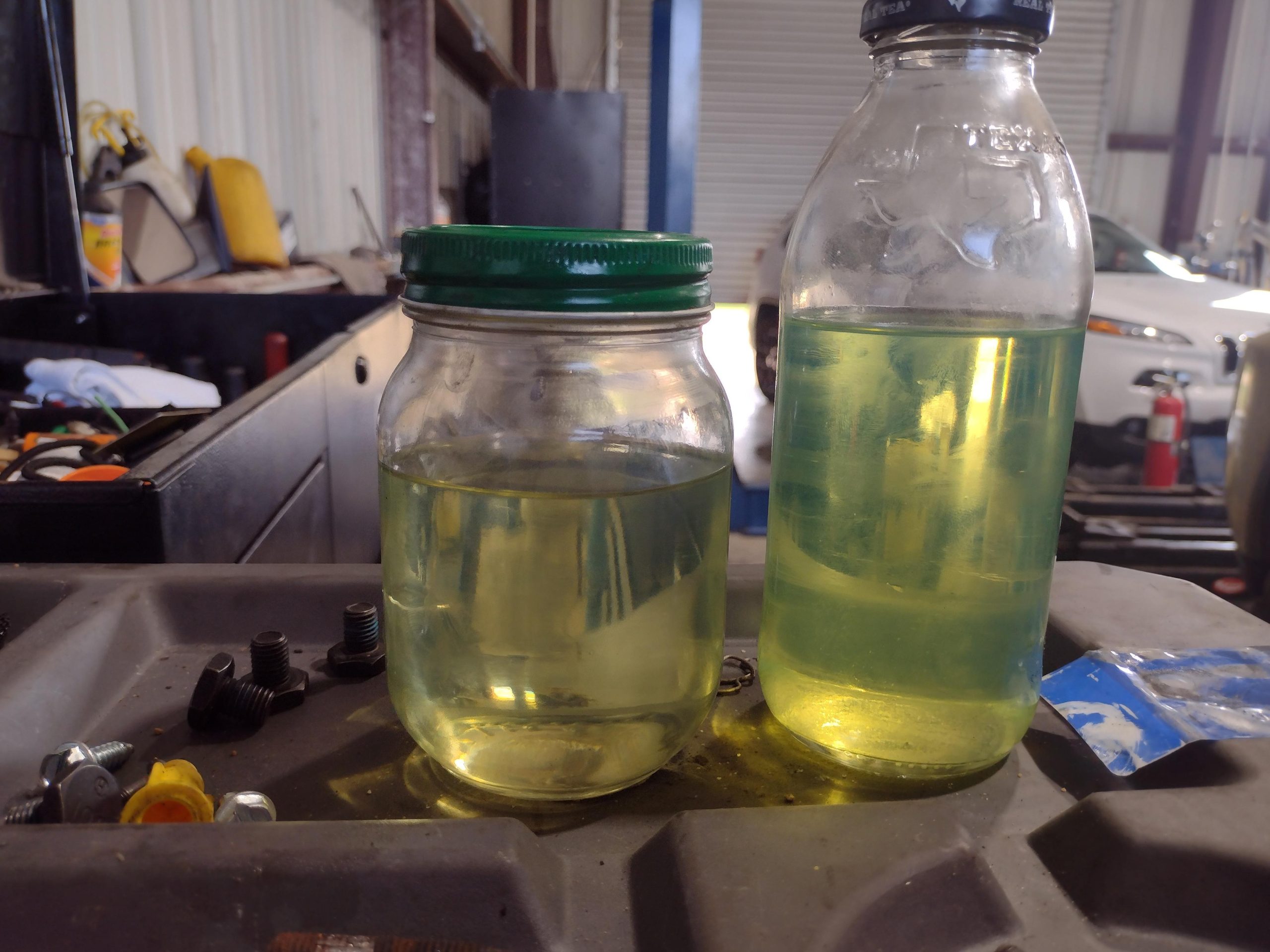
8. Cloudy Fuel or Visible Water Layers in a Sample
Sometimes the clearest answer sits right in front of your eyes. If you suspect water contamination, draw a small fuel sample into a clean, clear glass or plastic container and let it sit for a few minutes.
Healthy fuel looks bright and transparent. Contaminated fuel looks hazy, milky, or cloudy. Water is heavier than gasoline and diesel, so a distinct layer may settle at the bottom, creating a visible line between the two liquids.
That separation is a dead giveaway. Always take safety seriously when handling fuel. Work outdoors, away from flames, sparks, and cigarettes, and wear gloves.
Never taste or inhale fuel, and dispose of any sample properly at a local hazardous waste facility. If you are uncomfortable collecting fuel yourself, ask a mechanic to do it.
They have the tools and training to test it safely. A visible water layer means the tank needs professional attention, and driving on it can harm pumps and injectors.
Do not simply top off the tank with fresh fuel and hope for the best, since that only dilutes the problem. Have the system drained, cleaned, and inspected.
Then try to find the source, whether it was a bad fill-up, a leaky cap, or condensation. A simple glass of fuel can reveal a hidden threat before serious damage occurs.
