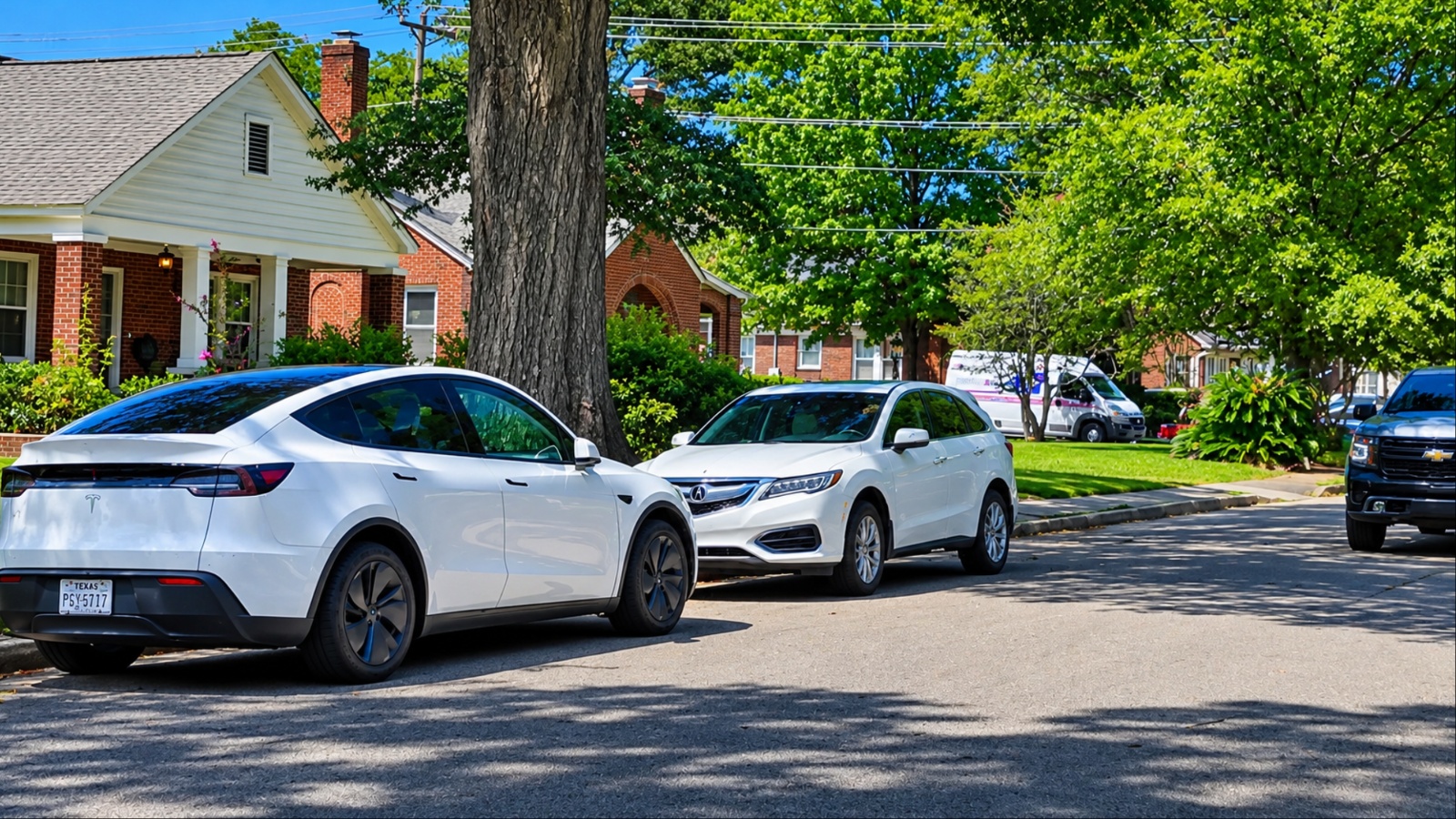
Finding a parking spot on a public street does not automatically mean your vehicle can legally stay there. Across the United States, parking regulations govern everything from how close you can leave a car to a fire hydrant to how long it can remain in one location.
Even a vehicle with valid registration can receive a ticket or be towed for violating local restrictions. Some rules apply nationwide through state traffic laws, while others depend on city ordinances, posted signs, and seasonal restrictions. Here are eight situations that can make street parking illegal for American drivers.
1. Parking Too Close to a Fire Hydrant, Crosswalk, or Driveway
A parking space may look perfectly acceptable until you notice how close your vehicle is to a fire hydrant, pedestrian crossing, or driveway. These locations have specific clearance requirements because improperly parked vehicles can obstruct emergency services, pedestrians, and other motorists.
Ignoring these restrictions can result in a parking citation even when there are no visible signs prohibiting parking.
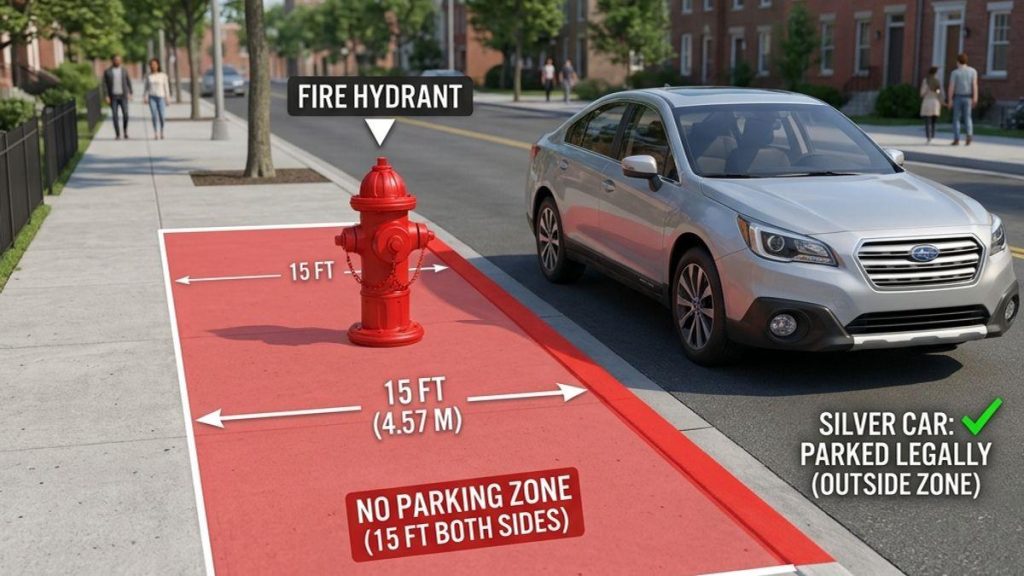
Pennsylvania provides clear measurements under Title 75, Section 3353. The law prohibits standing or parking within 15 feet of a fire hydrant, 20 feet of a crosswalk at an intersection, and in front of a public or private driveway. It also prohibits parking on a crosswalk or sidewalk.
Michigan follows similar restrictions under Michigan Compiled Laws §257.674. Vehicles cannot be parked within 15 feet of a fire hydrant, on a crosswalk, or within 20 feet of a crosswalk. Parking in front of public or private driveways is also prohibited.
These measurements matter because drivers sometimes assume that leaving a small gap around a hydrant or driveway is sufficient. In reality, the legal distance is measured according to the applicable state or local rule, not personal judgment.
New York City also prohibits parking within 15 feet of either side of a fire hydrant. Its parking guidance makes clear that painted curb markings do not determine the permitted distance.
The consequences can extend beyond a fine. A vehicle blocking emergency access may be towed, while one obstructing a driveway can prevent residents from entering or leaving their property.
Before leaving your vehicle, check the nearest hydrant, driveway entrance, and pedestrian crossing. A few extra feet can make the difference between a legal parking space and an unnecessary ticket.
2. Parking Against the Direction of Traffic
Finding a space on the opposite side of the road might seem convenient, especially on a narrow residential street. However, parking facing against the direction of traffic can violate local parking requirements. Many drivers overlook this rule because their vehicle is stationary, but parking regulations still govern its position and orientation.
Michigan addresses this under its Vehicle Code, Section 257.675. The statute generally requires a vehicle parked on a highway or street to have its wheels parallel to the roadway and within 12 inches of the curb on the right side of the vehicle.
A local authority may permit parking on the left side of a one-way roadway, provided the vehicle follows the specified curb-position requirements.
This means drivers cannot simply choose whichever direction makes a parking space easier to enter. The orientation of the vehicle must comply with the applicable street configuration and local rules.
New York City also identifies parking against the flow of traffic as an illegal parking condition in its official enforcement guidance. Residents can report vehicles parked in the wrong direction through the city’s illegal-parking reporting system.
There is a practical safety reason behind these restrictions. A driver parking against traffic may need to cross opposing traffic lanes to reach the space. Leaving the space can create a similar problem, especially when visibility is limited.
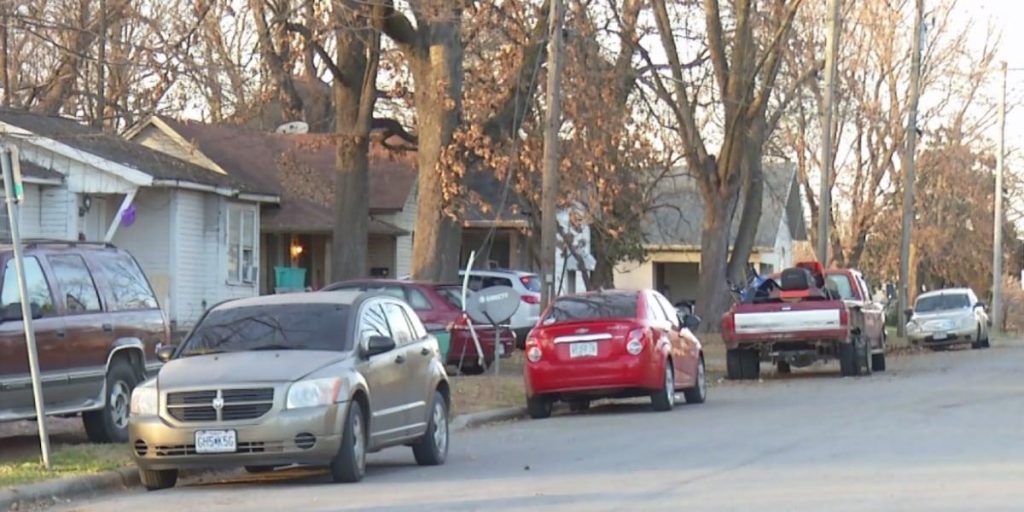
Vehicles facing the wrong direction may also have their lights, reflectors, and license plates positioned less effectively for approaching traffic.
Before parking, check the direction of traffic and the side of the street where parking is permitted. On one-way streets, follow the local rules governing which curb can be used.
A vacant space is not necessarily a legal space. Parking in the correct direction helps maintain predictable traffic movement and prevents an avoidable citation.
3. Parking a Vehicle With Expired Registration
A vehicle does not necessarily need to be moving to attract attention for expired registration. In some states, leaving an improperly registered vehicle on a public street is itself a parking violation. This can surprise owners who believe registration requirements apply only when driving on public roads.
Illinois has a particularly specific provision under 625 ILCS 5/11-1304.5. It prohibits stopping, parking, or leaving a vehicle standing on a public street, highway, or roadway when its Illinois registration plates or registration stickers have passed their expiration period.
The law includes certain statutory exceptions, but simply keeping the vehicle parked does not automatically protect its owner from enforcement.
New York City also has strict vehicle-compliance rules. The New York City Department of Transportation explains that the city is designated as a tow-away zone under state law. Vehicles parked illegally or displaying missing or expired registration or inspection credentials may be towed.
There is an important distinction between an expired registration and an expired inspection sticker. They are separate requirements, and the consequences depend on the applicable state regulations. A vehicle might have valid registration but fail its required inspection, or the reverse.
Drivers should also avoid assuming that a vehicle can remain indefinitely on a public street simply because it is not being driven. Local authorities may have additional requirements concerning abandoned vehicles, expired plates, and long-term street storage.
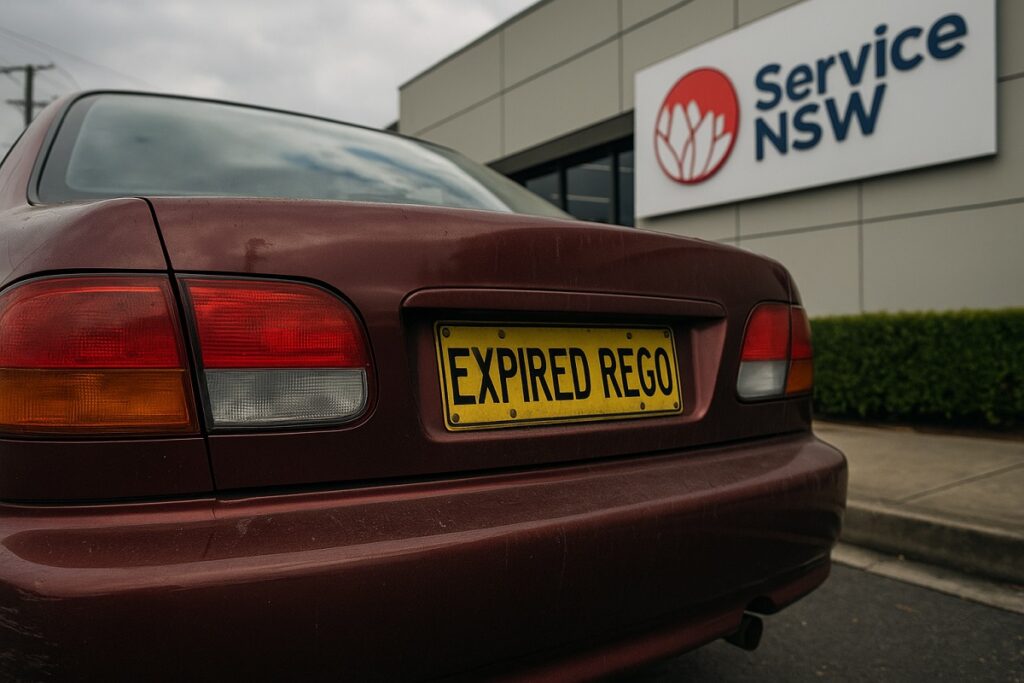
If your registration is approaching its expiration date, renew it before relying on public street parking. Keep the necessary documentation available and make sure any required plates or stickers are displayed correctly.
A private garage or driveway may offer different legal considerations, but public streets are subject to vehicle registration and parking requirements. An expired registration can therefore turn an otherwise ordinary parking arrangement into a citation or towing problem.
4. Ignoring Street-Cleaning and Alternate-Side Parking Restrictions
A street may offer perfectly legal parking during the evening but become a restricted area the following morning. Street-cleaning regulations are designed to give municipal cleaning vehicles access to curbs and parking lanes.
Drivers who ignore the posted schedule can receive parking tickets even when their vehicles are otherwise properly registered and legally parked.
New York City operates an extensive Alternate Side Parking (ASP) system. Under these rules, parking is prohibited on designated sides of streets during the days and hours displayed on street-cleaning signs. The restrictions remain in effect for the entire posted period, even if the street sweeper has already passed.
That last detail catches many motorists by surprise. Seeing a cleaning vehicle finish its work does not automatically mean parking restrictions have ended. Drivers must wait until the posted restriction expires or an official suspension takes effect.
The city’s Department of Sanitation states that failing to move a vehicle during an active alternate side parking period can result in a fine of up to $65. This figure applies to the cited NYC street-cleaning violation, not every parking violation throughout the country.
There are certain exceptions. New York City suspends Alternate Side Parking on designated legal and religious holidays, as well as during certain severe-weather conditions and emergencies. However, suspension of street-cleaning restrictions does not automatically cancel every other parking restriction on the block.
Other American cities also establish street-cleaning schedules, although their systems, penalties, and enforcement procedures differ.
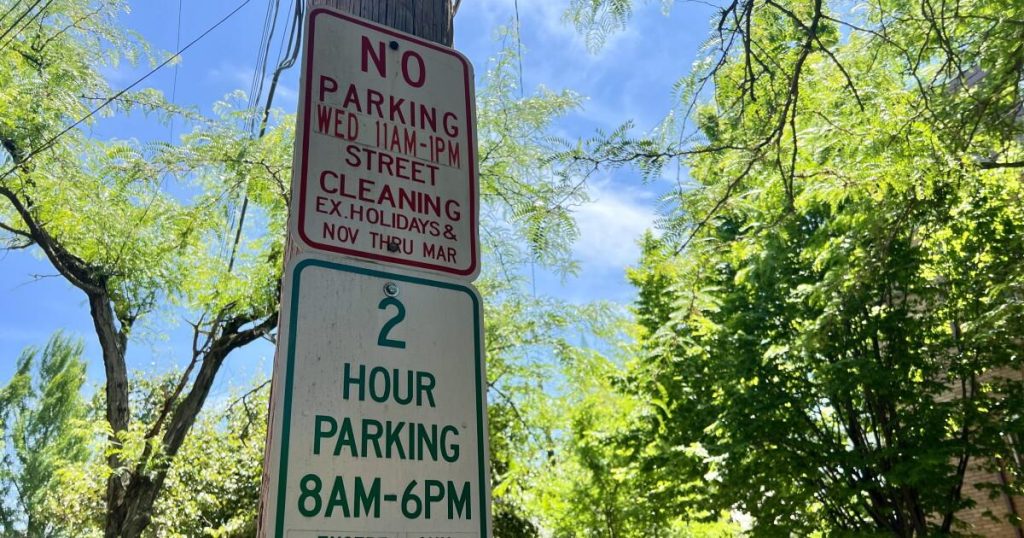
Drivers should read the complete parking sign before leaving their vehicles. Pay attention to the days, time ranges, directional arrows, and any temporary notices. Setting a reminder on your phone can help prevent an unexpected ticket.
Street cleaning may appear to be a minor municipal operation, but ignoring its parking schedule can make an otherwise legal parking space temporarily prohibited.
5. Leaving a Vehicle in the Same Street Parking Space for Too Long
A public street is not a permanent storage facility for privately owned vehicles. Even when a car is registered, operational, and parked correctly, leaving it in the same location for an extended period can violate municipal parking rules. Cities often establish time limits to prevent vehicles from occupying valuable street space indefinitely.
New York City provides a clear example. According to NYC311, unless a posted sign specifies otherwise, a vehicle cannot remain parked in the same street location for more than seven consecutive days. The restriction applies across residential and other neighborhood areas.
This means that moving a vehicle only a few inches may not necessarily resolve the problem if authorities determine that it has effectively remained in the same parking location. Drivers should not assume that an apparently unused street space belongs to them simply because they were the first to occupy it.
Other municipalities use different time limits. Olympia, Washington, has a separate abandoned-vehicle provision under its municipal code.
Under the cited ordinance, a vehicle may be considered abandoned on the city right-of-way after being parked for 72 hours or more. Additional criteria apply to vehicles that are unregistered or visibly inoperable.
The distinction between a time-limit violation and an abandoned vehicle is important. A properly maintained car can violate a local maximum-parking rule without necessarily meeting the legal definition of an abandoned vehicle.
Extended street storage can also create problems for street cleaning, snow removal, road maintenance, and neighborhood parking availability.

If you plan to travel or leave your vehicle unused for several days, check the local parking rules before doing so. Arrange alternative storage when necessary rather than assuming the car can remain indefinitely.
A public parking space is intended for temporary vehicle use, and local governments can enforce reasonable limits on how long it remains occupied.
6. Parking During a Declared Snow Emergency
A street that normally allows overnight parking can become a prohibited parking area when a municipality declares a snow emergency. These temporary restrictions help snowplows clear roads, remove accumulated snow, and maintain access for emergency vehicles. Drivers who fail to move their cars during an active parking ban can face citations and towing charges.
Philadelphia provides a clear example of how these rules work. The city’s Department of Streets identifies 110 miles of designated snow emergency routes. These routes are marked with large red signs displaying the words “Snow Emergency Route.”
When Philadelphia declares a snow emergency, vehicles parked along these designated routes must be moved to alternative parking locations until the emergency is officially over. Drivers who leave their vehicles in restricted areas can receive parking tickets, and their cars may be towed.
Importantly, vehicles that cannot move under their own power are not automatically exempt. A disabled vehicle left on a designated snow emergency route can still be removed to allow snow-removal operations to continue.
Other cities establish their own winter parking restrictions. Cleveland Heights, Ohio, for example, has a municipal ordinance that permits an emergency parking ban when the mayor or authorized representative declares a snow emergency after qualifying snowfall. Its ordinance provides for vehicle removal and towing when drivers violate the restriction.
The timing and activation requirements differ between municipalities. Some cities announce restrictions through emergency notifications, while others use designated routes and official notices.
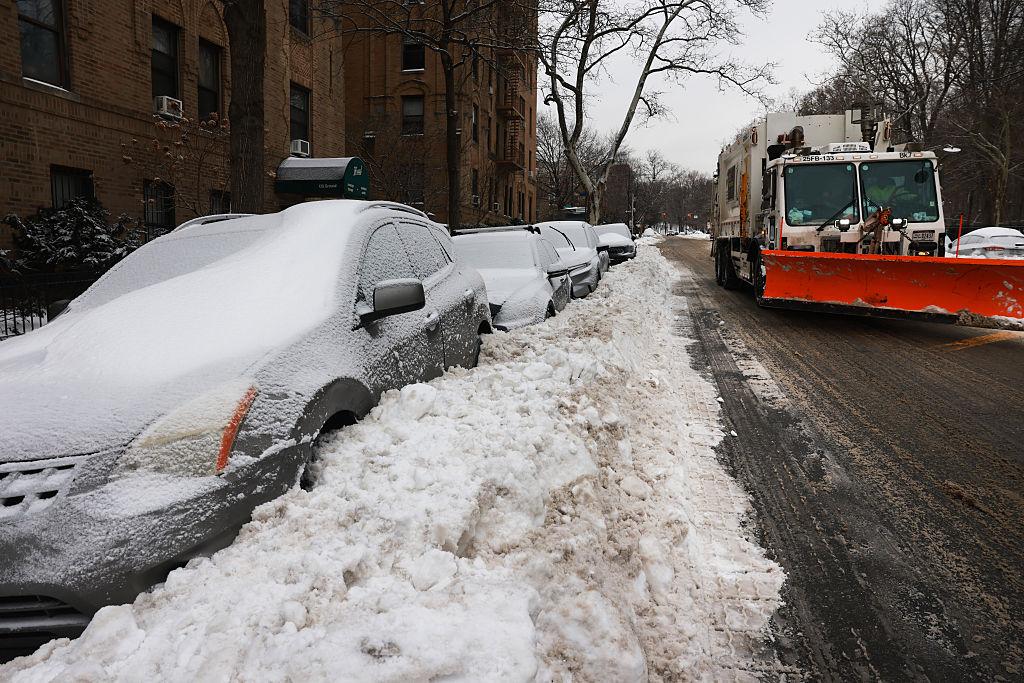
Drivers living in areas with regular winter snowfall should identify nearby snow emergency routes before winter begins. Pay attention to local government announcements and move your vehicle promptly when a parking ban is declared.
A familiar street parking location is not guaranteed to remain legal during severe weather. Temporary winter restrictions can override ordinary parking arrangements and leave an improperly parked vehicle facing an expensive tow.
7. Double-Parking Beside Another Parked Vehicle
Finding no available parking space does not permit drivers to leave their vehicles beside another parked car. This practice, commonly known as double parking, can obstruct moving traffic, interfere with emergency access, and force other motorists to change lanes unexpectedly.
New York City has an especially strict rule. Its official parking guidance states that double parking passenger vehicles is illegal at all times, regardless of the location, purpose, or duration. The restriction applies even when a driver remains inside the vehicle or switches on the hazard lights.
This is an important distinction because many motorists believe that briefly stopping beside another car to collect someone or unload shopping bags is acceptable. In New York City, occupying a second row of parking can still result in a citation.
Pennsylvania also addresses this problem under Title 75, Section 3353(a)(1)(i). The statute generally prohibits stopping, standing, or parking on the roadway side of a vehicle already stopped or parked at the curb. It provides limited exceptions, including certain loading and unloading situations authorized by local ordinance.
The rules can therefore vary depending on the state and municipality. A limited loading exception in one jurisdiction should never be treated as nationwide permission to double-park.
There are practical consequences beyond receiving a ticket. A double-parked vehicle can narrow the available roadway, block cyclists, delay buses, and force emergency vehicles to navigate around unnecessary obstacles.
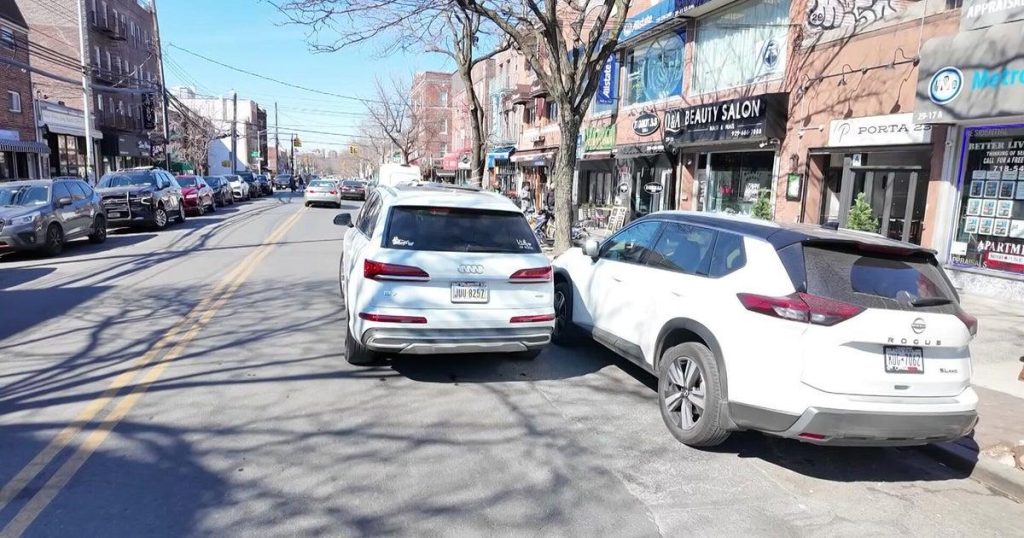
If a street is full, continue to a legal parking space rather than creating a second row. Commercial vehicles may have specific loading and delivery exceptions in certain locations, but those permissions are limited by posted hours and local regulations.
Hazard lights do not make an otherwise prohibited parking position legal. A few minutes of convenience can create congestion and expose the driver to an avoidable parking violation.
8. Parking in a Restricted Zone or Ignoring Posted Parking Signs
One of the easiest ways to receive a street-parking ticket is to ignore the signs placed along the curb. A location may look like an ordinary parking space, but restrictions can apply during specific hours, on certain days, or throughout the entire week.
These rules can also change depending on whether a street is being used for deliveries, public transportation, emergency access, or traffic management.
New York City uses several different parking sign categories. A No Parking sign generally prohibits parking while allowing limited stopping for activities such as passenger pickup or drop-off, subject to the sign’s conditions.
A No Standing sign is stricter and generally prohibits waiting or loading and unloading, while permitting brief passenger pickup or drop-off. A No Stopping sign is the most restrictive of the three.
The city also uses signs specifying particular days and hours. A vehicle legally parked at 8 p.m. may become illegally parked when a restriction begins the following morning.
Pennsylvania addresses this issue under Title 75, Section 3353. The law prohibits parking at locations where official signs prohibit it. Michigan’s Section 257.674 similarly prohibits parking where an official sign restricts stopping or parking.
Drivers should pay attention to directional arrows because they indicate the portion of the curb covered by a particular restriction. Reading only the nearest sign without checking the entire parking area can lead to mistakes.
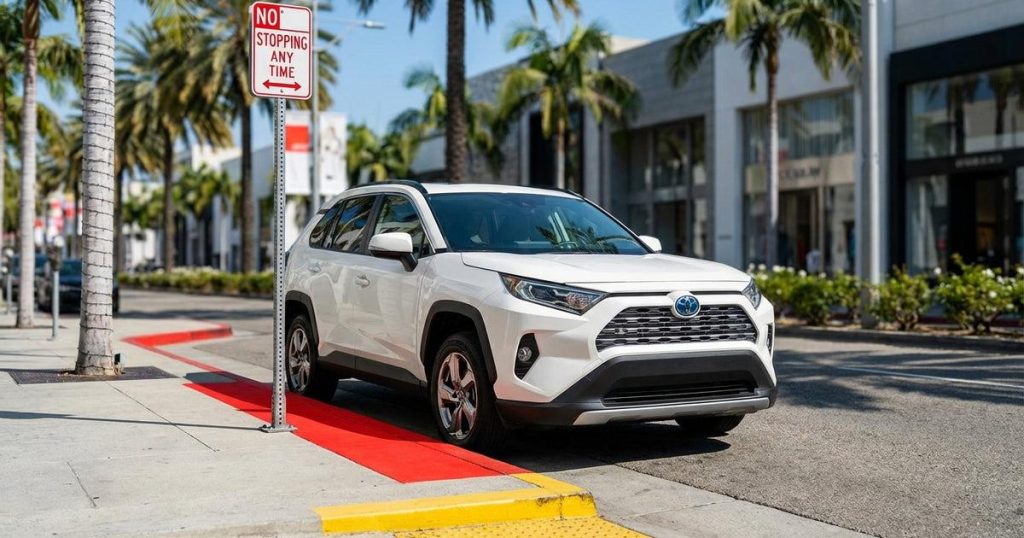
Temporary signs also deserve attention. Municipalities may establish short-term parking restrictions for construction, street repairs, public events, utility work, and emergency operations.
Before leaving your vehicle, check every relevant sign and identify the exact hours and days when parking is permitted. Never assume that a restriction has expired simply because other vehicles are parked nearby.
A clearly marked parking space is not a legal guarantee. The posted regulations determine whether your vehicle can remain there.