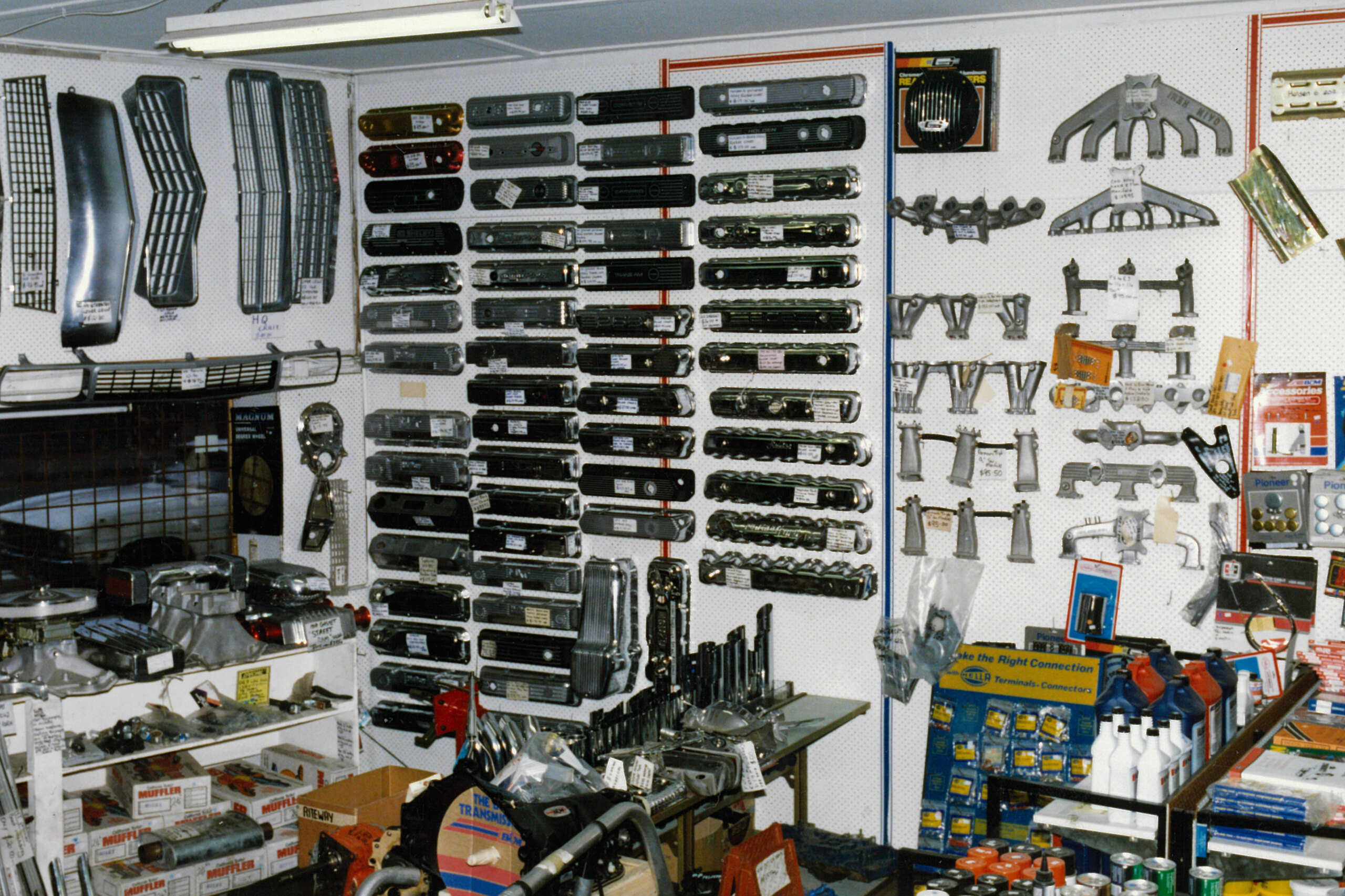
The price of a replacement part at an auto parts store is rarely what the store originally paid to acquire it. A customer might spend $150 on a brake rotor, $90 on an alternator, or $35 on an oil filter, but the retailer generally purchased that inventory through a manufacturer, wholesale distributor, or direct supplier at a lower price.
The difference helps cover the costs of stocking, storing, and selling the product, but it is not pure profit. The supply chain behind a single car part can involve several businesses, negotiated discounts, shipping expenses, and volume-based purchasing agreements.
Where Auto Parts Stores Get Their Inventory
Most auto parts retailers do not manufacture the products they sell. Instead, they source inventory from original equipment suppliers, aftermarket manufacturers, remanufacturers, and wholesale distributors.
The exact route depends on the retailer’s size, the product category, and whether the part is sold under a well-known brand or the store’s own label.
In the traditional aftermarket distribution system, a manufacturer sells products to a warehouse distributor. That distributor stores large quantities and supplies smaller parts businesses, often called jobbers.
The jobber acts as the final link by supplying the part to an auto repair shop or directly to an individual buyer. This distribution model typically involves three stages, starting with the manufacturer, followed by the warehouse distributor, and ending with the jobber.
The arrangement is different for large national chains. Companies such as AutoZone and O’Reilly Auto Parts have substantial purchasing operations and distribution networks.
They can buy directly from manufacturers, negotiate supply agreements, and move products through their own warehouses and stores. This can remove an intermediary and give them greater control over inventory costs.
The scale of the industry is considerable. MEMA, the Vehicle Suppliers Association, identifies more than 6,500 parts manufacturers and more than 282,000 retail outlets in the U.S. aftermarket supply chain. That includes national chains, independent retailers, service businesses, and other sales channels.
A store’s supplier relationship also affects what it pays. A large retailer ordering thousands of units may negotiate a different price from a small independent shop ordering a few dozen. Purchasing volume, payment terms, delivery arrangements, product category, and the length of the supplier relationship can all influence the final cost.
Some stores also sell private-label parts. These products are manufactured by outside suppliers but marketed under the retailer’s own brand.
The retailer can select different suppliers and product specifications to create budget, midrange, and premium options. This gives the store more control over its product range and pricing than simply stocking parts from independent brands.
Why the Wholesale Price Is Not the Same for Every Store
There is no universal wholesale discount that applies to every auto parts retailer. A store’s purchase price depends on its buying power, supplier agreements, the type of component, and the distribution route.
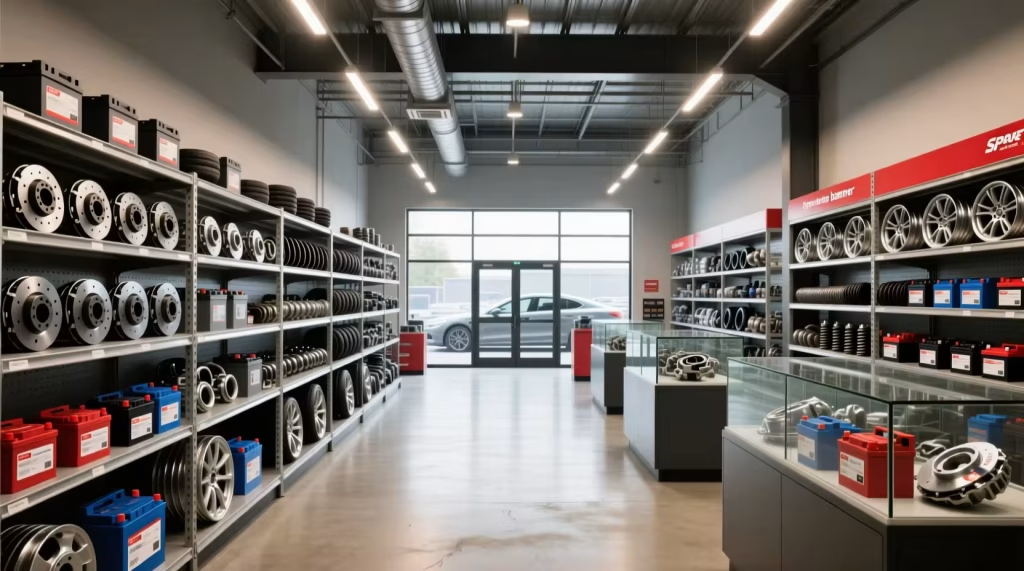
Consider a small independent parts store. It may purchase brake pads from a regional warehouse distributor rather than directly from the manufacturer. The distributor has already paid for the products, warehousing, transportation, and inventory management. It then sells them to the independent retailer at a wholesale price that allows it to earn its own margin.
A national chain can operate differently. It may negotiate directly with the manufacturer, purchase larger quantities, and distribute products through its own network. However, buying directly does not mean that the parts arrive without additional costs.
The retailer still has to pay for inbound freight, warehouse operations, storage, inventory management, and movement of products between distribution centers and stores.
Supplier incentives can also change the effective purchase cost. Manufacturers sometimes offer volume rebates, promotional allowances, discounts for meeting purchasing targets, and cooperative advertising support.
These arrangements are usually governed by individual contracts. A retailer that meets a particular purchasing target may receive a financial benefit that a smaller buyer cannot obtain.
Public company financial statements provide a useful look at how important these arrangements can be. AutoZone’s fiscal 2026 results reported gross profit equal to 52.3% of sales.
The company also identified tariff refunds and inventory accounting adjustments as factors affecting its quarterly gross margin. Its figures reflect the economics of a large retail and distribution business, not a standard markup on every individual part.
O’Reilly Automotive reported a 51.6% gross profit margin for 2025. Its reported cost of goods sold included not only merchandise costs but also warehouse and distribution expenses. That distinction matters because a retailer’s cost of selling parts includes much more than the amount paid to the manufacturer.
These percentages should not be interpreted as proof that a parts store buys every product for roughly half its retail price. Gross margin is calculated across a company’s sales and costs. Different products can have very different margins, and the figures include a mix of merchandise, customers, and distribution expenses.
The type of customer also matters. A retailer selling a part to an individual driver may charge a different price from the one offered to a repair shop buying repeatedly through a commercial account.
Professional customers can receive negotiated pricing because they purchase regularly and generate larger sales volumes. In exchange, the store benefits from recurring business and a more predictable sales relationship.
This is one reason the same part can have different prices depending on where it is purchased. An independent retailer, a national chain, an online seller, and a commercial supplier may all source the same component through different arrangements. Their costs and pricing strategies will not necessarily match.
How Much Does a Parts Store Actually Make?
To understand the difference between a store’s purchase cost and its selling price, consider a hypothetical aftermarket component listed for $100. Suppose the retailer’s effective merchandise cost after supplier discounts is $55. The store has a $45 difference between the selling price and merchandise cost.
That $45 is the gross profit before other expenses are accounted for. It is not the store owner’s take-home profit.
The retailer still needs to pay for transportation, warehouse handling, employee wages, rent, electricity, insurance, technology, advertising, payment processing, and other operating costs. A large chain also has to maintain distribution centers, delivery vehicles, inventory systems, and corporate operations.
Here is how the example might look:
- Customer’s purchase price: $100
- Effective merchandise cost: $55
- Gross profit: $45
- Allocated operating and distribution expenses: $30
- Remaining operating profit: $15
These figures are illustrative rather than an industry average. Actual costs and margins depend on the product, retailer, sales channel, and operating model.
Inventory itself is another major expense. A parts store cannot simply stock one or two popular products and expect to serve every customer. It needs components for thousands of vehicle models, model years, engine configurations, and trim levels. Even seemingly similar vehicles can require different brake pads, filters, sensors, belts, and electrical components.
That creates a difficult inventory challenge. A store must have enough products available to meet demand without tying up too much money in parts that may sit on shelves for months. If it stocks too little, customers may go elsewhere. If it stocks too much, capital remains locked in unsold inventory.
Large retailers use distribution centers and inventory management systems to balance these competing demands. O’Reilly’s 2025 results, for example, reported approximately $5.73 billion in inventory at year-end, demonstrating the scale of the stock investment required to support its network.
Returns and warranties create further costs. A customer may return an incorrect part, a defective component may need replacement, or a supplier may require the retailer to follow a particular warranty process.
Remanufactured components can also involve core-return arrangements, in which the customer returns the old component for a credit. These processes affect the retailer’s inventory and financial calculations.
For consumers, the practical lesson is that a high shelf price does not automatically mean a parts store is making an unusually large profit on that particular item. The retailer may have paid substantially less than the customer price, but it also carries the costs and risks of maintaining inventory and making the part available when needed.
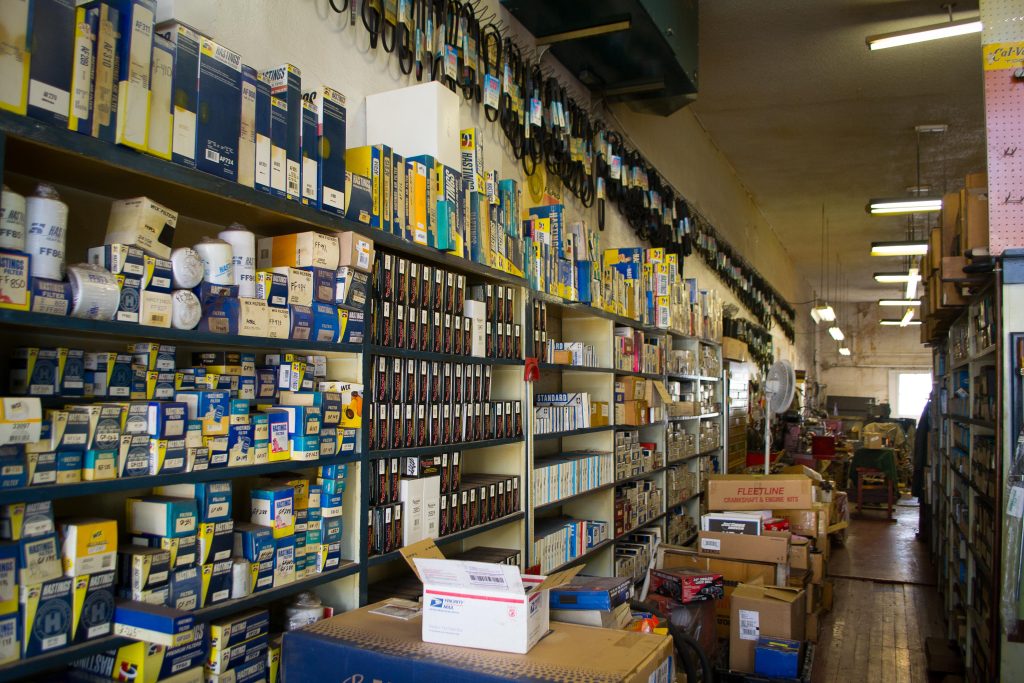
Comparing prices between retailers is still worthwhile. Customers can check whether the part is an original-equipment component, an aftermarket replacement, or a remanufactured product. They should also compare warranties, included hardware, fitment, and return policies rather than choosing entirely on price.
The key point is that a parts store’s acquisition cost is shaped by its suppliers, purchasing volume, distribution arrangements, and negotiated incentives. A large retailer may have advantages that a small independent store cannot match, but neither gets to keep the entire difference between the wholesale cost and the shelf price.
The money left after purchasing and selling the part must support the distribution network, employees, inventory, and operating expenses that keep the business running.