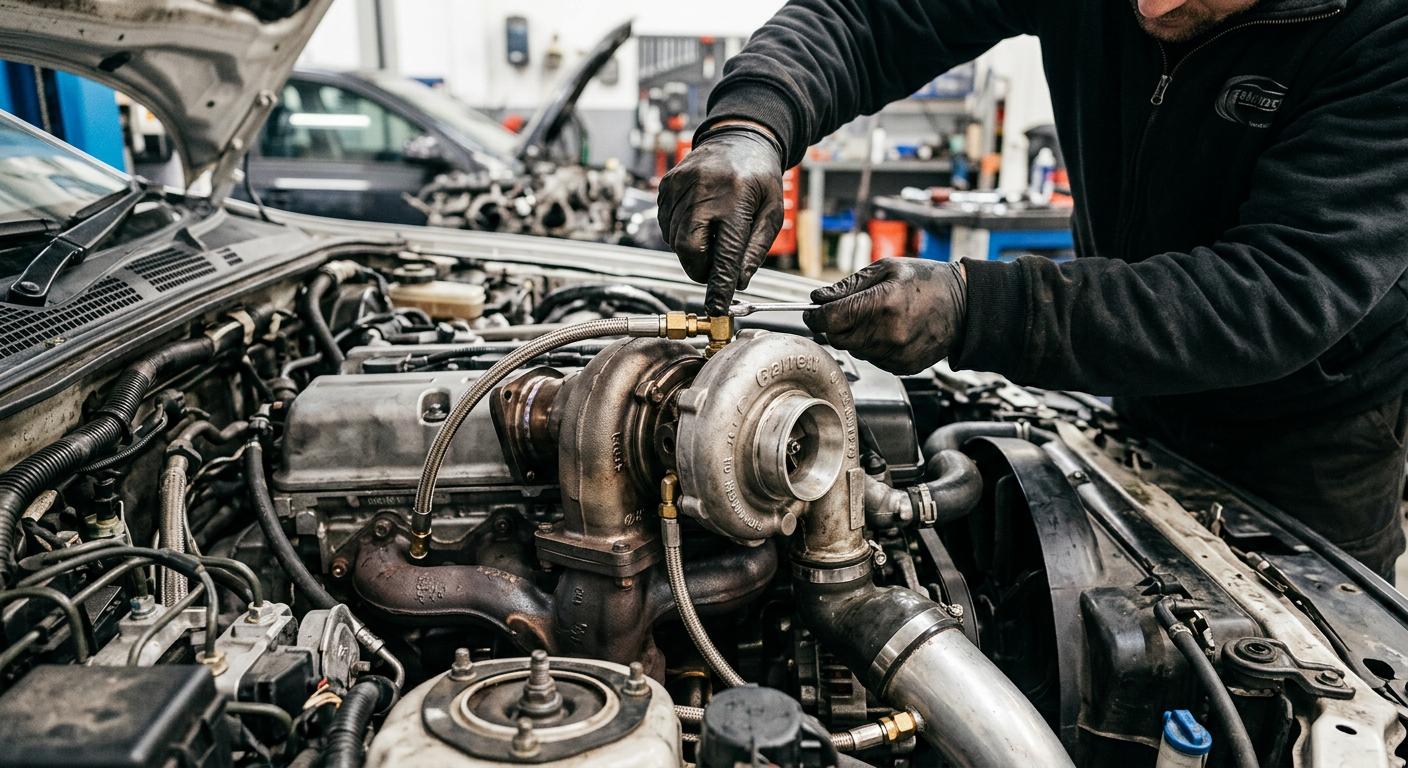
A turbocharger helps an engine produce more power by forcing additional compressed air into the cylinders. It operates under demanding conditions, relying on proper lubrication, clean intake air, and effective boost control to work correctly.
When something starts going wrong, the first clues may appear as unusual noises, exhaust smoke, slower acceleration, or unexplained oil loss. These symptoms do not always mean the turbo itself is damaged, since problems elsewhere in the engine can create similar effects.
Recognizing the warning signs early can help you avoid unnecessary replacement costs and prevent a minor fault from becoming a major repair.
1. Your Car Suddenly Feels Slower During Acceleration
A noticeable loss of acceleration can be one of the first clues that a turbocharged engine is not producing its expected boost. The turbocharger uses exhaust gas to spin a turbine connected to a compressor wheel.
That compressor pushes additional air into the engine, helping it produce more power. If the turbo cannot build the required pressure, acceleration may feel weaker, particularly when merging onto a highway, climbing a hill, or overtaking another vehicle.
The change may develop gradually. You might find yourself pressing the accelerator farther than usual to achieve the same response. In some vehicles, the engine control system may also limit power when it detects a boost-related fault. A warning light or reduced-power message can accompany the loss of performance.
However, a sluggish engine does not automatically mean the turbocharger has failed. BorgWarner lists several possible causes of insufficient boost, including a dirty air filter, leaking intake or pressure pipes, a faulty boost-control valve, fuel-system problems, and turbo bearing damage. A restricted exhaust system can also affect performance.
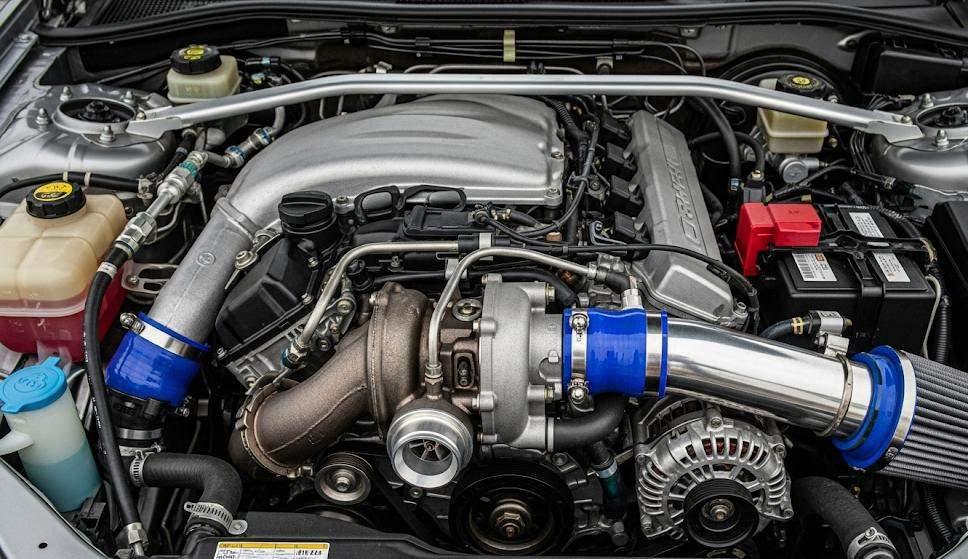
A technician should check actual boost pressure against the manufacturer’s specifications and inspect the intake pipes, intercooler connections, wastegate or variable-geometry mechanism, and related sensors.
Replacing the turbo before checking these components can lead to an expensive repair that does not solve the problem. If power drops suddenly or the engine begins making unusual noises, avoid hard acceleration until it has been inspected.
2. Blue or Gray Exhaust Smoke Appears
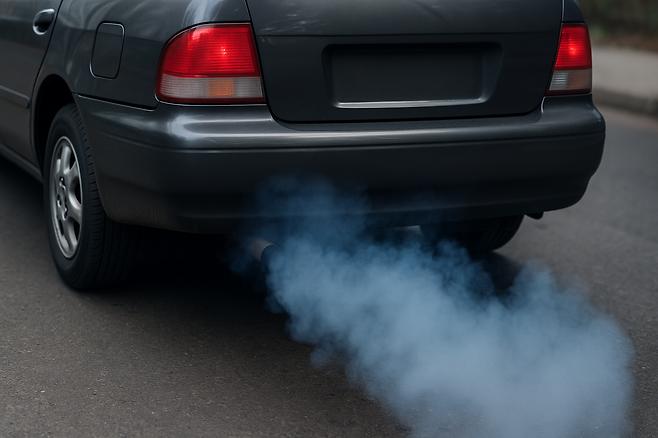
Blue or blue-gray exhaust smoke can indicate that engine oil is entering the combustion or exhaust system and burning. On a turbocharged vehicle, a damaged turbocharger bearing system or oil-sealing problem can allow oil to pass into the compressor or turbine side. The engine may then burn that oil, producing visible smoke from the tailpipe.
You may notice the smoke during acceleration, after idling, or when the engine is under load. The pattern can provide useful diagnostic information, but it is not enough to identify the turbo as the source. Worn piston rings, damaged valve guides or seals, and excessive crankcase pressure can also allow oil to enter areas where it should not be.
BorgWarner includes turbo bearing damage, restricted or leaking oil lines, crankcase ventilation faults, and engine wear among the possible causes associated with blue smoke. Garrett also warns that oil-related problems can damage the turbocharger’s rotating assembly and lead to oil passing into the exhaust.
Check the engine oil level according to the owner’s manual, but do not keep topping it up and ignore repeated smoke. Excessive oil consumption can become serious, and some diesel engines can experience an uncontrolled engine-speed increase if they begin burning their own lubricating oil.
If the engine revs unexpectedly or produces heavy smoke, stop safely, switch it off if possible, and seek professional assistance.
A technician should inspect the turbo oil feed and drain, crankcase ventilation, intake tract, and engine condition before deciding whether the turbo needs replacement.
3. A New Whining or Siren-Like Noise Comes From the Engine
A turbocharger naturally produces some operating sound, especially as engine speed and boost increase. A sudden change in that sound deserves attention. If a previously quiet engine develops a sharp whine, siren-like howl, or high-pitched mechanical noise, the turbocharger or its surrounding air system may have a problem.
One possible cause is wear in the turbo’s bearing system. The turbine and compressor wheels are connected by a shaft that spins at extremely high speed. Insufficient lubrication, contaminated oil, or bearing damage can affect how smoothly the rotating assembly operates.
Contact between a wheel and its housing can create a particularly concerning sound and may indicate serious internal damage.
Still, not every whistle means the turbo is failing. A split boost hose, loose clamp, leaking intake connection, or exhaust leak can produce a whistle or hiss that changes with engine load. BorgWarner lists damaged or leaking air pipes, exhaust leaks, foreign-object damage, and bearing problems among possible causes of turbocharger noise.
Pay attention to whether the sound is new, whether it grows louder under acceleration, and whether it appears alongside reduced power or smoke. Avoid deliberately revving the engine to reproduce the noise.
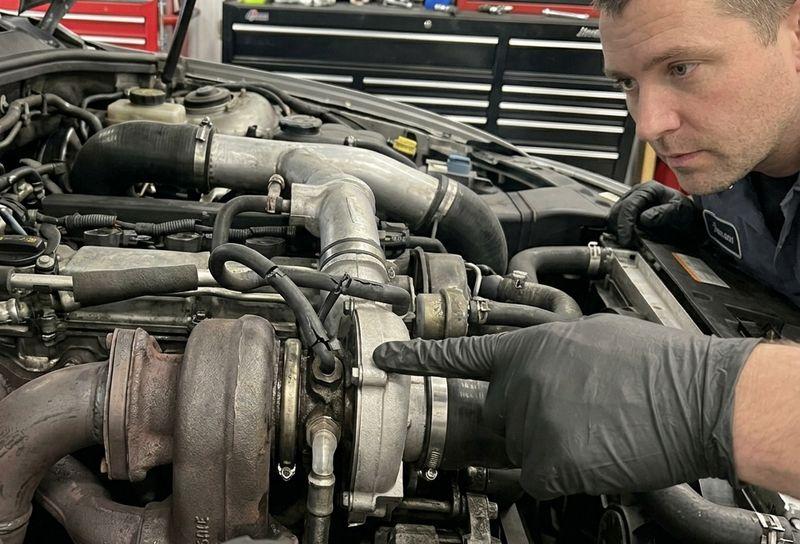
A technician can inspect the intake and exhaust connections, check for leaks, and evaluate the turbocharger according to the manufacturer’s procedure.
Do not insert fingers or tools into the turbo inlet to test the compressor wheel while the engine is running. If the noise is loud, rapidly worsening, or accompanied by heavy smoke, stop driving and arrange an inspection.
4. Engine Oil Levels Keep Dropping Between Changes
If you find yourself adding engine oil more frequently than usual, the turbocharger’s lubrication system deserves attention. Turbochargers depend on a steady supply of clean engine oil to lubricate and help control heat around their high-speed rotating assembly.
A damaged bearing system, restricted oil drain, or sealing problem can contribute to oil escaping into the intake or exhaust path.
The warning may be subtle at first. The dipstick level could fall between scheduled oil changes even when you do not see a puddle beneath the vehicle. In some cases, oil may collect inside the intake plumbing or intercooler, while in others it may pass through the turbine side and burn in the exhaust.
Do not assume the turbo is responsible simply because the vehicle has one. External engine leaks, worn piston rings, valve-guide problems, and a faulty crankcase ventilation system can also increase oil consumption.
BorgWarner’s troubleshooting guide lists all of these possibilities, along with blocked or leaking turbo oil feed and drain lines.
Make a habit of checking the oil level on level ground using the procedure in the owner’s manual. Record how much oil is added and how far the vehicle travels between checks. A repeated drop deserves investigation, especially when accompanied by blue smoke or unusual turbo noise.
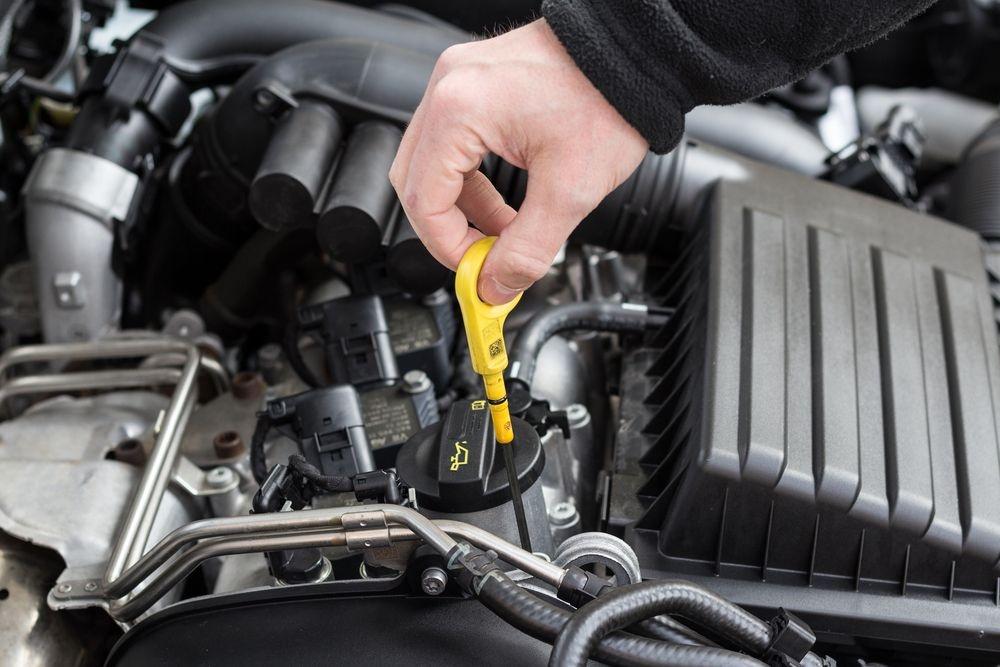
A repair shop should inspect the engine for external leaks, check crankcase pressure and ventilation, and examine the turbo oil lines and intake system. Running with insufficient oil can damage the engine as well as the turbocharger, so do not postpone diagnosis when the level falls repeatedly.
5. Black Smoke Comes From the Exhaust
Thick black exhaust smoke can indicate that the engine is receiving more fuel than the available air can burn cleanly. On a turbocharged engine, insufficient boost may reduce the amount of air reaching the cylinders. The result can be incomplete combustion and visible dark smoke, particularly under acceleration.
A damaged turbocharger can contribute to low boost, but the smoke does not identify the turbo as the definite cause. A split intercooler hose, loose intake connection, restricted air filter, faulty boost-control system, or fuel-injection problem can create a similar condition.
Diesel engines are particularly associated with visible black smoke when the air-fuel balance is disrupted, although the exact causes vary by engine and emissions equipment.
BorgWarner’s troubleshooting information connects black smoke with several possible faults, including dirty air filters, damaged compressor or turbine components, leaking pressure pipes, fuel-system problems, and boost-control issues. This is why replacing a turbocharger based only on exhaust color can be a costly mistake.
Notice when the smoke appears. A brief puff under certain conditions may have a different cause from persistent, heavy smoke that continues during normal driving. If the vehicle also feels unusually weak, has a check-engine light, or makes a new mechanical noise, arrange a diagnostic inspection promptly.

A technician can check stored fault codes, inspect the air filter and charge-air plumbing, and compare measured boost pressure with the manufacturer’s expected values. Fuel delivery and emissions-system components may also need testing. Avoid hard acceleration while the engine is producing heavy smoke, and do not ignore a sudden change in exhaust behavior.
6. The Turbocharger or Intake System Shows Signs of an Oil Leak
Oil around the turbocharger or inside its connected intake plumbing can be a reason to investigate further. The turbo receives engine oil for lubrication, and its oil feed and return arrangements must work correctly.
If a line becomes restricted, damaged, or incorrectly installed, oil may not circulate or drain as intended. Excessive crankcase pressure can also interfere with oil drainage and contribute to leakage.
A small oil film inside some intake systems is not automatic proof of turbo failure. Crankcase ventilation systems can route oil vapor into the intake, where residue may accumulate. The amount, location, and rate of buildup matter.
A fresh external leak around a feed line is also different from oil passing through the turbocharger into the compressor or turbine housing.
Garrett identifies excessive oil pressure, inadequate drainage, blocked air filters, and crankcase ventilation problems among potential causes of oil leakage associated with turbocharger seals. BorgWarner similarly lists damaged oil feed and drain lines, bearing damage, and crankcase ventilation faults as possible contributors.
If you notice oil around the turbo, avoid wiping it away and assuming the issue is resolved. A technician should identify where the oil originates, inspect the oil supply and return lines, and check crankcase ventilation and intake components. The engine should be cold and switched off before any hands-on inspection.
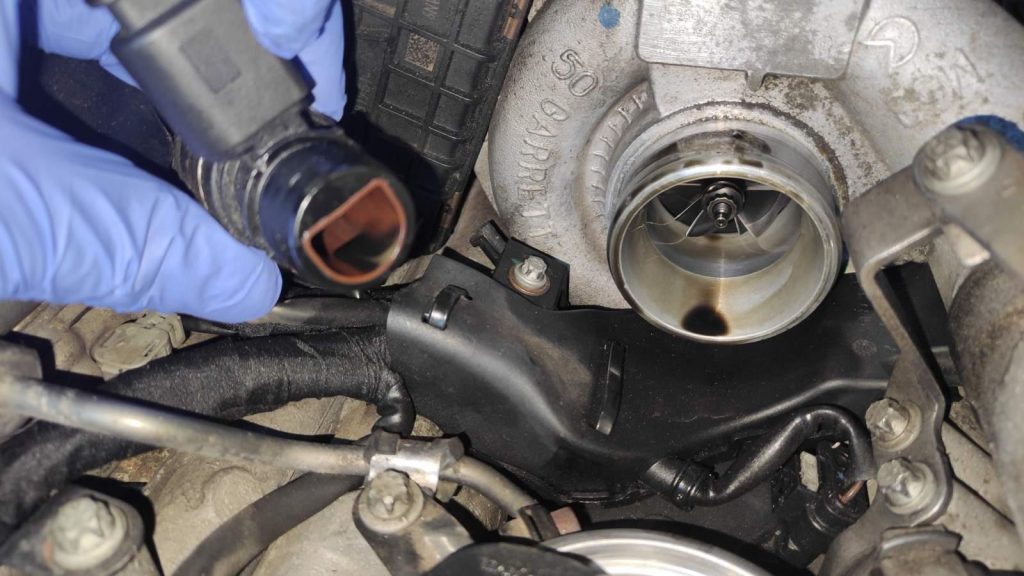
If the leak is substantial, the oil level is dropping quickly, or smoke accompanies the residue, do not continue normal driving until the vehicle has been assessed. Correctly identifying the source is essential because replacing the turbo without fixing an oil-drain or ventilation problem can lead to another failure.
7. The Check-Engine Light Appears With a Boost-Related Fault
A check-engine light accompanied by poor acceleration can point toward a problem in the turbocharging or boost-control system.
Modern vehicles use sensors and electronic controls to monitor engine operation, including intake pressure and the amount of boost being produced. If measured values do not match what the engine computer expects, it may store a diagnostic trouble code and illuminate the warning light.
Depending on the vehicle, a fault may involve low boost, excessive boost, a pressure sensor, a wastegate actuator, or a variable-geometry turbo mechanism. The engine computer may also reduce available power to protect the engine or emissions system. Drivers sometimes describe this as limp mode, although the exact behavior differs between manufacturers.
A warning light is not a verdict that the turbocharger itself has failed. A disconnected electrical connector, damaged wiring, leaking charge-air hose, faulty sensor, or control-system issue can trigger a boost-related code.
BorgWarner’s troubleshooting chart identifies problems with boost-control valves and pressure pipes among possible causes of abnormal boost pressure.
Do not replace components based on a generic code description alone. A technician should read the stored codes, check freeze-frame data where available, and compare commanded boost with actual pressure during the manufacturer’s approved diagnostic procedure. This can help distinguish a mechanical turbo fault from a sensor or control problem.

If the warning is flashing, the engine is misfiring, or power loss is severe, follow the owner’s manual and stop driving when it is unsafe to continue. Even when the vehicle still runs, a persistent warning deserves attention before the underlying problem causes further damage.
8. Acceleration Comes With a Hissing or Air-Leak Sound
A pronounced hissing sound during acceleration can indicate that compressed air is escaping from the turbocharger’s intake or charge-air system. After the compressor pressurizes incoming air, that air travels through pipes and often an intercooler before reaching the engine.
A loose clamp, split hose, damaged intercooler, or leaking connection can allow some of that pressure to escape.
The driver may hear a hiss that becomes louder when the engine is producing boost. The vehicle may also feel less responsive because the engine is not receiving the expected amount of pressurized air. On some vehicles, the engine computer may detect a difference between expected and measured pressure and store a fault code.
This symptom is important because a leaking hose can imitate a failing turbocharger. The turbo may still be mechanically sound but unable to deliver the expected pressure to the engine.
BorgWarner specifically lists distorted or leaking suction and pressure lines, as well as loose or damaged air connections, among possible causes of low boost and turbo-related noise.
Do not try to locate a leak by placing your hand near pressurized pipes while the engine is running. A shop can perform an appropriate pressure or smoke test to identify escaping air. The inspection should include hose connections, clamps, intercooler end tanks, and the intake manifold connections.
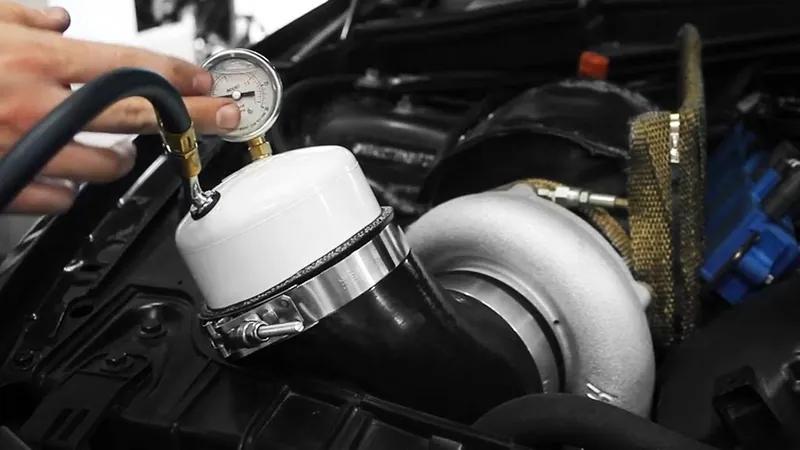
If the hissing appears with black smoke, poor acceleration, or a warning light, arrange a prompt inspection. Fixing a split hose or loose connection may be far less expensive than replacing a turbocharger that has not actually failed.
9. The Engine Enters Reduced-Power or Limp Mode
When a vehicle suddenly refuses to accelerate normally, even with the accelerator pressed firmly, its engine management system may have activated a reduced-power strategy. This is commonly called limp mode. On a turbocharged engine, a boost-control fault, excessive boost pressure, or insufficient boost can contribute to this behavior.
You might notice that the vehicle struggles to gain speed, the transmission seems reluctant to respond normally, or the engine will not deliver its usual performance. Some vehicles display a reduced-engine-power warning, while others simply feel noticeably restricted. The exact response depends on the manufacturer’s programming and the fault detected.
A failing turbocharger can be involved, but limp mode is not a turbo-specific warning. Faulty sensors, wiring problems, fuel-pressure issues, exhaust restrictions, and other engine-management faults can also trigger protective operation.
BorgWarner’s troubleshooting information lists both insufficient and excessive boost as conditions associated with turbocharger-system faults, with several possible underlying causes.
Avoid repeatedly switching the ignition on and off in an attempt to clear the problem. Even if the warning temporarily disappears, the underlying fault may remain. Record any dashboard message and have the diagnostic trouble codes read with suitable equipment.
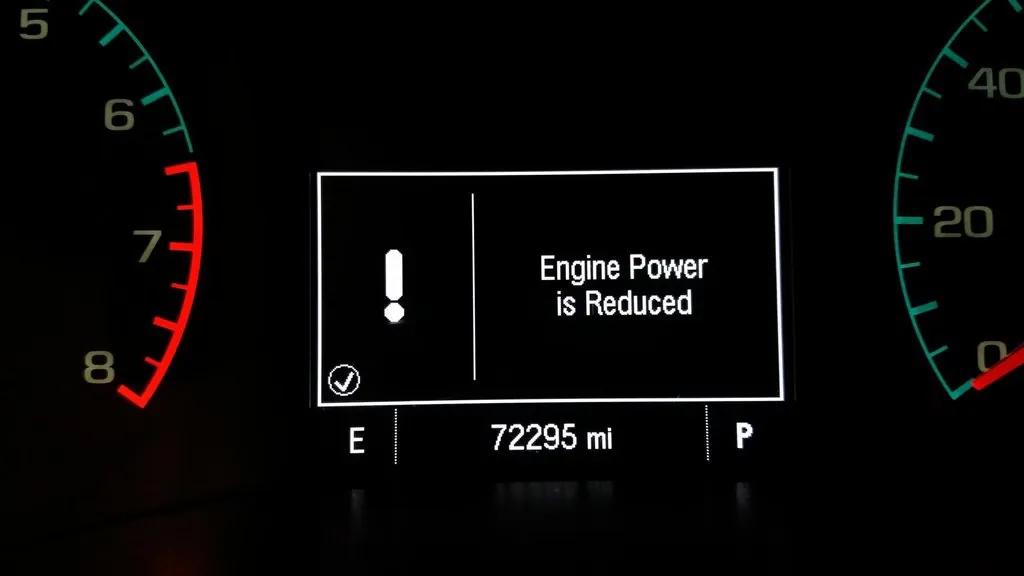
If the vehicle has lost substantial power, do not attempt highway overtaking or continue a long journey. Move to a safe location and arrange assistance if its performance makes driving unsafe.
A technician should inspect the boost-control system, pressure readings, sensors, intake plumbing, and turbocharger condition before recommending replacement.
10. The Turbocharger Produces Repeated Rattling or Grinding Sounds
A repeated metallic rattle, scraping noise, or grinding sound from the turbocharger area is a warning that should not be ignored.
The compressor and turbine wheels rotate at extremely high speeds on a shared shaft. If the bearing system becomes damaged or a wheel is affected by foreign material, the rotating assembly may no longer operate smoothly.
In severe cases, a damaged wheel can contact its housing. This may produce a scraping or metallic sound, sometimes accompanied by reduced power, smoke, or unusual vibration. Foreign objects entering through the intake or exhaust can also damage the compressor or turbine blades.
Even a small piece of debris can create a serious problem when it reaches a fast-spinning wheel. Garrett identifies foreign-object damage, oil starvation, and oil contamination among the major causes of turbocharger failure.
BorgWarner also lists foreign-body damage and bearing problems as possible causes of damaged compressor or turbine wheels and abnormal noise.
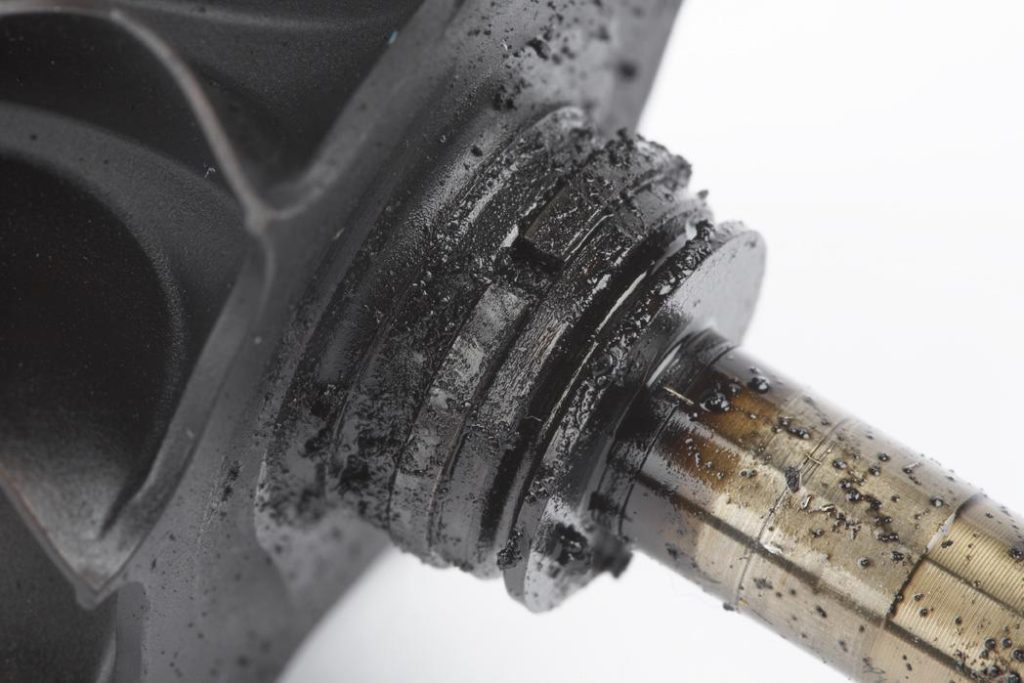
Do not try to confirm internal damage by reaching into the turbocharger or spinning the compressor wheel without following the correct inspection procedure. Some movement in a stationary turbocharger can be normal depending on its bearing design, and a casual hand check is not a reliable diagnosis.
If the sound is persistent or accompanied by smoke, oil loss, or a sudden drop in power, stop driving and have the vehicle inspected. Continuing to operate a turbo with suspected internal damage may allow debris or oil to affect other engine components.
A specialist can inspect the rotating assembly, oil supply, intake tract, and exhaust side to determine whether repair or replacement is necessary.