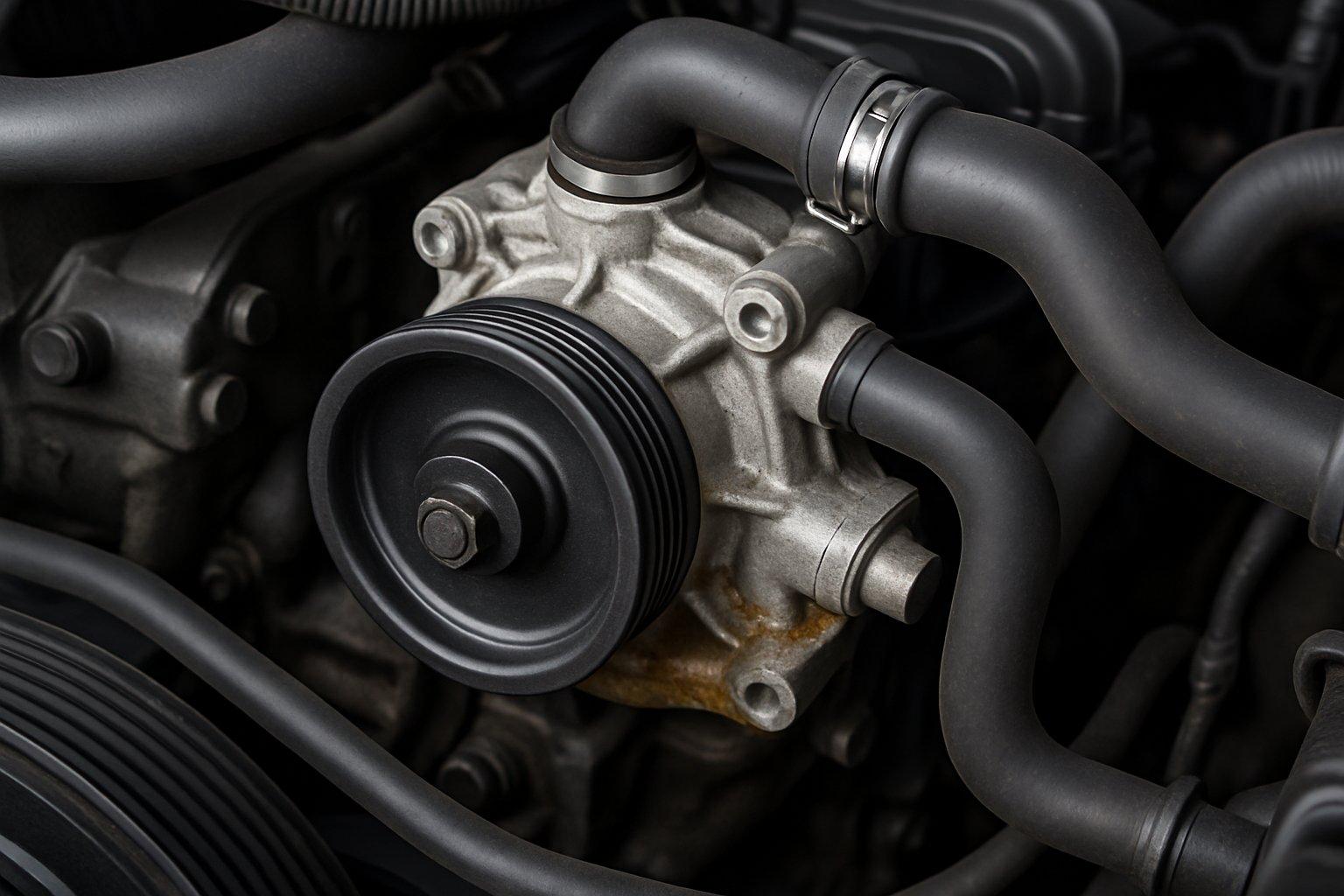
Your car’s water pump plays a critical role in keeping the engine at a safe operating temperature. It circulates coolant through the engine and radiator, helping carry excess heat away before it causes damage.
When the pump begins to fail, the warning signs can range from a small coolant leak to unusual noises and sudden overheating. Some symptoms develop gradually, while others can become serious during a single drive.
Recognizing these clues early can help prevent expensive engine repairs. Here are nine signs worth taking seriously, along with other cooling-system problems that can produce similar symptoms.
1. Coolant Starts Leaking From the Water Pump’s Weep Hole
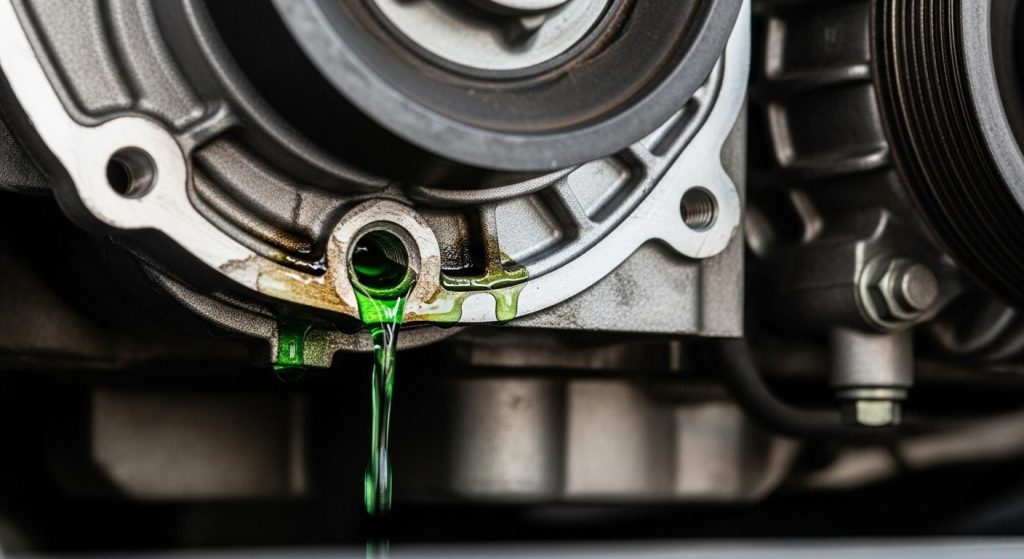
One of the more direct signs of water pump trouble is coolant escaping through the pump’s weep hole. This small opening is part of the pump’s design. It provides a route for coolant to escape if the internal shaft seal begins to fail, helping prevent fluid from entering the bearing assembly.
When the seal is working properly, the opening should generally remain dry after the pump’s initial installation and break-in period.
If the seal deteriorates, you may notice wetness, colored residue, or drops of coolant around the opening. The exact coolant color depends on the formula used in your vehicle, so color alone cannot identify the source. A fresh leak may leave a small mark, while a more developed failure can produce repeated drips.
Gates explains that pronounced seepage or drips from the weep hole after the initial break-in period indicate a developing water pump problem. The company also identifies contaminated coolant as a major contributor to seal damage. Dirt, rust particles, and incompatible coolant can interfere with the sealing surfaces.
Do not confuse a small amount of initial seepage from a newly installed pump with an established leak. The distinction matters, which is why the pump’s age and installation history should be considered.
If you see persistent coolant emerging directly from the weep hole, arrange an inspection promptly. Avoid touching the area while the engine is running, and never put your hands near moving belts or pulleys. A technician can confirm the leak source and determine whether the pump needs replacement.
2. Coolant Appears Around the Pump Housing or Mounting Surface
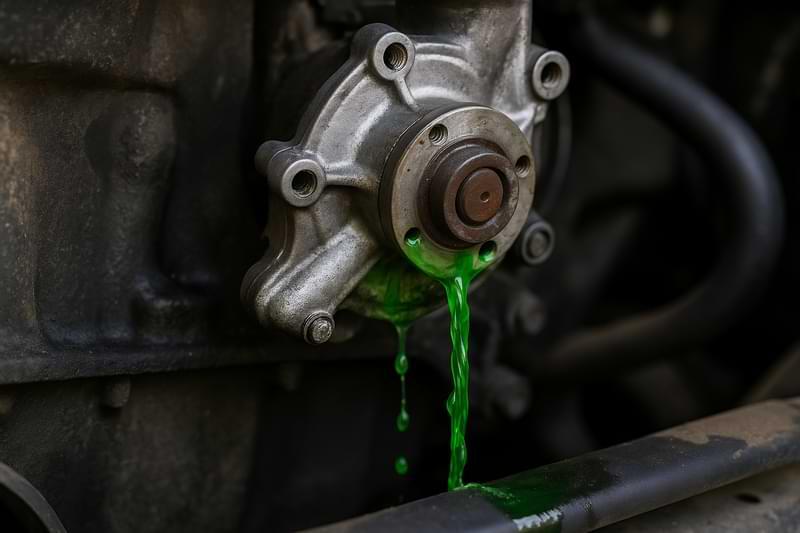
Not every water pump leak comes from the weep hole. Coolant can also escape around the pump housing, gasket, or mounting surface where the component attaches to the engine. If you notice dampness or dried coolant deposits around this area, the pump assembly deserves a closer inspection.
A water pump relies on seals and gaskets to keep coolant inside the cooling circuit. Over time, these sealing materials can deteriorate, become damaged, or fail to seal correctly. Installation mistakes can also cause trouble. For example, an incorrectly positioned gasket, an unsuitable sealant, or improper tightening can create a path for coolant to escape.
Gates identifies leakage from the mounting surface as a water-pump-related failure pattern. Its technical guidance also notes that incorrect seal or gasket installation can contribute to this problem.
However, the source must be checked carefully because coolant from a nearby hose, thermostat housing, or another component can run down the engine and collect around the pump.
Look for wet areas, crusty deposits, or a trail that appears to begin near the pump rather than simply pooling underneath the engine. Do not assume the pump itself is defective based only on where the coolant eventually drips.
A cooling-system pressure test can help a technician locate leaks without relying on guesswork. If the pump gasket or housing seal is confirmed as the source, the repair may require removing the pump and installing the correct sealing components.
Continuing to drive with a significant coolant leak risks low coolant levels and overheating, so have the problem assessed before it becomes worse.
3. The Engine Temperature Gauge Starts Climbing
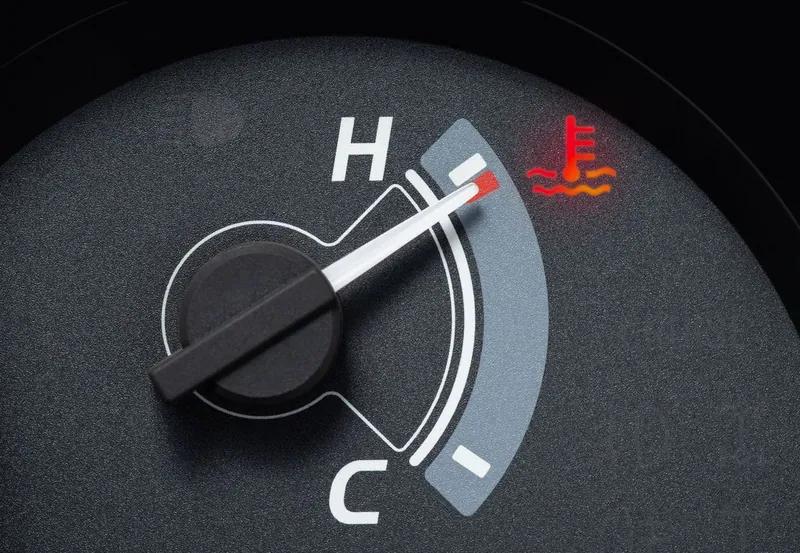
An engine temperature gauge that climbs higher than its normal operating position can indicate that the water pump is no longer circulating coolant effectively. The pump moves coolant through the engine and radiator. If its impeller becomes damaged, loosens on the shaft, or stops turning correctly, heat may not be carried away at the required rate.
You might first notice the temperature rising during a long drive, while climbing a hill, or when the engine is working harder than usual. In more serious cases, the gauge can move toward the hot zone even during ordinary driving.
Some vehicles display a temperature warning light or a message instead of a traditional gauge, so pay attention to the warnings your dashboard provides.
A failing water pump is not the only possible cause. Low coolant, a stuck thermostat, a restricted radiator, a malfunctioning cooling fan, or trapped air can also make an engine overheat. Replacing the pump without identifying the actual fault may leave the problem unresolved.
If the temperature warning appears or the gauge enters the danger zone, pull over somewhere safe and switch off the engine. Do not continue driving in the hope that the temperature will fall. Never remove a radiator cap or pressurized coolant reservoir cap while the engine is hot because escaping steam and coolant can cause severe burns.
Once the engine has cooled completely, the coolant level can be checked according to the owner’s manual. If overheating returns, arrange professional diagnosis and consider towing the vehicle rather than risking engine damage.
NAPA identifies overheating as a possible consequence of failed coolant circulation caused by a damaged pump mechanism or impeller.
4. The Temperature Reading Keeps Fluctuating
An engine temperature reading that repeatedly rises and falls can be another warning that the cooling system is not operating consistently.
A water pump with a damaged impeller, worn internal components, or an unstable drive may struggle to maintain the coolant circulation the engine requires. Instead of remaining near its normal operating range, the temperature may move noticeably during a journey.
You might see the gauge climb while accelerating or driving uphill, then drop after slowing down. In some cases, the changes are more noticeable in stop-and-go traffic or when the engine is under heavier load.
These patterns deserve attention, particularly if they occur alongside coolant loss, unusual pump noise, or signs of leakage.
However, temperature fluctuations do not prove that the water pump is failing. A thermostat that opens and closes incorrectly, low coolant, air trapped inside the system, or a faulty temperature sensor can produce similar readings. The cooling fan and radiator also influence how effectively the vehicle controls heat.
Pay attention to whether the fluctuation is new and whether it happens repeatedly. A single small movement on the gauge may be normal for some vehicles, depending on their dashboard design. A sudden climb toward the hot zone is a different matter and should be treated as an overheating warning.
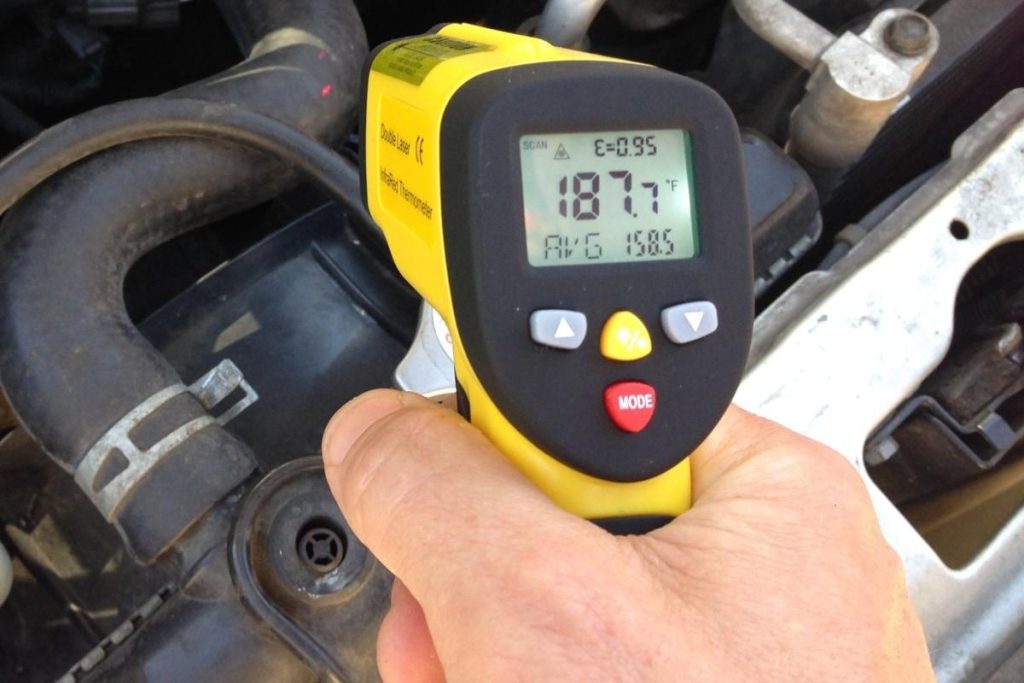
A technician can compare the dashboard reading with live temperature data, inspect coolant circulation, and test the thermostat and fan operation. This helps distinguish a weak water pump from another cooling-system fault.
Do not keep driving if the temperature reaches the warning range. Repeated overheating can cause serious engine damage even when the vehicle appears to cool down again.
5. A Whining, Grinding, or Rumbling Noise Comes From the Engine
A new whining, grinding, or rumbling sound from the front of the engine may point to a worn water pump bearing.
The pump’s shaft rotates while the engine is running, and its bearings support that movement. As the bearing wears, it may no longer rotate smoothly. The resulting noise can become more noticeable as engine speed increases.
A high-pitched squeal may also occur, but it is important not to blame every belt-area noise on the water pump. A worn serpentine belt, weak tensioner, damaged idler pulley, or another belt-driven accessory can create similar sounds. The location and character of the noise help narrow down the cause, but a proper inspection is needed to confirm it.
Gates identifies rumbling and screeching noises from the water pump as possible indications of bearing wear. It also notes that incorrect belt alignment or excessive belt tension can place additional load on the bearing and shorten its service life.
This is why a repair inspection should include the surrounding belt-drive components rather than focusing only on the pump.
Listen for a sound that was not present before, especially if it becomes louder during acceleration. Do not lean over a running engine or reach toward the belt to locate the noise. Moving components can cause serious injuries.
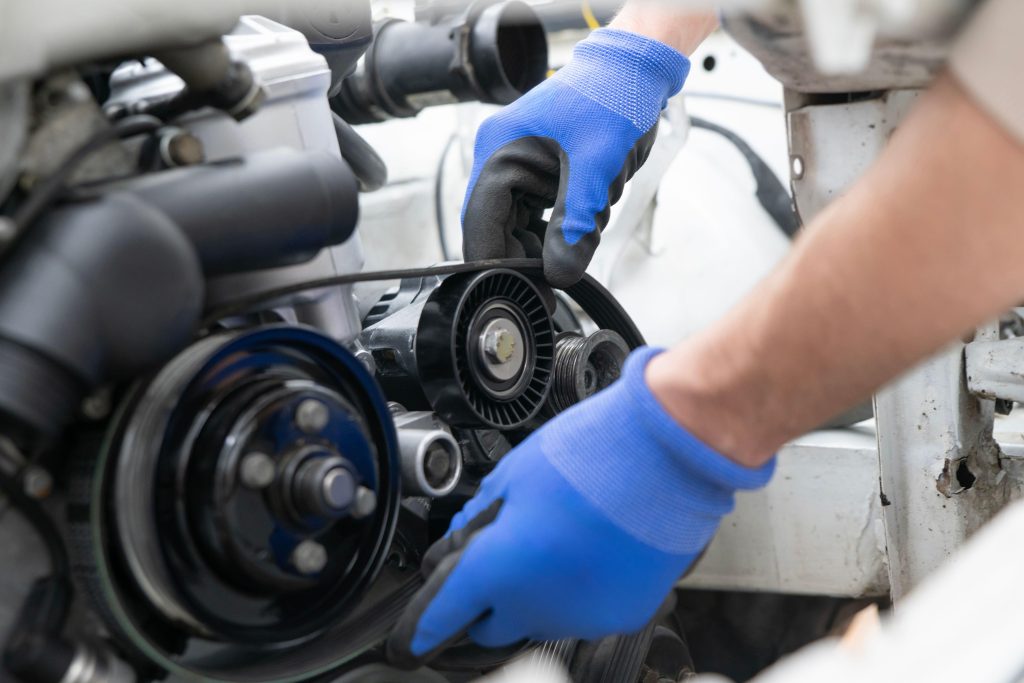
A mechanic can use appropriate diagnostic equipment to identify which component is making the sound. If the pump bearing is confirmed to be failing, replacement is generally necessary rather than simply lubricating the assembly. Ignoring a deteriorating bearing can lead to shaft movement, seal damage, coolant leakage, or a more complete pump failure.
6. The Water Pump Pulley Wobbles or Runs Unevenly
A water pump pulley that appears to wobble while rotating can indicate a problem with the pump shaft, bearing, pulley, or belt alignment.
On vehicles with belt-driven mechanical pumps, the pulley transfers engine power to the pump. It should rotate smoothly. If the shaft or bearing develops excessive play, the pulley may no longer follow a stable path.
You might notice the pulley moving from side to side, a belt tracking unevenly, or vibration around the accessory drive. These signs are worth investigating because the pulley and shaft operate under continuous mechanical load.
A damaged bearing can allow the shaft to move out of its intended position, putting additional stress on the seal and belt system.
Gates advises checking for side-to-side play at the water pump shaft with the engine switched off. Its technical guidance states that there should be no such play. The inspection should be carried out safely, with the engine completely stopped and cool. Do not try to test pulley movement while the engine is running.
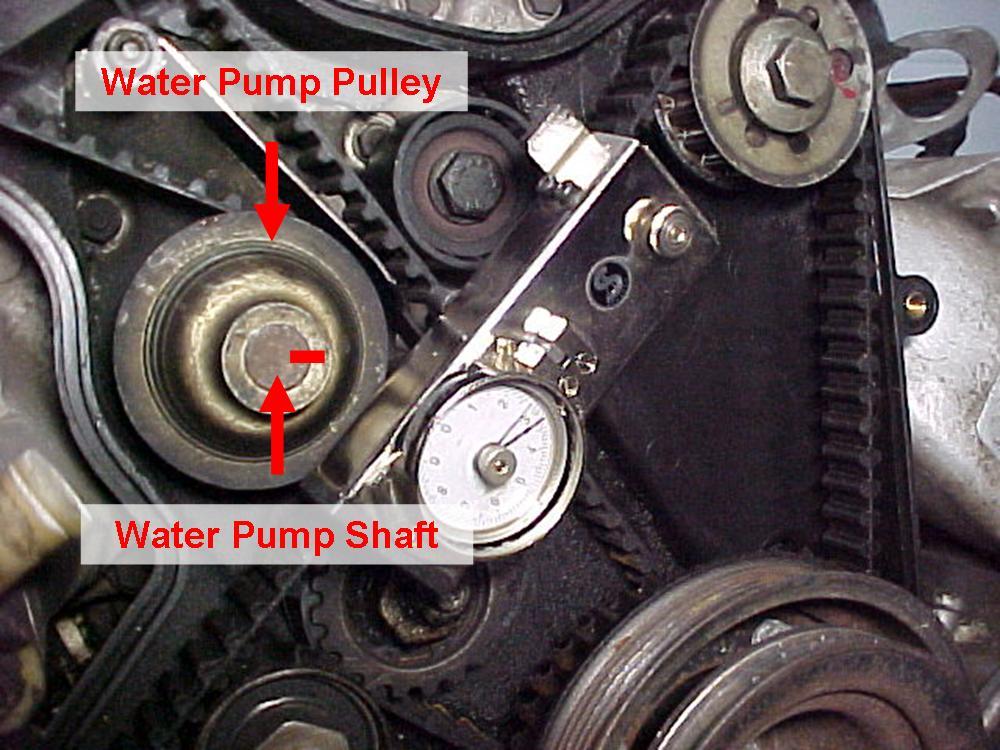
There are other possible sources of belt or pulley movement. A damaged pulley, loose mounting hardware, worn tensioner, or misaligned accessory drive can produce similar symptoms. Some vehicles also use electric water pumps or different pump arrangements, so not every model has an externally visible pump pulley.
If the pulley looks uneven or the belt is moving abnormally, avoid continued driving until the cause has been identified. A failing pulley or bearing can damage the belt, and a belt failure may affect other engine accessories depending on the vehicle’s design. Have a technician inspect the pump shaft, mounting points, belt tension, and alignment before replacing parts.
7. Steam Appears From Under the Hood
Steam rising from beneath the hood is a serious warning that the engine may be overheating or coolant may be escaping onto hot components. A failing water pump can contribute to this problem in two ways. It may allow coolant to leak from its seal or housing, or it may stop circulating coolant effectively enough to control engine temperature.
If coolant escapes onto hot engine surfaces, it can produce visible vapor. A major loss of coolant can also reduce the system’s ability to carry heat away from the engine. You may notice steam near the front of the vehicle, a rising temperature gauge, a warning message, or a sweet smell associated with hot coolant.
Do not assume the water pump is definitely responsible. A split radiator hose, leaking radiator, damaged reservoir, loose connection, or other cooling-system failure can also release coolant and create steam. The exact source needs to be identified before parts are replaced.
If steam appears while driving, pull over safely as soon as possible and turn off the engine. Do not open the hood immediately if doing so would expose you to escaping steam, and never remove a hot radiator cap or pressurized reservoir cap. The cooling system can remain dangerously hot after the engine has been switched off.
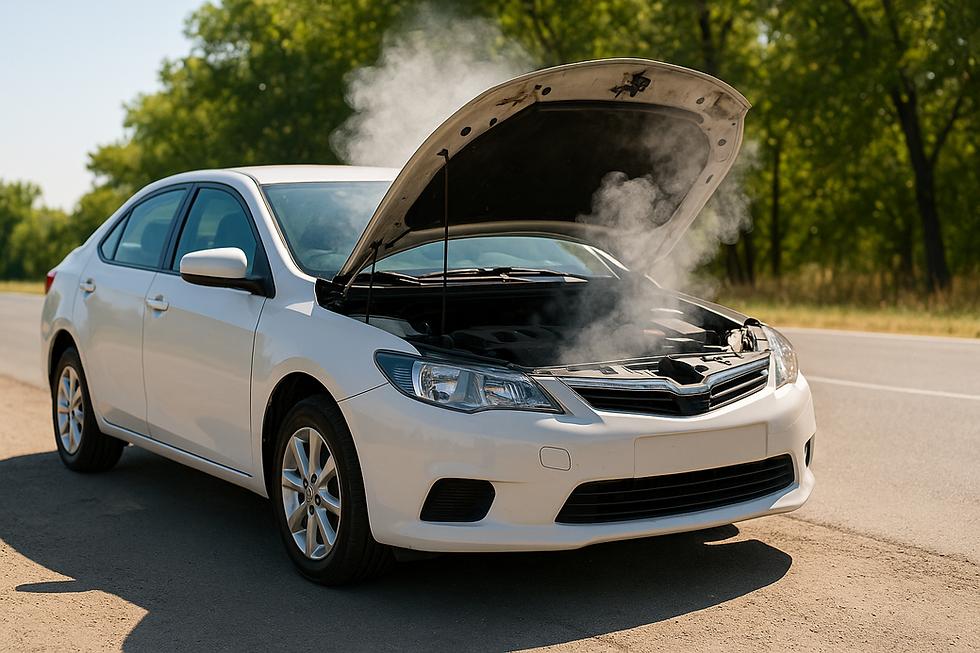
Wait until the vehicle has cooled before any visual inspection. If the engine has overheated or coolant is visibly escaping, arrange roadside assistance or a tow rather than attempting to drive to a repair shop.
NAPA lists coolant leaks and overheating among the problems associated with water pump failure. Steam is a reason to stop and investigate, not a symptom to ignore.
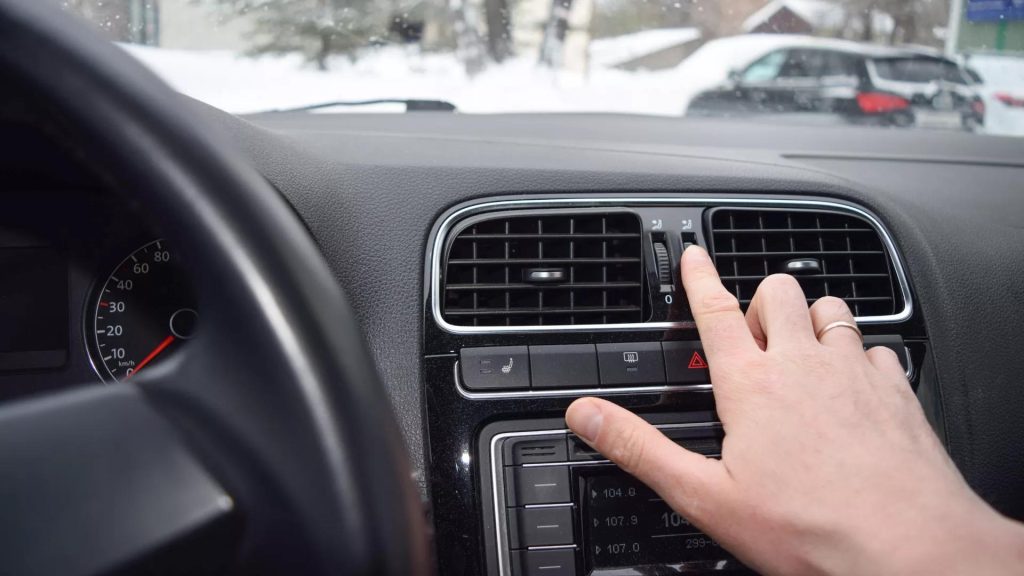
8. The Cabin Heater Starts Blowing Cold Air
If the cabin heater suddenly starts blowing cool air when you have selected a warm setting, a coolant-circulation problem may be involved. Most conventional vehicles use hot engine coolant to provide heat for the cabin. That coolant passes through the heater core, where air flowing across it is warmed before entering the passenger compartment.
A water pump that is not circulating coolant properly can reduce the flow reaching the heater core. The result may be weak cabin heat or air that stays cooler than expected, even after the engine has warmed up. This symptom becomes more concerning when it appears alongside a rising temperature gauge, coolant loss, or unusual noises from the engine area.
There are several other possible explanations. Low coolant can prevent the heater core from receiving enough hot fluid. Air trapped in the cooling system, a restricted heater core, a faulty blend-door actuator, or a thermostat problem can also affect cabin heating. The heater setting itself may not be the cause.
Notice whether the loss of heat happens suddenly, comes and goes, or changes with engine speed. These details can help a technician diagnose the problem, but they do not confirm a defective water pump by themselves.
If cold air from the heater occurs at the same time as an overheating warning, stop driving and switch off the engine safely. Do not rely on the cabin heater as a way to control a seriously overheating engine.
Once the vehicle is cool, have the coolant level and circulation checked according to the manufacturer’s procedure. A professional diagnosis can establish whether the pump, thermostat, heater core, or another component is responsible.
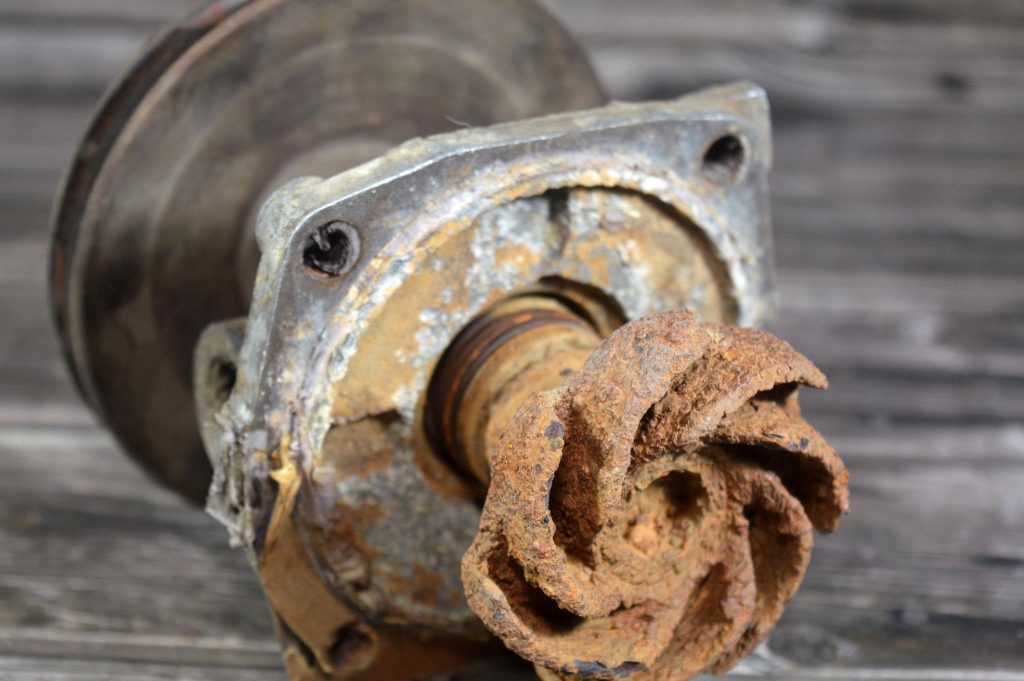
9. Rust, Sludge, or Heavy Deposits Appear in the Cooling System
Rust-colored deposits, sludge, or heavy scale in the cooling system can be a warning that the water pump and other cooling components are operating in contaminated coolant. The pump’s internal impeller has to move coolant through the engine. If corrosion or deposits build up on its surfaces, the impeller may become less effective at moving fluid.
Gates identifies rust, corrosion, and deposit buildup as water pump failure patterns. Its technical guidance explains that corrosion can affect impeller fins, while deposits and scale can clog parts of the pump and interfere with its operation.
Contaminated or incompatible coolant can contribute to these conditions, which is why using the vehicle manufacturer’s specified coolant matters.
A driver may notice discolored coolant in the reservoir, sediment around the tank, or deposits visible during a professional inspection. These signs do not automatically prove that the pump has failed. Rust or sludge can affect other parts of the cooling system as well, including the radiator, thermostat, and passages inside the engine.
Never open a hot coolant reservoir to inspect the fluid. Wait until the engine is completely cold and follow the owner’s manual for checking the level. If the coolant looks rusty, unusually dirty, or contains visible particles, have the entire system inspected rather than simply topping it up.
A technician may need to test the coolant, check for corrosion or restrictions, and assess the pump’s condition. If replacement is required, the system should be cleaned and refilled with the correct manufacturer-approved coolant. Installing a new pump without addressing contamination can expose the replacement part to the same damaging conditions.