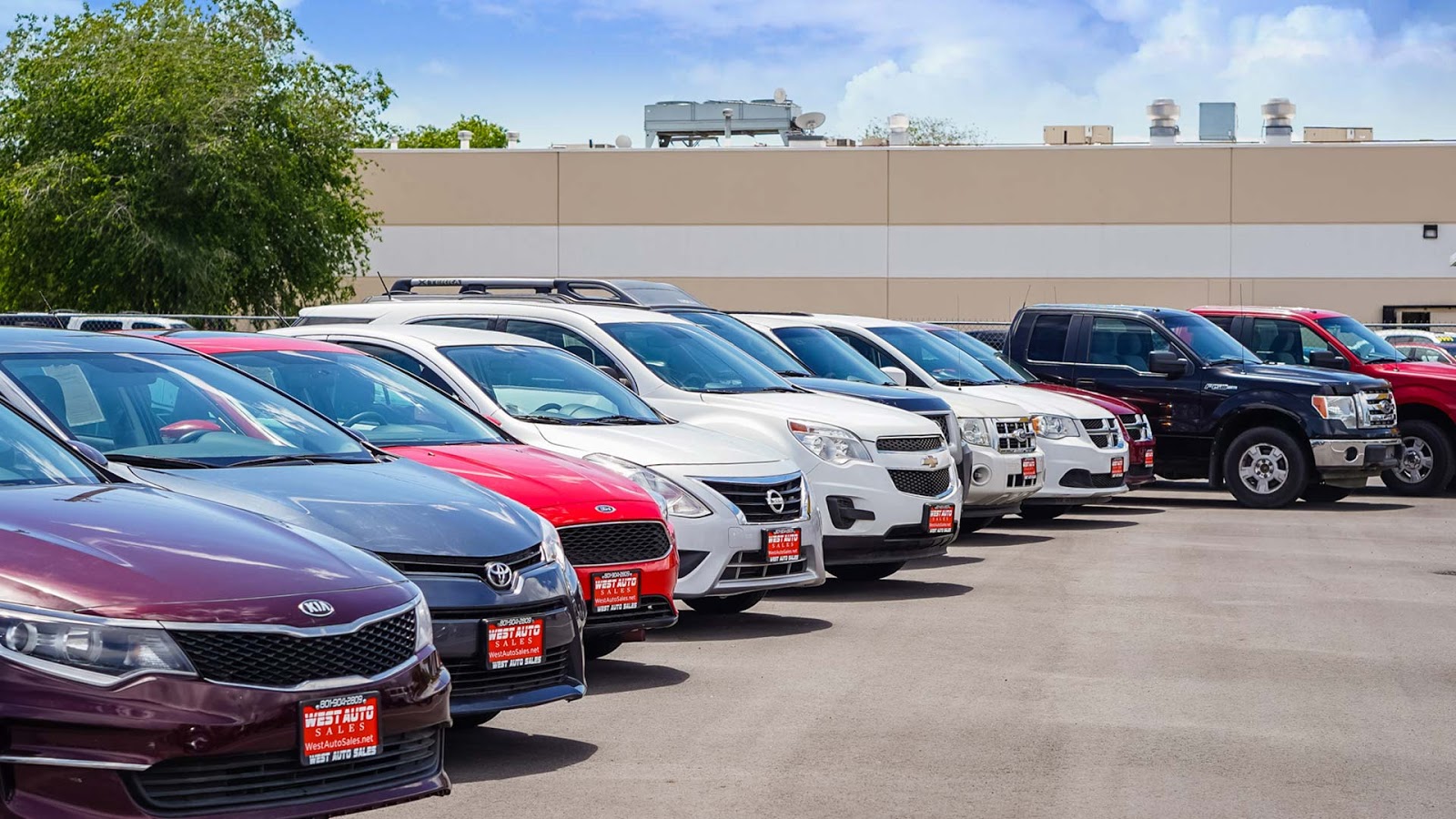
A discounted used car does not always mean a cheaper purchase. Dealerships frequently advertise reduced prices, special financing offers, trade-in bonuses, and attractive monthly payments to make vehicles appear more affordable.
However, some discounts come with financing conditions that can increase the amount buyers pay over time. A lower purchase price may be offset by a higher interest rate, longer repayment period, or additional products included in the loan.
Understanding how these offers work is essential before signing a financing agreement. Here are seven used-car discounts that deserve closer attention when shopping at American dealerships.
1. Discounts Available Only Through Dealership Financing
A used car advertised with a $2,000 discount can look like an excellent opportunity, particularly when competing dealerships are offering similar vehicles at higher prices.
However, buyers should pay attention when the salesperson explains that the reduced price is available only if they arrange financing through the dealership. The discount may be genuine, but the financing attached to it could make the transaction more expensive.
Dealership-arranged financing generally involves the dealer submitting a customer’s credit application to one or more lenders. Those lenders provide financing offers, and the dealership may present an interest rate above the lender’s original rate.
The Consumer Financial Protection Bureau (CFPB) explains that this additional amount can compensate the dealership for arranging the financing. It also confirms that the interest rate offered through a dealer is negotiable.
Consider a used vehicle priced at $25,000. A dealership offers a $2,000 discount if the customer finances through its lending network, reducing the purchase price to $23,000.
However, the dealer-arranged loan carries a 10% APR, while the buyer has already qualified for an outside loan at 7%. The lower purchase price must be compared against the additional interest paid over the repayment period.
Buyers should ask the dealership to provide two separate written quotes, one based on external financing and the other using the dealership’s financing option. They should then compare the loan amount, annual percentage rate (APR), repayment period, monthly instalments, and total amount payable to determine which option offers better value.
A discount is worthwhile only when the complete financing arrangement produces genuine savings. Do not assume that accepting the dealership’s loan is automatically the cheaper option.
2. Low-Monthly-Payment Discounts That Require Longer Loans
Some used-car advertisements emphasize an unusually affordable monthly payment rather than the actual purchase price. A dealership might promote a vehicle as costing just $299 per month, making it appear accessible to shoppers working with limited budgets.
However, that payment may depend on extending the loan over a much longer period, which can substantially increase the total financing cost.
Longer repayment periods reduce the amount due each month because the borrowed balance is spread across more payments. The disadvantage is that interest continues to accumulate for a longer time.
According to the CFPB, extending an auto loan can increase the total interest paid and leave buyers at greater risk of negative equity, meaning they owe more than the vehicle is worth.
Consider a $20,000 used-car loan at 8% APR, excluding additional fees. Over 48 months, the approximate monthly payment would be $488, with roughly $3,425 in total interest.
Extending the same loan to 72 months reduces the payment to approximately $351 but increases total interest to around $5,270. The lower payment therefore comes with approximately $1,845 in additional interest.
This is why buyers should never judge a dealership discount by its advertised monthly installment alone. Ask how many payments are required, what APR applies, and how much will be paid by the final installment. Also check whether the offer requires a substantial down payment or excludes taxes and dealer fees.

A longer loan is not automatically a bad decision, particularly when a buyer needs manageable payments. However, accepting one simply to qualify for an attractive advertised figure can turn a seemingly affordable used car into a considerably more expensive purchase.
3. Cash-Rebate Offers That Disappear When You Choose a Lower APR
A dealership may advertise a used vehicle with a substantial cash discount while also offering a separate low-interest financing option. At first glance, buyers might assume they can combine both benefits.
In reality, some promotional arrangements require customers to choose between a cash rebate and a reduced APR. Selecting the wrong option can increase the total amount paid for the vehicle.
This type of offer is more commonly associated with manufacturer incentives on new vehicles, but used-car dealerships can also advertise their own cash discounts and financing promotions.
The important detail is whether the two offers can be combined. A salesperson might present a $1,500 discount for customers who accept standard financing, while a separate promotion provides a lower interest rate without that discount.
For example, imagine a used vehicle priced at $22,000. The dealership offers a $1,500 cash discount with financing at 9% APR, or the full $22,000 price with financing at 5% APR.
A buyer who focuses exclusively on the discount might automatically choose the first option. However, the lower interest rate could produce greater savings depending on the loan amount and repayment period.
The CFPB advises consumers to compare APR, loan duration, amount financed, and total payments when evaluating financing offers. It also explains that promotional financing may have eligibility requirements and shorter repayment periods.
Before accepting either promotion, ask the dealership to calculate the complete cost of both arrangements. Include the down payment, financed amount, interest, and any additional fees. Request the figures in writing rather than relying on verbal estimates.
The cheapest financing option is not necessarily the one with the largest advertised discount. Buyers should select the arrangement that results in the lowest genuine purchase and borrowing cost.
4. Trade-In Bonuses That Conceal Negative Equity
A dealership offering an additional $1,000 or $2,000 for your trade-in can make a used-car purchase appear particularly attractive. These bonuses are often presented as limited-time incentives designed to increase the value of an older vehicle.
However, the advertised benefit may not represent additional savings if the dealership adjusts the purchase price or rolls an existing loan balance into the new financing agreement.
The biggest concern is negative equity. This happens when a vehicle owner owes more on an existing auto loan than the vehicle is currently worth. For example, someone might owe $14,000 on their current car, while its trade-in value is only $11,000.
That leaves $3,000 in negative equity that must be paid separately or incorporated into another financing arrangement.
The CFPB warns that rolling an outstanding loan balance into a new vehicle loan increases the amount borrowed and can make the new purchase more expensive.
Imagine a dealership offers a $2,000 trade-in bonus while purchasing a $24,000 used vehicle. However, the buyer also has $3,000 in negative equity.
If the dealership adds that balance to the new loan, the customer could begin with a higher debt than the vehicle’s purchase price suggests. The bonus may reduce the impact, but it does not automatically eliminate the outstanding debt.
Buyers should obtain an independent estimate of their current vehicle’s value and request a written trade-in appraisal. They should also ask for the existing loan payoff amount and examine how much negative equity will enter the new agreement.
Compare the purchase price without the trade-in before evaluating the bonus. Separating these figures makes it easier to identify whether the dealership is genuinely offering additional value or simply rearranging the numbers to make the transaction look better.
5. Discounts Bundled With Extended Warranties and Protection Packages
Some dealerships advertise a reduced used-car price while promoting additional protection products as part of the financing package. These may include extended warranties, vehicle service contracts, GAP coverage, tire protection, paint protection, or maintenance plans.
Although certain products can provide useful protection, including them in a discounted deal can increase the amount borrowed and the interest paid.
Consider a used vehicle advertised for $19,500. The salesperson offers a $500 discount but recommends adding a $2,000 extended service contract and an $800 protection package. If both products are financed with the vehicle, the customer may end up borrowing substantially more than expected.
The advertised reduction becomes less meaningful when additional purchases increase the loan balance.
The Federal Trade Commission (FTC) explains that dealer add-ons are not free and that customers can ask for their individual prices, review their conditions, and decline products they do not want.
The CFPB also identifies extended warranties, GAP insurance, and other optional products as expenses that can increase both monthly payments and total borrowing costs.
There is also a difference between an optional product and a genuine financing requirement. A dealership should not misrepresent an optional protection product as compulsory. Buyers should ask whether the advertised vehicle discount remains available without purchasing additional coverage.
Before signing, inspect the itemized contract and check whether the cost of every product has been included in the amount financed. Ask about cancellation rights, exclusions, deductibles, and coverage periods. An inexpensive-looking monthly increase can become a significant expense when spread across a five- or six-year loan.
A genuine vehicle discount should not depend on customers unknowingly purchasing products they neither requested nor need.
6. Down-Payment Assistance That Increases the Amount Financed
A used-car dealership might advertise a special discount or down-payment assistance program to attract buyers who do not have enough savings for a traditional down payment.
These offers can sound appealing because they reduce the amount of cash customers need when purchasing a vehicle. However, buyers should establish whether the dealership is actually reducing the vehicle’s price or simply adjusting the financing arrangement.
For example, a dealership advertises a $1,000 down-payment assistance offer on a $21,000 used vehicle. The customer might assume that the dealership is contributing $1,000 toward the purchase.
However, the offer could involve financing the full vehicle price, subject to lender approval, rather than providing a genuine reduction in the amount owed. Additional fees or financing conditions may also affect the final agreement.
A down payment normally reduces the amount borrowed. When a buyer contributes $2,000 toward a $20,000 vehicle, the starting loan balance is generally lower than it would be with no down payment, assuming the same fees and other terms. Borrowing more can increase interest costs and the risk of owing more than the vehicle is worth.
The CFPB identifies larger down payments as one way to reduce auto loan costs. Its guidance also explains that a lower loan-to-value ratio can help reduce the risk of negative equity.
Buyers should request a breakdown showing the vehicle price, actual down payment, assistance amount, fees, and final amount financed. Ask whether the assistance is a genuine price reduction, a lender incentive, or a financing arrangement that must eventually be repaid.
Also check whether the promotion requires a particular credit score, loan duration, or lender. An offer that eliminates the need for upfront cash may still be useful, but it should not be mistaken for free money.
The important question is how much debt the buyer will carry after completing the transaction, not simply how little money is required at the dealership.
7. Deferred-Payment Discounts That Make Financing More Expensive
Some used-car promotions advertise no payments for 60 or 90 days, allowing buyers to drive away without making an immediate loan payment. This can be attractive to shoppers who need time to manage their finances after purchasing a vehicle.
However, delayed payments do not necessarily mean delayed interest or a reduction in the total borrowing cost.
Depending on the loan agreement, interest may begin accumulating from the date the loan is funded, even if the first scheduled payment is several weeks away. When interest accrues during the promotional period, the customer may owe more than expected when regular payments begin. The precise treatment depends on the contract and the lender’s terms.
Consider a $20,000 used-car loan carrying a 9% APR. At a simplified monthly rate of 0.75%, approximately $150 in interest can accrue during the first month before accounting for payments.
If the agreement allows interest to accumulate during a 90-day payment deferral, the outstanding balance may grow before the buyer makes the first installment. Actual interest calculations depend on the lender’s daily or monthly accrual method.
The FTC advises consumers to examine financing terms carefully and understand the full cost of a loan rather than concentrating on promotional payment arrangements. The CFPB similarly recommends comparing APR, loan length, amount financed, and total payments before accepting an offer.

Before accepting a deferred-payment promotion, ask when interest begins, whether the initial payments are postponed or waived, and whether the loan balance increases during the waiting period. Request a written payment schedule showing the first payment date and total amount payable.
A delayed first payment can provide useful breathing room, but it is not automatically a discount. If the financing costs more because of the promotional arrangement, the apparent short-term benefit could become a long-term expense.