
A used car can look immaculate, have low mileage, and come with a thick folder of maintenance records, yet its history may not be as trustworthy as the seller claims.
Fabricated service records are particularly concerning because they can hide neglected maintenance, previous mechanical problems, or even odometer fraud.
Some sellers may alter invoices, manipulate mileage entries, or present incomplete paperwork as proof of years of careful ownership. Fortunately, suspicious documentation often leaves clues.
From inconsistent repair dates to questionable shop details, here are nine warning signs American used-car buyers should examine before trusting a vehicle’s maintenance history.
1. Mileage Readings That Do Not Follow a Logical Progression
One of the strongest warning signs in a used car’s service history is mileage that moves backwards between maintenance visits. Every genuine service invoice that records odometer information should help establish a timeline.
If an oil change invoice from 2023 shows 82,000 miles, but another document supposedly issued in 2022 records 76,000 miles, the sequence deserves immediate attention. There may be a legitimate explanation, such as a clerical error or an incorrectly entered date, but the seller should be able to explain the discrepancy.
A more concerning situation occurs when the mileage suddenly drops across several records. For instance, a vehicle might have a repair invoice showing 105,000 miles, followed by a maintenance receipt dated several months later showing only 78,000 miles.
That difference cannot be explained by ordinary driving. It could indicate odometer tampering, fabricated paperwork, or inaccurate information supplied by a repair facility.
The National Highway Traffic Safety Administration (NHTSA) estimates that approximately 452,000 vehicles are sold annually in the United States with false odometer readings. Its guidance specifically recommends comparing the odometer with maintenance records, inspection documents, and vehicle history reports.
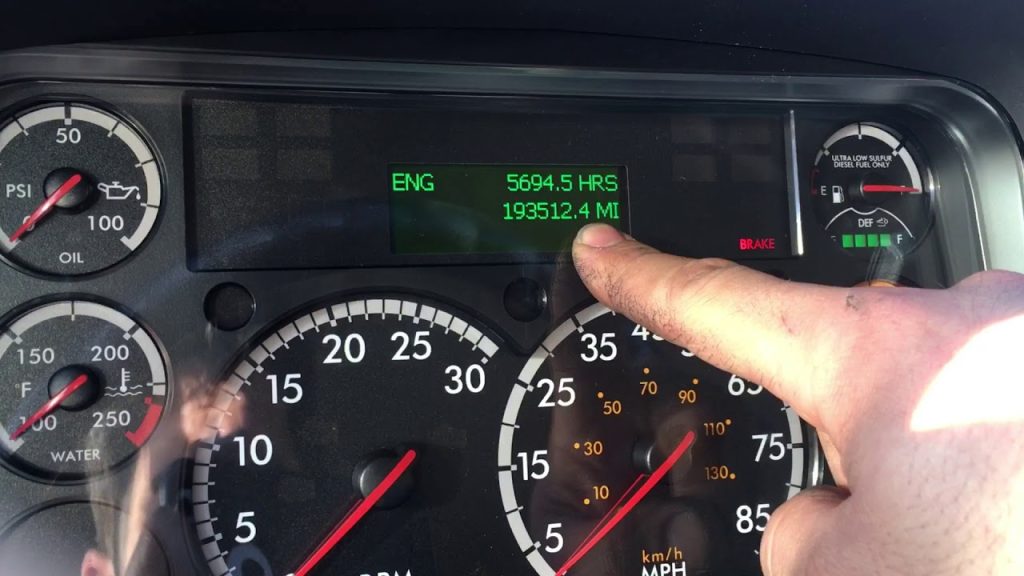
Buyers should create a simple chronological list of every available service date and mileage reading. Compare those figures with the current odometer, title information, inspection paperwork, and available vehicle history reports.
Pay particular attention to unusually large gaps or mileage reductions. A single incorrect entry does not automatically establish fraud, but repeated inconsistencies are difficult to ignore. If the seller cannot produce a convincing explanation or supporting documentation, an independent inspection and further mileage verification should come before any purchase.
2. Repair Invoices With Missing or Incorrect VIN Information
A service invoice becomes considerably more useful when it clearly identifies the vehicle that received the work. In the United States, the 17-character Vehicle Identification Number (VIN) provides a specific identifier that helps distinguish one vehicle from another.
If a seller presents years of maintenance records but none of the invoices includes a VIN, verifying that the work was actually performed on the vehicle becomes more difficult.
Some independent repair shops may record only the license plate, customer name, vehicle description, or partial identification details. That does not automatically make their paperwork fraudulent.
Smaller garages can have different documentation practices, and older receipts may not contain every detail expected from a modern dealership service department. Nevertheless, missing identification becomes more concerning when combined with other inconsistencies.
Look carefully for invoices containing a VIN that differs from the number displayed on the vehicle’s dashboard or driver’s-side door label. Even one incorrect character can mean the document belongs to another vehicle.
A particularly suspicious situation involves a seller presenting several invoices with different VINs while claiming they all document the same car.
Buyers should also compare the make, model, model year, and engine description printed on each invoice. A repair order identifying a different engine configuration or vehicle model needs an explanation before it can be accepted as legitimate maintenance evidence.
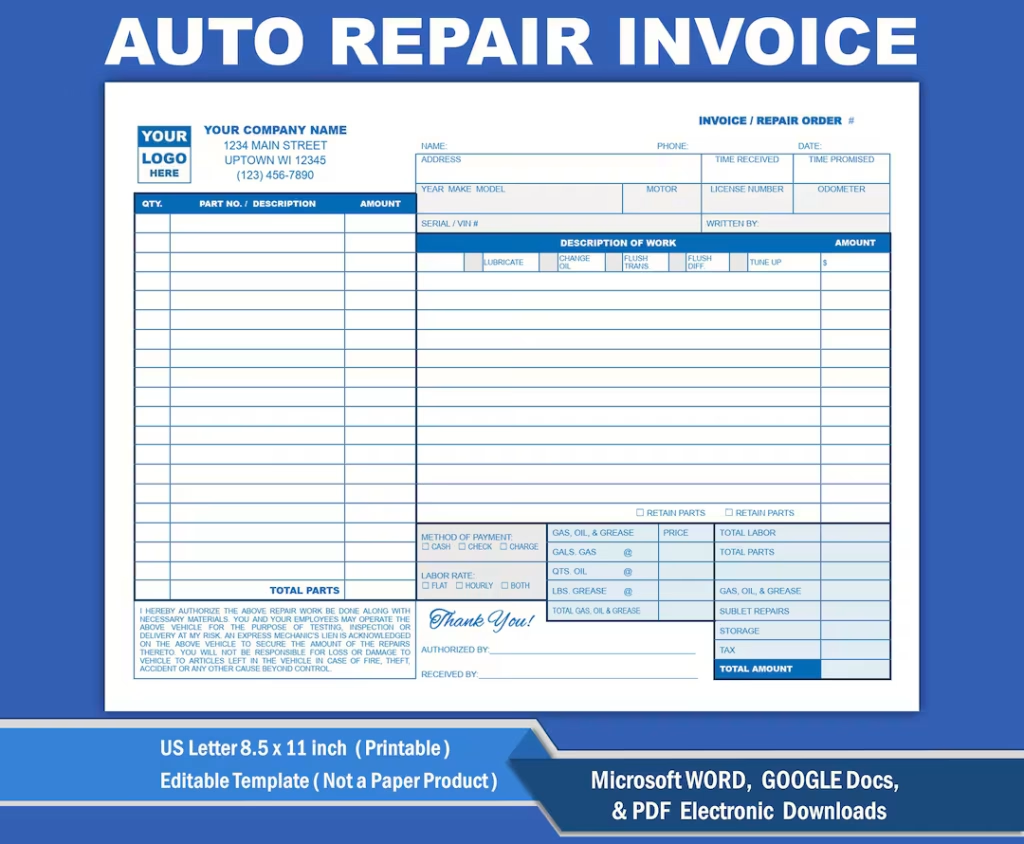
The safest approach is to contact the repair facility using independently verified contact information and ask whether it can confirm the invoice number, service date, and vehicle identification. A shop may require the owner’s authorization before releasing customer information.
Do not reject a vehicle solely because an older independent-garage receipt lacks a VIN. Instead, assess the complete paperwork and investigate documents that identify a different vehicle.
3. The Repair Shop Cannot Confirm the Listed Work
A service invoice may look convincing, but the business named on the document should be able to provide some confirmation that the transaction actually happened.
This is particularly important when a seller claims that an expensive repair, such as an engine replacement, transmission rebuild, or major suspension overhaul, was completed shortly before the vehicle went up for sale.
Start by checking whether the repair facility actually exists. Look for its business address, telephone number, and business name. A document listing an incomplete address, disconnected phone number, or business that cannot be located deserves closer examination.
However, remember that independent garages can close, relocate, or change ownership, so an unavailable business is not automatic proof of fabrication.
If the shop is still operating, contact it directly. Do not rely exclusively on a telephone number printed on the suspicious invoice because fabricated paperwork could contain a false contact number.
Find the business independently and ask whether it can verify the invoice number, approximate service date, and work description. The seller may need to provide authorization because repair facilities are not necessarily permitted to disclose another customer’s records.
Pay special attention to expensive repairs. If the seller claims that a $4,000 transmission repair was completed, there should ideally be supporting documentation identifying the work, parts, labor, and date. A basic receipt stating only that the vehicle was repaired provides considerably less evidence.

Another useful check is whether the shop’s records match the physical condition of the vehicle. An invoice claiming a recently replaced component should be consistent with the mechanic’s findings, although replacement parts do not always have easily identifiable markings.
The Federal Trade Commission recommends obtaining an independent mechanical inspection rather than relying exclusively on a seller’s paperwork or vehicle history report. That advice is particularly valuable when important repairs cannot be independently confirmed.
4. Identical Invoices With Repeated Formatting and Descriptions
A folder containing numerous maintenance receipts can create the impression of a carefully maintained vehicle. However, buyers should look beyond the number of documents and examine how they were produced.
One potential warning sign is a collection of invoices that appears unusually uniform, particularly when the documents supposedly come from different repair facilities.
For example, a seller might present receipts from three independent garages, yet every document uses identical wording, identical formatting, the same unusual abbreviations, and precisely matching descriptions of routine maintenance.
There can be legitimate reasons for similarities, especially when garages use the same invoicing software or standardized industry terminology. The concern arises when unrelated businesses appear to have produced paperwork from the same template without a reasonable explanation.
Repeated descriptions deserve attention too. Imagine receiving five invoices covering different oil changes over two years, with every document listing the same labor description, identical parts quantities, and exactly the same unusual spelling mistakes. That pattern does not establish fabrication, but it gives buyers a reason to verify the original transactions.
Check whether invoice numbers follow the numbering system used by the named repair facility. Compare dates, tax calculations, labor charges, business addresses, and technician information where available.
Genuine service documents often contain small differences because repair orders reflect different transactions and changing vehicle requirements.
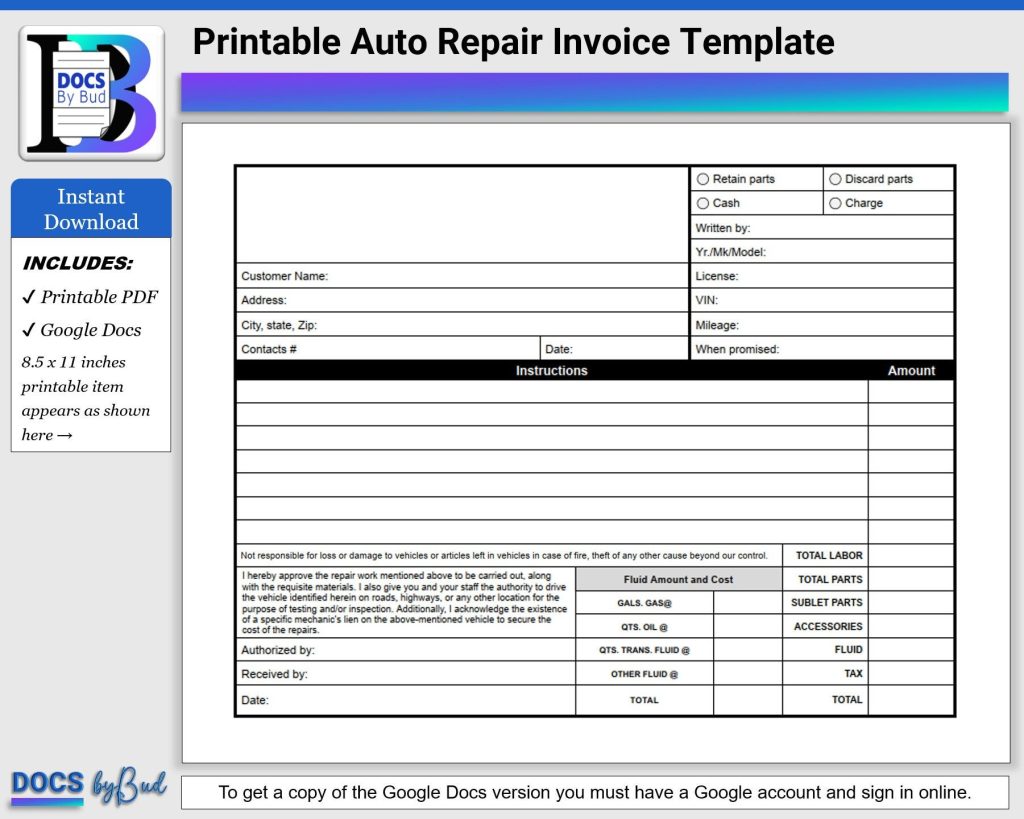
A particularly important step is asking for original digital invoices or copies obtained directly from the repair facility. Screenshots and printed documents can be edited, so their appearance alone is not enough to establish authenticity.
Avoid assuming that professional-looking paperwork is genuine. Equally, do not accuse a seller of fraud simply because two invoices look similar. The objective is to identify inconsistencies and obtain independent confirmation before treating the documents as reliable evidence of maintenance.
5. Service Dates That Do Not Match the Vehicle’s Ownership History
The maintenance records should be consistent with the vehicle’s ownership history. For example, if a seller claims to have owned the car since 2022 but provides invoices dated 2020 and 2021 bearing their name, this raises questions about the vehicle’s previous ownership and who was responsible for its maintenance before 2022.
Previous-owner invoices are legitimate and can provide valuable evidence of long-term maintenance. However, the seller should be able to explain how those documents were obtained. A complete folder inherited from a previous owner is different from paperwork containing unexplained names, dates, and ownership details.
Check the dates against available title records and ownership information. The National Motor Vehicle Title Information System (NMVTIS), operated under the oversight of the U.S. Department of Justice, provides information about title history, title dates, odometer readings, and vehicle brands.
It is useful for checking parts of a vehicle’s history, although it does not provide a complete record of every ownership or maintenance event.
Another problem involves invoices dated before the vehicle was manufactured or before its recorded first sale. A document supposedly showing a 2021 service visit for a vehicle manufactured as a 2022 model requires verification.
Production dates, model years, and registration dates are not necessarily identical, so buyers should check the actual vehicle details rather than assume every date difference indicates wrongdoing.
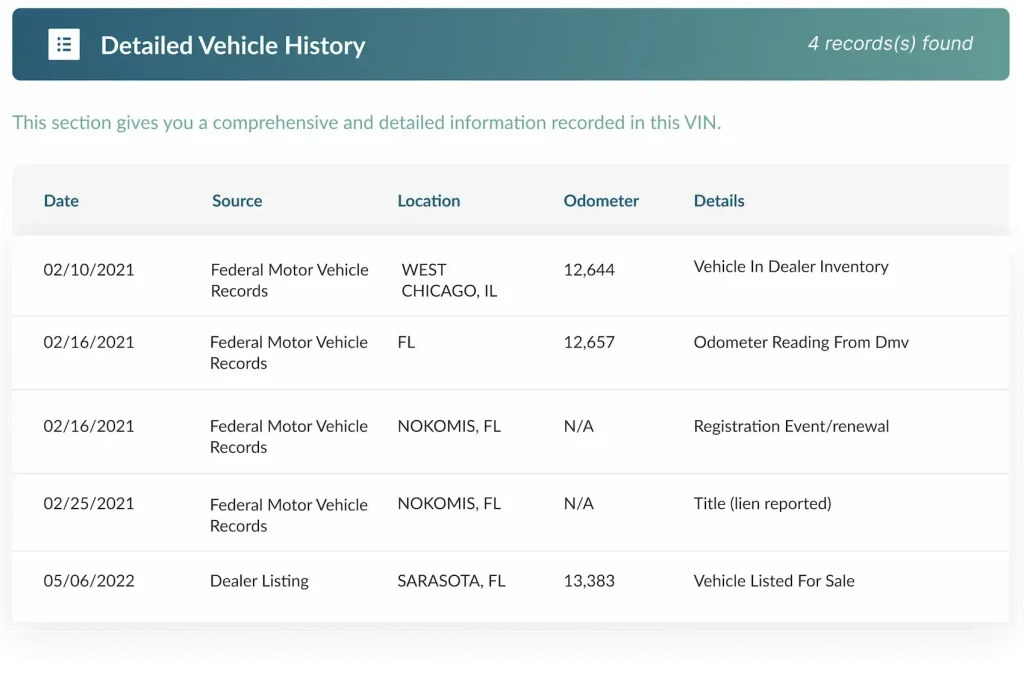
Look for inconsistent customer names, registration details, and repair locations. If a seller claims the vehicle spent its entire life in California but the paperwork suddenly shows several unexplained maintenance visits across distant states, ask for clarification.
Ownership changes and interstate travel are common in the used-car market. The warning sign is not a different name or location by itself, but a timeline that the seller cannot reasonably explain or support.
6. Major Repairs Listed Without Supporting Parts or Labor Details
An invoice claiming that a major repair was completed should contain enough information to explain what the repair involved. A seller might advertise a used vehicle as having a recently rebuilt transmission, replaced timing components, or a completely serviced cooling system.
These claims can make an older vehicle considerably more attractive, but a vague receipt is not strong evidence that the work was actually performed.
Consider a document that simply states “engine repair completed” with a date and a total charge of $2,500. It does not identify the components replaced, the labor performed, or whether the amount covered a complete repair or only a smaller adjustment.
Compare that with a detailed repair order listing the parts, labor operations, quantities, and relevant charges. The second document provides considerably more information that can be independently checked.
Not every legitimate garage provides highly detailed invoices. Some smaller businesses use simplified receipts, and older paperwork may have limited descriptions. However, when a seller makes an expensive repair central to the vehicle’s advertised value, buyers should reasonably expect supporting evidence.
Ask whether the repair facility can provide a more detailed copy of the original work order. For replacement components, request any available parts receipts, warranty documents, or manufacturer paperwork.
If an engine or transmission was replaced, the seller should ideally be able to identify the replacement unit and the facility responsible for the installation.
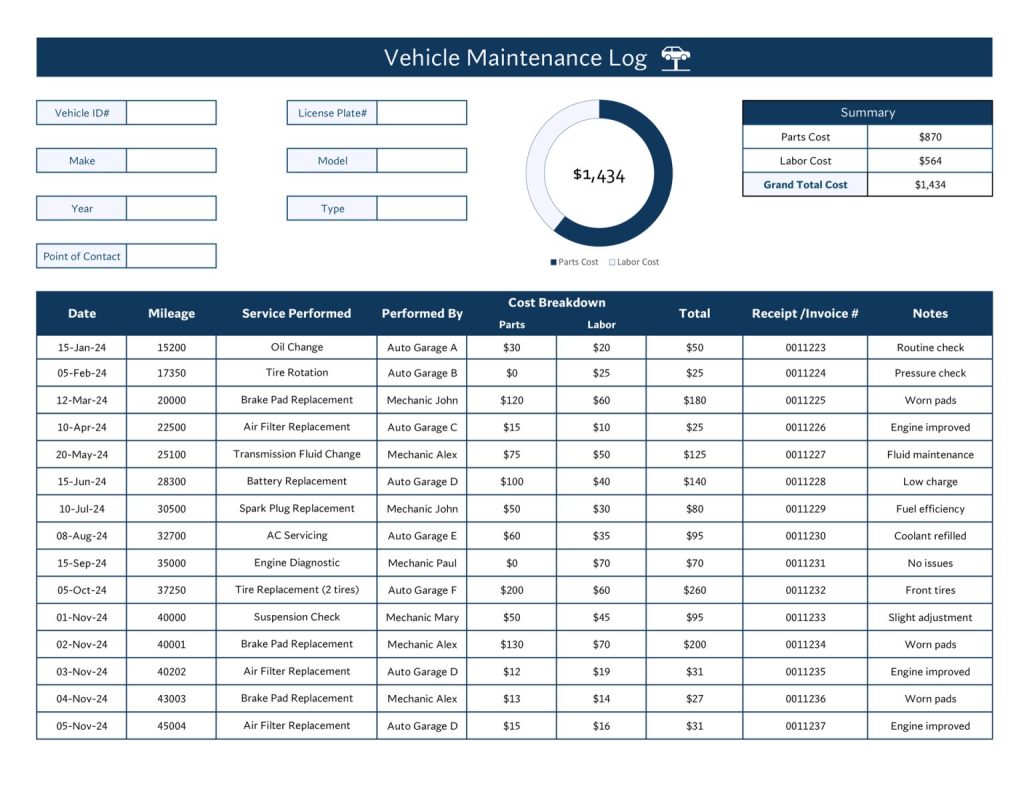
An independent mechanic can also examine whether the claimed repair appears consistent with the vehicle’s present condition. Certain replacement components may have identification labels, manufacturer markings, or other evidence, although not every repair leaves visible proof.
The FTC recommends obtaining an independent inspection and requesting a written report that identifies the vehicle and any necessary repairs. That inspection can help determine whether the seller’s maintenance claims deserve confidence.
7. Maintenance Records That Contradict the Vehicle’s Physical Condition
Paperwork can tell an impressive story, but the vehicle itself provides another source of evidence. If a seller presents records claiming that important maintenance was completed recently, yet an independent inspection reveals signs of neglected servicing, the two accounts deserve closer examination.
For example, the service folder might claim that the vehicle received regular oil changes, cooling-system maintenance, and extensive mechanical attention. However, an inspection could reveal significant fluid leaks, deteriorated belts, neglected hoses, or other problems that require investigation.
These conditions do not automatically prove that the invoices were fabricated. Maintenance work can be completed incorrectly, components can deteriorate after servicing, and some problems develop between scheduled visits.
Nevertheless, a clear contradiction becomes more concerning when the seller insists that major repairs were recently completed but cannot explain why the relevant components appear damaged or neglected.
Pay attention to the areas mentioned in the records. If an invoice claims that the brakes were replaced, ask the inspecting mechanic to examine the brake components. If the paperwork lists recent tire replacement, check the tire brands, manufacturing dates, tread condition, and available purchase documentation.
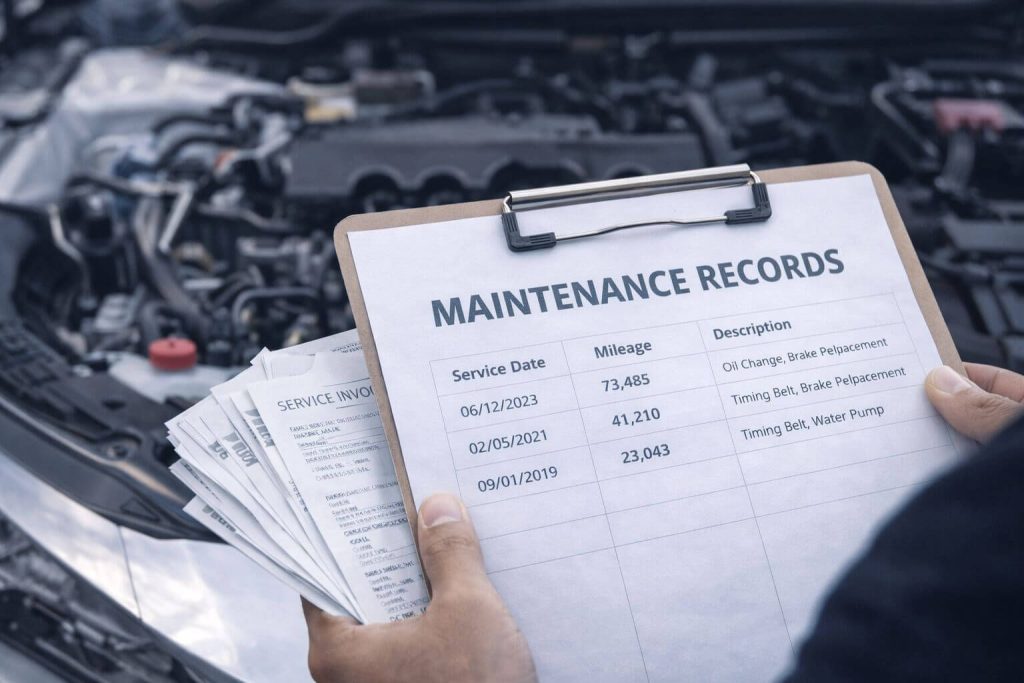
Remember that replacement parts can be worn through use, so their current condition must be interpreted in context.
The NHTSA also recommends comparing a vehicle’s physical wear, including pedal condition and tire information, with its claimed mileage. Such comparisons are useful when investigating possible odometer manipulation.
A professional pre-purchase inspection is particularly valuable here. Ask the mechanic to review the seller’s service documents alongside the actual condition of the vehicle.
This creates an opportunity to identify repairs that cannot be verified, maintenance claims that appear questionable, and mechanical problems that may have been overlooked.
8. Digital Records With Suspicious Editing or Inconsistent Information
Modern dealerships and repair facilities frequently use digital systems to manage customer information, invoices, and maintenance history.
Consequently, used-car sellers may provide PDF invoices, emailed receipts, screenshots, or printed copies of electronic service records instead of traditional paper booklets. Digital documentation is convenient, but it can also be altered more easily than many buyers realize.
Look for inconsistencies in the information rather than relying on appearance alone. An invoice might contain different fonts within the same mileage entry, unusual spacing around the service date, mismatched alignment, or text that appears to have been placed over another figure.
A mileage reading that looks different from the rest of the document deserves verification, especially when it changes the vehicle’s maintenance timeline.
File information can sometimes provide additional clues. For example, a PDF may have a creation or modification date that differs from the invoice date. However, these timestamps are not reliable proof of fraud because documents can be scanned, exported, downloaded, or reorganized long after the original transaction.
Another concern involves digital service histories that contain detailed dealership entries but no identifiable service location or supporting repair order. Ask the seller whether the manufacturer or dealership can retrieve the underlying maintenance transactions using the VIN.
Keep in mind that the absence of an entry in a digital service history does not establish that maintenance was never performed. Independent repair shops may not report their work to manufacturer databases, and some older service records may never have been digitized.
Whenever possible, obtain confirmation directly from the issuing dealership or repair facility. A genuine transaction should have some supporting business record, even if the seller’s particular copy has been edited or reformatted.
Treat digital records as evidence that needs verification, not as automatic proof that every listed repair actually happened.
9. The Seller Refuses to Provide Original Records or Allow Verification
Sometimes the biggest warning sign is not something written on an invoice but the seller’s reaction when you ask questions about it. A legitimate service history should be reasonably open to verification.
If a seller claims that a vehicle has received years of dealership maintenance but refuses to identify the dealership, provide available invoices, or authorize confirmation, buyers should be cautious.
There are legitimate privacy considerations. A repair facility may not release another customer’s information without permission, particularly when the vehicle has changed ownership.
However, the current owner can often request copies of their own records or authorize a repair facility to confirm relevant maintenance information.
Pay attention to how the seller handles reasonable requests. Someone who genuinely possesses maintenance documentation should generally be able to explain where it came from, identify the facilities involved, and clarify questionable entries.
Repeated excuses, conflicting explanations, or pressure to complete the transaction before verification are reasons to slow down.
Another concern is a seller who provides only photographs of selected invoices while refusing to show the original service booklet or complete maintenance folder. Individual photographs are not necessarily suspicious, but they make it harder to determine whether important pages have been omitted or whether the documents belong together.

Buyers should request the complete available service history, including older invoices, repair orders, inspection documents, and relevant warranty paperwork. An independent vehicle history report can provide additional information, but remember that no single report contains every repair performed on a vehicle.
The FTC recommends getting an independent mechanical inspection even when a seller provides a vehicle history report or claims that a dealership has already inspected the car. It also advises buyers to obtain important promises in writing.
If the seller refuses an independent inspection or prevents reasonable verification of major maintenance claims, consider walking away. There are plenty of used vehicles available, and an attractive asking price is not worth accepting an unverifiable mechanical history.