
Temporary license plates allow American drivers to operate newly purchased vehicles while permanent registration is being processed. However, receiving a temporary tag from a dealership does not automatically guarantee that it will be accepted by law enforcement or the state’s motor vehicle agency.
Incorrect vehicle information, missing insurance documentation, expired dates, and improper display can all create registration problems. Requirements also differ considerably between states, meaning a tag accepted in one location may not meet another state’s rules.
Understanding these common mistakes can help buyers avoid rejected applications, traffic citations, registration delays, and unnecessary trips to the DMV.
1. Incorrect Vehicle Identification Number (VIN)
One of the most serious mistakes involving temporary registration is entering an incorrect Vehicle Identification Number (VIN). Every vehicle has a unique 17-character VIN that identifies its manufacturer, model, production details, and individual identity.
When a temporary plate is issued, the associated registration information must correctly identify the vehicle being driven. Even a single incorrect character can create problems when law enforcement or a state motor vehicle agency checks the temporary registration.
This is not simply a paperwork inconvenience. A temporary tag associated with a different vehicle may be treated as improperly assigned, potentially making it invalid for the vehicle displaying it.
The problem can occur when dealership employees manually enter information, copy details from an incorrect document, or confuse two vehicles during a busy delivery process.
California provides a useful example of how seriously authorities treat this information. The California Highway Patrol’s July 2024 information bulletin explains that legitimate dealership-issued temporary plates include the vehicle’s VIN, model year, make, temporary plate number, report of sale number, and expiration date.
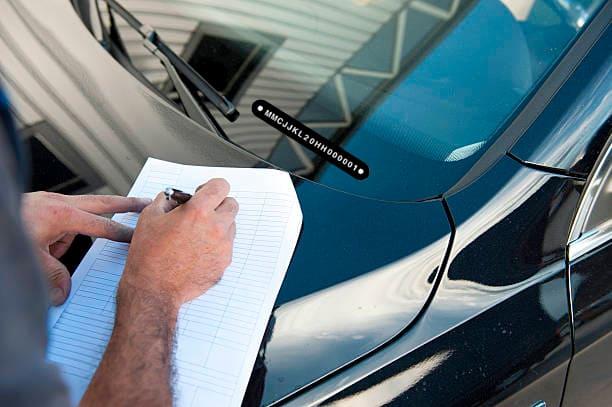
These details allow officers to verify that the tag corresponds to the vehicle being operated. Delaware’s dealer manual similarly requires the temporary registration slip to include the vehicle’s VIN, make, and year. Incomplete or illegible information can lead to dealership disciplinary action.
What buyers should do: Compare the VIN printed on the temporary tag and accompanying documents against the number displayed on the vehicle. Check the dashboard VIN visible through the windshield and the manufacturer’s identification label. If anything differs, ask the dealership to correct the registration information before driving away.
2. Missing or Incorrect Expiration Date
A temporary plate is not a substitute for permanent registration indefinitely. It provides limited authorization to operate a vehicle while the required registration process is completed.
One easily overlooked mistake is accepting a tag with a missing, incorrect, or illegible expiration date. Without a clearly established validity period, drivers can face difficulties proving that their temporary registration is still valid.
The permitted duration depends on the state and the type of temporary permit. For example, Texas buyer’s temporary tags are generally valid until the vehicle is registered or 60 days after purchase, whichever occurs first.
Utah dealer-issued temporary permits, meanwhile, are valid for 45 days from the date the dealer issues them. These differences demonstrate why drivers should never assume that every temporary plate automatically provides 30 or 90 days of legal operation.
Expiration information must also be displayed according to the applicable state’s requirements. Pennsylvania law requires the expiration date to be written on its temporary registration permit in permanent black marker. Utah requires the date to be clearly marked in letters and numbers at least three-quarters of an inch high.
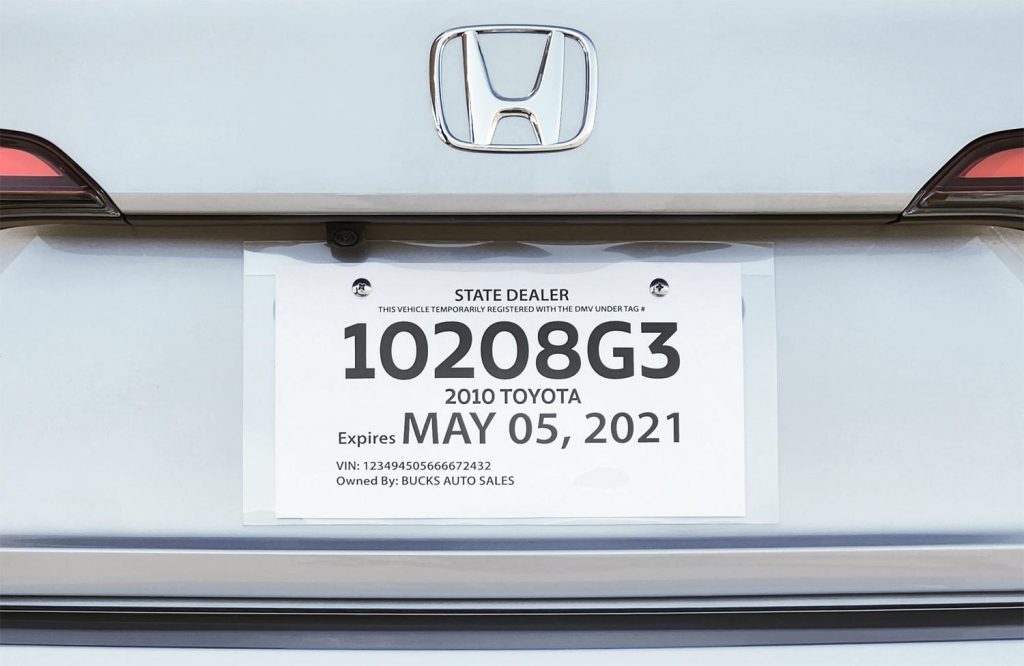
A dealership employee entering the wrong month or day can create confusion even when the remaining registration information is accurate. Buyers should also remember that receiving permanent plates may end the need for temporary registration before the printed expiration date.
What buyers should do: Check the issue date and expiration date immediately after receiving the temporary tag. Confirm the validity period with the relevant state DMV and request a corrected document if the date is missing or inaccurate. Never write a new expiration date yourself or assume that an expired tag receives an automatic grace period.
3. Driving Without Valid Proof of Insurances
A temporary registration plate does not remove the requirement to carry legally acceptable auto insurance. Buyers sometimes assume that because a dealership has issued a temporary tag, insurance verification has automatically been completed.
That assumption can create problems when the registration application is reviewed or when an officer requests proof of financial responsibility.
Insurance requirements vary by state, but many motor vehicle agencies require evidence of valid coverage before issuing temporary registration.
Pennsylvania, for example, identifies acceptable documents that can be used to establish insurance coverage before a temporary registration plate is issued. These include an insurance identification card, a policy declaration page, and certain valid insurance binders.
There can also be problems when the insurance document does not match the person or vehicle being registered. Pennsylvania’s Department of Transportation explains that an insurance card issued in a company’s name cannot automatically be used as proof for a vehicle being titled in an individual’s name without additional documentation confirming coverage.
The same issue can arise when an individual policy is presented for a vehicle being registered to a business.
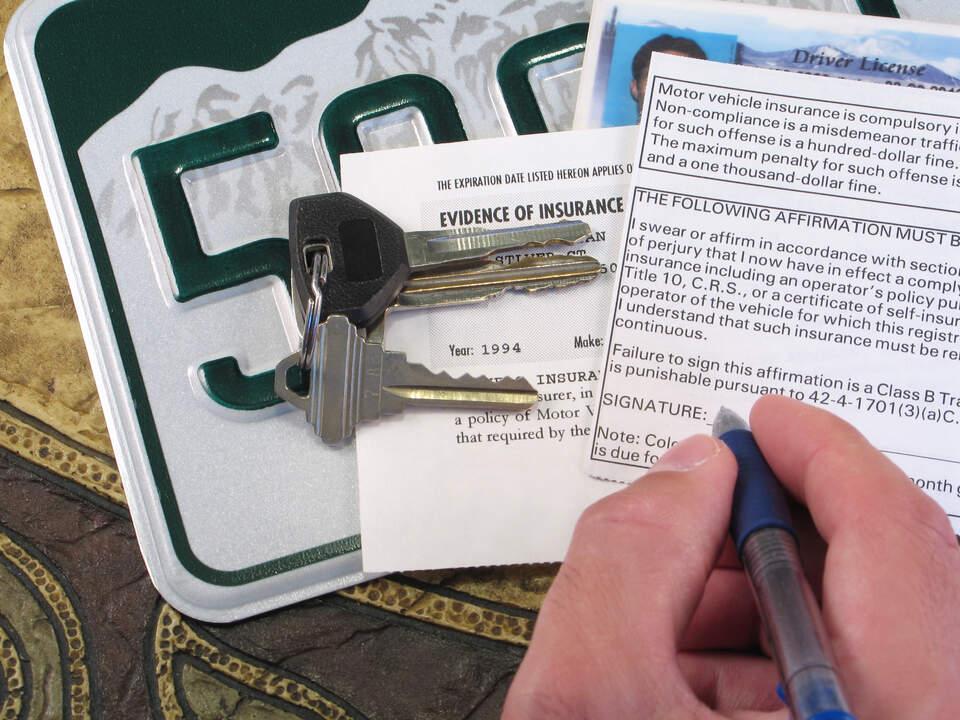
Delaware offers another example. Its DMV explains that when the insurance document does not contain the VIN of the newly purchased vehicle, additional documentation identifying the vehicle and the parties involved in the sale may be required.
This distinction matters because insurance coverage for an existing vehicle does not necessarily mean the newly purchased vehicle has been properly added to the policy. Drivers should verify the effective date and vehicle information rather than relying on an old insurance card.
What buyers should do: Contact your insurer before collecting the vehicle and confirm that the new car is covered from the date of purchase. Obtain an updated insurance card or declaration page where required. Make sure the policyholder, vehicle identification details, and coverage dates match the registration application.
4. Displaying the Temporary Plate in the Wrong Location
Receiving a valid temporary plate is only part of the registration process. Drivers must also display it in the location and manner required by their state’s regulations. Placing the document on the dashboard, behind tinted glass, or in an incorrect section of the rear window can make it difficult for law enforcement to read or verify the registration.
The exact mounting requirements are not identical across the United States. Texas, for example, requires a one-trip temporary registration plate to be securely attached to the exterior rear of the vehicle in an upright, horizontal position. The plate must be at least 12 inches above the ground and remain clearly visible and legible.
Pennsylvania follows a different arrangement for its temporary registration permit. Its law generally requires the document to be affixed to the lower-left inside corner of the rear window, with the printed information visible from outside the vehicle.
New Jersey also requires its electronic temporary tag to be mounted in the rear license plate holder rather than displayed in the rear window. The state’s electronic tag guidance specifically addresses this mounting requirement.
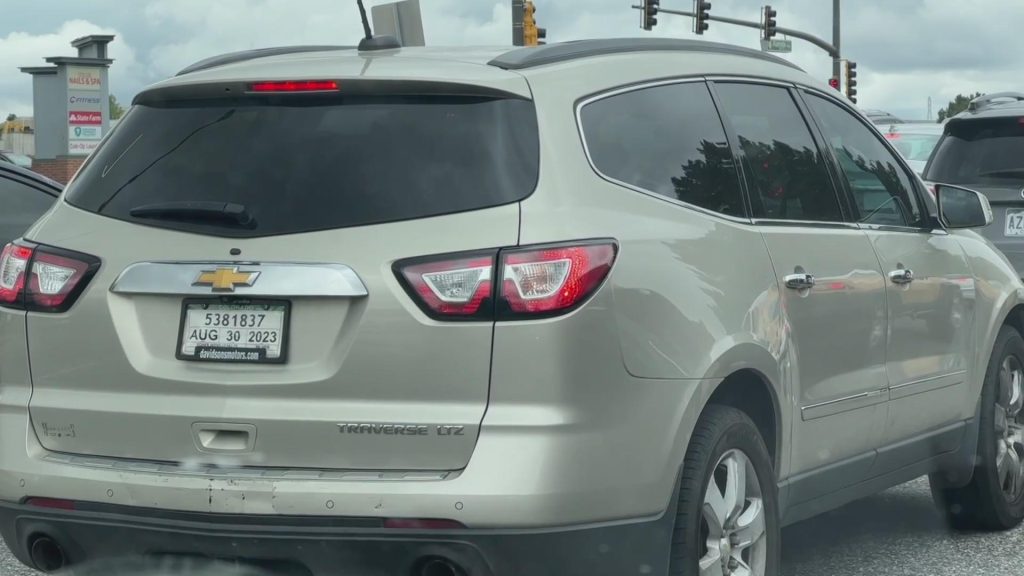
These examples show why copying another driver’s setup can be a mistake. A placement that is acceptable in one state may violate the rules somewhere else.
Obstructions are another concern. A dark window tint, decorative frame, adhesive, or other material can cover important registration information. Even when the tag is technically positioned correctly, unreadable information can create unnecessary complications.
What buyers should do: Follow the placement instructions supplied by the issuing dealership or DMV. Check whether your state requires exterior mounting or interior rear-window placement. Keep the entire tag visible, avoid covering its expiration date or identification number, and never move it to another vehicle.
5. Accepting an Incomplete or Illegible Temporary Tag
A temporary plate may look official, but missing information or poor printing can make it difficult to verify. Buyers should examine the document before leaving the dealership rather than discovering that essential details are unreadable during a traffic stop or registration inspection.
Depending on the state, a temporary tag or accompanying permit may need to display the registration number, vehicle identification details, dealer information, issue date, expiration date, and other identifying information.
Delaware provides a particularly detailed example. Its dealer manual requires the temporary registration slip to contain the dealer’s number, buyer’s name and address, driver’s license information, vehicle make and year, VIN, insurance information, dealer name, and issue and expiration dates.
The DMV can take disciplinary action against a dealership when the required information is incomplete or illegible.
California’s temporary plate requirements also demonstrate the importance of legibility and authenticity. The California Highway Patrol explains that legitimate dealership-issued tags contain identifying information, including a temporary plate number, report of sale number, VIN, vehicle year, make, and expiration date. The system also uses a state-specific watermark and QR code.
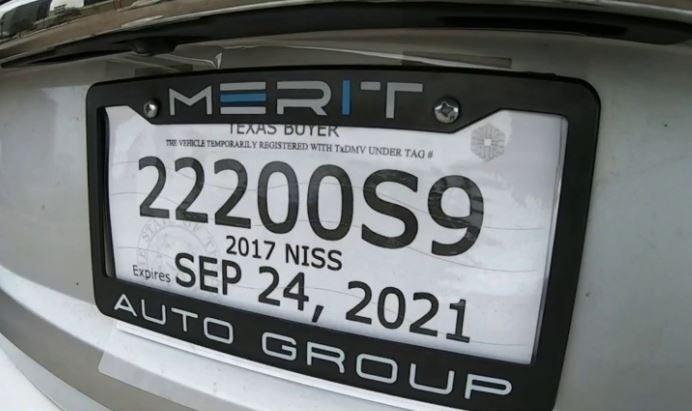
Printing problems can happen because of damaged paper, fading ink, poor printer quality, or incorrect formatting. A tag with missing characters or an obscured expiration date may be difficult for authorities to verify.
Buyers should also examine the accompanying receipt or registration permit. Some states require additional documents to remain inside the vehicle while the temporary registration is valid.
What buyers should do: Inspect the original tag in good lighting before leaving the dealership. Verify that every required field is present and readable. If the paper is damaged or information is missing, ask the issuing dealer to generate a corrected temporary registration through the authorized system rather than attempting to repair the document yourself.
6. Using a Photocopy, Altered Tag, or Unauthorized Duplicate
Trying to extend the usefulness of a temporary plate by photocopying it, changing its expiration date, or modifying its registration number can create serious legal problems.
Temporary tags are issued through state-authorized systems, and their identifying information is intended to correspond with an official registration record. A copied or altered document may not match the information available to law enforcement.
This issue is particularly relevant because temporary tags are not simply ordinary pieces of paper. Many states use electronic databases to record their issuance and connect each tag to a particular vehicle and purchaser.
New Jersey’s Motor Vehicle Commission explains that its electronic temporary tag system automatically generates the issue and expiration dates. Dealers cannot manually change these dates through the reprint function.
If a tag is reported lost or stolen, the system generates a new tag number rather than allowing the original document to be casually duplicated.
California also uses identifying security features on dealer-issued temporary plates, including a state watermark and QR code, to help distinguish legitimate tags from unauthorized reproductions.
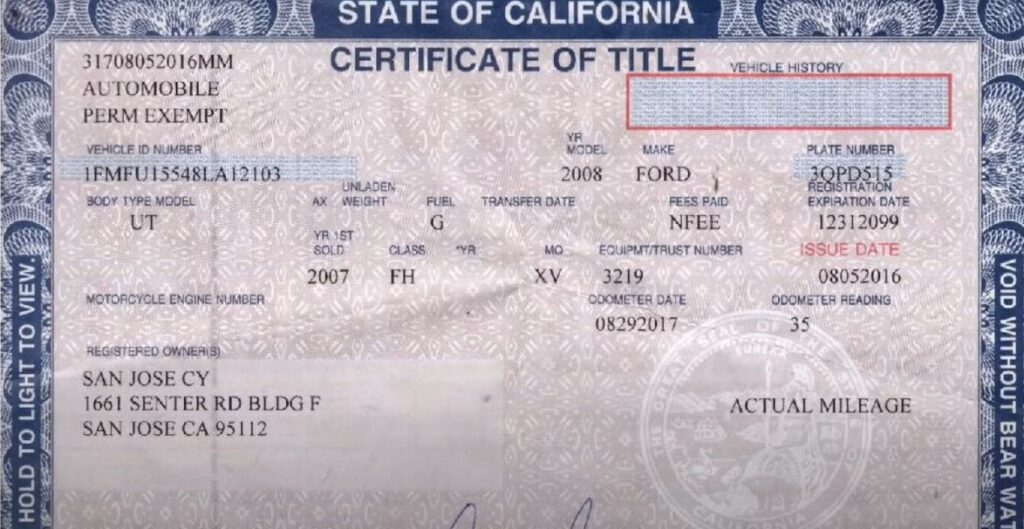
The legal consequences can be more serious than an ordinary registration paperwork error. Iowa Code Section 321.100 identifies altering registration documents or plates with fraudulent intent, counterfeiting them, and knowingly using forged documents as fraudulent practices. Other states have their own laws addressing false registration evidence.
A driver should also avoid using another person’s temporary tag, even when the vehicles appear similar. The registration information is vehicle-specific and cannot simply be transferred between cars.
What buyers should do: Use only the original temporary plate issued for your vehicle. If it becomes damaged, stolen, or lost, contact the issuing dealership or DMV and follow the official replacement procedure. Never write over an expiration date, edit the VIN, laminate an unauthorized copy, or reuse a tag issued for another vehicle.
7. Receiving a Temporary Tag From an Unauthorized Dealer or Seller
Not every seller is legally authorized to issue temporary registration plates. Buyers purchasing from private individuals, online sellers, or businesses that are not licensed vehicle dealers should be especially careful about accepting a temporary tag that has no verifiable connection to the appropriate motor vehicle agency.
In many states, dealer-issued temporary plates are restricted to licensed dealerships and specific authorized transactions. Delaware’s dealer manual explains that temporary tags can only be issued by dealers for vehicles sold by them when they submit the title application to the Division of Motor Vehicles.
This means a seller cannot simply obtain a dealership tag and use it for an unrelated private transaction.
Maryland’s Motor Vehicle Administration also describes temporary dealer plates as a mechanism for customers purchasing vehicles from dealerships while permanent title and registration documents are being processed.
Its procedures require dealers to collect the necessary title information, complete the temporary tag documentation, and provide the buyer with the relevant details.
Private-party purchases can follow a different process. In Colorado, for example, Denver County’s DMV provides temporary permits for qualifying private-party purchases. Buyers must provide identification, ownership documentation, proof of insurance, and other required information.
The permit is issued through the appropriate government office rather than being supplied by the private seller.

The important distinction is that temporary registration is not a benefit that any seller can create independently. The issuing authority, transaction type, and supporting documentation all matter.
What buyers should do: Verify whether the seller is licensed and legally permitted to issue the temporary tag. For a private-party purchase, contact your state DMV to determine which temporary permit applies. Do not accept handwritten or unofficial registration documents as a substitute for an authorized temporary plate.
8. Failing to Complete the Required Title, Registration, or Inspection Paperwork
A temporary plate does not remove the obligation to complete the vehicle’s title and registration requirements. It provides limited authorization while the necessary process is underway.
If important supporting documents are missing, incorrect, or never submitted, the temporary registration may not be issued properly, or the buyer may struggle to obtain permanent plates before it expires.
Typical paperwork problems include an improperly assigned title, missing signatures, an incomplete bill of sale, incorrect ownership information, or an unresolved lien. Depending on the state and transaction, buyers may also need to satisfy inspection, emissions, tax, and insurance requirements.
Delaware provides a clear example of how these requirements can affect temporary registration. Its DMV states that a vehicle must be inspected in Delaware before a temporary tag can be purchased. The agency also explains that proof of insurance and other vehicle-specific documents may be necessary.
Texas has additional requirements for certain temporary registration situations. Its official temporary registration guidance identifies proof of liability insurance and specific vehicle eligibility conditions. For a one-trip temporary registration plate, the vehicle must also meet the applicable requirements for that permit type.
The responsibility for submitting paperwork may initially fall on the dealership, but buyers should not assume that everything has been completed correctly. Errors in ownership records or delayed lienholder information can hold up the permanent registration process.
A particularly frustrating situation occurs when the temporary tag is nearing expiratio,n and the buyer discovers that the title application has not been processed. That can leave the driver without valid authorization to continue using the vehicle.
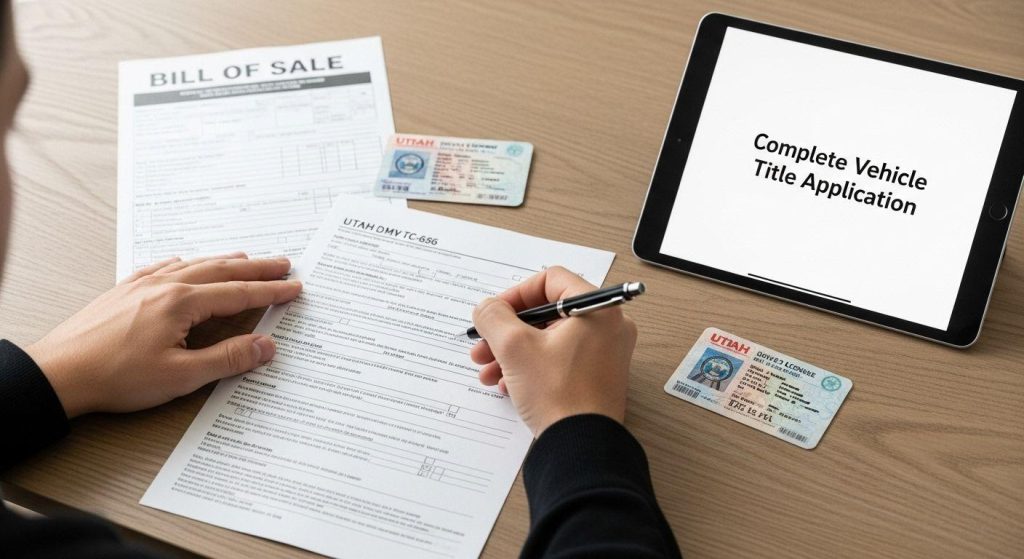
What buyers should do: Obtain copies of the bill of sale, title application, temporary registration receipt, and other relevant documents. Ask the dealership whether the title application has been submitted and whether any inspection or tax requirements remain outstanding. Follow up with the DMV before the temporary tag expires.
9. Continuing to Use the Temporary Tag After It Has Expired
One of the most avoidable mistakes is continuing to drive with a temporary plate after its validity period has ended. Some buyers assume that dealerships automatically receive additional time to process permanent registration or that an expired temporary tag remains acceptable while the title application is pending. Neither assumption is safe.
Temporary registration has a defined validity period, and the rules depend on the issuing state and permit category. For example, California dealership-issued temporary license plates expire 90 days after the vehicle’s sale.
The California Highway Patrol explains that drivers may be cited if they fail to replace dealer-issued temporary plates after receiving permanent registration plates.
Colorado has a particularly strict approach to expiration. Denver County states that temporary permits expire at midnight on the date printed on the document, with no grace period or automatic extension. Buyers who need additional time because of title or lien paperwork problems must contact the appropriate DMV office and follow the extension procedure.
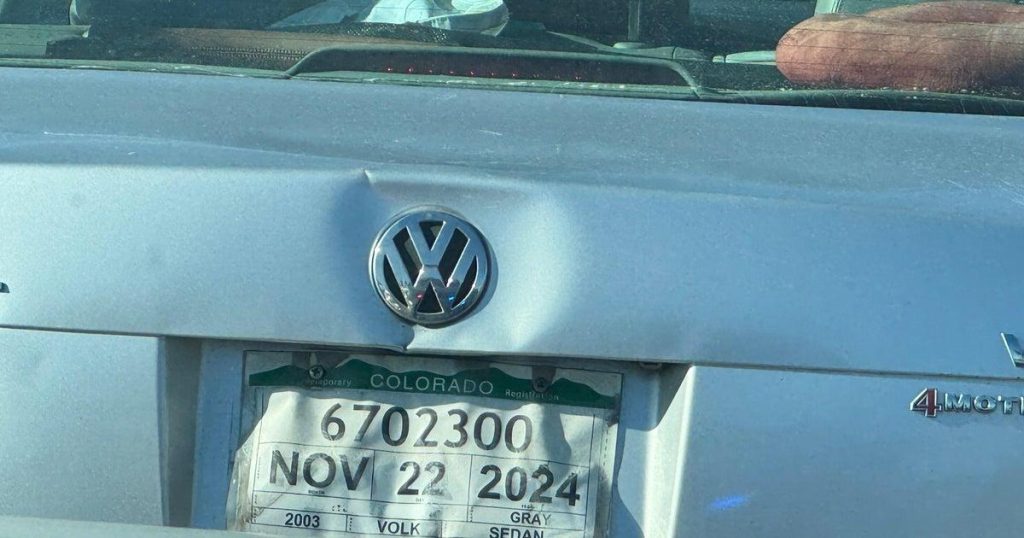
Utah takes a different approach, allowing dealer-issued temporary permits to remain valid for 45 days from issuance. These examples demonstrate why drivers should check the exact rules governing their own permits rather than rely on information from another state.
Another common mistake is continuing to display the temporary tag after permanent plates have arrived. In California, the CHP states that the dealer-issued temporary plates must be destroyed once the permanent plates are installed.
What buyers should do: Record the expiration date immediately and contact the dealership or DMV well before it arrives. If permanent registration is delayed, ask whether an extension or replacement permit is legally available. Never change the printed date or continue driving on the assumption that a pending application automatically extends the temporary registration.