A coolant leak does not always leave an obvious puddle underneath a vehicle. Some engines have water pumps positioned behind their timing covers, making a developing leak difficult to identify during an ordinary inspection.
In certain designs, coolant can escape into the engine’s internal cavities, potentially mixing with the oil and causing serious lubrication problems. Repairing these failures can also involve extensive disassembly because technicians must access components buried behind timing chains or timing belts.
These eight engines deserve particular attention when buying used vehicles, especially if unexplained coolant loss or unusual oil-level changes appear.
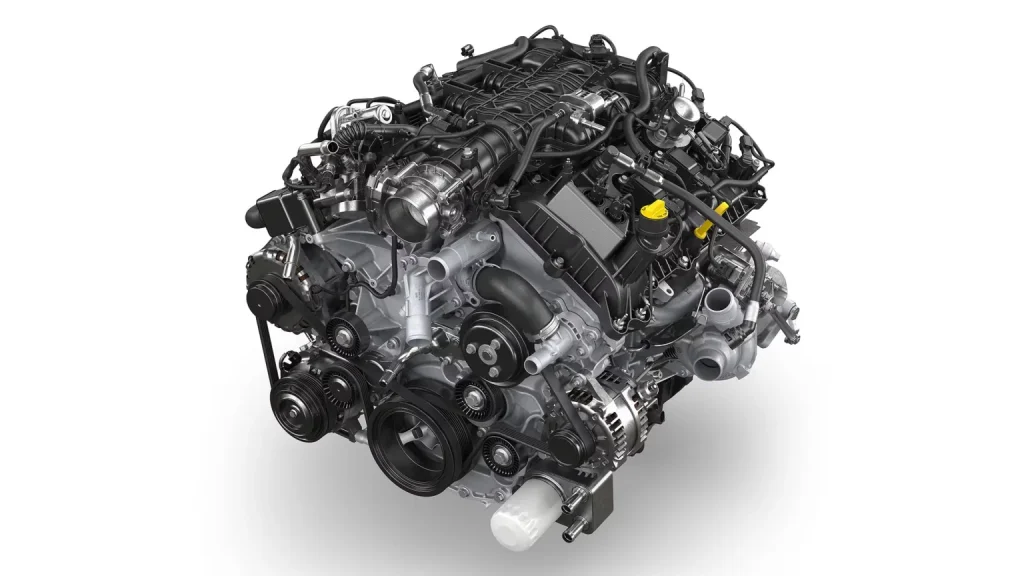
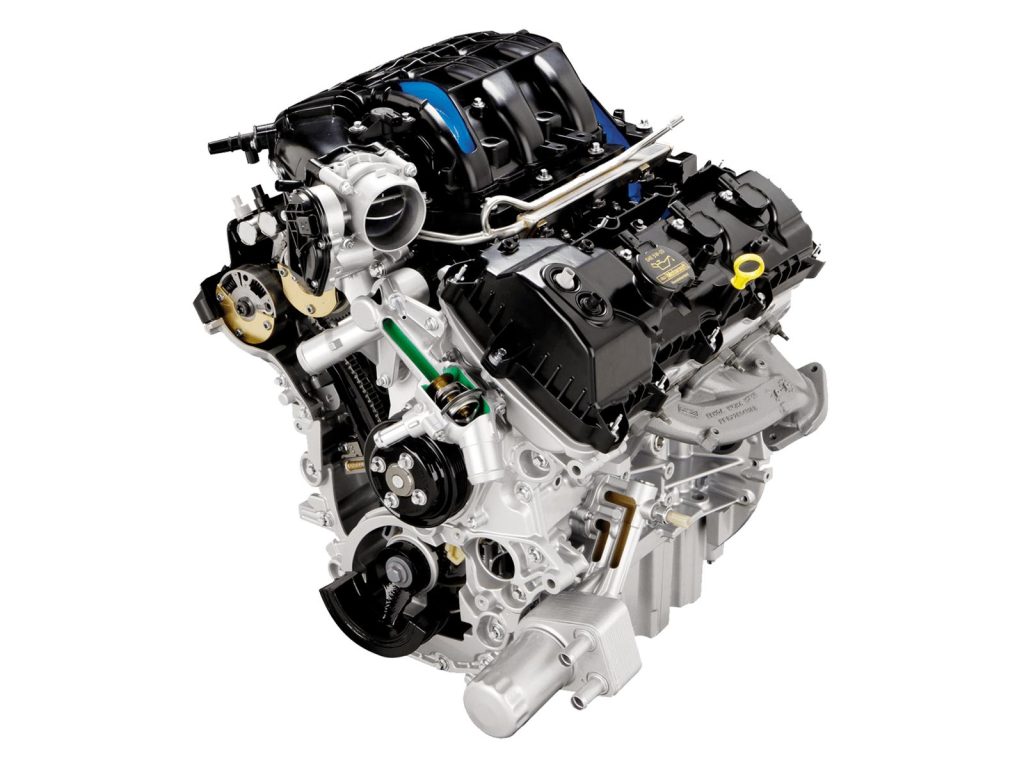
1. Ford 3.5L Ti-VCT V6 (2007-2019)
Ford’s naturally aspirated 3.5-liter Ti-VCT V6 is one of the clearest examples of an engine where a water pump leak can become much more serious than an ordinary external coolant loss.
Used in vehicles including the Ford Edge, Explorer, Flex, and Taurus, this engine features a timing-chain-driven water pump positioned behind the front engine cover. Unlike conventional externally mounted pumps, accessing it requires substantial engine disassembly.
Ford’s factory service information specifically identifies the coolant pump as timing-chain-driven. Its replacement procedure requires removing the engine’s timing-chain-driven chain components to access the pump.
The manufacturer also warns technicians to remove coolant that has accumulated in the oil pan because failing to do so can contaminate engine oil and cause severe damage.
The warning signs are not always dramatic. Owners may initially notice a gradually declining coolant level, an unexplained low-coolant warning, or traces of coolant around the engine. In more serious cases, the leaking pump allows coolant to enter the crankcase, potentially producing discolored oil or an unusually high oil level.
The financial consequences can be substantial. Replacing the pump involves much more labor than servicing a conventional externally mounted unit. Depending on the vehicle, shop rates, and whether timing components require replacement, repair estimates can reach several thousand dollars.
A used Ford with this engine deserves a cooling-system pressure test and careful inspection of the engine oil. If coolant loss has no visible external explanation, technicians should investigate the internal water pump rather than simply replacing hoses or the reservoir cap.
2. Ford 3.7L Ti-VCT V6 (2011-2019)
Ford’s 3.7-liter Ti-VCT V6 is part of the Cyclone engine family and shares a notable feature with the naturally aspirated 3.5-liter variant. Both engines use a timing-chain-driven water pump, a design detail worth understanding when evaluating their maintenance requirements and potential repair costs.
This arrangement can make a coolant leak particularly expensive because the pump is located behind the engine’s front cover rather than being easily accessible from the outside.
Ford’s service documentation identifies the 3.7-liter Ti-VCT engine as using a timing-chain-driven coolant pump. Its cooling-system diagnostic information also specifically lists coolant escaping through the pump’s weep hole as a possible source of coolant loss.
Vehicles using this engine include certain Ford Mustang, F-150, and Explorer applications. However, buyers should verify the exact engine and model-year configuration because not every vehicle in those ranges received the same powertrain.
A failing pump may initially produce only a small amount of coolant leakage. The problem becomes more serious when coolant travels into the engine’s internal cavities and reaches the crankcase. Mixing coolant with engine oil can reduce its lubricating effectiveness, potentially threatening bearings and other internal components.
Ford’s prescribed repair procedure requires access through the front engine cover and timing-chain assembly. That additional labor is a major reason why this problem can cost substantially more than replacing an ordinary belt-driven accessory water pump.
Depending on the vehicle and extent of damage, owners may face repair bills of several thousand dollars. If coolant contamination has already affected the engine oil, additional cleaning and mechanical inspections may be necessary.
Watch for recurring coolant loss, unexplained changes in oil level, and overheating. A pressure test combined with an oil inspection can help establish whether the pump is leaking internally before further engine damage develops.
3. Nissan VQ35DE 3.5L V6 (2002-2012)
Nissan’s VQ35DE is widely used across the company’s lineup, appearing in vehicles such as the Altima, Maxima, Murano, Quest, and Pathfinder, as well as several Infiniti models. Although the engine has a strong reputation for performance, its internal water-pump arrangement deserves attention when inspecting an older vehicle.
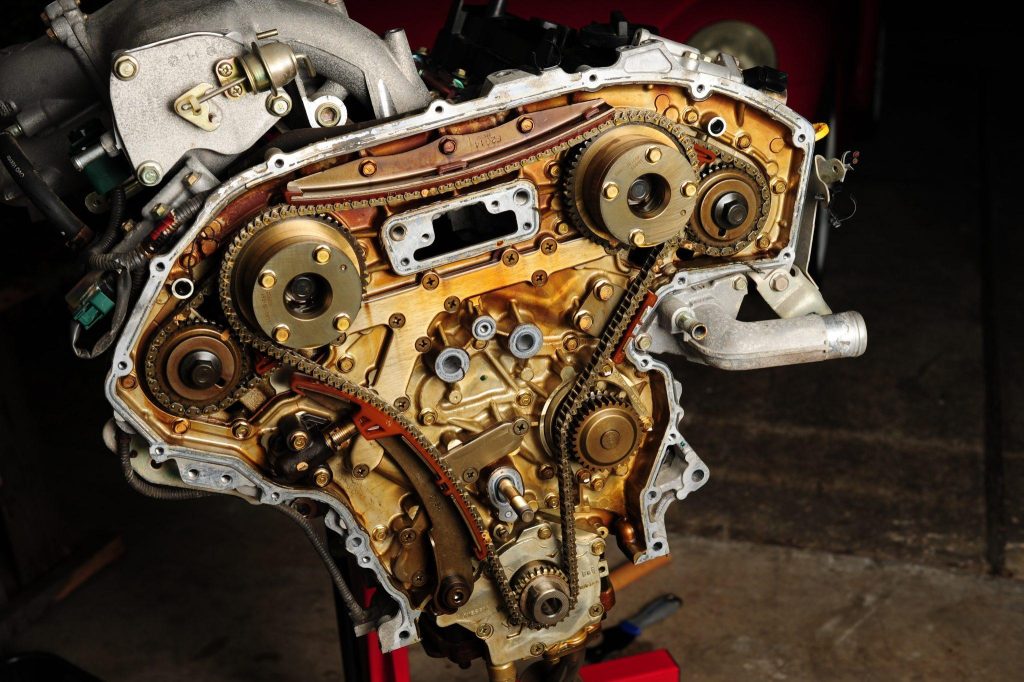
Unlike engines with an externally mounted water pump, the VQ35DE places its pump inside the front timing-chain case. Nissan’s factory service manual shows that accessing the component requires removing the water-pump cover and primary timing-chain tensioner.
The pump is driven by the timing chain, making replacement a considerably more involved procedure than changing a conventional accessory-driven pump.
One reason this arrangement can be concerning is that a failed pump seal may allow coolant to escape inside the timing-chain area. Depending on the leak location, coolant can enter the crankcase, creating a risk of oil contamination.
Nissan’s service procedure specifically instructs technicians to drain coolant from the engine block before removing the pump to prevent coolant from mixing with engine oil.
The early symptoms may appear relatively harmless. A gradually declining coolant reservoir level, unexplained overheating, or traces of coolant around the engine should not be ignored.
Milky engine oil or an increasing dipstick level can indicate a more serious internal contamination problem, although neither symptom identifies the water pump as the cause by itself.
Replacement can involve substantial labor because the front timing-chain components must be accessed. Depending on the vehicle and the condition of surrounding components, owners can face repair bills running into several thousand dollars.
Before purchasing a used VQ35DE-powered vehicle, request a cooling-system pressure test and check the oil for contamination. Persistent coolant loss without an obvious external leak deserves further investigation.
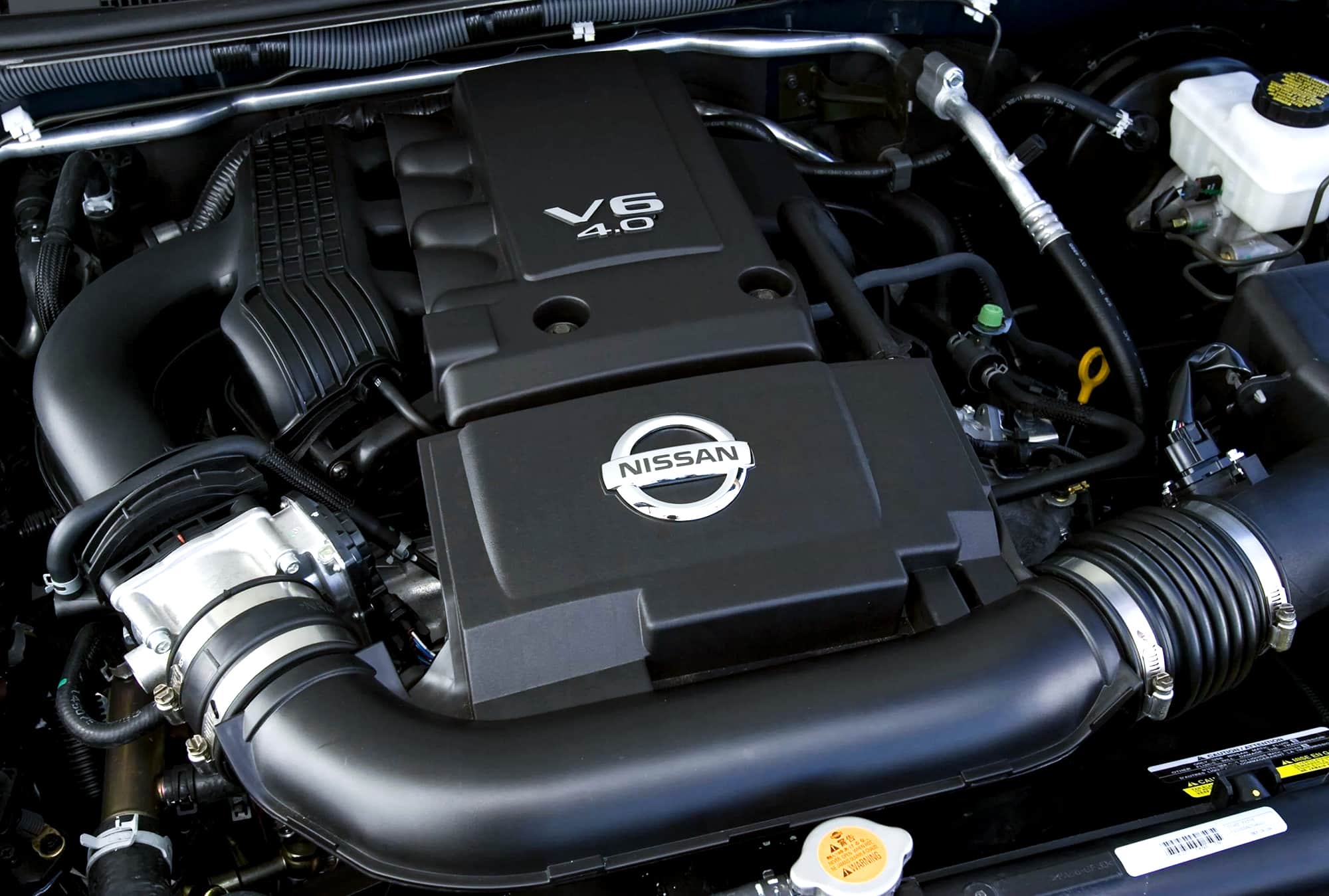
4. Nissan VQ40DE 4.0L V6 (2005-2012)
The 4.0-liter VQ40DE powered several popular Nissan trucks and SUVs, including the Frontier, Pathfinder, and Xterra. Its naturally aspirated V6 configuration delivers useful torque for everyday driving and light-duty towing, but its internal water-pump arrangement creates an expensive maintenance consideration.
Nissan positioned the water pump inside the front timing-chain case, where it is driven by the engine’s timing chain. According to factory service procedures, technicians must remove the water-pump cover and primary timing-chain tensioner to access the component. This is not a straightforward external water-pump replacement.
The pump’s location makes an early leak difficult to identify without a proper inspection. Coolant escaping from its internal sealing surfaces may travel into the timing-chain cavity rather than immediately forming a noticeable puddle beneath the vehicle. If coolant reaches the crankcase, it can contaminate engine oil and threaten internal lubrication.
Nissan’s service documentation specifically warns technicians not to spill coolant onto the timing chain and drive belt during removal. It also requires a pressure test after installation to confirm that the cooling system is sealed correctly. These instructions demonstrate why careful handling and proper diagnosis matter during this repair.
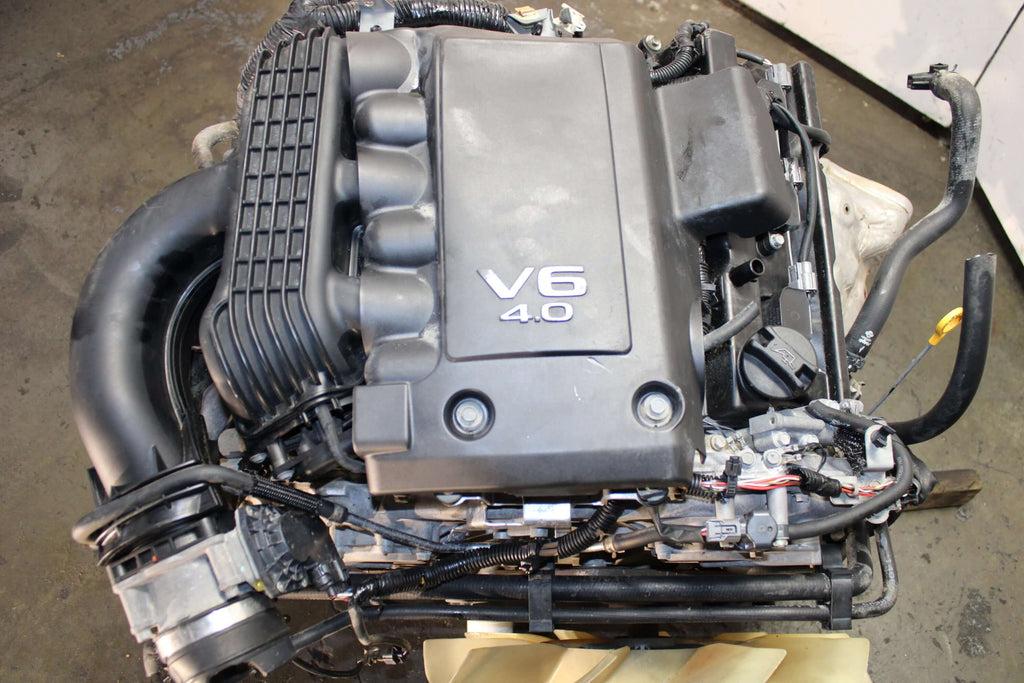
Owners should pay attention to repeated coolant top-ups, unexplained temperature increases, and changes in engine-oil appearance. A pressure test can help identify a leak, while an inspection of the oil can reveal possible internal contamination. Neither should be replaced by simply checking whether coolant is visible underneath the truck.
For used Frontier, Pathfinder, and Xterra buyers, the service history is especially important. Ask whether the internal water pump has previously been replaced and whether the timing-chain area was inspected during the repair.
A neglected leak can become much more expensive if coolant contamination progresses into engine damage.
5. Toyota 1MZ-FE 3.0L V6 (1994-2006)
Toyota’s 1MZ-FE is an older 3.0-liter V6 found in vehicles including the Camry, Avalon, Sienna, and Highlander. It is known for providing smooth power delivery, but its timing-belt-driven water pump creates an inspection point that used-car buyers should not overlook.
The pump sits behind the timing-belt covers, meaning technicians must remove several components before reaching it. Toyota’s factory service procedures for the 1MZ-FE specifically require removing the timing belt, camshaft timing pulleys, idler pulley, and timing-belt cover before the water pump can be removed.
The problem becomes particularly concerning when the pump’s mechanical seal begins leaking. Coolant can escape through the pump’s drain hole and collect inside the timing-cover area. Depending on the amount and location of the leakage, it may leave noticeable residue without immediately producing a large puddle underneath the vehicle.
Coolant contamination can also create problems for the timing belt. Toyota’s repair guidelines specifically call for replacing the belt if engine coolant has come into contact with it. This adds another potential repair expense, as exposure to coolant can affect the belt’s condition and reliability.
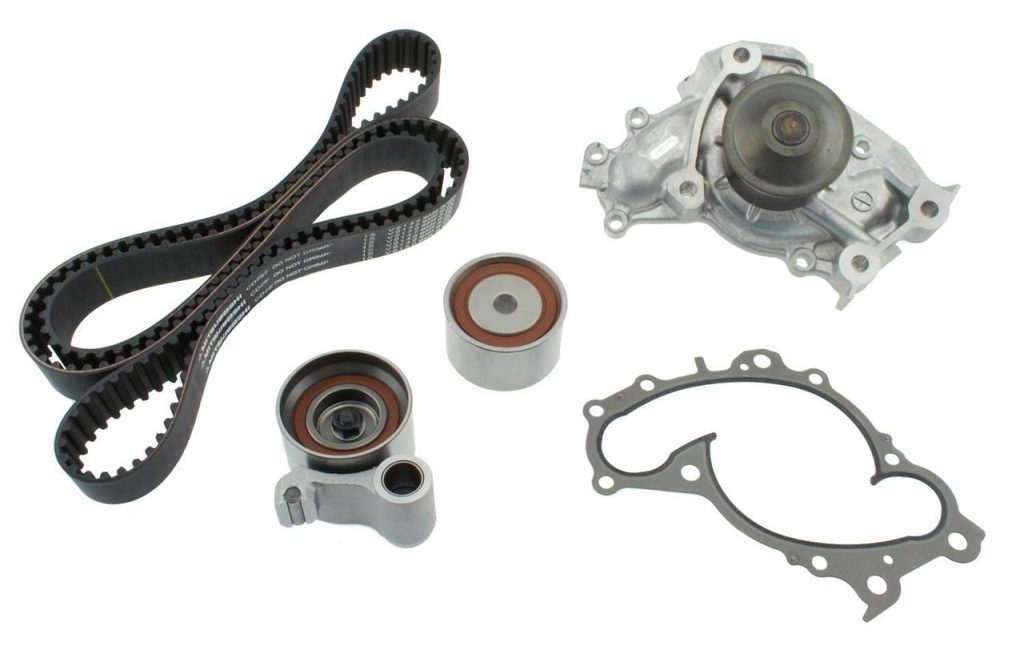
The usual warning signs include pink or whitish coolant deposits around the lower timing-cover area, falling reservoir levels, and unusual noises from the water-pump bearing. A noisy bearing does not necessarily mean the pump is leaking, but it warrants inspection.
Repair costs depend on the vehicle and labor rates. Since much of the timing-belt assembly must be removed, many owners choose to replace the belt, tensioner, and related service components while the engine is apart.
When buying an older Toyota with the 1MZ-FE, request proof of water-pump and timing-belt maintenance. A clean engine bay alone cannot establish that the pump is healthy.
6. Toyota 3MZ-FE 3.3L V6 (2003-2010)
The 3.3-liter 3MZ-FE V6 appeared in several Toyota and Lexus vehicles, including the Highlander, Sienna, Camry Solara, and Lexus RX 330. It uses a timing-belt-driven water pump positioned behind the timing covers, creating a repair situation similar to that of the older 1MZ-FE.
Toyota’s factory repair documentation confirms how deeply the pump is integrated into the timing assembly. For example, the 2005 Highlander 3MZ-FE procedure requires removing the crankshaft pulley, multiple timing-belt covers, timing belt, idler components, and camshaft timing pulley before accessing the pump.
A leaking mechanical seal can release coolant through the pump’s drain hole. Because the pump is partially concealed, early leakage may appear as dried coolant deposits around the timing-cover area rather than an obvious stream reaching the ground. If the leak becomes more severe, coolant can collect around the timing belt and surrounding components.
Toyota’s repair guidance specifically instructs technicians to inspect the pump’s drain hole and bearing. It also states that a timing belt contaminated by engine coolant should be replaced. This is important because repairing the pump without addressing a contaminated belt can leave another potential failure point in the engine.
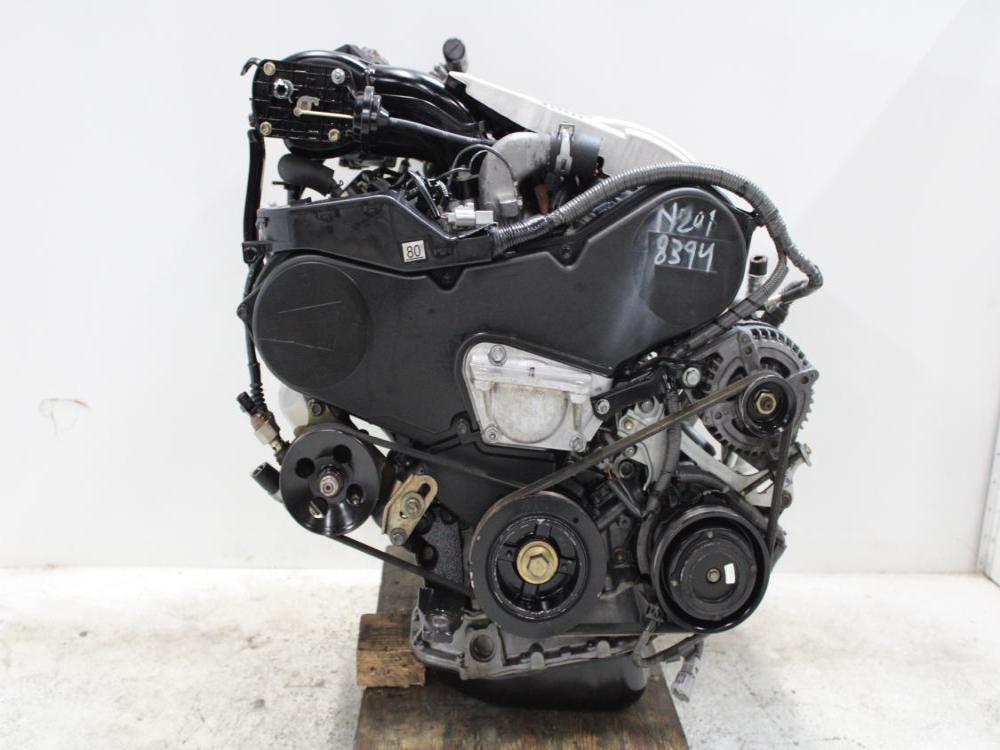
The warning signs worth monitoring include unexplained coolant loss, dried coolant residue near the front of the engine, and rough or noisy water-pump bearing operation. A cooling-system pressure test can help establish whether the pump is actively leaking.
The biggest expense is often labor rather than the water pump itself. Since the timing assembly must be dismantled, combining pump replacement with scheduled timing-belt maintenance can make financial sense.
Anyone considering a used 3MZ-FE vehicle should request invoices showing when the water pump and timing belt were last replaced.
7. Toyota 2UZ-FE 4.7L V8 (1998-2011)
Toyota’s 2UZ-FE is a 4.7-liter V8 found in vehicles such as the Tundra, Sequoia, Land Cruiser, and 4Runner. Known for its use in trucks and large SUVs, this engine was designed around a conventional timing-belt arrangement.
However, its water pump is positioned behind the timing-belt covers, making coolant leaks more labor-intensive to repair.
Toyota’s factory service documentation confirms that accessing the pump requires removing the timing belt and associated components.
The inspection procedure specifically instructs technicians to check the water pump’s air hole and water hole for coolant leakage. If leakage is detected, Toyota’s instructions call for replacing both the water pump and timing belt.
The location of the pump creates two concerns. First, coolant can accumulate around the timing-belt assembly without immediately producing a noticeable puddle underneath the vehicle. Second, leakage can contaminate the timing belt, potentially compromising a component responsible for keeping the engine’s valve timing synchronized.
Owners should watch for declining coolant levels, dried coolant deposits near the lower timing cover, and unusual bearing noise. A water pump that has developed excessive bearing play may also produce abnormal sounds during engine operation.
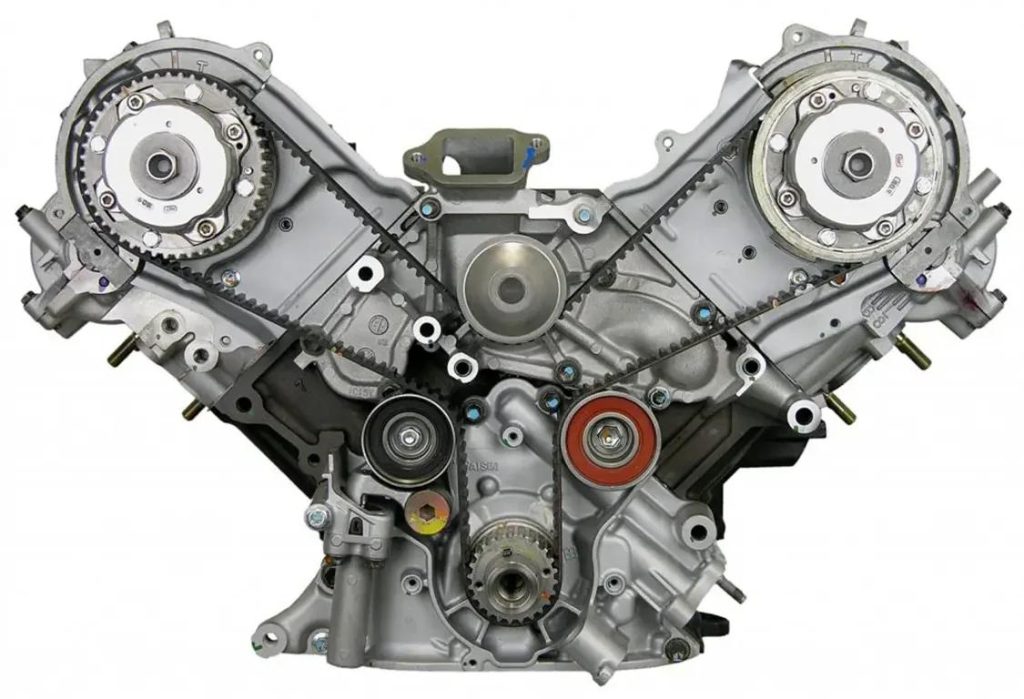
Repair expenses depend on the vehicle, labor rates, and condition of the surrounding timing components. Because the pump is accessed during timing-belt removal, replacing the belt, tensioner, and idlers at the same time can prevent paying for much of the same labor again.
For buyers considering an older Tundra, Sequoia, or Land Cruiser, maintenance documentation matters considerably. Ask whether the water pump was replaced during the previous timing-belt service.
A properly maintained 2UZ-FE can remain a dependable powerplant, but ignoring a concealed coolant leak can turn routine maintenance into a much larger repair.
8. Honda J35 3.5L V6 (2005-2017)
Honda’s J35 3.5-liter V6 powered numerous popular American-market vehicles, including the Accord V6, Odyssey, Pilot, Ridgeline, and Acura MDX. Although the engine has a reputation for smooth performance, its timing-belt-driven water pump is an important component to inspect, particularly on older, high-mileage examples.
Unlike an externally mounted accessory-driven pump, the J35 water pump is located behind the timing-belt covers.
Honda’s factory service procedures for J35A9, J35Z1, J35Z2, and J35Z3 applications require technicians to remove the timing belt and its adjuster before accessing the water pump. The pump is secured to the engine block with multiple bolts and an O-ring seal.
When the pump’s internal seal or mounting seal deteriorates, coolant can escape into the concealed timing-belt area. This may produce residue around the covers before an obvious puddle develops beneath the vehicle. A leaking pump can also contaminate the timing belt, making replacement of both components necessary.
Honda’s maintenance procedures make this an important consideration during scheduled timing-belt service. Replacing the water pump while the belt is already removed can avoid paying for much of the same disassembly labor later.
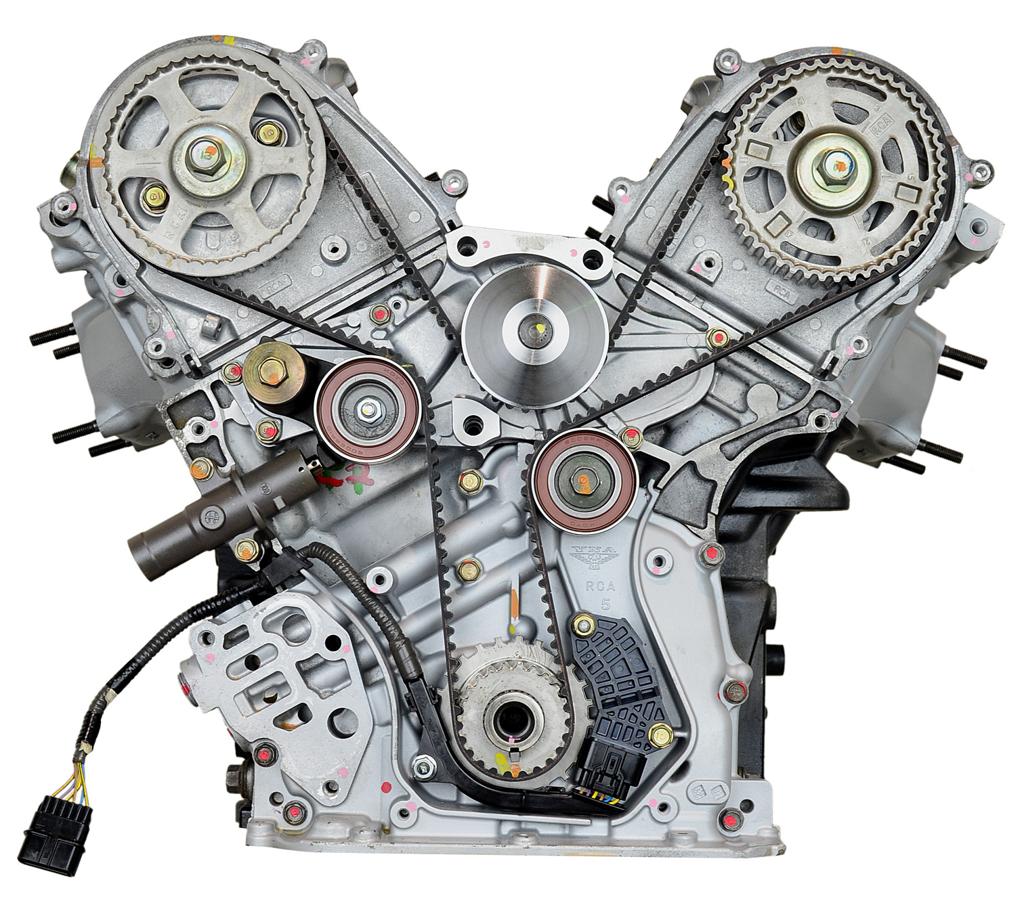
Warning signs include recurring coolant loss, dried coolant deposits around the timing-cover area, overheating, and unusual bearing noise. These symptoms require proper diagnosis because other cooling-system components can produce similar problems.
The actual repair bill varies by vehicle and shop. A complete timing-belt and water-pump service can cost several hundred dollars more than a basic belt replacement, depending on parts and labor.
For used-car buyers, checking the timing-belt service sticker is not enough. Request an invoice identifying whether the water pump was replaced, particularly when purchasing an older Odyssey, Pilot, or Accord V6.