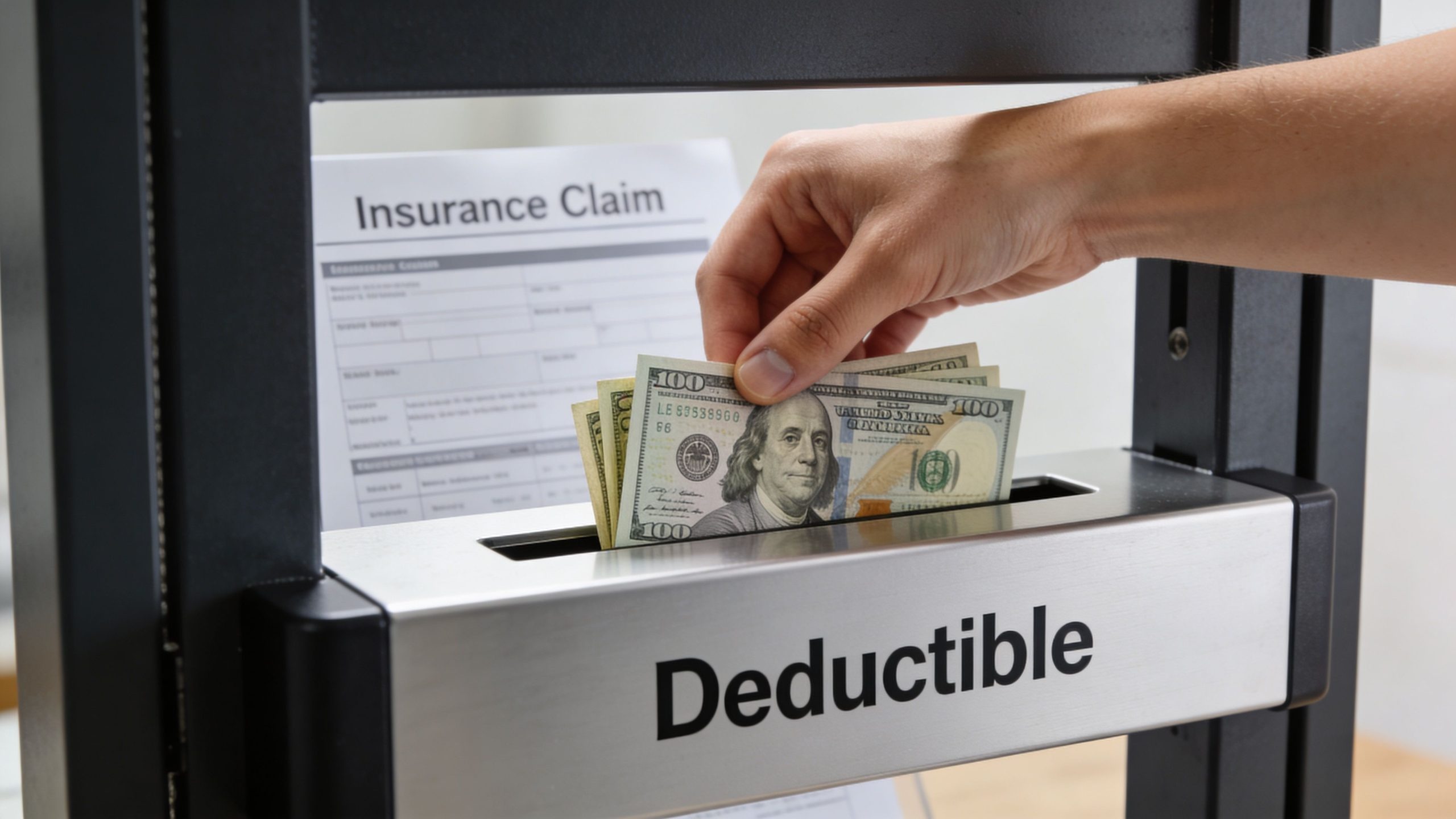
If your car insurance premiums are putting pressure on your budget, raising your deductible to $1,000 could be one way to reduce your monthly payments. This can free up money for other expenses, but it also means taking on a higher out-of-pocket cost if you need to file a covered claim.
So, is the potential savings worth accepting that extra financial responsibility? The answer depends on your savings, driving habits, financial priorities, and the amount your insurer is willing to discount your premium. Before making a decision, here is what you should understand about raising your deductible.
Understanding What a $1,000 Deductible Means
An insurance deductible is the amount you agree to pay toward a covered loss before your insurance company contributes its share.
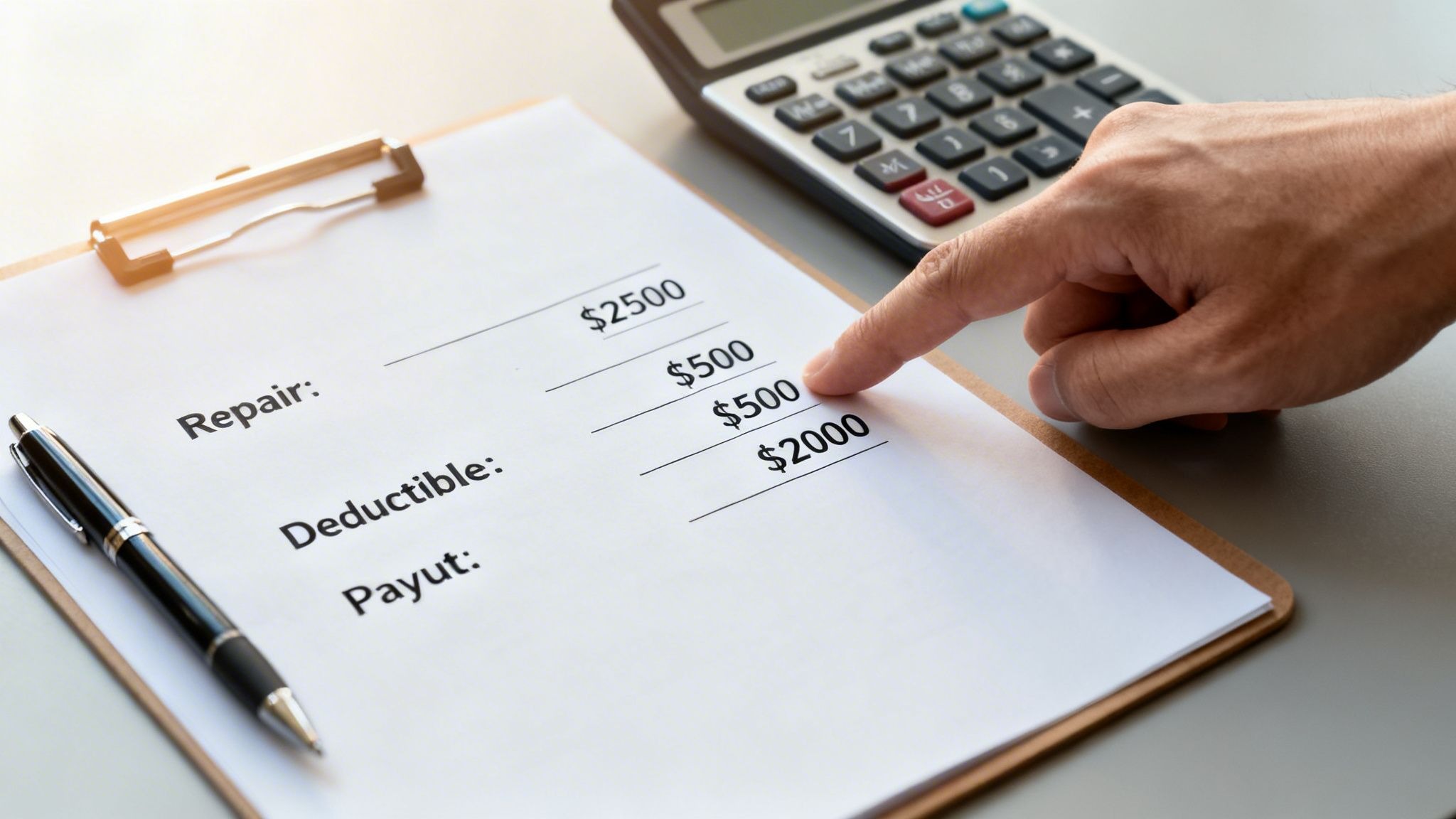
For example, if your vehicle sustains $3,500 in covered damage and your policy has a $1,000 deductible, you pay the first $1,000 while your insurer covers the remaining $2,500, subject to your policy terms and coverage limits.
Now consider a policy with a $500 deductible. For the same repair, your insurer would pay $3,000, leaving you responsible for just $500. That $500 difference can matter when unexpected expenses arise.
Choosing a $1,000 deductible means accepting more financial responsibility in exchange for a potentially lower insurance premium. You are essentially agreeing to handle a larger portion of smaller losses yourself.
It is also worth remembering that deductibles generally apply to specific coverage types, such as collision and comprehensive coverage. Your policy may have different amounts for each. Understanding these details helps you avoid surprises when filing a claim.
How Much Money Can You Save by Raising Your Deductible?
The opportunity to save money is one of the biggest reasons drivers consider increasing their deductible. Insurance companies generally charge lower premiums when customers agree to pay more toward covered repairs.
However, there is no universal discount for moving from $500 to $1,000. Your savings depend on factors such as your location, driving record, vehicle, coverage selections, insurer, and claims history.
Some insurance estimates suggest that increasing a deductible can reduce certain coverage premiums by around 15% to 25%. However, this is not a guaranteed discount, and your actual reduction could be smaller.
For instance, imagine your annual premium is $1,200. If your insurer offers a 10% discount after increasing your deductible, you would save $120 annually. A 20% discount would leave you with $240 in annual savings.
The important thing is to request an actual quote rather than rely on general estimates. Ask your insurer to show you the price difference between your current deductible and the proposed $1,000 option.
That figure will help you decide whether accepting additional out-of-pocket responsibility makes financial sense.

The Financial Risks of Choosing a Higher Deductible
Lower insurance payments sound appealing, but a higher deductible comes with a financial responsibility that deserves careful thought.
Suppose your vehicle gets damaged in an accident, and the repair bill reaches $1,800. With a $1,000 deductible, you must provide that amount before your collision coverage contributes toward the eligible repair costs.
If you only have $600 available in savings, finding the remaining $400 could become stressful. This is where the decision becomes less about saving money on monthly premiums and more about having enough cash available when an unexpected event occurs.
There is also the possibility of experiencing multiple accidents or covered losses within a relatively short period. Each separate claim may require you to pay the applicable deductible, depending on your policy and the circumstances.
Another concern is that minor damage may not justify filing a claim. If repair costs are close to your deductible, paying the bill yourself might be more practical.
A higher deductible can therefore create pressure on your emergency savings. Before making the change, consider whether you could comfortably handle a $1,000 expense without borrowing money or missing essential payments.
When Raising Your Deductible Makes Financial Sense
A $1,000 deductible can be a reasonable choice when your finances allow you to handle unexpected vehicle repairs without disrupting your regular budget.
Consider someone who has a healthy emergency fund, consistent income, and a relatively clean driving record. This person may feel comfortable accepting a higher deductible because the additional out-of-pocket expense would not create an immediate financial problem.
It can also make sense for drivers who rarely file insurance claims and prefer to pay for smaller repairs themselves. Rather than submitting a claim for every minor incident, they can reserve insurance for more expensive covered losses.
Another factor worth considering is the actual amount you stand to save. If increasing your deductible reduces your annual premium by $250, you could recover the additional $500 deductible exposure after two claim-free years, assuming the savings remain consistent.
However, this calculation is only a guide. You may experience a covered accident before reaching that point, and premiums can change at renewal.
The decision becomes more attractive when you have enough savings, can tolerate some financial risk, and receive a worthwhile premium reduction from your insurance provider.
When You Should Keep Your Deductible at $500
Not everyone benefits from choosing a $1,000 deductible. For some drivers, keeping a $500 option is the more sensible financial decision.
If your savings are limited, accepting an additional $500 in potential repair costs may place unnecessary pressure on your household budget. A lower deductible provides more protection against immediate expenses when a covered accident happens.
This option may also suit people who depend heavily on their vehicles for work, family responsibilities, or daily transportation. Unexpected repair bills can already be difficult to manage, especially when transportation expenses continue while the vehicle is being repaired.
Drivers who have a history of frequent claims may also prefer a lower deductible, provided the premium difference is affordable.
Think about your monthly expenses, too. Saving a small amount on insurance each month might not justify taking on a much larger payment when an accident occurs.
There is nothing wrong with paying a slightly higher premium for the reassurance of having less money to provide after a covered loss. Insurance should provide financial protection that fits your actual circumstances, not create another expense you cannot comfortably manage.
How to Decide Whether the $1,000 Option Is Worth It
Before changing your policy, compare the actual costs associated with both deductible options. Your insurance provider can give you quotes showing how much you would pay annually with a $500 deductible and a $1,000 deductible.
Next, calculate the annual savings. If the difference is $15 per month, you would save $180 over 12 months. Since you would be accepting an additional $500 in deductible responsibility, it would take approximately 34 months of maintaining the lower premium to save that amount.
This simple calculation gives you a useful starting point, although it does not account for future premium changes or possible claims.
You should also review your emergency fund. Ideally, you should have the full deductible amount readily available rather than depending on a credit card or personal loan if an accident occurs.
Ask your insurer whether collision and comprehensive coverage have separate deductible options. You may discover that increasing one deductible while keeping the other at $500 provides a better balance.
Finally, check whether changing your deductible affects any other policy benefits, discounts, or coverage conditions. A quick conversation with your insurance agent can help clarify these details before you make a commitment.
Other Ways to Lower Your Car Insurance Premium
Raising your deductible is not the only way to reduce your insurance expenses. If accepting additional out-of-pocket responsibility does not fit your financial situation, several other options may help you pay less.
Start by comparing quotes from different insurance companies. Providers use different pricing methods, so another insurer may offer a lower premium for similar coverage.
You can also ask about available discounts. Safe driving programs, vehicle safety features, low-mileage discounts, and qualifying policy bundles may reduce your insurance costs.
Review your existing coverage as well. If you drive an older vehicle with a low market value, paying for certain optional coverages may deserve a closer look. However, avoid removing protection without understanding the financial consequences.
Maintaining a good driving record is another practical way to support lower insurance costs. Avoiding accidents and traffic violations can help you qualify for better rates with some providers.
If you decide to increase your deductible, consider transferring part of your monthly premium savings into a dedicated emergency fund. This way, the money you save can help prepare you for a future repair bill.
A $1,000 deductible can be a smart financial choice, but only when the potential savings justify the additional risk. Choose an amount that protects both your vehicle and your financial stability.