Choosing tires for a pickup involves more than checking tread life, traction, or off-road capability. When towing a heavy trailer, the tires must support the truck’s actual axle loads while maintaining the load capacity specified by the manufacturer.
Some factory-equipped pickups use passenger-metric tires, while heavier-duty configurations come with Light Truck (LT) tires designed for demanding load conditions.
Upgrading to a higher load-rated tire may be appropriate for certain towing applications, but it cannot increase the truck’s factory payload, GVWR, or axle ratings. Here are eight popular American pickups whose tire specifications deserve careful attention.
1. Ford F-150
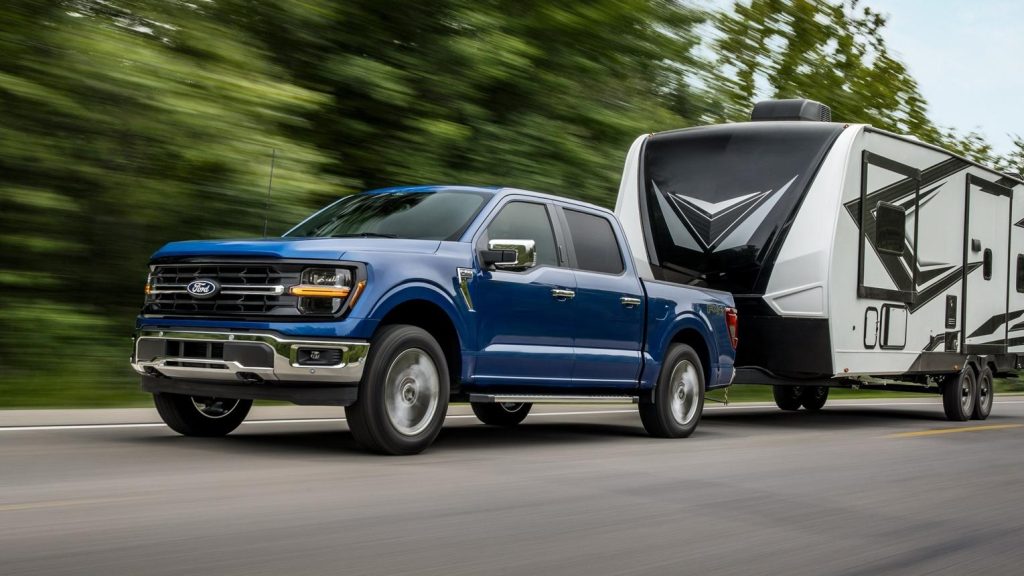
The Ford F-150 is one of America’s most popular towing pickups, but its wide range of configurations makes tire selection particularly important. Depending on the cab, engine, drivetrain, trim, and factory equipment, an F-150 can use different tire sizes and load specifications.
A tire suitable for an unloaded commuter truck may not be the right choice for an owner regularly hauling a heavy travel trailer or equipment trailer.
Ford’s 2024 F-150 owner’s manual specifically warns against installing replacement tires with lower load-carrying capacities than the original equipment. It also explains that choosing tires with higher load limits does not increase the truck’s factory Gross Vehicle Weight Rating (GVWR) or Gross Axle Weight Rating (GAWR).
This distinction matters because trailer tongue weight transfers additional weight onto the pickup. Passengers, cargo, hitch equipment, and accessories also consume available payload. The rear tires can therefore experience considerably more loading during towing than they do during ordinary driving.
For owners considering a change from P-metric tires to LT tires, Bridgestone recommends comparing the original tire’s load capacity at the placard pressure with the replacement tire’s capacity using the appropriate load-and-inflation tables. Its guidance also explains that passenger-metric capacity must be adjusted when making this comparison.
Before buying replacement tires, identify the original size, load index, and recommended cold pressure on the driver’s door label. Then weigh the loaded truck, including trailer tongue weight, to understand actual axle loading.
An appropriately rated LT tire may suit demanding towing conditions, but simply choosing Load Range E because it sounds stronger is not a substitute for correct sizing and pressure calculations.
2. Chevrolet Silverado 1500
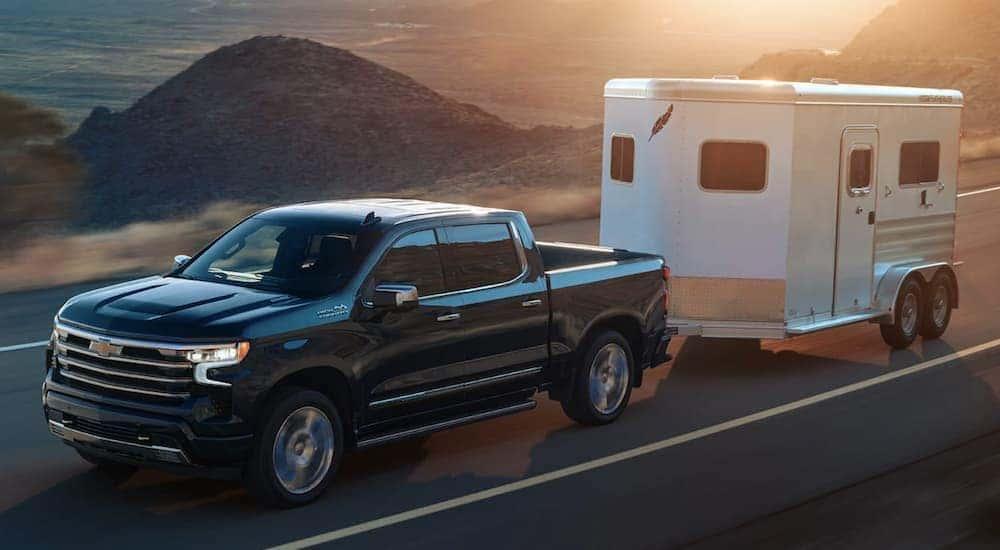
The Chevrolet Silverado 1500 offers several engine, cab, suspension, and drivetrain combinations, which means its tire requirements are not identical across the lineup.
Owners who regularly tow boats, campers, or enclosed trailers should pay particular attention to the rear axle’s loading because trailer tongue weight can substantially increase the weight carried by the rear tires.
Chevrolet’s 2024 Silverado documentation explains that the vehicle-specific Tire and Loading Information label identifies the original tire size, recommended inflation pressure, and available occupant and cargo capacity. The certification label separately provides the GVWR and front and rear GAWR figures.
These numbers matter more than the tire’s marketing description. For example, an all-terrain tire advertised for heavy-duty use is not automatically suitable for a particular Silverado. Its actual load capacity must meet the truck’s requirements at the correct inflation pressure.
The federal tire-selection requirements in 49 CFR 571.110 also establish that the combined maximum load ratings of tires fitted to an axle must meet or exceed that axle’s GAWR. Passenger tires installed on trucks are subject to an additional load-rating adjustment in this calculation.
For Silverado owners considering a move to LT tires, the first step is checking whether the original configuration uses P-metric or LT-metric equipment. Bridgestone’s guidance explains how to compare the original passenger tire’s adjusted capacity with an LT replacement using the appropriate load tables.
It is also important to note that using higher-rated tires does not make up for excessive trailer tongue weight or exceeding the rear axle’s weight limit. Always weigh the vehicle when fully loaded and ensure that both axle weights stay within the manufacturer’s specified limits.
A properly selected LT replacement can provide additional load-carrying capability where appropriate, but the Silverado’s original engineering limits always remain in force.
3. Ram 1500
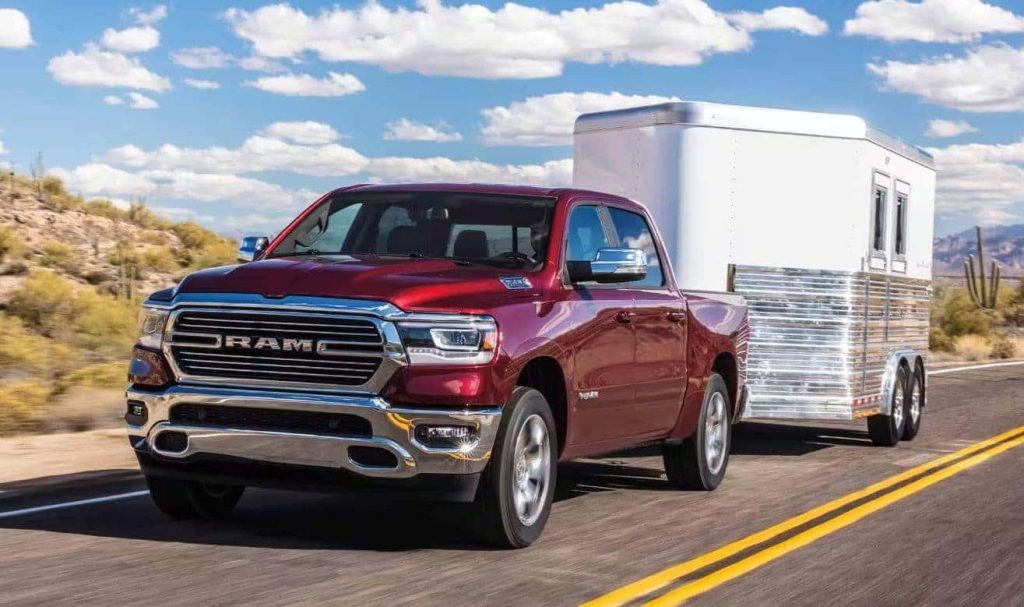
The Ram 1500 is frequently used for recreational towing, including travel trailers, boats, and enclosed equipment haulers. However, its different suspension packages, cab configurations, and factory tire options mean that owners should not assume every version needs the same load rating.
The correct tire choice becomes especially important when the truck regularly operates close to its rear axle weight limit.
Ram’s 2025 owner’s manual explains that the vehicle certification label identifies the maximum front and rear Gross Axle Weight Ratings. It also specifically states that replacement tires must provide at least the load capacity of the original equipment tires.
This is important when selecting aftermarket all-terrain or mud-terrain tires. A more aggressive tread pattern does not automatically mean greater load capacity. Two tires with identical dimensions can have different load indexes, load ranges, and maximum carrying capacities.
For owners considering an LT tire upgrade, the appropriate load-and-inflation table must be consulted. A Load Range E tire may offer a higher maximum capacity than an original passenger-metric tire, but its capacity depends on inflation pressure and the exact size.
Ram also warns against exceeding GVWR, maximum payload, or either axle’s GAWR. These limits include passengers, accessories, cargo, and trailer tongue weight. Installing stronger tires does not change those figures.
Before towing regularly, check the rear axle weight with the truck loaded and connected to the trailer. Compare that measurement with the rear GAWR and verify that each tire can support its share of the load.
The Ram 1500 can benefit from appropriately selected LT tires in demanding applications, but the decision should follow actual weight measurements rather than assumptions based on tire appearance or load-range lettering.
4. Toyota Tundra
Toyota’s Tundra is a full-size pickup designed for work and recreational towing, but owners should pay close attention to factory tire specifications when changing wheels or upgrading to aftermarket rubber. Different Tundra trims use different tire sizes and equipment, so a replacement that fits physically may not necessarily provide the correct load capacity.
Toyota’s owner documentation provides a specific method for checking replacement tire capacity. The 2022 Tundra manual instructs owners to divide the tire’s maximum load rating by 1.10 and verify that the resulting figure exceeds half the higher of the vehicle’s front or rear GAWR.
This calculation is particularly relevant when considering passenger-metric tires for a truck application. Federal requirements also account for the reduced load rating of passenger tires installed on multipurpose vehicles and trucks.
For Tundra owners who regularly tow heavy trailers, an LT tire may be worth evaluating if its size and load characteristics are approved for the vehicle. However, choosing Load Range E without checking the correct inflation pressure and load table can create unnecessary stiffness without solving the actual weight-distribution problem.
Another consideration is trailer tongue weight. It contributes to the pickup’s payload and rear axle loading, alongside passengers, tools, and accessories. Weighing the truck while fully loaded provides a more useful picture than relying on the advertised maximum towing capacity.
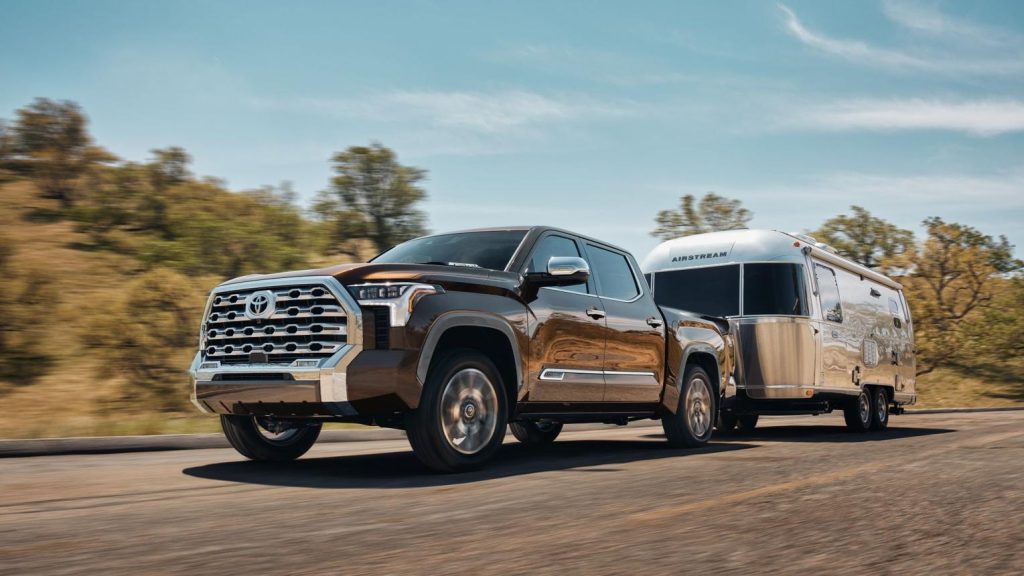
Before purchasing tires, inspect the driver’s door placard, identify the original tire’s load index, and compare replacement capacity at the recommended operating pressure.
A Tundra equipped with correctly matched tires can be better prepared for demanding towing conditions, but neither stronger tires nor aftermarket suspension components increase Toyota’s factory GVWR or GAWR.
5. Nissan Titan
The Nissan Titan is another full-size pickup whose tire specifications deserve attention when towing frequently. Its V8 power and substantial towing capability make it attractive to owners hauling campers, recreational equipment, and utility trailers.
However, the tires must support the actual weight carried by each axle rather than simply matching the truck’s advertised towing capacity.
Nissan’s 2023 Titan owner’s manual explains the relationship between GVWR, GAWR, and vehicle capacity weight. It specifically states that trailer tongue weight must be included when calculating the load carried by the truck.
This matters because a pickup can remain below its maximum towing rating while exceeding its available payload or rear axle capacity. For example, passengers, aftermarket bumpers, toolboxes, hitch equipment, and trailer tongue weight can collectively place considerable additional demand on the rear tires.
Owners considering higher-load replacement tires should first identify the original tire size and load specification. An LT tire with a higher load capacity may be appropriate for a particular application, but it must also fit the approved wheel dimensions and meet the required capacity at the operating pressure.
Do not assume that every Titan needs Load Range E tires. The original configuration and actual axle weights determine what is necessary. A higher maximum tire rating also does not authorize exceeding Nissan’s vehicle weight limits.
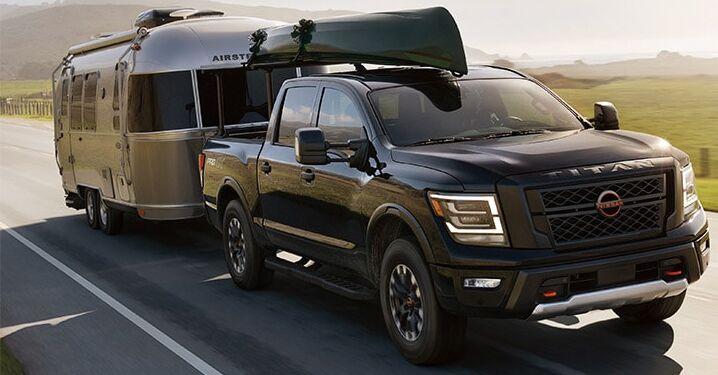
Nissan recommends checking actual vehicle loading rather than relying exclusively on estimates. A commercial scale can help establish front and rear axle weights when the truck is connected to its trailer and carrying its normal equipment.
For Titan owners who tow regularly, correctly matched LT tires may offer a useful option. The important decision is choosing a tire that meets the manufacturer’s requirements without sacrificing appropriate pressure, handling, or compatibility.
6. Chevrolet Colorado
The Chevrolet Colorado occupies the midsize pickup segment, but its smaller dimensions do not eliminate the importance of tire load capacity. Owners who tow campers, fishing boats, or equipment trailers need to pay particular attention to payload and rear axle loading because midsize trucks can have limited capacity once passengers and accessories are added.
Chevrolet’s 2024 Colorado owner’s manual explains that its Tire and Loading Information label identifies the original tire size, recommended cold inflation pressure, and maximum occupant and cargo capacity. Its certification label also provides the front and rear axle weight ratings.
The tire lineup varies by trim. For example, Goodyear’s 2024 Colorado fitment catalog lists different sizes for the WT, LT, Trail Boss, Z71, and ZR2, including 255/65R17, 265/60R18, 275/60R20, and larger off-road configurations. These differences make it important to identify the exact truck before ordering replacement tires.
A Colorado used for frequent towing may benefit from an appropriately selected LT tire if the original equipment and axle requirements support that choice. However, a larger tire does not automatically carry more weight. Its load index, construction, and inflation pressure must be checked.
Chevrolet also warns that exceeding GVWR or either axle’s GAWR can affect handling, damage components, and increase the risk of a crash.
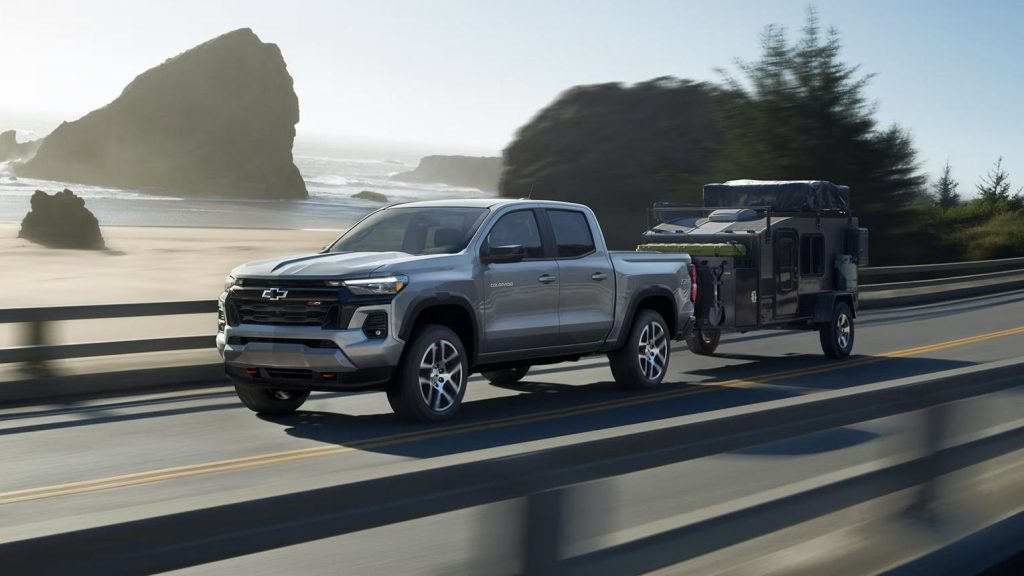
Before purchasing an upgrade, weigh the loaded truck with its trailer attached. Include passengers, tools, accessories, and tongue weight in the calculation. Then compare the measured axle loads against the manufacturer’s limits.
The Colorado’s midsize platform makes careful weight management especially important. A correctly rated tire can support the approved load, but it cannot turn the truck into a heavier-duty towing model.
7. Ford Ranger
The Ford Ranger is a popular midsize pickup for drivers who want useful towing capability without the size of a full-size truck. However, owners should be careful when selecting replacement tires, particularly when the vehicle regularly carries equipment or pulls a travel trailer.
The 2024 Ranger was offered with different factory wheel and tire configurations depending on trim. The off-road-oriented Ranger Raptor, for example, uses a different tire specification from conventional versions.
This means replacement tires should be selected using the exact factory placard rather than a generic Ranger fitment recommendation.
Ford’s official load-carrying guidance makes an important distinction between tire capacity and vehicle capacity. Replacement tires must not have lower load-carrying capacities than the original equipment tires. Ford also states that installing higher-capacity tires does not increase the truck’s GVWR or GAWR.
For Ranger owners who tow regularly, moving from passenger-metric tires to appropriately selected LT tires may be worth discussing with a qualified tire professional. However, the replacement must meet the original load requirement at the correct inflation pressure and remain compatible with the approved wheels.
A higher load-range designation is not automatically the right answer. An unnecessarily stiff tire can change ride comfort and handling, particularly when the pickup is driven without a trailer.
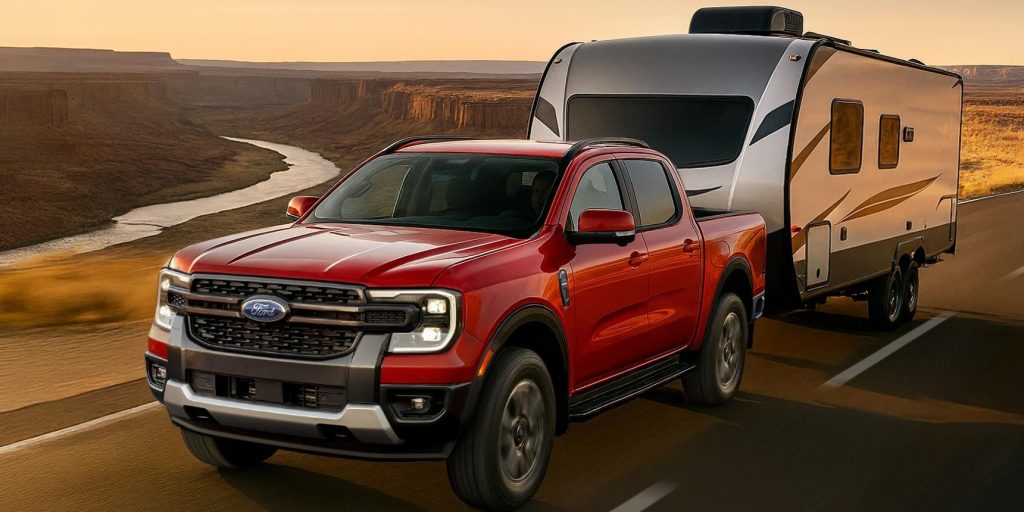
Pay attention to the rear axle when loading the truck. Trailer tongue weight, passengers, cargo, and aftermarket accessories all contribute to the total weight carried by the vehicle.
Weighing the Ranger in its actual towing configuration is a sensible way to establish whether its rear axle and tires are operating within their limits.
The goal is not simply to install the strongest available tires. It is to select a properly rated replacement that supports the truck’s approved towing and loading configuration.
8. Nissan Frontier
The Nissan Frontier is frequently chosen by buyers who need a midsize pickup for daily transportation and occasional towing. Its body-on-frame construction and available four-wheel drive make it useful for recreational applications, but the tires still need to match the actual load requirements of the truck.
For the 2024 US-market Frontier, Nissan offered different wheel and tire configurations. Goodyear’s fitment listings identify sizes including 265/70R16 and 265/65R17, depending on trim and equipment. The PRO-4X uses a different off-road-oriented setup from some standard models.
These differences matter when choosing replacement tires. Two tires with the same dimensions can carry different loads depending on their construction and load index. An attractive all-terrain tire is not necessarily suitable for a Frontier that regularly operates near its rear axle weight limit.
Owners considering a move to LT tires should compare the original tire’s load capacity at the factory-recommended pressure with the replacement’s capacity using the appropriate manufacturer load tables. Bridgestone specifically explains the adjustment required when converting from passenger-metric to LT-metric tires.
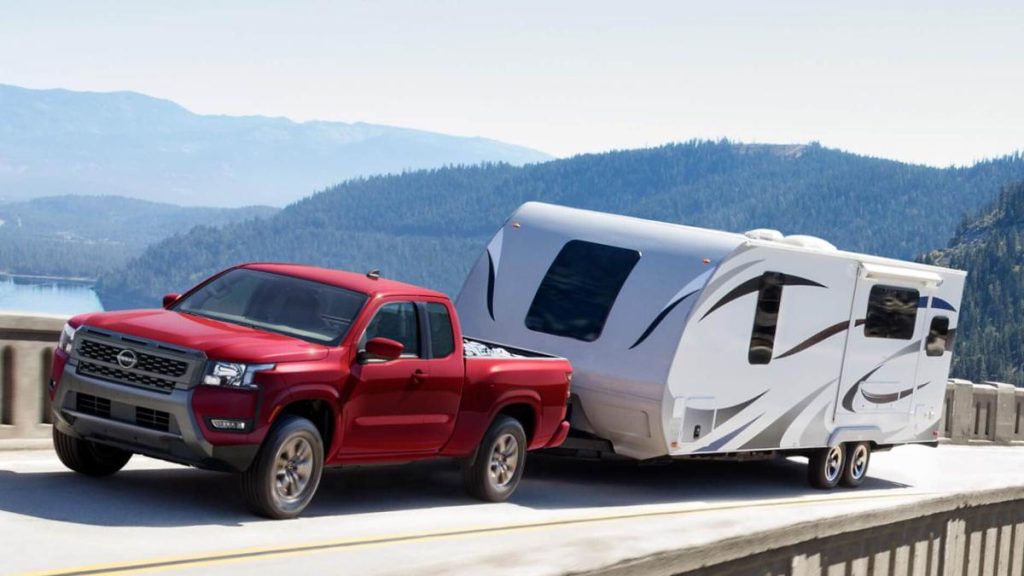
The Frontier’s available payload must also account for occupants, cargo, accessories, hitch equipment, and trailer tongue weight. Installing tires with higher maximum load ratings cannot increase the vehicle’s original weight limits.
A useful approach is to weigh the loaded pickup with the trailer connected and compare front and rear axle weights with the certification-label ratings. This provides a much more accurate assessment than relying on the trailer’s advertised dry weight.
For Frontier owners who tow frequently, the right LT tire may provide a suitable replacement option. However, tire size, wheel compatibility, inflation pressure, and manufacturer load requirements must all be checked before making the change.