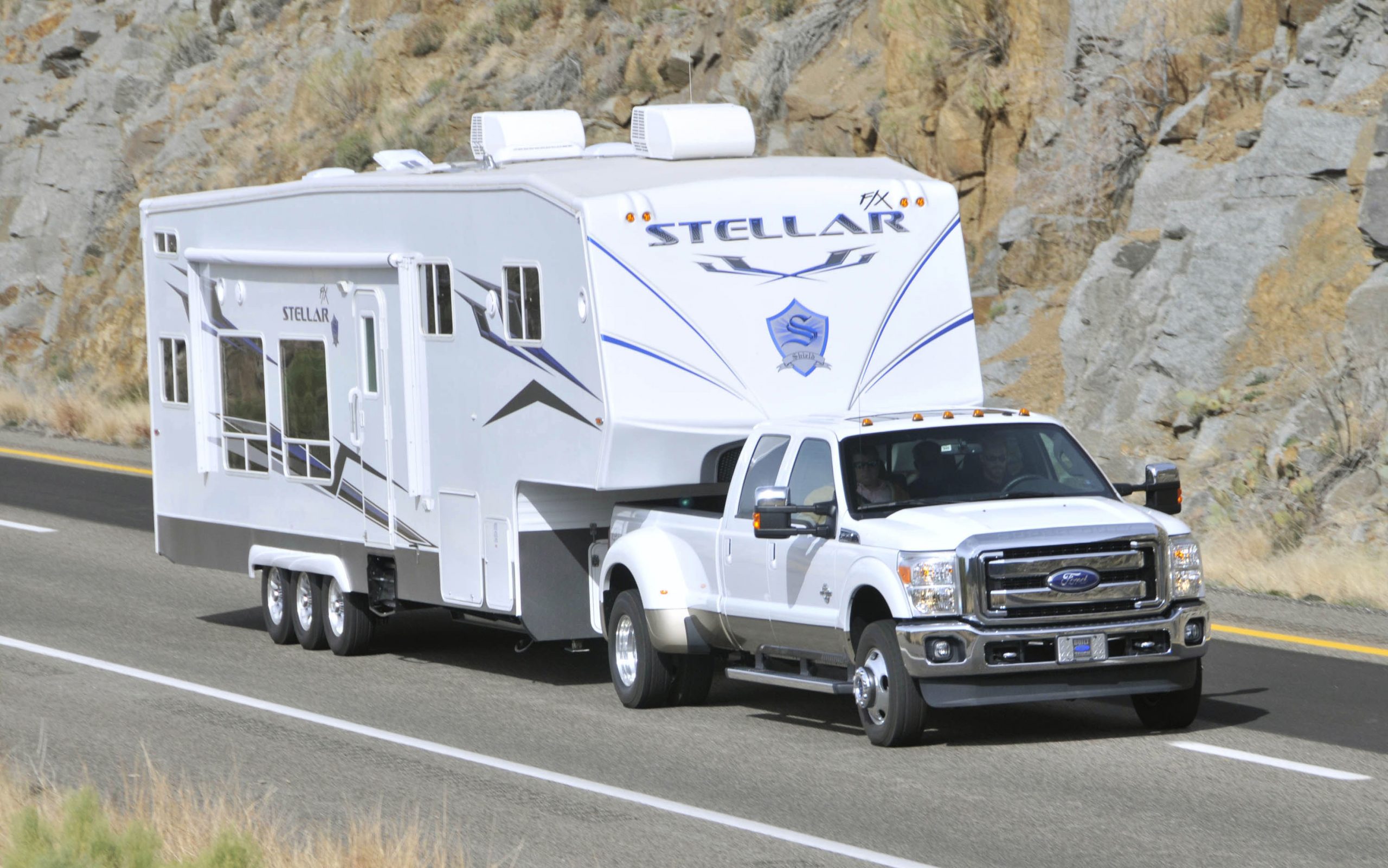
A pickup can tow a heavy trailer for hundreds of miles, but a small preparation mistake can turn a routine highway trip into a dangerous emergency. Overloaded tires, overheated brakes, damaged electrical connections, and poorly maintained wheel bearings can all create conditions that lead to excessive heat or sparks.
Towing-related problems can affect more than just the truck itself. Trailer tires, electrical wiring, and cargo can also contribute to dangerous situations. Knowing how heat buildup and electrical faults develop can help drivers recognize early warning signs and reduce the risk of preventable fires while traveling.
1. Exceeding the Pickup’s Towing and Payload Ratings
A pickup may have an impressive maximum towing figure, but that number does not mean every trailer can be safely pulled at that weight under every loading condition.
Exceeding the truck’s gross vehicle weight rating (GVWR), gross combined weight rating (GCWR), axle ratings, or hitch tongue-weight limit can place excessive demands on its tires, brakes, suspension, and drivetrain. Those stresses can generate heat, damage components, and increase the risk of a serious mechanical failure.
The owner’s manual and the certification labels on the truck provide the ratings that matter. The trailer’s loaded weight must be considered, not simply its advertised empty weight. Passengers, tools, fuel, cargo in the bed, and the trailer’s tongue weight all count toward the pickup’s payload.
A driver who checks only the maximum towing figure can overlook a payload or rear-axle limit.
Vehicle manufacturers explicitly warn against overloading while towing. A NHTSA-hosted Jeep owner’s manual, for example, cautions that excessive trailer or vehicle weight can damage the brakes, tires, engine, transmission, steering, suspension, and other structural components.
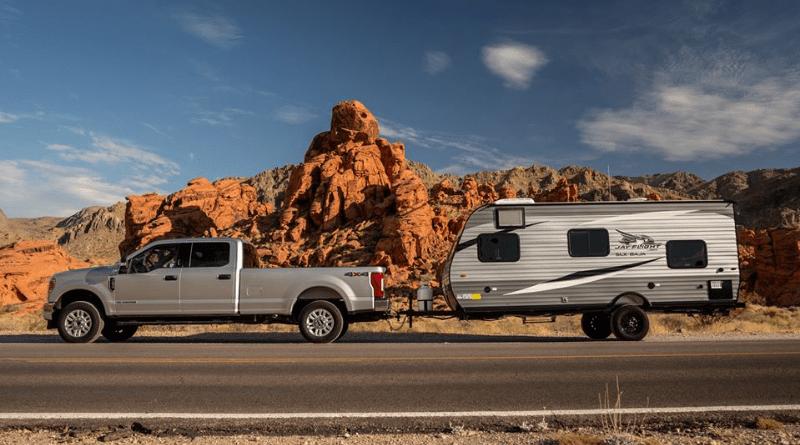
The link to fire risk may not be immediately obvious, but it is important. Overloaded brakes and tires experience additional strain, increasing the chance of excessive heat buildup and damage during extended highway trips. Just because a truck can pull a trailer does not mean the combined load is within safe operating limits.
Before departure, weigh the loaded combination if its actual weight is uncertain. Check the truck’s GVWR, GCWR, front and rear GAWR, hitch rating, and the trailer’s ratings. Never use a higher-rated hitch to justify exceeding a lower vehicle limit.
2. Towing With Underinflated or Aged Tires
Trailer tires can be exposed to sustained heat for hours, especially when a pickup is towing at highway speed in warm weather. Starting a trip with low pressure makes that situation more dangerous.
An underinflated tire flexes excessively as it rolls, increasing heat buildup inside the casing. If the tire is also overloaded, damaged, or worn, the chance of a failure rises further. A tire failure can leave hot rubber and debris near the wheel area, creating an additional hazard if a damaged component or nearby material ignites.
The National Highway Traffic Safety Administration identifies underinflation as the leading cause of tire failure. It advises drivers to check pressure when tires are cold and inspect for cuts, punctures, bulges, cracks, and other visible damage before long trips.
Do not use the pickup’s door-jamb pressure figure automatically for the trailer. Check the trailer tire placard and tire manufacturer’s guidance, and make sure each tire is suitable for the load it carries.
Texas Department of Insurance guidance also recommends checking both towing vehicle and trailer tire pressure, inspecting for dry rot and cracking, and checking wheel lug nuts before towing.
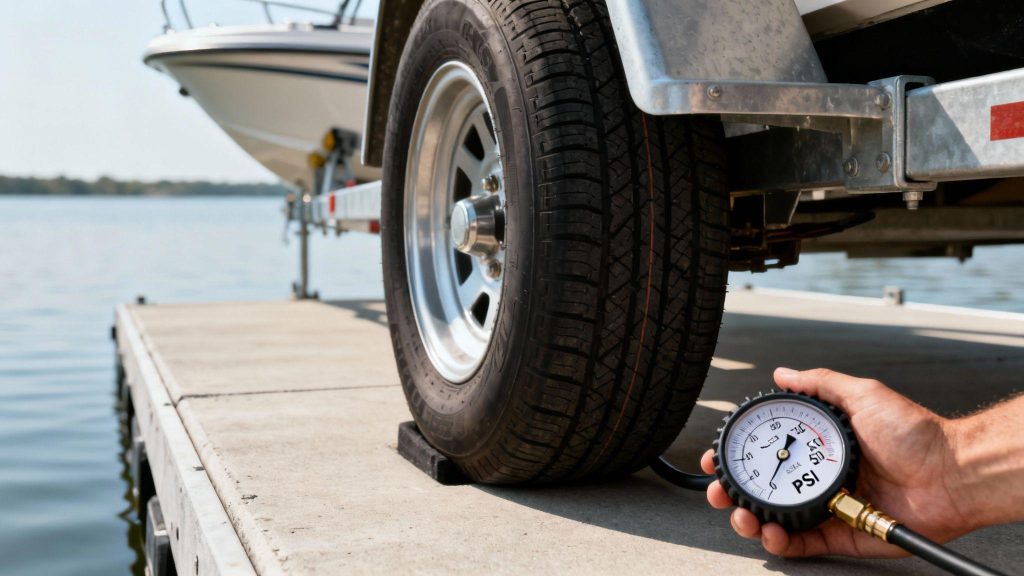
Age deserves attention even when the tread looks acceptable. Rubber can deteriorate during storage, particularly when tires sit outdoors or are exposed to harsh conditions.
Before a long trip, inspect the sidewalls and tread, verify cold pressure with a reliable gauge, and confirm the tires’ load capacity. If a tire has a bulge, exposed cords, deep cracking, or other serious damage, do not tow on it.
3. Riding the Brakes on Long Downhill Grades
A heavily loaded trailer requires more stopping effort than a pickup traveling alone. On a long downhill stretch, drivers who keep constant pressure on the brake pedal can overheat the truck’s brakes and, depending on the trailer’s braking setup, its brakes too.
Excessive heat can reduce braking effectiveness, damage friction components, and create a serious fire hazard around the wheel area.
The safer approach is to control speed before the descent begins. Select an appropriate lower gear and use the pickup’s engine braking or grade-control feature when the owner’s manual recommends it.
Many trucks also have a tow/haul mode designed to improve control while towing. It can help the transmission select suitable gears, although the exact behavior differs by vehicle. Consumer Reports advises drivers to avoid continuous brake application on long downhill grades because it can cause the brakes to overheat.
A Ford towing manual hosted by NHTSA also advises shifting to a lower gear on long or steep descents and warns against applying the brakes continuously. It recommends allowing more stopping distance and braking gradually when towing.
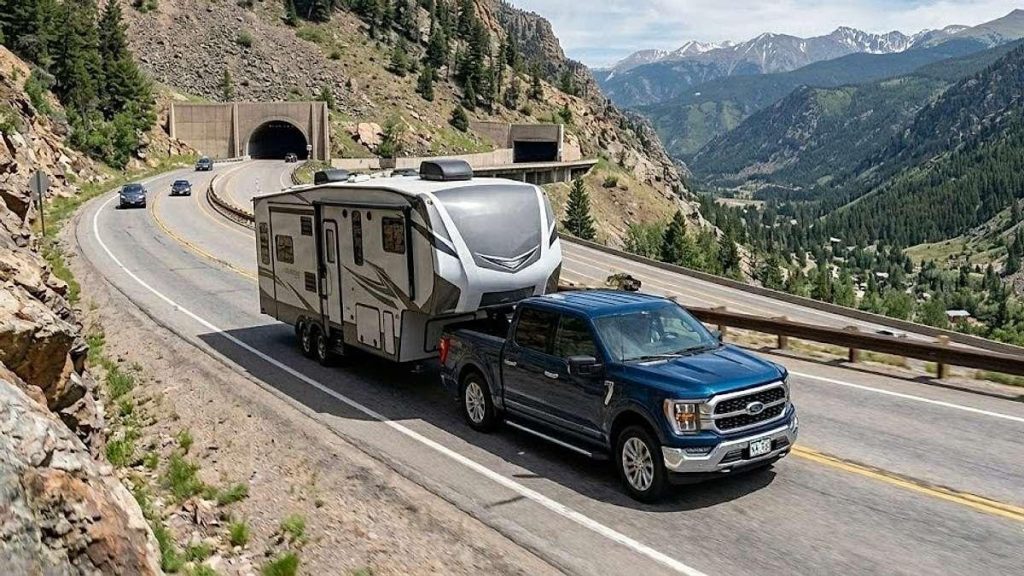
Do not interpret this as permission to coast downhill in neutral or switch off the engine. Maintain control and follow the vehicle manufacturer’s instructions. If the brakes begin to smell unusually hot, smoke, or lose effectiveness, find a safe place to stop as soon as possible. Do not continue down the highway hoping they will recover while carrying the same load.
Before a mountain trip, make sure both the pickup’s braking system and the trailer brakes are properly adjusted and maintained. Confirm that the brake controller is set according to the trailer and vehicle instructions.
If you regularly tow through steep terrain, have a qualified technician inspect the brakes before departure. Preventing excessive heat is far safer than discovering a braking problem halfway down a mountain.
4. Ignoring Trailer Wheel-Bearing Maintenance
Trailer wheel bearings are easy to overlook because they are hidden behind the hubs. Yet they carry the load while allowing the wheels to rotate.
If a bearing loses lubrication, becomes contaminated, or is incorrectly adjusted, friction can increase and generate dangerous heat. In severe cases, an overheated wheel end can ignite nearby tire material or grease, turning a maintenance problem into a roadside fire.
The National Association of Trailer Manufacturers’ Trailer Safety Week maintenance guidance recommends inspecting bearing components, checking for wear and corrosion, and ensuring that bearings are properly lubricated. Its guidance also warns that incorrect bearing adjustment can cause overheating and premature failure.
A wheel-end problem may provide warning signs before it becomes catastrophic. Listen for grinding, rumbling, or unusual noises from a trailer wheel. Look for grease leaking around the hub, damaged seals, or visible signs of overheating.
If one hub appears significantly hotter than the others, treat that as a reason to stop safely and arrange an inspection. Do not touch a suspected overheated hub with your bare hand.
The danger is not theoretical. In an investigated motorhome fire, the National Transportation Safety Board identified insufficient lubrication in a wheel-bearing assembly as a factor that led to increased temperatures, bearing failure, tire ignition, and a major fire.
That case involved a motorhome rather than a pickup towing a conventional trailer, but it demonstrates how a wheel-end lubrication failure can escalate.
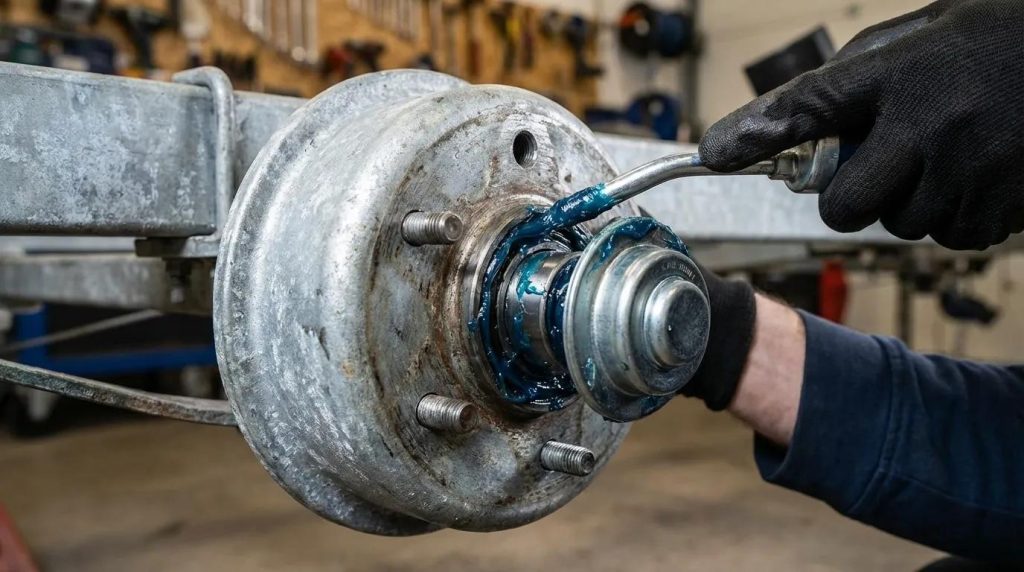
Service intervals depend on the trailer’s axle and hub design. Some hubs use oil, while others use grease-packed bearings or different maintenance arrangements.
Follow the trailer and axle manufacturer’s service instructions rather than applying a universal interval. If the trailer has been stored for a long time or is being prepared for a long-distance journey, have its hubs inspected before towing.
5. Using Damaged or Improperly Installed Trailer Wiring
A trailer’s electrical system does more than operate its lights. Depending on the setup, its wiring also supplies power to electric brakes, a breakaway system, and other accessories. Damaged insulation, loose connections, poorly made splices, or wires rubbing against metal can create electrical faults.
A short circuit or overheated connection can produce sparks or ignite nearby combustible material.
One particularly serious mistake is connecting trailer lighting directly to the pickup’s tail-light wiring without the correct equipment.
A Ford towing manual hosted by NHTSA specifically warns against connecting trailer lamp wiring directly to the vehicle’s tail-lamp wiring because doing so can damage the electrical system and result in a fire. It recommends having the proper towing-wiring installation carried out by an authorized dealer.
The trailer’s own wiring deserves attention as well. The National Association of Trailer Manufacturers explains that wiring should be protected against physical damage and that connections need enough slack to accommodate normal movement between the truck and trailer.
Its safety guidance also warns that undersized wiring can overheat, short out, and cause a fire. Before a trip, inspect the connector between the pickup and trailer. Look for melted plastic, corrosion, exposed copper, loose pins, and insulation that has been cut or rubbed through.
Check that the cable cannot become trapped between moving parts or drag on the pavement. Test the running lights, brake lights, turn signals, and electric brakes using the manufacturer’s recommended procedure.
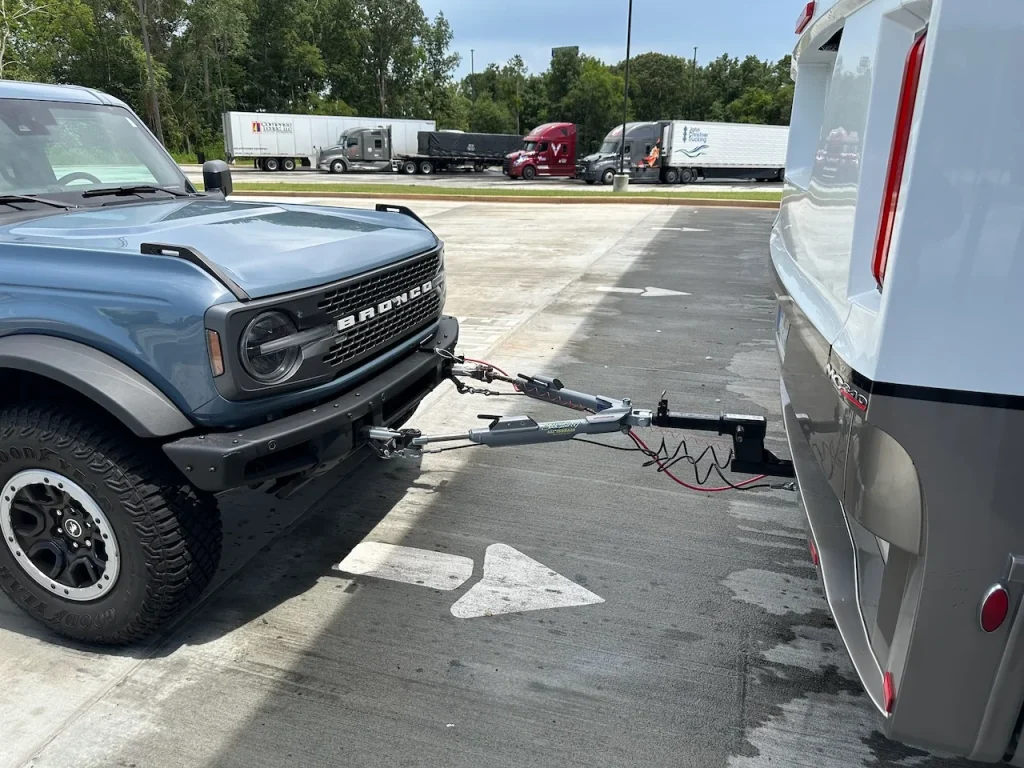
Avoid quick repairs involving twisted wires or exposed connections. Use the correct wiring harness, connectors, wire size, and circuit protection specified for the equipment. If a fuse repeatedly blows or a connector becomes unusually hot, do not keep replacing the fuse and continuing the journey. Have the fault diagnosed before towing again.
6. Driving With the Trailer Breakaway Brakes Activated
A trailer breakaway system is an emergency safety feature, not a normal braking aid. On equipped trailers, it is designed to apply the trailer brakes if the trailer separates from the towing vehicle.
The system generally uses a switch and a pin connected to the pickup by a dedicated cable. If the trailer breaks away, the cable pulls the pin and activates the emergency brakes.
Problems begin when the pin is accidentally pulled, the cable is attached incorrectly, or the system remains activated after a test or repair. The trailer brakes may stay applied while the pickup continues pulling the trailer.
That creates continuous friction at the wheel ends, generating heat that can damage brake components and potentially contribute to a fire.
Trailer manufacturer Lamar warns owners not to tow with the breakaway brake system switched on because the brakes can overheat and suffer permanent damage. Its manual also instructs users to test the system before towing and not to operate the trailer if the system is not functioning properly.
Make the breakaway check part of your pre-trip routine. Confirm that the pin is fully inserted, the cable is connected to the designated attachment point on the pickup, and the cable has enough freedom to avoid being pulled during ordinary turns.
Do not attach it in a way that lets it tangle with the safety chains or other equipment. Follow the trailer manufacturer’s instructions for the correct connection and testing procedure.
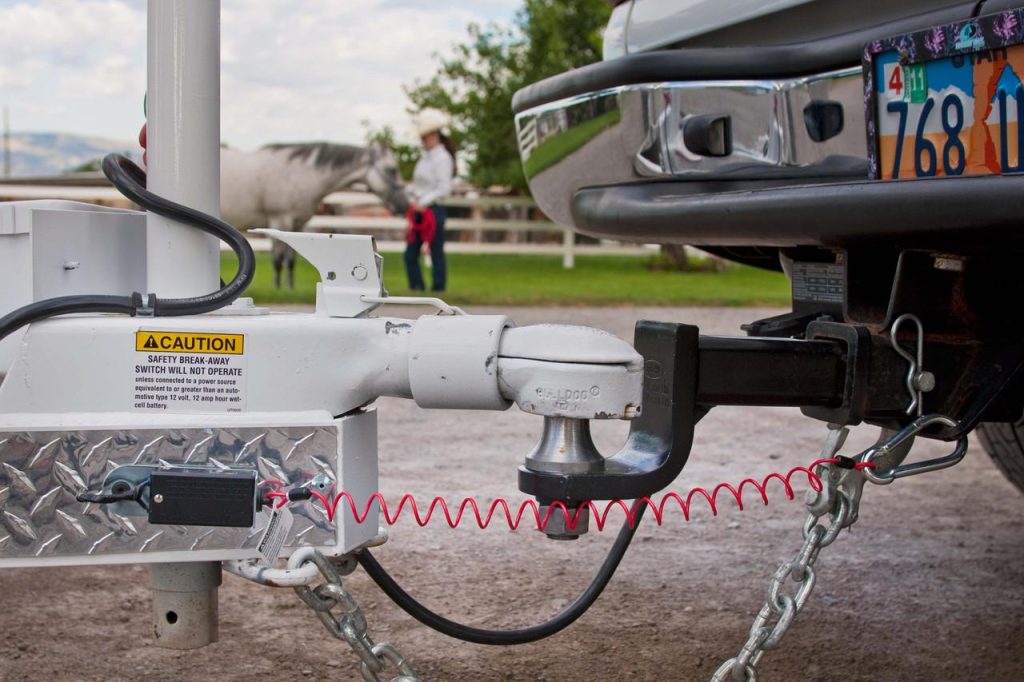
If you notice unusual resistance, a burning smell, smoke, or excessive heat around a trailer wheel, stop in a safe location. Do not simply pull the breakaway pin again or disconnect wiring without understanding the fault.
Have the brake system inspected and repaired before continuing. A functioning breakaway system can help prevent a runaway trailer, but an incorrectly activated one can create a dangerous overheating problem.
7. Continuing to Drive After Smelling Burning or Seeing Smoke
One of the most dangerous towing mistakes is treating a burning smell, smoke, or an unusually hot wheel as a minor inconvenience. These symptoms can indicate a dragging brake, failing bearing, damaged tire, or electrical fault.
Continuing at highway speed gives the problem more time to generate heat and potentially ignite nearby materials. A driver may notice the smell before seeing flames, making an early response especially important.
Wheel-end fires can develop when friction from a failing bearing or brake assembly raises temperatures around the hub. The National Transportation Safety Board has documented a motorhome fire in which insufficient wheel-bearing lubrication contributed to increased temperatures, bearing failure, and tire ignition.
Although that investigation involved a motorhome, the mechanical risk is relevant to trailers with similar wheel-end components.
If smoke appears, do not continue driving to the next fuel station or wait for the next scheduled stop. Move away from traffic and stop in a safe location as soon as possible.
If flames are visible or the fire is spreading, get everyone away from the truck and trailer, move well clear of the roadway, and call 911. Do not stand beside the wheels or attempt to handle an overheated component.
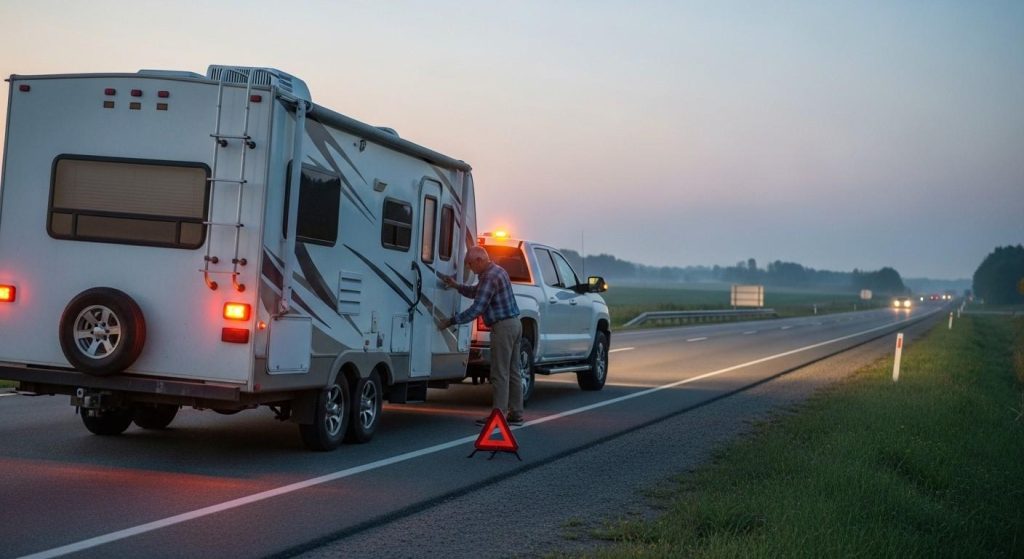
A properly rated fire extinguisher can be useful for a small, accessible fire, but it is not a reason to approach a rapidly developing wheel or trailer fire. The U.S. Fish and Wildlife Service’s towing and cargo guidance lists a properly rated and sized fire extinguisher among the recommended emergency equipment for towing vehicles.
After any smoke or overheating incident, have the truck and trailer inspected before returning to the highway. A smell that disappears after cooling does not prove the underlying fault has been fixed. Finding the source while the damage is still limited can prevent a much more serious emergency.