A new car battery should provide reliable starting power, but its age alone does not guarantee that it is operating properly. Manufacturing defects, improper storage, prolonged discharge, charging-system problems, and excessive electrical drain can shorten battery life much sooner than expected.
Some warning signs appear within months of installation, while others develop gradually as the battery loses its ability to store and deliver electricity.
Recognizing these symptoms early can prevent unexpected breakdowns and unnecessary replacement expenses. Here are seven signs that a relatively new car battery may already be losing capacity and needs proper testing.
1. The Engine Takes Longer to Start Than Before
A noticeably slower engine start is one of the first symptoms worth investigating when a recently installed battery begins losing performance. Instead of turning over immediately, the starter motor may crank more slowly, producing a drawn-out sound before the engine finally starts.
This can indicate that the battery is struggling to deliver the current required by the starter. Automotive batteries are rated by cold cranking amps (CCA), which measure their ability to deliver starting current under specified cold-temperature conditions.
When internal battery capacity deteriorates, the available starting power can decline. A battery that initially met its rated performance may eventually struggle to provide sufficient current, particularly during cold mornings.
However, slow cranking does not automatically prove that the battery is defective. Loose terminals, corroded connections, damaged cables, a failing starter motor, and engine-related problems can produce similar symptoms. A technician should check these components before recommending replacement.
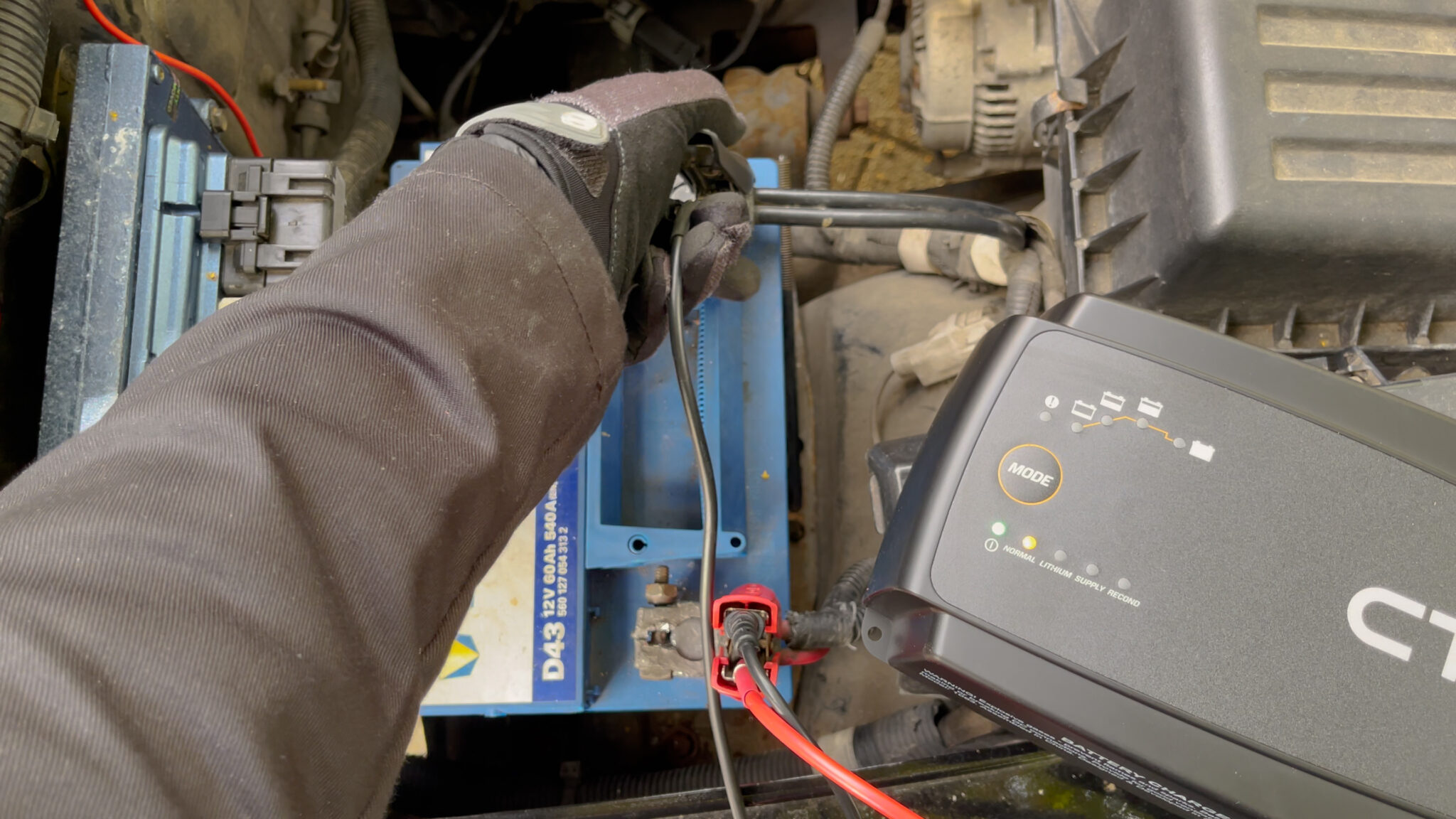
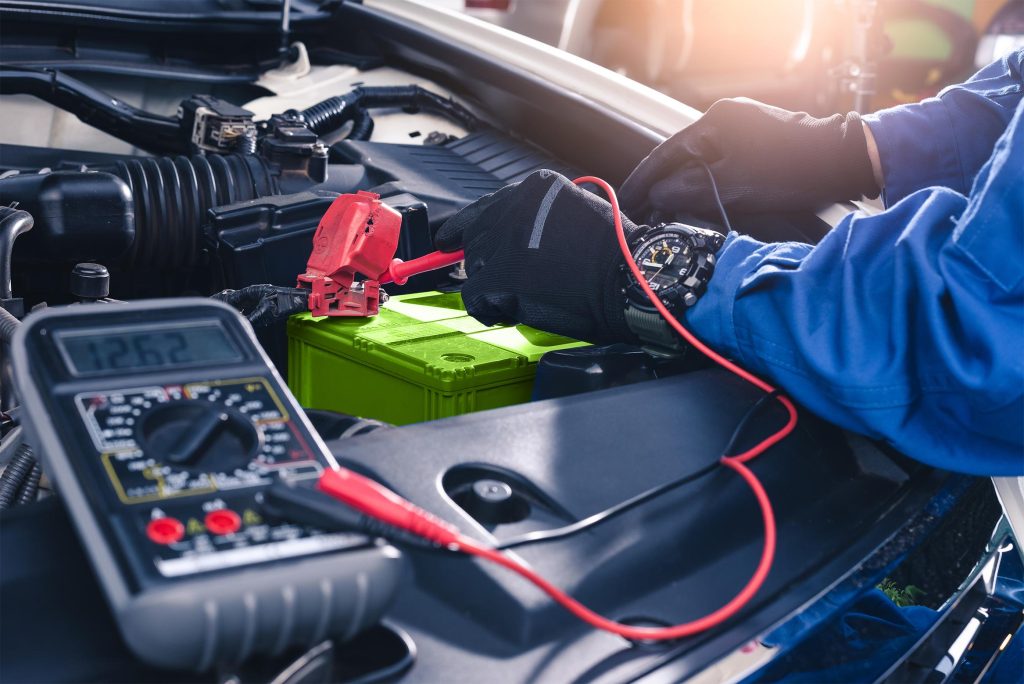
A proper battery load test can help identify the problem. DENSO explains that a conventional 12-volt battery, when adequately charged, should generally maintain at least 9.6 volts during a 15-second test at half its CCA rating at 70 degrees Fahrenheit. Temperature affects the acceptable minimum, so technicians must use the appropriate testing chart.
Another useful step is comparing the battery’s measured CCA with its manufacturer’s rating. A substantial reduction can indicate declining starting performance even when the battery still holds some charge.
If your new battery repeatedly produces slow starts, request a battery and starting-system inspection. Do not wait until the engine refuses to turn over completely. Early testing can distinguish a weak battery from an electrical connection or starter problem.
2. You Need Jump-Starts More Frequently Than Expected
A battery that repeatedly needs jump-starting deserves immediate attention, particularly when it was installed only recently. One isolated discharge does not necessarily mean the battery has lost capacity.
Leaving headlights on overnight, accidentally keeping accessories running, or parking a vehicle for an extended period can drain even a healthy battery. Repeated incidents, however, suggest that something in the electrical system needs investigation.
The important question is whether the battery can retain enough energy after being fully recharged. A deteriorating battery may accept a charge but lose it unusually quickly or struggle to provide sufficient starting power after the vehicle sits unused.
Battery condition and battery charge are two different things. A discharged battery may simply need proper charging, while a battery with damaged internal components may fail to retain or deliver energy even after charging.
The National Highway Traffic Safety Administration’s published battery diagnostic guidance identifies extended storage, charging-system faults, poor electrical connections, and excessive parasitic drain among the potential causes of a weak or discharged battery. These problems should be ruled out before installing another replacement.
A technician can begin by fully charging the battery and performing a conductance or load test. The charging system should also be checked to determine whether the alternator is restoring the energy consumed during starting and normal vehicle operation.
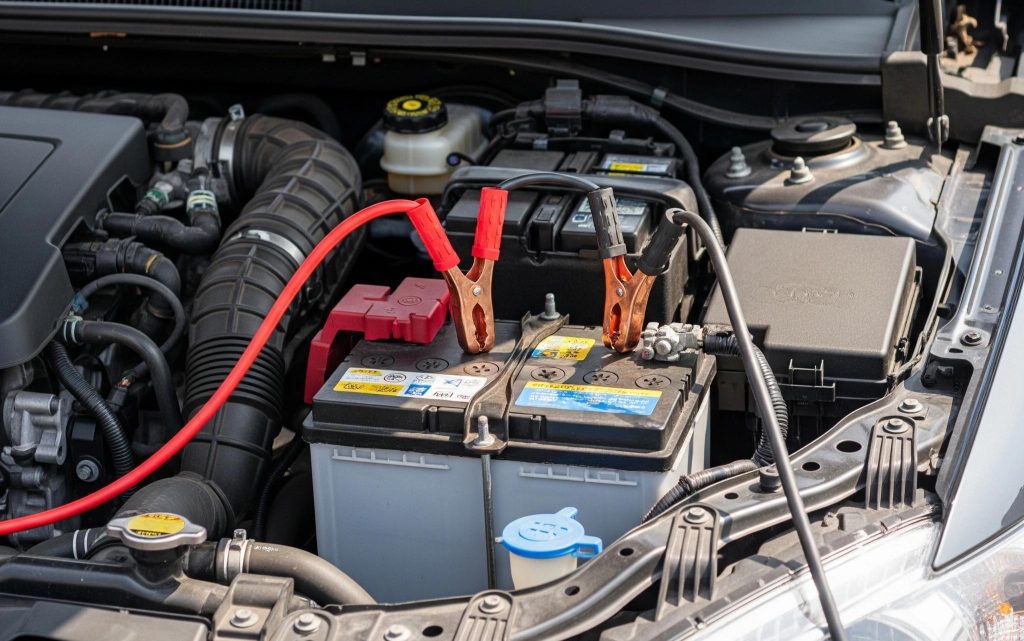
Pay attention to how frequently jump-starting becomes necessary. If the battery goes flat repeatedly after relatively short parking periods, ask for a parasitic-draw test. Modern vehicles continue consuming a small amount of electricity while switched off, but an abnormal electrical drain can discharge the battery faster than intended.
A recently installed battery should not routinely require external assistance. If it does, investigate the cause rather than repeatedly jump-starting the vehicle and assuming the problem is solved.
3. The Headlights Become Noticeably Dimmer During Starting
If your headlights briefly become much dimmer when starting a relatively new car, the battery deserves a closer inspection. The starter motor requires a substantial amount of electrical current, and a healthy battery should be capable of supplying that demand without causing excessive voltage loss across the vehicle’s electrical system.
A battery that has lost capacity may struggle to maintain voltage under heavy electrical loads. You might notice the headlights becoming unusually weak, the dashboard illumination fading, or the infotainment screen restarting while the engine is cranking. These symptoms can become more noticeable during cold weather, when starting demands increase.
However, temporary headlight dimming during engine startup is not automatically evidence of battery deterioration. Some voltage fluctuation is normal, and modern vehicles may intentionally manage electrical loads during starting.
The important distinction is whether the dimming is excessive, persistent, or accompanied by other electrical symptoms.
A technician should measure battery voltage while the engine is cranking and compare the result with the manufacturer’s specifications. DENSO’s conventional battery load-testing procedure uses a benchmark of at least 9.6 volts at 70 degrees Fahrenheit during a 15-second test at half the battery’s rated CCA. The minimum acceptable voltage changes with temperature.
It is also important to inspect the battery terminals and ground connections. Loose or corroded connections can create resistance, producing symptoms similar to those of a weak battery.
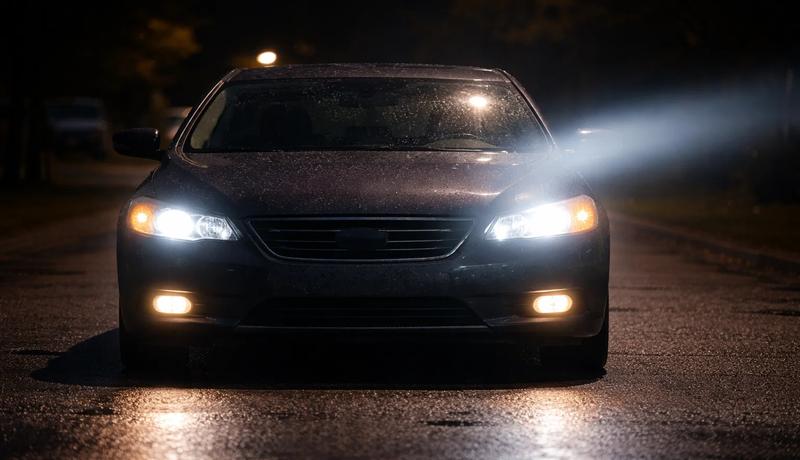
If the headlights remain dim after the engine starts, the charging system should also be examined. An alternator fault, damaged wiring, or a poor ground connection can prevent the vehicle from maintaining proper electrical voltage.
Do not replace a battery simply because the lights flicker once. Ask for a battery health test, charging-system evaluation, and voltage-drop inspection. These checks help determine whether the battery has genuinely lost capacity or another electrical component is responsible.
4. The Battery Voltage Drops Faster Than Expected When Parked
A battery that loses voltage unusually quickly while the vehicle is parked may be struggling to retain its charge. This can happen even when the battery is relatively new, particularly if it has experienced repeated deep discharges or has an internal manufacturing defect.
A conventional fully charged 12-volt lead-acid battery should generally measure around 12.6 volts or higher after resting, although the precise reading depends on battery construction, temperature, and manufacturer specifications. A consistently lower resting voltage after proper charging deserves investigation.
The key is to distinguish between losing stored charge and losing actual battery capacity. A battery can become discharged because something in the vehicle continues consuming electricity after the ignition is switched off.
Modern vehicles naturally use small amounts of power to maintain computer memory, security systems, and other electronic functions.
Toyota’s published diagnostic guidance uses 50 milliamps as the reference threshold for its specified parasitic-draw test after the vehicle’s electronic control units have entered sleep mode. This is not a universal limit for every vehicle. Some models have different requirements and shutdown periods.
DENSO also recommends investigating parasitic loads exceeding 0.35 amps under its general battery-testing guidance. Such a draw can discharge a battery relatively quickly.
For example, a faulty relay, aftermarket dash camera, malfunctioning module, or improperly installed accessory may continue consuming electricity while the car is parked.
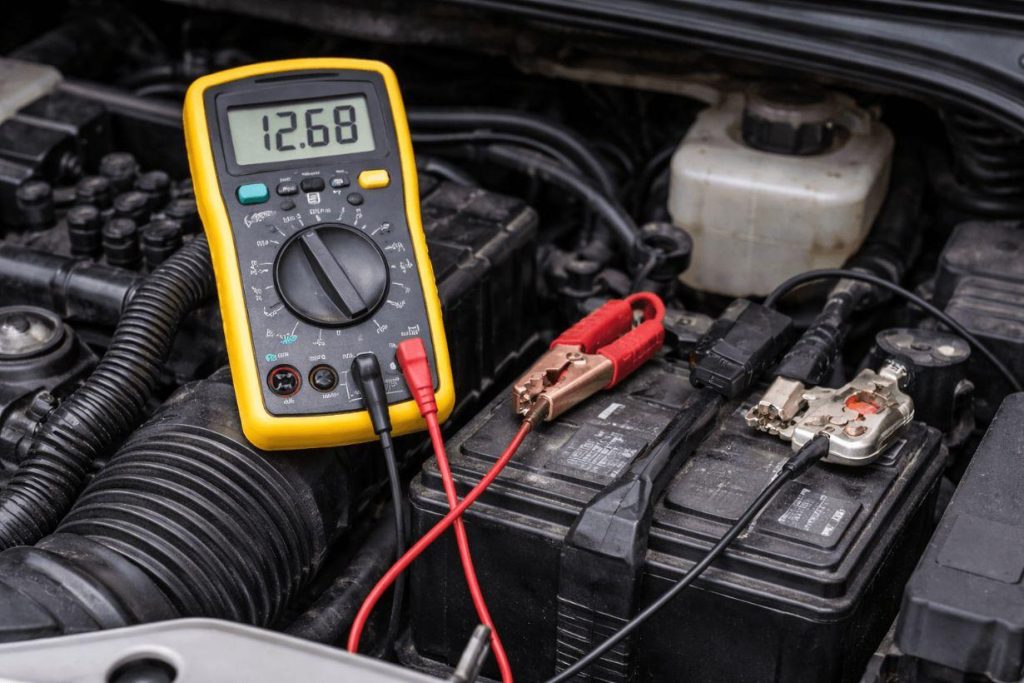
A proper diagnosis involves fully charging the battery, testing its health, and measuring current consumption after the vehicle has entered its normal sleep state. Technicians can then identify the circuit responsible for excessive electrical draw.
If your new battery repeatedly becomes weak after sitting overnight or for a few days, do not immediately purchase another one. Have both the battery and the vehicle’s electrical system tested. Otherwise, a replacement battery could develop the same problem.
5. The Battery Case Starts Swelling or Showing Signs of Leakage
Physical changes to a recently installed battery should never be ignored. A battery case that appears swollen, distorted, cracked, or unusually wet can indicate an internal problem that goes beyond ordinary loss of electrical capacity. In some cases, excessive heat, overcharging, freezing, or internal battery damage can cause the casing to deform.
Lead-acid batteries contain an electrolyte solution that participates in the chemical reactions responsible for storing and delivering electricity.
When internal conditions become abnormal, the battery may produce excessive gas or experience pressure buildup. This can contribute to case swelling, particularly when ventilation is restricted or the charging system is not operating correctly.
Leakage is another serious warning sign. Visible fluid around the battery housing, damaged casing, or corrosion accompanied by moisture can indicate an electrolyte leak. Acid leakage can damage nearby metal surfaces, electrical connections, and surrounding components.
DENSO’s battery inspection guidance specifically recommends checking for cracked cases, bulging, leaking fluid, loose terminals, and other physical defects before performing electrical testing. A battery with visible structural damage should not simply be recharged and returned to service.
There is also an important distinction between normal terminal corrosion and a damaged battery. White or bluish deposits around the terminals can result from chemical reactions involving battery connections. While corrosion can interfere with electrical flow, it does not automatically mean the battery casing has failed.
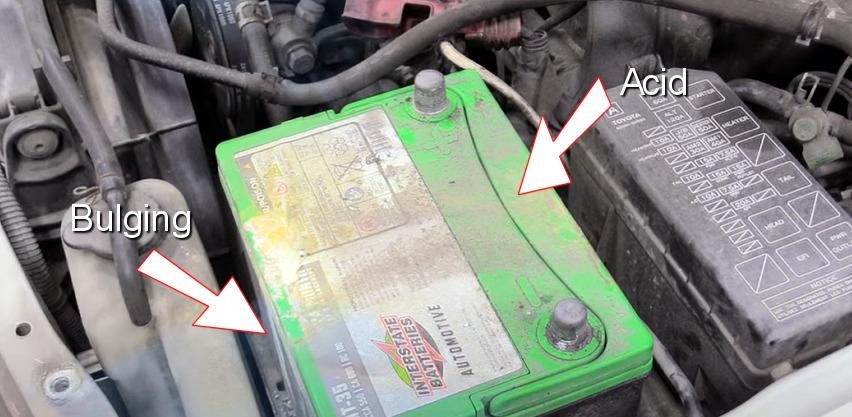
If a newly installed battery becomes swollen or starts leaking, stop using it and arrange professional inspection or replacement. Do not attempt to puncture, open, or squeeze the casing. Avoid sparks, flames, and direct contact with leaking electrolyte.
The vehicle’s charging system should also be checked because excessive charging voltage can contribute to battery damage. Replacing the battery without addressing the underlying cause may result in another failure.
A new battery should have an intact, properly secured casing. Any visible swelling, cracking, or leakage deserves immediate attention rather than waiting for starting problems to appear.
6. The Automatic Start-Stop System Stops Working Frequently
Drivers of vehicles equipped with automatic start-stop technology may notice that the engine no longer switches off at traffic lights as frequently as it did when the car was new. Although this feature can stop operating for several reasons, a battery that has lost sufficient charge or performance is one possible explanation.
Start-stop systems depend on the battery to support repeated engine restarts and maintain electrical equipment while the engine is temporarily switched off. Consequently, manufacturers use battery monitoring systems to determine whether sufficient electrical energy is available before allowing the feature to operate.
Some vehicles display messages such as “Start-Stop Unavailable,” “Battery Charging,” or similar warnings when the system determines that operating conditions are unsuitable. Depending on the model, the battery’s state of charge, temperature, and estimated state of health can influence this decision.
However, a disabled start-stop function does not automatically indicate a defective battery. Low outside temperatures, high cabin heating or air-conditioning demand, engine temperature, seat heating, and other electrical loads can prevent the system from activating.
Battery type is another important consideration. Many start-stop vehicles require an enhanced flooded battery (EFB) or absorbent glass mat (AGM) battery rather than an ordinary conventional starting battery. Installing the wrong type can affect performance and battery monitoring.
If the feature stops working consistently despite normal driving conditions, have the battery tested using equipment compatible with its technology. Ask the technician to check the battery management system and charging system as well.
Some vehicles also require battery registration or adaptation after replacement. Without the correct procedure, the vehicle’s charging strategy may not accurately reflect the newly installed battery.
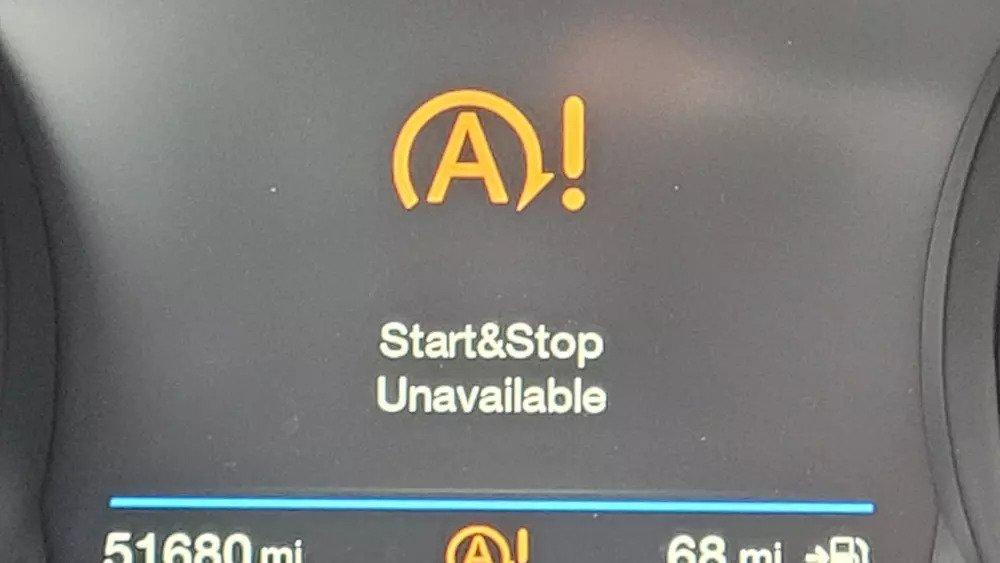
Pay attention to whether the warning appeared shortly after battery installation. If it did, verify that the replacement battery meets the manufacturer’s specifications.
Start-stop technology provides a useful indication of how the vehicle manages electrical energy, but it should be treated as a supporting warning rather than a definitive battery-capacity test.
7. A Professional Battery Test Shows Significantly Reduced Capacity
Sometimes the most convincing warning sign appears on a diagnostic tester rather than through something the driver can hear or see. A battery may start the engine normally and show a reasonable resting voltage while already losing its ability to deliver sufficient electrical power.
This is why a voltage reading alone cannot establish battery health. A fully charged 12-volt battery can still have deteriorated internal components that reduce its cold-cranking performance or usable capacity.
Professional battery testers commonly use conductance technology to estimate the battery’s ability to deliver starting current. The technician enters the correct battery type and rated cold-cranking amps, allowing the equipment to compare measured performance against the manufacturer’s specifications.
For conventional load testing, DENSO provides a useful benchmark. At 70 degrees Fahrenheit, a properly charged battery should maintain at least 9.6 volts during a 15-second load test at half its rated CCA. The acceptable minimum changes with temperature, so technicians must follow the appropriate testing chart.
For example, a battery originally rated at 650 CCA should generally be able to sustain a 325-amp test load while maintaining the specified voltage under those conditions.
If the tester reports weak battery health, reduced CCA, or a failed load test, the battery may need replacement even if it continues starting the vehicle occasionally.
One important step is to make sure the battery has enough charge before testing its condition. DENSO advises charging a conventional battery to at least 12.6 volts before carrying out its recommended load test. Testing a battery while it is undercharged could lead to inaccurate results.
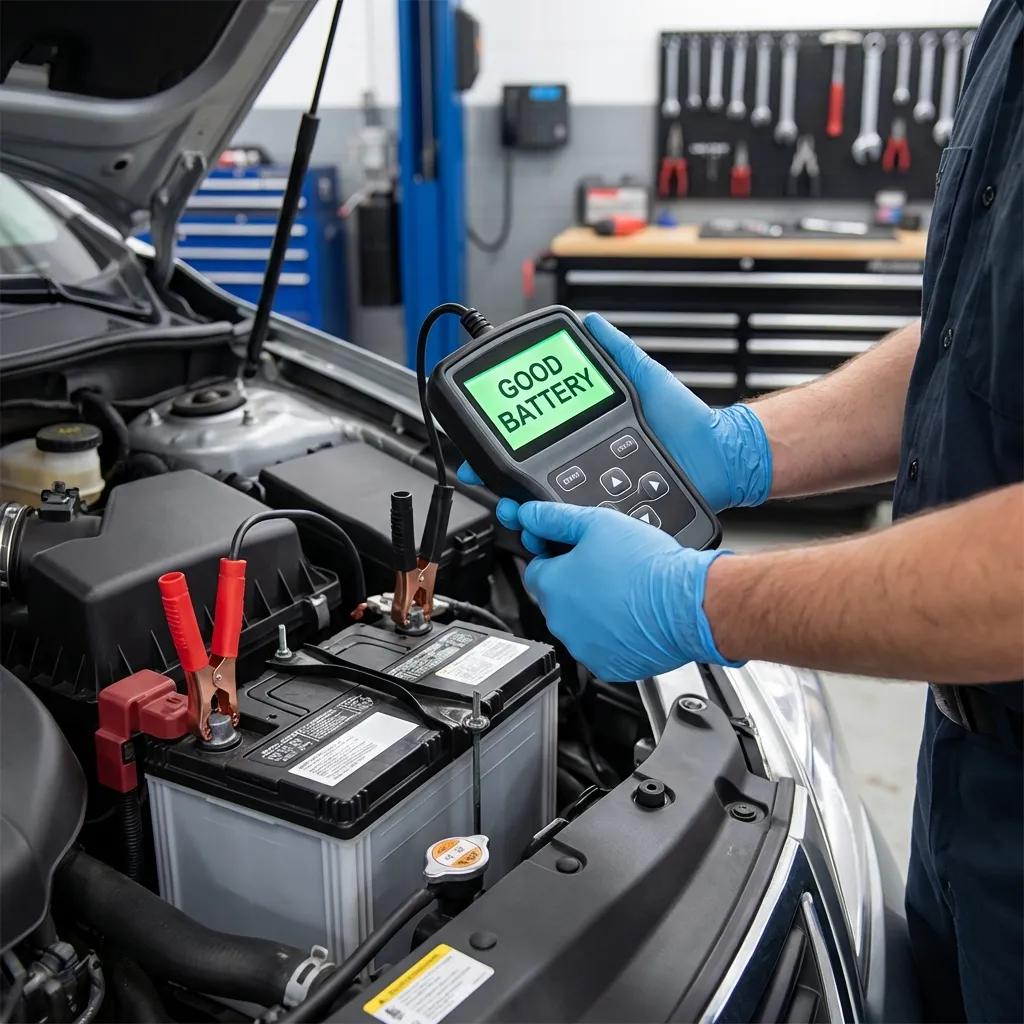
Ask the technician to provide the measured CCA, rated CCA, battery condition, and charging-system results. These figures make it easier to determine whether the battery itself is deteriorating or another component is responsible.
For a recently installed battery, retain the purchase receipt and warranty documents. If it fails a properly performed test within the warranty period, contact the retailer or manufacturer about possible replacement coverage.
A professional test is the most reliable way to confirm suspected capacity loss rather than relying on symptoms alone.