Breaking down on the side of the road is stressful enough without worrying about being cheated by someone offering help.
Unfortunately, stranded motorists can become easy targets for dishonest mechanics and roadside scammers who take advantage of urgency, limited options, and unfamiliarity with vehicle repairs.
Some demand payment for work that was never performed, while others invent mechanical problems, inflate repair bills, or pressure drivers into unnecessary services.
Knowing how these scams work can help motorists recognize warning signs before handing over their keys, money, or personal information. A little caution can prevent an expensive roadside experience.
1. Sending Unsolicited Tow Trucks and Mechanics
One of the most common ways dishonest roadside operators target stranded motorists is by appearing without being requested. A driver dealing with a breakdown or accident may suddenly notice a tow truck stopping nearby, with the operator offering to take the vehicle to a repair shop.
The offer can seem helpful, particularly when the driver is blocking traffic or standing on a dangerous roadside. However, an unsolicited arrival deserves caution.
Some predatory operators monitor busy roads, accident locations, and police activity to find motorists who need assistance. Instead of waiting for a driver to contact them, they approach first and attempt to secure permission to tow the vehicle.
The problem often begins after the car is loaded. The operator may take it to a repair facility chosen without the owner’s approval, where unexpected towing, storage, and administrative charges can accumulate.
The National Insurance Crime Bureau reported an 89% increase in nationwide predatory towing claims between the beginning of 2022 and the end of 2024. It also warns that some motorists have faced bills running into thousands of dollars.
A safer approach is to contact your insurance company, automobile club, or established roadside assistance provider yourself.
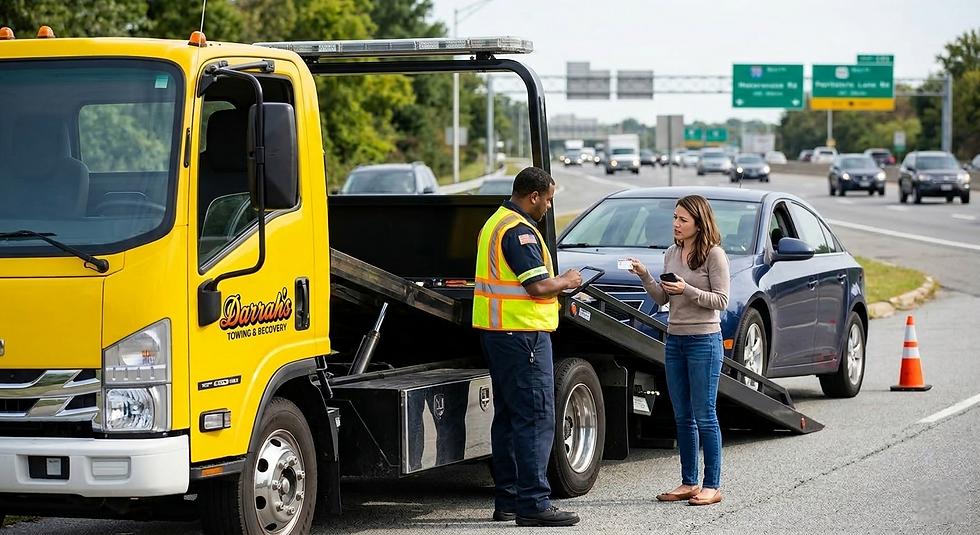
If someone arrives unexpectedly, ask for the company’s name, driver’s identification, and destination before agreeing to anything. You are generally entitled to choose your towing provider, subject to applicable local rules and emergency circumstances.
Never assume that a tow truck’s presence means it was dispatched by police or your insurer. Verify the information independently before handing over your keys. A few minutes of checking can prevent a much more expensive problem.
2. Pretending to Represent a Genuine Repair Company
A convincing company name does not automatically mean the person offering roadside repairs is legitimate. Some scammers pretend to represent established repair businesses or mobile mechanic services, using recognizable company names to gain a stranded driver’s confidence.
They may even provide a business telephone number, website, or professional-sounding explanation to make the offer appear genuine.
This approach is particularly effective when a driver searches online for emergency mechanical assistance. A fraudulent operator may respond to an inquiry while pretending to work for a real company.
After gaining the driver’s trust, the person might claim that a replacement part is required immediately and request payment before arriving at the vehicle.
A documented case in Stafford County, Virginia, illustrates how this can happen. In August 2025, local authorities warned about a woman who paid someone impersonating a mobile mechanic through Apple Pay for a supposedly necessary replacement part.
The promised service never arrived. When she contacted the genuine company, she discovered that it did not provide mobile mechanic services.
The safest response is to verify the business independently. Do not rely on a telephone number or website supplied by the person who contacted you. Find the company’s official contact information yourself and ask whether the individual is an employee or authorized contractor. Confirm that the business actually offers roadside repairs at your location.
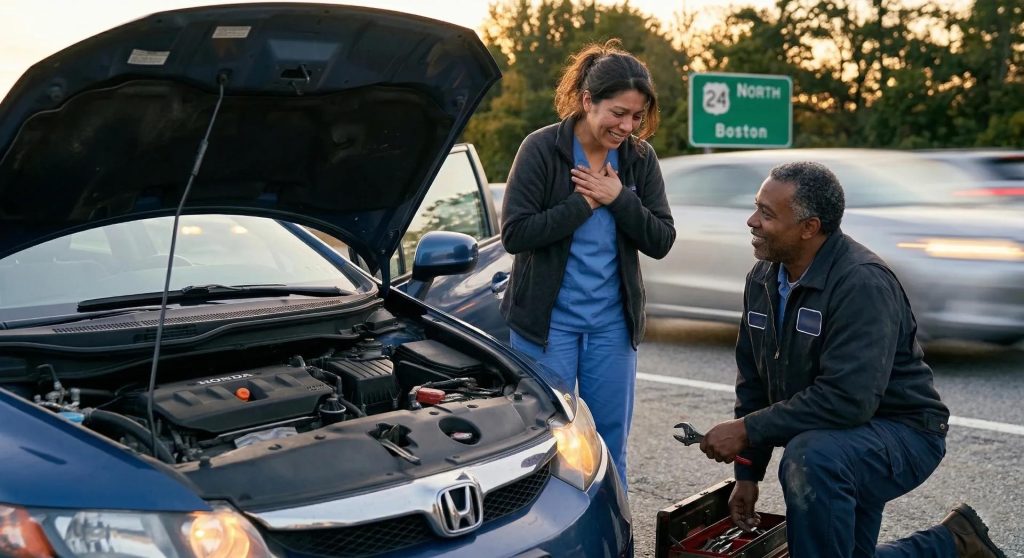
Be especially cautious when someone demands an immediate electronic payment before providing a written estimate or confirming the service. Payment applications can make it difficult to recover money sent to an unknown recipient.
If a mechanic claims to represent a familiar business, verification should happen before payment, not after the promised repair fails to materialize.
3. Inventing Serious Mechanical Problems
A stranded driver may have very little knowledge about what caused the breakdown. Dishonest mechanics can take advantage of this uncertainty by describing minor problems as major mechanical failures.
A vehicle that needs a replacement battery or a simple electrical connection repaired might be presented as having a damaged alternator, failed fuel pump, or serious engine problem.
The pressure becomes greater when the mechanic claims the vehicle cannot be moved safely without immediate repairs. A driver who is far from home may agree to expensive work simply because getting back on the road feels more important than questioning the diagnosis.
One warning sign is a mechanic who announces a major failure without conducting meaningful diagnostic checks. For example, a dead battery does not automatically mean the alternator has failed.
Similarly, an engine that will not start does not necessarily need a replacement starter motor. Several different faults can produce similar symptoms, and proper diagnosis requires appropriate testing.
The Federal Trade Commission advises consumers to be cautious about repair businesses that make exaggerated claims, demand immediate payment, or promise work without providing clear written information.
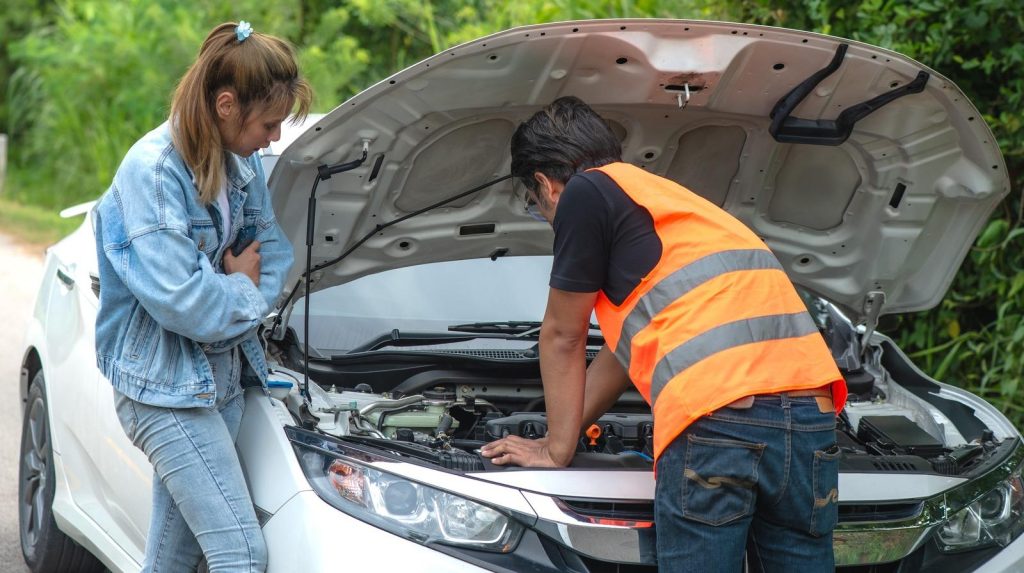
Ask the mechanic to explain the suspected fault and identify the tests supporting the diagnosis. Request photographs, diagnostic codes, or a written inspection report where appropriate. If the proposed repair is expensive, consider asking for the vehicle to be transported to a repair shop you trust.
You should never feel obligated to approve a major repair simply because someone says the vehicle will otherwise be unusable. A legitimate professional should be willing to explain the problem without using fear or intimidation.
Taking time to verify a diagnosis can prevent unnecessary spending and help ensure that the actual mechanical problem receives attention.
4. Quoting a Cheap Price Before Adding Hidden Charges
A suspiciously low initial price can make an unfamiliar roadside mechanic or towing operator appear more affordable than established assistance providers.
The driver may agree to the service after hearing an attractive quote, only to discover that the final invoice contains numerous additional charges that were never properly explained.
This tactic can involve separate fees for mileage, vehicle loading, roadside labor, equipment, after-hours assistance, storage, and administrative services. Some dishonest operators may also describe vague expenses as emergency recovery or special handling charges.
By the time the driver realizes how much the service actually costs, the vehicle may already be loaded onto the tow truck.
The National Insurance Crime Bureau warns that predatory towing operators frequently use excessive and hidden fees. Its reporting includes cases involving bills exceeding $16,000, demonstrating how serious these disputes can become.
Texas Department of Insurance guidance also warns motorists about towing scams in which an unsolicited operator recommends a particular repair facility before presenting a much larger bill involving towing and storage.
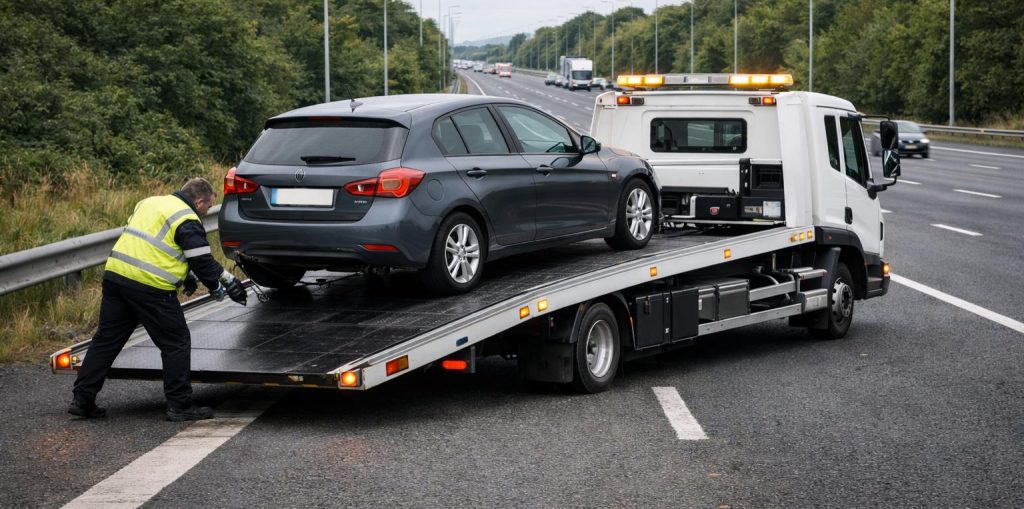
Before agreeing to roadside assistance, request a written estimate that identifies the basic service charge, mileage rate, additional labor, storage fees, and destination. Ask whether taxes or other charges will be added. If the operator refuses to provide clear pricing, do not authorize the service unless an immediate safety emergency leaves no reasonable alternative.
It is also important to distinguish between a towing estimate and a repair estimate. A driver may agree to have a vehicle transported without authorizing any mechanical work.
Keep copies of all receipts and signed documents. A low advertised price means very little if the final invoice is filled with charges that were never disclosed before the service began.
5. Demanding Upfront Payment for Parts That Never Arrive
A stranded driver may be willing to pay for a replacement part if it means getting the vehicle running again. Dishonest mechanics exploit that urgency by claiming they need money immediately to purchase a battery, alternator, starter motor, fuel pump, or another component.
The driver sends the payment, but the mechanic disappears without returning with the promised part.
This scam can be particularly convincing when the person provides a detailed explanation of the supposed failure. They might claim that a nearby supplier has the required component but will not release it until payment is received.
In other cases, the mechanic may insist that an advance payment is necessary to reserve the part or arrange immediate delivery.
A Stafford County Sheriff’s Office warning from August 2025 documented a case involving a fraudulent mobile mechanic. The victim was asked to send money through Apple Pay for a supposedly necessary replacement part.
After receiving the payment, the individual failed to provide the promised service. The genuine company later confirmed that it did not offer mobile mechanic services.
There is an important difference between a legitimate parts deposit and a suspicious payment demand. Established repair businesses may require deposits for special-order components, but they should be able to identify the business, explain the repair, and provide written documentation.
Before transferring money, independently verify the mechanic’s identity and contact the parts supplier if possible. Request an itemized estimate showing the part description, price, labor charge, and expected arrival time. Avoid sending money to personal payment accounts belonging to unknown individuals.
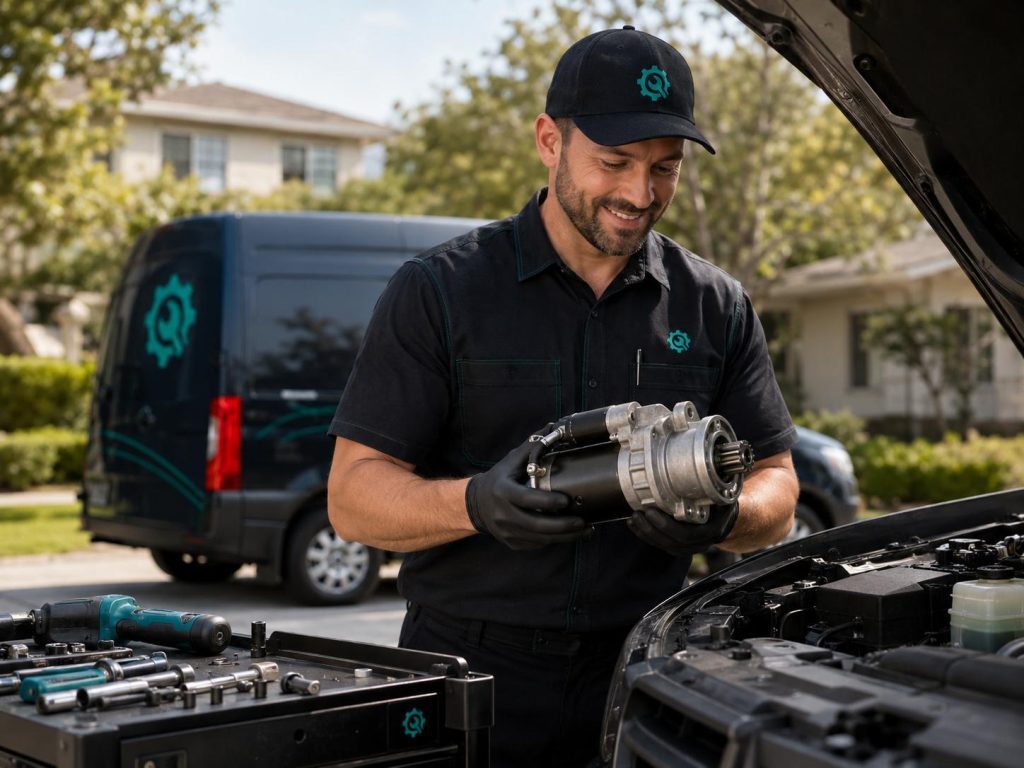
Be especially careful with payment methods that offer limited protection or make disputes difficult. If someone refuses to provide basic business information or pressures you to pay immediately, consider ending the transaction and contacting a trusted roadside assistance provider instead.
6. Taking Vehicles to Unapproved Repair Shops
Not every dishonest roadside operator intends to repair a vehicle at the breakdown location. Some target stranded drivers by convincing them to send their vehicles to a particular repair shop, often claiming that the facility is nearby, affordable, or already approved by an insurance company.
The problem begins when the driver discovers that the destination was never independently verified.
This practice can involve cooperation between a towing operator and a repair facility. The tow truck arrives unexpectedly, offers assistance, and recommends a specific shop.
Once the vehicle reaches the destination, the owner may face inflated storage charges, unauthorized repairs, or demands for additional payments before the vehicle is released.
California’s Department of Insurance issued a warning in February 2025 about vehicle-hostage scams targeting accident victims in Southern California.
Investigators described schemes in which motorists were directed to particular repair facilities and subsequently faced demands for large payments to recover their vehicles. The investigation involved an alleged organized insurance fraud operation.
The National Insurance Crime Bureau also warns about bandit tow trucks that take vehicles to dishonest repair facilities, where unexpected charges can accumulate.
To protect yourself, choose the repair destination before authorizing a tow. If your insurance company has a preferred repair network, contact the insurer directly using its official telephone number. You can also request transportation to a reputable shop you have independently selected.
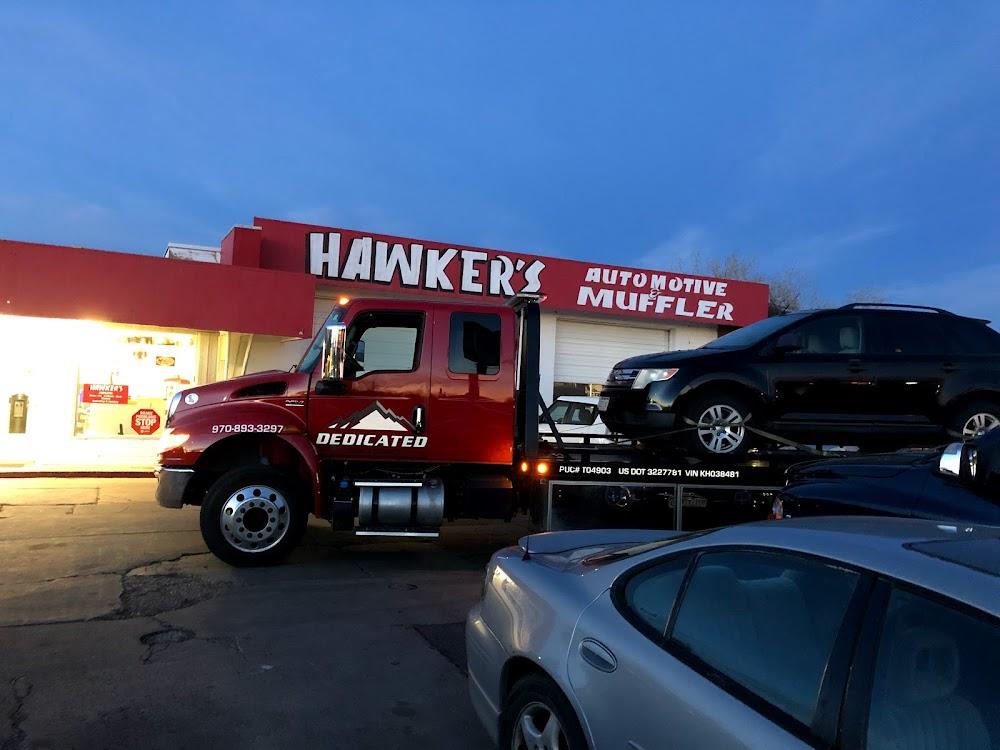
Never assume that a repair facility is insurance-approved simply because a tow truck driver says so. Ask for the shop’s full name, address, and contact details before signing anything.
Most importantly, read the towing authorization carefully. It should clearly identify where the vehicle is going and what services you are approving.
7. Making Drivers Sign Blank or Incomplete Authorization Forms
Paperwork can become a powerful tool for dishonest roadside operators, particularly when a driver is stressed and wants to get away from a dangerous roadside location. One tactic involves asking motorists to sign blank forms or incomplete authorization documents before their vehicles are loaded onto a tow truck.
The operator may describe the paperwork as a routine requirement, but signing without understanding its contents can create serious financial problems.
A signed document can later be used to support charges for towing, storage, vehicle transportation, or other services. If important details such as the destination, agreed price, and scope of authorization are missing, disputing the final bill can become considerably more difficult.
The National Insurance Crime Bureau has specifically warned about towing scams involving blank documents. Its investigations have found cases in which drivers signed paperwork authorizing a tow, only to face additional charges for services that were never clearly explained or agreed upon.
The danger is not limited to towing fees. Some operators may attempt to include repair authorization or storage agreements in the same paperwork. A driver who believes they are approving transportation could unknowingly sign documents allowing additional services or accepting unfavorable payment terms.
Never sign a blank document, even if the operator insists that it is standard procedure. Read every page and make sure the company name, vehicle details, destination, prices, and authorized services are clearly stated. If a section is incomplete, request that it be filled in before signing.
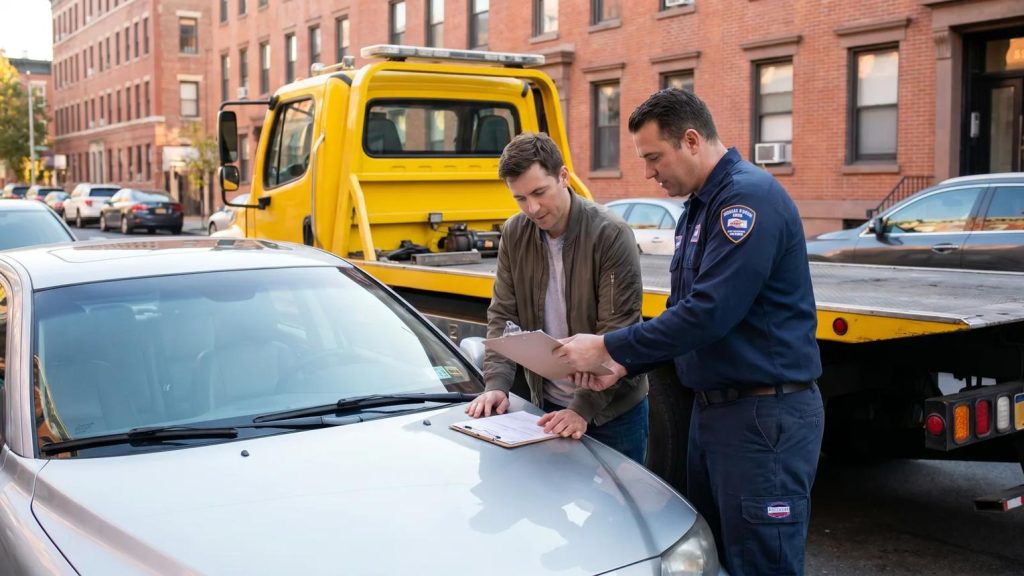
You should also photograph or request a copy of every document you sign. If the operator refuses to provide a copy or becomes aggressive when questioned, treat that behavior as a serious warning sign.
A legitimate towing company should have no reason to prevent you from understanding the agreement. Taking a few minutes to review the paperwork can protect you from charges that appear long after the roadside emergency has ended.
8. Refusing to Release the Vehicle Until Extra Money Is Paid
One of the most stressful situations a stranded driver can encounter is discovering that a vehicle has been taken to a storage yard or repair facility and cannot be retrieved without paying unexpected charges.
Dishonest operators may use control over the vehicle to pressure owners into paying inflated towing, storage, or administrative fees. This practice is commonly described as a vehicle-hostage or predatory towing scam.
The problem can become especially serious when the vehicle is taken somewhere the owner never selected. The operator may demand payment for daily storage, transportation, paperwork, or other expenses that were not clearly disclosed when the tow was arranged.
In some cases, drivers are also prevented from retrieving personal belongings until the disputed amount is paid.
The National Insurance Crime Bureau identifies excessive storage fees and refusal to release vehicles as common warning signs of predatory towing.
California’s Department of Insurance documented a particularly concerning version of this scheme in February 2025. Its investigation involved alleged fraudulent towing and repair operations in which vehicles were held while large payments were demanded from insurance companies.
If this happens, request an itemized invoice showing every charge and the reason it was added. Keep copies of the original towing authorization, receipts, text messages, and photographs. Contact your insurance company and the relevant state towing regulator or consumer protection agency to dispute suspicious charges.
Do not attempt to physically confront an aggressive operator or enter a restricted storage facility without permission. If threats are made or you feel unsafe, contact local law enforcement.
The most effective protection is preventing the situation in the first place. Choose your towing provider, confirm the destination, and obtain written pricing before the vehicle leaves the roadside.