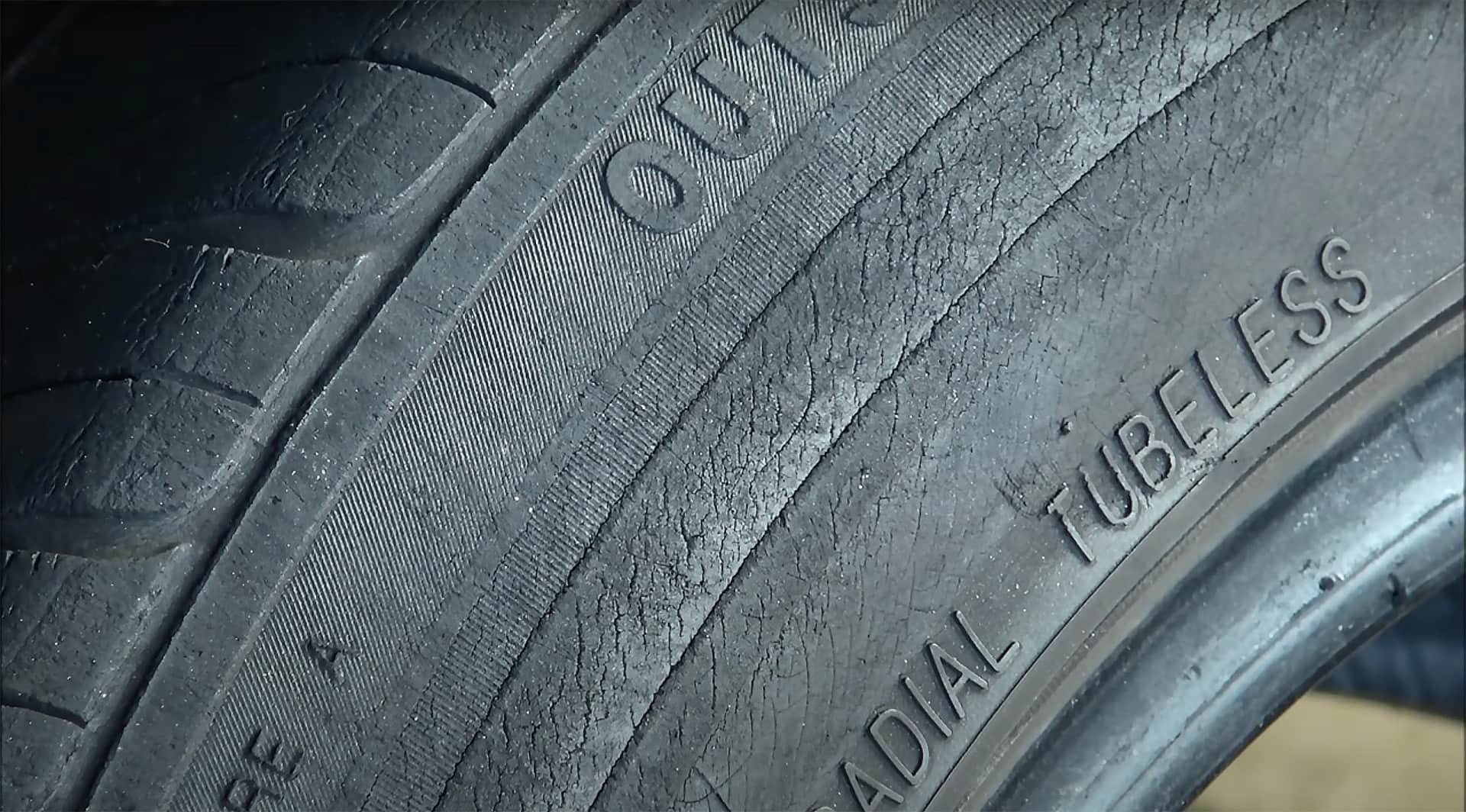
A tire sidewall is more than a collection of numbers, letters, and manufacturer markings. It contains important information about tire size, load capacity, speed capability, manufacturing date, and operating limits.
Yet many drivers misunderstand these details, sometimes choosing incorrect replacements or inflating their tires to the wrong pressure. Even familiar markings can be misleading when their meaning is taken out of context.
Understanding what these symbols actually communicate helps drivers make safer buying decisions, recognize aging tires, and avoid unnecessary damage. Here are eight commonly misunderstood tire-sidewall details that every vehicle owner should know before visiting a tire shop.
1. Maximum Inflation Pressure Is Not the Recommended Tire Pressure
One of the most common tire-sidewall mistakes is treating the printed maximum pressure as the correct inflation setting for everyday driving. A tire might display wording such as “MAX PRESS 44 PSI,” leading an owner to believe that all four tires should be inflated to 44 PSI. That interpretation is incorrect.
The marking identifies the maximum permissible inflation pressure associated with the tire’s stated maximum load, not necessarily the pressure recommended by the vehicle manufacturer.
For normal use, drivers should follow the cold tire pressure listed on the vehicle’s tire information placard, usually found on the driver’s door jamb, or in the owner’s manual.
That specification accounts for the vehicle’s weight, suspension, handling characteristics, and original tire fitment. The recommended pressure can be lower than the maximum printed on the tire.
Consider a vehicle whose door placard specifies 35 PSI, while its replacement tire displays a maximum of 44 PSI. Inflating it to 44 PSI simply because the number appears on the sidewall can produce an unnecessarily harsh ride and may affect handling and tire wear.
Conversely, running below the vehicle’s recommended pressure can increase heat buildup and cause excessive shoulder wear.
Tire pressure should also be measured when the tires are cold, preferably before driving or after the vehicle has been parked for several hours. As tires warm up during use, the air inside expands and causes the pressure reading to increase. Avoid letting air out of warm tires just to match the recommended cold-pressure setting.
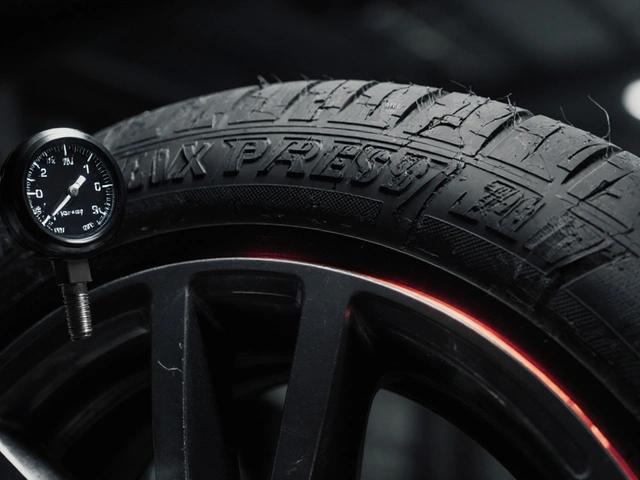
NHTSA and tire manufacturers distinguish between the tire’s maximum pressure marking and the vehicle manufacturer’s recommended inflation setting. Drivers should use the door placard as their everyday reference, not the largest PSI number printed on the rubber.
2. The Tire Size Number Does Not Represent the Wheel Diameter Alone
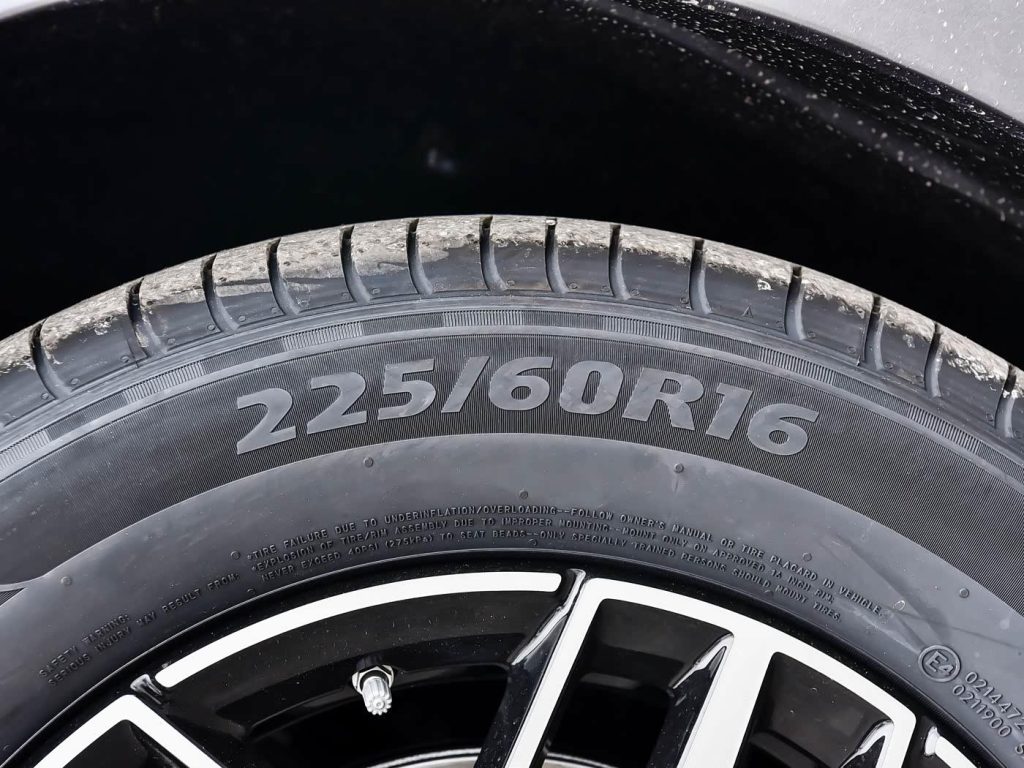
A marking such as P225/60R16 can look like a complicated product code, but each section describes a different measurement. Drivers sometimes focus on the final number and assume the entire sequence refers to wheel size. In reality, the final “16” identifies the wheel rim diameter in inches. The other numbers describe the tire’s dimensions and construction.
The first number, 225, represents the tire’s nominal section width in millimeters. The next number, 60, is the aspect ratio. It means the sidewall height is nominally 60 percent of the tire’s section width.
In this example, that works out to approximately 135 millimeters. The letter R indicates radial construction, which is the standard design used by most modern passenger vehicle tires.
Why does this distinction matter? A tire with the correct 16-inch rim diameter can still be unsuitable if its width or aspect ratio is wrong. Changing those dimensions can affect clearance, speedometer accuracy, handling, and the vehicle’s overall diameter. A tire that physically fits onto the wheel is not automatically an approved replacement.
The initial letter also carries useful information. “P” identifies a passenger-type tire, while “LT” indicates a light-truck tire. Some tire sizes have no initial letter, which can indicate a metric sizing designation rather than a P-metric one.
These categories can have different load characteristics, so they should not be treated as interchangeable simply because the numbers look similar.
When replacing tires, compare the complete size marking with the vehicle’s door placard or owner’s manual. Do not order a tire based only on the final rim-diameter number. The Tire Industry Association and NHTSA explain these size components in their consumer tire-education materials.
3. The Load Index Is Not the Tire’s Weight
The two- or three-digit number printed after the tire size is often mistaken for a measurement of the tire’s weight. In reality, it is usually the load index, a code indicating how much weight the tire can carry under specified conditions.
For example, a tire marked 225/60R16 98H has a load index of 98. That number does not mean the tire weighs 98 pounds, nor does it directly state its capacity in pounds.
The load index must be interpreted using a standardized load index chart. A rating of 98 corresponds to a maximum capacity of 1,653 pounds per tire under the applicable test conditions. A rating of 95, by comparison, represents 1,521 pounds.
These figures help explain why two tires with identical dimensions may not necessarily be suitable replacements for the same vehicle.
Drivers sometimes focus on the size alone when buying replacement tires. That can lead to an unsuitable choice if the replacement has a lower load index than the vehicle manufacturer specifies.
The tire may physically fit the wheel, but its load-carrying capability could be insufficient for the vehicle’s requirements, particularly when carrying passengers or cargo.
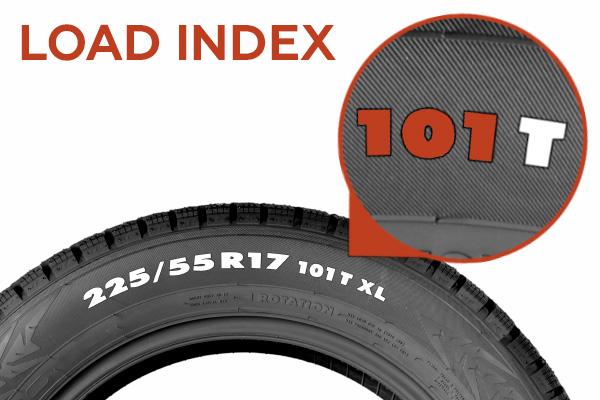
You may also see markings such as XL or Extra Load. These identify tires designed to carry a higher load than standard-load versions of the same size when inflated to the appropriate pressure. They do not mean that the vehicle can automatically carry more cargo. The vehicle’s gross vehicle weight rating and axle weight ratings remain important limits.
Check the driver’s door placard and owner’s manual before choosing a replacement. Match or exceed the specified load index only where the vehicle manufacturer permits it, and confirm the correct inflation pressure for the selected tire. The load index is a capacity code, not a decorative number or a measurement of tire weight.
4. The Speed Rating Is Not a Recommended Driving Speed
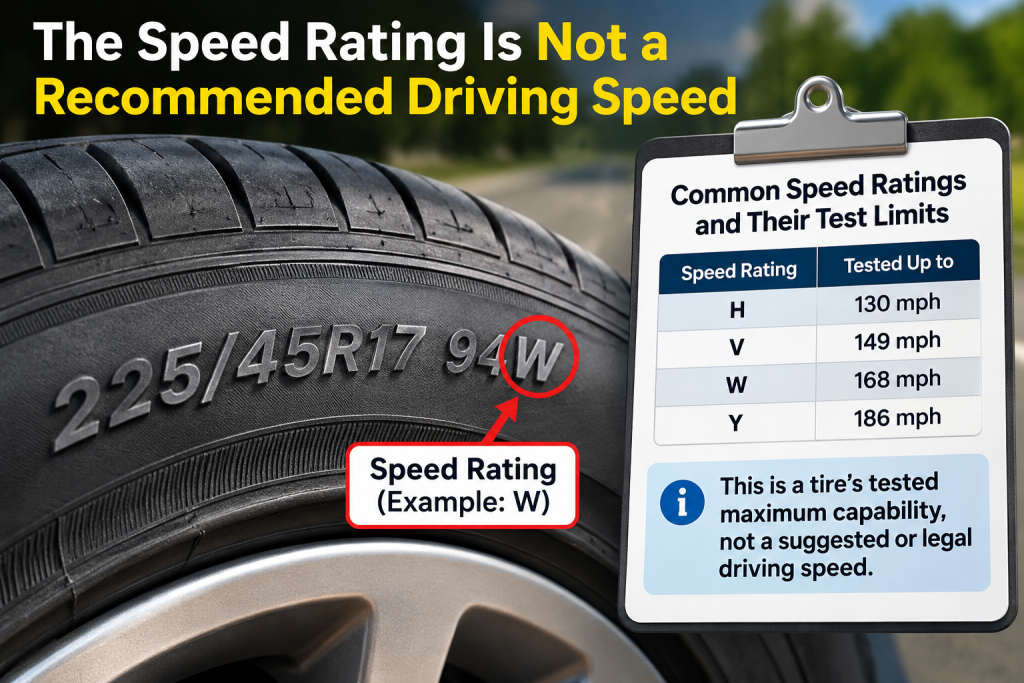
A letter such as H, V, W, or Y near the end of a tire-size marking is its speed symbol. Drivers sometimes read this as a recommended cruising speed or assume it indicates how fast they should drive on public roads.
Neither interpretation is correct. The symbol identifies the tire’s speed capability under specified test conditions when it is correctly inflated and carrying an appropriate load.
For example, an H-rated tire has a nominal speed capability of up to 130 mph, while a V rating corresponds to up to 149 mph. W and Y ratings correspond to 168 mph and 186 mph, respectively.
These are tire classification limits, not permission to drive at those speeds. Actual road conditions, legal speed limits, vehicle condition, and tire load all remain decisive.
Why should owners pay attention to this letter when replacing tires? A vehicle designed for a particular speed-rated tire may have handling and performance characteristics that depend on the specified tire construction.
Installing a lower-rated tire without checking manufacturer guidance can affect the vehicle’s intended performance and may not meet the original specification.
The rating also does not mean a tire can safely sustain its maximum listed speed indefinitely in every situation. High temperatures, underinflation, overloading, damage, and wear can reduce a tire’s ability to operate safely. A speed rating should never be considered a substitute for regular inspection.
When shopping, compare the complete service description on the sidewall with the vehicle’s placard or owner’s manual. If the original tire has a V rating, do not assume an H-rated replacement is automatically acceptable just because its dimensions match.
Ask a qualified tire professional to verify the replacement specification. The letter is a technical capability rating, not a target for the speedometer.
5. The Four-Digit DOT Code Reveals the Manufacturing Date
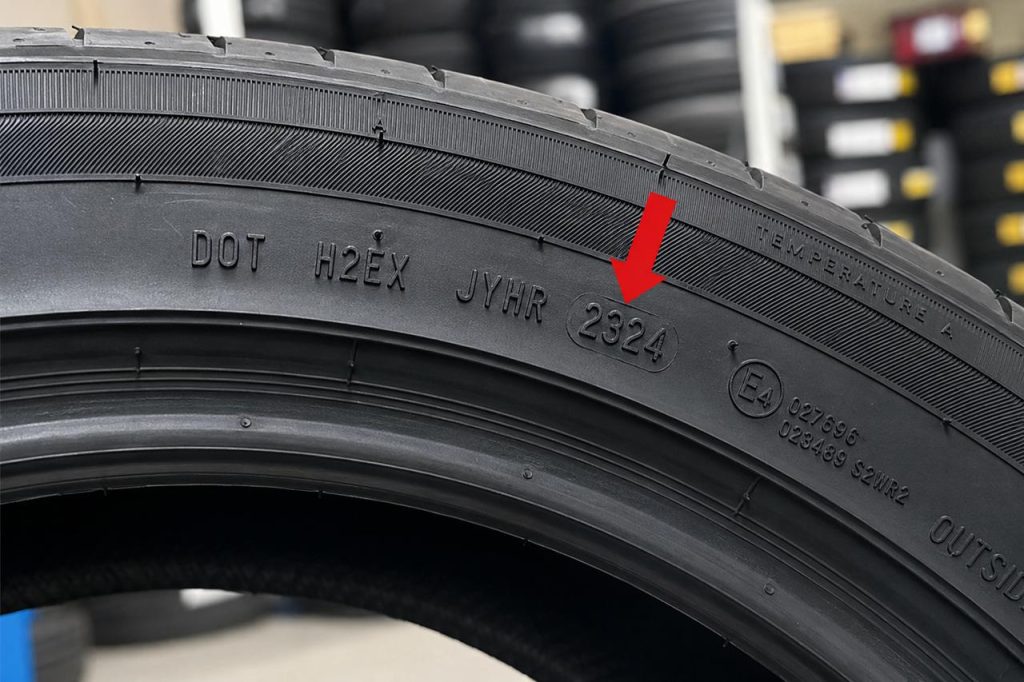
A tire can have deep tread and still be old enough to deserve closer attention. The four-digit date code at the end of the Tire Identification Number, commonly called the DOT code, tells you when the tire was manufactured.
Many drivers see the letters DOT followed by a long sequence of characters but do not realize that the final four digits contain the production date.
The first two digits represent the week of manufacture, while the last two identify the year. For example, a code ending in 2324 means the tire was manufactured during the 23rd week of 2024.
A code ending in 4819 indicates production during the 48th week of 2019. This information is useful when buying used tires, checking older spare tires, or evaluating a vehicle that has spent long periods parked.
One detail that can confuse vehicle owners is that the full Tire Identification Number may be printed on only one side of the tire. If the four-digit manufacturing date code is missing from the visible sidewall, inspect the opposite side as well. Depending on the tire’s position, you may need to look underneath the vehicle or turn the steering wheel to get a better view of the markings.
Manufacturing date alone does not establish whether a tire is safe or unsafe. Age-related deterioration depends on factors such as storage, climate, exposure to sunlight, inflation, maintenance, and use.
A tire can develop cracking or other damage before its tread is worn out. Conversely, a tire’s date code does not automatically mean it must be discarded on a particular anniversary.
Follow the vehicle and tire manufacturer’s age-related replacement recommendations. Inspect older tires for cracking, bulges, deformation, and other signs of deterioration. If you are purchasing a used vehicle, checking the date codes on all four tires and the spare can reveal whether the rubber is much older than it appears.
6. UTQG Treadwear Numbers Are Not Guaranteed Mileage
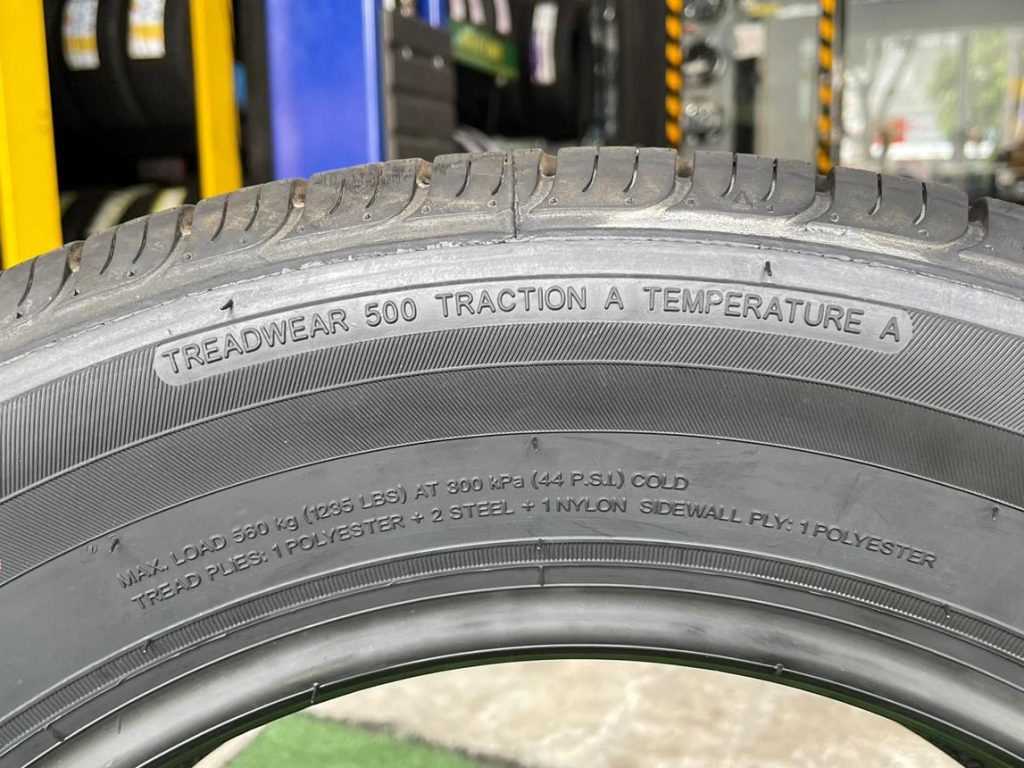
A tire marked “TREADWEAR 500” can look much more durable than one carrying a rating of 300. That comparison is useful, but drivers often misunderstand what the number actually promises.
The Uniform Tire Quality Grading system, or UTQG, uses a controlled government test to compare treadwear performance against a standardized reference tire. It does not promise that a tire will last 50,000 miles, 70,000 miles, or any other specific distance.
In the UTQG system, the reference tire is assigned a treadwear grade of 100. A tire rated 500 performed at a higher relative level on the prescribed test course than the reference tire.
However, the result is not a direct prediction of real-world tire life. Driving habits, road surfaces, climate, alignment, inflation pressure, vehicle weight, and maintenance can all change how quickly tread wears.
Another point to consider is that treadwear ratings are most reliable when comparing tires from the same manufacturer, as grading methods and performance standards can vary between brands.
Different manufacturers may obtain their ratings under different testing and reporting circumstances, so a 500 rating from one brand should not automatically be treated as proof that it will last longer than every tire rated 400 by another brand.
A high number also does not necessarily mean better grip in every condition. Some drivers choose tires based only on the treadwear figure and overlook wet-weather performance, winter capability, handling, or braking characteristics. That can be a costly mistake if the vehicle is used in heavy rain or cold weather.
When comparing tires, consider the treadwear grade alongside the traction and temperature grades, the manufacturer’s mileage warranty, and independent tire-test results. Treat the number as a comparative indicator, not a mileage guarantee.
Regularly check tread depth and condition rather than waiting for a promised mileage figure that the sidewall never actually provided.
7. Traction and Temperature Grades Do Not Measure Every Aspect of Safety
The words “TRACTION” and “TEMPERATURE” on a tire sidewall can give drivers useful information, but their meanings are narrower than many people assume.
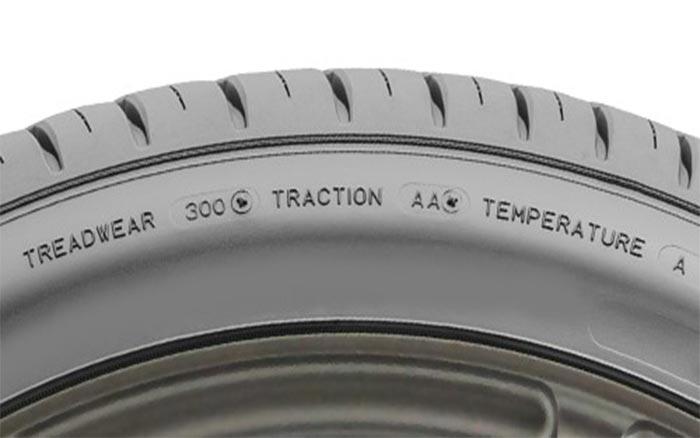
Some owners see a traction grade of AA and believe it guarantees the shortest stopping distance in every situation. Others interpret a temperature grade of A as proof that the tire cannot overheat. Neither conclusion is accurate.
Under the US Uniform Tire Quality Grading system, traction grades are AA, A, B, and C, with AA being the highest. These grades measure a tire’s ability to stop in straight-line braking tests on specified wet asphalt and concrete surfaces.
They do not measure cornering grip, dry-road braking, resistance to hydroplaning, or performance on snow and ice. A tire with an AA grade may therefore perform differently from another tire when conditions change.
Temperature ratings use a different grading system consisting of A, B, and C, with A indicating the highest level of heat resistance. These ratings are based on controlled laboratory tests that measure how effectively a tire can dissipate heat.
However, this rating assumes the tire is properly inflated and not overloaded. Underinflation, excessive speed, or carrying too much weight can generate dangerous heat even in a tire with an A rating.
Drivers should also understand that these grades do not replace the vehicle manufacturer’s tire requirements. A tire with strong UTQG numbers may still be unsuitable if it has the wrong size, load index, speed rating, or seasonal design.
When comparing replacement tires, consider all three UTQG markings together, but do not select a tire based on one letter alone. Check independent performance tests and make sure the tire suits the climate and driving conditions where the vehicle is used. The grades provide standardized information, not a complete safety score.
8. The Three-Peak Mountain Snowflake Symbol Is Not Just a Winter Decoration
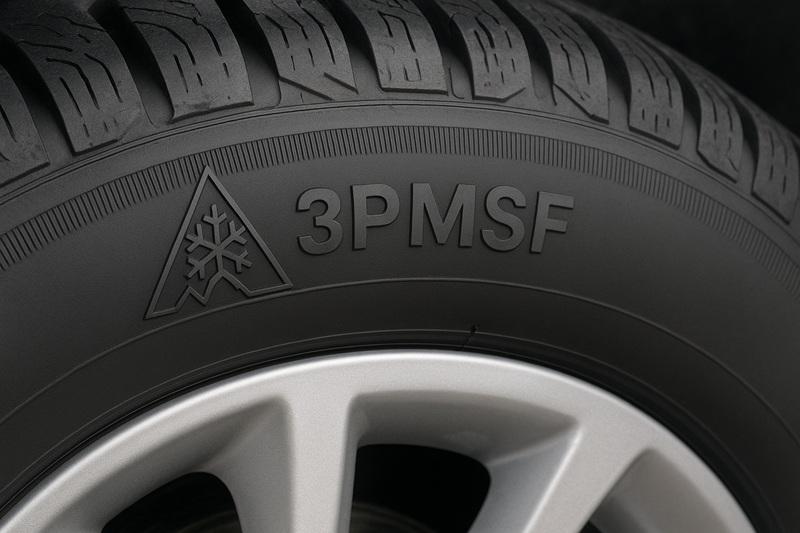
The three-peak mountain snowflake symbol is easy to overlook, particularly when drivers are comparing several tires with similar tread patterns. It is not simply a decorative winter logo. The symbol identifies a tire that meets specific performance requirements for severe snow conditions under a standardized test.
A tire carrying it has demonstrated a defined level of snow traction, making the marking useful for drivers who regularly encounter snowy roads.
The symbol is often abbreviated as 3PMSF. To earn it, a tire must meet the required snow-traction performance criteria in the applicable industry test.
This is different from an ordinary M+S marking, which indicates a tread design intended for mud and snow but does not, by itself, demonstrate that the tire passed the same severe-snow performance test.
However, there is an important limitation. The mountain-and-snowflake symbol does not mean the tire is a dedicated winter tire, nor does it guarantee strong performance on ice.
Some all-weather tires carry the symbol while remaining designed for year-round use. Dedicated winter tires generally use specialized rubber compounds and tread designs intended for cold-weather conditions.
Drivers in states with regular snowfall should check this marking when choosing replacement tires. It can be particularly relevant in areas where winter driving conditions are common or where local regulations recognize severe-snow-rated tires for certain roads.
Still, owners should check the specific rules for the area rather than assuming the symbol automatically satisfies every chain or traction requirement.
Also inspect the rest of the sidewall before purchasing. The snowflake symbol does not tell you the tire’s size, load capacity, speed rating, or correct inflation pressure. Those specifications must still match the vehicle’s requirements.
Think of the symbol as one important piece of winter-performance information, not a complete description of what the tire can handle.