
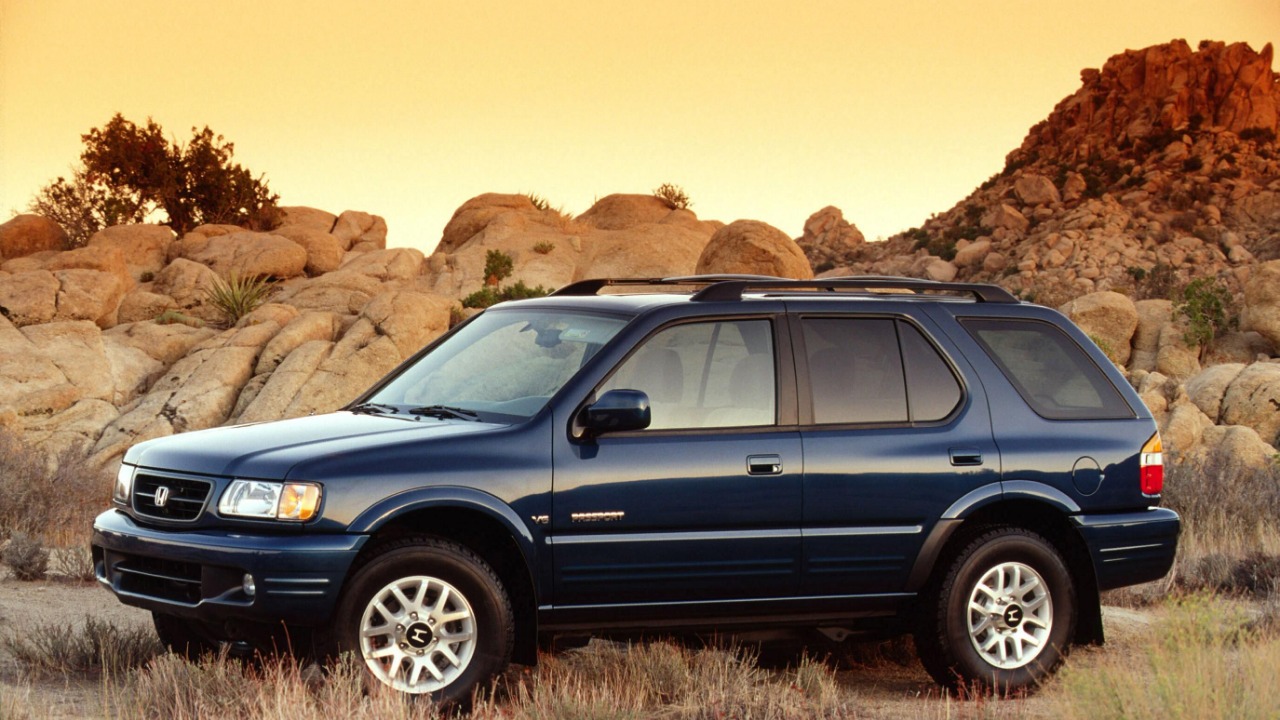
The Honda Passport has gone through two very different eras. The original Passport was a truck-based SUV sold around the turn of the century, while the name returned in 2019 as a larger two-row crossover based on Honda’s modern SUV architecture.
That makes choosing the right model year especially important for used buyers. Some newer Passports have strong reliability records, while certain years carry substantial recall histories or aging-related concerns.
This guide separates five model years that stand out for their reliability and ownership attributes from five that deserve greater caution. The goal is to give buyers useful model-year context before they compare mileage, condition, pricing, and maintenance records.
5 Best Honda Passport Years
1. 2022 Honda Passport
The 2022 Passport is a particularly interesting used-market choice because Honda had several years to refine the modern Passport before this model year arrived.
Consumer Reports rates the 2022 Passport as much more reliable than other vehicles from the same model year and records four NHTSA recalls. That combination gives this year a strong foundation for buyers searching for a used Passport with established reliability data.
The powertrain is another reason this model year deserves attention. The Passport uses Honda’s 3.5-liter V6, paired with a nine-speed automatic transmission, while available all-wheel drive gives buyers additional traction for poor-weather and light off-road situations.
The Passport also provides a spacious two-row cabin, making it useful for families who do not need the third row of the Pilot.
The recall history should still be checked before purchase. The Passport has been included in several Honda campaigns affecting components such as the fuel pump, rearview camera system, and brake hardware.
A recall appearing on a vehicle does not necessarily mean the vehicle is defective today, since completed recall repairs can address the identified problem. The important step is confirming that the applicable repair was performed.
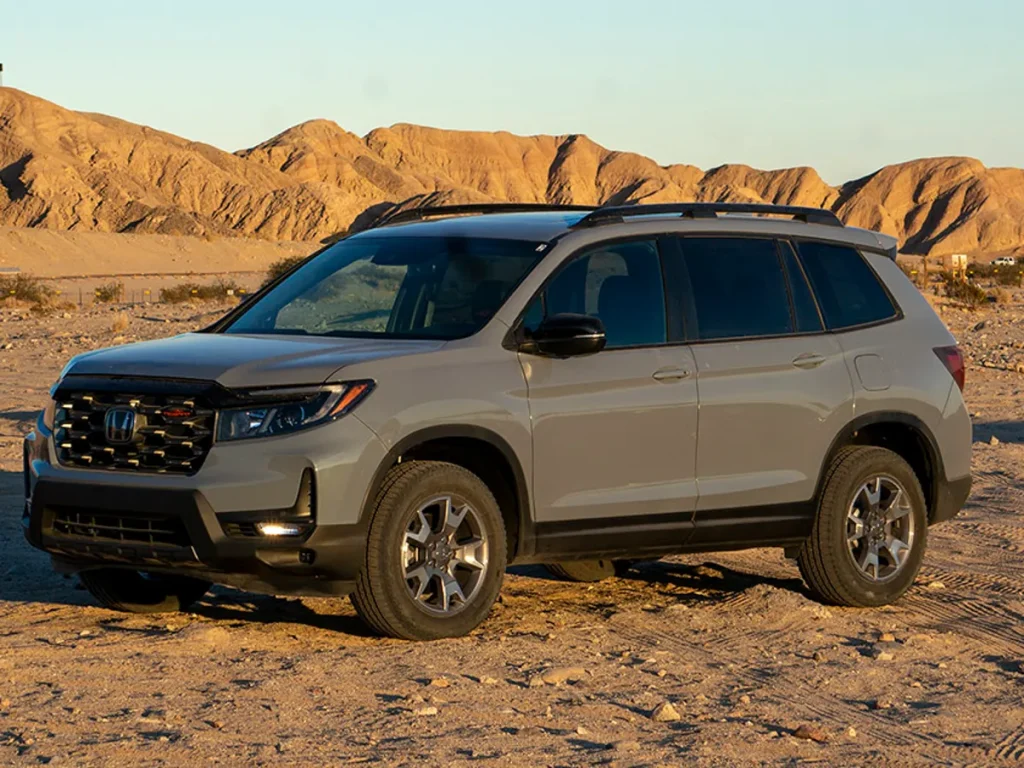
The 2022 model therefore offers a useful combination of established mechanical hardware, strong Consumer Reports reliability results, and a relatively recent production date. It is a year worth investigating when shopping for a used Passport, particularly when the vehicle has documented maintenance and a clean recall history.
2. 2021 Honda Passport
A different strength defines the 2021 Passport. Rather than relying simply on its age or equipment, this model year has favorable owner-reported reliability data.
Consumer Reports says the 2021 Passport is more reliable than other cars from the same model year, although it lists seven NHTSA recalls. That distinction makes 2021 an interesting case because reliability and recall counts do not necessarily tell the same story.
Safety equipment also received attention during this period. IIHS testing for the 2021 Passport shows a good rating in the driver-side small-overlap front test, the original moderate-overlap front test, and the original side test. The standard front crash-prevention system earned an Advanced rating in vehicle-to-vehicle testing.
Mechanically, the 2021 model stays with the 3.5-liter V6 and nine-speed automatic combination used by the modern Passport. That means buyers get a conventional gasoline powertrain rather than having to consider a turbocharged four-cylinder or hybrid system.
For drivers who regularly carry passengers or cargo, the Passport’s two-row configuration also leaves substantial room behind the second row.
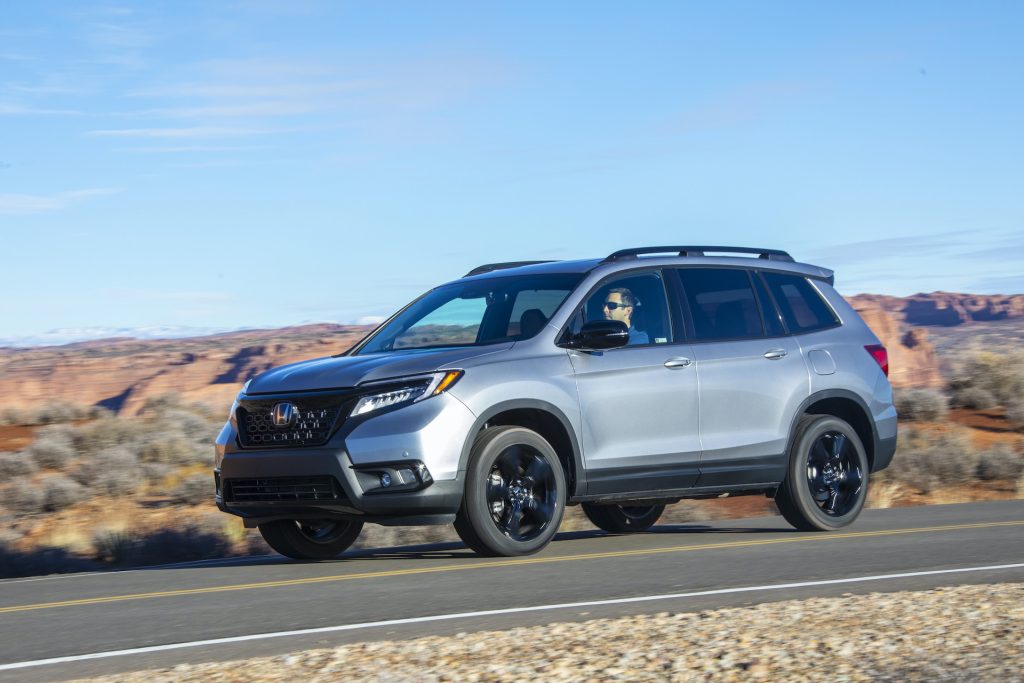
However, the recall history is worth keeping in mind. Consumer Reports lists seven recalls for the 2021 Passport, making a VIN check an important step for anyone considering one. The recall campaigns addressed several issues, including problems involving the fuel pump and other vehicle equipment.
Once those repairs are verified, however, the model’s favorable reliability record and mature mechanical package make this year worthy of consideration.
3. 2023 Honda Passport
The 2023 Passport represents one of the later versions of the second-generation model before Honda introduced significant changes to the SUV’s future direction.
Consumer Reports rates the 2023 Passport as much more reliable than other cars from the same model year, which gives it a useful advantage for shoppers looking for a relatively recent used example. Its established 3.5-liter V6 also avoids the added complexity of a turbocharged engine.
Honda continued using the 280-horsepower 3.5-liter V6 with a nine-speed automatic transmission for the 2023 Passport. Front-wheel drive was available, while Honda’s i-VTM4 all-wheel-drive system remained an option.
That setup makes the Passport particularly relevant to buyers who want a two-row SUV with conventional gasoline power and useful towing capability.
The 2023 model also benefits from the Passport’s practical proportions. With two rows rather than three, passengers receive generous space while the cargo area remains useful for luggage, groceries, and outdoor equipment.
The Passport’s relatively high seating position gives it the traditional SUV character many buyers expect without moving into a full-size vehicle.
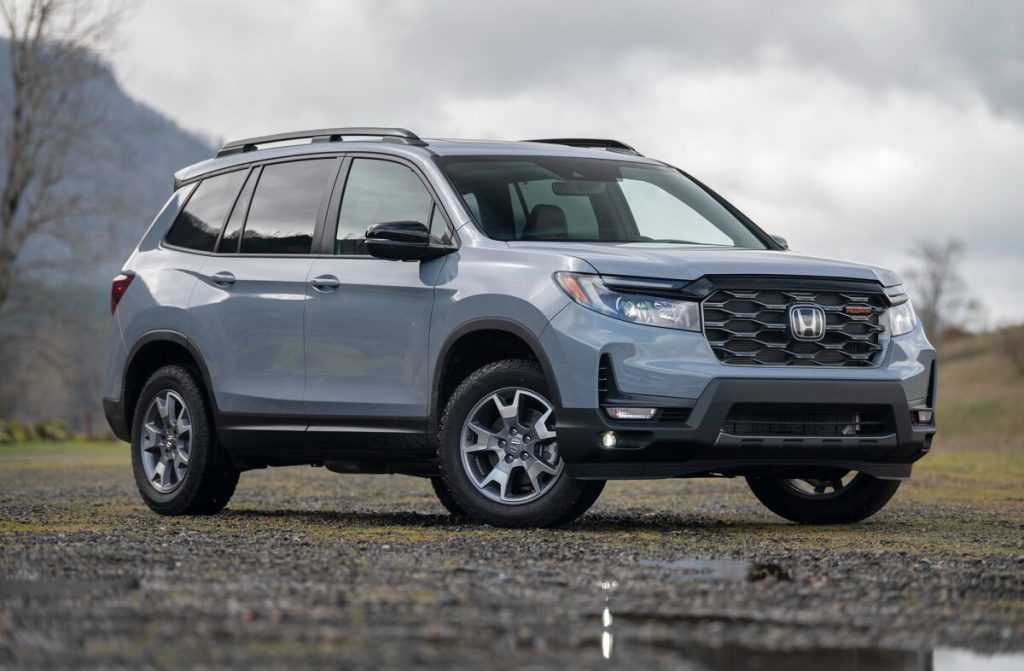
Reliability data is the main reason this year belongs here. The 2023 Passport does not need to rely solely on Honda’s reputation because Consumer Reports’ owner-survey information provides favorable evidence for the model year.
Buyers should still check the VIN for recalls and inspect the vehicle’s maintenance history, particularly on examples that have been used for towing or off-road driving.
4. 2024 Honda Passport
The 2024 Passport is another late-production example that gives used buyers access to a well-established formula.
Consumer Reports rates the 2024 Passport as much more reliable than other cars from the same model year, providing a strong reason to consider it when shopping for a relatively new used SUV.
Honda retained the naturally aspirated 3.5-liter V6 for 2024, producing 280 horsepower and 262 lb-ft of torque. The engine is paired with a nine-speed automatic transmission, while all-wheel drive remains available.
For buyers who prefer a proven naturally aspirated engine rather than a smaller turbocharged unit, that configuration is one of the Passport’s defining characteristics.
Another advantage is the vehicle’s straightforward two-row layout. The Passport gives buyers more passenger and cargo space than a compact crossover while avoiding the third-row compromises found in many three-row SUVs. Its size also makes it suitable for family transportation, road trips, and carrying recreational equipment.
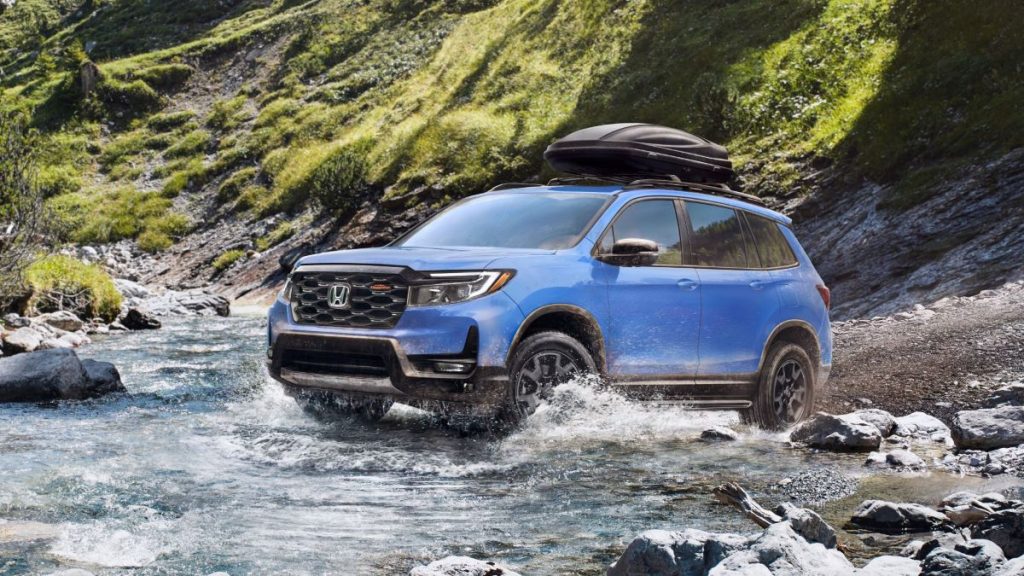
The 2024 Passport does not escape the need for due diligence. Even a newer used vehicle should be checked for completed recalls, regular oil changes, transmission servicing, and signs of accident or towing-related damage. Mileage can also vary substantially between individual examples.
What makes the 2024 model worth including is the combination of newer vehicle age, a familiar V6 powertrain, and favorable reliability information. For buyers who want a modern Passport while limiting the amount of time the vehicle has spent on the road, this model year provides a useful point of comparison against older examples.
5. 2020 Honda Passport
The 2020 Passport earns a place in this group for a different reason than the newer examples. It combines the relatively mature second year of the modern Passport with favorable reliability information and the same naturally aspirated V6 that defines the model.
Consumer Reports rates the 2020 Passport as more reliable than other cars from the same model year, giving used buyers a positive data point when comparing it with other early Passport models.
Mechanically, there is little mystery about what sits under the hood. Honda equipped the 2020 Passport with a 3.5-liter V6 producing 280 horsepower and 262 lb-ft of torque, paired with a nine-speed automatic transmission.
Buyers could choose front-wheel drive or Honda’s available i-VTM4 all-wheel-drive system. The latter also helped make the Passport suitable for drivers who regularly encounter snow, gravel roads, or other low-traction conditions.
The interior is another reason this year remains relevant. The Passport was designed as a two-row SUV, so Honda could devote more space to the rear passengers and cargo area rather than squeezing in a third row.
That gives the 2020 model a practical advantage for buyers who want substantial interior room but do not need seating for seven or eight people.
Its age now works in both directions. A 2020 Passport can cost less than a newer equivalent, but a used example has had more time to accumulate mileage and wear.
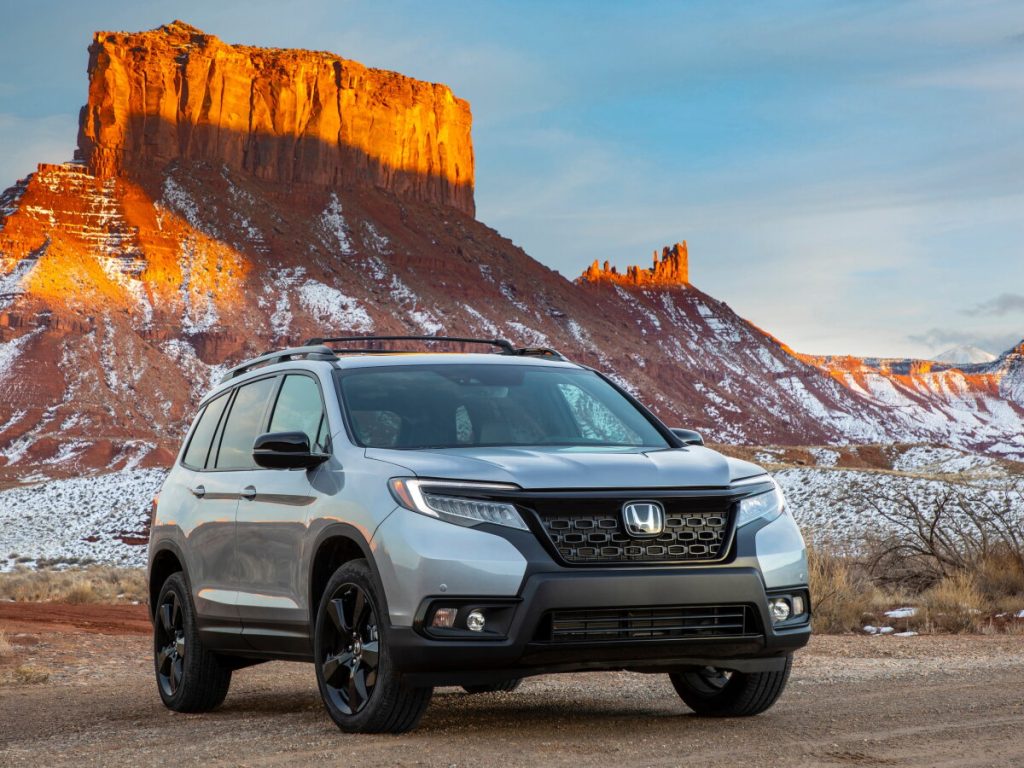
Maintenance records therefore matter considerably. A buyer should inspect the transmission operation, brakes, suspension, tires, and drivetrain, particularly on an all-wheel-drive vehicle that has been driven extensively in difficult conditions.
The 2020 Passport’s favorable reliability data, proven V6 configuration, and useful two-row design make it a year worth putting on a used-car shopping list.
5 Honda Passport Years to Skip
1. 2019 Honda Passport
The 2019 Passport deserves caution primarily because it was the first model year of Honda’s modern return of the nameplate.
Consumer Reports rates the 2019 Passport as having about average reliability compared with other vehicles from the same model year and lists six NHTSA recalls. That combination makes the launch-year Passport less straightforward than later examples from the same generation.
The SUV itself brought a familiar Honda formula to a new market position. It used a 3.5-liter V6 and a nine-speed automatic transmission, with front-wheel drive or available all-wheel drive. The basic mechanical package proved durable enough to continue into subsequent years, but the first production year accumulated several recall campaigns.
Among the documented recalls was a fuel-pump issue affecting certain Honda vehicles. A separate recall involved the rearview camera display, while other campaigns addressed components that could affect vehicle operation or safety.
Having recalls does not automatically make a used vehicle unsafe if the required repairs were completed, but the number of campaigns makes a VIN check particularly important for a 2019 example.
Age is now another consideration. A 2019 Passport is no longer a particularly new vehicle, and some examples have accumulated significant mileage. Buyers should pay attention to transmission behavior, suspension condition, brakes, tires, and evidence of previous towing or rough use.
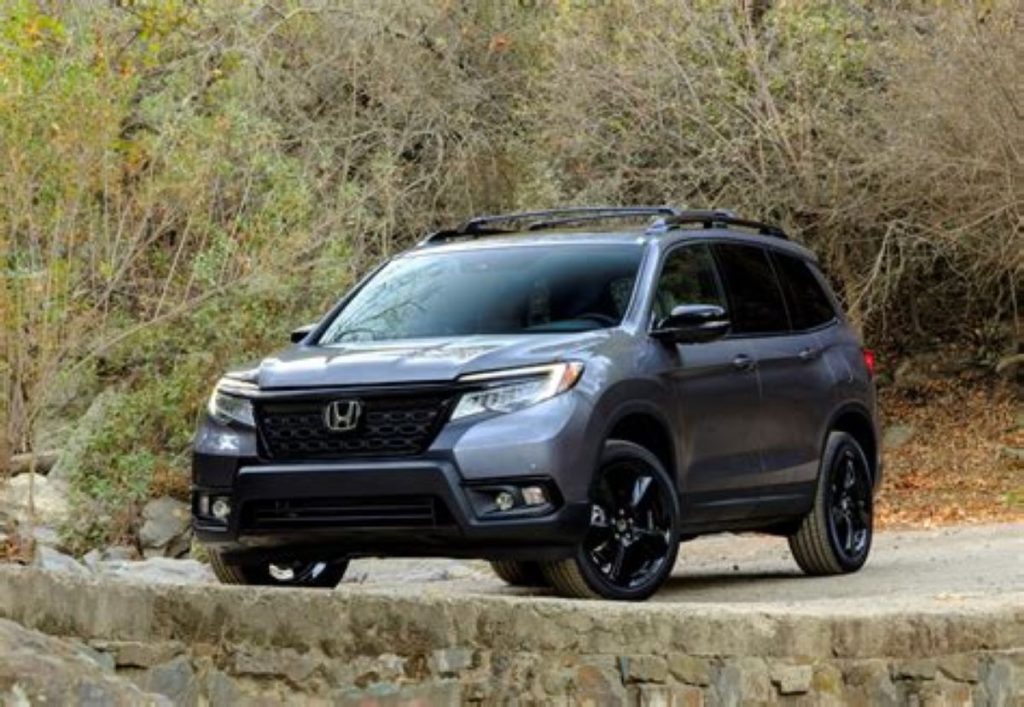
The 2019 Passport can still be a sensible used SUV when the vehicle has complete service records and documented recall repairs. It appears here because buyers have newer Passport years to choose from, including later examples with more favorable reliability data.
2. 2002 Honda Passport
The 2002 Passport requires a completely different kind of caution. It was the final model year of the original Passport sold in the United States, making it vastly older than every modern Passport discussed elsewhere in this article. At this point, the vehicle’s age is itself one of the most important factors a used buyer has to consider.
The first-generation Passport was based on the Isuzu Rodeo rather than the Honda Pilot architecture used by today’s Passport. It was offered as a traditional SUV with a body-on-frame-style construction and available four-wheel drive, giving it a substantially different driving character from the current crossover-based Passport.
For a vehicle more than two decades old, ordinary component aging becomes difficult to ignore. Suspension bushings, hoses, seals, brake components, cooling-system parts, and electrical equipment can deteriorate even when mileage is relatively modest.
Rust can create additional problems, particularly on vehicles that have spent years in regions where road salt is commonly used.
The drivetrain also needs a close inspection. Buyers should look for evidence of regular fluid changes, cooling-system maintenance, and previous transmission or drivetrain repairs. A vehicle this old may have passed through several owners, so a complete service history can be difficult to establish.
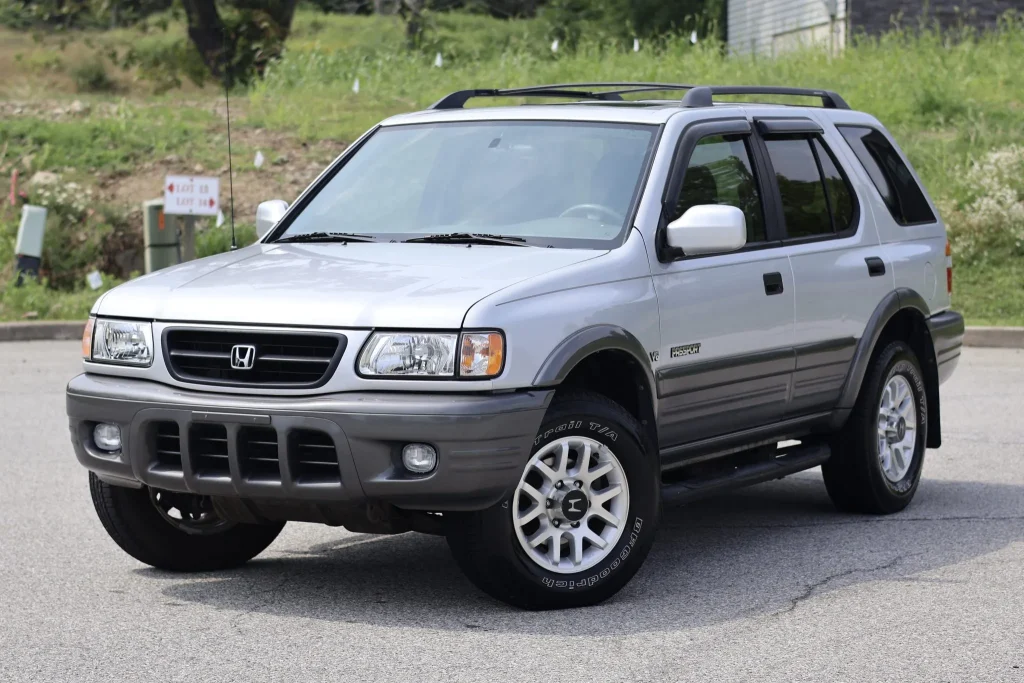
The 2002 Passport is not being included because every surviving example is necessarily unreliable. Some may have been exceptionally well maintained.
The problem is that buyers seeking predictable daily transportation face considerably more age-related uncertainty than they would with a modern Passport. The vehicle’s low purchase price can therefore be misleading if substantial deferred maintenance appears after the sale.
3. 1999 Honda Passport
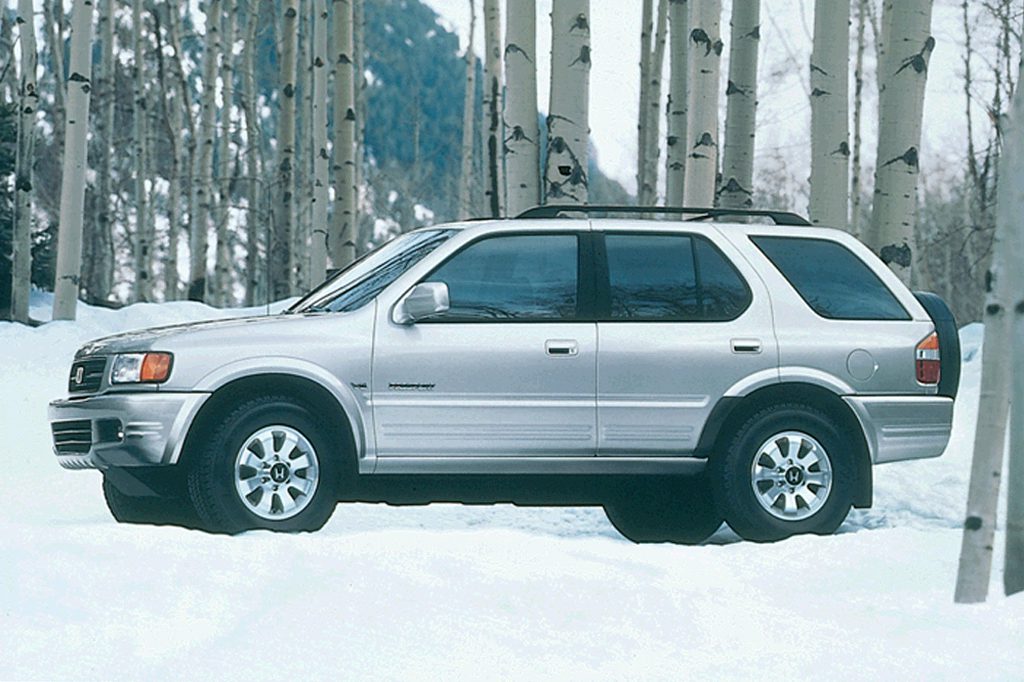
The 1999 Passport is another first-generation example that presents significant age-related considerations. Unlike the modern Passport, which was designed as a two-row crossover SUV, the 1999 model came from an era when the Passport shared its engineering roots with Isuzu’s SUV lineup.
That distinction matters because buyers are not simply purchasing an older version of today’s Honda SUV. They are buying a fundamentally different vehicle whose components and support requirements reflect late-1990s engineering. After more than 25 years, finding an example with an untouched original mechanical condition is increasingly unlikely.
Rust deserves particular attention. The frame and underbody should be inspected carefully, especially if the vehicle has spent much of its life in a northern state. Corrosion can affect suspension mounting points, brake lines, fuel-system components, and other areas that are expensive or difficult to repair.
The engine and transmission should also be evaluated independently rather than assuming Honda reliability will protect against age. Look for fluid leaks, overheating history, transmission hesitation, abnormal drivetrain noises, and evidence that previous owners kept up with cooling system and fluid maintenance.
Another challenge is simply finding replacement parts and qualified service for an older vehicle. Some routine components remain easy to source, but unusual trim, electronics, and body parts can become increasingly difficult to locate.
A 1999 Passport can appeal to enthusiasts who specifically want an older truck-style SUV, but for someone simply seeking an affordable, dependable daily driver, its age introduces too many variables to ignore.
A carefully documented example can work, but buyers should approach it as an old vehicle rather than a conventional used Honda.
4. 2000 Honda Passport
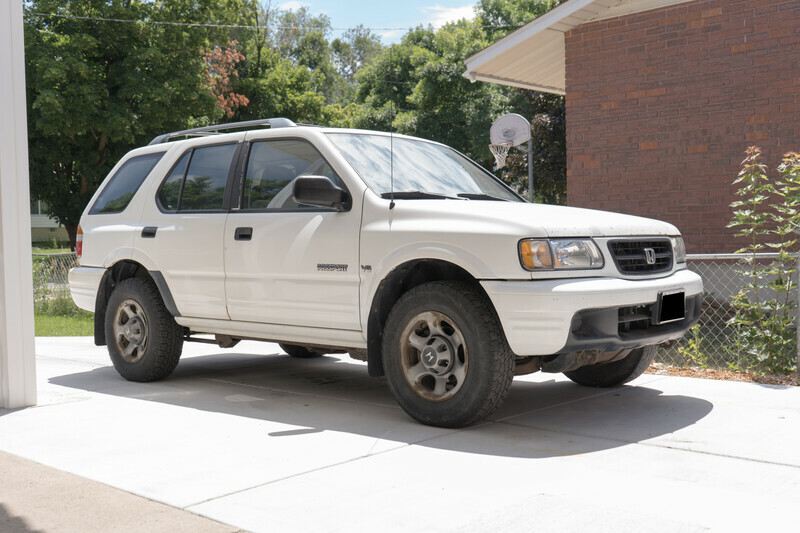
The 2000 Passport sits near the end of the original generation, but that does not eliminate the problems associated with age. By today’s standards, this is a 26-year-old SUV, so condition matters far more than the Honda badge or the relatively low odometer reading an individual vehicle might display.
The original Passport’s traditional SUV design can actually make it appealing to a specific group of buyers. Its higher ground clearance and available four-wheel-drive configuration gave it capabilities that differ from the newer Passport. However, those characteristics also mean some examples may have experienced harder use than a typical urban crossover.
A used 2000 model should receive an extensive underbody inspection. Frame corrosion, worn suspension components, damaged exhaust parts, and deteriorated brake lines can all turn an inexpensive purchase into a substantial repair project. Rust is especially important because cosmetic repairs can hide structural corrosion underneath.
The drivetrain deserves equal attention. Buyers should test the automatic transmission for smooth engagement and shifting, check for leaks, and examine the cooling system for evidence of neglected maintenance.
Four-wheel-drive components should also be tested rather than simply assuming that the system works because the dashboard indicates engagement.
Interior condition can provide clues about how the vehicle was treated. Excessive wear on the driver’s seat, pedals, and controls compared with the claimed mileage may warrant further investigation, particularly when maintenance records are incomplete.
This model year is therefore less about a single mechanical defect and more about accumulated age. Someone specifically looking for a vintage SUV may find a 2000 Passport interesting, but a buyer seeking inexpensive modern transportation should recognize that repairs can quickly exceed the vehicle’s purchase price.
5. 1998 Honda Passport
The 1998 Passport completes this group because it combines the risks of an older first-generation SUV with the realities of owning a vehicle approaching three decades of age. At this point, even a Passport that has been maintained properly will have many components that are far beyond the age range of a typical modern used vehicle.
The biggest concern is not necessarily one particular failure. It is the number of systems that can require attention simultaneously. Cooling hoses, belts, seals, suspension components, brake lines, fuel-system parts, and electrical connections can all deteriorate with age. A buyer therefore needs to look beyond the engine and transmission when evaluating one.
Rust inspection is particularly important. The underbody, frame areas, suspension attachment points, and brake lines should be checked carefully. A clean-looking exterior does not guarantee that the underside has remained in good condition after decades of exposure to moisture and road salt.
Maintenance documentation can make a major difference. An example with receipts showing regular fluid services, cooling-system work, suspension replacement, and rust prevention is considerably easier to evaluate than one being sold with little information about its past.
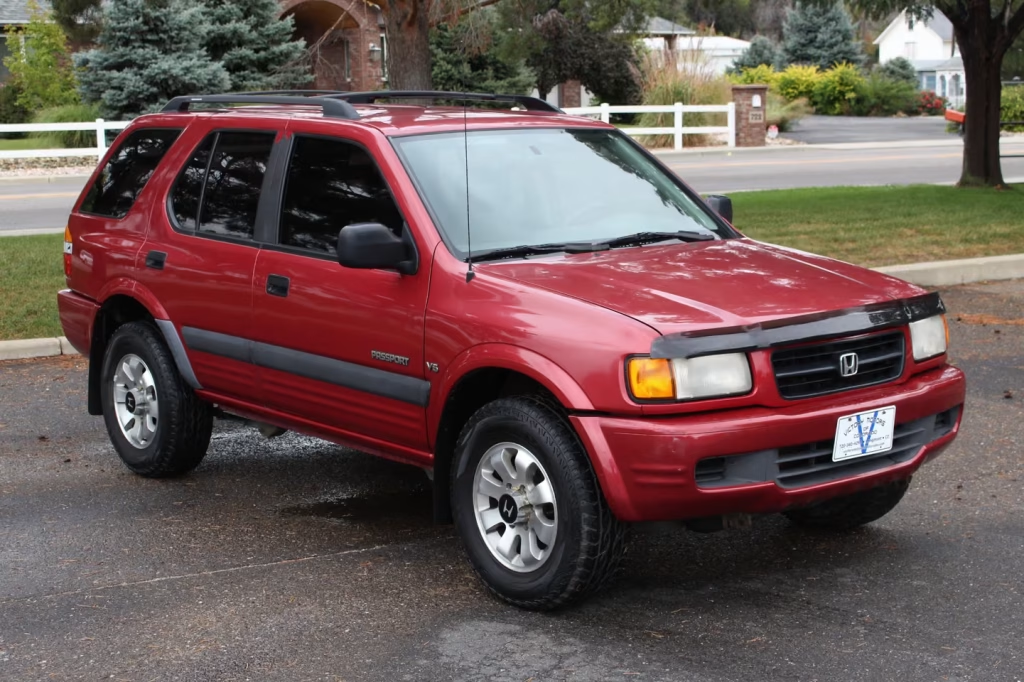
The 1998 Passport’s traditional SUV construction may appeal to buyers who want an inexpensive project vehicle or an older four-wheel-drive SUV. It is a different proposition for someone who wants dependable transportation with predictable running costs.
That is the central reason for its inclusion here. The vehicle’s age creates uncertainty that newer Passport models simply do not face to the same degree. Anyone considering one should budget for repairs before purchase rather than assuming a low sale price represents the true cost of ownership.
