
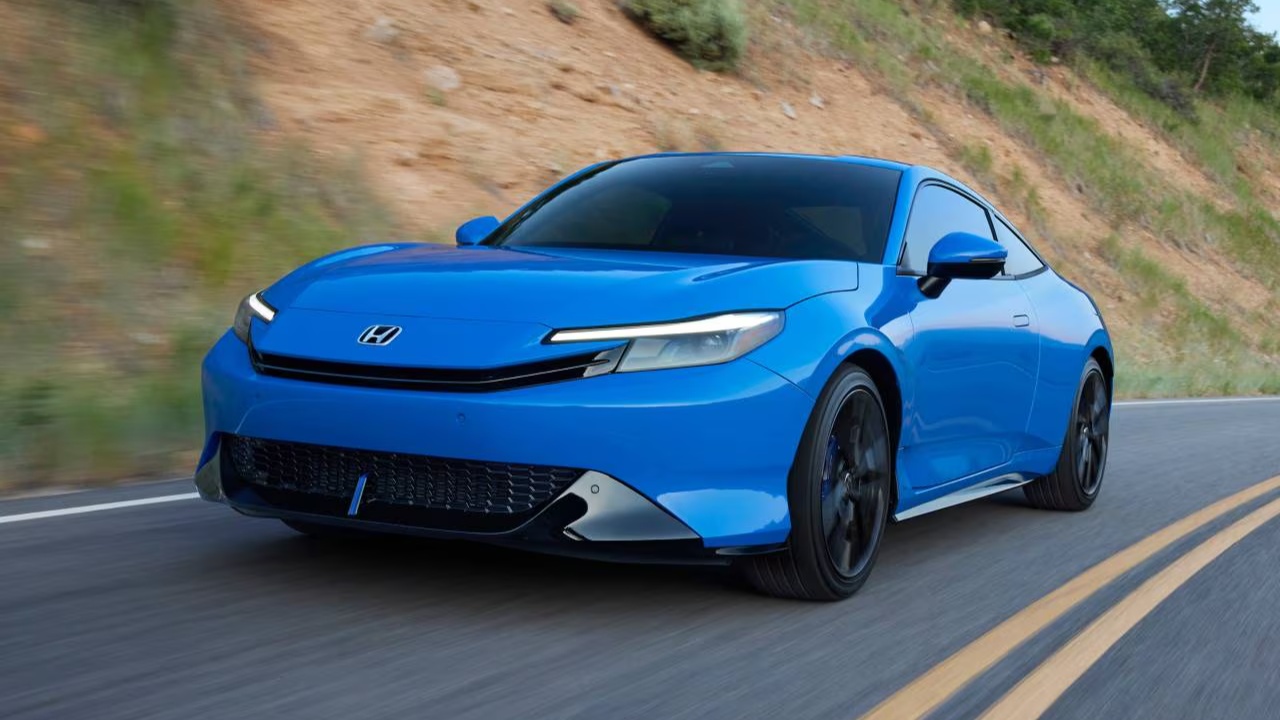
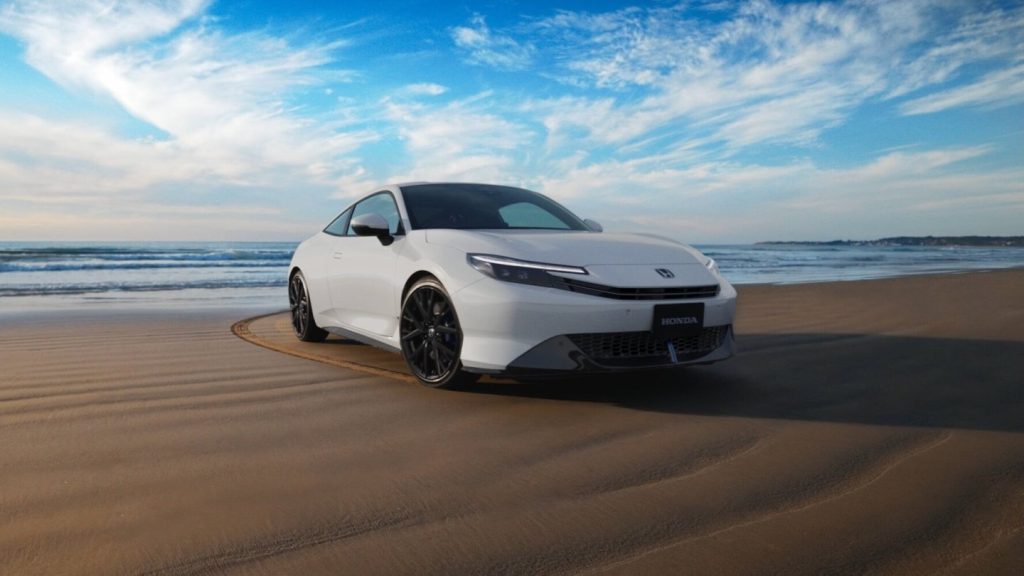
The 2027 Honda Prelude Hybrid looks like a straightforward return of a famous sports coupe, but its clever details go beyond the styling. Honda has packed the new Prelude with technology and chassis hardware that can be easy to overlook during a quick drive.
Its hybrid system can simulate gear changes, the drive modes alter how the car responds, and the hatchback body provides more practical cargo access than the coupe shape suggests.
Inside, Google’s built-in wireless smartphone connectivity and a customizable digital cluster add another layer of convenience. These eight hidden features show how Honda combined everyday usability with the Prelude’s performance-focused character.
1. S+ Shift Can Simulate Gear Changes in a Hybrid
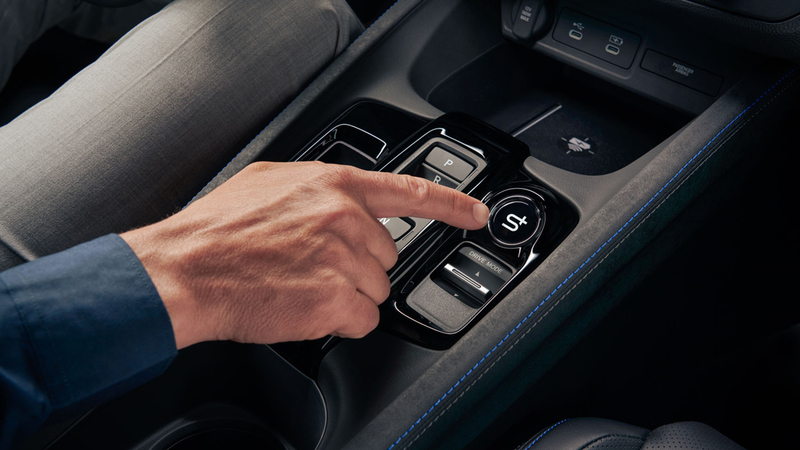
One of the Prelude Hybrid’s most unusual features is the Honda S+ Shift, because it changes how the hybrid powertrain feels without using a conventional multi-speed automatic transmission.
Honda designed the system to simulate the sensation of gear changes, allowing the driver to experience changes in engine sound, simulated shift points, and paddle-shifter inputs. The result is intended to make the two-motor hybrid system feel more like a traditional performance drivetrain.
The feature is activated through a dedicated S+ Shift control, and the steering-wheel paddles allow the driver to interact with the simulated shifts. Honda says the system simulates the behavior of a dual-clutch transmission, even though the Prelude does not actually use a conventional dual-clutch gearbox.
That distinction is important because S+ Shift is essentially software and control logic working with the hybrid system to create a more engaging response.
The system also works with the Prelude’s four drive modes, Comfort, GT, Sport, and Individual. Sport mode gives the car a sharper and more responsive character, while Individual lets drivers tailor certain settings to their preferences. As a result, the Prelude can deliver a noticeably different driving experience depending on the selected mode.
For a hybrid coupe, this is a particularly interesting solution. Instead of asking buyers to choose between fuel efficiency and driver involvement, Honda has attempted to give the powertrain an additional layer of interaction. The 2027 U.S. Prelude produces 200 horsepower and is rated at 46 mpg city and 41 mpg highway, according to Honda.
2. The Prelude’s Hatchback Creates More Practical Cargo Access
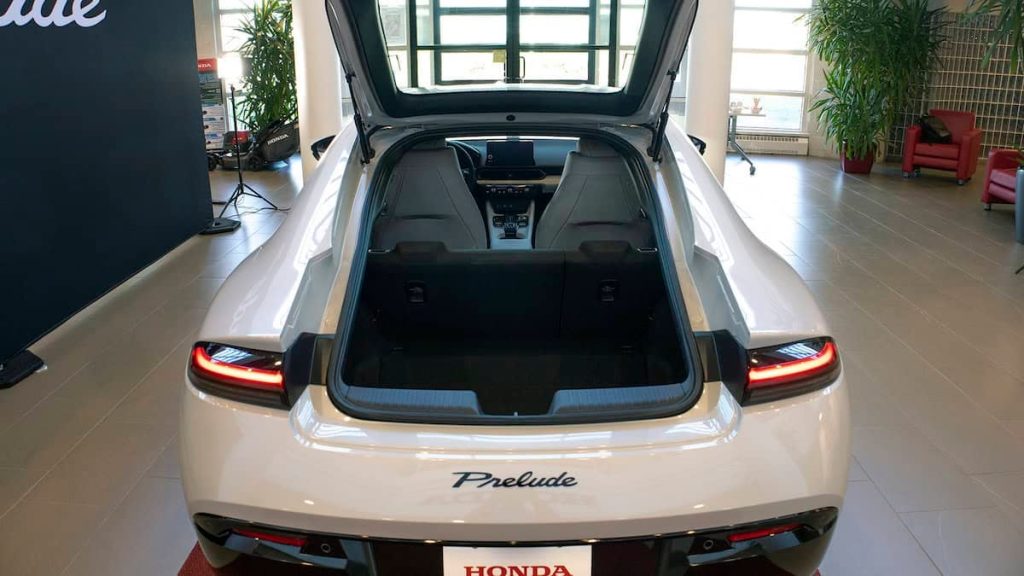
The Prelude may look like a traditional low-slung two-door coupe, but the rear body actually uses a hatchback design. That is an easy detail to miss when looking at the car from a distance, yet it makes a meaningful difference when the vehicle is being used outside of a weekend drive.
Honda specifically highlights the hatchback configuration as part of the Prelude’s cargo versatility. Rather than having a small conventional trunk opening, the large rear hatch lifts with the glass, creating a much wider opening through which owners can load luggage, bags, and other items.
The rear seatbacks also fold in a 60/40 split, allowing the cargo area to be expanded without sacrificing both rear seating positions. That arrangement gives the Prelude more flexibility than its sporty silhouette initially suggests. Someone can fold one section to carry a longer item while leaving the other rear seat available for a passenger.
Honda lists the 2027 Prelude with 15.1 cubic feet of cargo volume. That is a useful figure for a performance-oriented two-door, especially considering the car’s compact footprint and low roofline. The rear seats are not simply decorative either.
Honda designed the cabin to accommodate four occupants, although the rear seating area is naturally more compact than the front.
This is one of those features that becomes more valuable after ownership begins. A coupe buyer might initially think about the Prelude mainly as a driver’s car, but the hatch allows it to handle everyday errands without requiring a separate vehicle for modest cargo duties.
It is also consistent with the original Prelude’s grand-touring character. Honda has positioned the new model as something that can provide sporty driving enjoyment while remaining usable beyond the occasional back-road trip.
3. The Adaptive Dampers Quietly Change the Prelude’s Character
The Prelude’s adaptive damper system is one of the features that can be easy to overlook because it does not announce itself with an obvious piece of hardware.
Honda pairs the system with the car’s dual-axis front suspension and multi-link rear suspension, allowing the dampers to adjust their behavior according to the selected driving mode and road conditions. Honda specifically lists an Adaptive Damper System as standard equipment on the 2027 Prelude Hybrid.
The setup becomes more interesting when paired with the Prelude’s four drive modes, Comfort, GT, Sport, and Individual. Comfort is tuned for smoother, more relaxed everyday driving, while Sport gives the car quicker and sharper responses. This allows the Prelude to adjust its character based on the type of driving.
GT sits between those personalities, making it useful when the car is being driven over longer distances rather than pushed hard on a winding road.
Individual mode is where the feature becomes particularly useful for owners who do not want to accept a fixed package of settings. Honda allows the driver to create a personalized combination of characteristics rather than simply selecting one of the factory-defined personalities.
The system also complements the Prelude’s Brembo four-piston front brake calipers and dual-axis front suspension. Those components are intended to give the hybrid coupe more controlled responses during enthusiastic driving, while the adaptive dampers allow the chassis to remain usable when the road becomes less predictable.
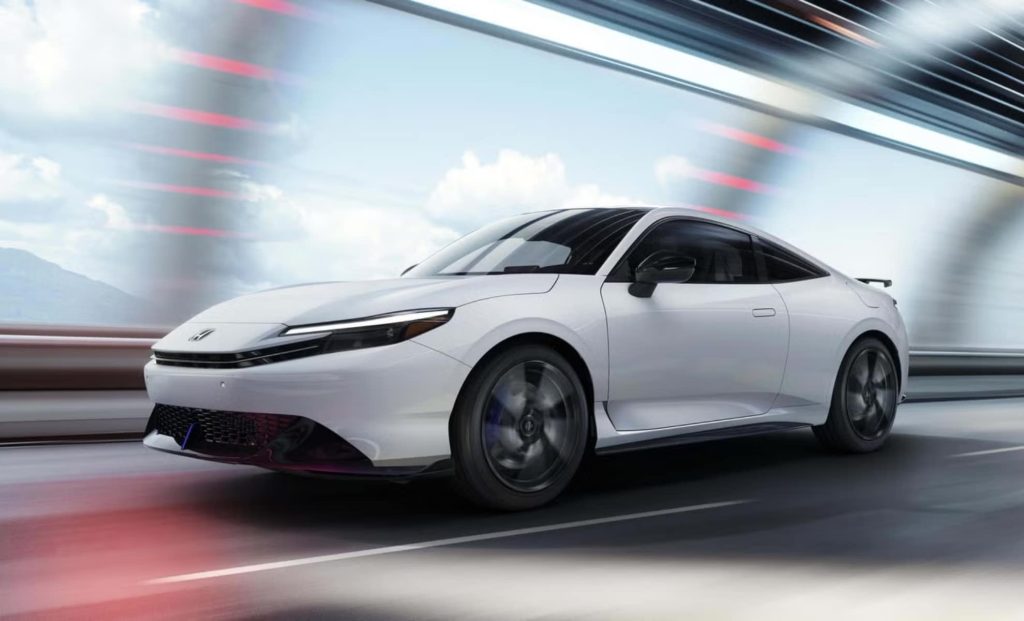
That dual-purpose character is important because Honda has positioned the Prelude as a grand-touring coupe rather than an uncompromising track car. The adaptive dampers help bridge those two roles, giving the driver a way to change the car’s behavior without making a physical adjustment to the suspension.
4. Individual Mode Lets You Create a Personal Driving Setup
The Prelude’s individual drive mode is more significant than its name suggests. Rather than forcing the driver to choose between four preset personalities, Honda gives owners a way to personalize the car’s behavior. The system is part of the Prelude’s four-mode setup, which also includes Comfort, GT, and Sport.
That matters because the ideal settings for a daily commute are not necessarily the same ones a driver would want on a winding road.
Comfort can prioritize a calmer experience, while Sport is intended to make the Prelude feel more responsive. Individual provides another option for drivers who want characteristics from different modes combined into their own preferred configuration.
Honda’s approach fits the Prelude particularly well because the car uses a hybrid powertrain that behaves differently from a conventional sports coupe.
The two-motor system and direct-drive arrangement do not rely on a traditional multi-speed transmission, so Honda uses electronic controls, drive modes, and S+. Shift to give the driver more control over how the car responds.
The feature is also useful for someone who wants a more comfortable setting without giving up the sharper responses available from the sportier modes. Instead of repeatedly switching between presets, the driver can establish a preferred configuration and return to it.
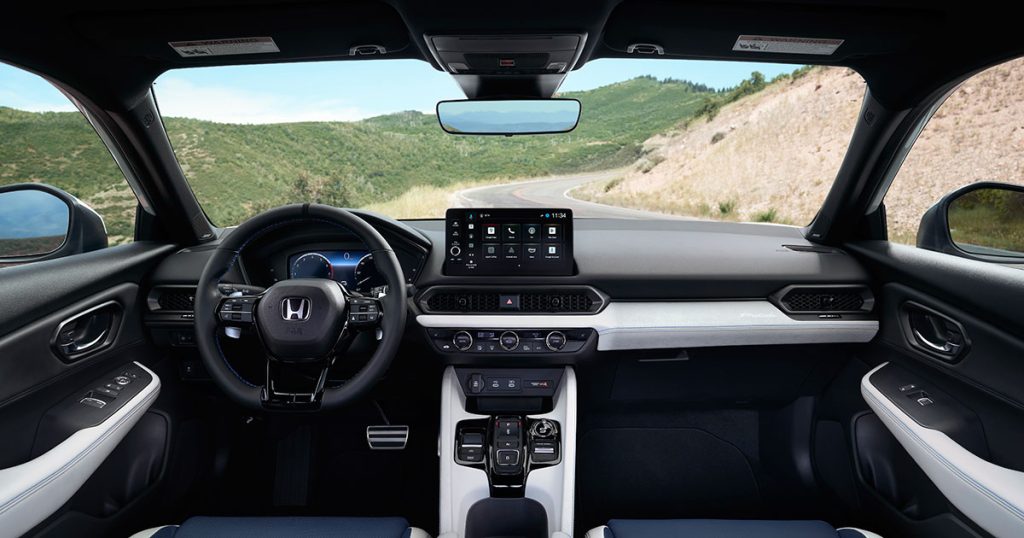
It is a small detail, but it reinforces the Prelude’s driver-focused philosophy. Honda has not treated the hybrid system as something that should simply operate in the background. The company has given the driver several ways to influence how the powertrain and chassis feel.
For a car that combines efficiency with performance hardware, that degree of personalization is one of the Prelude’s more interesting hidden capabilities.
5. Google Built-In Can Use Gemini for Hands-Free Assistance
One of the Prelude’s less obvious technology features is built into its standard 9-inch touchscreen. Honda equips the 2027 Prelude with Google built-in, bringing services such as Google Maps and Google Play directly into the infotainment system. This gives drivers access to familiar Google features without relying entirely on a connected smartphone.
The system has also been upgraded with Google Gemini, allowing drivers to interact with the assistant using natural-language commands.
That means the driver does not have to rely exclusively on a connected smartphone for navigation or basic information. Google Maps operates through the vehicle’s own system, while Gemini can handle conversational requests.
Honda specifically gives examples such as finding a suitable stopping point, adjusting the air conditioning, and answering questions about the vehicle.
The distinction between this system and ordinary smartphone mirroring is important. Wireless Apple CarPlay and Android Auto are also available, so owners can still bring their preferred smartphone interface onto the display. Google built-in provides a separate, native option that operates through the Prelude’s infotainment system.
The setup also includes Alexa Built-in, Bluetooth connectivity, HondaLink services, and a wireless phone charger. Those features turn what could have been a basic sports-coupe dashboard into a surprisingly comprehensive connected environment.
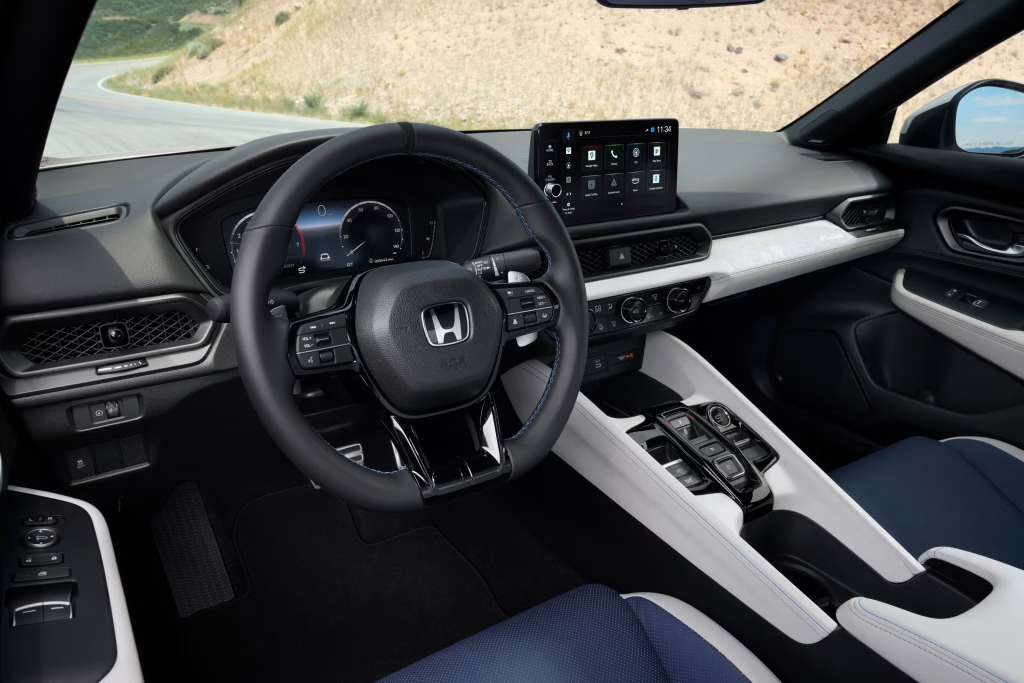
For a car with a performance-focused identity, this technology is useful because it keeps many everyday functions accessible without requiring the driver to physically handle a phone. That becomes particularly valuable when navigating unfamiliar roads or looking for a place to stop during a longer drive.
The 9-inch screen may not be the largest display in the segment, but Honda has packed considerable functionality behind it.
6. The Prelude Has Active Noise Cancellation Despite Its Sporty Character
A sports coupe does not necessarily need to be loud inside the cabin, and Honda has given the Prelude Active Noise Cancellation to make longer drives more comfortable. The system is easy to miss because no special switch or visible component announces its presence. It works electronically in the background as part of the vehicle’s cabin refinement.
Active Noise Cancellation uses the vehicle’s audio hardware to counter unwanted low-frequency sounds. Rather than simply adding more insulation and weight, the system can electronically reduce certain noises reaching occupants.
That is particularly useful in a hybrid coupe because Honda wants the Prelude to function as a grand-touring car as well as a sporty two-door.
The system works alongside other measures intended to make the cabin comfortable, including the Prelude’s dual-zone automatic climate control, heated front seats, and leather-trimmed sport seats. Honda also equips the car with an eight-speaker Bose premium audio system with a dedicated subwoofer.
There is an interesting contrast here. Honda has deliberately engineered the Prelude to produce a more engaging experience through features such as S+ Shift and Active Sound Control, yet it has also included technology designed to suppress unwanted noise. Those systems serve different purposes.
Active sound control can contribute to the driving experience, while active noise cancellation works to reduce undesirable background sound.
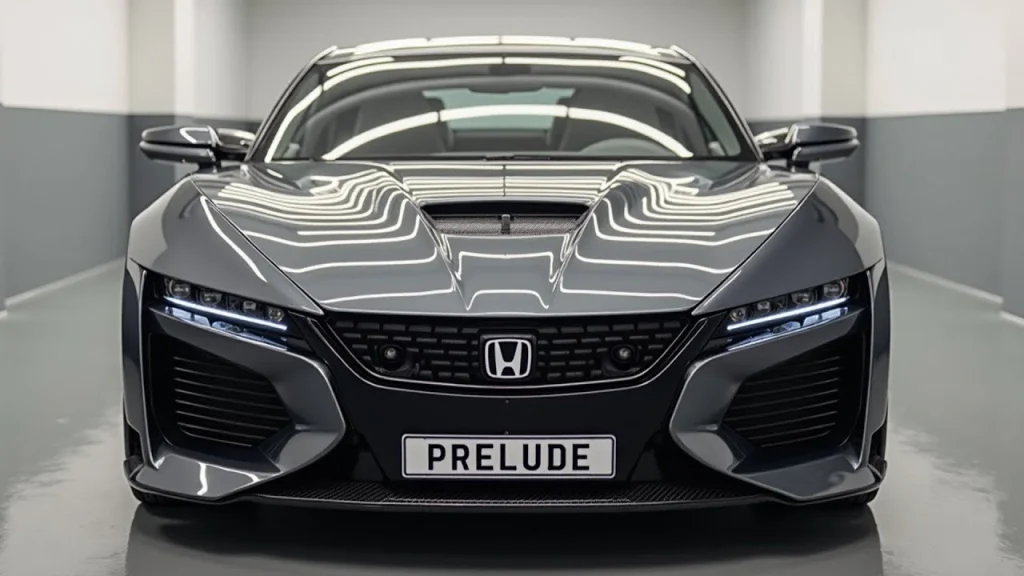
That combination makes sense for a car positioned between a conventional commuter and a hardcore performance coupe. The Prelude can become more expressive when the driver selects a sportier setting, but it does not have to remain noisy during a normal highway journey.
For buyers who plan to use the Prelude regularly rather than only on weekends, this subtle feature could be one of the cabin’s most useful additions.
7. The Digital Instrument Cluster Can Be Customized for Different Driving Modes
The Prelude’s 10.2-inch digital instrument cluster is more than a conventional speedometer replacement. Honda designed the display to provide customizable driving information, while the information presented can change with the car’s selected driving mode.
That gives the driver a way to keep track of the information that matters without relying entirely on the center touchscreen.
The setup becomes more notable because the Prelude offers four selectable drive modes, Comfort, GT, Sport, and Individual. Each setting changes the car’s driving character, while the digital display complements those adjustments by keeping the driver informed and engaged. Together, these features give the Prelude a more personalized driving experience.
Instead of treating the instrument panel as a static collection of gauges, Honda uses it as a configurable interface for the hybrid coupe.
The system also keeps important information directly in front of the driver. That includes vehicle speed and other operating information, while the center 9-inch touchscreen handles navigation, entertainment, and connected functions. Separating those jobs reduces the need to look away from the road to find basic driving information.
Another detail that complements the Prelude’s sporty character is its flat-bottom steering wheel, which places illuminated controls within easy reach. Behind the wheel are S+ Shift alloy paddles that let the driver control the simulated shifting system without taking their hands far from the steering wheel or reaching toward the center console.
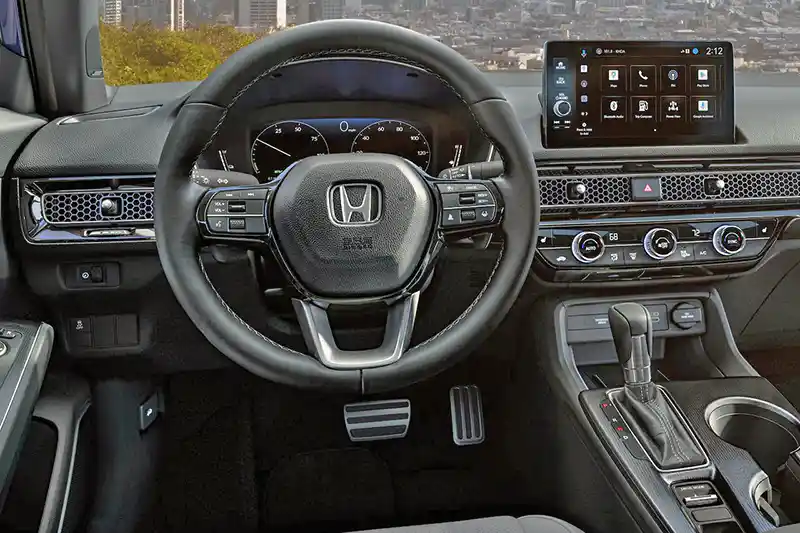
It is an understated feature, but one that becomes more useful the longer the car is driven. The Prelude combines a hybrid powertrain with performance-oriented chassis hardware, and the customizable digital cluster helps bring those different elements together in a single driver-focused display.
8. Walk Away Auto Lock Can Lock the Prelude Without Touching the Key Fob
One of the Prelude’s easiest convenience features to overlook is Smart Entry with Walk Away Auto Lock. Once the key fob is detected by the driver, the system allows the vehicle to be unlocked without manually pressing a button on the remote.
The same technology can automatically lock the Prelude after the driver walks away. Honda lists Smart Entry with Walk Away Auto Lock as standard equipment on the 2027 Prelude.
The advantage becomes apparent during everyday use. Imagine leaving the car after parking while carrying a phone, bag, or other items. Instead of stopping to press the lock button on the key fob, the driver can simply walk away with the key.
The vehicle detects that the key has moved beyond the appropriate range and automatically secures the doors.
It is a small convenience, but it removes one of those repetitive tasks that drivers perform hundreds of times during ownership. There is no need to remember whether the remote was pressed after closing the door.
Honda combines the system with push-button start, remote engine start, and an automatic-dimming rearview mirror, giving the relatively compact coupe a collection of convenience equipment that is more commonly associated with larger vehicles.
The feature also fits the Prelude’s emphasis on keeping the driver focused on the car rather than its controls. S+ Shift provides manual-style interaction when driving, while Smart Entry and Walk Away Auto Lock simplify the moments before and after the drive.
For a vehicle that starts at $42,400 for the 2027 U.S. model, these small touches help make the Prelude feel like a complete daily-use vehicle rather than a sports coupe designed only for occasional driving.
