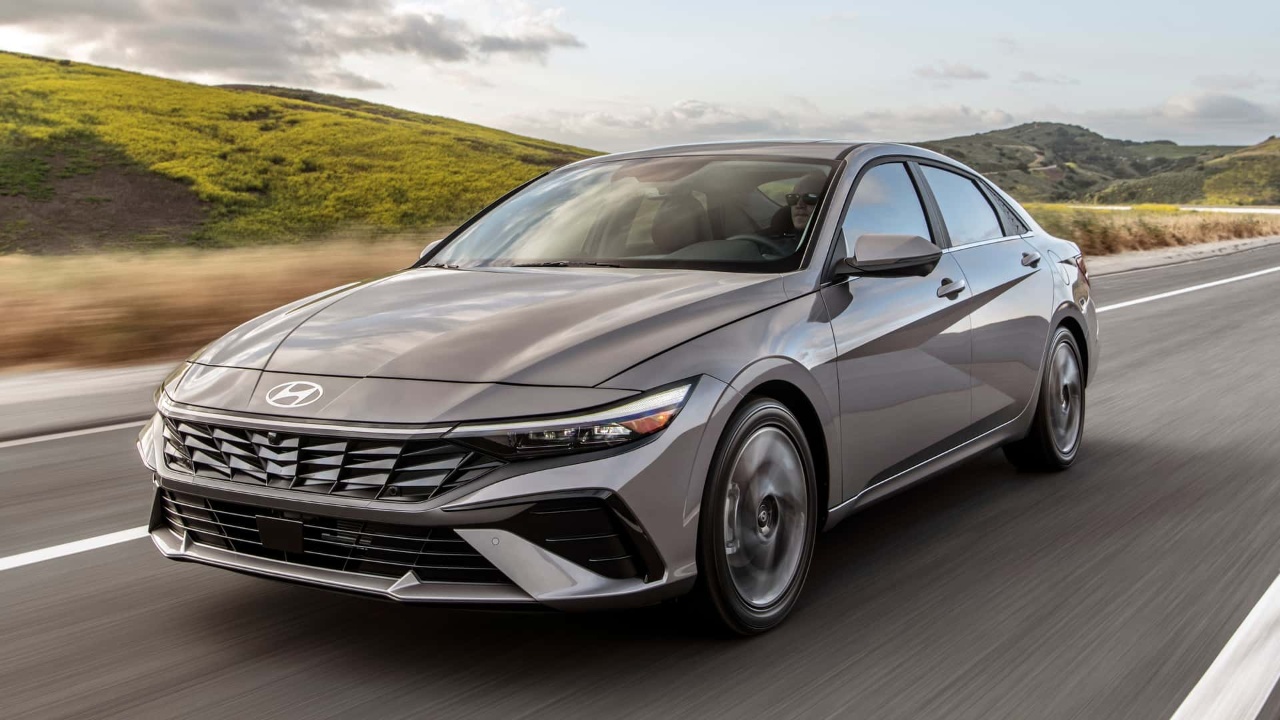
The number of vehicle thefts in the United States has fallen sharply, but one familiar name remains at the top of the list. The Hyundai Elantra was America’s most stolen vehicle in 2025, with 21,732 thefts reported nationwide, according to the National Insurance Crime Bureau.
The Honda Accord ranked second with 17,797 reported thefts, followed closely by another Hyundai sedan, the Sonata, with 17,687. The figures come from NICB’s analysis of reported U.S. vehicle thefts for 2025, released in March 2026.
The ranking is notable because it comes during a period when vehicle theft has declined considerably across the country. A total of 659,880 vehicles were reported stolen in 2025, down 23.2% from 850,708 in 2024. NICB says that was the lowest level of vehicle theft in several decades. Yet the Elantra continued to stand out.
Its 21,732 thefts were not simply a product of the broader increase in vehicle crime seen during the pandemic years. The model has remained a frequent target even as total thefts have moved sharply lower.
For owners, that makes the latest NICB ranking worth paying attention to. A lower national theft rate does not necessarily mean every vehicle has the same risk, and the Elantra’s position shows why individual vehicle characteristics and security measures still matter.
Why the Elantra Remains a Major Theft Target
The Hyundai Elantra’s position at the top of the 2025 list is particularly notable because Hyundai and Kia vehicles became unusually prominent in U.S. theft statistics during the past several years.
The problem was linked to certain Hyundai and Kia vehicles that lacked electronic immobilizers, allowing thieves to exploit vulnerabilities in the vehicles’ ignition systems. Social media videos helped spread methods for stealing some affected vehicles, creating what became widely known as the “Kia Challenge.”
Automakers subsequently introduced software updates and other theft-prevention measures for affected vehicles.
NICB’s latest data show that those efforts are having an effect. Hyundai and Kia vehicles accounted for 14% of all reported vehicle thefts in 2025, down from 16% in 2024 and 21% in 2023. NICB specifically points to software updates and theft-prevention measures as factors contributing to the decline. But the reduction has not removed the problem completely.
The Elantra alone accounted for 21,732 reported thefts in 2025. The figure is substantially lower than the 31,712 Elantras stolen in 2024, according to NICB’s previous annual data, but the model still ranked first nationwide.
The difference demonstrates why the headline “vehicle thefts are falling” needs some context. National theft numbers can improve while particular models remain disproportionately targeted.
The Honda Accord provides an interesting comparison. It ranked second in 2025 with 17,797 thefts, meaning the Elantra was stolen 3,935 more times than the Accord. The Hyundai Sonata was only 110 thefts behind the Accord, while the Chevrolet Silverado 1500 followed with 16,764.
The rest of NICB’s 2025 top 10 included the Honda Civic with 12,725 thefts, the Kia Optima with 11,521, the Ford F-150 with 10,102, the Toyota Camry with 9,833, the Honda CR-V with 9,809, and the Nissan Altima with 8,445.
That mix is revealing because it includes both sedans and some of America’s most popular trucks and SUVs.
Popularity can matter. A vehicle with a large number of units on American roads can provide thieves with more opportunities, while some models can also have stronger demand in illegal parts markets.
NICB’s data do not establish that one specific factor explains every theft. Theft patterns vary by model year, location, security equipment, and the particular methods used by criminal groups.
The safest assumption for owners of a frequently targeted model is therefore not that every vehicle is equally vulnerable, but that additional precautions can reduce opportunities for theft.
What Elantra Owners Can Do to Protect Their Cars
The first step is also one of the simplest, making the vehicle more difficult to enter and drive away. NICB recommends parking in well-lit locations, where greater visibility may discourage thieves. Owners should also check that the windows are closed and the doors are locked whenever they leave the vehicle.
Drivers should never leave a vehicle running while unattended, even for a short period. NICB also recommends taking the keys with you whenever you leave the vehicle.
Those measures sound obvious, but theft can happen quickly when an unattended vehicle presents an easy opportunity.
Owners of affected Hyundai models should also check whether their particular vehicle is eligible for Hyundai’s anti-theft software update or other security measures. The exact protection available depends on the vehicle’s model year and equipment.
For additional protection, NICB recommends considering devices such as steering-wheel locks, audible alarms, kill switches, and tracking devices. These technologies provide additional layers of security rather than relying entirely on the vehicle’s factory equipment.
A steering-wheel lock, for example, makes it physically more difficult to drive the vehicle away even if someone manages to enter it. A tracking device can potentially help authorities locate the vehicle if it is stolen. Owners should also consider where the vehicle is parked overnight.
A secure garage is generally preferable to an isolated street location, although no parking location eliminates theft risk. When a garage is unavailable, a well-lit area with regular foot and vehicle traffic can provide another layer of deterrence.
The importance of these precautions becomes clearer when looking at the national numbers. NICB says a vehicle was still stolen approximately every 48 seconds in the United States during 2025, despite the historic decline.
That means the decline in theft should not create a false sense of security. The national trend is encouraging. But for someone who owns a vehicle that remains high on the theft list, the relevant question is not simply whether vehicle theft is falling nationwide. It is whether their particular car has protections that make it less attractive or more difficult to steal.
Owners have another important reason to take theft prevention seriously. Some stolen vehicles are never recovered.
NICB’s current vehicle-theft guidance says more than 642,000 vehicles were stolen in 2025 and that 21% were not recovered. The organization also notes that organized theft networks continue to adapt as prevention technology improves. That makes rapid reporting essential if a vehicle disappears.
Owners should contact law enforcement as soon as they discover the theft and then notify their insurance company. Having the vehicle identification number, license plate information, and other identifying details readily available can make the reporting process easier.
The 2025 theft ranking also provides a broader lesson about vehicle security. The Hyundai Elantra remains America’s most stolen vehicle even though total U.S. vehicle thefts have dropped to their lowest level in decades. That combination shows that national improvement does not eliminate model-specific risk.
For Hyundai Elantra owners, the best response is not panic. It is layered protection. Lock the vehicle, take the keys, avoid leaving it running, use secure parking whenever possible, verify whether applicable security updates have been completed, and consider additional anti-theft equipment.
NICB recommends these measures because thieves generally look for opportunities, and making a vehicle more difficult to steal can make another target more attractive.
The latest numbers ultimately tell two stories at the same time. America’s vehicle-theft problem has improved dramatically, with reported thefts falling from more than one million in 2023 to 659,880 in 2025. But within that much smaller total, the Hyundai Elantra remains the vehicle most frequently reported stolen.
With 21,732 thefts, it led the Honda Accord by nearly 4,000 vehicles. For Elantra owners, that statistic is a useful reminder that falling national crime numbers do not replace basic vehicle-security habits. The risk may be lower than it was during the theft surge, but taking a few extra precautions can still make a meaningful difference.