
When enthusiasts discuss Japanese sports cars, the conversation typically gravitates toward legendary names that have achieved cult status across the globe.
The Toyota Supra, Nissan Skyline GT-R, Mazda RX-7, and Honda NSX dominate collector garages and internet forums alike. These vehicles have earned their place in automotive history through motorsport victories, engineering innovation, and undeniable charisma. However, Japan’s automotive golden era produced far more than just these celebrated icons.
Beneath the surface of mainstream recognition lies a fascinating collection of sports cars that never achieved international fame, vehicles that remained confined to domestic markets or were produced in such limited numbers that they’ve largely disappeared from collective memory.
These overlooked machines represent some of Japan’s most ambitious engineering experiments, bold styling exercises, and passionate attempts to capture the essence of driving excitement during an era of unprecedented automotive enthusiasm.
This exploration celebrates ten such vehicles Japanese sports cars that deserve recognition beyond their homeland, machines that tell stories of ambition, innovation, and the pure joy of automotive enthusiasm.
These are the cars that enthusiasts have never heard of, the hidden gems waiting to be rediscovered by a new generation of collectors and historians who appreciate automotive excellence in all its forms.
1. Mazda AZ-1 (1992-1995)
The Mazda AZ-1 stands as one of the most audacious interpretations of Japan’s kei car regulations ever conceived. While most manufacturers approached the kei class with practical economy boxes, Mazda’s engineers asked a provocative question: what if we built a mid-engined supercar within these strict dimensional constraints?
The result was a pint-sized exotic that featured gullwing doors, a removable roof panel, and styling that wouldn’t look out of place in a science fiction film.
Measuring just 3,295mm in length and powered by a turbocharged 657cc three-cylinder engine producing 64 horsepower the maximum allowed under kei regulations the AZ-1 was technically modest on paper.
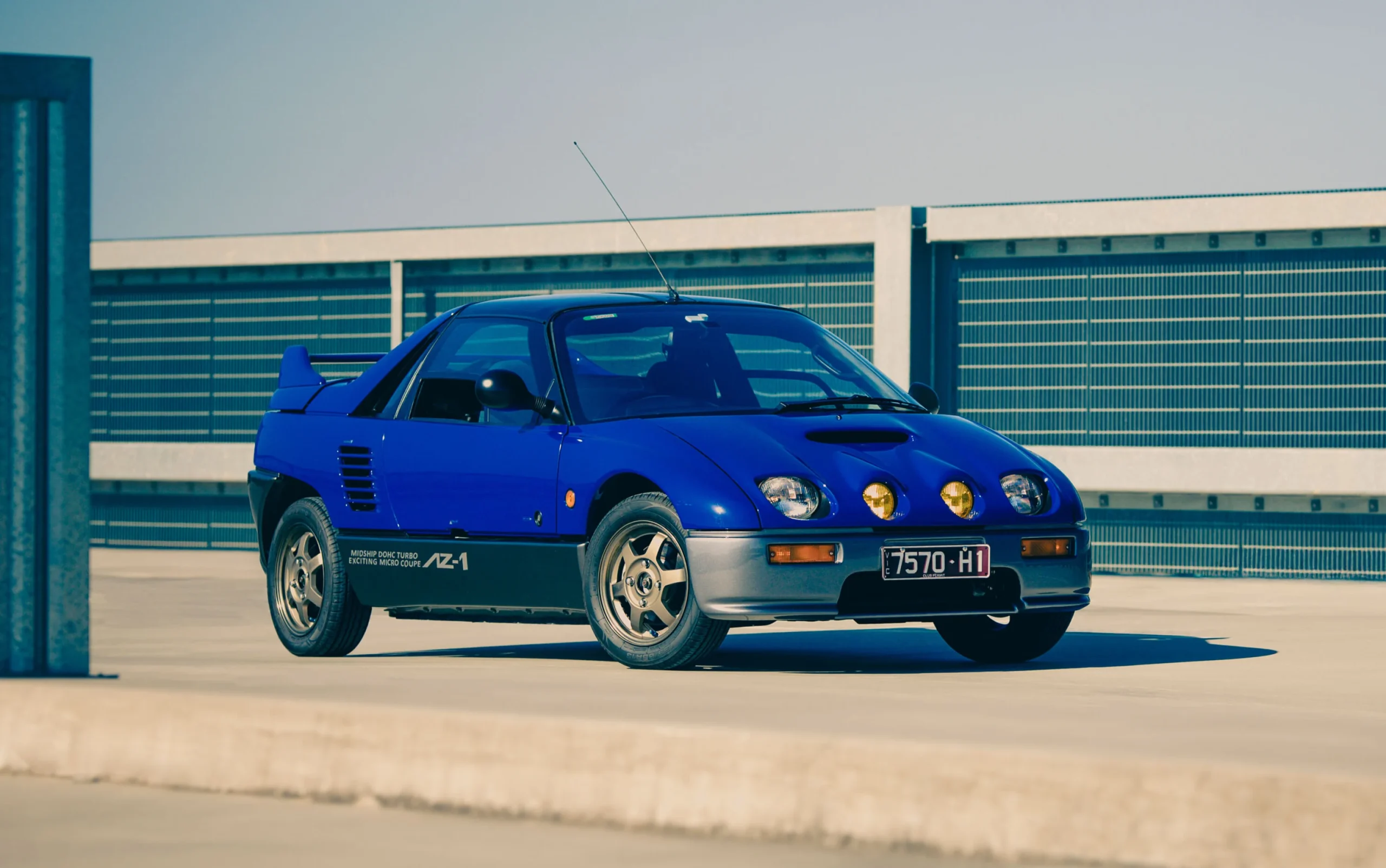
However, with a curb weight of merely 720 kilograms, the power-to-weight ratio delivered genuinely entertaining performance. The mid-engine layout provided exceptional balance, and the short wheelbase made the AZ-1 incredibly nimble through tight corners.
Drivers reported that the car felt far faster than its specifications suggested, a testament to Mazda’s engineering prowess. Today, the AZ-1 has achieved cult status among enthusiasts who appreciate its uncompromising approach to the kei sports car concept.
Values have risen steadily as collectors recognize the AZ-1 as representing a unique moment in automotive history when a manufacturer was willing to build something utterly impractical yet deeply passionate.
The AZ-1 proves that greatness isn’t measured solely in horsepower or lap times but in the courage to pursue a vision regardless of commercial viability.
2. Nissan Pulsar GTI-R (1990-1994)
Long before Subaru’s WRX and Mitsubishi’s Lancer Evolution became household names among rally enthusiasts, Nissan created the Pulsar GTI-R, a homologation special that transformed an ordinary compact hatchback into a fire-breathing rally weapon.
Built to satisfy World Rally Championship Group A regulations, the GTI-R required Nissan to produce 5,000 road-going examples, resulting in one of the most underappreciated all-wheel-drive performance cars of the 1990s.
At the heart of the GTI-R sat the legendary SR20DET engine, a 2.0-liter turbocharged inline-four producing 227 horsepower in factory specification.
This powerplant was already respected among enthusiasts for its robust construction and tuning potential, but in the GTI-R, it was paired with Nissan’s ATTESA all-wheel-drive system adapted from the Skyline GT-R.
The combination delivered devastating acceleration, with the GTI-R capable of sprinting to 100 km/h in approximately 5.4 seconds supercar territory for the early 1990s.
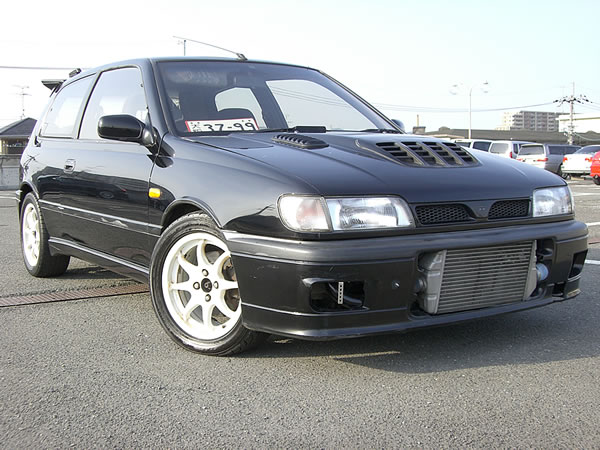
The GTI-R’s visual presence was impossible to ignore. Aggressive fender flares accommodated wider tracks and larger wheels, a massive hood scoop fed cool air to the top-mounted intercooler, and a prominent rear spoiler provided downforce at speed.
The stance was purposeful and muscular, clearly communicating the car’s performance intentions. Underneath, the suspension received significant upgrades including reinforced components, revised geometry, and increased wheel travel to handle rally stage punishment.
Despite its impressive capabilities, the GTI-R never achieved the recognition it deserved. Nissan chose not to export the model widely, limiting availability primarily to Japan and select European markets.
The timing also worked against it, as the GTI-R launched just as Nissan was preparing to introduce the R32 Skyline GT-R to international audiences, and marketing resources naturally flowed toward the more prestigious model.
Today, the Pulsar GTI-R remains one of the most overlooked rally legends, a technological tour de force that deserves far greater appreciation from the enthusiast community.
3. Mitsuoka Orochi (2006-2014)
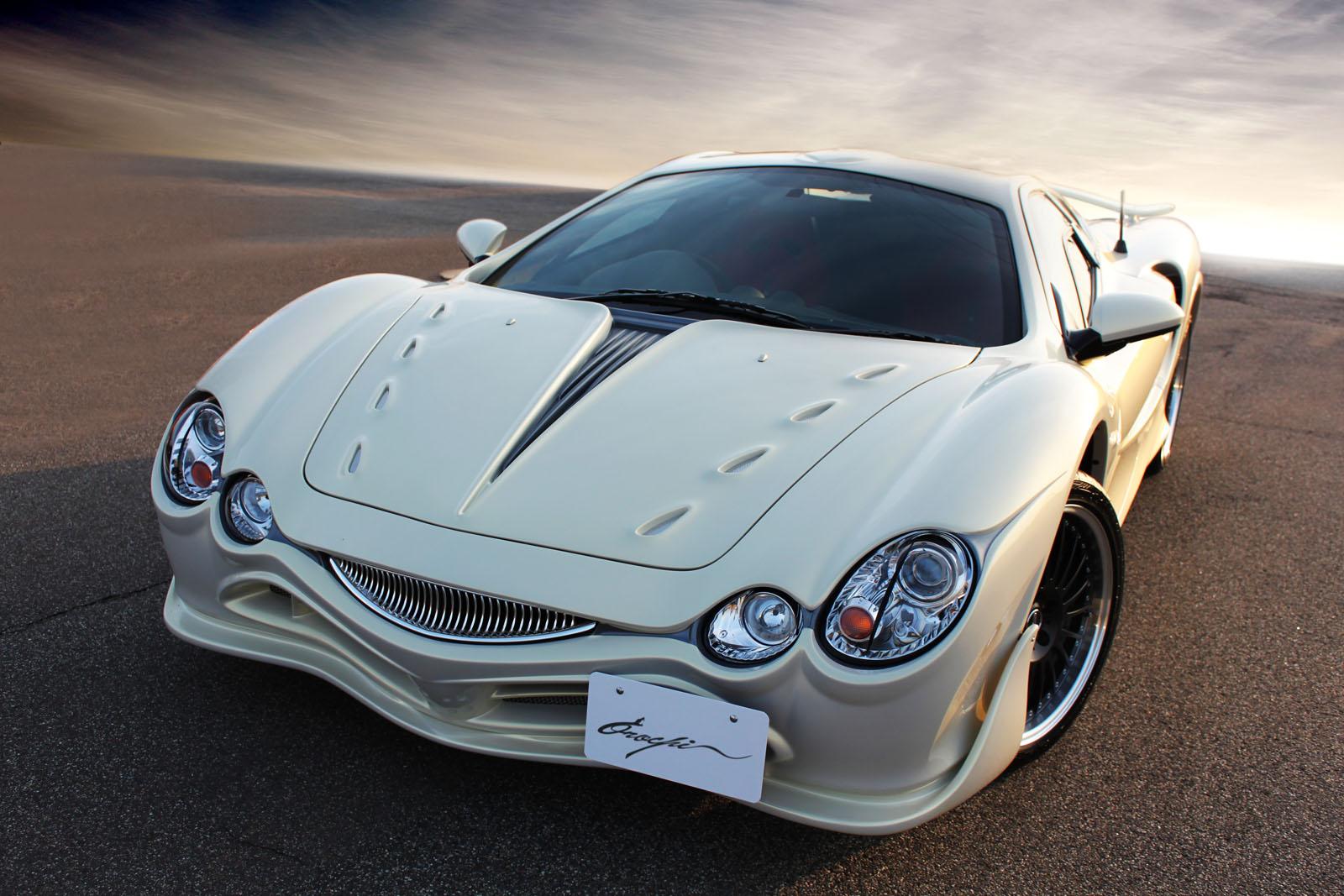
The Mitsuoka Orochi represents perhaps the most polarizing design to emerge from Japan in the 21st century, a sports car whose appearance divides opinion so sharply that indifference is simply impossible.
Named after an eight-headed dragon from Japanese mythology, the Orochi certainly captured that creature’s fearsome presence, featuring an aggressive front fascia with multiple air intakes, unusual proportions, and styling details that seemed to reference everything from supercars to marine life.
Mitsuoka Motor Company occupies a unique position in Japan’s automotive industry as a small-scale manufacturer specializing in retro-styled vehicles built on existing platforms.
The Orochi, however, represented the company’s most ambitious project an original sports car design with genuine supercar aspirations.
The development process spanned nearly a decade, beginning with a concept shown at the 2001 Tokyo Motor Show and eventually reaching limited production in 2006.
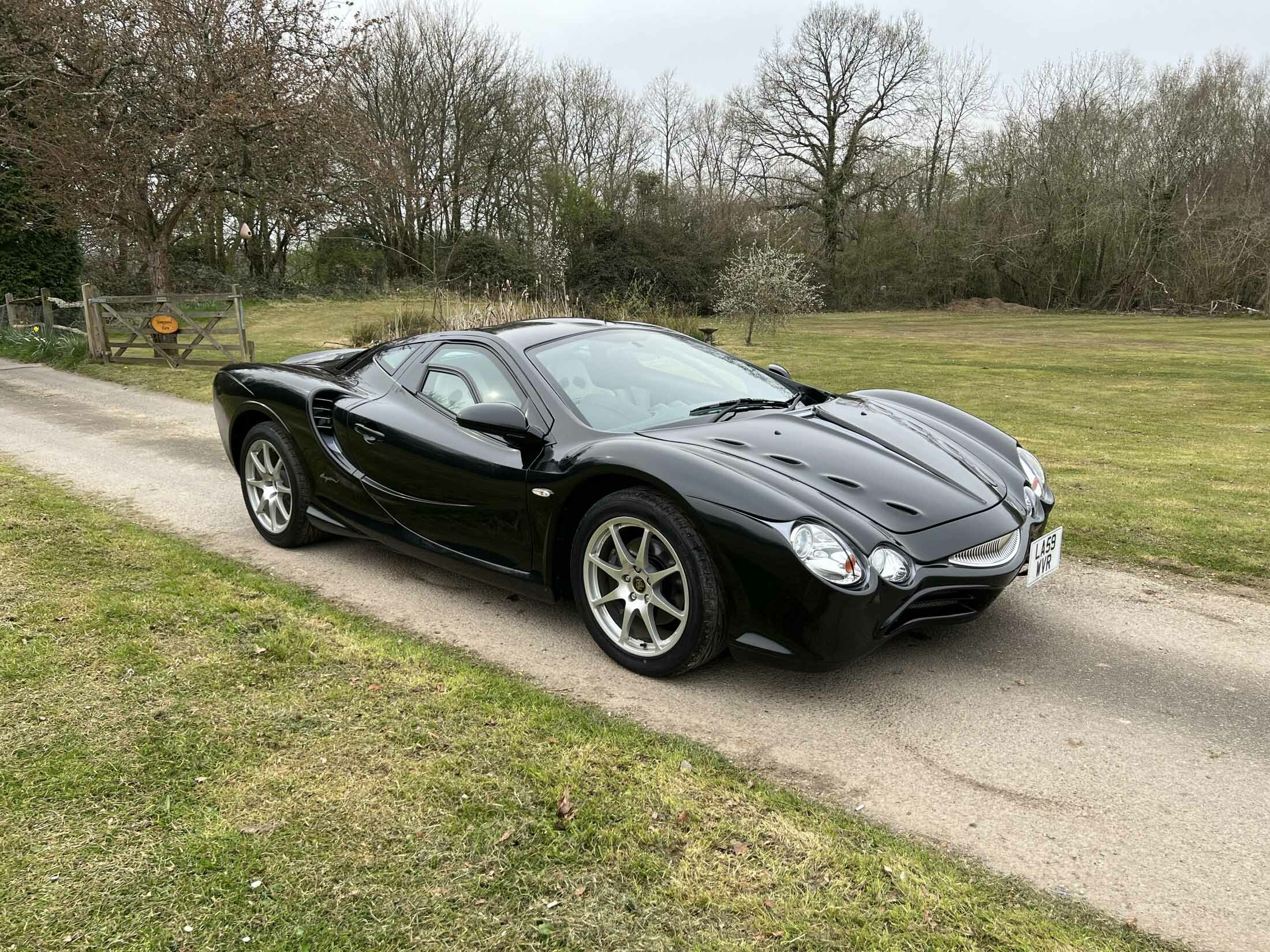
Underneath the controversial bodywork lay componentry borrowed from Honda, including a 3.3-liter V6 engine sourced from the Honda Legend producing 233 horsepower.
While this output might seem modest for a vehicle with supercar styling, the Orochi was never intended to compete on purely performance metrics.
Instead, Mitsuoka positioned it as an artistic statement, a rolling sculpture that celebrated design freedom and manufacturing independence.
The mid-mounted engine drove the rear wheels through a five-speed automatic transmission, a configuration that provided balanced handling characteristics if not neck-snapping acceleration.
Critics often dismissed the Orochi as merely a styling exercise without substance, pointing to its relatively modest performance and high price tag as evidence of misplaced priorities.
However, such assessments miss the point entirely. The Orochi succeeded as a statement of independence, proof that a tiny manufacturer could conceive, develop, and produce an original sports car outside the traditional automotive establishment.
In an industry increasingly dominated by corporate consolidation and risk-averse decision-making, the Orochi’s mere existence represented a victory.
Its controversial styling ensured it would never be forgotten, even if universal appreciation remained elusive. For enthusiasts who value individuality above conformity, the Mitsuoka Orochi stands as a fascinating footnote in Japanese automotive history.
4. Toyota Sera (1990-1996)
The Toyota Sera embodied Japan’s bubble-era optimism in automotive form, a compact coupe featuring butterfly doors and styling that seemed inspired by future visions of personal transportation.
While not a traditional sports car in terms of raw performance, the Sera demonstrated that innovation could manifest in unexpected ways, prioritizing design creativity and engineering novelty over brute horsepower.
The Sera’s most distinctive feature was undoubtedly its door design. Unlike conventional doors or even the gullwing configuration, the Sera employed butterfly doors that hinged at the A-pillar and swung upward and forward.
Glass panels extended from the doors into the roof, creating an exceptional sense of openness and visibility when closed. This design wasn’t purely aesthetic Toyota engineers recognized that the large glass areas improved driver awareness and made the cabin feel significantly more spacious than its compact dimensions suggested.
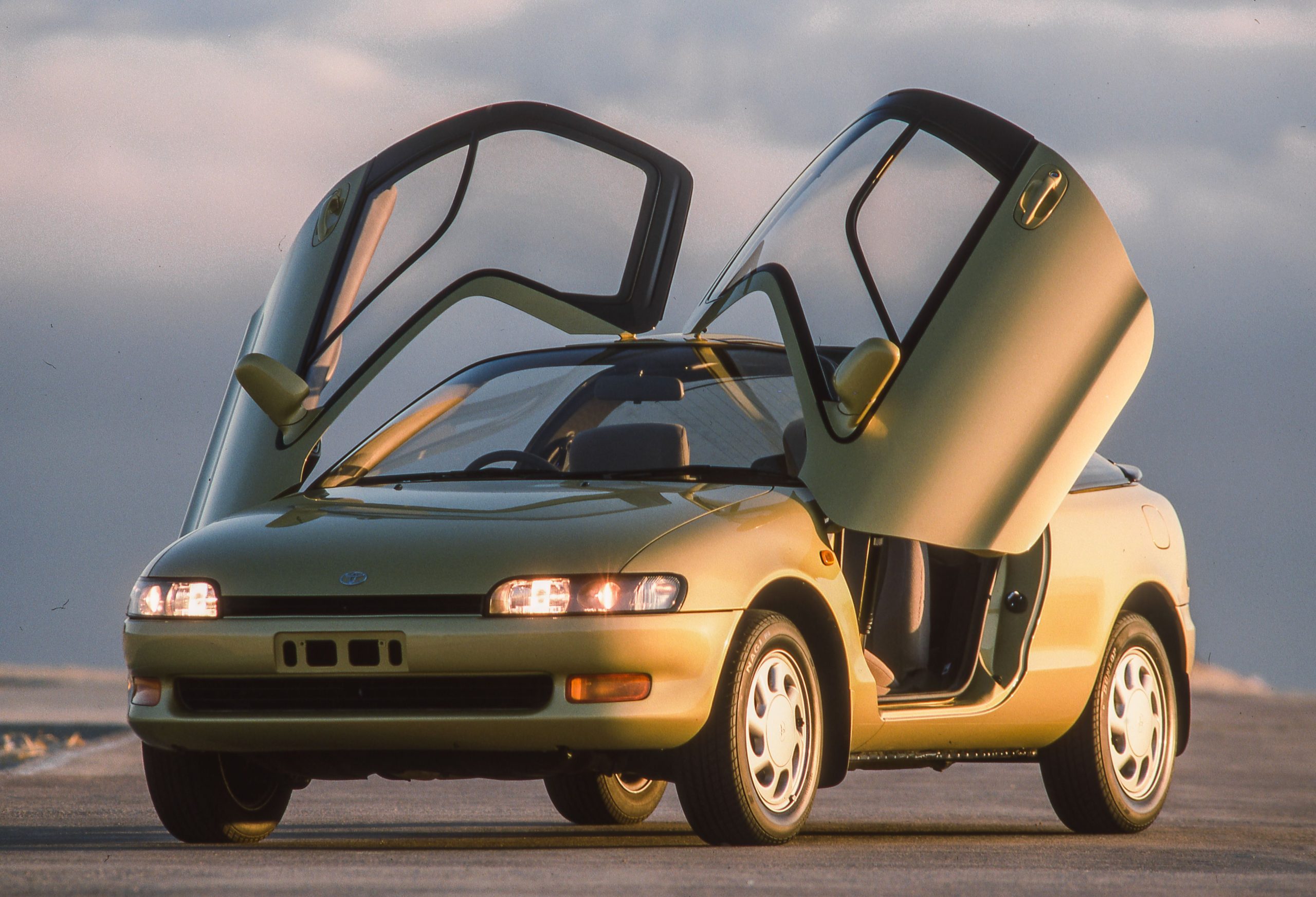
Power came from a 1.5-liter inline-four engine producing approximately 110 horsepower, adequate rather than exciting by performance standards. However, Toyota never positioned the Sera as a high-performance machine.
Instead, it targeted young buyers seeking distinctive styling and modern features wrapped in an affordable, practical package. The front-wheel-drive layout prioritized interior space and fuel efficiency, while the suspension tuning favored comfort over aggressive handling dynamics.
The Sera’s legacy lies in its representation of an era when Japanese manufacturers felt empowered to experiment with unconventional ideas. The butterfly doors served no functional performance purpose, yet Toyota invested the engineering resources to develop them anyway because they contributed to the car’s unique identity.
This willingness to pursue design innovation for its own sake seems increasingly rare in contemporary automotive development, where every feature must justify its existence through cost-benefit analysis. The Toyota Sera reminds us that sometimes the journey and the doors that open to begin it matter as much as the destination.
Also Read: 12 Crossovers That Don’t Require Tall People to Duck
5. Suzuki Cappuccino (1991-1998)
The Suzuki Cappuccino answered a question few had asked: what if you built a roadster around kei car regulations while honoring classic British sports car traditions? The result was a diminutive two-seater that packed surprising driving enjoyment into dimensions barely larger than a modern golf cart, proving that the sports car experience depended more on philosophy than displacement or horsepower.
Like the Mazda AZ-1, the Cappuccino adhered strictly to kei car regulations, measuring under 3.4 meters in length and employing a turbocharged 657cc three-cylinder engine limited to 63 horsepower.
However, Suzuki’s approach differed fundamentally from Mazda’s mid-engined exotic concept. The Cappuccino followed the traditional front-engine, rear-wheel-drive layout beloved by British roadster manufacturers, complete with a longitudinally-mounted engine, proper transmission tunnel, and a well-balanced chassis.

Despite the modest power output, the Cappuccino’s 725-kilogram curb weight delivered genuinely engaging performance. The turbocharged engine provided adequate thrust for spirited driving, and the minimal weight meant momentum conservation became a rewarding skill to master.
The five-speed manual transmission featured pleasingly short gear ratios that kept the engine in its effective powerband, and the mechanical feel through the shifter, pedals, and steering provided constant communication with the driver.
The Cappuccino’s charm lay in its honest execution of the roadster formula at a scale nobody else attempted. While lacking the exotic appeal of larger sports cars, it delivered the essential experience top-down motoring, responsive handling, and driver engagement in a package that was affordable, efficient, and genuinely fun.
The Suzuki Cappuccino proved that driver satisfaction needn’t correlate with power figures or performance metrics, sometimes the simplest approach yields the purest joy.
6. Nissan NX2000 (1991-1993)
The Nissan NX2000 represented an unusual experiment in modular sports car design, a compact coupe featuring removable T-top roof panels and styling that attempted to position it as an affordable alternative to pricier sports cars.
While the NX series was sold in the United States, the specific NX2000 variant with its high-performance SR20DE engine remained relatively obscure, overshadowed by more celebrated platforms that shared the same powertrain.
At launch, the NX arrived with conventional four-cylinder engines offering modest performance. However, Nissan recognized an opportunity to create a more engaging variant by transplanting the naturally aspirated SR20DE engine from the Sentra SE-R.
This 2.0-liter four-cylinder produced 140 horsepower and 132 lb-ft of torque, delivered through a characterful powerband that rewarded enthusiastic driving. While not overwhelmingly powerful, the SR20DE earned respect for its willing nature, durability, and tuning potential.

The NX2000’s most distinctive feature was its removable roof panels, which Nissan marketed as offering coupe security with convertible-style open-air enjoyment.
The T-top configuration became popular during the 1980s and early 1990s, appearing on various sports cars as a compromise between fixed roofs and full convertibles. In the NX2000, the panels stored in the hatchback area when removed, allowing drivers to adapt to changing weather conditions.
However, the system added weight and complexity compared to a conventional fixed roof, somewhat undermining the performance intentions.
The NX2000’s legacy remains complicated. It offered a compelling combination of practicality, decent performance, and open-air capability at a reasonable price point.
However, it lacked the focused identity that might have carved out a sustainable market niche. Today, the NX2000 represents an interesting footnote in Nissan’s performance history, a well-intentioned effort that circumstances and market realities prevented from achieving its potential.
7. Honda Beat (1991-1996)
The Honda Beat completed Japan’s triumvirate of kei sports cars alongside the Mazda AZ-1 and Suzuki Cappuccino, offering Honda’s interpretation of maximum driving enjoyment within minimum dimensions.
True to Honda’s engineering philosophy, the Beat prioritized mechanical sophistication and high-revving performance over raw power figures, creating a miniature sports car that rewarded smooth, precise driving.
Honda positioned the engine amidships, just ahead of the rear axle, in a layout that optimized weight distribution and handling balance.
The naturally aspirated 656cc three-cylinder engine represented a masterpiece of compact engine design, featuring four valves per cylinder, MTREC fuel injection, and a redline of 8,500 rpm, stratospheric for the era.
Peak output of 63 horsepower arrived at 8,100 rpm, encouraging drivers to explore the upper reaches of the tachometer where Honda’s engineers had concentrated their development efforts.
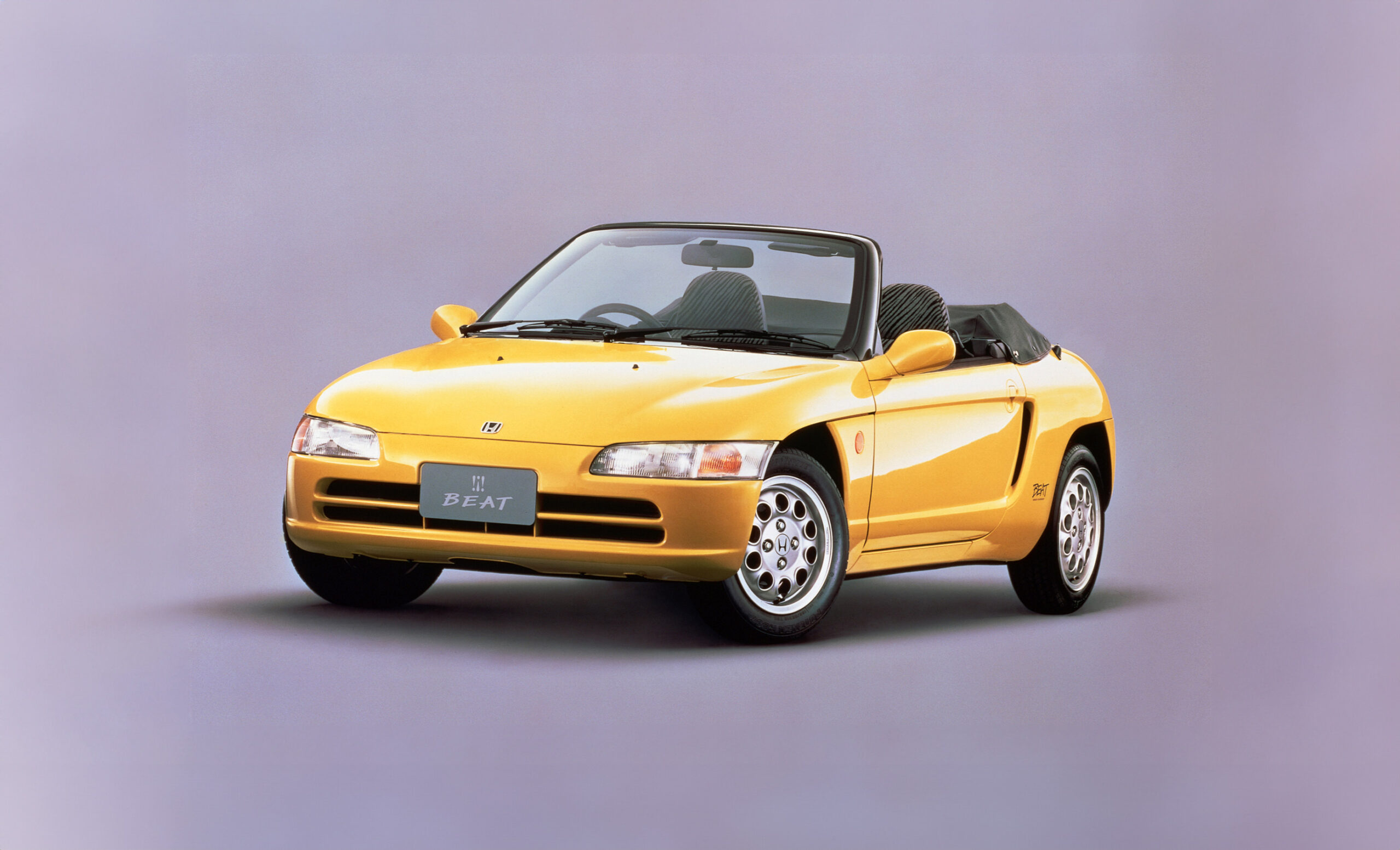
The Beat’s chassis demonstrated Honda’s commitment to genuine sports car dynamics. Wishbone suspension at all four corners provided exceptional control and feedback, while the short 2,280mm wheelbase made the car incredibly agile through tight corners.
The steering was quick and communicative, transmitting detailed information about road surface conditions and available grip. Brake feel was excellent, with strong, progressive stopping power that inspired confidence during spirited driving.
The Beat’s legacy lies in its demonstration that Honda could create an engaging sports car experience regardless of displacement or power output.
The high-revving engine, precise controls, and balanced chassis delivered driving satisfaction that transcended the modest specifications.
The Beat proved that Honda’s “man maximum, machine minimum” philosophy applied equally to sports cars as economy vehicles, creating something special within significant constraints. For enthusiasts seeking the purest expression of the roadster formula, the Honda Beat offered an answer few knew existed.
8. Mazda Autozam AZ-3 / Eunos Presso (1991-1998)
The Mazda AZ-3, marketed through various Mazda sales channels as both the Autozam AZ-3 and Eunos Presso, represented Mazda’s attempt to create an affordable coupe targeting young buyers with limited budgets but strong desires for stylish transportation.
While often overlooked in discussions of 1990s Japanese sports cars, the AZ-3 offered a compelling package that balanced practicality, efficiency, and surprising driving enjoyment.
Built on Mazda’s B-platform shared with the contemporary 323/Familia, the AZ-3 featured distinctive fastback styling that set it apart from mainstream hatchbacks.
The roofline swept dramatically toward the rear, creating a coupe-like profile despite the car’s compact dimensions. Pop-up headlights reinforced the sporting intentions, while clean body lines gave the design a timeless quality that has aged better than some contemporary efforts.
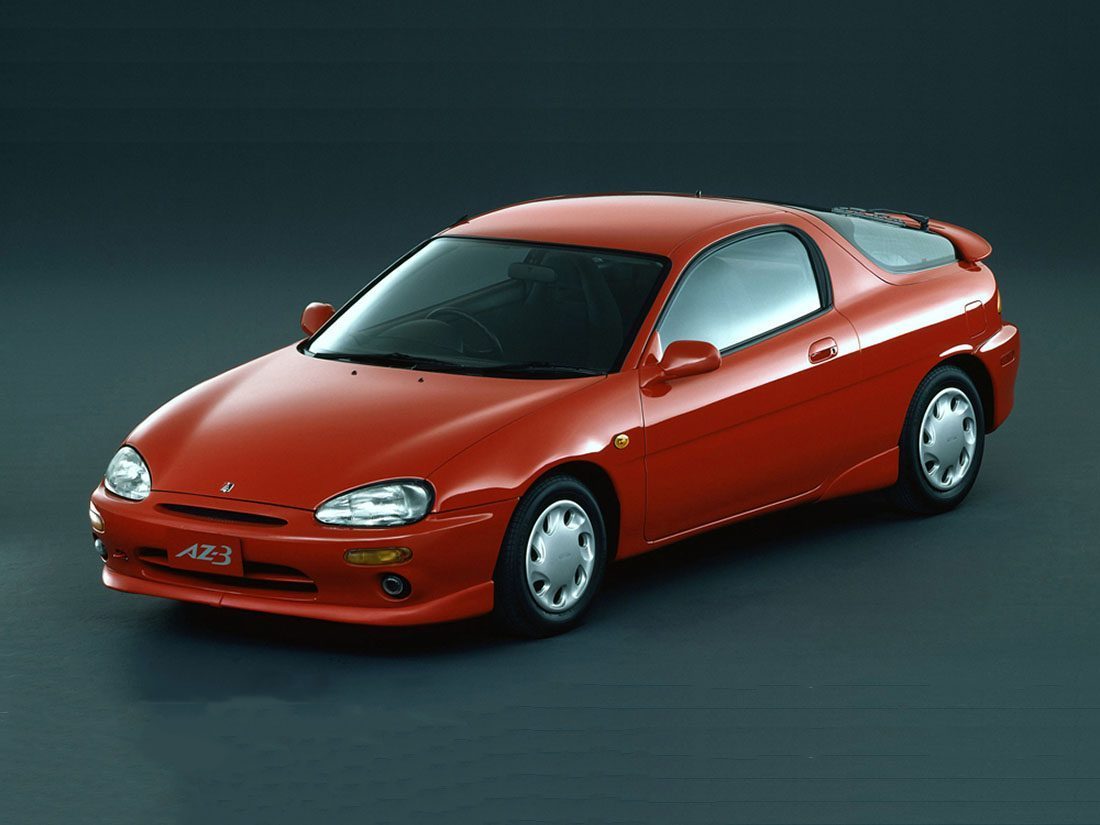
Engine options ranged from modest 1.5-liter four-cylinders in base specifications to the more enthusiastic 1.8-liter V6 found in upmarket versions.
The V6 variant, while not particularly powerful by sports car standards, delivered smooth, refined power delivery and a pleasant exhaust note that enhanced the driving experience.
The smaller four-cylinder engines prioritized economy over performance but remained pleasant to operate in typical driving conditions.
The AZ-3 remained a Japan-only model, with no official exports to international markets. This limited availability combined with the car’s positioning as an entry-level offering meant few enthusiasts outside Japan recognized the model or understood its place in Mazda’s lineup.
Today, the AZ-3 represents an increasingly rare example of bubble-era automotive optimism, when manufacturers felt empowered to develop niche products targeting specific demographic segments.
While never a true performance car, the AZ-3 demonstrated that affordable transportation could incorporate style, quality, and driving enjoyment without requiring significant financial sacrifice.
9. Toyota Cynos / Paseo (1991-1999)
The Toyota Cynos, marketed as the Paseo in export markets, occupied an unusual position in Toyota’s lineup as a compact sports coupe positioned below the Celica but above basic economy offerings.
While the Paseo received modest distribution in international markets including North America, the specific Japanese-market Cynos variants with sportier specifications and unique features remained largely unknown outside their home market.
Toyota designed the Cynos around the Tercel platform, prioritizing affordability and efficiency while incorporating styling cues that suggested sporting aspirations.
The coupe body style featured a distinctive fastback roofline, smooth contours, and proportions that flattered the compact dimensions.
The design was conservative by sports car standards but possessed a clean, understated elegance that avoided the aggressive styling excesses common during the era.
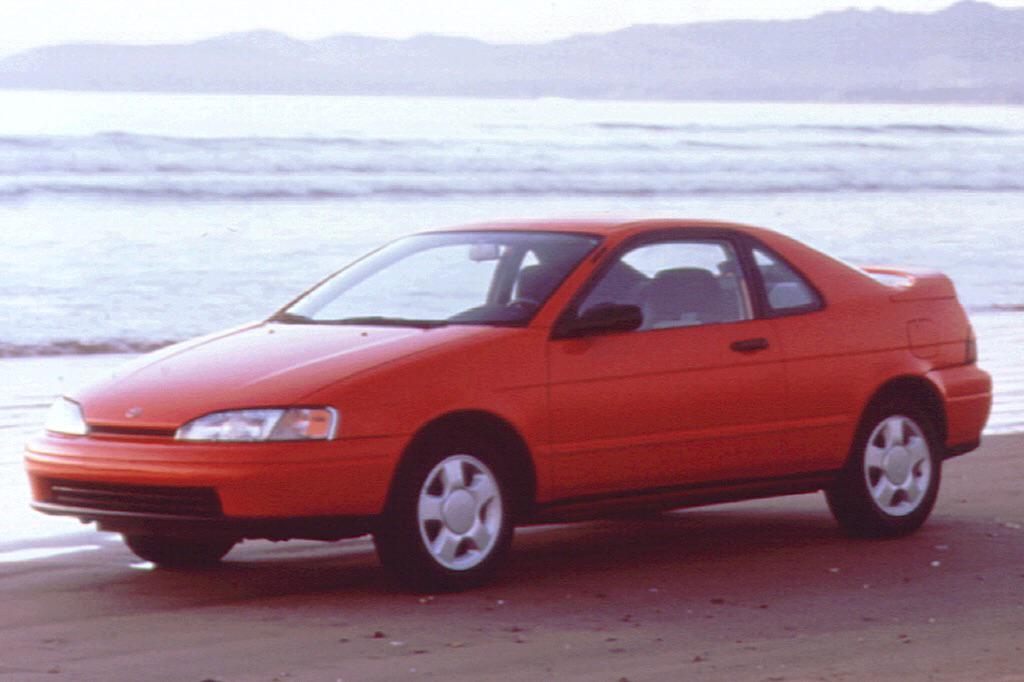
Engine options centered around various configurations of Toyota’s reliable four-cylinder powerplants. The base models utilized 1.5-liter engines producing modest output appropriate for economy-focused driving, while sportier variants featured the 5E-FHE engine with additional performance tuning.
Even the enthusiast-oriented versions prioritized efficiency and refinement over outright performance, producing approximately 100 horsepower adequate for the lightweight chassis but hardly overwhelming.
The Cynos demonstrated competent handling characteristics that rewarded smooth, efficient driving technique. The front-wheel-drive layout provided predictable dynamics, and the compact dimensions made the car maneuverable in urban environments.
The suspension tuning favored comfort over aggressive handling, though the chassis remained composed during spirited driving on familiar roads. The steering provided adequate feedback, and the brakes offered sufficient stopping power for the car’s performance envelope.
The Cynos legacy lies in its demonstration that affordable sports coupes needn’t deliver overwhelming performance to provide value. For young buyers in 1990s Japan, the Cynos offered stylish transportation, reliable Toyota engineering, and enough sporting character to make daily commutes enjoyable.
While never a performance icon, the Cynos served its intended purpose admirably, providing thousands of owners with dependable, attractive transportation during an era when such combinations represented genuine achievement in automotive design and engineering.
10. Daihatsu Copen (2002-2012)
The Daihatsu Copen arrived over a decade after the kei sports car boom, offering a modern interpretation of the compact roadster formula when most manufacturers had abandoned the segment.
This timing proved both advantageous and challenging the Copen benefited from technological advances and lessons learned from earlier attempts, but entered a marketplace where enthusiasm for small sports cars had significantly diminished.
Daihatsu designed the Copen around kei car regulations, employing a turbocharged 659cc four-cylinder engine producing the regulation-maximum 63 horsepower.
However, unlike the 1990s kei sports cars that prioritized lightweight construction and analog driving experiences, the Copen incorporated modern conveniences including a power-retractable hardtop a sophisticated feature unusual in such a small, affordable vehicle.
The hardtop mechanism was impressively engineered, folding into the rear deck in approximately 20 seconds, transforming the Copen from a weather-tight coupe to an open roadster.
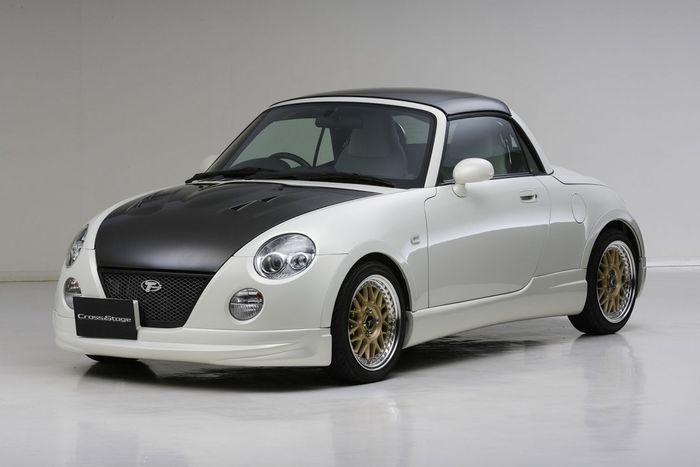
The front-wheel-drive layout with front-mounted engine represented a conventional approach that prioritized packaging efficiency and parts-sharing with Daihatsu’s economy models.
While lacking the exotic appeal of mid-engine configurations or the dynamic purity of rear-wheel-drive, this layout delivered predictable handling and practical packaging.
The MacPherson strut front suspension and torsion beam rear provided adequate body control, though the ride quality suffered somewhat on rough pavement due to the short wheelbase and firm damping.
The Copen’s significance lies in its demonstration that the kei sports car concept remained viable well into the 21st century. While lacking the raw, analog appeal of 1990s predecessors, the Copen offered a more refined, practical interpretation that better suited contemporary buyer expectations.
The power-retractable hardtop, in particular, removed a significant barrier that prevented many buyers from considering convertibles weather protection without compromising open-air enjoyment.
For enthusiasts seeking overlooked Japanese sports cars, the Daihatsu Copen represents a charming, affordable option that delivers distinctive styling and genuine driving enjoyment in a package most Western enthusiasts have never encountered.
Also Read: 10 Hybrids That Don’t Eat Tires When in Prolonged Use
