
Modern SUVs have become technological marvels on wheels. They are packed with advanced driver assistance systems that promise safer journeys and smarter driving experiences. From automatic emergency braking to lane-keeping assist, these systems rely on a complex web of sensors, cameras, and radar units. Each component must be perfectly aligned to function correctly.
However, there is a dark financial secret hiding behind all this impressive technology. Even the smallest fender bender or minor parking lot bump can throw these sensitive systems completely out of calibration. What looks like a harmless tap on the bumper can trigger a repair bill that shocks most vehicle owners. The cost of ADAS recalibration after even a minor impact routinely exceeds $2,000 at dealerships.
The problem is growing worse every year as more sensors are embedded into every corner of the vehicle. Front radar units, rear cameras, side blind-spot monitors, and windshield-mounted cameras all require precise calibration. Replacing or recalibrating just one of these components can cost hundreds of dollars alone. When multiple systems need attention after a single bump, the costs stack up alarmingly fast.
This guide examines nine popular SUVs where post-collision ADAS recalibration consistently crosses the $2,000 threshold. Understanding these costs before you buy could save you from an expensive surprise after a minor incident.
1. Mercedes-Benz GLE (2020–2024)
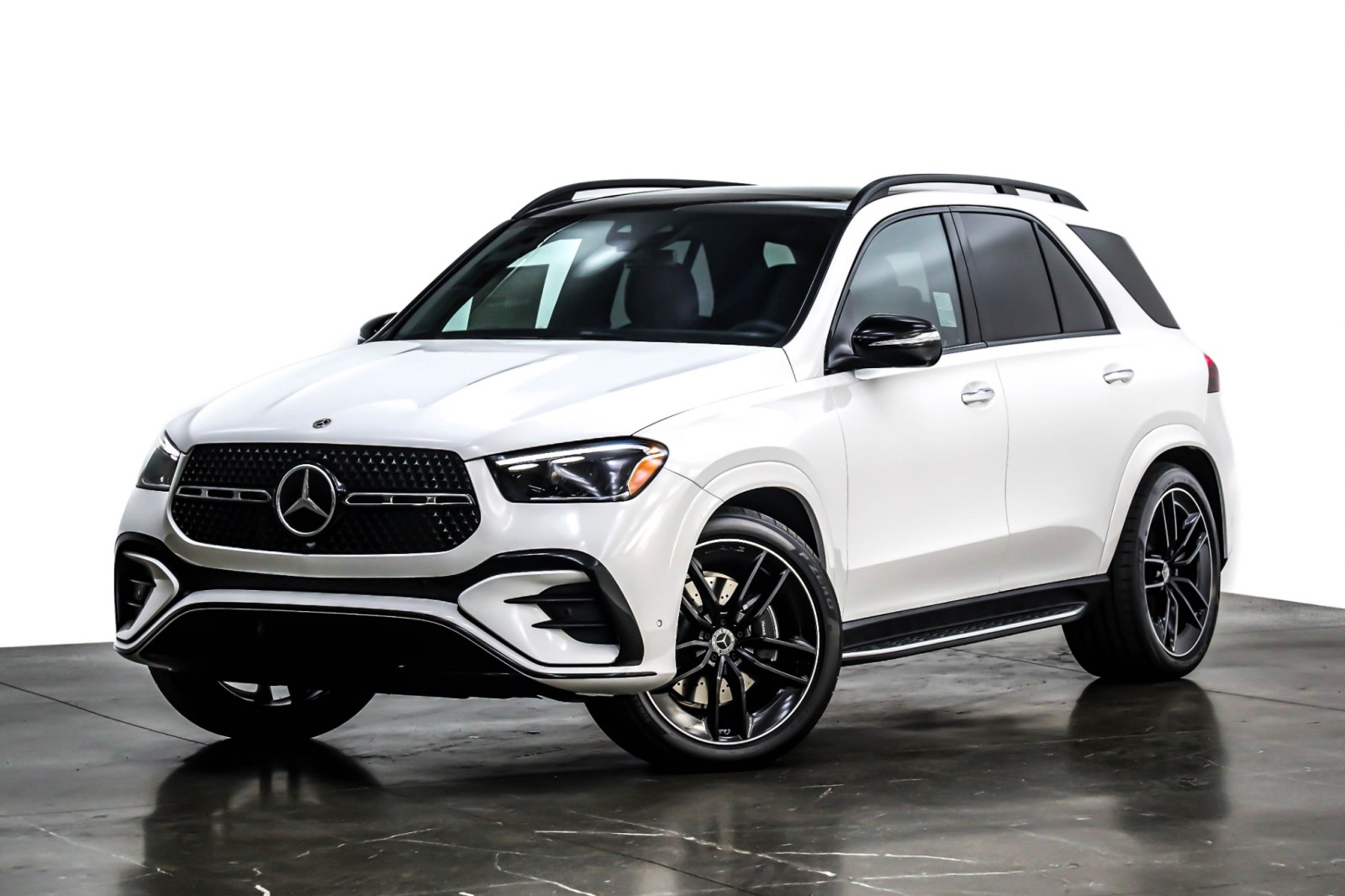
The Mercedes-Benz GLE is one of the most technologically sophisticated luxury SUVs on the market today. It comes loaded with an extensive suite of driver assistance systems that form the backbone of its safety credentials.
The GLE features Mercedes’ Driving Assistance Package as either standard or optional equipment depending on the trim. This package includes Active Distance Assist DISTRONIC, Active Steering Assist, Active Lane Change Assist, Active Blind Spot Assist, and Active Brake Assist. Each one of these systems depends on sensors and cameras mounted at specific points around the vehicle’s body.
The primary forward-facing radar is embedded deep within the front fascia of the GLE. It operates in conjunction with a stereo camera system mounted high on the windshield. Both units must be aligned within fractions of a millimeter to function accurately. A minor front-end collision, even at low speed, can disturb both components simultaneously.
When a Mercedes-Benz GLE comes into a dealership for ADAS recalibration, the process is far from simple. Technicians require a completely flat, level surface measuring at least 10 meters in length. Specialized target boards and Mercedes-specific calibration software must be used throughout. The process cannot be rushed or approximated in any way.
The stereo camera recalibration alone at a Mercedes dealership routinely costs between $800 and $1,200. Adding radar alignment pushes the total significantly higher. If the front bumper fascia was damaged and sensors need repositioning, parts and labor add further to the final figure.
Many GLE owners have reported total ADAS recalibration bills exceeding $2,500 after seemingly minor parking lot incidents. One common scenario involves a shopping cart strike that cracks the front bumper skin. The bumper itself may look like a simple cosmetic repair, but the radar unit behind it requires full recalibration afterward.
Insurance companies frequently dispute these costs as disproportionate to the visible damage. However, Mercedes-Benz dealer service departments are firm that recalibration cannot be skipped. Skipping it could result in systems like Autonomous Emergency Braking operating on incorrect data. That creates a safety risk far more serious than the repair bill itself.
The rear of the GLE also carries significant sensor investment. Blind-spot radar units sit inside the rear bumper on both sides. A rear-end tap from another vehicle in a parking garage can disturb both sensors. Rear ADAS recalibration adds another $600 to $900 to the total repair bill.
The GLE’s 360-degree camera system adds yet another layer of potential recalibration cost. All four cameras must be calibrated to stitch together a seamless bird’s-eye view image. If even one camera is repositioned slightly during a repair, the entire 360-degree system must be recalibrated together. This process can add $400 to $700 to the final invoice.
Owners considering the GLE should factor these potential costs into their insurance coverage decisions. Opting for lower collision deductibles makes much more financial sense with vehicles like this. The technology that makes the GLE safer also makes it considerably more expensive to restore after any impact.
2. BMW X5 (2019–2024)
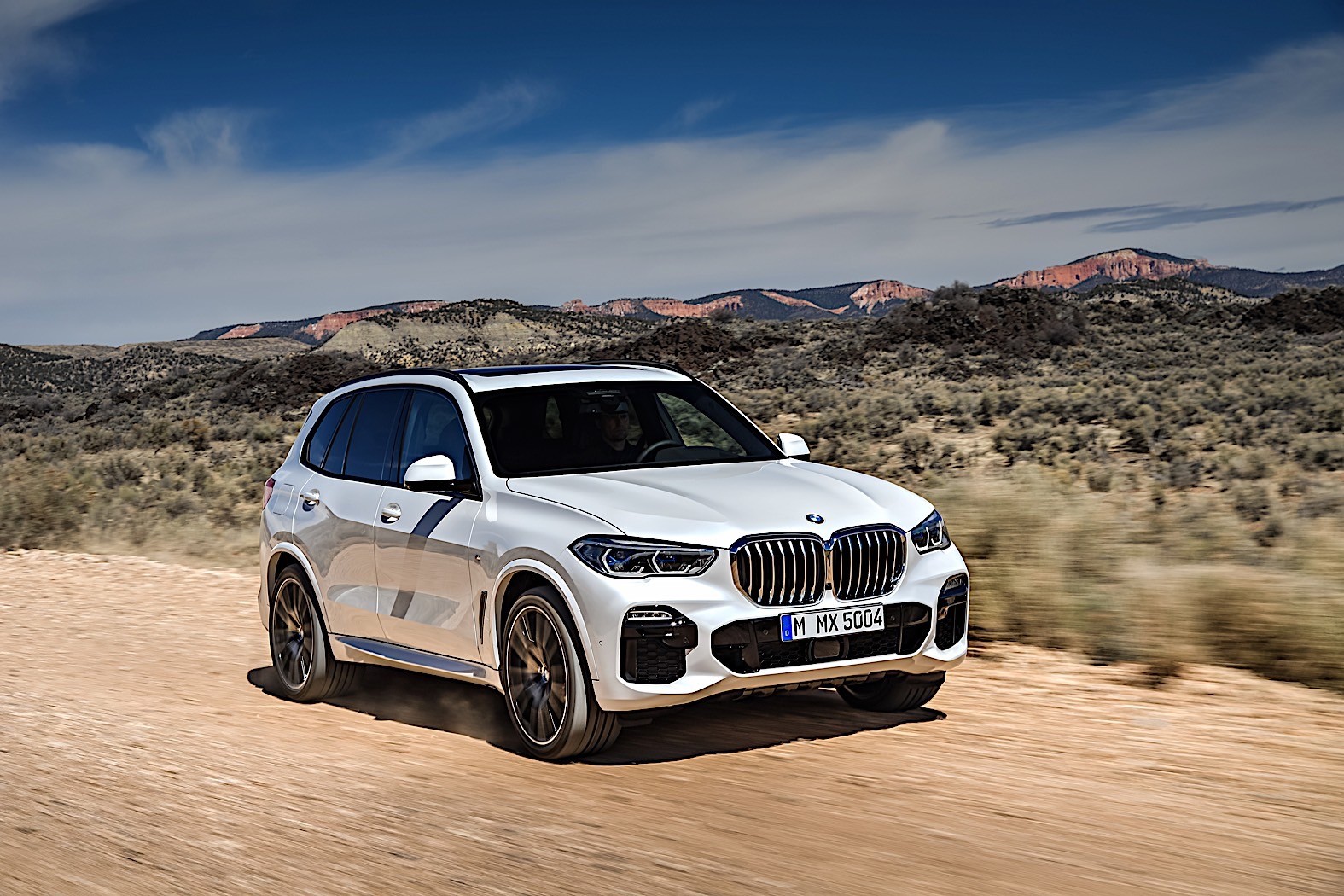
The BMW X5 sits at the premium end of the midsize SUV segment and brings with it an enormous package of driver assistance technology. BMW has invested heavily in making the X5 one of the most automated vehicles in its class.
Standard on newer X5 models is BMW’s Driving Assistant Professional system. This includes Active Cruise Control with Stop and Go, Steering and Lane Control Assistant, Lane Change Warning, and Evasion Aid. These features rely on a front radar, a front camera, rear radar sensors, and multiple side cameras working in perfect harmony.
The front camera on the X5 is mounted directly behind the windshield near the rearview mirror. It captures a wide-angle view of the road ahead and feeds data to multiple safety systems simultaneously. Even replacing the windshield on an X5 requires full camera recalibration afterward. A cracked windshield from a road pebble can therefore trigger ADAS costs completely unrelated to any collision.
BMW uses a combination of static and dynamic calibration procedures for its camera systems. Static calibration requires special target boards placed at precise distances in a controlled environment. Dynamic calibration requires driving the vehicle at specific speeds on roads with clear lane markings. Both procedures must be completed fully before the system is considered properly calibrated.
At a BMW dealership, the labor cost for front camera recalibration alone ranges from $600 to $1,000. The front radar module recalibration adds another $500 to $800. If the radar unit itself was damaged and requires replacement, the part alone costs between $800 and $1,400 before labor.
The X5’s rear cross-traffic alert system adds additional vulnerability. The two rear corner radar sensors are positioned within the rear bumper assembly. A moderate rear impact that requires bumper replacement will almost certainly disturb these sensors. Rear radar recalibration adds $500 to $800 to the repair cost.
X5 owners in urban areas report particularly frequent recalibration bills. City driving exposes vehicles to more low-speed impacts from other drivers in tight parking situations. A gentle rear tap that barely marks the paint can still move a radar sensor enough to require professional recalibration. The gap between visible damage and required sensor work is frustratingly wide.
BMW’s iDrive system will typically alert the driver when sensors are out of alignment. Warning messages appear in the instrument cluster indicating that driver assistance systems are inactive or impaired. While these warnings are helpful, they do not reduce the cost of the recalibration work that follows. They simply confirm what a good body shop inspection would reveal.
Total ADAS recalibration costs for a BMW X5 after a minor front or rear impact consistently exceed $2,000 at authorized dealerships. Independent shops may offer lower prices but cannot always access BMW’s proprietary calibration software. Using non-dealer calibration on a BMW can sometimes void portions of the vehicle’s remaining warranty coverage.
3. Audi Q7 (2020–2024)
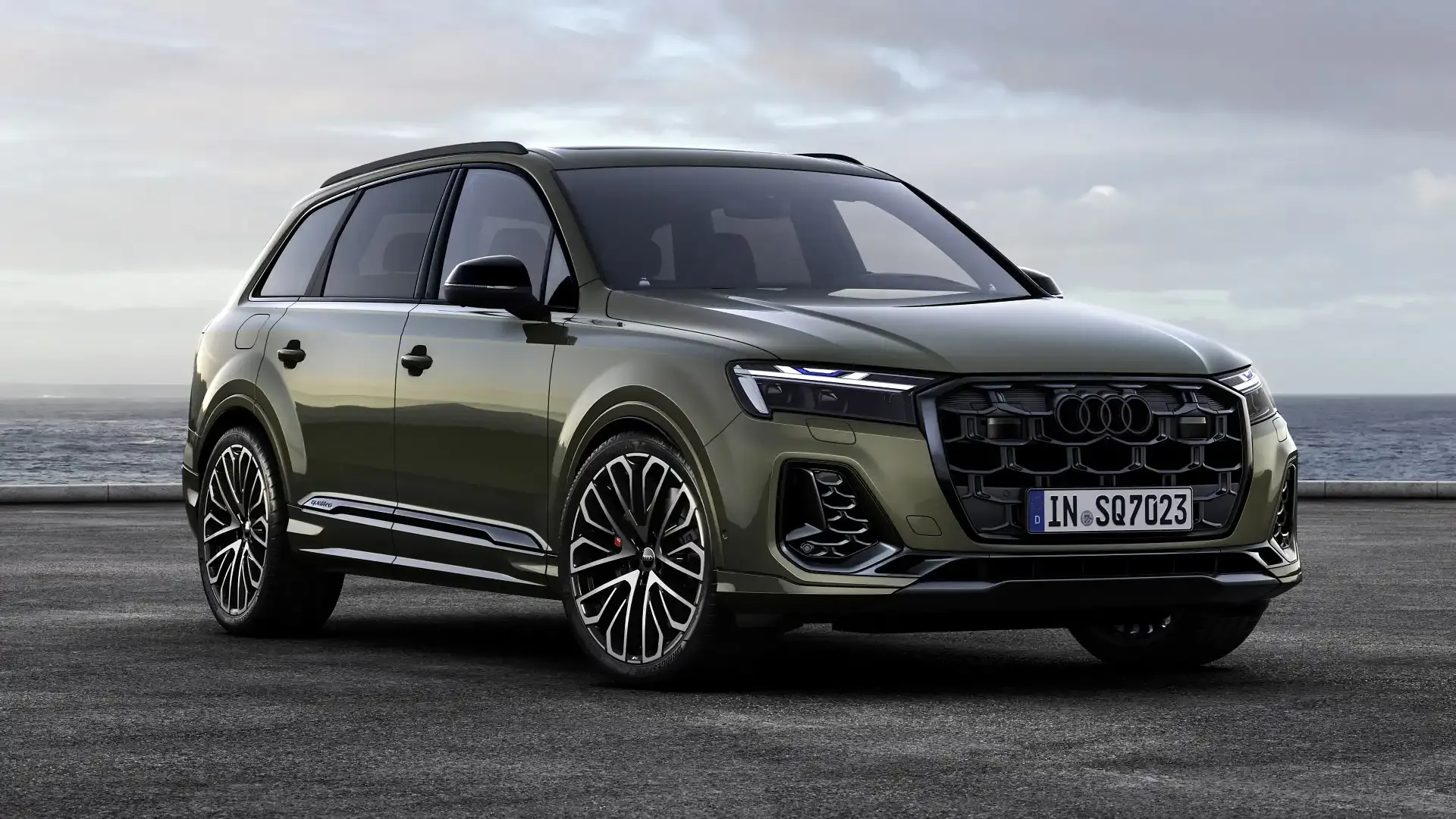
The Audi Q7 is a three-row luxury SUV that packs an impressive array of driver assistance features into its sleek, modern design. Audi has positioned the Q7 as a technology leader in the full-size luxury SUV segment.
The Q7 comes equipped with Audi Pre Sense Front, Audi Pre Sense Rear, Active Lane Assist, Adaptive Cruise Assist, and a 360-degree camera system. Each of these features relies on sensors positioned around the vehicle at critical structural points. The front radar unit, for instance, sits directly behind the front lower grille insert. Even a minor grille replacement can disturb its alignment.
Audi’s camera-based systems on the Q7 are particularly sensitive to physical disturbance. The forward-facing camera sits inside the windshield and works alongside a laser scanner on some trim levels. These components must be aligned to within very tight tolerances for the systems to operate reliably. Road debris striking the front of the vehicle at highway speed has been known to knock sensors out of alignment without causing visible body damage.
Windshield replacement on the Q7 is one of the most common triggers for unexpected ADAS recalibration costs. Audi’s Advanced Key and heads-up display system both interact with the windshield-mounted camera assembly. Replacing the windshield requires recalibrating the forward camera, and sometimes the heads-up display alignment as well. This single job can cost $1,500 to $2,200 at an Audi dealership.
A front bumper replacement on the Q7 is even more expensive from an ADAS standpoint. The front radar, front parking sensors, and sometimes the adaptive cruise control module all require attention. Parts and recalibration for the front bumper area alone can reach $3,000 to $4,500 on a Q7. Even a minor fender bender at low speed can generate this level of expense.
The Q7’s rear sensor suite is equally costly to recalibrate. Rear cross-traffic alert, rear parking assist, and the rear portion of the 360-degree camera system are all housed in or near the rear bumper. A rear-end impact requiring bumper replacement pushes total ADAS recalibration costs to $2,000 to $3,000 easily.
Audi dealers use the ODIS (Offboard Diagnostic Information System) for all sensor calibration work. This system is not available to independent repair shops without special licensing agreements. Many Q7 owners find themselves with no practical alternative to paying dealer prices for recalibration work. The proprietary nature of the system effectively eliminates competitive pricing pressure.
The Q7’s popularity as a family vehicle means it is frequently used in school pickup lines, crowded parking lots, and urban settings. These are precisely the environments where minor bumps and scrapes are most common. Owners should seriously consider gap insurance and low deductible collision coverage when operating a Q7 in high-traffic situations.
4. Volvo XC90 (2020–2024)
The Volvo XC90 has built its entire brand identity around safety, and its ADAS suite is among the most comprehensive of any SUV on the market. Volvo’s commitment to a vision of zero accidents means the XC90 is festooned with sensors, cameras, and radar units in every direction.
The XC90 features Pilot Assist, City Safety with autobrake, Run-off Road Mitigation, Oncoming Lane Mitigation, and a full suite of parking cameras. City Safety alone integrates radar and camera data to detect vehicles, cyclists, pedestrians, and large animals. The system requires all its input sensors to be precisely aligned to distinguish between these different types of obstacles reliably.
Volvo places a dual-mode radar and camera unit directly behind the upper portion of the windshield on the XC90. This combined unit handles lane keeping, automatic emergency braking, and adaptive cruise control simultaneously. Because it handles so many functions at once, any misalignment has wide-reaching consequences across multiple systems. A cracked windshield can effectively disable much of the XC90’s active safety technology at once.
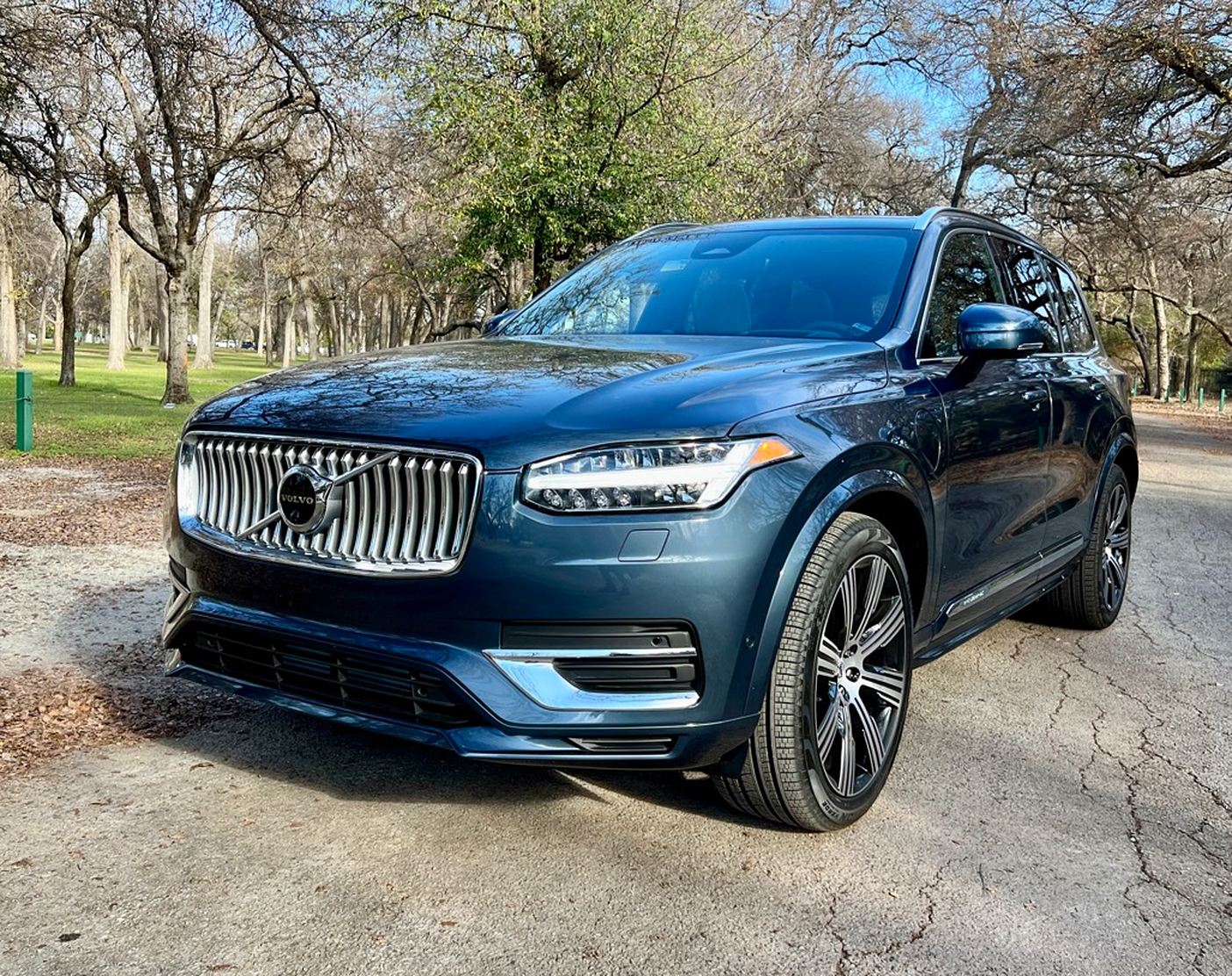
Windshield replacement with camera recalibration on the XC90 costs between $1,200 and $1,900 at Volvo dealerships. If the combined radar and camera module itself is damaged, replacement parts cost $1,500 to $2,500 before labor. The labor for complete front system recalibration adds another $500 to $900 on top of parts costs.
The XC90’s front lower bumper also houses critical components. The long-range radar for highway speed adaptive cruise control sits in the lower bumper cavity. A parking lot impact that damages the lower bumper can easily displace this radar unit. Replacing and recalibrating the long-range radar alone costs $800 to $1,400 at a Volvo dealer.
Corner radars for blind-spot detection and cross-traffic alert complete the XC90’s comprehensive sensor network. These units sit inside the rear quarter panels and are vulnerable to side-swipe incidents. Even a slow-speed side impact that leaves only paint transfer can shift a corner radar out of calibration. Recalibrating both rear corner radars costs $600 to $1,000 in labor alone.
Total ADAS recalibration after a moderate front-end impact on the XC90 frequently reaches $2,500 to $4,000. Volvo requires all recalibration to be performed at certified dealerships or approved Volvo bodyshops. Independent shops without Volvo-certified technicians cannot access the proprietary VIDA calibration software. This restriction significantly limits owners’ options for finding lower-cost alternatives.
Despite the high recalibration costs, XC90 owners generally express continued confidence in the vehicle’s safety value. The systems work exceptionally well when properly calibrated, and Volvo’s safety record supports the investment. However, understanding the full cost of ownership, including post-accident sensor work, is essential before purchase.
Also Read: 9 SUVs With the Best 5-Year Resale Values in 2026
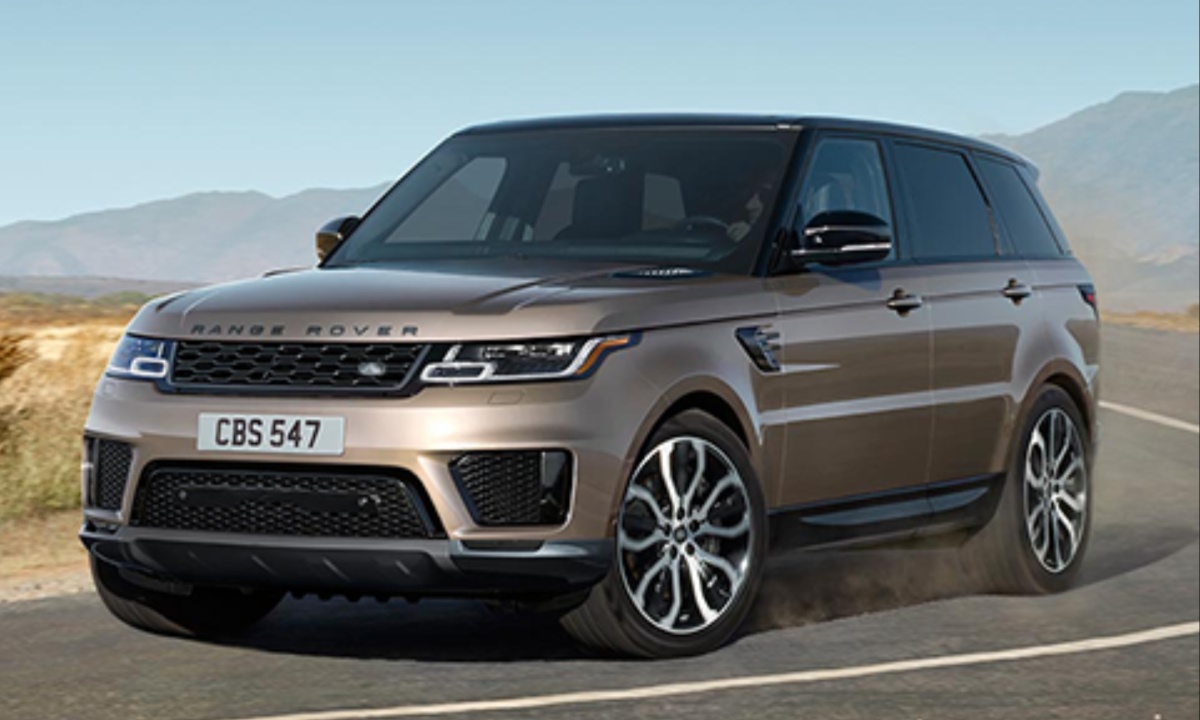
5. Land Rover Range Rover Sport (2022–2024)
The Range Rover Sport combines rugged off-road capability with a level of technological sophistication that rivals any urban luxury SUV. Its ADAS suite is comprehensive, and its sensor network is spread across nearly every panel on the vehicle.
The Range Rover Sport features Adaptive Cruise Control, Lane Centering, Traffic Sign Recognition, Blind Spot Assist, and a ClearSight Ground View system. ClearSight Ground View uses cameras to show a virtually transparent view of the ground beneath the front of the vehicle. This feature alone requires multiple precisely calibrated camera units positioned at specific angles under the vehicle’s lower bodywork.
Land Rover uses a combination of radar, lidar-style sensors, and cameras that must work together seamlessly. The front radar is integrated into the lower grille area, which takes the first impact in any front-end collision. Even a minor off-road scrape against a rock face can damage the front bumper sensors. The RRS is frequently taken off-road, making sensor damage from terrain contact a real and common concern.
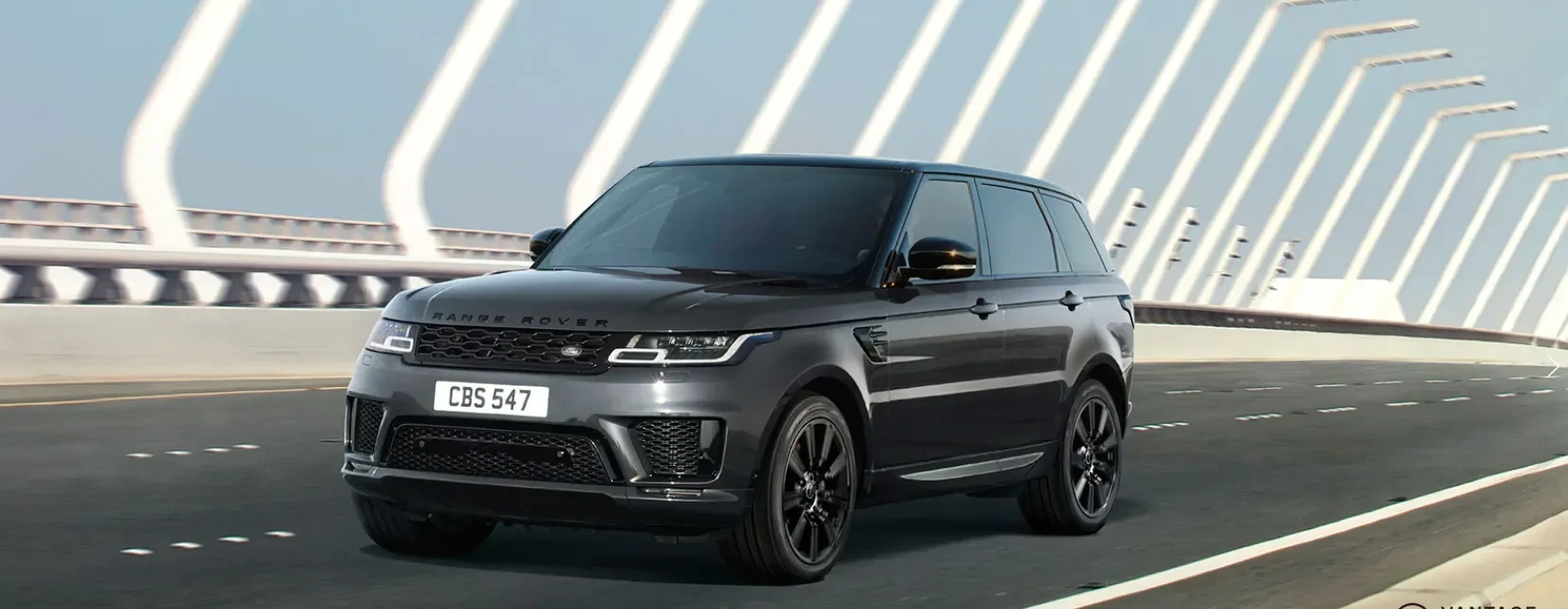
The cost of front-end ADAS repairs on the Range Rover Sport is among the highest in the midsize luxury SUV segment. A front bumper replacement with full sensor recalibration routinely runs $3,000 to $5,000 at Land Rover dealerships. Parts pricing for Land Rover is notoriously high compared to German luxury competitors. Labor rates at Land Rover dealers in major cities frequently exceed $250 per hour.
The Range Rover Sport’s 360-degree surround camera system requires individual calibration of each camera unit. There are typically four camera units that must stitch together into a seamless composite image. If any single camera is replaced or disturbed, all four must be recalibrated together as a complete system. This process alone adds $700 to $1,200 to any repair involving body panels that house cameras.
Rear-end impacts on the Range Rover Sport carry similarly high recalibration costs. The rear radar module, rear parking sensors, and rear camera all require attention after a bumper replacement. Recalibrating the rear sensor suite costs $800 to $1,500 in labor, before any parts replacement costs are considered.
Land Rover’s reputation for above-average maintenance and repair costs extends fully into the ADAS recalibration domain. Insurance premiums for the Range Rover Sport are significantly raised compared to comparably priced competitors. Much of this elevation reflects insurers’ awareness of high post-collision electronics repair costs. Prospective buyers should request detailed repair cost estimates before committing to purchase.
6. Cadillac Escalade ESV (2021–2024)
The Cadillac Escalade ESV is the flagship of American luxury SUVs, and it carries a sensor load to match its premium price point. General Motors has invested enormously in the Escalade’s Super Cruise and broader ADAS capabilities.
The Escalade ESV features Super Cruise hands-free driving technology, Automatic Emergency Braking, Lane Change Alert, Side Blind Zone Alert, Rear Cross Traffic Alert, and a comprehensive HD Surround Vision camera system. Super Cruise alone relies on a precision LiDAR map database combined with camera and radar inputs. Any deviation in sensor alignment can cause Super Cruise to disengage or operate unreliably on supported highways.
The front of the Escalade ESV hosts multiple sensor systems in a very compact space. The front radar, the front camera, and the forward-facing element of the HD Surround Vision system are all positioned in the front fascia area. A collision that requires front bumper replacement will almost certainly disturb all three systems simultaneously. This is precisely the scenario that generates the largest single ADAS recalibration invoices.
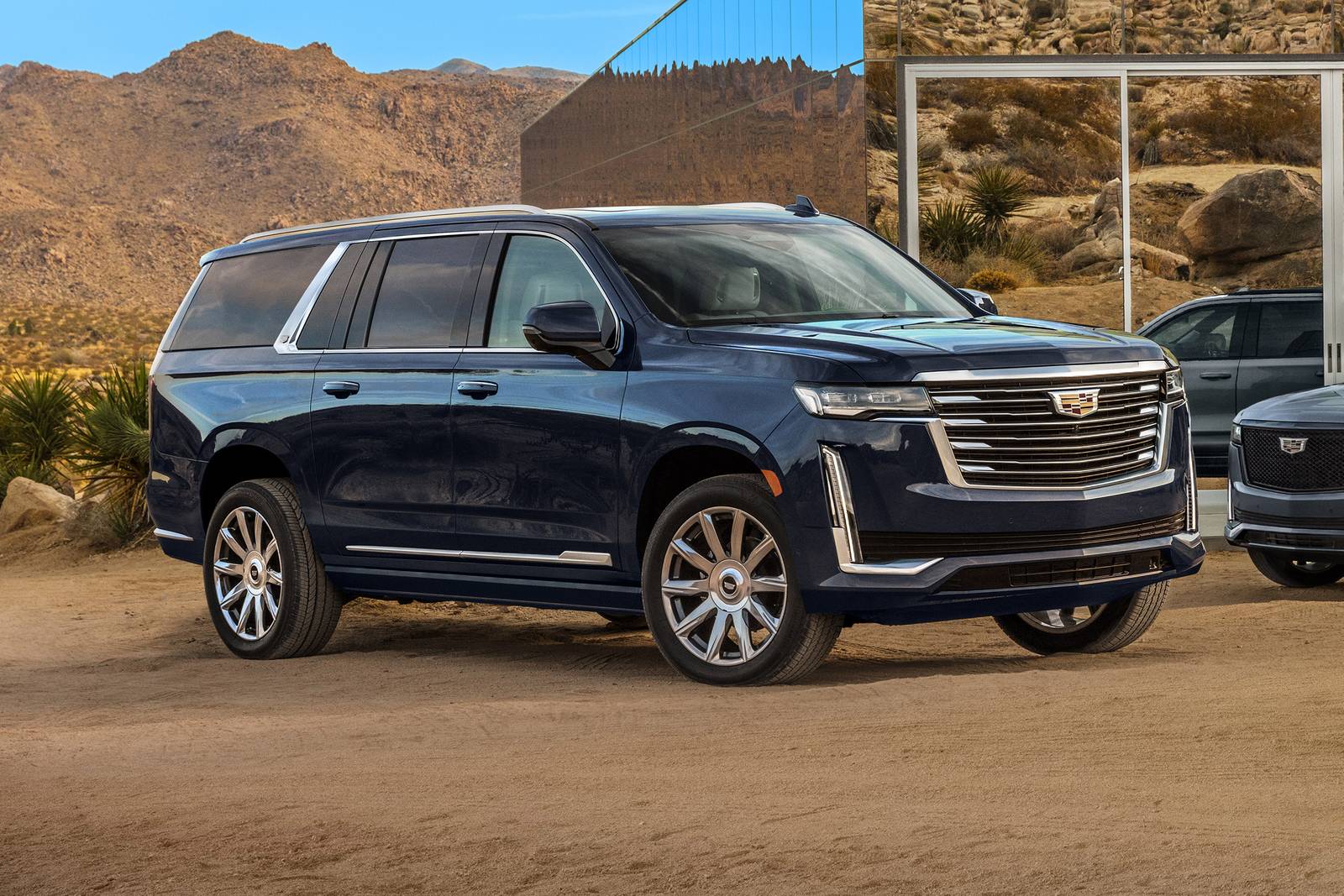
At a Cadillac dealership, front radar recalibration costs $600 to $900 in labor. Camera recalibration adds another $500 to $800. If the radar or camera module itself requires replacement, parts costs push the total to $2,500 to $4,000 easily. The sheer size of the Escalade ESV means technicians need very large calibration areas, which adds to total labor time.
The Super Cruise system adds another dimension of complexity to post-collision repair. After any significant sensor disturbance, the Super Cruise system must be fully verified against its LiDAR map database. This verification process requires test driving the vehicle on a mapped Super Cruise corridor. The verification adds labor time and cannot be bypassed without leaving the system in a degraded state.
The Escalade ESV’s trailer camera system, optional on many trims, adds further recalibration costs when the rear is involved in a collision. The rear hitch area houses additional sensor components that must be aligned after bumper work. Total rear ADAS recalibration on an Escalade ESV runs $800 to $1,400 in labor alone.
Given the Escalade ESV’s enormous purchase price, many owners maintain comprehensive insurance policies that cover these costs. However, insurance claims for ADAS recalibration frequently result in raised premiums at renewal. Some owners find that paying out of pocket for smaller recalibration jobs makes more financial sense than filing a claim. Understanding this cost dynamic is important for any Escalade ESV owner.
7. Porsche Cayenne (2019–2024)
The Porsche Cayenne combines sports car performance with SUV practicality, and its driver assistance technology reflects the same level of engineering precision found throughout the vehicle. Porsche’s ADAS systems are built to extremely high tolerances that make post-collision recalibration particularly demanding.
The Cayenne is equipped with Porsche InnoDrive, Lane Change Assist, Surround View, Night Vision Assist, and Active Cruise Control. Night Vision Assist alone uses a thermal imaging camera mounted in the front bumper to detect pedestrians and large animals in darkness. This thermal camera is an unusual and expensive component that most competing SUVs do not offer. Its replacement cost alone exceeds $2,000 before any recalibration labor is added.
Porsche’s front radar on the Cayenne is a high-precision unit calibrated to tighter specifications than many competitors. The calibration process requires Porsche’s proprietary PIWIS diagnostic system, which is available only at authorized Porsche centers. This restriction eliminates the possibility of using independent recalibration services for most of the Cayenne’s sensor suite. Every Cayenne ADAS repair flows through Porsche’s authorized service network at premium dealer rates.
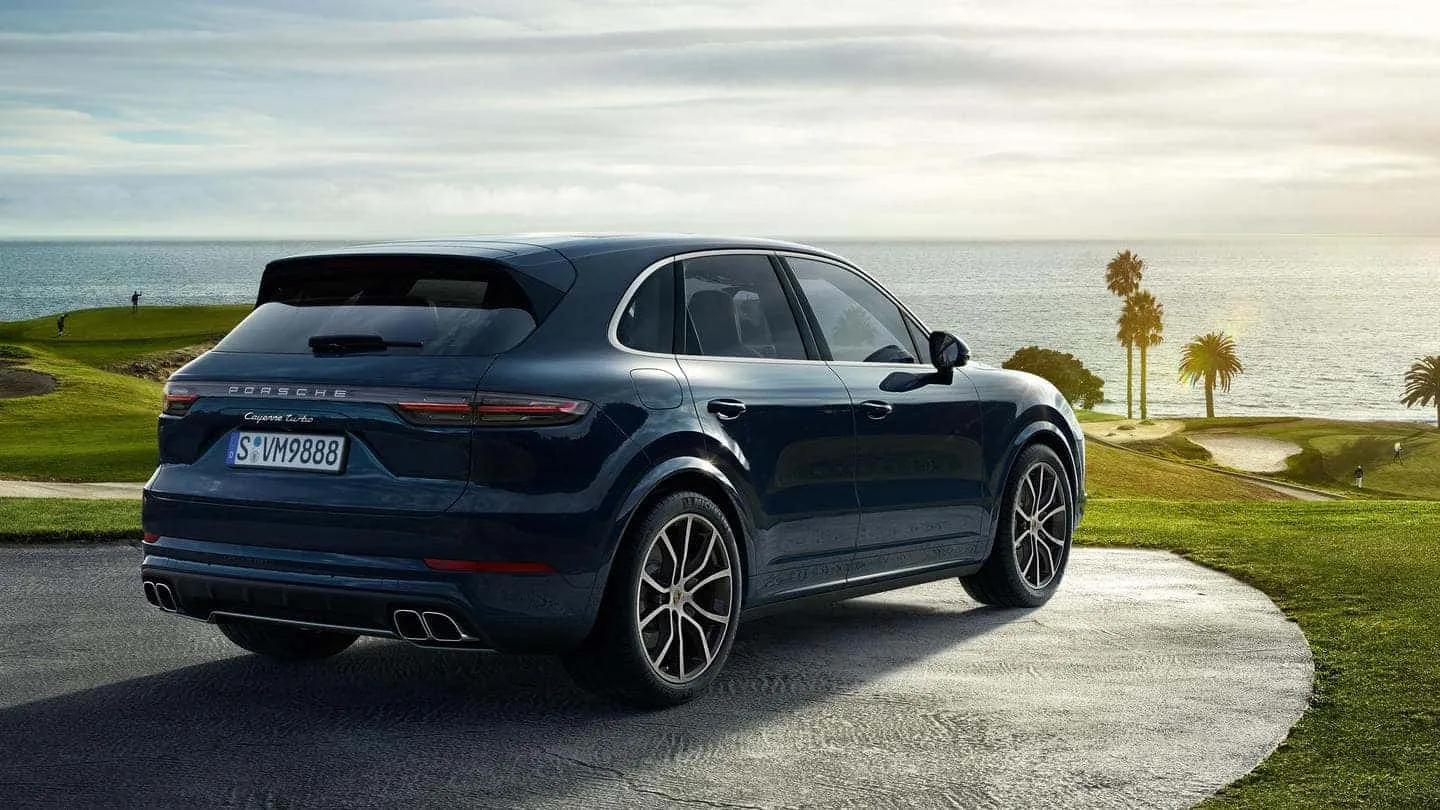
A front bumper replacement on the Cayenne with full ADAS recalibration routinely costs $4,000 to $6,000 at Porsche dealers. The thermal camera for Night Vision, if damaged, adds $2,000 to $3,000 in parts costs alone. Front radar replacement and recalibration adds another $1,500 to $2,500. A single minor front-end collision on a Cayenne can generate a repair bill that approaches or exceeds $8,000.
The Cayenne’s Surround View system, which uses cameras integrated into the door mirrors and front and rear bumpers, creates additional recalibration exposure. Mirror-mounted cameras are particularly vulnerable to parking lot side-swipes and low-speed urban impacts. Replacing a mirror assembly on the Cayenne requires camera recalibration for the Surround View system. This adds $400 to $700 to what might otherwise appear to be a simple mirror replacement job.
Porsche owners tend to carry excellent insurance coverage, which partially insulates them from the shock of high recalibration bills. However, the frequency of ADAS-related claims on the Cayenne has not gone unnoticed by insurance actuaries. Insurance premiums for the Cayenne have risen significantly in markets with high urban collision rates. Some insurers now specifically price in ADAS recalibration exposure when calculating Cayenne policy rates.
The Cayenne’s exceptional driving dynamics mean it is often driven more enthusiastically than many competing luxury SUVs. This raises the statistical likelihood of minor collision events over the vehicle’s lifetime. Owners should budget for at least one significant ADAS recalibration event during a typical three to five year ownership period.
8. Tesla Model X (2021–2024)
The Tesla Model X approaches driver assistance technology from a fundamentally different direction than its traditional automotive rivals. Tesla’s entire ADAS and autonomous driving strategy is built around a camera-only system, rejecting the radar-based approach used by most competitors.
Current Model X vehicles use eight external cameras positioned around the vehicle to provide 360-degree visibility. Tesla’s Full Self-Driving and Autopilot systems process all input exclusively from these cameras using onboard neural network hardware. The elimination of radar creates a different calibration challenge compared to sensor-fusion systems. Each camera must be aimed and calibrated to very precise angles to ensure the AI can accurately interpret its visual inputs.
A minor front-end collision that requires bumper or hood replacement on the Model X can disturb the front three cameras simultaneously. Tesla’s front-facing cameras are mounted in the front fascia and at the base of the windshield. Even small angular deviations in camera alignment can cause Autopilot to misinterpret lane positions, vehicle distances, or obstacle locations. Recalibration after a front-end impact is not optional on a Tesla if the owner wants Autopilot to function reliably.
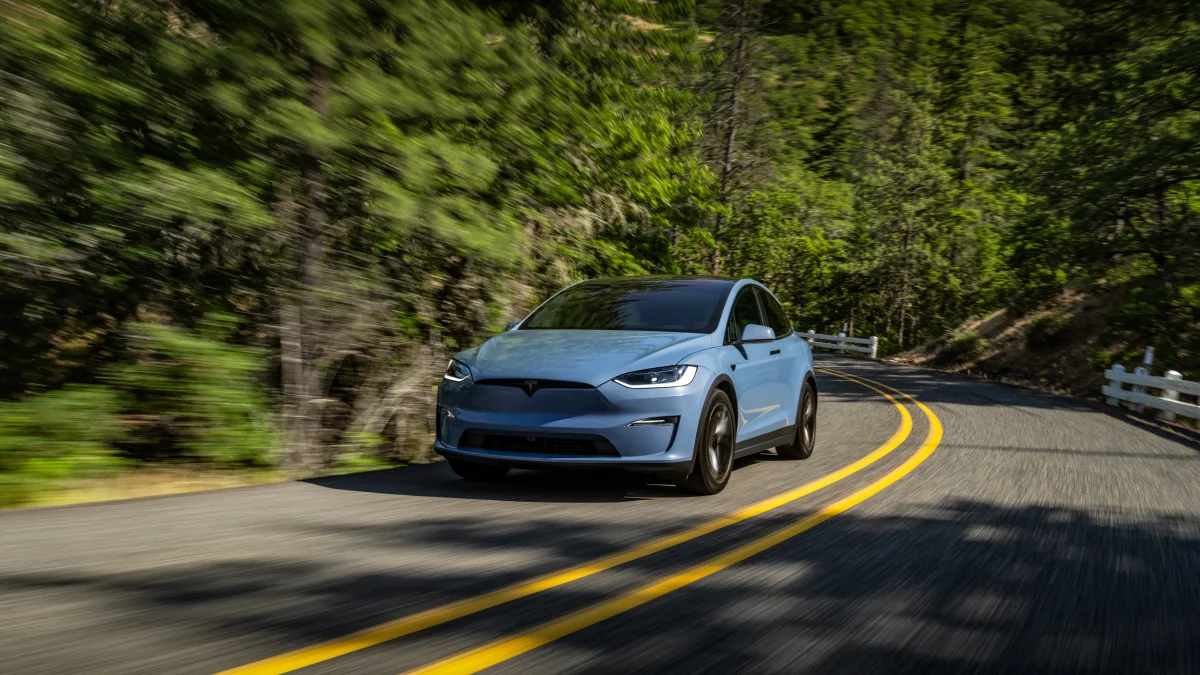
Tesla recalibration is performed primarily through a dynamic process that involves driving the vehicle at normal speeds on roads with visible lane markings. The vehicle’s onboard systems use visual data to self-calibrate the cameras over a period of several miles of driving. However, this process only works within certain alignment tolerances. If cameras are physically misaligned beyond acceptable limits by body damage, physical adjustment must precede the dynamic calibration drive.
At Tesla Service Centers, camera replacement and recalibration costs vary significantly by the camera’s position and the extent of damage. A single front-facing camera replacement with recalibration costs $600 to $1,200 at Tesla Service Centers. When multiple cameras require attention after a collision, total costs reach $2,000 to $3,500 easily.
The Model X’s falcon wing rear doors add an unusual ADAS vulnerability not found in conventional SUVs. Each falcon wing door contains sensors and cameras that monitor obstacles during the door’s complex opening sequence. A side-swipe impact on a falcon wing door can damage these door-mounted sensors. Replacing and recalibrating the door sensor system adds $800 to $1,500 to the total repair cost.
Tesla’s over-the-air software updates occasionally change calibration parameters, which means recalibration requirements can evolve even without physical damage. Some Model X owners have reported that major software updates temporarily disrupted Autopilot functionality until a recalibration drive was completed. This software-driven recalibration need is unique to Tesla and represents an ongoing ownership consideration that traditional automaker customers do not face.
9. Jeep Grand Cherokee L (2021–2024)
The Jeep Grand Cherokee L represents an unexpected entry on this list, as Jeep is not typically associated with the ultra-premium sensor packages found on European luxury SUVs. However, the three-row Grand Cherokee L packs a surprisingly extensive ADAS suite that carries significant post-collision recalibration costs.
The Grand Cherokee L offers Forward Collision Warning with Active Braking, Adaptive Cruise Control with Stop, Lane Centering, Blind Spot Monitoring, Rear Cross Path Detection, and a full 360-degree Surround View Camera system. Higher trims also add a Night Vision camera mounted in the front bumper, similar to the Porsche Cayenne’s system. This combination of features creates a sensor density that rivals vehicles costing significantly more.
Stellantis, which owns the Jeep brand, has integrated these systems using a multi-camera and multi-radar architecture. The forward radar is embedded in the lower front fascia, directly behind the brand’s iconic seven-slot grille insert. The Grand Cherokee L is frequently used for light off-road driving and towing, exposing the front lower fascia to impacts from trail debris and towing situations. This use pattern makes front sensor damage more likely than on equivalent road-focused luxury SUVs.
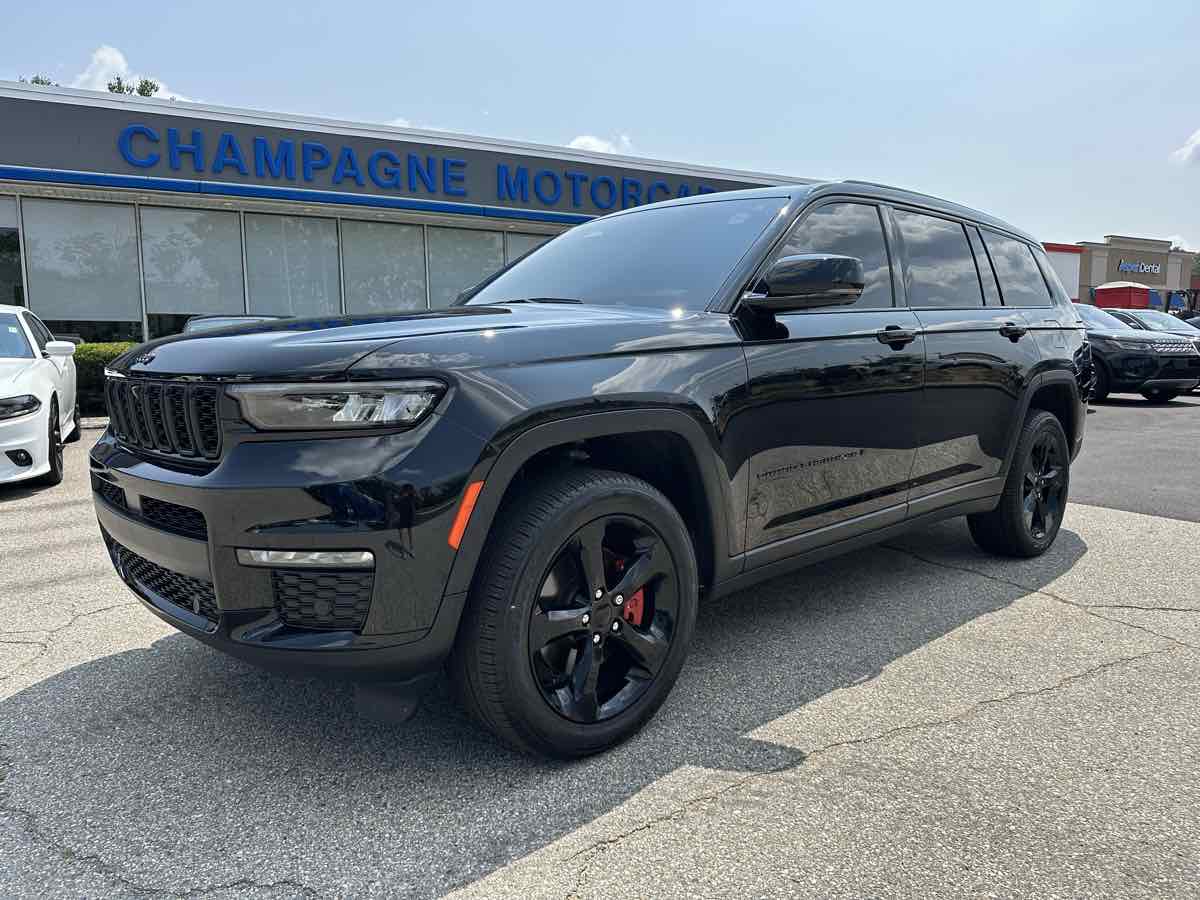
Front ADAS recalibration costs on the Grand Cherokee L have surprised many owners who expected Jeep-level repairs to be more affordable than German competitors. Dealer estimates for front radar recalibration run $700 to $1,100 at Jeep dealerships. Adding front camera recalibration pushes the total to $1,400 to $2,000. If the front fascia requires replacement, the combination of parts and full recalibration regularly crosses $3,000.
The Night Vision camera option, found on Summit Reserve and higher trims, adds $2,500 to $3,500 in replacement cost if the front bumper unit is damaged. This single component transforms a moderate front-end repair into a major insurance event. Many buyers opt for Night Vision without fully considering its replacement cost implications. The feature’s value must be weighed carefully against this financial exposure.
The Grand Cherokee L’s 360-degree Surround View Camera system is integrated into the front fascia, door mirrors, and rear liftgate. Mirror cameras are particularly exposed to side-swipe damage in parking situations.
Replacing both mirror camera assemblies with full surround view recalibration costs $900 to $1,500. Combined with front or rear ADAS work, total recalibration bills on the Grand Cherokee L routinely exceed $2,500 after moderate collisions.
Jeep’s dealer service network has faced criticism for inconsistent ADAS recalibration quality compared to European luxury brand dealers. Several owner forums document cases where recalibration work had to be repeated after initial attempts failed to fully restore system function.
Owners are advised to verify all ADAS functions thoroughly after any repair involving sensor components. Requesting a written post-recalibration systems check is strongly recommended before accepting the vehicle from the dealer.
The Grand Cherokee L represents a cautionary example of how modern technology costs have reached deeply into the mainstream luxury segment.
A vehicle that costs considerably less than a German flagship SUV can generate repair bills that rival those of its more expensive competitors. Buyers who choose the Grand Cherokee L for its value proposition should ensure their insurance coverage fully accounts for its sophisticated and expensive ADAS sensor suite.
Also Read: Subaru Holds Consumer Reports Top Brand Spot Two Years Running
