
The automotive world moves fast. Every few years, manufacturers reveal sweeping redesigns with bold new styling, updated platforms, and cutting-edge technology. But not every car follows that script.
Some vehicles stay on sale for years, sometimes nearly a decade, wearing the same basic sheet metal they debuted with, long after rivals have moved on to the next generation.
In 2026, a surprisingly large number of brand-new cars sitting in dealership showrooms still carry designs that were laid down in 2017 or 2018, when smartphones still had headphone jacks and streaming services were just starting to take over.
These aren’t failures or forgotten relics. Many of them are among the most beloved, best-selling, and most iconic vehicles. Their longevity tells a story of enduring appeal, designs so good, or concepts so strong, that time simply hasn’t diminished them.
Whether it is the indestructible utility of a Jeep, the timeless silhouette of a Porsche, or the Italian drama of an Alfa Romeo, these cars prove that age is not always the enemy of greatness. Here are 8 cars you can still buy brand-new in 2026 that trace their core design DNA directly back to 2017 or 2018.
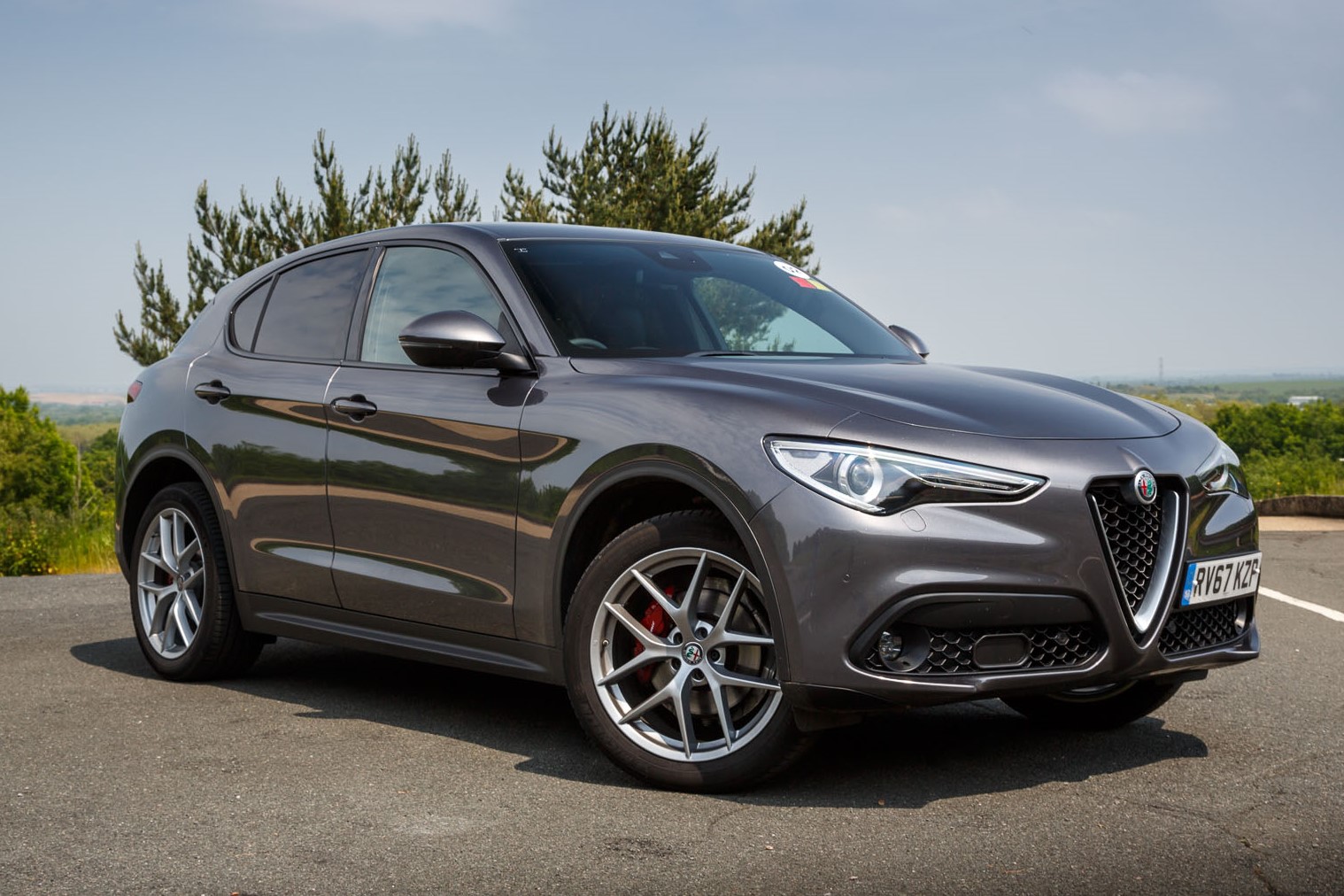
1. Alfa Romeo Stelvio (Designed 2016, On Sale 2017)
The Alfa Romeo Stelvio arrived in global showrooms in 2017, and it immediately made every other compact luxury SUV look a little boring. It was gorgeous, aggressive, and unlike anything else in its segment. Fast forward to 2026, and that same fundamental design is still on sale, barely changed on the outside, and carrying the same spiritual mission it always had.
Alfa Romeo extended the production of the current Stelvio deliberately. The company confirmed that a full redesign would not arrive until 2027, meaning the 2026 model year represents the last hurrah for the original generation.
Rather than apologizing for its age, Alfa Romeo has leaned into what makes this car special. The Stelvio remains one of the most driver-focused SUVs you can buy at any price.
At the heart of the 2026 Stelvio sits a turbocharged 2.0-litre four-cylinder engine producing 280 horsepower and 306 lb-ft of torque. Paired with an eight-speed automatic transmission and standard Q4 all-wheel drive, the Stelvio sprints from zero to 60 mph in approximately 5.4 seconds.
- Engine: 2.0-liter Turbocharged Inline-4
- Horsepower: 280 hp @ 5,500 rpm
- Torque: 306 lb-ft @ 2,000 rpm
- Length: 184.6 in (approx. 4,689 mm)
- Width: 74.9 in (approx. 1,902 mm)
That is a figure that still beats the base engines of rivals like the BMW X3 and Mercedes-Benz GLC. The Stelvio’s party piece has always been its handling. Built on the same Giorgio platform as the Giulia sedan, it uses double-wishbone front suspension and a five-link rear, giving it a dynamic character that feels far more sports car than crossover.
The cabin is where you notice the years most clearly. The materials are of good quality, but the infotainment system and layout reflect an older era of design. Alfa has added wireless Apple CarPlay and Android Auto to keep things current.
The 12.3-inch digital instrument cluster features three different display layouts, Evolved, Relax, and Heritage, inspired by Alfa Romeo’s motorsport heritage. Standard safety equipment now includes automatic emergency braking, blind-spot monitoring, and adaptive cruise control.
What makes the 2026 Stelvio fascinating is that it remains one of the sharpest-looking SUVs on the road despite being nearly a decade old. Its sculpted flanks, the bold V-shaped Scudetto grille, and the tapered roofline still attract attention in a way that many newer designs simply do not.
For those who want to own a piece of Italian automotive history before the nameplate transforms into something new, the 2026 model represents a final opportunity.
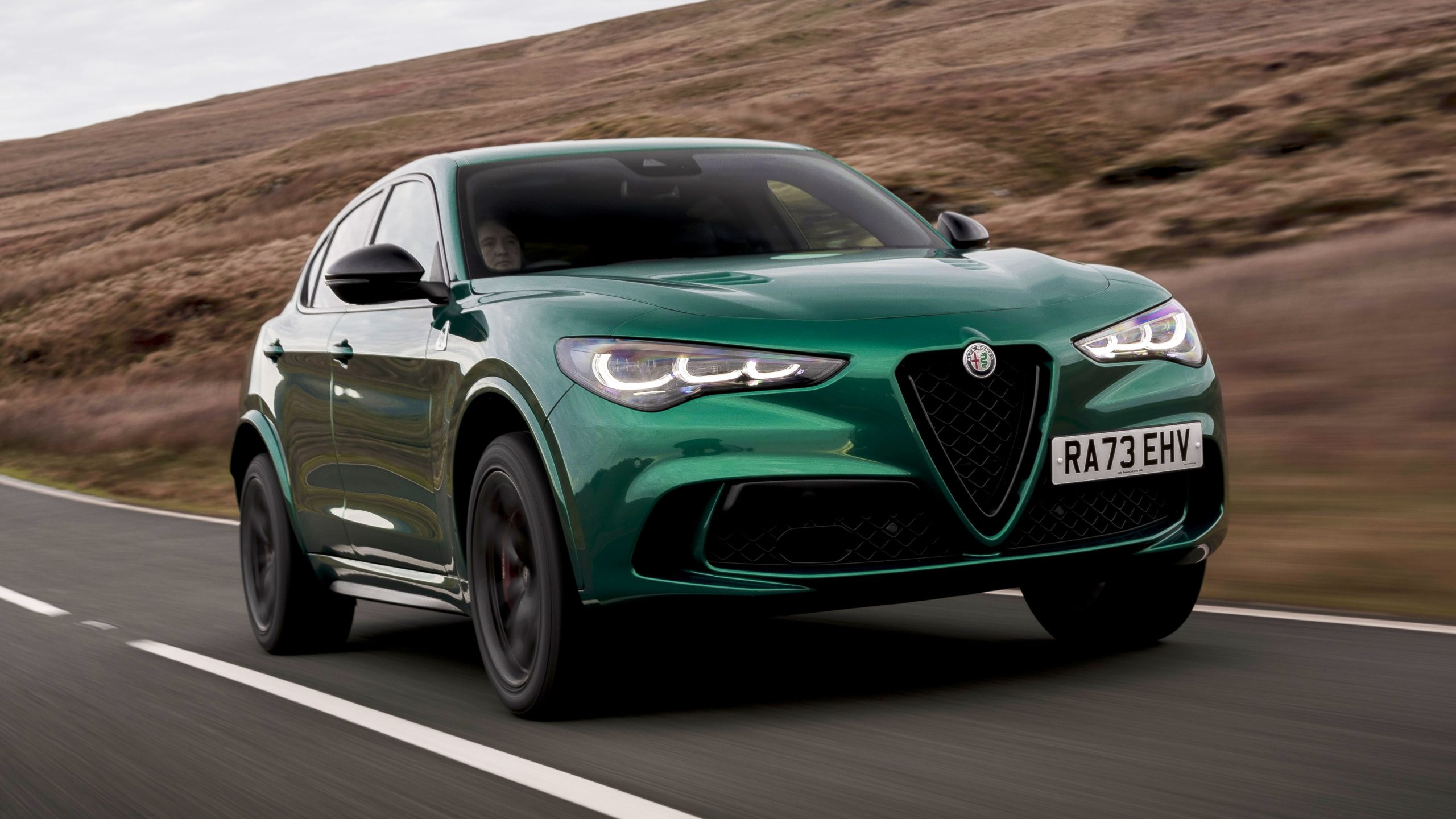
2. Alfa Romeo Giulia (Designed 2016, On Sale 2016–Present)
Like its SUV sibling, the Alfa Romeo Giulia launched in 2016 on the same Giorgio platform and has been wearing an essentially unchanged body ever since.
It arrived as a serious challenge to the BMW 3 Series and Mercedes C-Class, a rear-wheel-drive Italian sports sedan with genuine driver engagement. In 2026, it remains exactly that: passionate, quick, and beautifully styled.
The Giulia is one of the best-looking sedans ever made. Its proportions are near-perfect, with a long hood, short overhangs, a low roofline, and muscular rear haunches that give it an athletic stance from every angle. Italians have a phrase for it: bella figura. It looks like a car that is moving even when standing still. A decade has done little to diminish this effect.
- Engine: 2.0-liter Turbocharged Inline-4
- Horsepower: 280 hp
- Torque: 306 lb-ft
- Length: 182.8 in (approx. 4,643 mm)
- Width: 73.7 in (approx. 1,872 mm)
For 2026, the Giulia continues with its turbocharged 2.0-litre four-cylinder engine as the standard offering, producing 280 horsepower and 306 lb-ft of torque.
Rear-wheel drive is standard; all-wheel drive is available. The eight-speed automatic is slick and quick-shifting, and the car’s weight distribution is near-perfect at 50/50.
At just over 3,300 pounds, the Giulia is meaningfully lighter than most of its German rivals. That weight advantage translates directly into more communicative, more rewarding driving dynamics.
The Giulia Quadrifoglio, while discontinued in certain markets, still lives on as a cultural touchstone. The standard Giulia’s handling and steering feel remain class-leading.
Adaptive suspension, precise electric power steering, and a rigid chassis give it a level of driver involvement that the BMW 3 Series and Mercedes C-Class often struggle to match. Critics have long pointed to the Giulia’s interior as its weakest point, but Alfa has gradually improved materials and infotainment connectivity over the years.
In 2026, the Giulia represents something rare: a sports sedan that prioritizes driving above all else, still available new, still thrilling, and still Italian in the most passionate sense of the word.
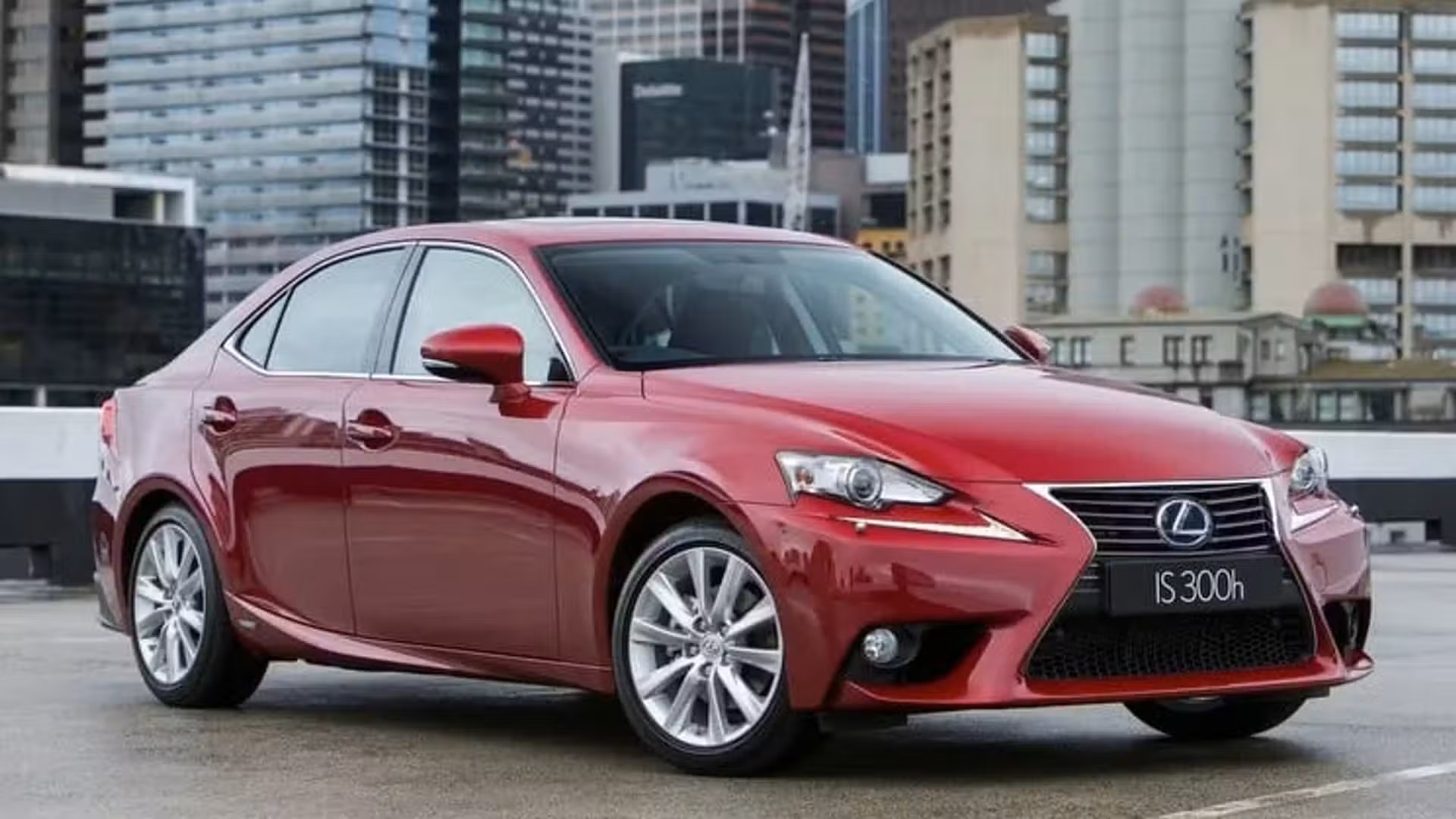
3. Lexus IS (Third Generation, In Production Since 2013)
The third-generation Lexus IS debuted at the 2012 Paris Motor Show for the 2014 model year, making it one of the longest-lived luxury car generations in recent history. It has now been through three distinct facelifts in 2017, 2020, and again for 2026 without ever receiving a true ground-up redesign. Yet here it is, still on sale, still sporting, and still desirable.
The 2026 IS represents the most thorough refresh the car has received in years. Lexus redesigned the front fascia with its new corporate nose and a broader spindle grille interpretation.
The interior gains a welcome 12.3-inch infotainment screen, replacing the old eight-inch unit that was beginning to show its age. New rack-parallel electric power steering improves handling feel, and a linear solenoid-type adaptive suspension sharpens the ride-handling balance. These are not minor tweaks, they are substantive improvements that meaningfully move the car forward.
- Engine: 3.5-liter Naturally Aspirated V6
- Horsepower: 311 hp
- Torque: 280 lb-ft
- Length: 185.4 in (approx. 4,709 mm)
- Width: 72.4 in (approx. 1,839 mm)
For 2026, the IS is available only as the IS 350, powered by a 3.5-litre naturally aspirated V6 producing 311 horsepower and 280 lb-ft of torque. The turbocharged four-cylinder IS 300 and the thunderous V8-powered IS 500 are no longer offered.
The IS 350 comes in rear-wheel-drive or all-wheel-drive configurations. With RWD and the eight-speed automatic, zero to 60 mph arrives in 5.6 seconds, respectable, if not class-leading. With AWD, the six-speed automatic takes the sprint to 5.7 seconds.
What the IS 350 offers that newer rivals cannot is character. The V6 is naturally aspirated and sings beautifully toward its redline in a way that modern turbocharged engines simply do not.
The F Sport tuning firms up the suspension and adds sporty visual elements. Lexus Safety System+ 3.0 becomes standard, bringing automatic emergency braking, adaptive cruise control, lane departure steering assist, and more. The IS 350 goes on sale in early 2026, with pricing to be announced closer to launch.
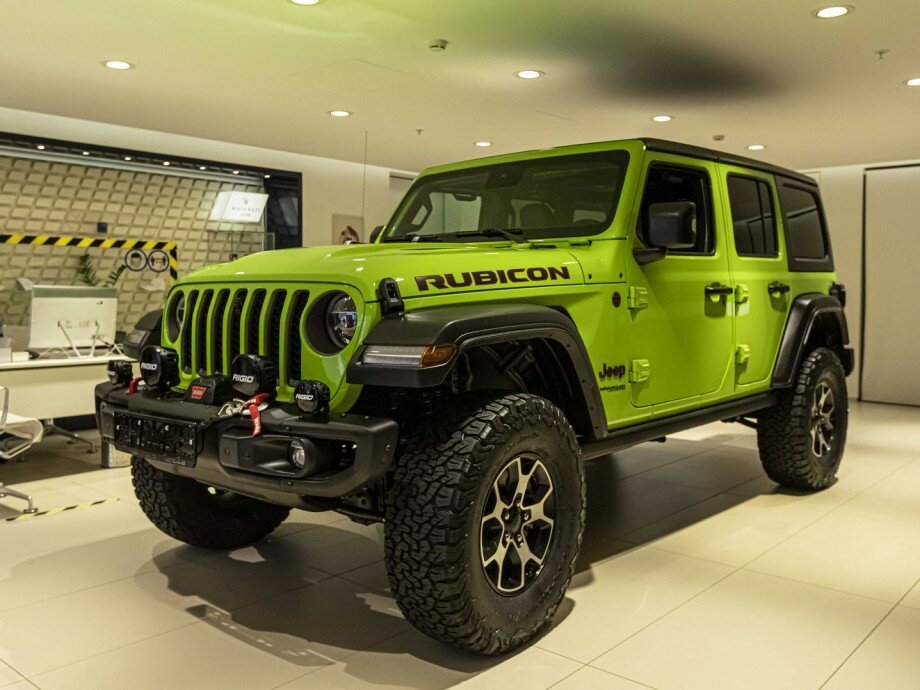
4. Jeep Wrangler JL (Launched 2018)
The fourth-generation Jeep Wrangler, internally known as the JL, launched for the 2018 model year and brought with it a suite of modernizations: more efficient engines, improved on-road manners, a better interior, and a host of new technology.
Yet it retained everything that made a Wrangler a Wrangler: removable doors, a fold-down windshield, solid axles, and that unmistakable seven-slot grille. In 2026, the JL-generation Wrangler carries on without apology.
The 2026 Wrangler retains its iconic boxy silhouette, upright stance, and exposed door hinges. Jeep has introduced several special editions for 2026, including the Whitecap Edition with retro CJ-inspired graphics and the Rockslide Edition with steel rock rails and Blue Agave exterior accents.
The lineup spans from the base Sport to the extreme Rubicon and the rare Commando 392 variant, available exclusively to active military and veterans. Trim options number over a dozen, ensuring there is a Wrangler for virtually every taste and use case.
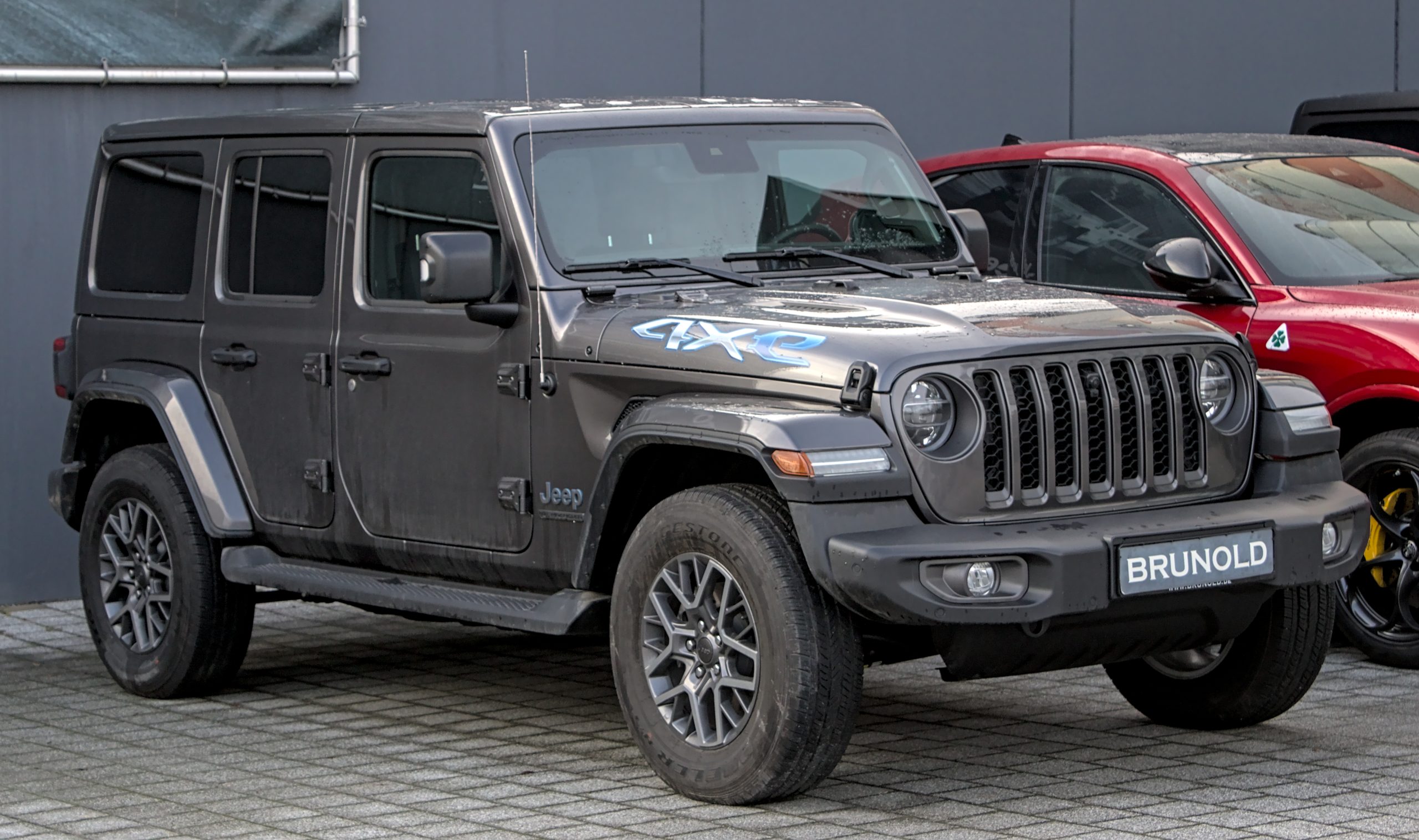
- Engine: 3.6-liter Pentastar V6
- Horsepower: 285 hp
- Torque: 260 lb-ft
- Length: 188.4 in (approx. 4,785 mm)
- Width: 73.9 in (approx. 1,877 mm)
Power comes from a choice of engines, including the 3.6-litre Pentastar V6 producing 285 horsepower and 260 lb-ft of torque, the 2.0-litre turbocharged four-cylinder making 270 horsepower and 295 lb-ft, and the 3.0-litre EcoDiesel V6 delivering 260 horsepower and a diesel-strong 442 lb-ft of torque.
The 4xe plug-in hybrid continues to offer electric-only driving of up to approximately 21 miles. Off-road credentials remain unmatched in the segment. The Rubicon trim features front and rear locking differentials, disconnecting sway bars, and rock-rail protection for serious trail work. Ground clearance on the Rubicon tops 10.8 inches.
The fifth-generation Uconnect infotainment system is standard, with up to an 8.4-inch touchscreen and wireless smartphone connectivity. A 12-inch screen is available on upper trims.
The Wrangler’s appeal endures not because it is the most refined vehicle on the road, it most certainly is not. It endures because it is capable of things that no crossover can match, while being just comfortable enough for daily driving. That balance has defined Jeep for decades.
Also Read: 8 SUVs Where Owners Hit 500,000 Without Major Repairs
5. Porsche 911 992 Generation (Launched 2019)
The Porsche 911 is perhaps the greatest argument in automotive history that design continuity is not a weakness but a strength. The 992 generation, the eighth evolution of the 911, was introduced in November 2018 for the 2019 model year.
In 2026, updated as the 992.2, it continues on the same fundamental platform, the same iconic silhouette, and the same rear-engine layout that has defined Porsche since 1963.
The 2026 lineup is expansive. There are now more than 20 variants of the 911, spanning Coupe, Cabriolet, and Targa body styles across Carrera, Carrera T, Carrera S, Carrera 4S, GTS, and Turbo S designations.
Prices range from $134,650 for the Carrera Coupe to $286,650 for the Turbo S Cabriolet. The biggest news for 2026 is the Turbo S, which now employs Porsche’s revolutionary T-Hybrid system.
This mild-hybrid setup integrates an electric motor into the eight-speed PDK transmission and uses electric exhaust gas turbochargers to eliminate lag entirely. Total system output reaches 701 horsepower, the most powerful production 911 ever made.
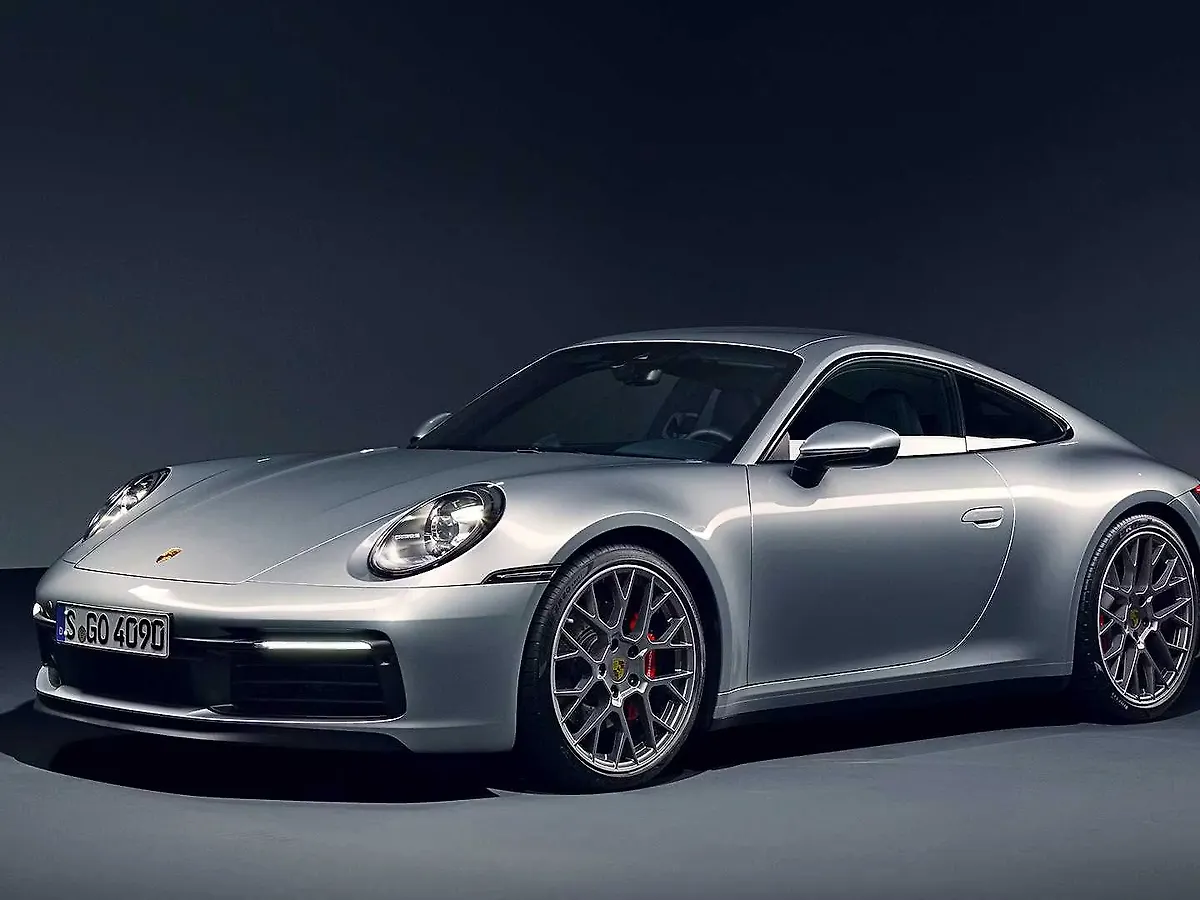
- Engine: 3.0-liter Flat-6 Twin-Turbo
- Horsepower: 379 hp
- Torque: 331 lb-ft
- Length: 177.9 in (approx. 4,519 mm)
- Width: 72.9 in (approx. 1,852 mm)
Standard Carrera models continue with a twin-turbocharged 3.0-litre flat-six. In the Carrera, it produces 379 horsepower. The Carrera S and 4S make 473 horsepower.
Even the base Carrera will reach 60 mph from rest in around 4.0 seconds with the Sport Chrono package. The GTS adds the T-Hybrid system with a combined output of 532 horsepower, enabling a 0-60 time of 2.9 seconds.
The 911’s exterior silhouette has barely changed from the 992.1 to 992.2. Subtle revisions to the front fascia, wider rear arches, and slim LED tail lamps that stretch across the engine cover are the primary visual differences from the original 2019 launch car.
Inside, Porsche has kept the iconic central tachometer as the focal point of the instrument cluster. The 10.9-inch Porsche Communication Management touchscreen is now supplemented by Amazon Alexa integration and improved software responsiveness.
According to the JD Power 2025 Initial Quality Study, the 911 ranks highest in the Premium Sporty Car segment. Year after year, it wins the benchmark comparison tests. It does so while carrying a design architecture that is now seven model years old.
6. Chevrolet Express Van (Launched 1996, Still Sold in 2026)
No list of long-running designs would be complete without the Chevrolet Express. Launched in 1996 as a replacement for the G-Series van, the Express is in 2026, marking its 30th year of production with no fundamental redesign.
It is arguably the most extreme example of design longevity in the modern automotive market, a full-size passenger and cargo van that has essentially looked the same since the Clinton administration.
The Express competes in a world that has largely moved on. Ford replaced its Econoline with the Transit over a decade ago. Ram’s ProMaster is modern and efficient. Mercedes-Benz, Volkswagen, and Ford offer vans with advanced diesel engines, tall rooflines, and upright cargo spaces designed for urban delivery.
The Express, by contrast, is a conventional American body-on-frame van with a forward-cab design dating back to the 1990s. It is honest about what it is and who it is for.
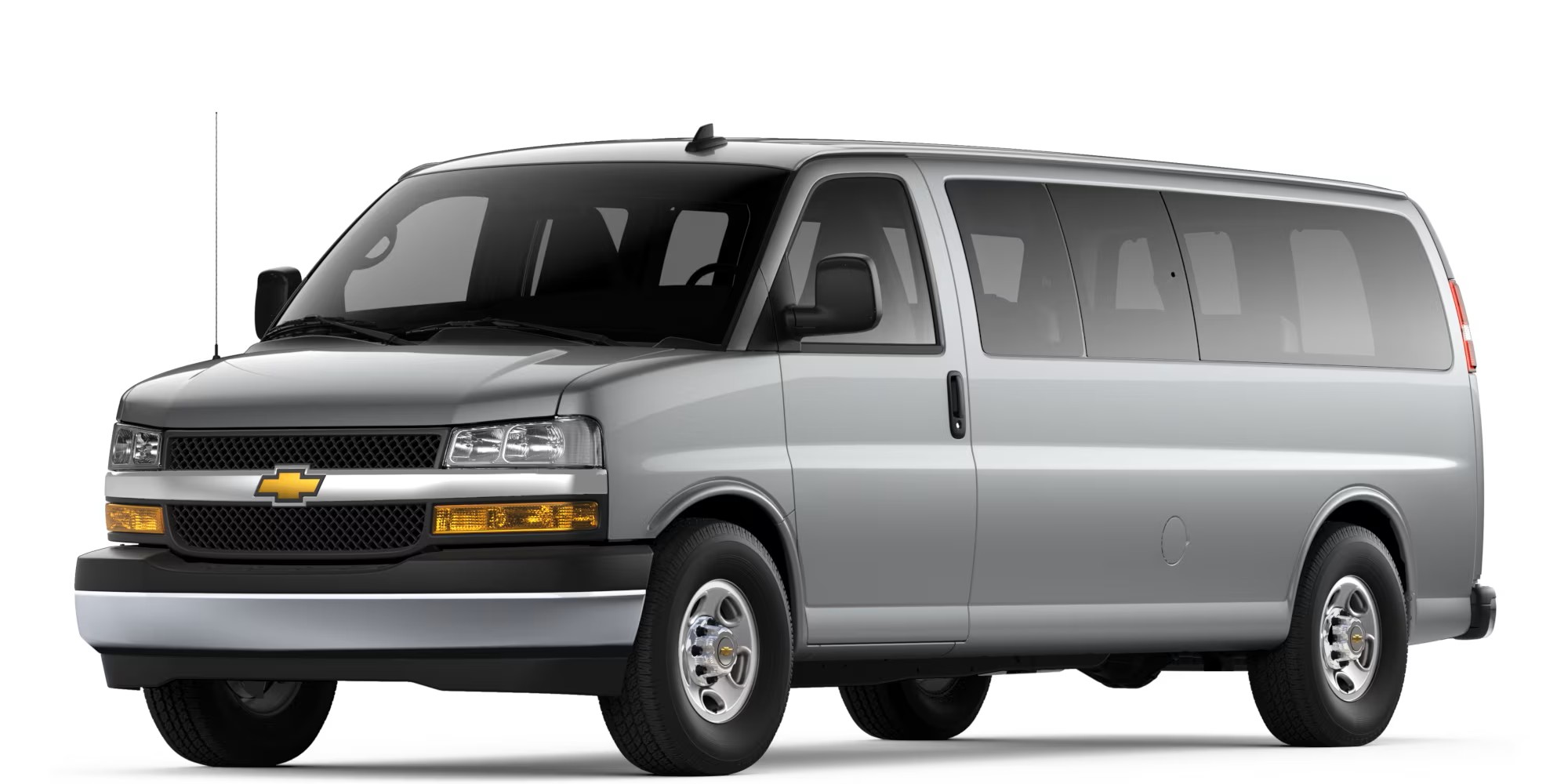
- Engine: 6.2-liter V8
- Horsepower: 401 hp
- Torque: 464 lb-ft
- Length: 224.1 in (approx. 5,692 mm)
- Width: 79.4 in (approx. 2,017 mm)
For 2026, the Express continues with its 4.3-litre V6 and the more popular 6.2-litre V8, the latter producing 401 horsepower. A 2.8-litre turbocharged Duramax diesel is also available. Rear-wheel drive is standard; all-wheel drive is optional.
The Express comes in cargo, passenger (up to 15 seats), and cutaway configurations. Government agencies, churches, airport shuttle operators, and trades contractors continue to buy it in volume because it is reliable, simple, cheap to maintain, and already understood by every technician in the country.
Incremental improvements over the decades include updated safety electronics, a modern 8-inch infotainment screen, and a standard rear camera. But the fundamental body, platform, and driving character remain rooted in 1996.
The Express is not glamorous. But it represents something the automotive industry often forgets: for many buyers, a vehicle is a tool. And a tool that works does not need to be replaced.
7. Ford F-250 / F-350 Super Duty (Current Generation: 2017)
The current generation of Ford’s Super Duty heavy-duty pickup truck launched for the 2017 model year, introducing an all-new aluminum-intensive body and redesigned frame after the previous generation ran from 2008 to 2016.
Ford followed it with updates in 2020 and again in 2023, but the fundamental design, the proportions, the greenhouse, and the cab structure remain rooted in that 2017 launch. In 2026, the Super Duty soldiers on with refreshed details but the same essential form.
The Super Duty’s design is deliberately purposeful. The tall boxy hood, the wide-set headlamps, and the massive front grille are all calculated to project strength and utility.
The 2026 model receives some additional styling touches, revised grille treatments on certain trims, updated lighting signatures, but you would need to look carefully to distinguish a 2026 model from a 2018 one in traffic.
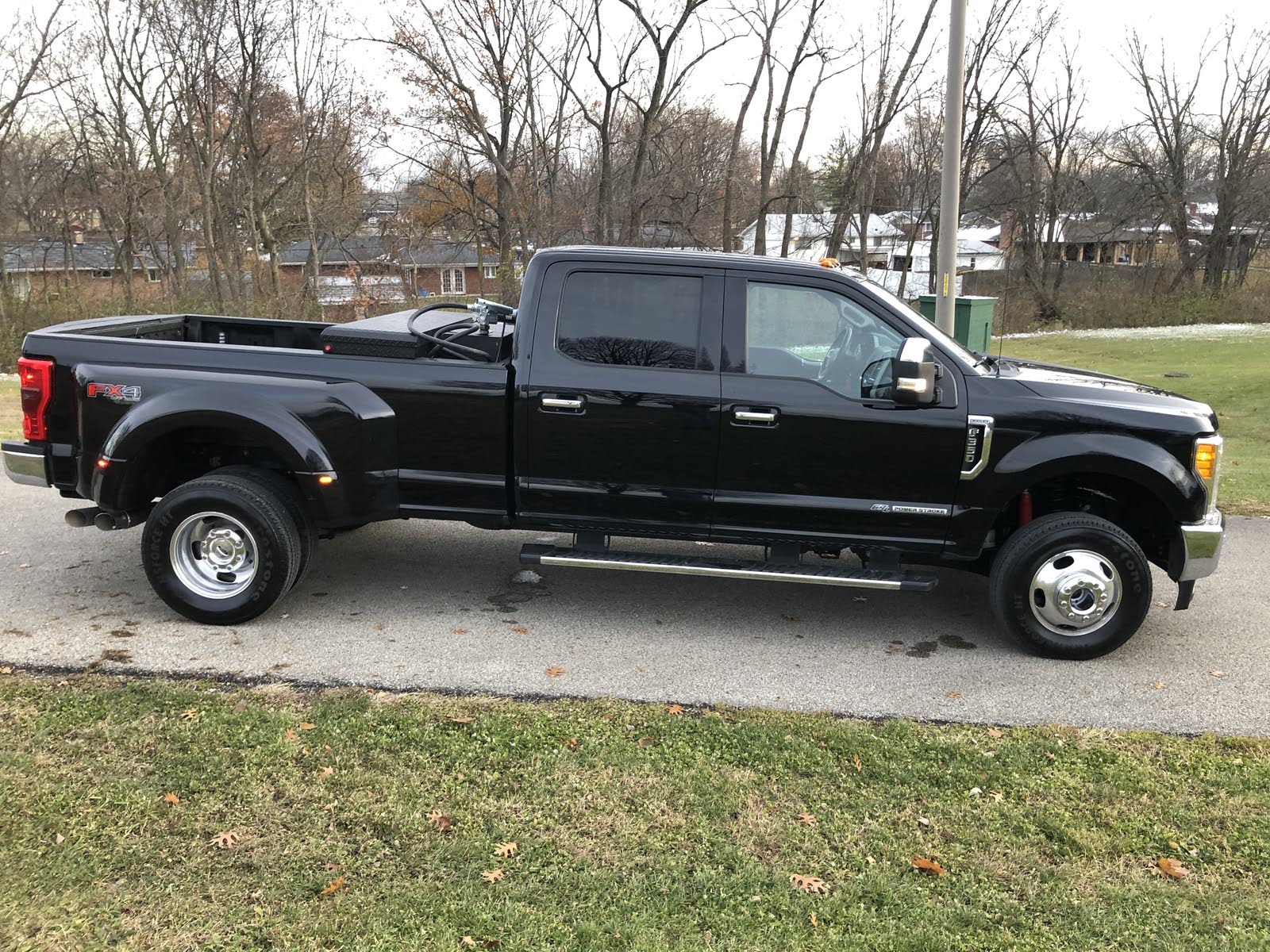
- Engine: 6.7-liter Power Stroke Diesel V8
- Horsepower: 500 hp
- Torque: 1,200 lb-ft
- Length: 250.0 in (approx. 6,350 mm)
- Width: 80.0 in (approx. 2,032 mm)
What the Super Duty offers is unmatched towing and payload capability. The 6.7-litre Power Stroke diesel V8 produces 500 horsepower and an enormous 1,200 lb-ft of torque.
The F-350 dually can tow up to 40,000 pounds in the right configuration, a number that no light-duty truck and very few medium-duty trucks can match.
The gasoline option is a 7.3-litre V8 producing 430 horsepower and 475 lb-ft, alongside the 6.8-litre V8 making 405 horsepower. These are engines for people who work their trucks to the bone every single day.
Inside, the 2026 Super Duty offers an available 15.5-inch touchscreen with Ford’s SYNC 4 system, heated and ventilated seats, and a host of Pro Power Onboard generator capability up to 7.2 kW of exportable power from the truck’s engine.
The interior quality has improved markedly over recent model updates. But from the outside, this is still fundamentally a 2017-born truck making its way through 2026 showrooms.
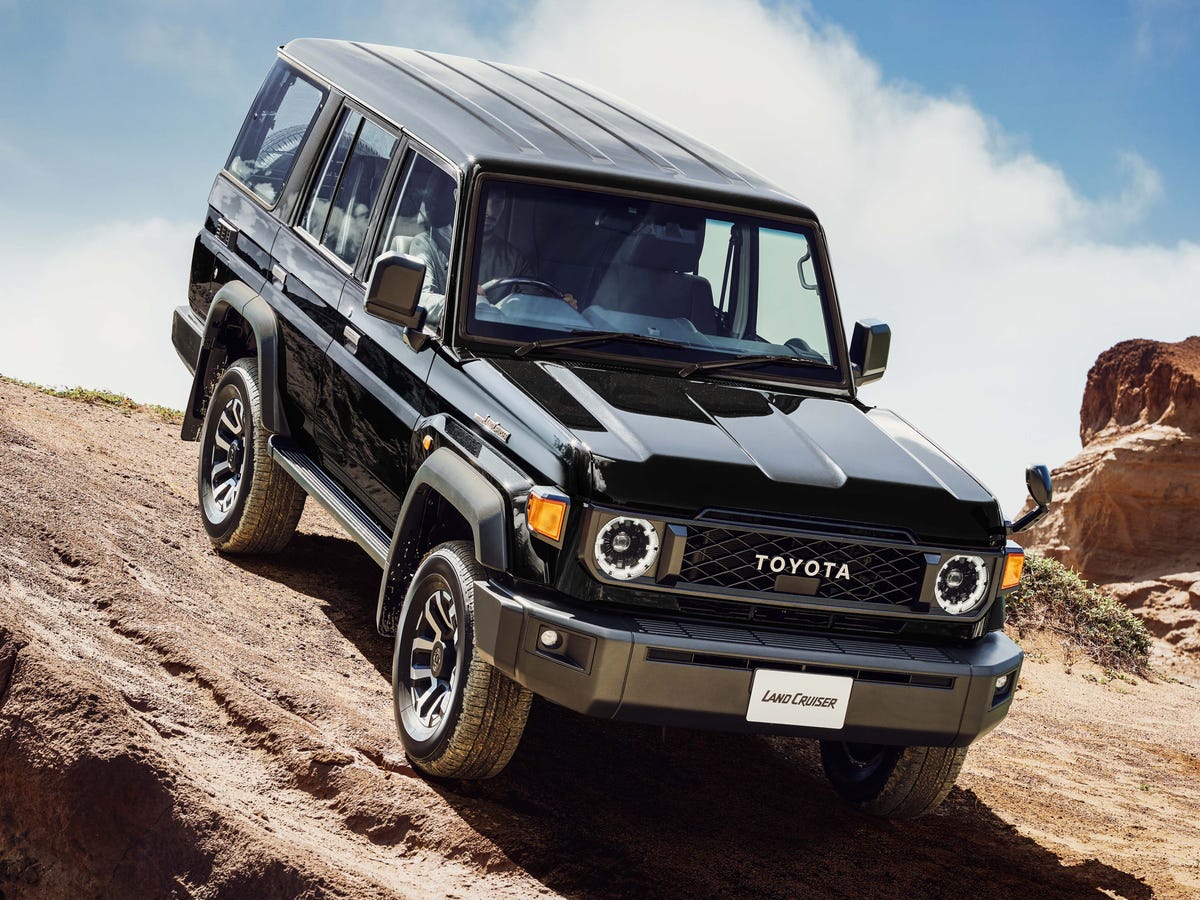
8. Toyota Land Cruiser 70 Series (Original Design: 1984 Still Sold Globally in 2026)
The Toyota Land Cruiser 70 Series is, without question, the most extreme example on this list. First launched in 1984 as the successor to the legendary 40 Series, the J70 Land Cruiser has been in continuous production for over four decades. In 2026, it is still being sold new in markets including Australia, South Africa, and Japan, with a body and character that trace directly back to its 1984 debut.
The J70 did receive one significant facelift during its life, the front end was updated in the early 2000s with squarer headlamps matching other Toyota trucks of that era. Interestingly, as of recent production, it has reverted somewhat toward round headlights reminiscent of the original, while maintaining a near-identical silhouette to the car that launched in 1984. Buy one in 2026 and you are purchasing arguably the closest thing to a brand-new 1980s 4×4 that money can buy.
- Engine: 2.8-liter Turbocharged Inline-4 Diesel
- Horsepower: ~204 hp
- Torque: ~369 lb-ft
- Length: 192.5 in (approx. 4,890 mm)
- Width: 70.3 in (approx. 1,785 mm)
In modern production specs, the 70 Series is available in wagon, pick-up, and Troopy (troop carrier) body styles. The powertrain has been updated over the decades.
The current iteration uses a 2.8-litre turbocharged diesel four-cylinder engine producing approximately 204 horsepower and 369 lb-ft of torque, paired with a six-speed manual or automatic transmission.
Part-time four-wheel drive, a solid front axle, and a solid rear axle give it mechanical simplicity that is genuinely unmatched by any modern SUV. There are no independent suspension components to bend or break on rough trails.
The 70 Series is not imported to the United States due to emissions and safety regulations, which makes it one of the great forbidden fruits of the automotive world.
But in the markets where it is available, it sells consistently and commands fierce loyalty from farmers, mining companies, park rangers, and anyone who needs a vehicle that will start in extreme conditions, carry heavy loads, and still be repairable by a bush mechanic in the middle of nowhere. In the age of touchscreen-laden crossovers, the 70 Series is a reminder that sometimes the best technology is no technology at all.
Also Read: 10 Cars Owners Routinely Drive Past 350,000 Miles
