
The 1960s were one of the most explosive decades in automotive history. The world watched in awe as the Ford Mustang ignited a pony car revolution, the Ferrari 250 GTO became a rolling legend, and the Lamborghini Miura redefined what a supercar could be. These famous names have never faded from public memory, and they likely never will.
But history is rarely so simple. For every celebrated classic that found its place in the spotlight, there were dozens of extraordinary machines that quietly disappeared into the mist of time.
Some were killed by corporate politics, others by bad timing or inadequate funding. A few simply suffered from the cruel misfortune of arriving in a market already crowded with more famous rivals.
The 1960s were so overflowing with automotive brilliance that even genuinely impressive sports cars could be overlooked and eventually forgotten.
This article takes a closer look at ten of the most remarkable sports cars from that golden decade, machines that deserved far more recognition than history gave them.
From elegant Italian grand tourers powered by American V8 engines to nimble British lightweight coupes built on plywood, these ten cars represent some of the boldest and most fascinating engineering ideas of their era.
1. Gordon-Keeble GK1 (1964–1967)
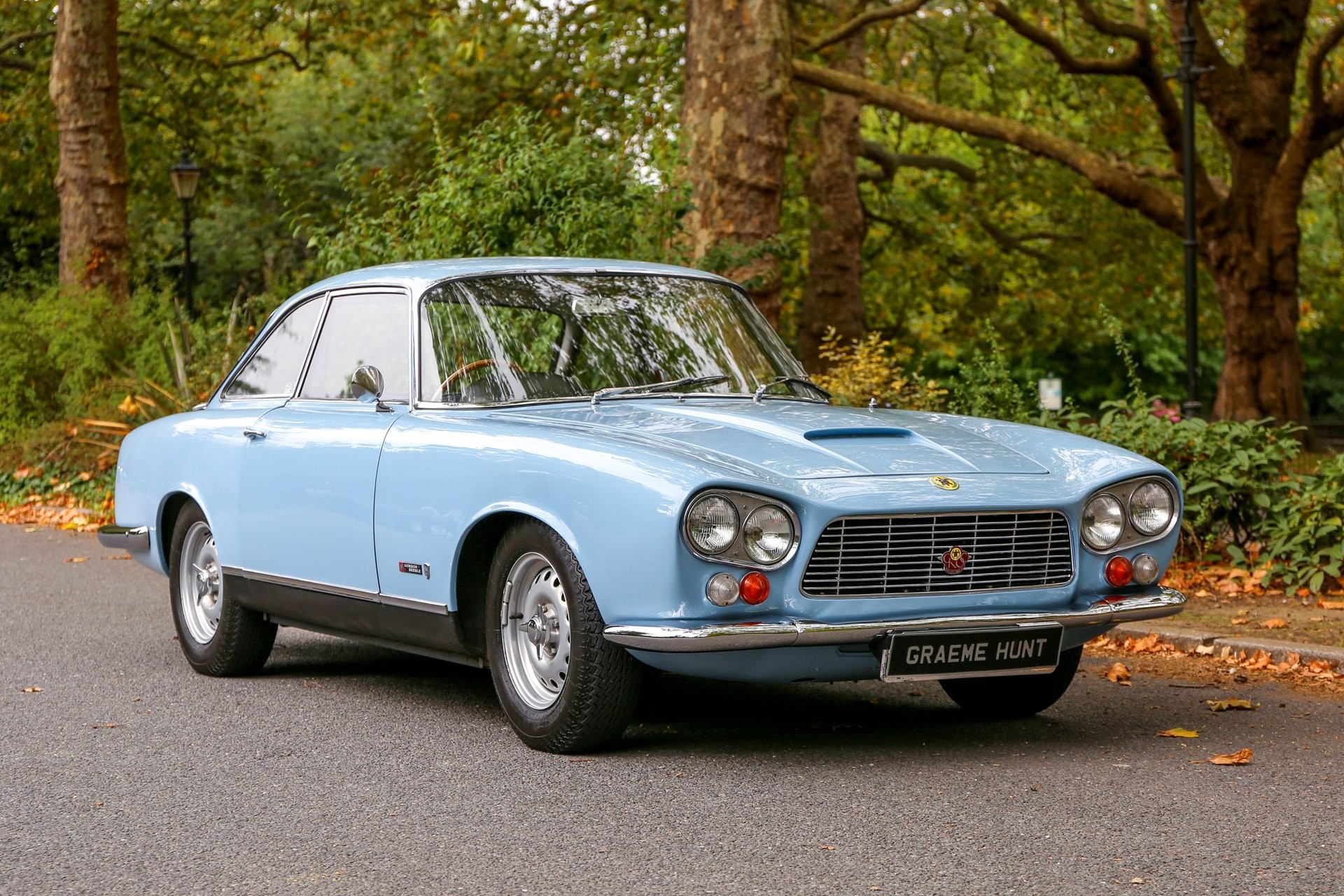
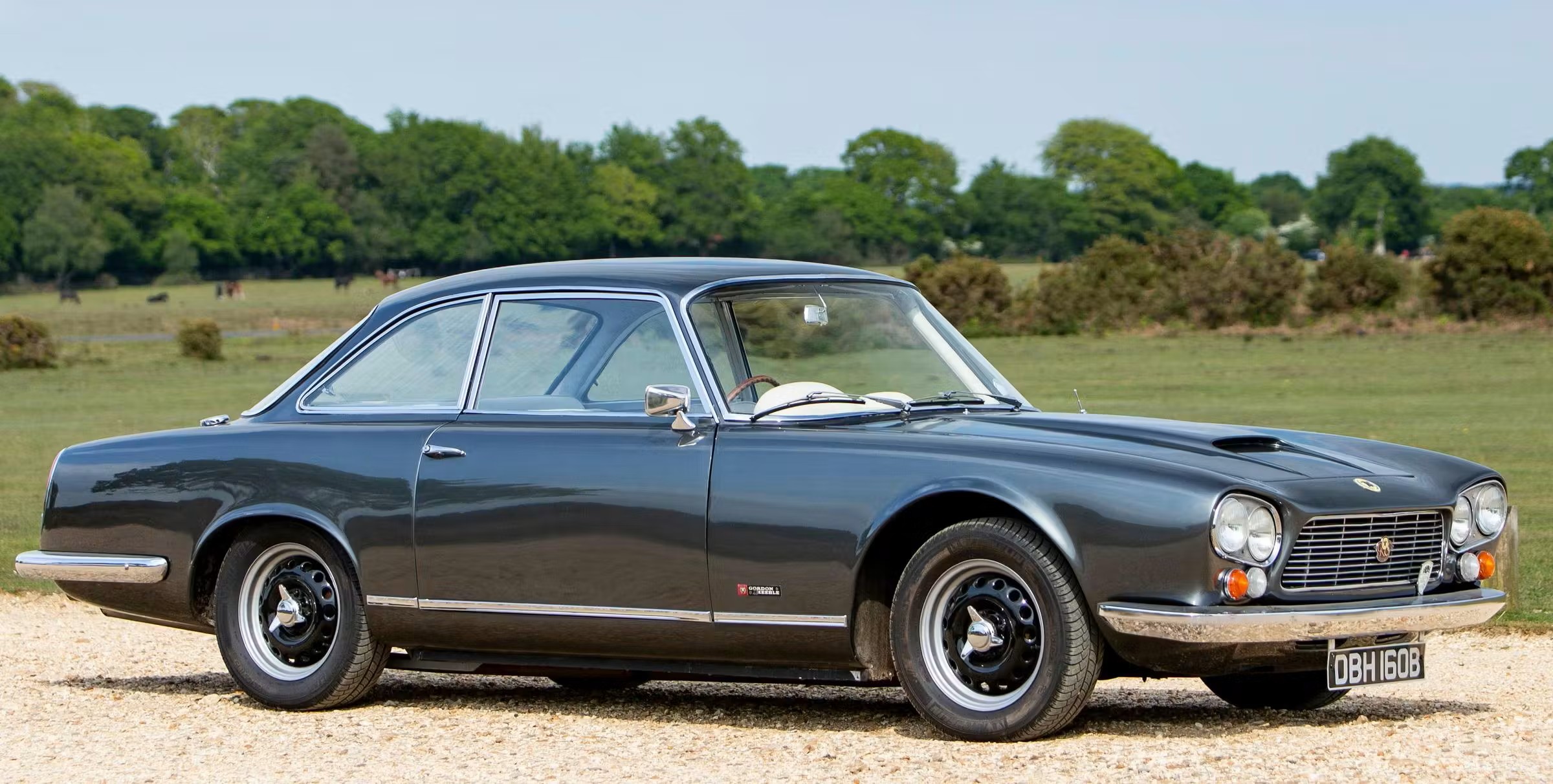
The Gordon-Keeble GK1 is one of automotive history’s most poignant what-ifs. It was a car that had everything, breathtaking Italian styling, American muscle, and British engineering, yet it survived in production for barely two years before financial ruin ended the dream.
The story began in 1959 when British engineer Jim Keeble and motoring enthusiast John Gordon joined forces to create a grand touring car unlike anything Britain had produced before.
They recruited a then 21-year-old designer named Giorgetto Giugiaro, who was working at Bertone, to style the body. Giugiaro’s design was sweeping and confident, with a long hood, a low glassfibre body, and a shape that was simply stunning.
The prototype appeared at the Geneva Motor Show in 1960 on the Bertone stand, where it caused an immediate sensation. Journalists called it one of the most exciting cars they had ever seen.
Production finally began in 1964, and the completed car was every bit as formidable as the prototype had promised. The Gordon-Keeble used a square-section tubular spaceframe chassis clothed in a fibreglass body manufactured by Williams and Pritchard in England.
Specifications:
- Engine: 5.4-litre Chevrolet 327 V8 (OHV, 4-speed manual)
- Horsepower: 300 bhp @ 5,000 rpm
- Torque: 360 lb-ft @ 3,200 rpm
- Length: 184 in (4,674 mm)
- Width: 68 in (1,727 mm)
Beneath the long hood sat a Chevrolet Corvette-derived V8 engine displacing 5.4 litres. The chassis featured independent front suspension with coil springs and unequal-length wishbones, while the rear used a sophisticated De Dion axle with a Watts linkage and parallel trailing arms.
Girling disc brakes with dual servo assistance were fitted at all four corners. In period testing, motoring journalists consistently praised the car’s composure and its ability to combine serious performance with genuine refinement.
The Gordon-Keeble was the fastest four-seat car in Britain at its launch. Only 100 examples were produced in total before the company folded in 1967, making the GK1 one of the rarest grand tourers of its era.
The GK1’s failure came down almost entirely to pricing and production problems. The company never managed to manufacture cars quickly enough to cover its operating costs.
Despite a product that outperformed many rivals from Ferrari and Aston Martin at a fraction of the price, Gordon-Keeble simply could not survive the brutal economics of small-volume manufacturing.
Today, of the 100 cars built, at least 94 are believed to have survived a testament to how deeply their owners valued them. The car that nearly conquered the grand touring world lives on quietly in the hands of devoted collectors.
2. Iso Grifo (1965–1974)
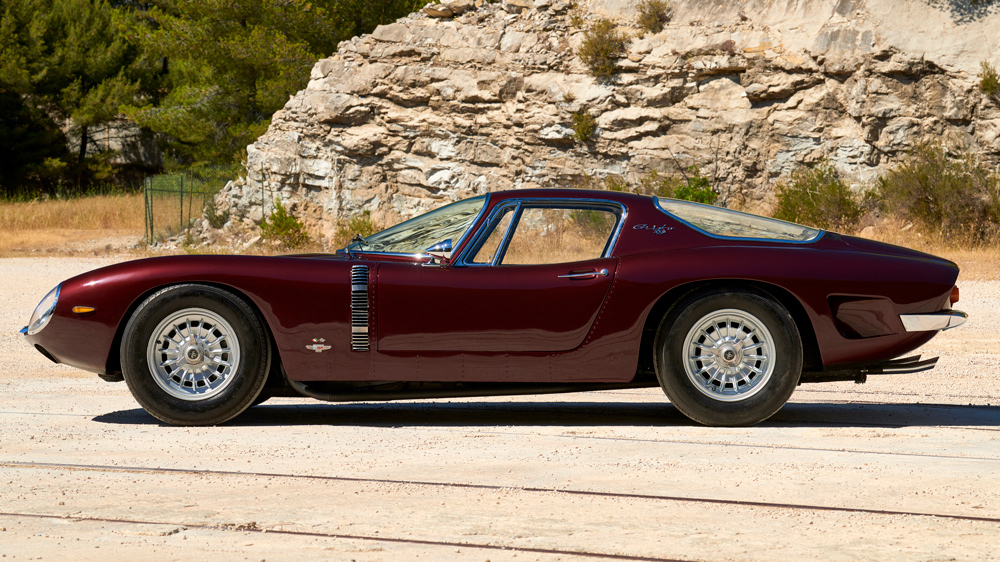
Italy in the 1960s produced some of the most beautiful automobiles ever built, and the Iso Grifo sits near the very top of that glittering list. Styled by the young Giorgetto Giugiaro at Bertone and engineered by Giotto Bizzarrini, the genius behind the Ferrari 250 GTO, the Grifo was an extraordinary synthesis of Italian artistry and American mechanical muscle.
Renzo Rivolta, who had made his fortune building refrigerators and motorbikes, wanted to enter the luxury GT market. He hired Bizzarrini to engineer the chassis and Bertone to style the body, creating a car that combined a Chevrolet V8 engine with a beautifully crafted Italian body.
The Grifo debuted at the Turin Motor Show in 1963, initially as the A3/L concept, before entering production in 1965. From the very first glance, it was clear this was a serious machine. Twin headlights per side flanked a long, low hood, a fastback roofline gave way to distinctive slatted cooling vents, and the stance was wide, aggressive, and utterly purposeful.
Specifications:
- Engine: 5.4-litre Chevrolet 327 V8 (standard) / 7.0-litre Chevrolet 427 V8 (optional)
- Horsepower: 295–435 bhp (depending on variant)
- Torque: 360 lb-ft @ 3,200 rpm (GL300)
- Length: 174.4 in (4,430 mm)
- Width: 69.7 in (1,770 mm)
The engineering was equally impressive. Bizzarrini pushed the heavy V8 as far back in the engine bay as possible to improve weight distribution, a lesson he had learned while developing the 250 GTO at Ferrari.
The chassis was a shortened version of the Iso Rivolta platform, built from welded steel with a wheelbase of 2,500 mm. Suspension was fully independent at the front and rear, and four-wheel disc brakes provided serious stopping power.
The road-going GL300 version used the Chevrolet 327 V8 in a state of tune that produced strong and reliable power. An even more aggressive GL365 variant with higher-output tuning was also available from the outset.
Only around 413 examples of all series were built across the Grifo’s nine-year production life. The car has never achieved the fame of its Ferrari and Maserati contemporaries, largely because Iso lacked the racing heritage and brand mystique of those legendary marques.
Yet in pure engineering terms, the Grifo was often their equal and sometimes their superior. Today, it remains one of the most underappreciated grand tourers of the entire 1960s era.
3. Bizzarrini 5300 GT Strada (1965–1968)
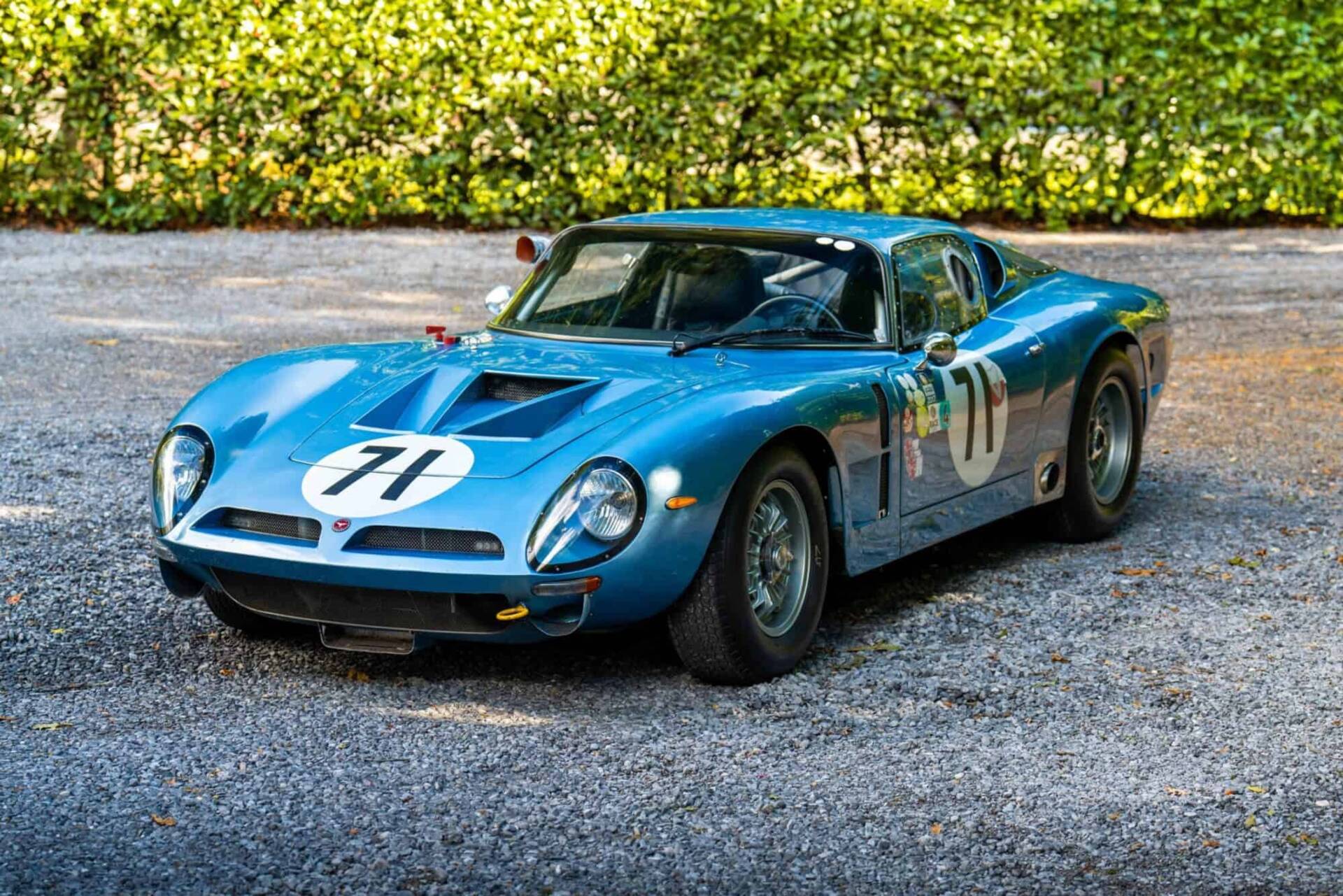
After his acrimonious split from Iso Rivolta, Giotto Bizzarrini did what any self-respecting engineering genius would do, he built his own car. The result was the 5300 GT Strada, one of the most capable and fearsome-looking sports cars of the entire decade, and one that is almost completely unknown outside a small circle of dedicated enthusiasts.
Bizzarrini had been the chief engineer behind the Ferrari 250 GTO before being fired in the famous “Palace Revolt” of 1961. He then worked on the Iso Grifo chassis before striking out under his own name.
The 5300 GT Strada used a platform derived from the Iso Rivolta IR 300, but Bizzarrini radically lowered the body and moved the heavy V8 as far rearward as possible in the engine bay.
The car sat just 44 inches tall, giving it an almost impossibly menacing silhouette. Its long hood, wide haunches, and deeply raked windscreen made it look like a racing car that had been given a token nod to road legality. That was, in many ways, exactly what it was.
Specifications:
- Engine: 5.4-litre Chevrolet 327 V8 (OHV, 4-speed BorgWarner T-10 manual)
- Horsepower: 365 bhp @ 6,000 rpm
- Torque: 376 lb-ft @ 3,500 rpm
- Length: 175.6 in (4,460 mm)
- Width: 69.3 in (1,760 mm)
The Strada used a 5.4-litre Chevrolet small-block V8, the same basic unit found in many of its contemporaries, but Bizzarrini’s blueprinting and tuning process wrung exceptional performance from it.
The car featured a fully independent suspension setup with coil springs at all four corners, Girling disc brakes all around, and a low centre of gravity that gave it extraordinary handling balance.
Light alloy bodywork reduced weight significantly, giving the Strada a power-to-weight ratio that made many far more expensive machines look pedestrian.
Just 133 examples were built between 1964 and 1968, making the 5300 GT one of the rarest and most extraordinary road cars of the decade. Bizzarrini’s company ultimately failed due to a lack of capital and the complexities of small-volume production.
The car that should have made him a household name became instead a footnote, known only to specialists who can appreciate just how remarkable it truly was.
4. Monteverdi High Speed 375 (1967–1976)
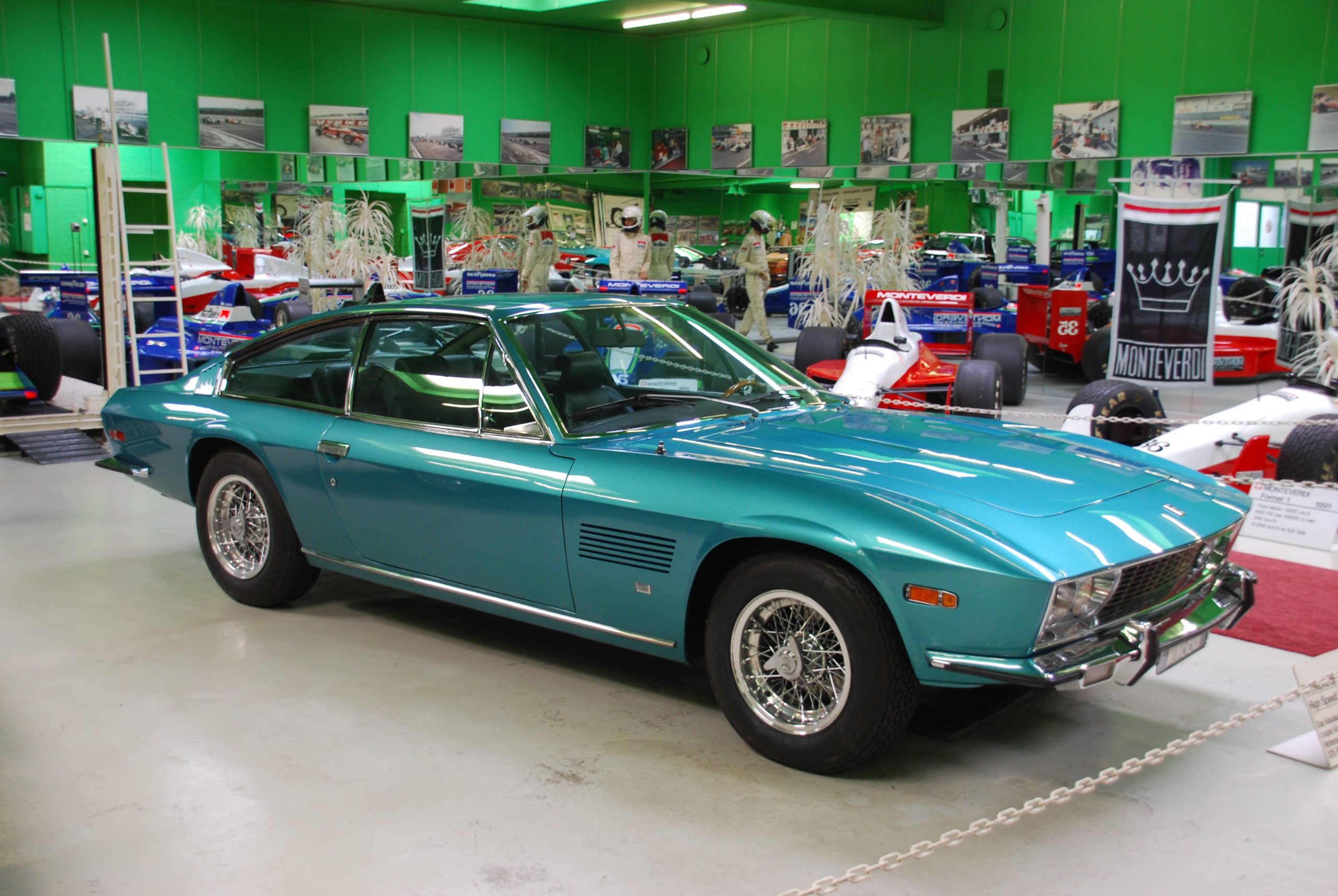
Switzerland is not a country typically associated with sports car manufacturing, but in 1967, a young Swiss racing driver named Peter Monteverdi stunned the automotive world by revealing the High Speed 375S at the Frankfurt Motor Show.
It was an audacious creation: a beautifully styled grand tourer from a tiny nation, powered by a massive American Chrysler V8, bodied by the Italian coachbuilder Pietro Frua, and offered at a price that put it directly in competition with Ferrari and Maserati.
Monteverdi had made his name as a racing driver and garage owner before deciding to build his own car. He had virtually no capital and no manufacturing heritage, yet his self-confidence was absolute.
The ‘375’ designation came from the claimed 375 horsepower of the Chrysler 440 Magnum V8 that powered the car. Frua’s styling was elegant and purposeful, with a long hood, a fastback roofline, and a clean, unfussy body surface that gave the car a timeless quality.
Contemporary observers noted similarities with the Maserati Mistral, which Frua had also styled, but the Monteverdi had its own strong character.
Specifications:
- Engine: 7.2-litre Chrysler 440 Magnum V8 (OHV, 3-speed TorqueFlite automatic / 4-speed manual)
- Horsepower: 375 bhp @ 4,600 rpm
- Torque: 481 lb-ft @ 2,800 rpm
- Length: 181 in (approx.)
- Width: 70.7 in (approx.)
The technical package was straightforward but effective. The chassis was a substantial ladder-frame structure with independent front suspension and a live rear axle.
The Chrysler 440 Magnum V8 delivered tremendous torque across a wide rev range, making the Monteverdi an effortless long-distance cruiser. The interior was lavishly appointed, with hand-stitched leather and deep pile carpeting that rivalled the finest British and Italian grand tourers of the period.
A Hemi-engined variant using Chrysler’s famous 426 Hemi V8 could also be ordered for those who wanted even more power. The Monteverdi High Speed was produced in relatively small numbers across its production life. It found a loyal customer base among wealthy European buyers who wanted Ferrari-like exclusivity with more manageable running costs.
Yet beyond this small circle, the car has remained almost entirely forgotten. Peter Monteverdi’s achievement in building a credible luxury sports car from scratch, in Switzerland of all places, deserves far greater recognition than history has afforded him.
Also Read: 9 SUVs With Repair Bills Over $8,000 After Year
5. De Tomaso Vallelunga (1964–1967)
Long before De Tomaso became synonymous with brutal Ford V8 power in the Mangusta and Pantera, the company’s Argentine founder, Alejandro de Tomaso, built something far more delicate and technically fascinating.
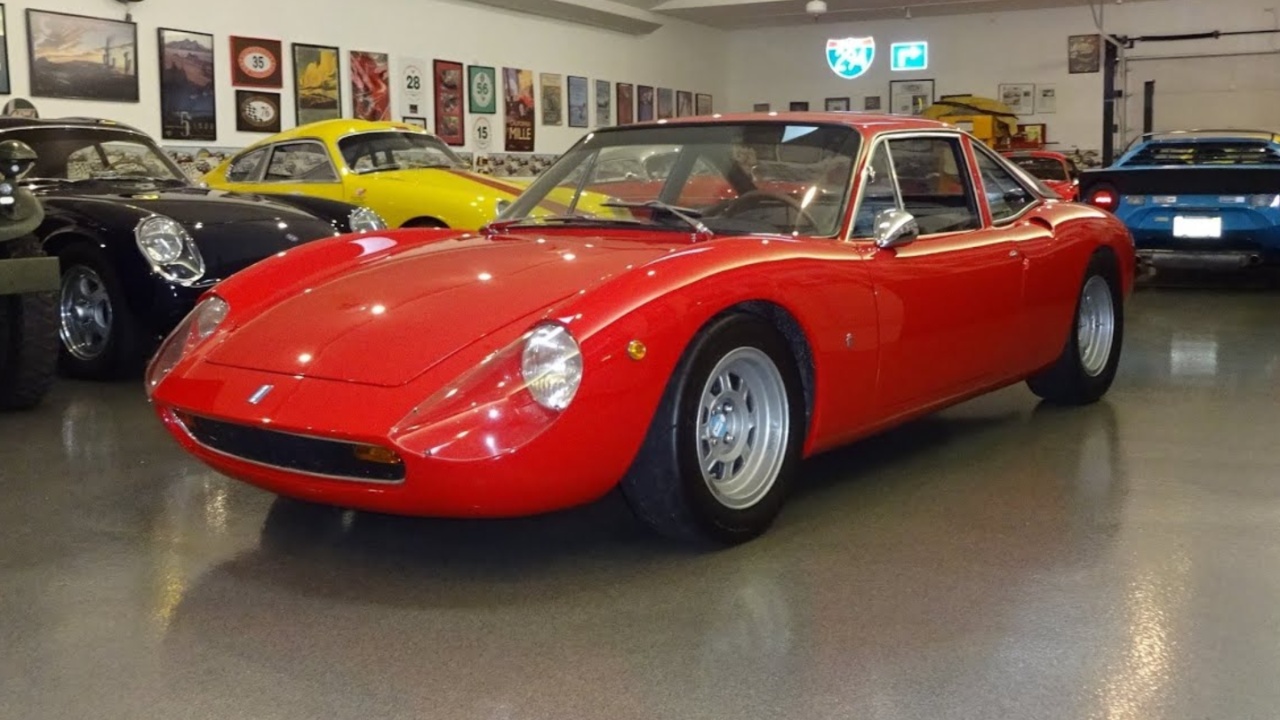
The Vallelunga was De Tomaso’s first road car, and it was only the second production automobile to use a mid-engine layout, predated only by the obscure ATS sports car of 1963.
De Tomaso had arrived in Modena in 1959 after a colourful past that included both racing and political intrigue in Argentina. He set up his company building Formula Junior and Formula racing cars before turning his attention to a road car. The Vallelunga was introduced at the Turin Motor Show in 1963 and went into limited production the following year.
Its body was styled by Giorgetto Giugiaro and built in fibreglass by Ghia, giving it a clean, coupe shape with hints of Ferrari 250 LM and Dino 206 in its lines. The result was a strikingly pretty car that punched well above its humble mechanical origins.
Specifications:
- Engine: 1.5-litre Ford Kent inline-4 (OHV, 4-speed manual)
- Horsepower: 105 bhp
- Torque: ~90 lb-ft
- Length: 151.2 in (3,840 mm)
- Width: 63.0 in (1,600 mm)
The engine was a 1.5-litre Ford Cortina Kent four-cylinder mounted longitudinally behind the cockpit, ahead of the rear axle. It produced a modest 105 bhp, but the Vallelunga weighed just 726 kg, barely more than a thousand and a half pounds.
The backbone chassis was a pressed steel monocoque with a tubular rear sub-frame. The suspension used Formula-inspired double-wishbone geometry at the front and a multi-link setup at the rear, providing handling that impressed professional racing drivers. Four-wheel disc brakes completed an impressively advanced technical package for a car costing relatively little.
Only 59 examples were produced across the Vallelunga’s production run from 1964 to 1967. The car was expensive relative to its power output, and it was simply too small and too specialised to appeal to a wide market.
In 1966, it was exhibited at the Museum of Modern Art in New York as an example of outstanding industrial design, a remarkable honour that nonetheless failed to translate into commercial success. The Vallelunga remains one of the most technically prescient and visually lovely forgotten cars of the decade.
6. Fiat Dino Coupé (1967–1972)
The Fiat Dino Coupé occupies one of the most unusual positions in automotive history. It was built not because Fiat wanted a sports car in its lineup, but because Enzo Ferrari needed one.
Enzo required a minimum of 500 road-car engines to homologate his new V6 unit for Formula 2 racing, and Fiat’s production capacity was the only way to achieve that number in time. The result was one of the finest and most overlooked grand touring coupes of the entire 1960s.
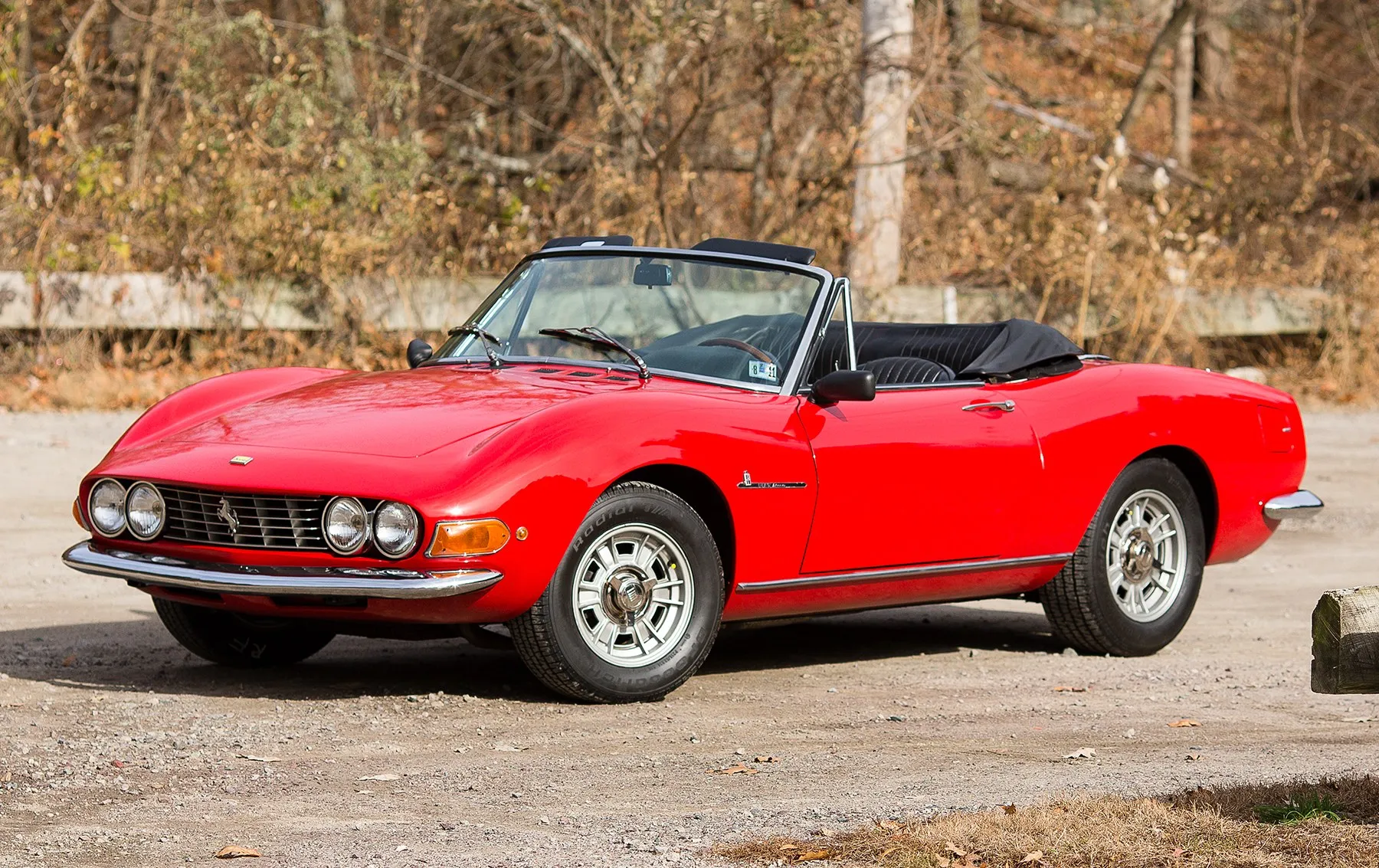
The coupé body was designed by Marcello Gandini at Bertone, the same designer who would later create the Lamborghini Countach, giving it a fastback roofline, a wide stance, and beautifully resolved proportions that remained handsome for decades.
Under the hood sat a genuine Ferrari-developed V6 engine, designed by Aurelio Lampredi, with a twin overhead camshaft cylinder head and six individual intake ports. This was not a watered-down road car unit; it was the same fundamental architecture that powered Ferrari’s Formula 2 racing cars, adapted for production road use by Fiat.
Specifications:
- Engine: 2.0-litre Ferrari Dino V6 DOHC (later 2.4-litre)
- Horsepower: 160 bhp @ 7,200 rpm
- Torque: 126 lb-ft @ 5,500 rpm
- Length: 177.4 in (4,507 mm)
- Width: 66.8 in (1,696 mm)
The 2.0-litre version produced 160 bhp at a free-revving 7,200 rpm, giving the Dino Coupé a soundtrack and character completely unlike any other Fiat of the era.
The chassis was a conventional steel monocoque with independent suspension front and rear, and the five-speed manual gearbox gave the driver full access to the engine’s impressive power band.
The steering was responsive, and the driving experience was engaging in a way that few affordable sports cars of the period could match. The Fiat Dino Coupé has always lived in the shadow of the Ferrari Dino 246 GT, which used a closely related engine and was built in far smaller numbers.
In reality, the Fiat is a distinctly different car with its own strong character and genuine driving rewards. It has never received the credit it deserves as one of the most technically interesting and pleasurable Italian coupes of its era.
7. Intermeccanica Italia (1967–1973)
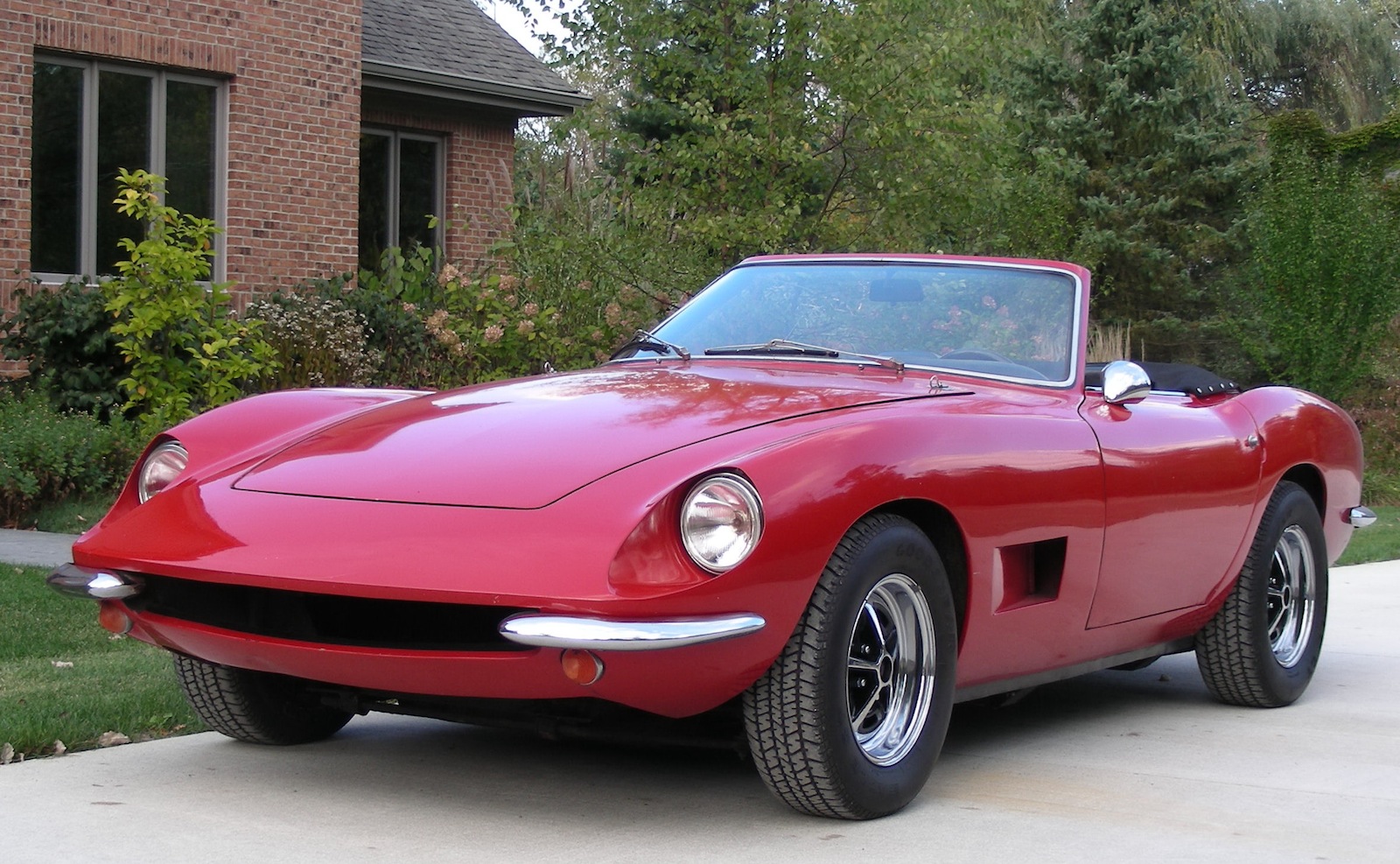
The Intermeccanica Italia is perhaps the ultimate expression of the Italian-American hybrid sports car concept that flourished in the 1960s. It was beautiful enough to rival a Ferrari, powerful enough to embarrass most of its contemporaries, and so comprehensively forgotten that even many serious classic car enthusiasts have never heard of it.
Frank Reisner was a Hungarian-born Canadian who fell in love with Italy and set up a coachbuilding business in Turin called Costruzione Automobili Intermeccanica. Through a complex series of business relationships and name changes, including the Griffith, the Omega, and the Torino, Reisner eventually arrived at the Italia, which debuted in 1967.
The car was hand-assembled in Turin before being shipped to the United States for final completion and sale. Its styling was penned by Bob Cumberford and carried strong Ferrari influences, with a long hood, a wide glassfibre body, and flowing lines that drew inevitable comparisons to the finest Italian coachwork of the period.
Specifications:
- Engine: 4.7-litre Ford 289 V8 (later 5.0-litre Ford 302 V8, 4-speed manual)
- Horsepower: 271 bhp @ 6,000 rpm (289 version)
- Torque: ~282 lb-ft
- Length: 172.5 in (4,382 mm)
- Width: 68.0 in (1,727 mm)
Beneath that gorgeous exterior sat a Ford V8 engine, initially the 4.7-litre 289 unit producing 271 bhp, later upgraded to the 5.0-litre 302 V8 as emissions regulations evolved.
The chassis was a robust tubular steel structure with independent suspension all around and four-wheel disc brakes. The V8’s torque made the Italia an effortless performer on the open road, capable of reaching 100 km/h in around 6.5 seconds.
The interior was luxuriously appointed, with hand-stitched leather and quality fittings that reinforced the car’s positioning against Ferrari and Maserati. Fewer than 600 examples of all Italia variants were built across the model’s six-year production life.
The complexity of transatlantic distribution, combined with the chronic underfunding that afflicted almost every small-volume sports car maker of the era, eventually brought Intermeccanica down. The Italia remains one of the most beautiful and most ignored sports cars of the 1960s.
8. Marcos 1800 GT (1964–1966)
Britain’s small specialist car industry in the 1960s was a hothouse of ingenuity, producing a string of lightweight, driver-focused sports cars that could embarrass cars costing many times their price.
The Marcos 1800 GT was one of the finest and most technically unconventional of this remarkable breed, using a construction method so unusual that it bordered on the eccentric.
Marcos Cars was founded in 1959 by Jem Marsh and Frank Costin. Costin was an aeronautical engineer who applied aircraft construction principles to cars, including his signature technique of building structural bodies from plywood.
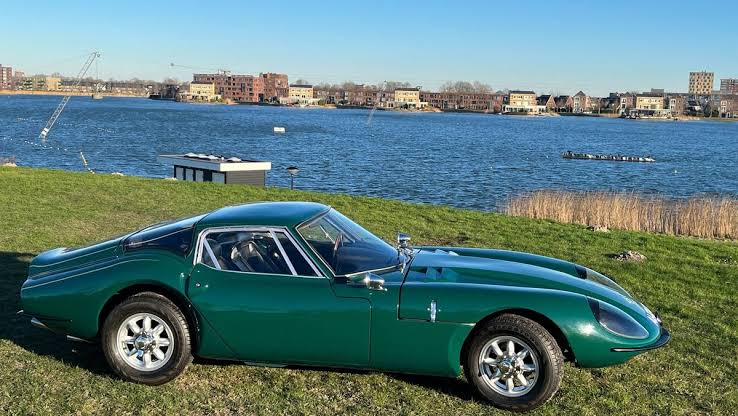
The Marcos 1800 introduced in 1964 used exactly this approach: a stressed plywood monocoque that was both lighter and stiffer than a conventional steel chassis, clothed in a fibreglass body styled by Dennis and Peter Adams.
The result was a car that looked like a ground-hugging racer with its steeply raked windscreen and sleek fastback profile, and weighed just 769 kg, ready to run.
Specifications:
- Engine: 1.8-litre Volvo B18 inline-4 DOHC (4-speed manual with overdrive)
- Horsepower: 114 bhp
- Torque: ~100 lb-ft
- Length: ~148 in (approx. 3,760 mm)
- Width: ~62 in (approx. 1,575 mm)
The engine was a Volvo B18 four-cylinder unit of 1,778cc mounted in the front, producing 114 bhp. It was matched to an overdrive gearbox that made the Marcos an unexpectedly relaxed long-distance car despite its racy appearance.
The suspension used a de Dion rear axle arrangement, later replaced with a simpler but effective live axle setup when Ford engines replaced the Volvo unit in 1966.
One of the Marcos’s most distinctive features was its fixed seat arrangement: instead of adjusting the seat position, the driver adjusted the pedals and steering column to suit their reach, saving weight and lowering the seating position.
Only 99 examples of the Volvo-engined Marcos 1800 were built before the switch to Ford power in 1966. In competition, Marcos cars were genuinely competitive against much more expensive machinery, with well-driven examples capable of outrunning Ford GT40s in endurance races.
Despite this motorsport record and its fascinating plywood construction, the Marcos 1800 GT has drifted into almost complete obscurity outside Britain’s small specialist car community.
9. Sunbeam Tiger (1964–1967)
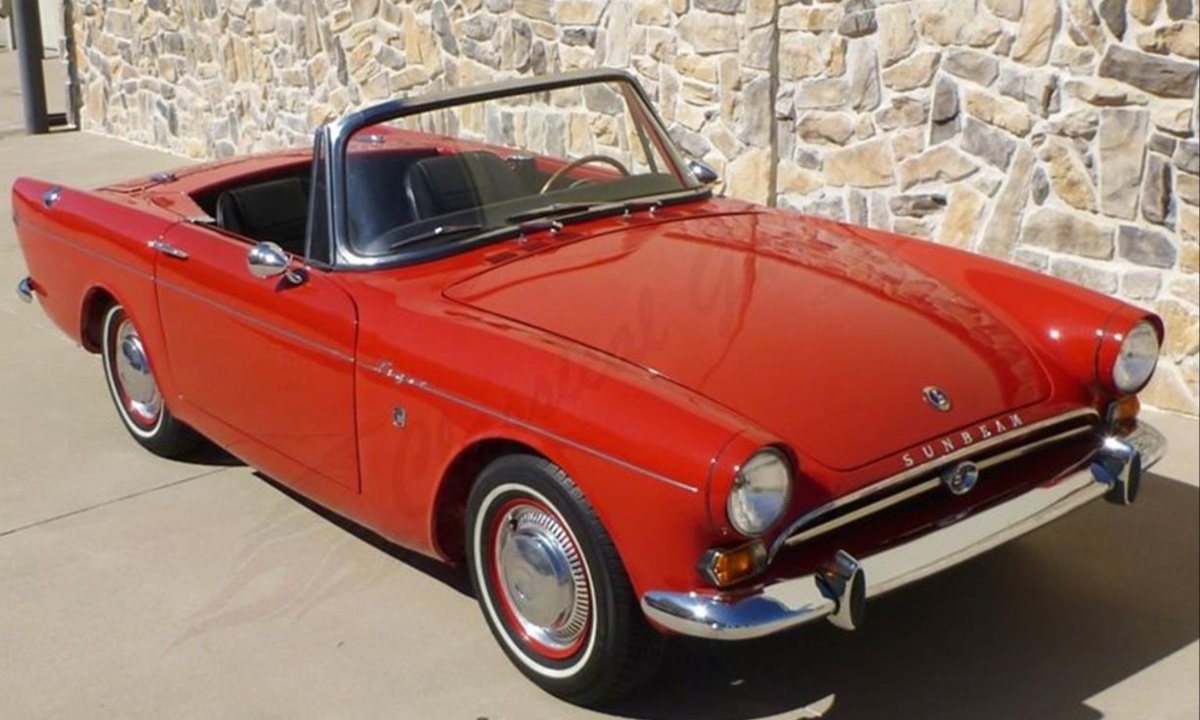
The concept of cramming a large American V8 into a small British roadster reached its most charming expression in the Sunbeam Tiger. Conceived with help from Carroll Shelby, the same man behind the AC Cobra, the Tiger transformed the gentle Sunbeam Alpine into a genuinely ferocious sports car, all while maintaining the civilised manners of a proper British roadster.
The story began in 1962 when Ian Garrad, the Rootes Group’s US West Coast sales manager, sent his service manager to neighbouring dealerships with a measuring tape to find a V8 engine that would physically fit inside the Alpine’s engine bay.
The Ford small-block was the winner. Garrad then brought in Carroll Shelby, engineer Ken Miles, and racing driver Jack Brabham to make it work. The resulting Tiger debuted at the 1964 New York Motor Show, where it was immediately praised for offering Cobra-like performance in a car that was comfortable enough to use every day.
Specifications:
- Engine: 4.3-litre Ford 260 V8 (Mk I) / 4.7-litre Ford 289 V8 (Mk II)
- Horsepower: 164 bhp (Mk I) / 200 bhp (Mk II)
- Torque: 258 lb-ft @ 2,200 rpm (Mk I) / 282 lb-ft @ 2,400 rpm (Mk II)
- Length: 156 in (3,962 mm)
- Width: 60.5 in (1,537 mm)
The Tiger Mk I used the Ford 260 cubic inch V8, a 4.3-litre unit producing 164 bhp and 258 lb-ft of torque. This propelled the 2,565 lb car to 60 mph in 8.6 seconds and on to a top speed of 118 mph.
The chassis received numerous reinforcements to handle the extra power, including a stronger transmission tunnel, revised engine mounts, and a beefier differential.
The installation process at Jensen Motors in West Bromwich, which manufactured the Tiger under contract, was reportedly vigorous, as a sledgehammer was sometimes required to persuade the bulkhead to accommodate the larger engine. The Mk II version of 1967 used the larger Ford 289 V8 producing 200 bhp, with only 633 built, making it the rarer and more sought-after variant.
Just 7,083 Tigers were built in total before Chrysler’s takeover of the Rootes Group brought production to an abrupt end Chrysler had no interest in selling a car powered by a rival’s Ford V8.
The Tiger has a devoted following among classic car enthusiasts, but it remains largely unknown to the wider public, who have never heard of Rootes Group or Sunbeam.
10. Lancia Fulvia HF Coupé (1965–1976)
The Lancia Fulvia Coupé is perhaps the most technically sophisticated car on this list, and certainly one of the most elegantly engineered sports cars produced anywhere during the 1960s.
It used a front-wheel-drive layout at a time when sports cars were almost universally rear-wheel-drive, powered an extraordinarily compact V4 engine architecture found nowhere else in the automotive world, and produced a driving experience of rare balance and refinement.
The Fulvia sedan had been introduced at the Geneva Motor Show in 1963, designed by Pietro Castagnero. The coupé version followed in 1965 with even cleaner and more purposeful styling.
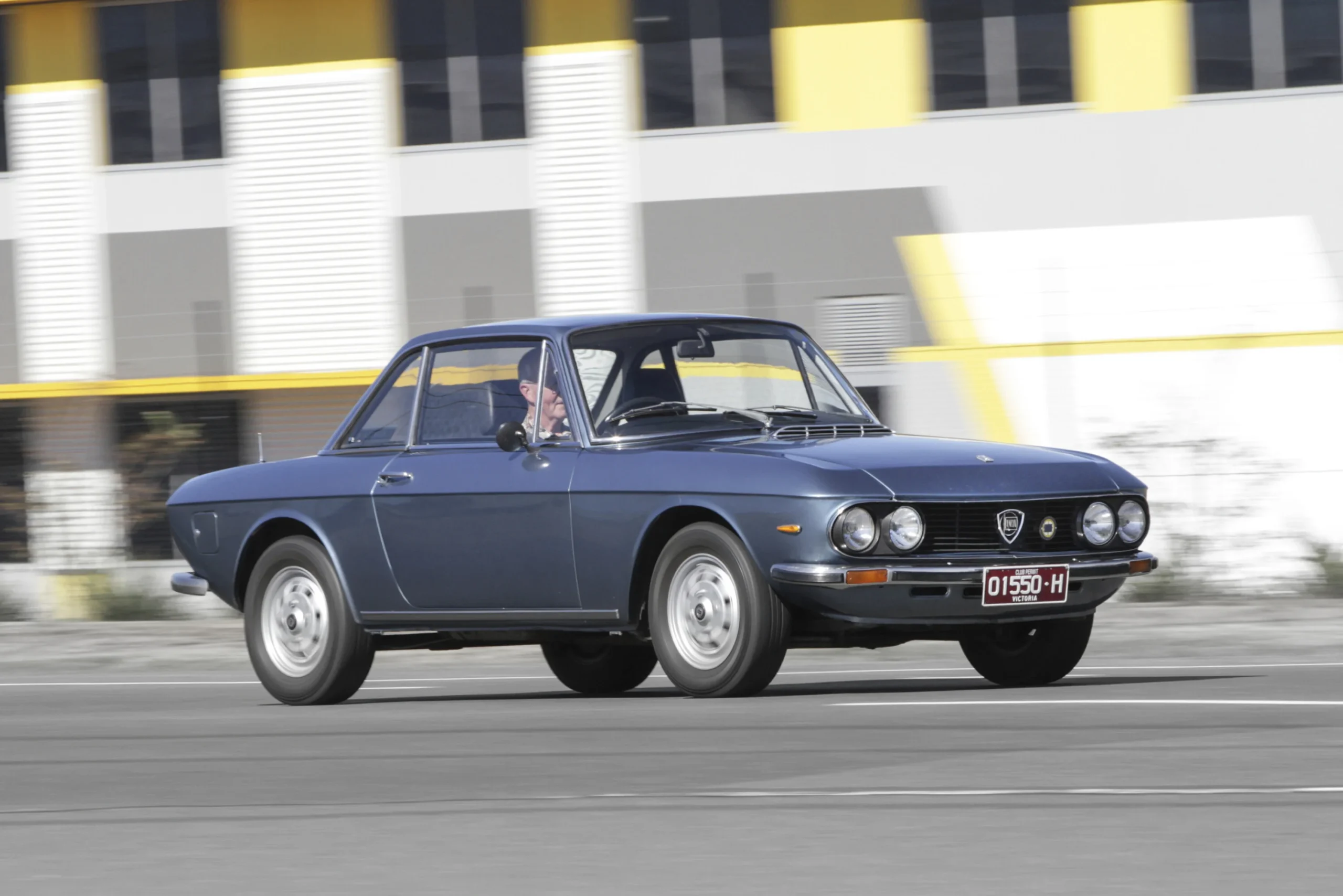
Its narrow, elegant body sat low over wide wheels, with a short overhanging nose, a compact passenger cell, and a tail that dropped away cleanly.
The effect was of a car that was both discreet and deeply purposeful, a quality very much in keeping with Lancia’s engineering philosophy of performance achieved through sophistication rather than brute force.
Specifications (1.3 HF Coupé):
- Engine: 1.3-litre Lancia V4 DOHC (5-speed manual)
- Horsepower: 87–92 bhp @ 6,000 rpm
- Torque: ~86 lb-ft @ 4,500 rpm
- Length: 153.9 in (approx. 3,910 mm)
- Width: 61.4 in (approx. 1,560 mm)
The engine was the Fulvia’s masterstroke: a narrow-angle V4 of just 13 degrees between the cylinder banks, designed by Zaccone Mina, with twin overhead camshafts and a remarkably high state of tune for a unit of this size.
The HF variant, introduced in 1966, used a 1,216cc version producing between 80 and 88 bhp, with a lightweight body and stripped-out interior that reduced weight dramatically.
Later HF versions grew to 1,298cc, then to the magnificent 1.6 HF unit of 1,584cc, producing up to 132 bhp, enough to make the Fulvia a genuine rally weapon. In competition, the Lancia Fulvia HF won the International Rally Championship in 1972, a remarkable achievement for such a small and seemingly modest car.
The Lancia Fulvia HF Coupé was never a mass-market success, and today it is known mainly to Italian car enthusiasts and rally historians. Its combination of engineering innovation, precise driving dynamics, and beautiful, understated styling makes it one of the most rewarding and characterful sports cars of the entire 1960s, and one that time has treated with extraordinary neglect.
Anyone fortunate enough to drive a well-sorted Fulvia HF immediately understands what was lost when Fiat took over Lancia in 1969, and the independent spirit of the old company began its long fade into memory.
Also Read: 9 Cars With Climate Systems That Underperform in Hot Climates
