
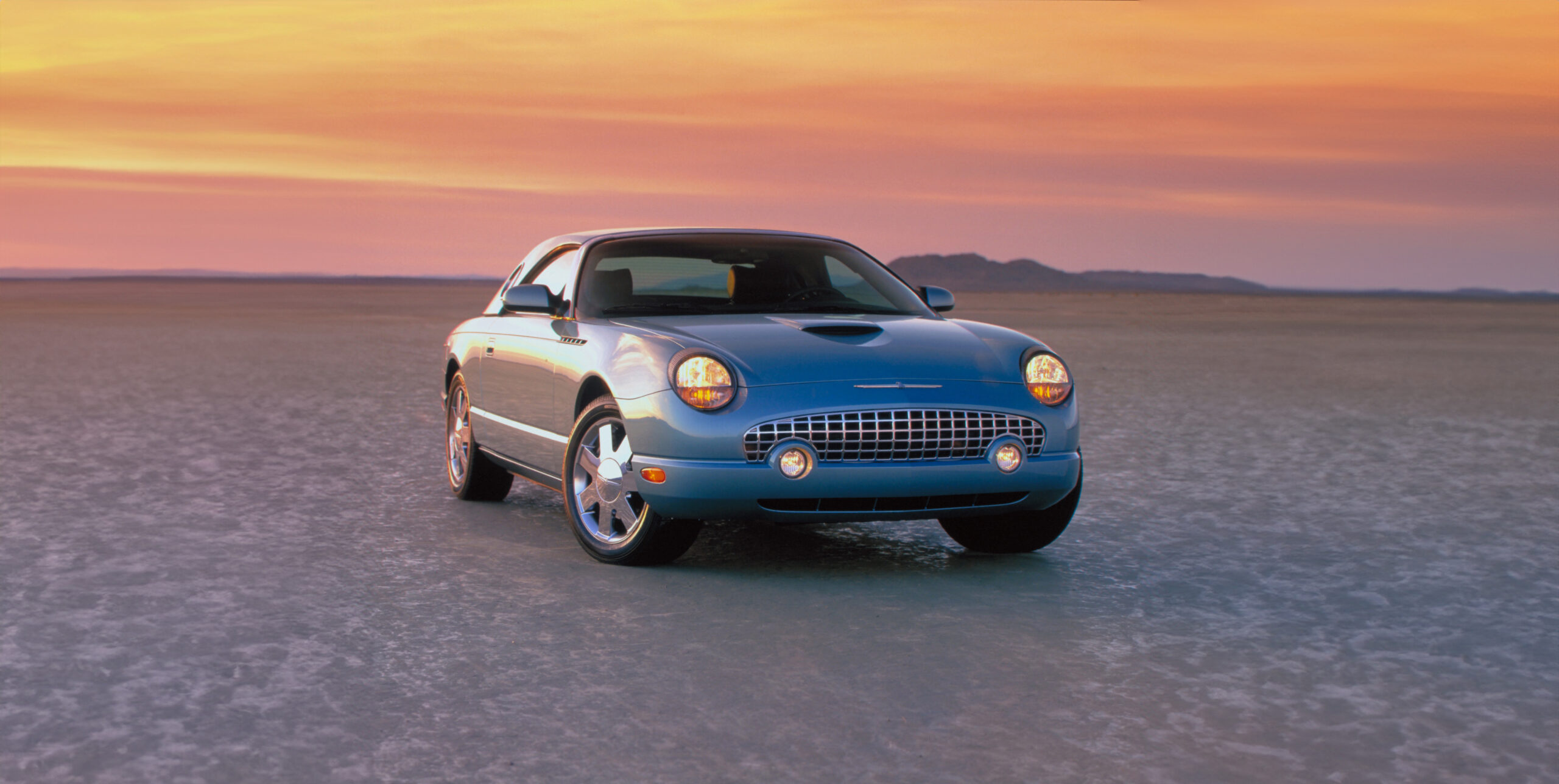
Throughout the history of the automobile, color has been far more than a mere cosmetic choice. It has been a bold statement of personality, a reflection of cultural moods, and sometimes even a symbol of rebellion.
From the earliest black Model T Fords that rolled off Henry Ford’s assembly line in the early 1900s, to the explosive, eye-searing muscle car palettes of the late 1960s and early 1970s, automotive color has mirrored the times in which it was born.
The era of vivid, daring, one-of-a-kind factory paint options was a golden age for car enthusiasts and collectors alike. These were not just colors, they were experiences, identities, and legacies painted across steel and chrome.
Sadly, the automotive world has drifted steadily toward a palette dominated by white, black, gray, and silver, with over 75% of all new cars today wearing these neutral tones.
The explosive personality of colors like Plum Crazy Purple, Hugger Orange, Sublime Green, and Panther Pink has largely been erased from dealership showrooms.
These shades defined generations of drivers and remain deeply coveted by collectors decades after their discontinuation. This article celebrates ten of the most iconic, beloved, and lamented car colors that manufacturers no longer offer, which helped shape automotive history and still command attention on every classic car show floor today.
1. Plum Crazy Purple, Dodge/Plymouth (1970–1971)
Few automotive colors in history have inspired the level of devotion that Plum Crazy Purple commands. This electrifying, deep-violet hue was introduced by Chrysler/Mopar as part of their celebrated “High Impact” color range for the 1970 model year.
It was known as Plum Crazy on Dodge vehicles and In-Violet on Plymouth models, but both carried the same iconic paint code: FC7. The color debuted in an era when muscle cars were king, and automakers were locked in a fierce battle not just for performance supremacy but also for visual dominance on the streets.
Plum Crazy was Dodge’s most audacious answer to that battle. It was a purple so saturated and vivid that it appeared to almost glow under direct sunlight.
The name itself, Plum Crazy, was a deliberate play on the idiom “plumb crazy,” meaning absolutely out of one’s mind, perfectly capturing the wild spirit of the muscle car era.
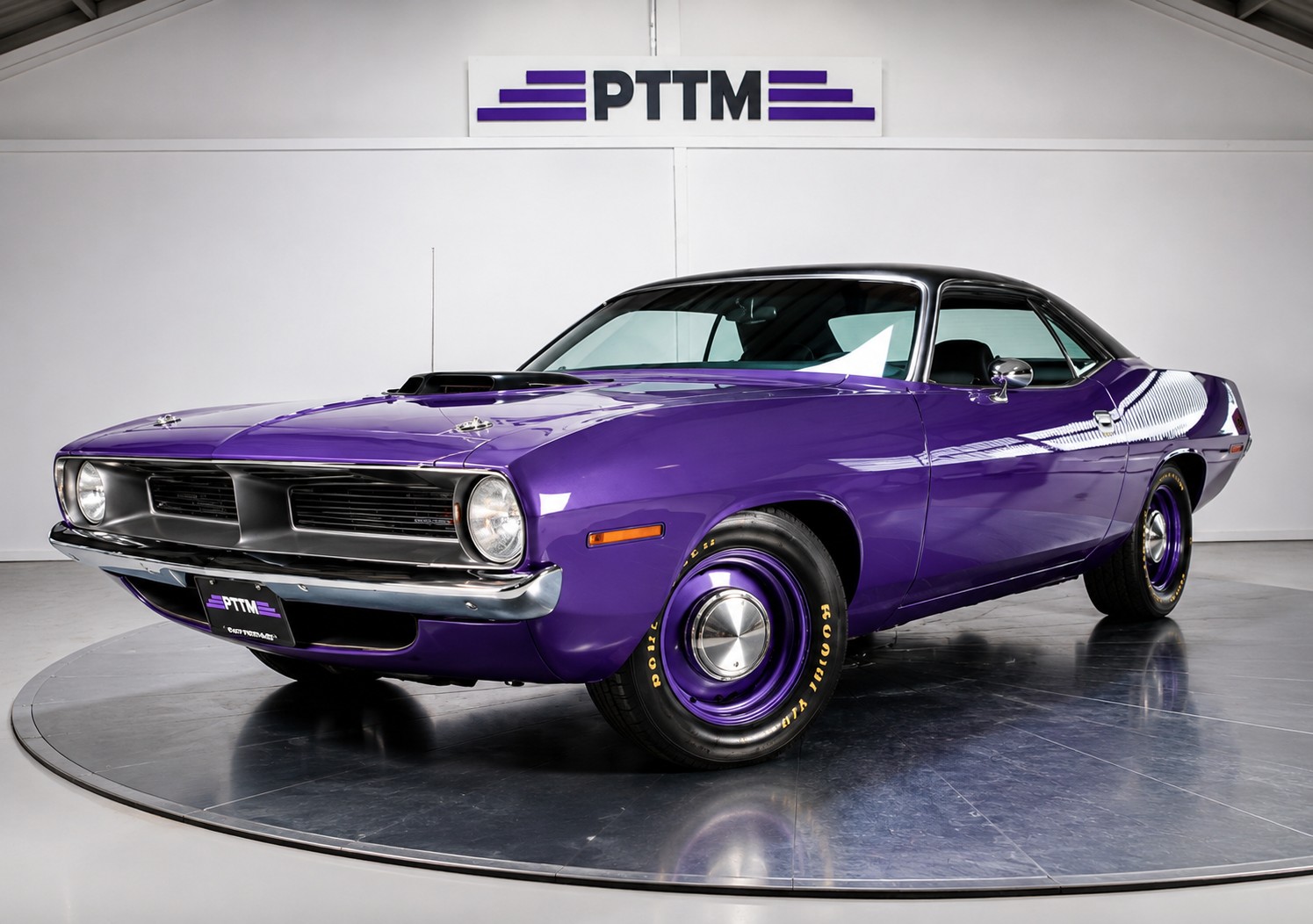
Vehicle Specifications (1970 Dodge Challenger R/T):
- Engine: 426 cu in (7.0L) HEMI Pushrod V8
- Horsepower: 425 hp @ 5,000 rpm
- Torque: 490 lb-ft @ 4,000 rpm
- Length: 191.3 inches
- Width: 76.5 inches
The color looked stunning on the wide, aggressive bodywork of the Dodge Challenger R/T and Dodge Charger, two of the most celebrated muscle cars of the era.
It also graced the Plymouth ‘Cuda and Road Runner, giving them an almost regal, otherworldly presence on the road. Drivers who chose Plum Crazy were making a statement that they were not interested in blending in. They wanted to be seen, heard, and remembered.
Unfortunately, the combination of tightening emissions regulations, the oil crisis of 1973–74, and shifting consumer tastes toward more conservative colors brought the High Impact era to an abrupt close.
By 1974, these bold shades had all but vanished from Chrysler’s order books. Plum Crazy was discontinued along with the rest of the High Impact family, leaving enthusiasts mourning one of the most spectacular factory paint options ever offered.
Today, an original Plum Crazy-painted Challenger or ‘Cuda in good condition is extraordinarily valuable. Dodge did revive the name briefly for the modern Challenger in limited runs, but the original FC7 formulation remains irreplaceable.
2. Hugger Orange, Chevrolet (1969–1970)
Hugger Orange was General Motors’ most aggressive foray into bold factory paint colors. It was introduced for the 1969 model year on the Chevrolet Camaro and quickly became one of the most recognizable and beloved hues in American automotive history.
The name paid homage to the Camaro’s reputation for “hugging” corners with its sport-tuned suspension, and the color itself lived up to every inch of that aggressive persona.
This was a vivid, warm, reddish-orange that looked spectacular against the muscular body lines of the Camaro SS and Z/28. It was not a subtle orange, it was a declaration.
On a 1969 Camaro with a black racing stripe, Hugger Orange created one of the most visually striking combinations ever seen on an American production car. Enthusiasts often paired it with a black or orange houndstooth interior, making the visual experience even more memorable and immersive.
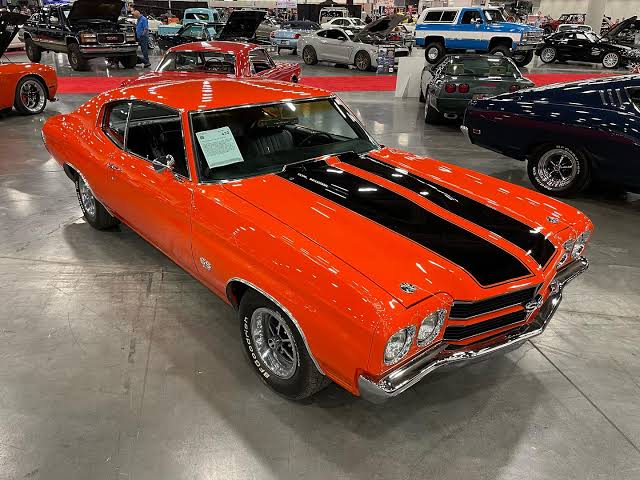
Vehicle Specifications (1969 Chevrolet Camaro SS):
- Engine: 396 cu in (6.5L) Big Block V8 (L35 variant)
- Horsepower: 325 hp @ 4,800 rpm
- Torque: 410 lb-ft @ 3,200 rpm
- Length: 186.0 inches
- Width: 74.0 inches
Beyond the Camaro, Hugger Orange was also made available on other GM platforms, including the Chevelle, El Camino, Nova, and Corvette during the same period.
This wide availability made it one of the most seen and recognized factory colors of the era. However, like so many of the bold colors from this period, it disappeared from GM’s lineup as the early 1970s brought new priorities to the automotive industry.
The shifting market toward fuel economy, the pressure of new emissions standards, and the economic impact of the 1973 oil embargo conspired to kill off the boldly colored muscle car era. By the mid-1970s, Hugger Orange had been quietly retired.
Today, a numbers-matching 1969 Camaro SS in Hugger Orange commands enormous premiums at auction, often selling for six figures without hesitation from collectors.
3. Vitamin C Orange, Ford (2001–2004)
Vitamin C Orange, carrying paint code K2, was one of the most vivid and daring factory colors Ford offered during the New Edge Mustang era. This pure, blazing orange free of any red undertone was available across the 2001–2004 model years on the Mustang GT and Cobra, giving the sharp, angular New Edge bodywork an almost predatory, high-voltage presence on the road. The name itself was perfect: bold, unapologetic, and full of energy.
The New Edge Mustang was already one of Ford’s most visually aggressive designs crisp body lines, a pronounced hood, and sculpted haunches that gave it a tense, coiled presence. Vitamin C Orange amplified every one of those design decisions. Under sunlight the finish practically radiated. Under streetlights it glowed.
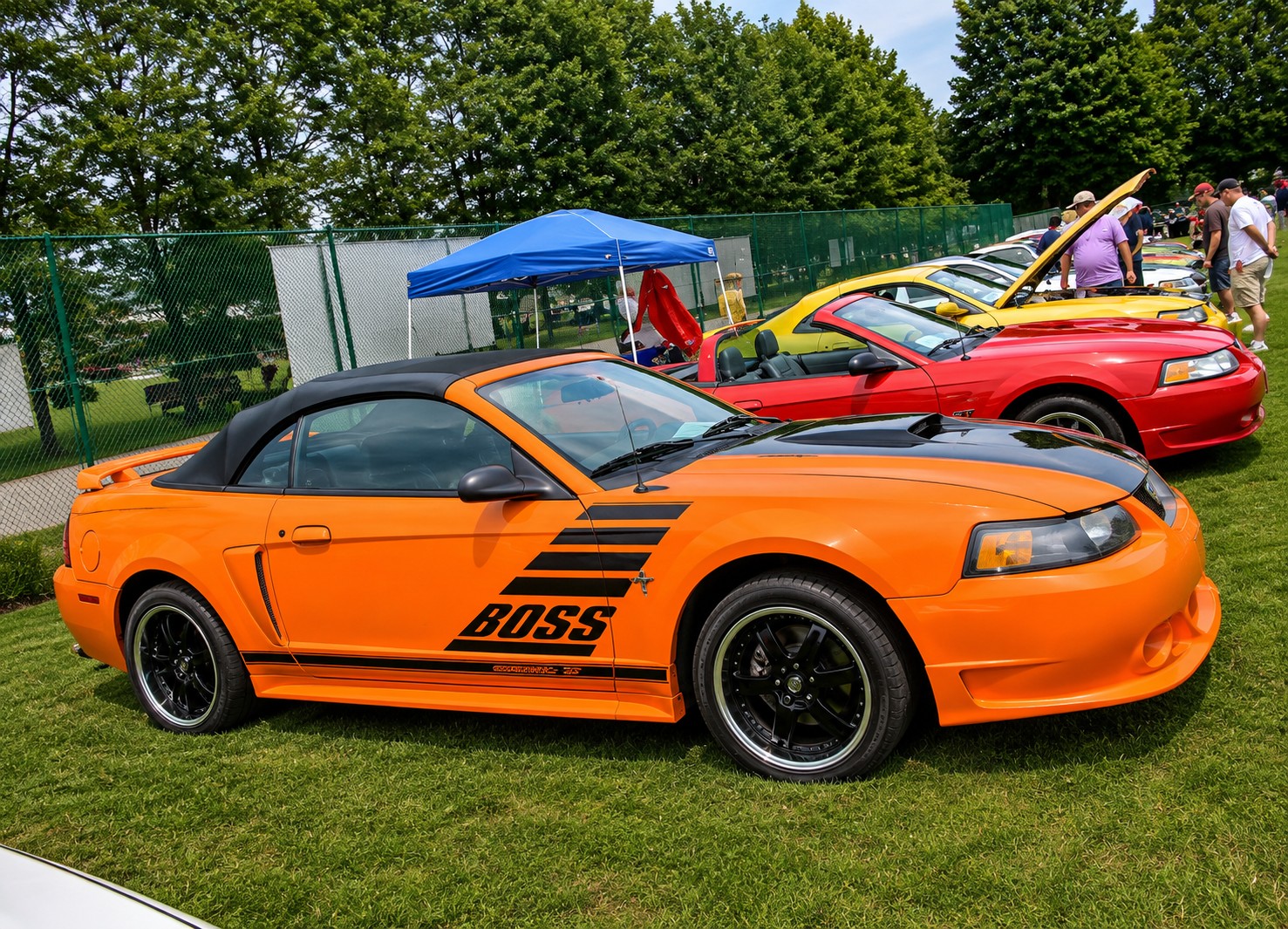
Vehicle Specifications (2002 Ford Mustang GT):
- Engine: 4.6L (281 cu in) SOHC Modular V8
- Horsepower: 260 hp @ 5,250 rpm
- Torque: 302 lb-ft @ 4,000 rpm
- Length: 183.2 inches
- Width: 73.1 inches
There was no mistaking it and no ignoring it. Against the GT’s aggressive hood scoops and sculpted fenders, it looked like nothing else on American roads at the time.
It was also offered on the supercharged SVT Cobra, where 390 horsepower beneath that hood turned an already striking machine into something genuinely threatening.
Drivers who chose Vitamin C Orange were making an unmistakable statement no interest in blending in, no patience for subtlety, and no apologies for anyone left in the rearview mirror. Ford quietly retired the color after 2004 as the New Edge generation gave way to the retro-inspired S197 platform.
It was never carried forward or officially revived under its original K2 code. Surviving examples remain a vivid and cherished relic of the early 2000s Mustang era.
4. Panther Pink (Moulin Rouge), Dodge/Plymouth (1970–1971)
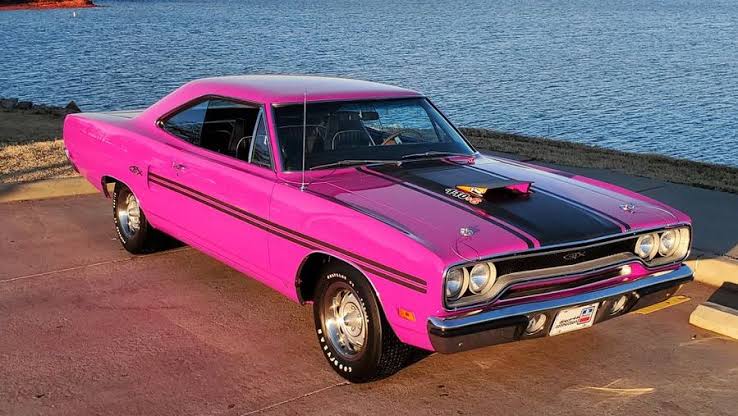
Panther Pink, known as Moulin Rouge on Plymouth and Chrysler models, may be the single most audacious factory paint option ever offered on a performance automobile.
It was a vivid, hot pink that required significant confidence from any driver bold enough to order it. The color code FM3 was part of Chrysler’s High Impact palette for 1970 and 1971, and it stands as one of the rarest and most collectible factory colors in American automotive history.
The irony of Panther Pink is that it appeared on some of the most brutally powerful cars of the era, 426 HEMI-equipped ‘Cudas, Chargers, and Challengers.
Seeing a car with 425 horsepower and enough torque to unsettle the Earth dressed in bright pink was a surreal and unforgettable experience. The name “Panther Pink” on the Dodge side evoked sleekness and danger, while “Moulin Rouge” on the Plymouth side referenced the famous Parisian cabaret, equally theatrical and attention-grabbing.
Specifications:
- Engine: 426 cu in (7.0L) 426 HEMI V8
- Horsepower: 425 hp @ 5,000 rpm
- Torque: 490 lb-ft @ 4,000 rpm
- Length: 186.7 inches
- Width: 74.9 inches
Very few buyers actually ordered this color new, which makes surviving original examples exceptionally rare and valuable today. Many second-hand owners, feeling the social pressure of driving a pink muscle car, repainted their vehicles in more conventional colors.
This means that original FM3 cars that survived in their factory finish are among the most sought-after classics. A pink ‘Cuda at auction draws enormous crowds and enormous prices.
The color was discontinued alongside the rest of the High Impact line as the muscle car era came to a close. It has never been officially revived by Chrysler, making every surviving example a true relic of one of the most colorful periods in American automotive history.
Also Read: Heated Seats as a Subscription Was the Moment Carmakers Lost the Public
5. Top Banana (Lemon Twist), Dodge/Plymouth (1970–1973)
Top Banana is one of the most joyfully named and visually electric factory colors to ever emerge from Chrysler’s High Impact era. Dodge called it Top Banana; Plymouth called it Lemon Twist, named after the aromatic citrus garnish twisted over a cocktail glass.
Both shared paint code FY1, and the color itself was a pure, blazing tropical yellow that looked as loud as it sounded. It was the life of the party on every muscle car that wore it, turning showroom floors into something closer to a fruit stand on fire.
Introduced for the 1970 model year, Top Banana arrived at exactly the right moment. American muscle was at its absolute peak engines were massive, compression ratios were sky-high, and buyers wanted their cars to be seen from three blocks away.
This shade delivered on that promise completely. Whether it was draped over a Dodge Challenger, a Plymouth ‘Cuda, a Road Runner, or a Duster, the color transformed sheet metal into a statement.
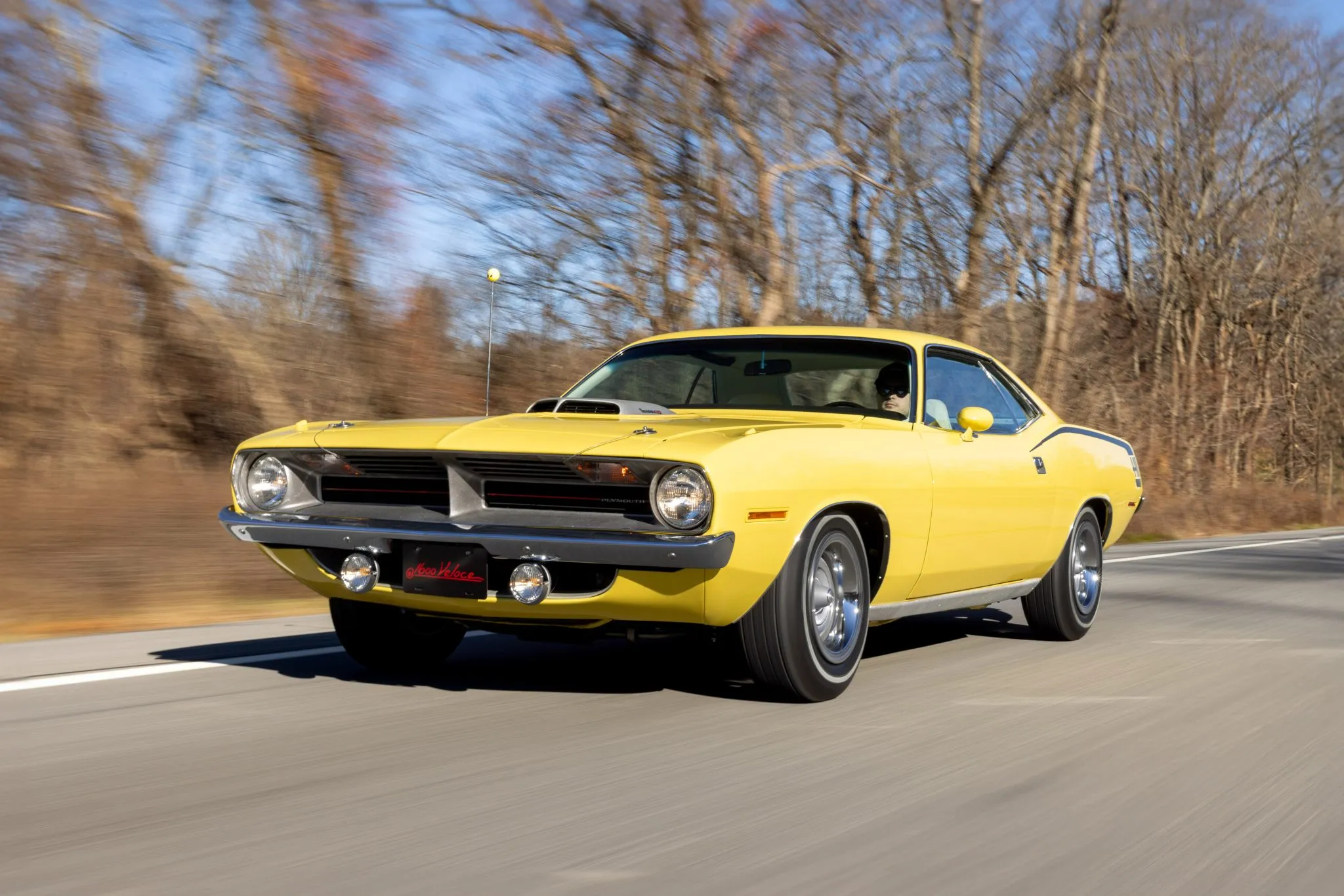
Specifications (1970 Plymouth ‘Cuda 440+6):
- Engine: 440 cu in (7.2L) Six-Pack V8
- Horsepower: 390 hp @ 4,700 rpm
- Torque: 490 lb-ft @ 3,200 rpm
- Transmission: 4-speed manual (A-833) or TorqueFlite 727 automatic
- Length: 186.7 inches
- Width: 74.9 inches
Top Banana / Lemon Twist was one of only two High Impact colors offered across all four model years from 1970 through 1973, making it the longest-running shade in the entire High Impact family.
Every other color in that legendary palette came and went in one, two, or three seasons. This one endured. And in 1973, the final, fading year of the original muscle car era it stood alone as the only High Impact color still available. It outlasted everything else Chrysler had thrown at the decade.
Surviving examples in original, unrestored Top Banana paint are among the most prized finds in the Mopar collector world. The color has never been officially reissued under its original FY1 paint code, and every car that still wears it today carries fifty-plus years of American muscle history on its skin. At any major Mopar gathering, a genuine Top Banana ‘Cuda or Challenger stops the crowd cold, proof that the boldest choices age the best.
6. Daytona Yellow, Chevrolet (1969–1971)
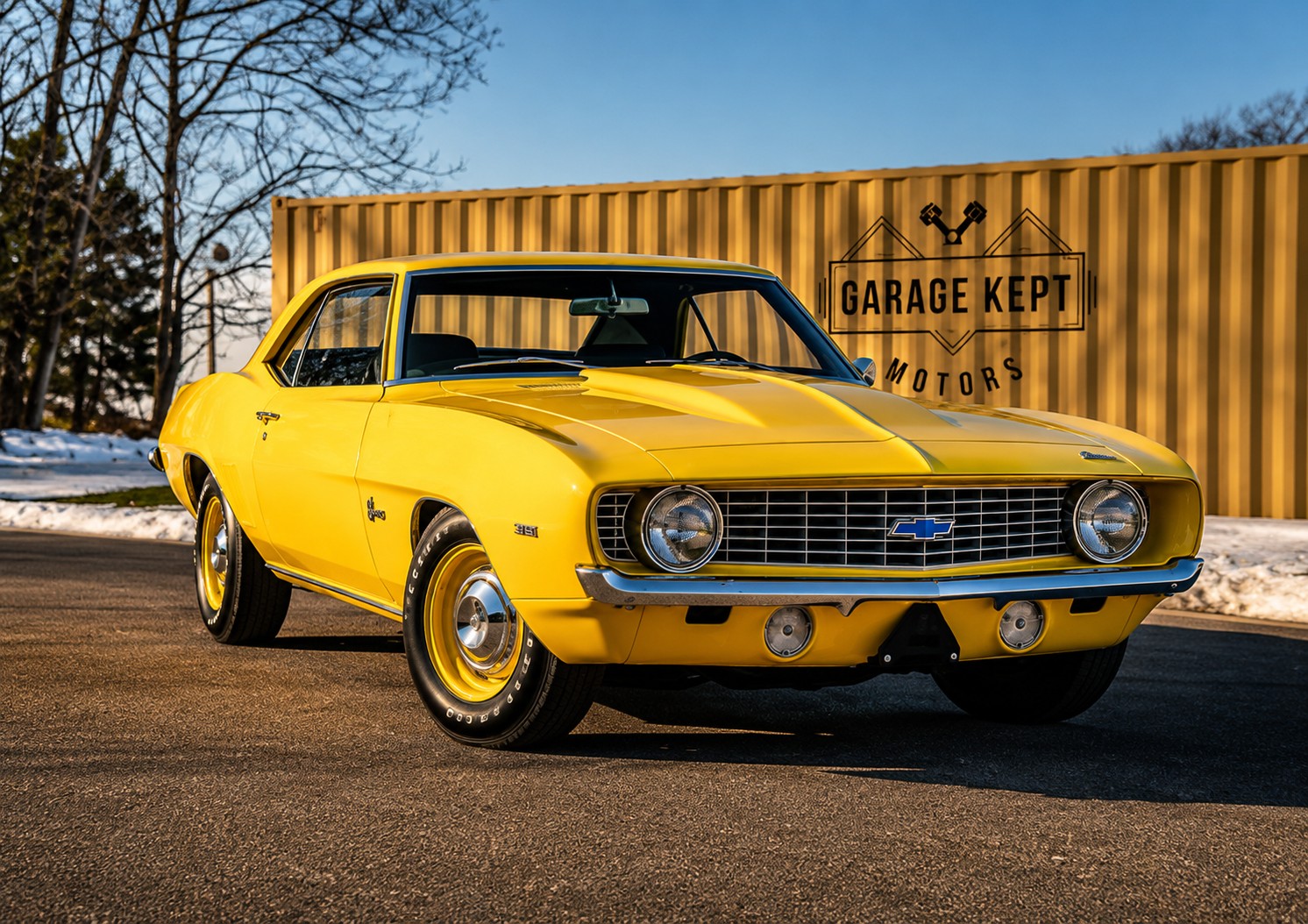
Daytona Yellow was one of the most energetic and visually striking factory colors that General Motors ever offered. Introduced for the 1969 model year, this high-saturation, brilliant yellow was offered on several of Chevrolet’s most celebrated performance platforms.
It was closely associated with the Corvette Stingray and the Chevrolet Nova SS, as well as the Camaro, giving it an incredibly broad and prestigious vehicle portfolio.
The color was a pure, warm, sunflower-to-canary yellow that looked stunning in natural sunlight. On a 1969 Corvette Stingray with its sleek fastback profile and chrome side exhausts, Daytona Yellow created an almost exotic supercar aesthetic that was head-turning by any standard.
On the Nova SS, it gave a more compact and aggressive character, a sleeper wolf in vivid yellow clothing. The color’s brightness and energy perfectly matched the performance credentials of the vehicles that wore it.
Specifications:
- Engine: 427 cu in (7.0L) L71 Tri-Power V8
- Horsepower: 435 hp @ 5,800 rpm
- Torque: 460 lb-ft @ 4,000 rpm
- Length: 182.5 inches
- Width: 69.2 inches
Daytona Yellow was also offered on the Chevrolet Chevelle SS, where it helped transform an already muscular car into something visually spectacular.
The wide body of the Chevelle provided an enormous canvas for the color, and the result was one of the most visually dramatic muscle cars of the era. Paired with black racing stripes, Daytona Yellow created a combination that remains one of the most iconic in American performance car history.
The color was phased out by the early 1970s as GM moved away from its high-impact color palette. The tightening regulatory environment and changing consumer tastes made these vivid yellows seem too flashy for the new, more austere era of American motoring. Today, original Daytona Yellow cars are highly collectible and among the most admired at classic car events.
7. Go Mango (Vitamin C), Dodge/Plymouth (1969–1970)
Go Mango is one of the most distinctive and warmly remembered factory colors from Chrysler’s celebrated High Impact era. In 1969 and 1970, the vibrant EK2 orange paint color was available in two fruit-inspired names: Go Mango at Dodge and Vitamin C at Plymouth.
It was a deep, rich, true orange warmer and more golden than Hemi Orange that radiated heat and energy against the broad bodywork of Chrysler’s most powerful muscle cars.
Where Hemi Orange leaned toward red, Go Mango leaned toward gold, giving it a uniquely tropical warmth that no other factory color of the era could replicate.
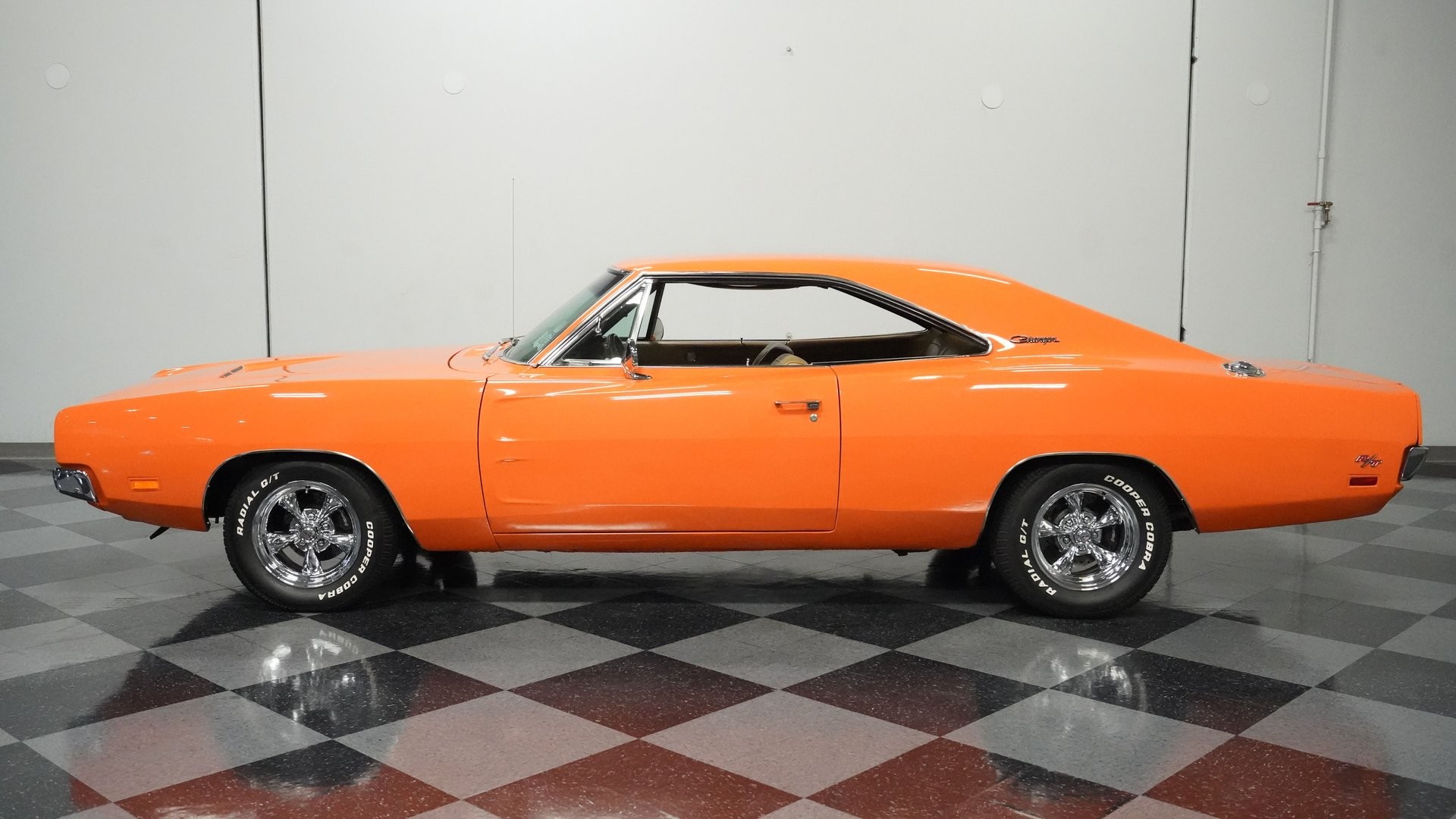
Vehicle Specifications (1969 Dodge Charger R/T):
- Engine: 440 cu in (7.2L) Magnum V8
- Horsepower: 375 hp @ 4,600 rpm
- Torque: 480 lb-ft @ 3,200 rpm
- Length: 208.0 inches
- Width: 76.6 inches
On the Dodge Charger, Go Mango gave the already ferocious fastback an almost tropical menace. On the Plymouth ‘Cuda and Road Runner, Plymouth’s Vitamin C name perfectly captured the sharp, citrus brightness of the hue against those wide, aggressive body panels.
Available only for 1969 and 1970, EK2 was one of the shortest-lived High Impact options, just two model years before Chrysler pulled it from the palette entirely. That brevity makes it one of the rarest colors in the entire High Impact family today.
Unlike several of its siblings that received modern revivals, the original Go Mango EK2 formula has never been officially reissued under its original name and code. Surviving examples command serious attention at every Mopar gathering, proof that the rarest colors always leave the deepest impression.
8. Citron Gold (Citron Yella / Curious Yellow), Dodge/Plymouth (1970–1971)
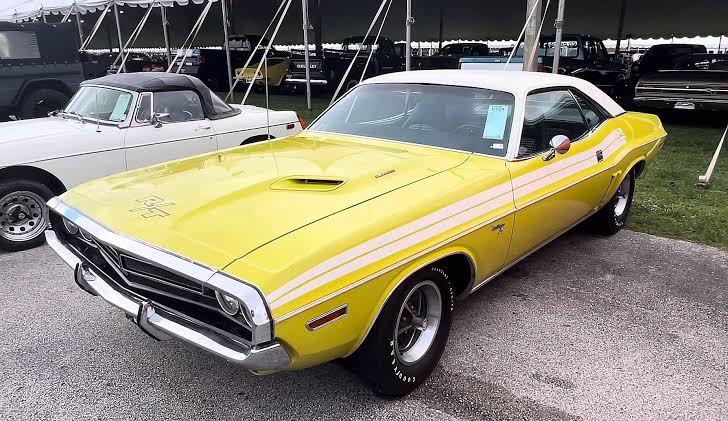
The Citron-family colors from Mopar’s High Impact era occupy a uniquely provocative position in automotive history. Dodge called it Citron Yella, Plymouth named it Curious Yellow, a name that raised more than a few eyebrows given its unintentional cultural connotations, and both wore the paint code GY3.
The color was a brilliant, acid-tinged yellow-gold that sat somewhere between a rich lemon yellow and a warm golden tone, giving it a character unlike any other factory color of the era.
The name “Curious Yellow” has amused and shocked automotive historians for decades. Chrysler’s color-naming team was clearly in a playful mood, and the name became part of the legend of the High Impact era.
Whether it was an intentional double entendre or a remarkable coincidence, it ensured that the color was never forgotten. Cars painted in Curious Yellow attracted attention for reasons that went well beyond their physical appearance.
Specifications:
- Engine: 383 cu in (6.3L) Magnum V8 (standard)
- Horsepower: 335 hp @ 5,000 rpm
- Torque: 425 lb-ft @ 3,400 rpm
- Length: 203.5 inches
- Width: 76.4 inches
On the road, this citron-yellow tone looked spectacular on wide-bodied Mopar machines. On a Plymouth ‘Cuda or Road Runner, the deep, golden character of the color gave the car an almost predatory look, like a yellow jacket insect ready to sting.
It complemented the bold graphics and aggressive body lines of Chrysler’s E-body and B-body platforms extremely well, making it one of the more visually cohesive of the High Impact options.
The color was discontinued after the 1971 model year, surviving only briefly before the regulatory and economic pressures of the early 1970s killed off the entire High Impact range. Today, surviving examples in Curious Yellow / Citron Yella are among the rarest and most collectible of all High Impact Mopar vehicles.
9. Big Bad Orange, AMC (1969–1970)
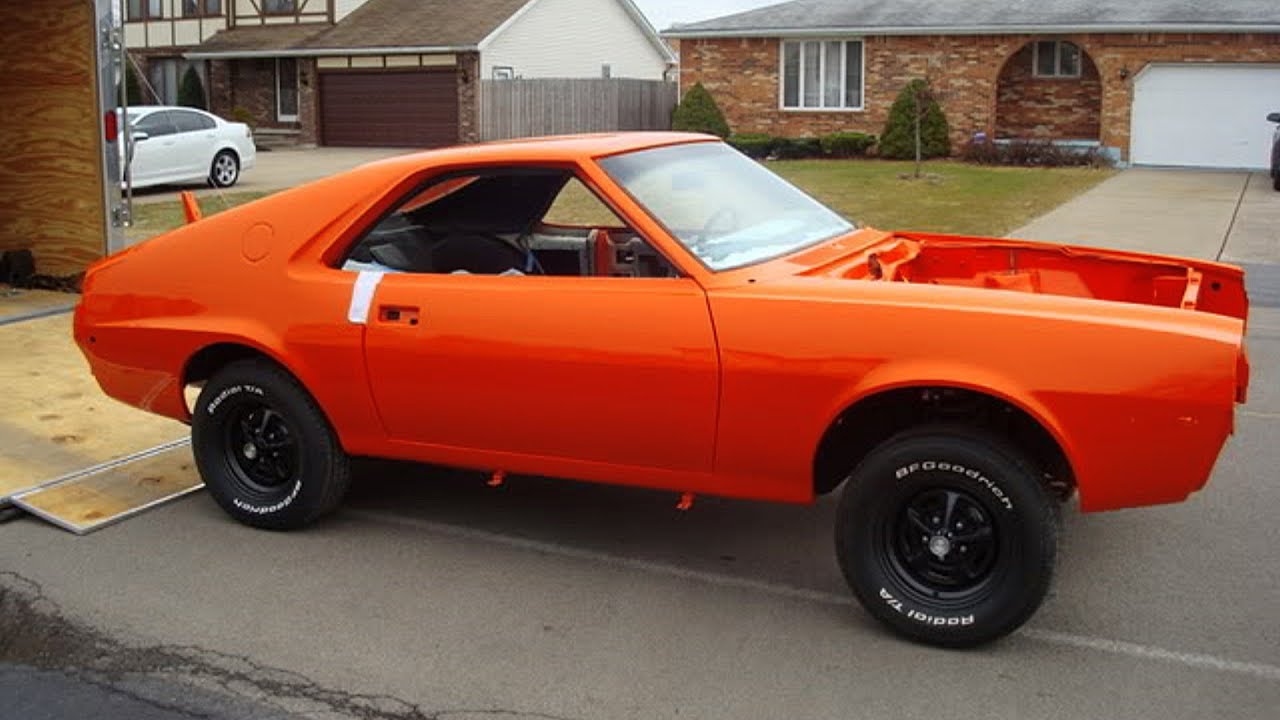
American Motors Corporation may have been the smallest of the Detroit automakers, but in 1969 they made an outsized statement with the “Big Bad” color trilogy: Big Bad Blue, Big Bad Green, and the most popular of the three, Big Bad Orange.
Available on the AMC Javelin and AMC AMX, this was AMC’s direct challenge to the visual dominance of Mopar and GM in the battle for the most attention-grabbing factory colors.
Big Bad Orange was a pure, saturated, warm orange with tremendous presence and visual impact. It was paired with color-keyed front and rear bumpers as part of the Big Bad package, a $34 option that also included bright aluminum accent molding and color-keyed rear bumper guards.
Specifications:
- Engine: 390 cu in (6.4L) V8 (Go-Package)
- Horsepower: 315 hp @ 4,600 rpm
- Torque: 425 lb-ft @ 3,200 rpm
- Length: 177.2 inches
- Width: 71.6 inches
For a relatively modest investment, a buyer could transform their AMX or Javelin into one of the most visually arresting machines on American roads. The color-keyed bumpers were particularly ahead of their time, eliminating the chrome contrast and creating a cohesive, monochromatic visual effect.
The AMX was AMC’s performance flagship, a two-seat sports car built to challenge the Corvette on performance and the Mustang on price. In Big Bad Orange, it became a genuine head-turner that punches well above its budget weight class in terms of visual drama.
The Javelin, as a full-size pony car competitor, wore the color equally well, giving it the aggressive personality that its performance credentials deserved.
Despite its popularity as a color within the AMC community, Big Bad Orange was discontinued after the 1970 model year. AMC faced financial challenges that ultimately led to the company’s demise, and the bold color palette was an early casualty of the company’s retreat from the muscle car market. Today, Big Bad Orange AMC vehicles are among the most desirable and collectible of all AMC products.
10. Gossamer Blue, Ford (Early 2000s)
While most of our list has been dominated by the muscle car era of the late 1960s and early 1970s, Gossamer Blue represents a more recent and equally lamented casualty of automotive color discontinuation.
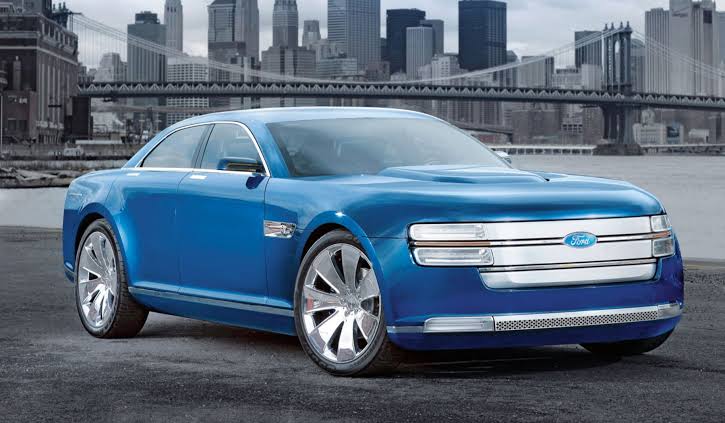
This soft, dreamy, almost pearlescent light blue was offered by Ford in the early 2000s on models including the Ford Focus, and it represented something genuinely different in an era when bold, vivid colors were rare. It was a color that felt both modern and nostalgic a gentle, shimmering shade that seemed to shift and breathe in changing light conditions.
Gossamer Blue occupied a unique visual space that no other factory color of the era quite replicated. It was neither the deep navy blue common in executive cars, nor the bright electric blue seen on performance vehicles.
Specifications:
- Engine: 2.0L Zetec inline-4 DOHC
- Horsepower: 130 hp @ 5,300 rpm
- Torque: 135 lb-ft @ 3,750 rpm
- Length: 168.1 inches
- Width: 66.9 inches
Instead, it was a delicate, almost ethereal tone that gave the vehicles it adorned a soft, premium quality feel. On the Ford Focus, a car that was otherwise known for its sporty, aggressive European design language, Gossamer Blue created an unexpectedly elegant impression.
The color’s appeal lay partly in its versatility. It worked beautifully in morning and evening light, when the soft hues of the sky matched and complemented the car’s finish.
It also photographed exceptionally well, appearing to glow slightly in outdoor shots. Ford’s paint technicians achieved a subtle pearlescent depth to the formula that made it stand out from ordinary solid or metallic blues.
Unfortunately, Gossamer Blue proved to be too specialized for sustained production. As Ford consolidated its color palette for cost and efficiency reasons in the mid-2000s, this gentle and beautiful shade was quietly discontinued.
It left behind a small but passionate community of enthusiasts who still consider it one of the most beautiful factory blues ever produced, and a reminder that the loss of distinctive colors is not limited to the muscle car era alone.
Also Read: 10 Modifications That Quietly Destroy the Resale Value of Cars
