
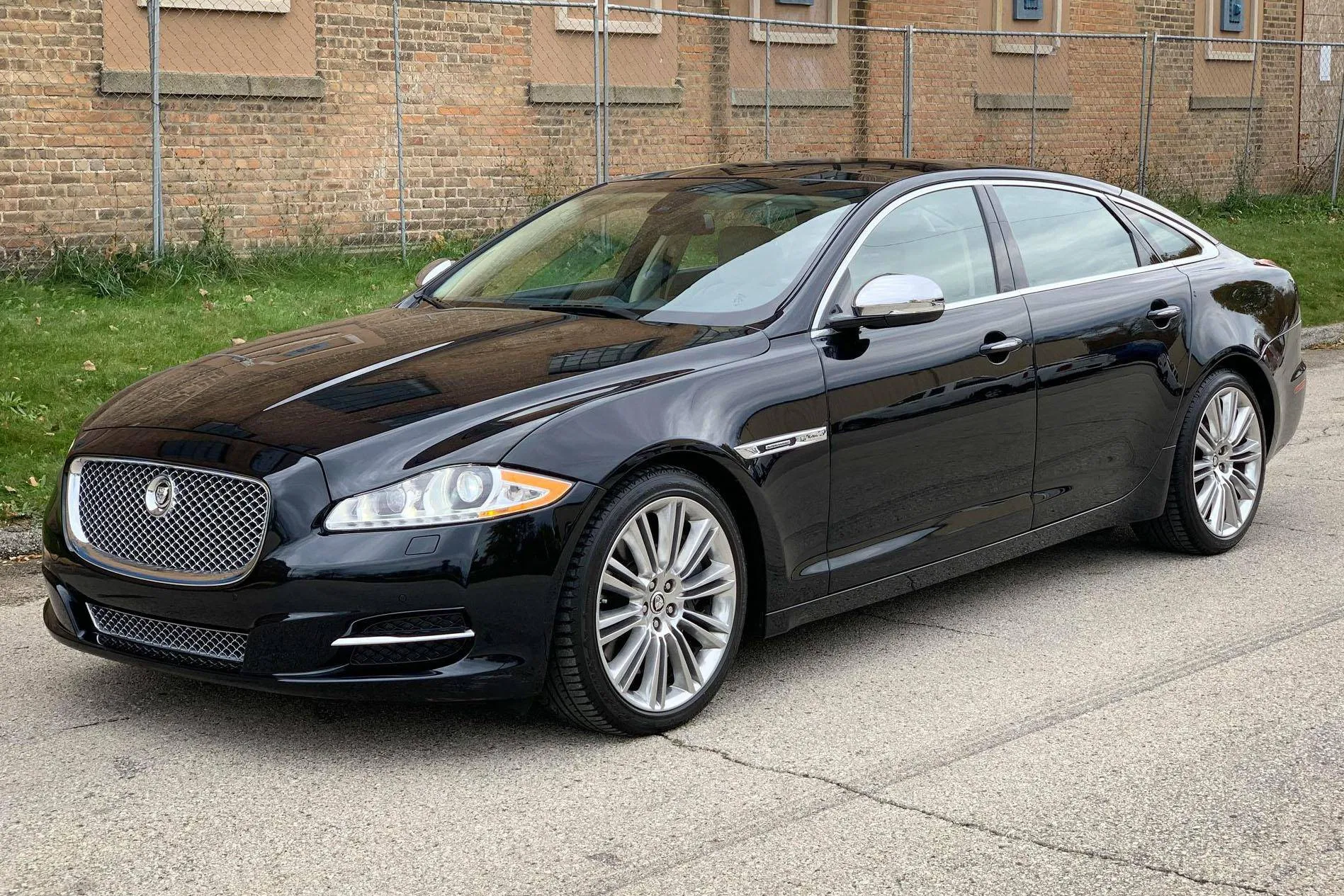
Buying a car on a budget feels like a win until the repair bills start rolling in. Some vehicles look like incredible deals on the surface, with attractive price tags that make them nearly irresistible to first-time buyers and budget-conscious shoppers alike. But beneath that shiny exterior often lies a ticking financial time bomb.
The used car market is full of tempting offers. A luxury sedan for under $15,000 or a powerful sports car for less than $10,000 can seem like the deal of a lifetime. However, what dealerships and private sellers rarely mention is the long-term cost of ownership, parts, labour, specialist mechanics, and rare components that can drain your bank account faster than you ever imagined.
Maintenance costs vary dramatically between vehicles. Some cars are designed with serviceability in mind, making repairs quick, affordable, and straightforward. Others require hours of labour just to access basic components, and their parts are either imported, discontinued, or simply overpriced.
This guide explores eight cars that consistently lure buyers in with low sticker prices but punish owners with sky-high repair and maintenance costs. From European luxury brands to discontinued American muscle, these vehicles have earned a notorious reputation in the automotive world.
If you’re considering buying any of these cars, read this first. Understanding the true cost of ownership could save you thousands of dollars and a great deal of frustration. Knowledge is your greatest asset when going through the used car market.
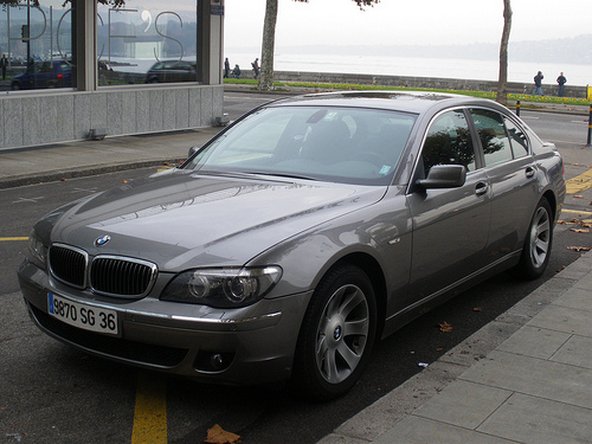
1. BMW 7 Series (E65/E66 Generation, 2002–2008)
The BMW 7 Series has long been the brand’s flagship luxury saloon. It represents the pinnacle of German engineering, refined comfort, and cutting-edge technology, at least when it was new. On the used market, however, the E65/E66 generation tells a very different story.
You can pick up one of these elegant machines for as little as $5,000 to $8,000 today. That price point makes it tempting for buyers who want to experience genuine executive-class motoring without a premium price tag. What they don’t realise is that they are essentially buying a depreciated luxury vehicle with full-price luxury repair costs.
The E65 generation was introduced with BMW’s iDrive infotainment system, which was revolutionary but notoriously unreliable. Early versions were plagued with software glitches and hardware failures. Replacing the iDrive controller alone can cost over $1,000 in parts and labour.
The engine options themselves are engineering masterpieces, but masterpieces that demand masterful (and expensive) maintenance. The N62 V8 engine, found in the 745i and 750i variants, is particularly well-known for its valley pan gasket issue. This repair requires removing the engine from the car, and labour alone can exceed $3,000 at a dealership.
The air suspension system is another notorious cost centre. When the self-levelling suspension fails, and it will replacement parts and labour can run between $1,500 and $4,000, depending on how many components need replacing. Most owners eventually convert to conventional coil springs, which is itself not a cheap job.
Electronics throughout the vehicle are complex and interlinked. A fault in one system can trigger cascading issues across multiple modules. Independent mechanics often struggle with the proprietary BMW diagnostic systems, pushing owners toward expensive dealership visits.
Cooling system components, including the water pump, thermostat, and expansion tank, are known failure points. These are typically made of plastic and degrade over time. A full cooling system overhaul can set you back $1,200 to $2,000 easily.
The interior quality is exceptional, but aging luxury interiors come with aging luxury repair bills. Soft-close door mechanisms, electronic seat motors, and climate control systems all carry premium replacement costs.
If you love the idea of driving a V8-powered German luxury car, the 7 Series E65 will absolutely deliver that experience. Just make sure you have a healthy maintenance fund sitting alongside your purchase budget.
Specifications:
- Engine: 4.4-litre N62 V8, naturally aspirated
- Horsepower: 325 hp @ 6,100 rpm
- Torque: 450 Nm (332 lb-ft) @ 3,600 rpm
- Length: 5,044 mm (198.6 inches)
- Width: 1,902 mm (74.9 inches)
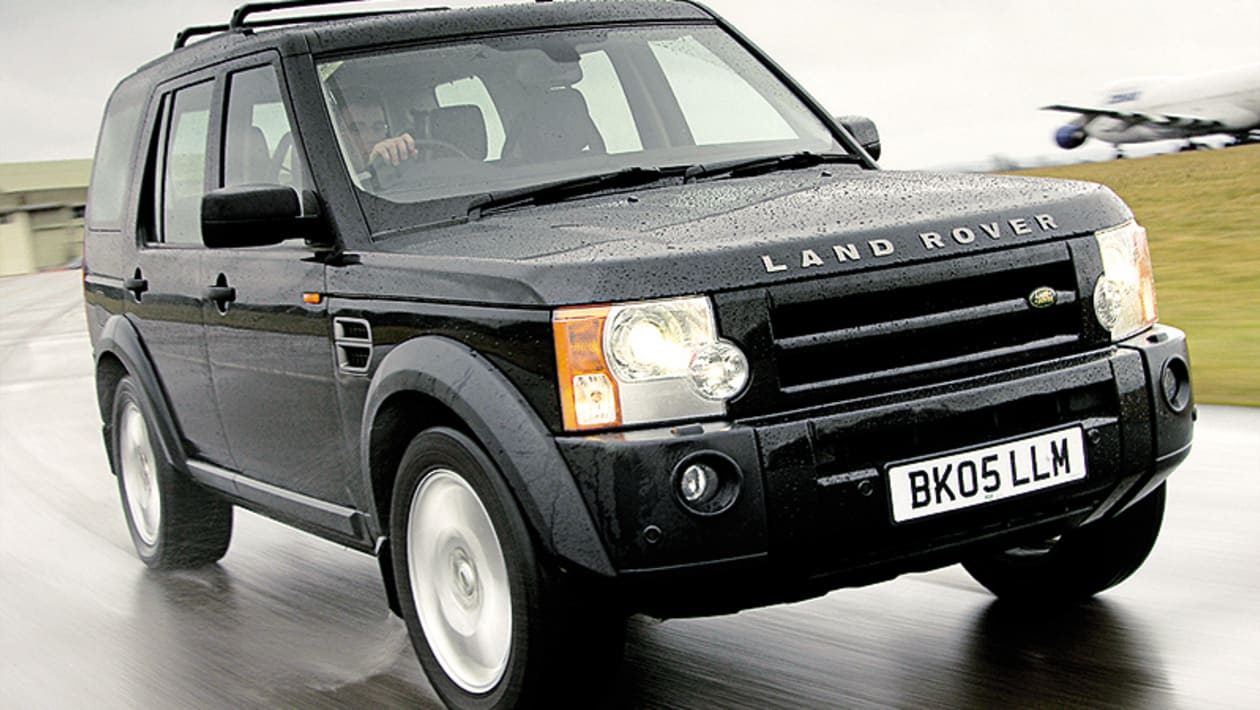
2. Land Rover Discovery 3 (2004–2009)
The Land Rover Discovery 3, known as the LR3 in North America, is one of the most capable off-road SUVs ever produced. It combines genuine terrain-conquering ability with a surprisingly comfortable and refined interior. For families who want adventure without giving up luxury, it looks like the perfect package, especially at used prices of $8,000 to $14,000.
The reality of owning a Discovery 3 is considerably more complicated. Land Rovers, particularly from this era, have earned a legendary reputation for unreliability. Long-term owners often joke that owning one is essentially funding a second car just to have transport while the Discovery is in the shop.
The air suspension system is perhaps the single biggest issue with this vehicle. The Discovery 3 rides on an electronically controlled air suspension that adjusts ride height based on terrain and speed. When new, this system is impressive. As the vehicle ages, airbags, compressors, and valves begin to fail regularly.
A single air spring replacement can cost $400 to $700 per corner. If all four need replacing, which is common combined with a failed compressor, you could be looking at a $3,000 to $5,000 repair bill. Many owners convert to aftermarket coilover setups, but that also carries a high cost.
The Terrain Response system, while brilliant in concept, is a complex electronic ecosystem. Faults in the transfer case or centre differential can be electronically triggered and are extremely expensive to diagnose and repair. Specialist Land Rover technicians are not available everywhere, and generic garages often cannot handle these systems.
The 4.4-litre V8 engine, supplied by Jaguar, has known issues with head gaskets and oil leaks. Engine oil consumption is a consistent complaint among owners. Regular oil checks are essential, or engine damage can occur rapidly and silently.
Timing chain issues are another concern in both V8 and diesel variants. A stretched or jumped timing chain can cause catastrophic engine damage. Preventive replacement is recommended around the 100,000-mile mark, which itself costs over $2,000.
Electrical gremlins are a constant companion with this generation of Land Rover. Dashboard warning lights appear seemingly at random. Faults with the ABS module, HDC system, and body control module are widely reported and consistently expensive.
Specifications:
- Engine: 4.4-litre, naturally aspirated
- Horsepower: 295 hp @ 5,500 rpm
- Torque: 410 Nm (302 lb-ft) @ 4,000 rpm
- Length: 4,840 mm (190.5 inches)
- Width: 1,915 mm (75.4 inches)
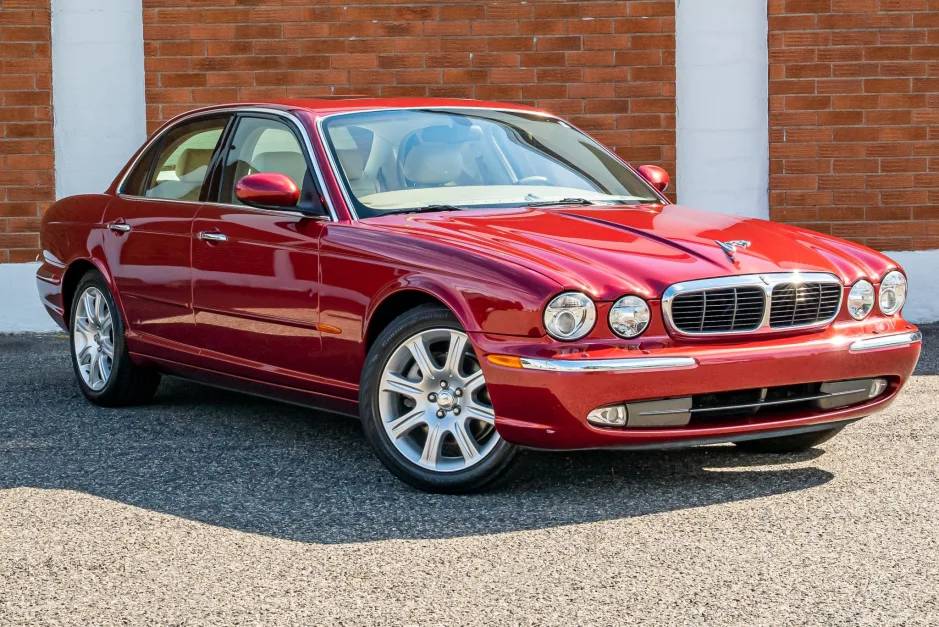
3. Jaguar XJ (X350 Generation, 2003–2009)
The Jaguar XJ X350 is one of the most beautiful executive saloons ever designed. Its classical styling, hand-stitched leather interior, and whisper-quiet V8 engines made it a genuine competitor to the best German luxury cars of its era. Today, you can find these elegant machines selling for as little as $5,000 to $10,000, which is precisely where the danger begins.
Jaguar earned its reputation through a strong focus on craftsmanship and performance, but it has never been known for mechanical reliability or low maintenance costs. The X350 features an aluminium body, which was considered a major engineering breakthrough at the time of its release. However, that same aluminium construction also makes body repairs highly expensive, requiring specialist equipment and trained technicians to carry out the work properly.
The supercharged XJR variant, with its 4.2-litre V8 producing 395 horsepower, is particularly attractive to enthusiasts. It also happens to be particularly attractive to expensive problems. The supercharger itself can develop seal failures, and a full rebuild or replacement costs thousands of pounds or dollars at a specialist shop.
Air suspension, again, is a recurring nightmare. The Jaguar’s adaptive air suspension system develops leaks and compressor failures as it ages. Replacement costs mirror those seen in other luxury brands, $2,000 to $4,500, depending on severity and component failure.
The ZF automatic gearbox used in many variants is generally reliable but expensive when it does fail. A full gearbox rebuild or replacement can exceed $4,000. The gearbox is tightly integrated with the vehicle’s electronic systems, making generic repairs very difficult.
Cooling system failures are well documented in the XJ X350. Plastic coolant pipes and connectors crack and fail over time. An overheating engine in this car can very quickly escalate into a head gasket failure, which is a repair bill that might exceed the car’s actual market value.
Servicing alone is expensive. Oil changes, brake fluid flushes, and tyre replacements on the large OEM wheel sizes all carry premium pricing. Finding an independent specialist who genuinely understands the X350’s unique engineering is increasingly difficult as the car ages further.
Specifications:
- Engine: 4.2-litre, naturally aspirated
- Horsepower: 294 hp @ 6,000 rpm
- Torque: 413 Nm (305 lb-ft) @ 4,100 rpm
- Length: 5,095 mm (200.6 inches)
- Width: 1,895 mm (74.6 inches)
4. Maserati Quattroporte (Fifth Generation, 2003–2012)
Few cars offer the theatre and drama of a Maserati Quattroporte. The name itself means “four doors” in Italian, and this grand luxury saloon delivers one of the most intoxicating driving experiences available in a four-door body. Used examples of the fifth-generation model now sell for as little as $10,000 to $18,000, a fraction of their original six-figure price tags.
The Quattroporte’s depreciation curve is among the steepest in the automotive world. This is not a coincidence. While the car looks and sounds utterly spectacular, it requires an almost comical level of financial commitment to keep running properly.
The Ferrari-derived 4.2-litre V8 engine is a jewel. It produces a glorious sound that no other four-door saloon can match. However, this engine requires valve timing services and general maintenance that is performed almost exclusively by Maserati specialists whose hourly labour rates reflect the exclusivity of their client base.
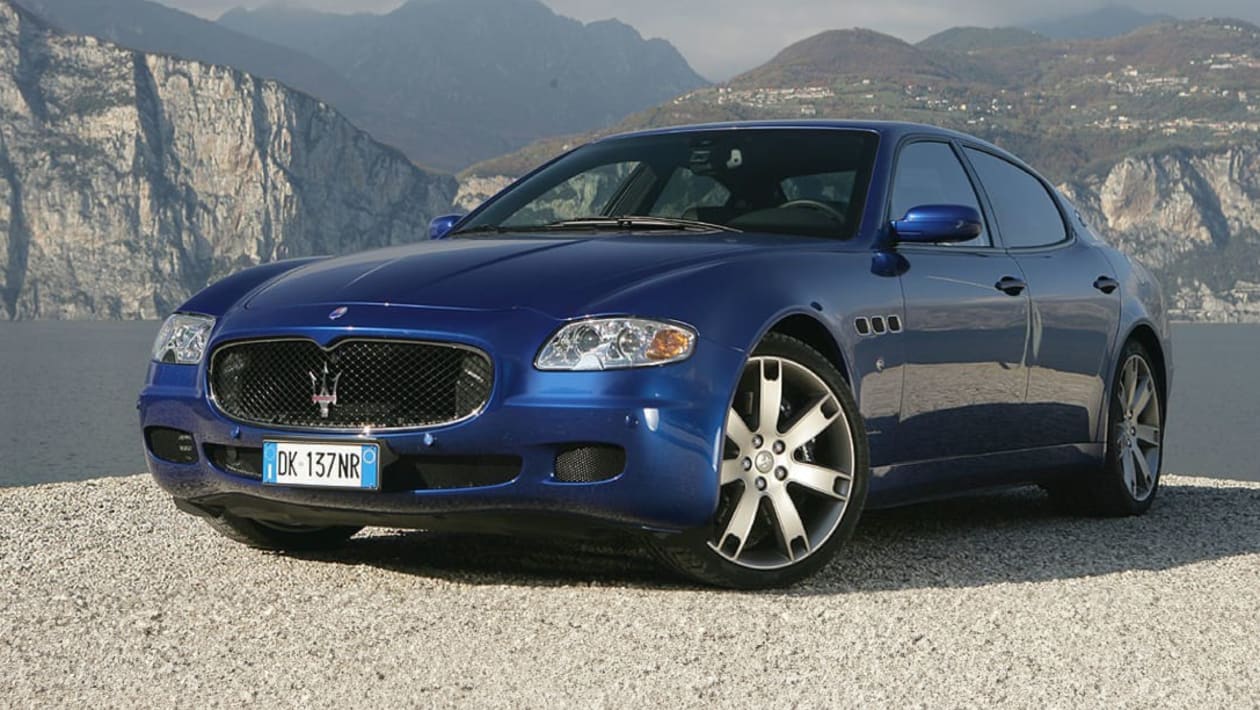
The Cambiocorsa gearbox, a single-clutch automated manual transmission, is one of the most discussed failure points in modern Italian car history. It provides a sporty driving experience but is notoriously jerky at low speeds and prone to complete failure. A replacement gearbox or full rebuild easily costs $5,000 to $10,000. Many experts advise avoiding the automatic version entirely in favour of the rare six-speed manual.
Cooling system integrity is a constant concern. The radiator, expansion tank, and associated hoses are known failure points. An overheated Maserati V8 can develop head gasket issues that lead to catastrophic engine failure if not caught immediately.
The F1 pump, responsible for operating the gearbox actuators, fails regularly and costs $1,500 to $3,000 to replace. It is not a question of if it will fail, but when. Experienced Maserati owners often budget for this repair before even taking delivery.
Suspension components, particularly front control arm bushings and ball joints, wear rapidly. Italian sports cars are tuned for performance, which means comfort comes second and longevity of suspension parts comes third. Annual suspension inspections are strongly recommended.
Even routine servicing is expensive. Oil changes require specific Maserati-approved synthetic oil. Brake fluid changes, air filter replacements, and spark plug services all carry premium labour rates due to engine bay access complexity.
Specifications:
- Engine: 4.2-litre Ferrari-derived V8, naturally aspirated
- Horsepower: 395 hp @ 7,000 rpm
- Torque: 460 Nm (339 lb-ft) @ 4,500 rpm
- Length: 5,052 mm (198.9 inches)
- Width: 1,896 mm (74.6 inches)
Also Read: 8 Red Flags On A Used Car Listing
5. Volkswagen Phaeton (2002–2016)
The Volkswagen Phaeton is one of the most ambitious and ultimately tragic automobiles ever produced. Ferdinand Piëch, VW’s legendary chairman, insisted on building a car that would rival the Rolls-Royce Phantom in engineering quality while wearing a Volkswagen badge. The result was a technical masterpiece that the market largely rejected and a car that became one of the most expensive-to-maintain vehicles ever made.
Used Phaetons can be found for astonishingly low prices, sometimes as little as $8,000 to $15,000 for a V8 or W12 example. The W12 variant, in particular, represents extraordinary value in terms of performance delivered per dollar spent at purchase. The ongoing financial pain, however, begins almost immediately after.
The W12 engine is an engineering marvel, essentially two VR6 engines joined together on a common crankshaft. It powers the Phaeton to impressive speeds with remarkable refinement. However, accessing virtually anything on this engine requires extensive disassembly. Something as simple as replacing spark plugs on the W12 can take a professional mechanic several hours.
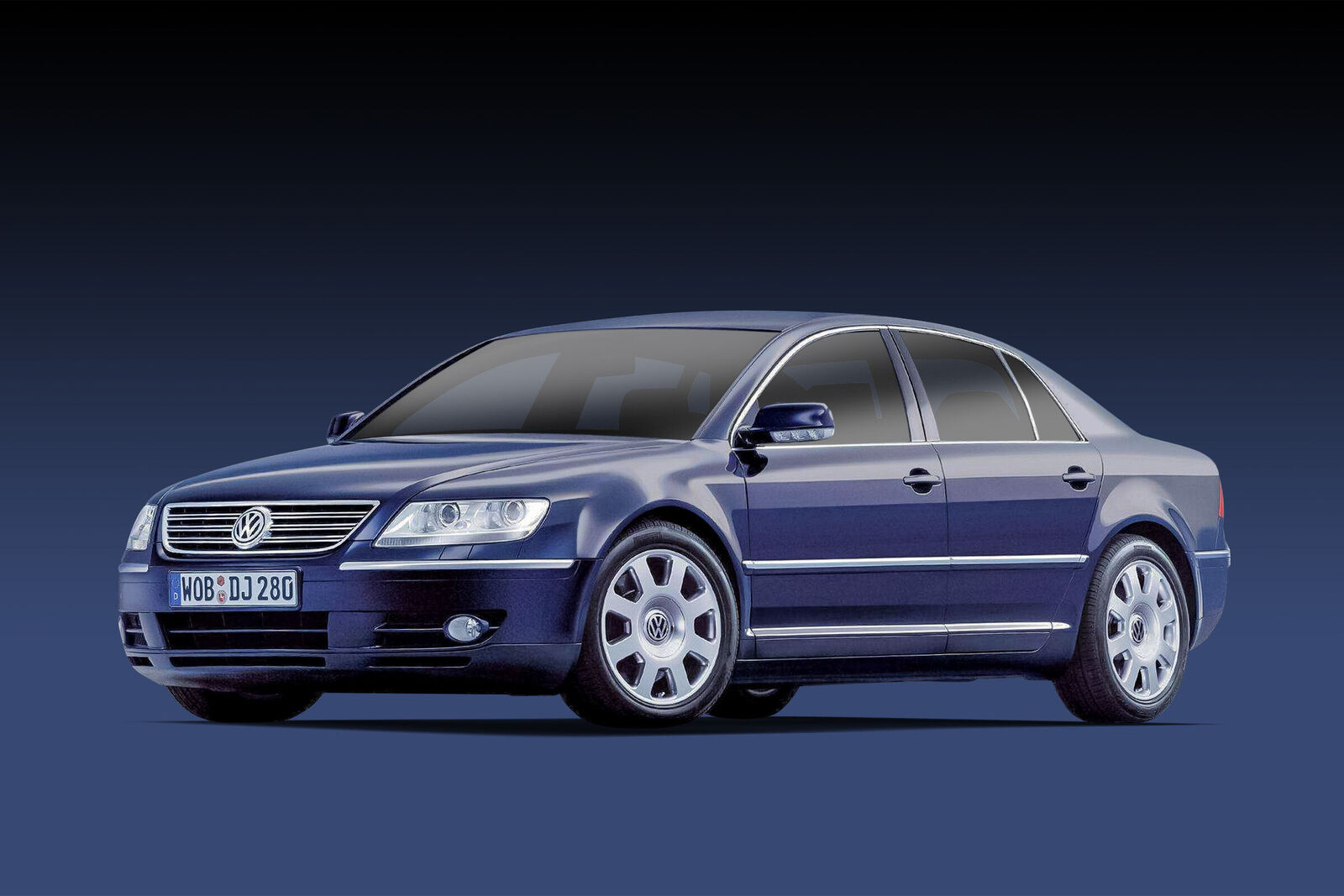
The Phaeton was built to an almost obsessive standard of quality. It features a dual-zone automatic air conditioning system with separate control units for each seat zone, a system comprising hundreds of individual components. When these climate control units fail, diagnosis and repair are both time-consuming and expensive.
Air suspension, fitted as standard, is the typical weak point. The Phaeton’s air suspension is complex beyond almost any other vehicle in this class. Full replacement of worn air suspension components can cost $4,000 to $7,000 at a specialist workshop.
The electronic systems throughout the Phaeton are tied together in a deeply integrated network. Accessing fault codes requires specialist VW diagnostic equipment. Generic OBD-II readers provide almost no useful information on this vehicle. Many mainstream garages simply refuse to work on it.
Window regulators, door lock mechanisms, and seat adjustment motors are all overengineered to a level that makes them uniquely expensive to replace. Even interior trim repairs carry dealer pricing well above what most car owners would expect.
Specifications:
- Engine: 6.0-litre W12, naturally aspirated
- Horsepower: 444 hp @ 6,000 rpm
- Torque: 600 Nm (442 lb-ft) @ 3,000 rpm
- Length: 5,163 mm (203.3 inches)
- Width: 1,903 mm (74.9 inches)
6. Cadillac Escalade (Second Generation, 2002–2006)
The Cadillac Escalade occupies a unique place in American automotive culture. It is bold, brash, and unmistakably aspirational. The second-generation model, riding on GM’s full-size truck platform, projects an image of wealth and status that few vehicles can match. Used examples are now widely available for $6,000 to $12,000, making them appealing to buyers who want maximum presence for minimum outlay.
Many buyers tend to underestimate the ongoing costs of operating a vehicle of this size and complexity. The Escalade is more than just a large SUV, as it functions as a sophisticated network of electronic and mechanical systems, each contributing to higher repair and maintenance expenses.
The 6.0-litre Vortec V8 engine is generally durable and proven. However, it is thirsty, averaging around 12 to 14 miles per gallon in real-world driving. Fuel costs alone make this vehicle expensive to live with before any repairs are even factored in.
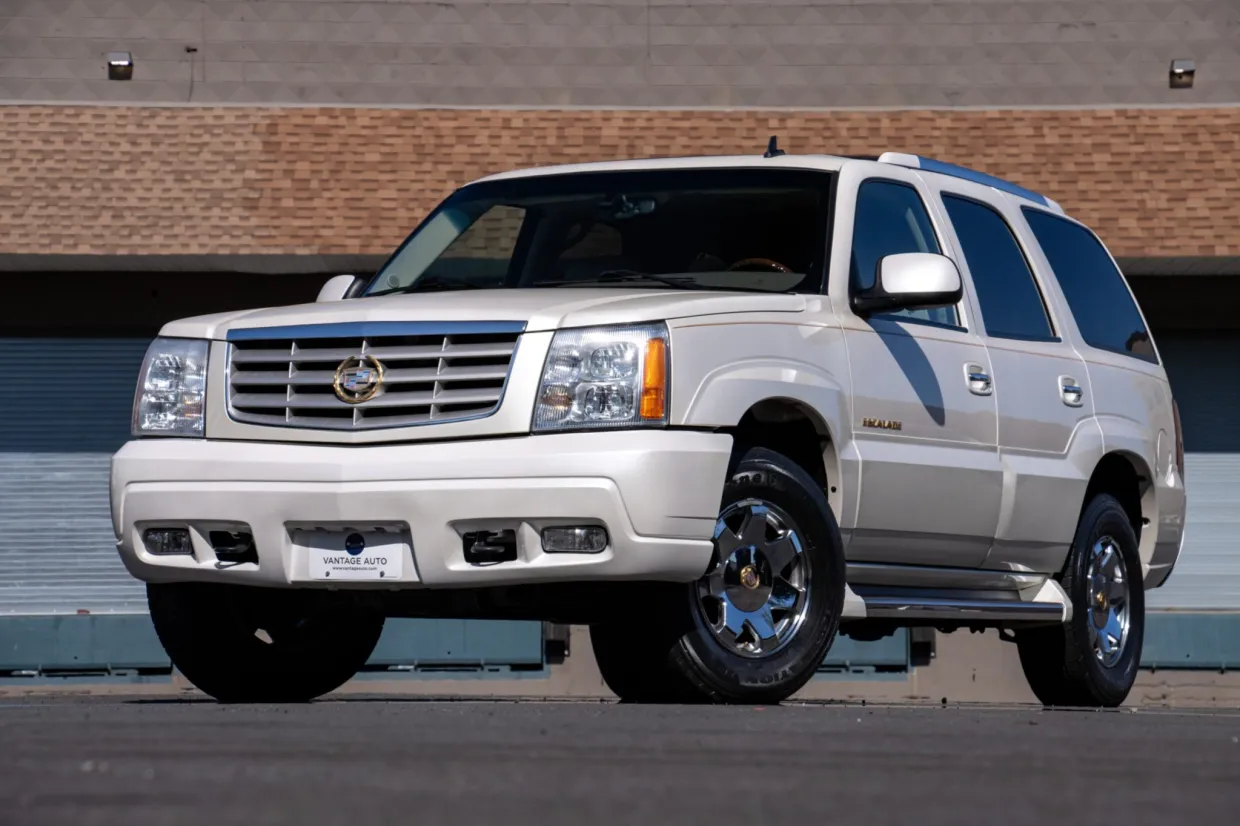
Active fuel management (AFM), which allows the engine to run on four cylinders at light loads, is a well-documented source of problems in this generation. Lifter failure related to AFM is widespread. A full lifter replacement job, often combined with camshaft replacement, can cost $3,000 to $5,000 at an independent shop.
The magnetic ride control suspension system, offered on upper trim levels, is technically impressive but financially demanding when it fails. Individual MagneRide shocks cost $600 to $1,200 each. If all four require replacement simultaneously, the total repair bill easily exceeds $5,000, including labour.
The rear air suspension on some variants suffers from similar issues to those of other luxury SUVs. Compressor failure and air bag rupture are common after ten years of use. Repairs typically run between $1,500 and $3,000.
Transmission problems, particularly with the 4L65-E and 4L60-E automatic gearboxes, are frequently reported. These transmissions can slip, shudder, and eventually fail, particularly in vehicles used for towing. A rebuild or replacement costs $2,500 to $4,500.
Specifications:
- Engine: 6.0-litre Vortec LQ4 V8, naturally aspirated
- Horsepower: 345 hp @ 5,200 rpm
- Torque: 515 Nm (380 lb-ft) @ 4,000 rpm
- Length: 5,130 mm (201.9 inches)
- Width: 2,007 mm (79.0 inches)
7. Mercedes-Benz CL600 (C215 Generation, 2000–2006)
The Mercedes-Benz CL600 is one of the most opulent grand tourers ever produced by the Stuttgart manufacturer. Powered by a twin-turbocharged V12 engine, it offered a combination of performance, luxury, and refinement that was virtually unmatched in its era. New prices exceeded $130,000. Today, used examples regularly change hands for just $8,000 to $15,000.
That price gap should be read as a warning, not an opportunity. The CL600 is widely regarded among Mercedes specialists as one of the most expensive cars to maintain. Every system on this vehicle is complex, and complexity in a twenty-year-old German luxury car translates directly into repair bills.
The 5.5-litre twin-turbocharged V12 engine designated M275 is a technological achievement. It produces tremendous power and delivers it with absolute smoothness. However, it also features two turbochargers, two separate cooling circuits, three rows of spark plugs (twelve total), and an engine management system of extraordinary complexity.
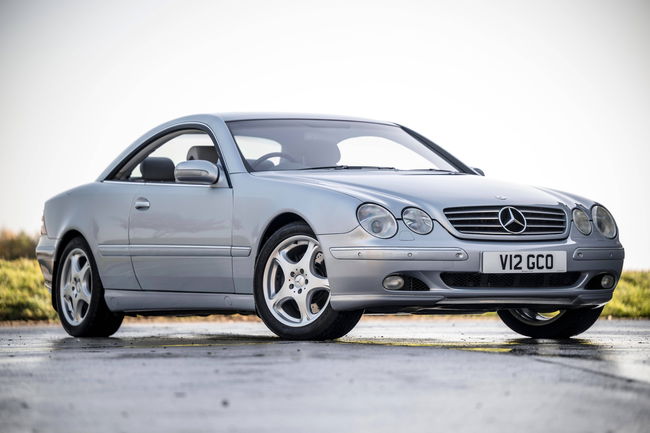
Spark plug replacement alone on this engine typically costs $800 to $1,500 due to the labour required to access all twelve plugs. This service is recommended every 60,000 miles. The turbochargers themselves can fail, and a rebuild or replacement of both units costs $3,000 to $6,000.
The Active Body Control (ABC) hydraulic suspension is exclusive to this model and several related Mercedes products. It completely eliminates body roll through a hydraulic strut system. When it works, it is astonishing. When it fails, and it does, the repair bills are equally astonishing. A full ABC system overhaul can cost $8,000 to $15,000.
The Sensotronic Brake Control (SBC) system replaced conventional braking in this vehicle. When the SBC module fails, braking performance is compromised immediately. Replacement modules and recalibration typically cost $2,000 to $4,000.
The transmission, while generally reliable, is expensive when it does fail. The five-speed automatic gearbox carries premium pricing for rebuilds. Routine transmission fluid services are more complex and expensive than those on conventional vehicles.
Specifications:
- Engine: 5.5-litre M275 twin-turbocharged V12
- Horsepower: 493 hp @ 5,000 rpm
- Torque: 830 Nm (612 lb-ft) @ 1,800 rpm
- Length: 4,935 mm (194.3 inches)
- Width: 1,847 mm (72.7 inches)
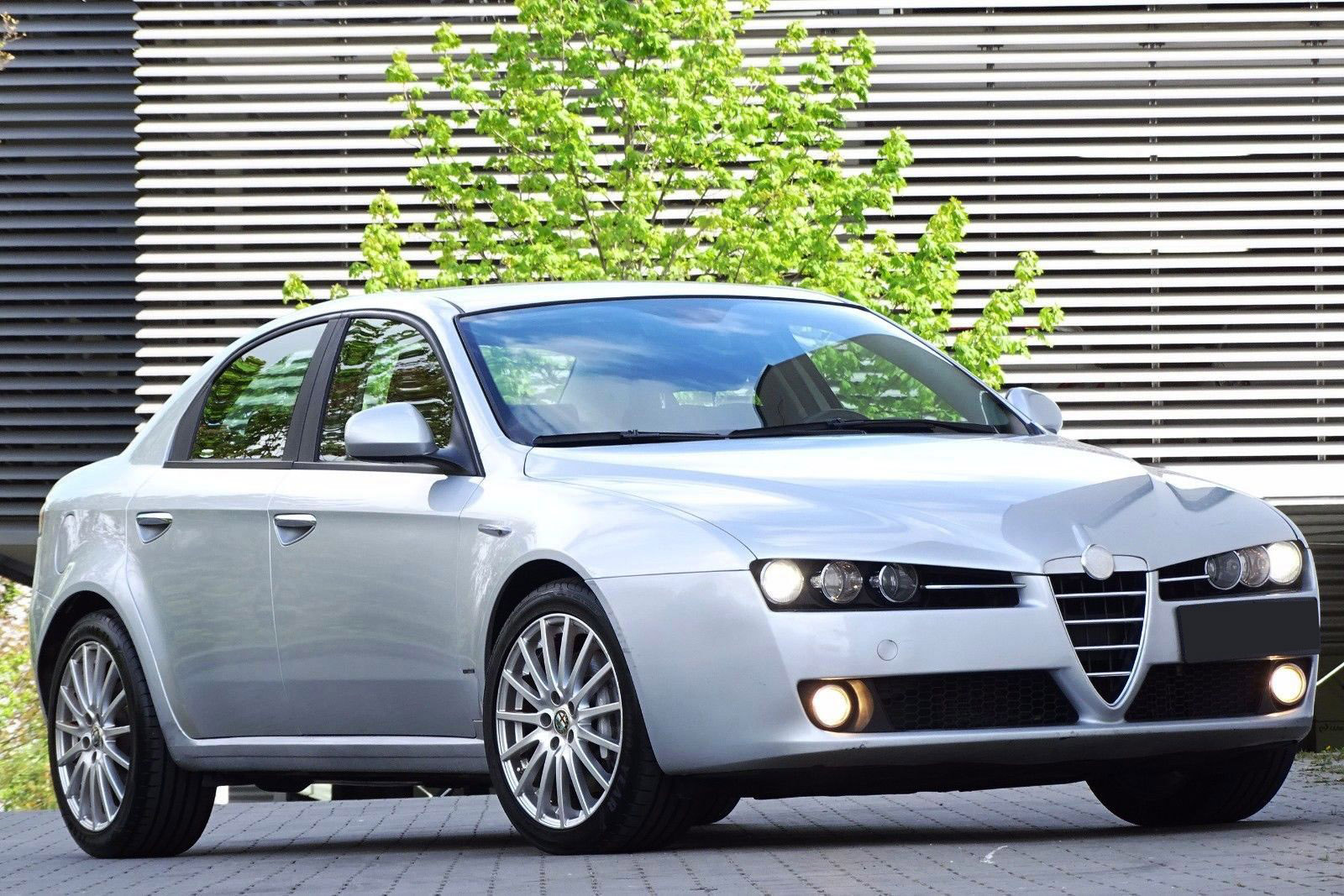
8. Alfa Romeo 159 (2005–2011)
The Alfa Romeo 159 is perhaps the most emotionally compelling car on this list. It is drop-dead gorgeous, with styling by Giorgetto Giugiaro that ages better with every passing year.
It drives with genuine passion and character that no German competitor of its era could truly replicate. Used prices have now fallen to $4,000 to $9,000, which makes it one of the most tempting bargains in the enthusiast car world.
It is also consistently ranked among the least reliable cars of its generation by owner surveys and reliability indices across Europe and beyond. The combination of Italian electrical systems, a complex all-wheel-drive setup (on the Q4 variant), and proprietary components makes repairs both frequent and financially painful.
The 3.2-litre V6 engine is a sonorous, characterful unit that sounds magnificent at full throttle. It also requires careful maintenance to stay healthy.
Timing chain tensioner issues are well-documented. If the chain skips or snaps, the engine suffers catastrophic valve damage, a repair that costs more than the car is worth in most cases.
The electrical system is famously temperamental. Dashboard warning lights illuminate for reasons that can take hours of specialist diagnostic time to identify. The body control module, climate system, and instrument cluster all carry histories of random failures. Labour costs for electrical diagnosis at an Alfa specialist are not trivial.
The all-wheel-drive Q4 system, while excellent in wet conditions, adds significant mechanical complexity. The rear differential and transfer case require periodic maintenance. Parts availability for the Q4 drivetrain components is increasingly challenging in many markets.
Rust is a genuine concern for older examples. The 159’s body panels are susceptible to corrosion, particularly around wheel arches and sill areas. Bodywork repairs on a car of this value are often uneconomical, but leaving rust untreated only accelerates structural deterioration.
The Selespeed automated manual gearbox, offered as an alternative to the standard manual, is widely regarded as the worst gearbox option available. Actuator failures and pump failures are common. Repair costs regularly exceed $2,000 to $3,500. Buyers should seek manual gearbox examples wherever possible.
Brake components, particularly rear callipers, are known to seize. Italian performance cars run hot braking systems that require more frequent servicing than equivalent family saloons. Replacement rear callipers cost significantly more than equivalent German or Japanese components.
Specifications:
- Engine: 3.2-litre Busso V6, naturally aspirated
- Horsepower: 256 hp @ 6,200 rpm
- Torque: 322 Nm (237 lb-ft) @ 4,500 rpm
- Length: 4,661 mm (183.5 inches)
- Width: 1,830 mm (72.0 inches)
Also Read: 10 Best Sedans With Least Depreciation After 10 Years
