
When a vehicle rolls over, the roof becomes the last barrier between occupants and the ground. Most people obsess over horsepower figures, fuel economy, and infotainment screens when buying an SUV, yet one of the most critical safety metrics, roof-crush resistance, rarely enters the conversation. That oversight can be fatal.
The Insurance Institute for Highway Safety (IIHS) measures roof strength using a strength-to-weight ratio (SWR), which calculates the peak force a roof can sustain before crushing five inches inward, relative to the vehicle’s own curb weight.
A score of 4.0 or higher earns a “Good” rating, meaning the roof must withstand a force at least four times the vehicle’s weight before significantly deforming. Research shows that this threshold represents a 50 percent reduction in serious or fatal rollover injuries compared to the old federal standard of just 1.5.
For SUVs, rollover safety is especially critical. Studies reveal that roughly 59 percent of SUV occupant deaths in crashes involve rolling over, compared to just 25 percent for cars. As manufacturers adopted high-strength steel, hot-formed boron alloys, and advanced unibody architectures, roofs have grown dramatically stiffer over the past two decades.
The ten SUVs profiled here represent the most exceptional examples of rollover protection available, built with engineering precision, real-world crash data, and a commitment to keeping occupants alive when physics turns violent.
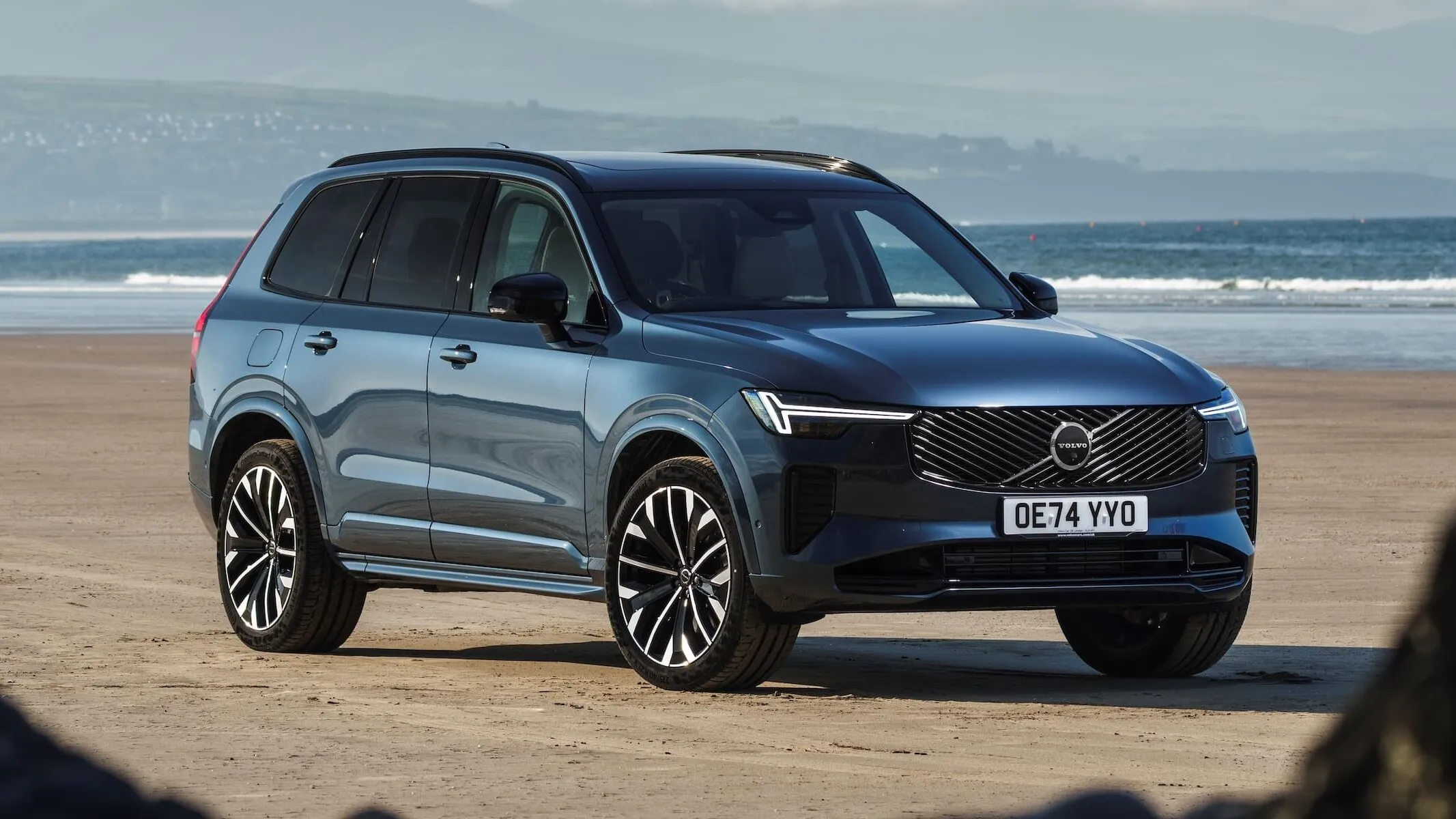
1. Volvo XC90
Very few vehicles have built a reputation for safety as strong as the Volvo XC90. Since debuting in 2003 and continuing through the current SPA generation introduced in 2016, the XC90 has established itself as a leader in roof strength and rollover protection. Its engineering standards have become a benchmark that many rivals strive to match. Rather than designing the vehicle to simply satisfy IIHS testing requirements, Volvo developed the XC90 with a structure centered on maximizing occupant protection and preserving survival space during severe crashes.
The XC90’s body structure incorporates approximately 40 percent hot-formed boron steel. Boron steel is an ultra-high-strength alloy that is formed while hot, allowing it to be shaped into complex structural components without the brittleness that normally accompanies extreme hardness.
The A-pillars, B-pillars, and roof bows are all reinforced with this material, creating a passenger cage that resists deformation even under extreme loading. In IIHS testing, the XC90’s SWR scores have consistently placed it among the highest-rated SUVs in its class, with the roof withstanding forces well above the “Good” threshold before reaching five inches of crush displacement.
The XC90 has earned the IIHS Top Safety Pick+ designation repeatedly, including for 2025 model year vehicles. The five-star NHTSA safety rating reinforces this standing. Beyond structure, the XC90 deploys airbags along the full length of the interior, protecting all three rows of occupants simultaneously during a rollover.
The curtain airbags are designed to remain inflated long enough to prevent ejection as the vehicle rolls, a critical detail that distinguishes Volvo’s passive safety philosophy from cheaper alternatives.
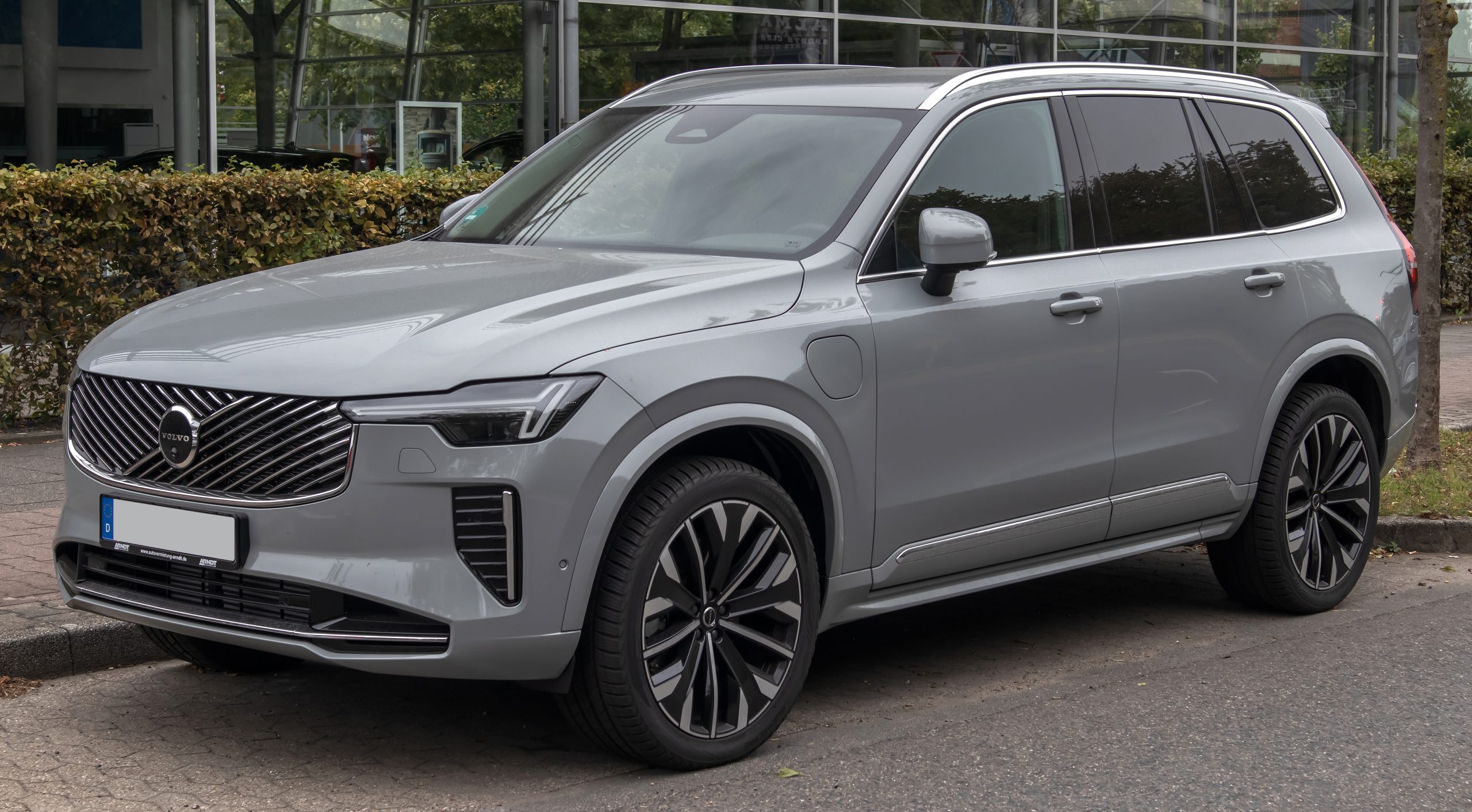
Volvo’s internal testing goes beyond regulatory requirements. The company subjects XC90 prototypes to full rollover sequences, launching them from rigs to ensure the vehicle completes multiple rolls without catastrophic cabin intrusion.
The doors reportedly remain manually operable after such tests, which is a genuine measure of survival space integrity. Structural engineering here is not about passing tests; it is about surviving the worst-case scenario.
The 2025 XC90 also benefits from Volvo’s Pilot Assist semi-autonomous suite, city safety collision avoidance, and run-off road protection systems that physically tighten seat belts and firm up suspension before an impending rollover. This active-passive safety integration is the most holistic approach to rollover protection available on any production SUV.
Specifications (2025 Volvo XC90 B6 AWD):
- Engine: 2.0L Turbocharged + Supercharged 4-cylinder (mild hybrid)
- Horsepower: 312 hp
- Torque: 295 lb-ft
- Length: 194.9 inches
- Width: 84.3 inches (with mirrors)
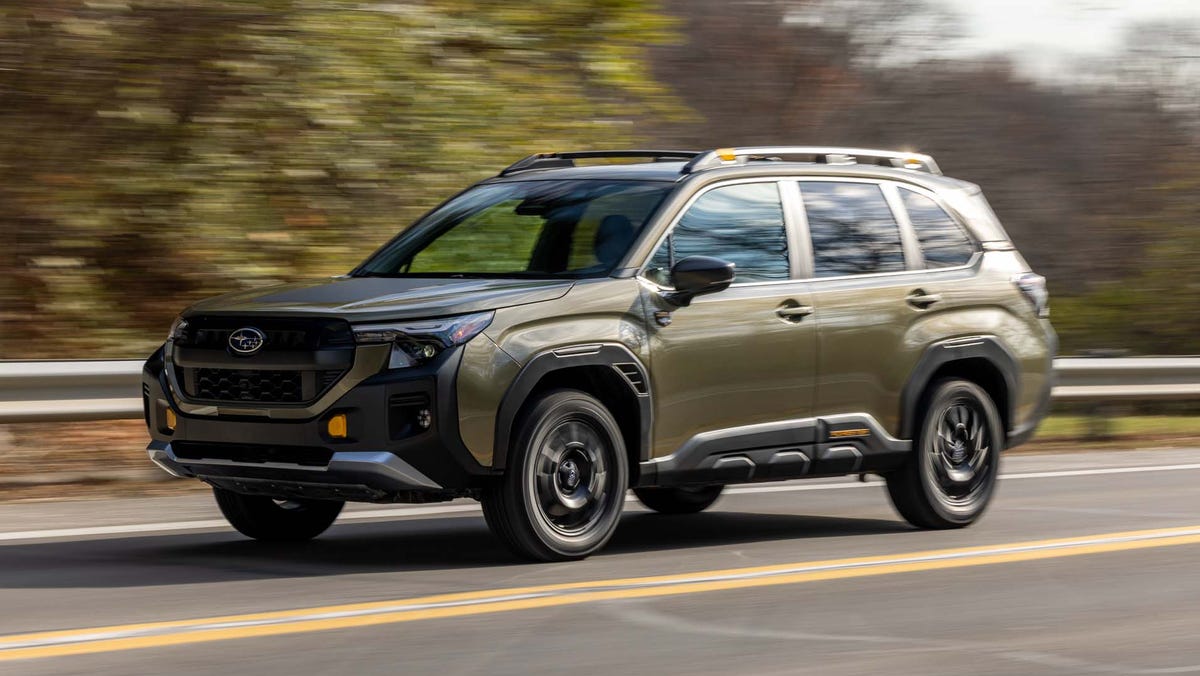
2. Subaru Forester
The Subaru Forester was among the very first SUVs to earn a “Good” rating when the IIHS launched its roof strength test protocol in 2009. This was not an accident.
Subaru’s Symmetrical All-Wheel Drive platform demands a particularly rigid chassis to handle torque distribution across all four wheels equally, and that same rigidity translates directly into superior roof crush resistance. The Forester’s body shell has always been built with rollover scenarios in mind.
Subaru uses a ring-shaped reinforcement system that connects the roof to the A-pillars, B-pillars, and side sills in a continuous load path. When the roof is subjected to crush forces, that energy is not absorbed at a single point but distributed around the entire cabin perimeter.
This design has produced some of the highest strength-to-weight ratio scores in the compact SUV segment. The 2019-2024 Forester generation, built on the Global Platform, further raised this performance by incorporating higher proportions of ultra-high-tensile steel in key structural nodes.
The sixth-generation 2025 Forester continues this tradition on a further-refined platform. Engineers specifically reinforce the crossmembers connecting the B-pillars across the roof arch. This horizontal brace acts like a truss in a building, preventing the two sides of the roof from collapsing inward independently during a rollover. It is a small engineering decision with enormous consequences for occupant survival space.
Subaru’s EyeSight driver assistance system adds an active layer to this passive protection. The system includes pre-collision braking, lane keep assist, and sway warning, all targeting the most common precursors to rollover crashes on highways.
The Forester is not simply designed to survive a rollover; it is designed to avoid one. This two-pronged approach makes it an exceptional value for safety-conscious buyers.
The 2025 model’s standard symmetrical AWD system also contributes indirectly to rollover safety. By maintaining balanced traction across all four wheels at all times, the Forester is less prone to the sudden oversteer or corner snap that precipitates many rollover events on curves. The integration of active torque vectoring in higher trims improves this further.
Specifications (Subaru Forester):
- Engine: 2.5L Naturally Aspirated Flat-Four (Boxer)
- Horsepower: 180 hp
- Torque: 178 lb-ft
- Length: 182.1 inches
- Width: 71.0 inches
3. Toyota Highlander
When the IIHS first tested midsize SUVs for roof strength, the Toyota Highlander stood out immediately. It was among a small group that withstood forces of nearly five times its own vehicle weight, pushing well beyond the 4.0 SWR required for a “Good” rating.
Toyota’s TNGA-K platform, which underpins the current fourth-generation Highlander, takes this structural advantage and builds upon it with modern manufacturing techniques.
The Highlander’s roof structure uses a combination of high-tensile steel and ultra-high-strength steel (UHSS) at load-bearing junctions. Toyota’s weld planning specifically positions resistance spot welds at locations that maximize load transfer around the cabin ring.
Engineers also use laser screw welding in the roof-to-pillar joints, which creates a stronger, more uniform bond than conventional welding alone. The result is a roofline that maintains its geometry under sustained crush forces.
Toyota’s approach to rollover protection extends into its Vehicle Stability Control (VSC) and Active Torque Control system. The Highlander monitors lateral acceleration, yaw rate, and individual wheel speeds to detect impending rollover conditions.
When sensors detect a tip-inducing maneuver, the system selectively applies braking to specific wheels and reduces engine torque to bring the vehicle back to a stable trajectory. This intervention often happens faster than human perception.
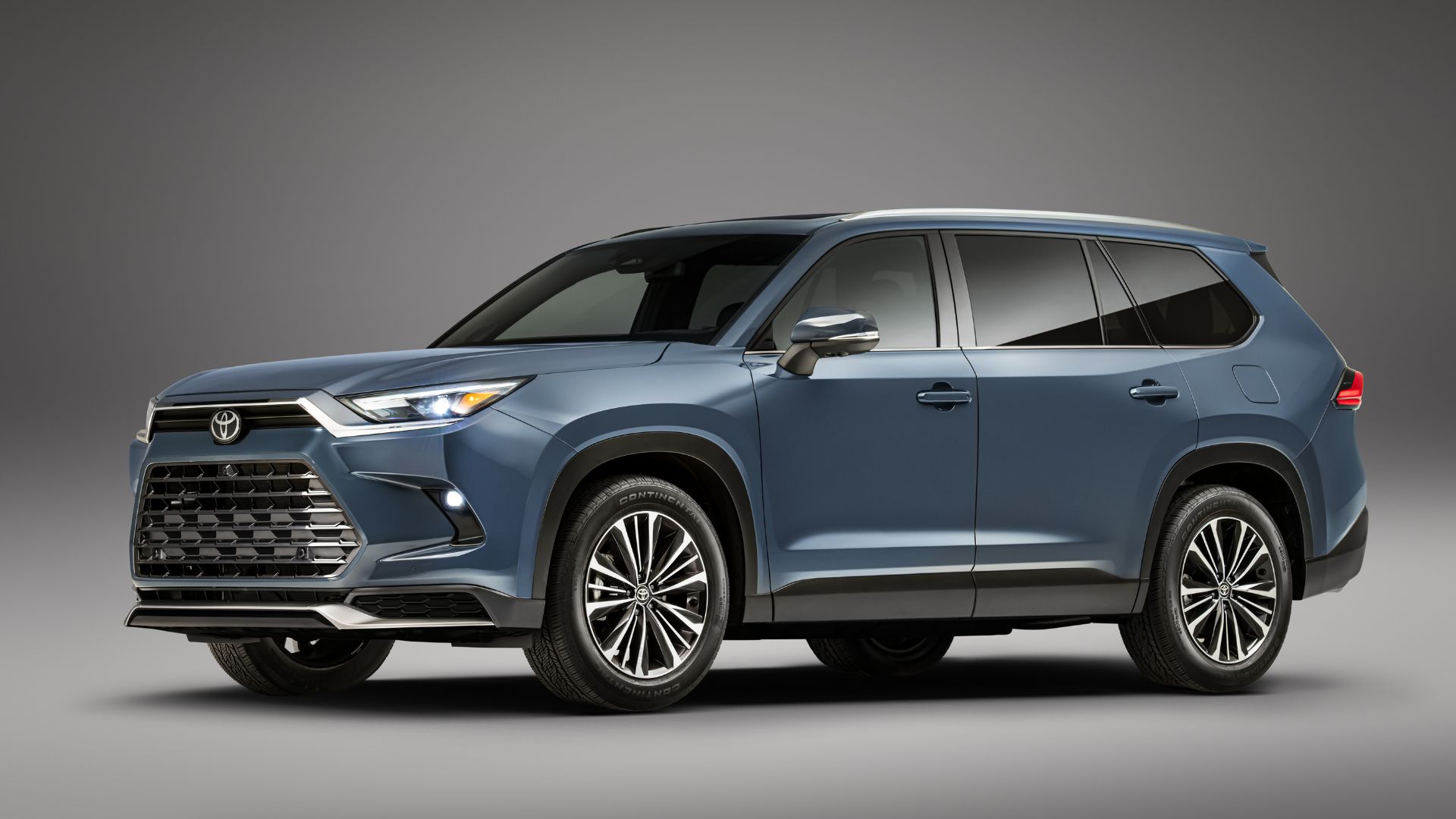
The current Highlander generation also features a star safety system as standard equipment across all trims. This includes pre-collision alert with pedestrian detection, lane departure alert, automatic high beams, and radar cruise control.
These technologies reduce the frequency of high-energy crashes that are most likely to produce rollover events. Toyota’s commitment to making safety standards not optional reflects a corporate philosophy that has paid consistent dividends in IIHS and NHTSA testing.
The Highlander’s relatively low center of gravity for its class, achieved through the wide-stance TNGA-K platform, also reduces the static stability factor (SSF) risk. This geometric advantage works in concert with the strong roof to give occupants a layered protective envelope.
Specifications:
- Engine: 2.4L Turbocharged 4-cylinder
- Horsepower: 265 hp
- Torque: 310 lb-ft
- Length: 194.9 inches
- Width: 76.0 inches
4. Rivian R1S
The Rivian R1S represents a new generation of SUV safety engineering, and its roof crush performance reflects the unique structural advantages of a purpose-built electric platform. The 2025 R1S earned the IIHS Top Safety Pick+ designation, the highest possible award after Rivian implemented targeted modifications to the front body structure and rear seat architecture. In the large electric SUV segment, the R1S stands alone in safety achievement.
Electric vehicle architecture provides an inherent structural advantage in roof crush scenarios. The skateboard battery pack that runs the full floor length of the R1S acts as an additional structural foundation, lowering the vehicle’s center of gravity and effectively stiffening the entire underbody.
The R1S earned Good ratings in every IIHS crash test category in 2025, with only headlights receiving an Acceptable rather than Good score. This comprehensive performance reflects Rivian’s decision to approach safety holistically rather than optimizing for individual test scenarios. The roof structure in particular benefits from the continuous load path created by the battery-integrated floor, the reinforced pillars, and the overhead roof bows.
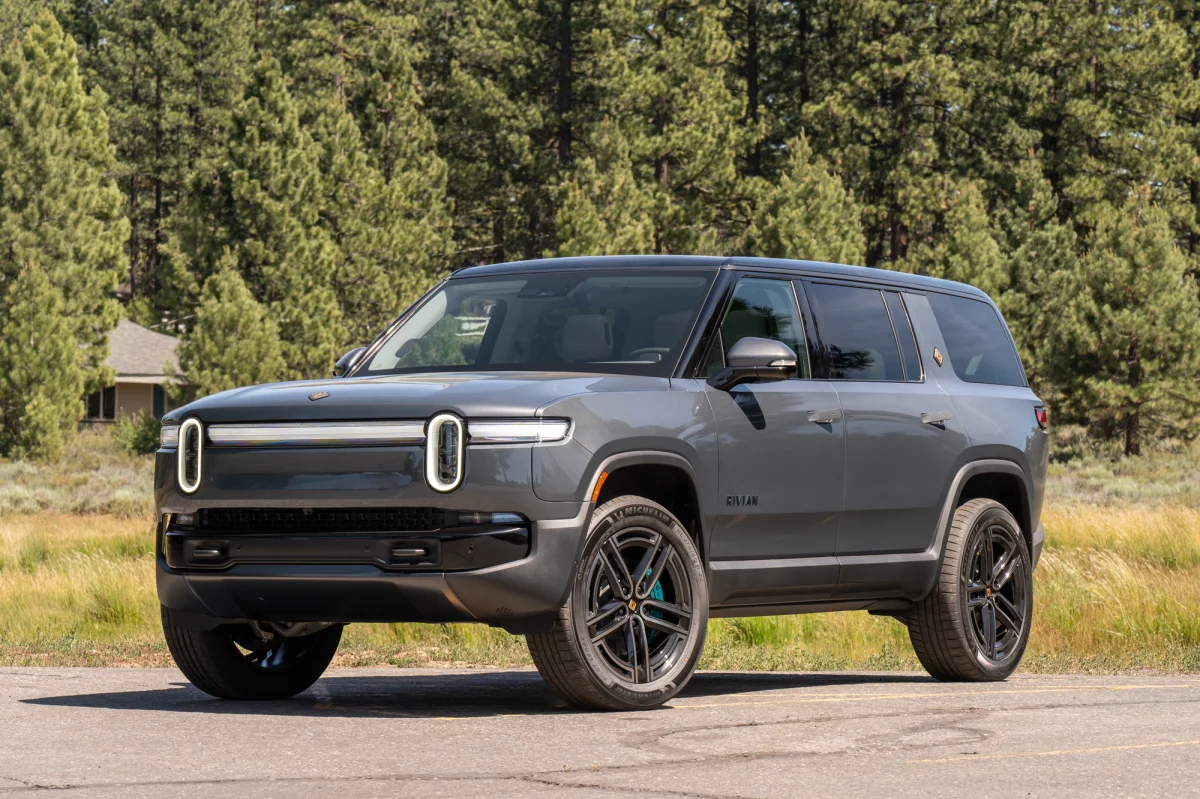
The R1S also features a quad-motor configuration in its top specification that provides individual wheel torque control, functioning effectively as the most advanced stability system available in any SUV.
Each wheel can be independently modulated in milliseconds, allowing the R1S to suppress rollover-inducing dynamics before they develop into uncontrollable yaw.
Specifications:
- Motor: Dual electric motors
- Horsepower: 600 hp
- Torque: 829 lb-ft
- Length: 201.8 inches
- Width: 86.0 inches
Also Read: 8 SUVs With The Most Space For Comfort
5. Genesis GV80
The Genesis GV80 holds the IIHS Top Safety Pick+ designation and represents one of the most thoroughly engineered approaches to rollover protection in the luxury midsize segment.
Genesis, as Hyundai Motor Group’s flagship luxury division, draws on the parent company’s deep investment in safety research and applies it with premium materials and precision manufacturing tolerances. The GV80’s body structure achieves an exceptionally high roof strength-to-weight ratio that places it among the elite in its category.
The GV80 uses a high proportion of Advanced High-Strength Steel (AHSS) in its body structure, with ultra-high-strength material concentrated in the A-pillars, B-pillars, and roof side rails.
Hyundai Motor Group’s manufacturing process incorporates hot stamping for these critical components, heating steel blanks to 930 degrees Celsius before pressing them into shape, then rapidly quenching them to achieve tensile strengths of 1,500 MPa or greater. This process produces pillar cross-sections that are both lighter and dramatically stiffer than conventionally cold-formed steel.
These features address the most common pre-crash scenarios that lead to SUV rollover events, sudden swerving, lane departure on highways, and lateral instability during evasive maneuvers. The active safety net is broad and highly integrated.
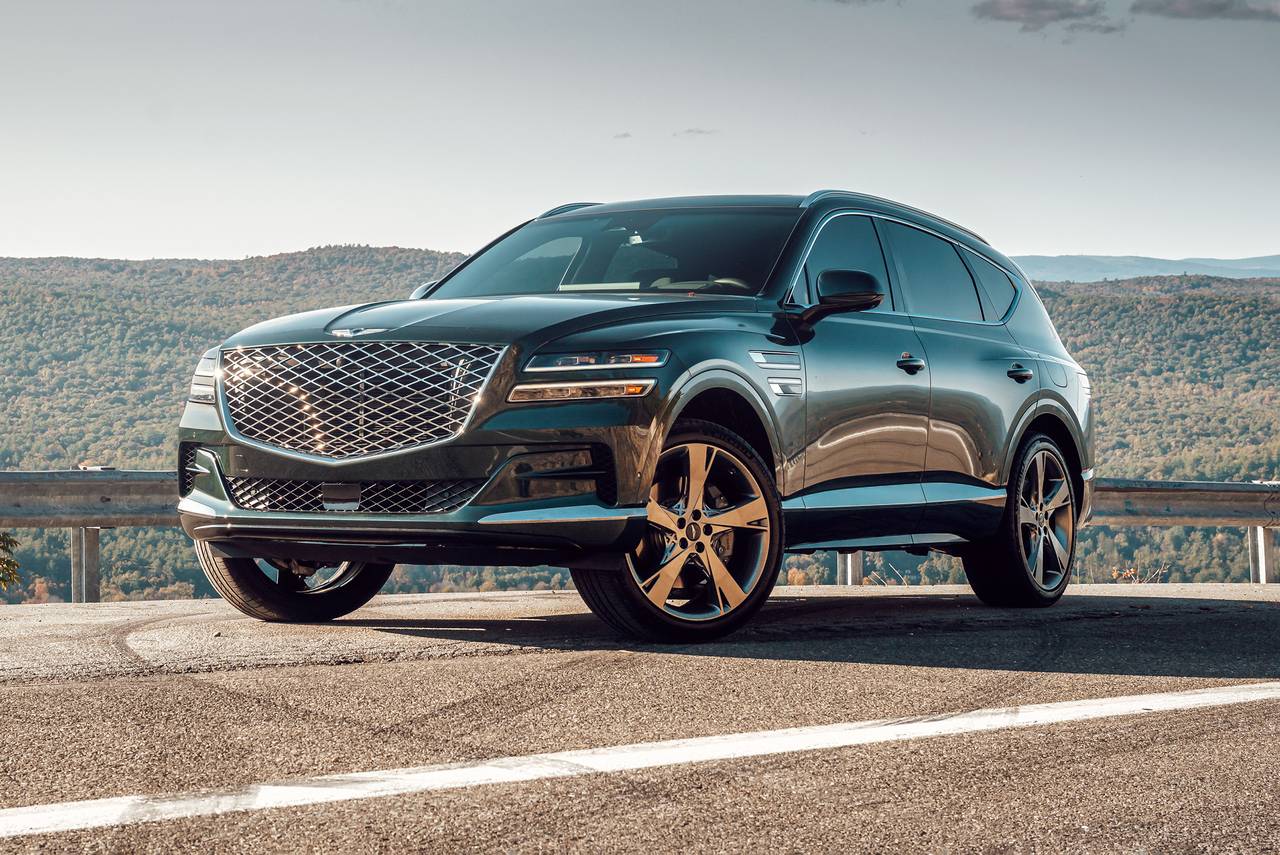
The 2025 GV80 refresh introduced a 27-inch panoramic OLED display without compromising the structural integrity of the dashboard cross-beam. This detail illustrates the lengths to which Genesis engineers go to ensure that customer-facing feature improvements do not degrade safety architecture.
Specifications:
- Engine: 3.5L Twin-Turbo V6
- Horsepower: 375 hp
- Torque: 391 lb-ft
- Length: 194.9 inches
- Width: 77.8 inches
6. Kia Telluride
The Kia Telluride has earned consistent IIHS Top Safety Pick+ recognition since its 2020 launch and holds one of the strongest roof-crush performances in the mainstream three-row SUV segment. Unlike premium brands that justify structural investment through high sticker prices, Kia has built this level of protection into a vehicle that competes on value. The result is arguably the best safety-to-price ratio in its class.
The Telluride is built on the Hyundai Motor Group’s N3 platform, sharing core structural architecture with the Hyundai Palisade. The platform uses advanced high-strength steel in over 50 percent of the body structure, with the highest-strength grades concentrated at the pillar-to-roof interface points.
These bows act as intermediate supports, reducing the effective span of the roof panel that must resist crushing forces. The more bows present, the stiffer the roof structure, and the higher the achievable SWR before five inches of crush displacement is reached.
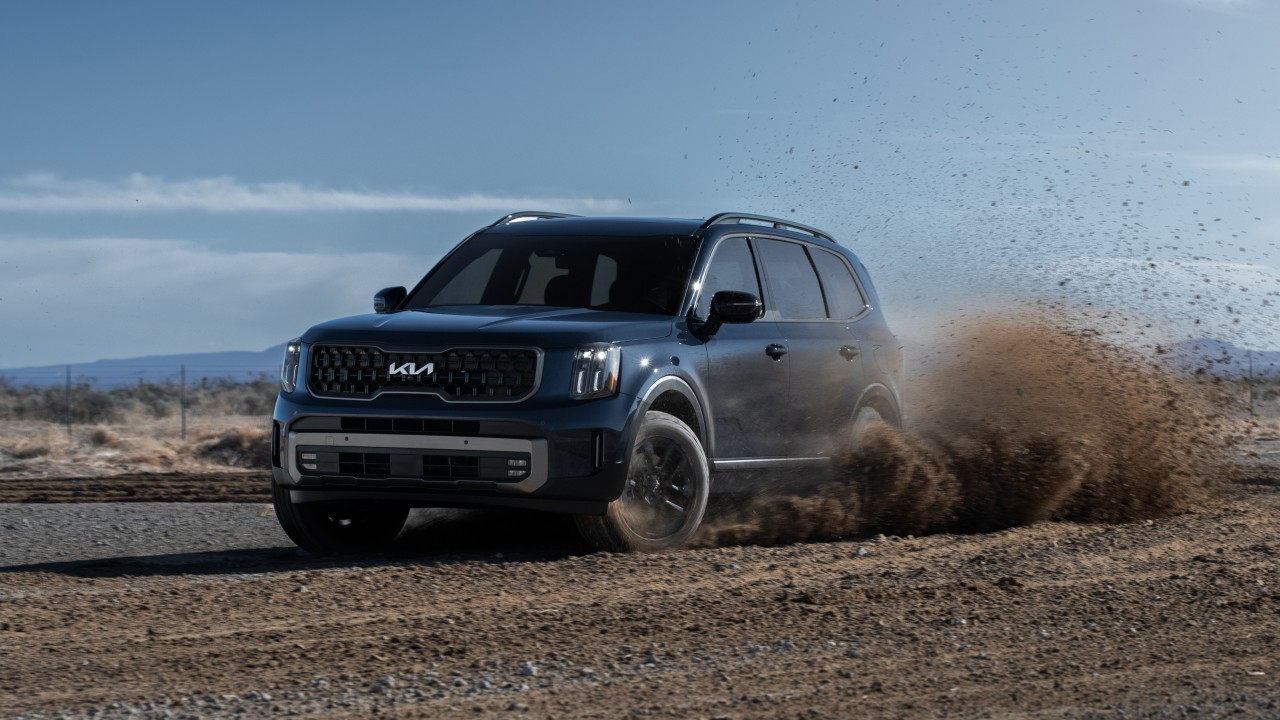
Kia’s approach to active rollover prevention is similarly comprehensive. The Telluride comes standard with Vehicle Stability Management that uses electronic stability control combined with rollover mitigation logic.
When the system detects lateral acceleration and roll rate combinations that exceed safe thresholds, it intervenes with selective braking. This is not a reactive system; it is predictive, using steering input data to anticipate loss of control before it occurs.
The Telluride also scores well in rear-seat occupant protection, a metric the IIHS began emphasizing with its updated moderate overlap test. The combination of strong structural performance and proper rear-seat restraint calibration means all seven occupants benefit from the vehicle’s safety engineering, not just those in the front row.
Specifications:
- Engine: 3.8L Naturally Aspirated V6
- Horsepower: 291 hp
- Torque: 262 lb-ft
- Length: 196.9 inches
- Width: 78.3 inches
7. Tesla Model Y
The Tesla Model Y is the world’s best-selling vehicle and carries IIHS Top Safety Pick+ honors for 2025. Its roof crush performance is among the strongest in the midsize SUV segment, benefiting from a combination of electric vehicle architecture, high-strength steel and aluminum construction, and Tesla’s unique approach to structural integration. The Model Y proves that mass-market electrification and exceptional safety engineering are not mutually exclusive.
The Model Y’s electric skateboard platform positions the heavy battery pack along the entire floor of the vehicle. This dramatically lowers the center of gravity compared to any ICE-powered SUV of comparable size.
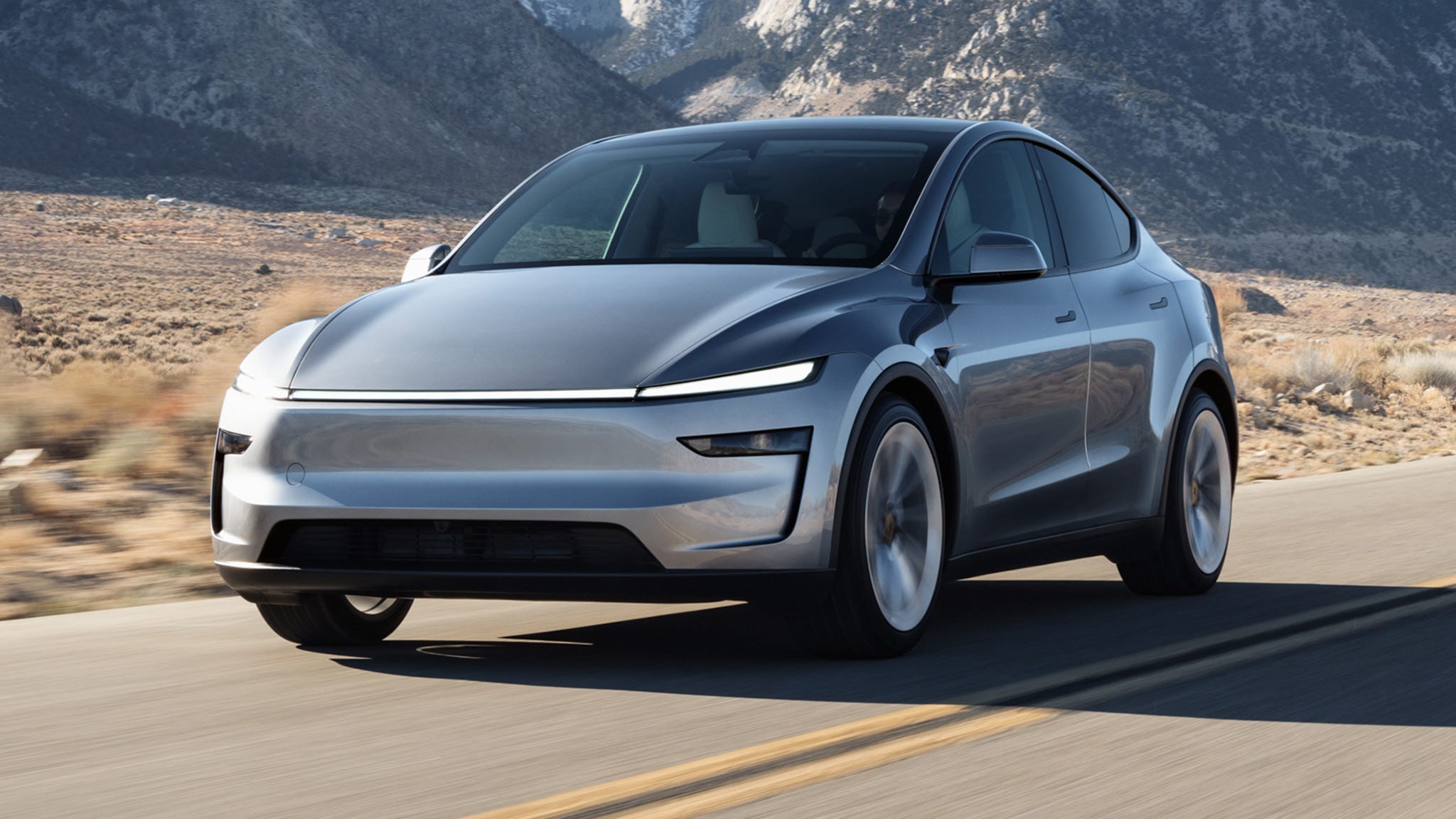
A lower center of gravity means the static stability factor, the geometric resistance to tipping over, is inherently better before any active electronic system intervenes. In practical terms, the conditions that would cause a conventional SUV to tip are far less likely to do the same to a Model Y.
Tesla’s Autopilot and Full Self-Driving technologies contribute to rollover prevention by helping drivers avoid situations that can lead to loss of control. These systems assist with maintaining lane positioning, reacting quickly to unexpected traffic movements, and managing speed changes more smoothly than many drivers can on their own.
By reducing the likelihood of abrupt steering corrections and other destabilizing maneuvers, they help lower the risk of rollover-related incidents. As a result, the Model Y focuses not only on protecting passengers during a crash but also on helping prevent dangerous situations from developing in the first place.
The 2025 Juniper-generation refresh of the Model Y maintained the structural architecture that earned previous models their top safety ratings. The interior changes and revised suspension geometry did not compromise the roof structure or pillar connections that define rollover protection performance.
Specifications:
- Motor: Dual electric motors
- Horsepower: 456 hp
- Torque: 497 lb-ft
- Length: 187.0 inches
- Width: 75.6 inches
8. Mazda CX-90
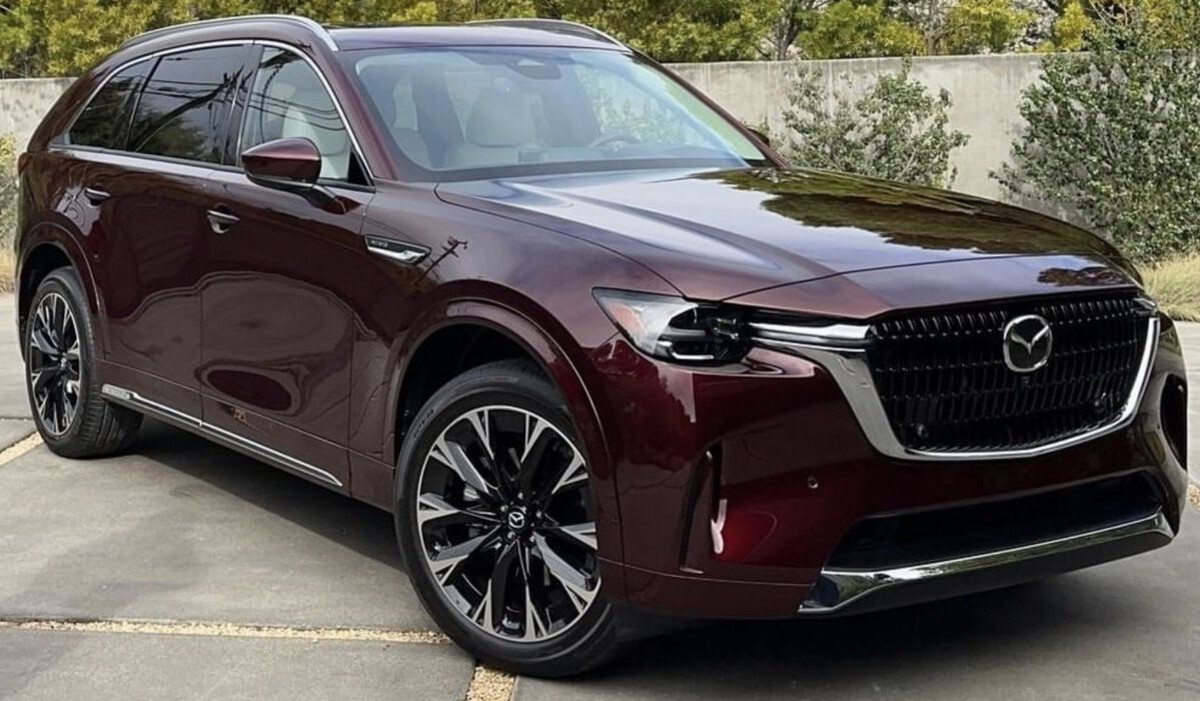
The Mazda CX-90, introduced for the 2024 model year as Mazda’s flagship three-row SUV, earns IIHS Top Safety Pick+ recognition and delivers roof crush resistance that reflects Mazda’s deep commitment to safety philosophy, one they call “Mazda Proactive Safety.” The CX-90 is built on a rear-wheel-drive-biased platform that gives it both dynamic precision and structural advantages that benefit rollover protection.
Mazda uses a body structure built around ring-shaped perimeter reinforcements a technique they refer to as “Continuous Pillar Structure.” The A-pillar, roof rail, B-pillar, and side sill form an unbroken load path of ultra-high-strength steel around each door opening.
The B-pillar is the primary load carrier in a rollover, taking the majority of the roof force as the vehicle rolls onto that side. A stout, properly reinforced B-pillar is the single most important structural element in roof crush performance.
Mazda’s i-Activsense driver assistance suite includes G-Vectoring Control Plus, a technology that applies subtle brake interventions to improve weight distribution through corners.
While primarily a handling refinement, this system prevents the destabilizing weight transfers that can amplify roll angles on curved roads. The CX-90 is thus dynamically resistant to the kind of maneuver-induced rollovers that kill SUV occupants on highway ramps and rural roads.
The PHEV variant of the CX-90 adds a battery pack under the floor, which contributes additional structural mass and further lowers the center of gravity. This model achieves particularly strong rollover stability metrics alongside its excellent roof crush rating.
Specifications:
- Engine: 3.3L Turbocharged Inline-6
- Horsepower: 340 hp
- Torque: 369 lb-ft
- Length: 200.4 inches
- Width: 77.3 inches
9. BMW X5
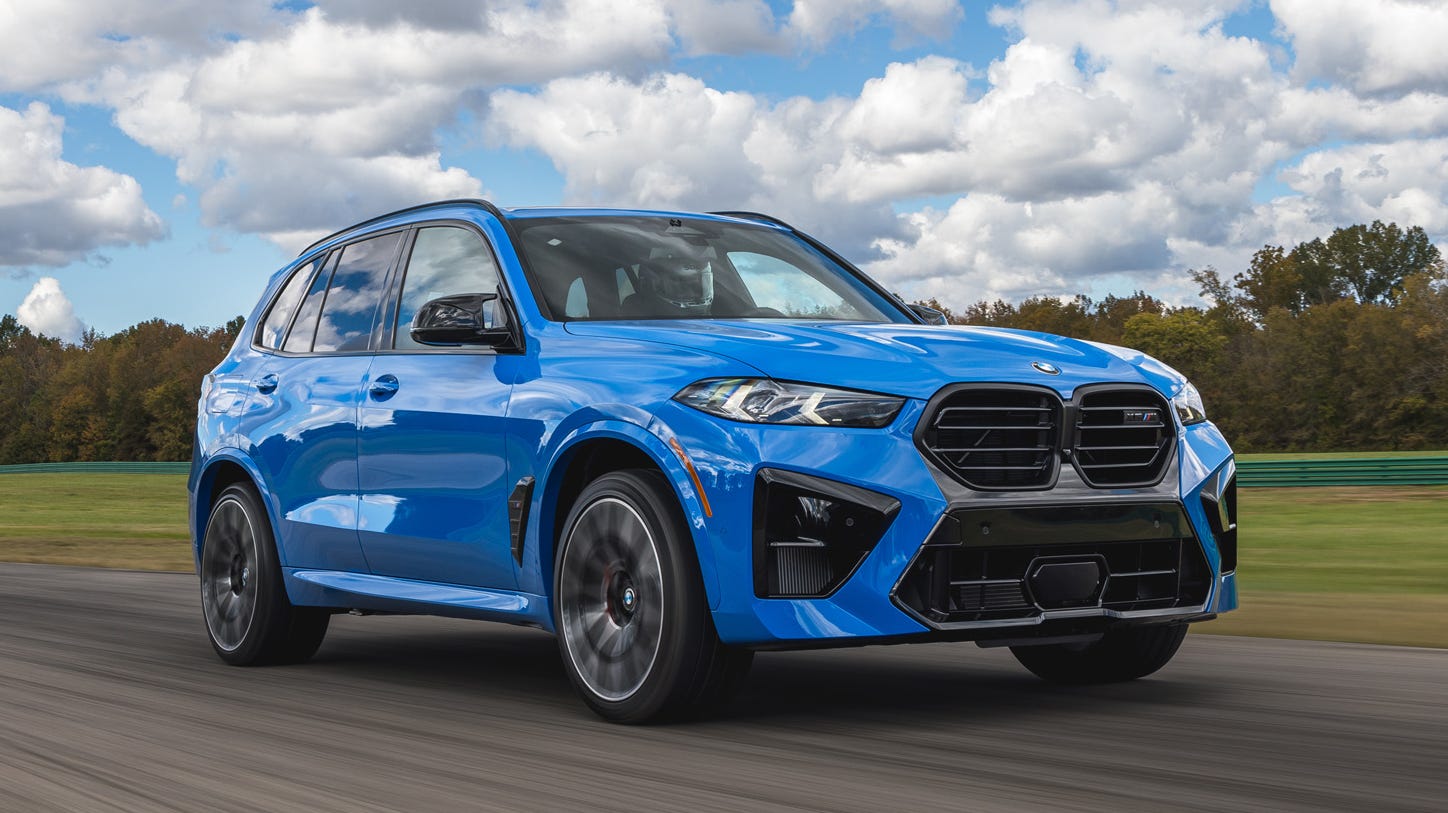
The BMW X5 has earned IIHS Top Safety Pick+ recognition and delivers roof crush resistance that reflects German engineering precision in the luxury midsize SUV class. BMW’s construction philosophy for the X5 combines high-strength steel, aluminum, and carbon fiber-reinforced plastic (CFRP) in a multi-material body concept.
This approach achieves both weight reduction and targeted structural stiffness with the strongest materials placed exactly where crush forces are highest.
BMW uses hot-formed ultra-high-strength steel in the A-pillars and B-pillars of the X5, with UHSS tensile strengths exceeding 1,500 MPa in the most critical nodes.
The X5’s xDrive all-wheel-drive system contributes to rollover prevention through its torque vectoring capability. BMW’s rear differential actively distributes torque between the rear wheels, preventing the inside rear wheel from losing traction during sharp cornering, precisely the condition that can flip a tall vehicle. This system works continuously, not only in emergency situations, and reflects BMW’s integration of dynamic driving performance with safety outcomes.
BMW’s Dynamic Stability Control (DSC) with roll-over stabilization function monitors body roll angle and activates individual wheel braking when rollover risk is detected.
The system’s calibration reflects decades of high-performance dynamics engineering. It intervenes early in the destabilization cycle, before human perception would trigger a corrective steering input, making it among the fastest and most decisive active rollover prevention systems in production.
The X5 also features curtain airbags for all three rows in its optioned configurations, rear automatic emergency braking, and BMW’s Drive Recorder function that captures crash data for post-accident analysis. This data can be used by emergency responders to assess likely injury severity based on impact recording, improving pre-hospital care.
Specifications:
- Engine: 3.0L Turbocharged Inline-6
- Horsepower: 375 hp
- Torque: 398 lb-ft
- Length: 194.3 inches
- Width: 78.9 inches
10. Subaru Ascent
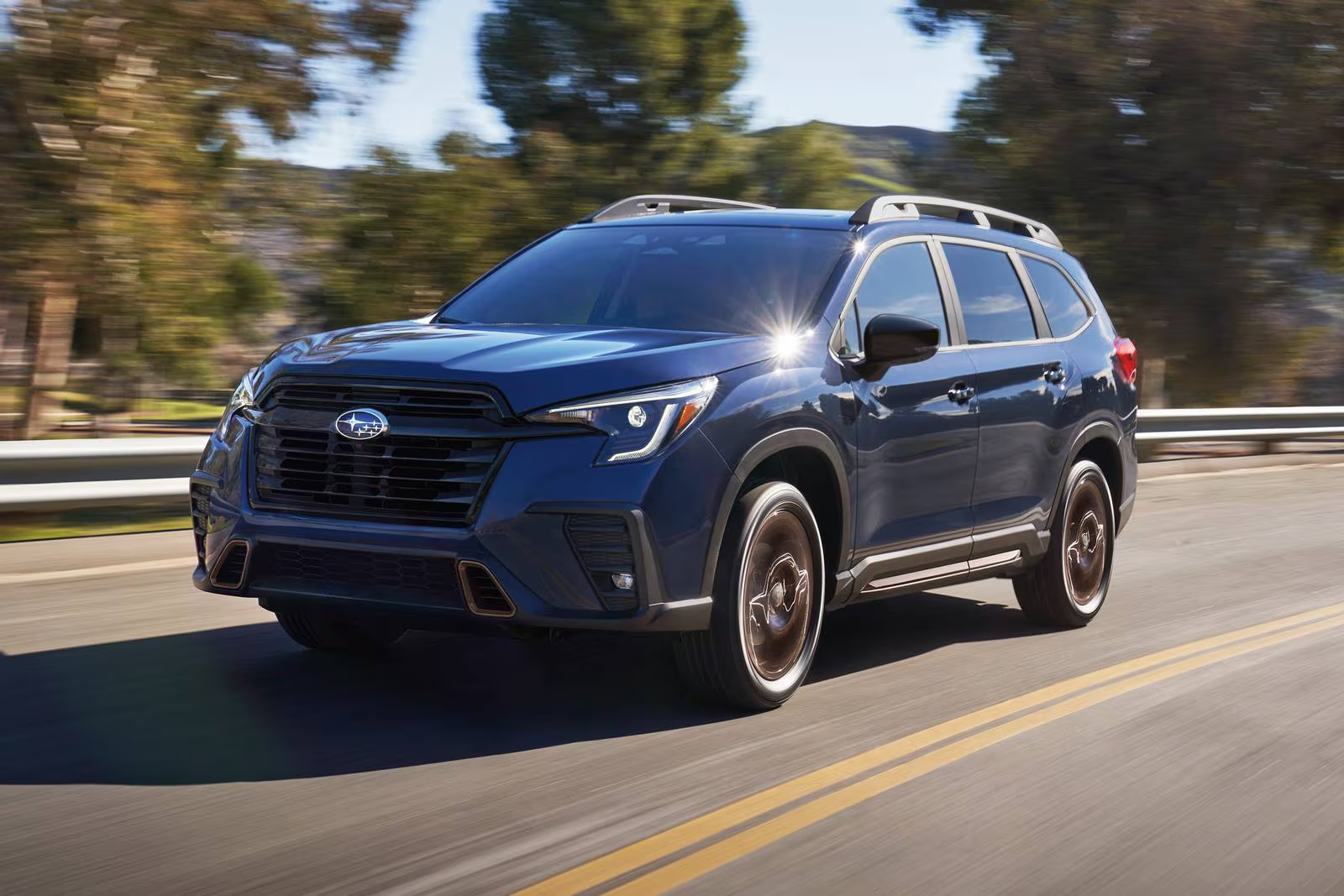
The Subaru Ascent is the largest vehicle in Subaru’s lineup and represents the brand’s commitment to extending its structural safety philosophy to a full three-row family SUV. The Ascent is built on the Subaru Global Platform (SGP), the same architecture that gives the Forester and Outback their exceptional crash performance.
In the category of three-row midsize SUVs, the Ascent achieved the best score in the tougher rear-seat protection overlap test from the IIHS, distinguishing it from larger, better-funded competitors.
The Ascent’s SGP body uses high-strength steel in ring-shaped closed-loop structural paths around each door opening. Subaru’s engineers use a central floor tunnel that acts as a torsional backbone, connecting the front and rear subframes into a unified structural system.
This is significant because the updated IIHS protocol specifically targets rear passenger protection, placing a second dummy in the seat behind the driver during the overlap test. The Ascent’s rear seat belt geometry, seat back stiffness, and curtain airbag deployment timing are all calibrated to protect third-row families, not just front-row drivers.
Subaru’s EyeSight system on the Ascent monitors multiple cameras simultaneously, providing pre-collision braking, lane departure warning, lane keep assist, and sway warning.
The sway warning function is particularly relevant to rollover prevention it detects the lateral drift pattern associated with distracted driving and alerts the driver before a loss-of-control event can develop into a rollover scenario.
The Ascent’s symmetrical AWD with torque vectoring provides active stability enhancement that complements its passive structural strength. In conditions where a rollover might otherwise be initiated by surface transitions, gravel-to-asphalt, wet pavement on a curve, the AWD system maintains symmetrical traction that counteracts the yaw disturbance before it destabilizes the vehicle.
Specifications:
- Engine: 2.4L Turbocharged Flat-Four (Boxer)
- Horsepower: 260 hp
- Torque: 277 lb-ft
- Length: 196.8 inches
- Width: 76.0 inches
Also Read: 8 Family Vehicles With the Lowest Five-Year Running Costs
