
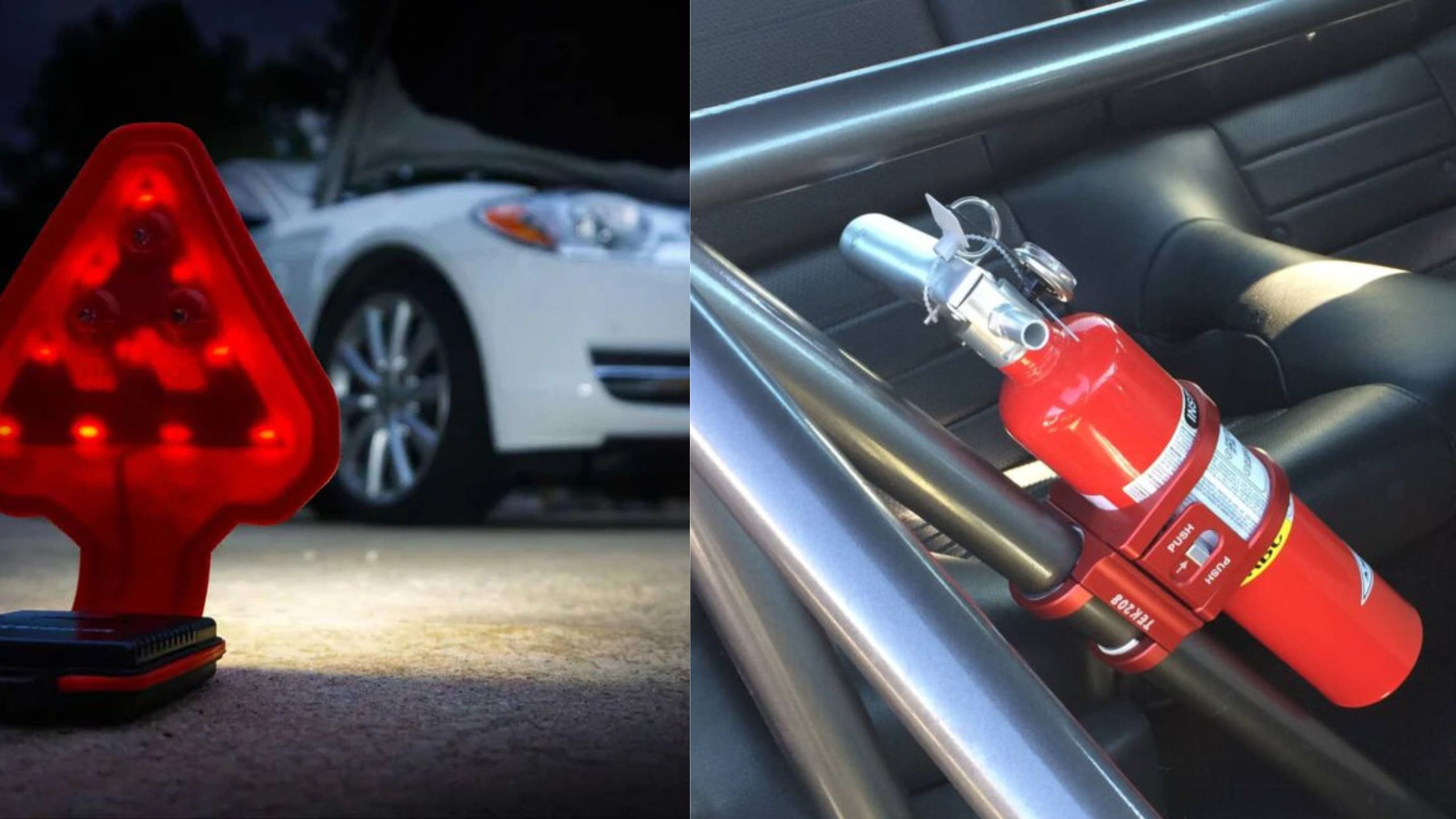
Roadside emergencies can happen without warning, making it essential for every driver to keep basic emergency supplies in the trunk. A well-prepared vehicle can help you handle unexpected problems more safely, reduce repair costs, and minimize delays when breakdowns occur.
From flat tires to dead batteries and changing weather conditions, having the right tools provides peace of mind and greater confidence behind the wheel. Whether you are an experienced motorist or a new driver, being prepared allows you to respond calmly when trouble arises. This guide highlights 10 essential tools that every car owner should keep on hand for everyday emergencies.
1. Spare Tire, Jack, and Lug Wrench
A flat tire is the single most common roadside emergency that drivers experience across the world. Statistics show that approximately 220 million flat tires occur in the United States alone each year, which is roughly one flat every 7 seconds somewhere on American roads.
Most modern vehicles come with a spare tire tucked beneath the trunk floor, but many drivers have never actually checked whether it is properly inflated. A spare tire that has been sitting flat for years is completely useless when you actually need it most.
Your spare tire should be checked for pressure at least once every three months without exception. Many mechanics recommend treating it exactly like your four regular tires and inspecting it during every routine maintenance visit.
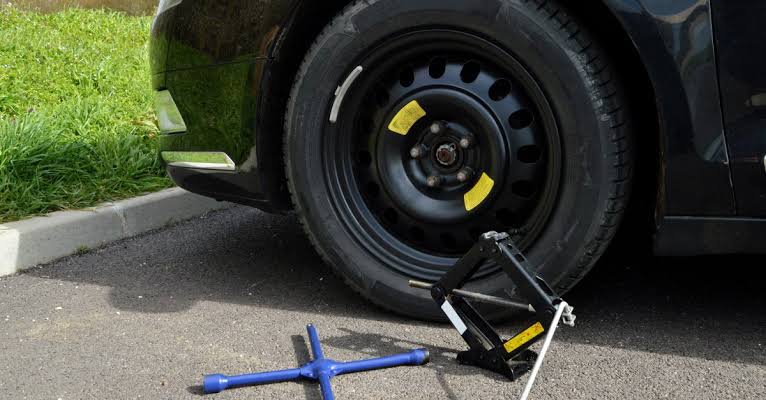
The hydraulic or scissor jack that typically comes with your vehicle is designed strictly for emergency use only. It is not a professional-grade tool, but it is perfectly capable of getting you through a flat tire situation safely when used on firm, level ground.
A lug wrench is what allows you to remove and replace the lug nuts holding your tire to the wheel hub. Many factory lug wrenches are awkward and short, so upgrading to a cross-shaped four-way lug wrench can make the entire job significantly easier.
Keeping a small piece of wood or a flat board in the trunk is also a wise practice. It can be placed under the jack on soft or uneven ground to prevent the jack from sinking and causing the vehicle to collapse dangerously.
2. Jumper Cables or a Portable Jump Starter
A dead battery is the second most common reason drivers call for roadside assistance in virtually every country around the world. It happens when interior lights are accidentally left on, when batteries age out past their lifespan, or simply on cold winter mornings when battery chemistry slows to a crawl.
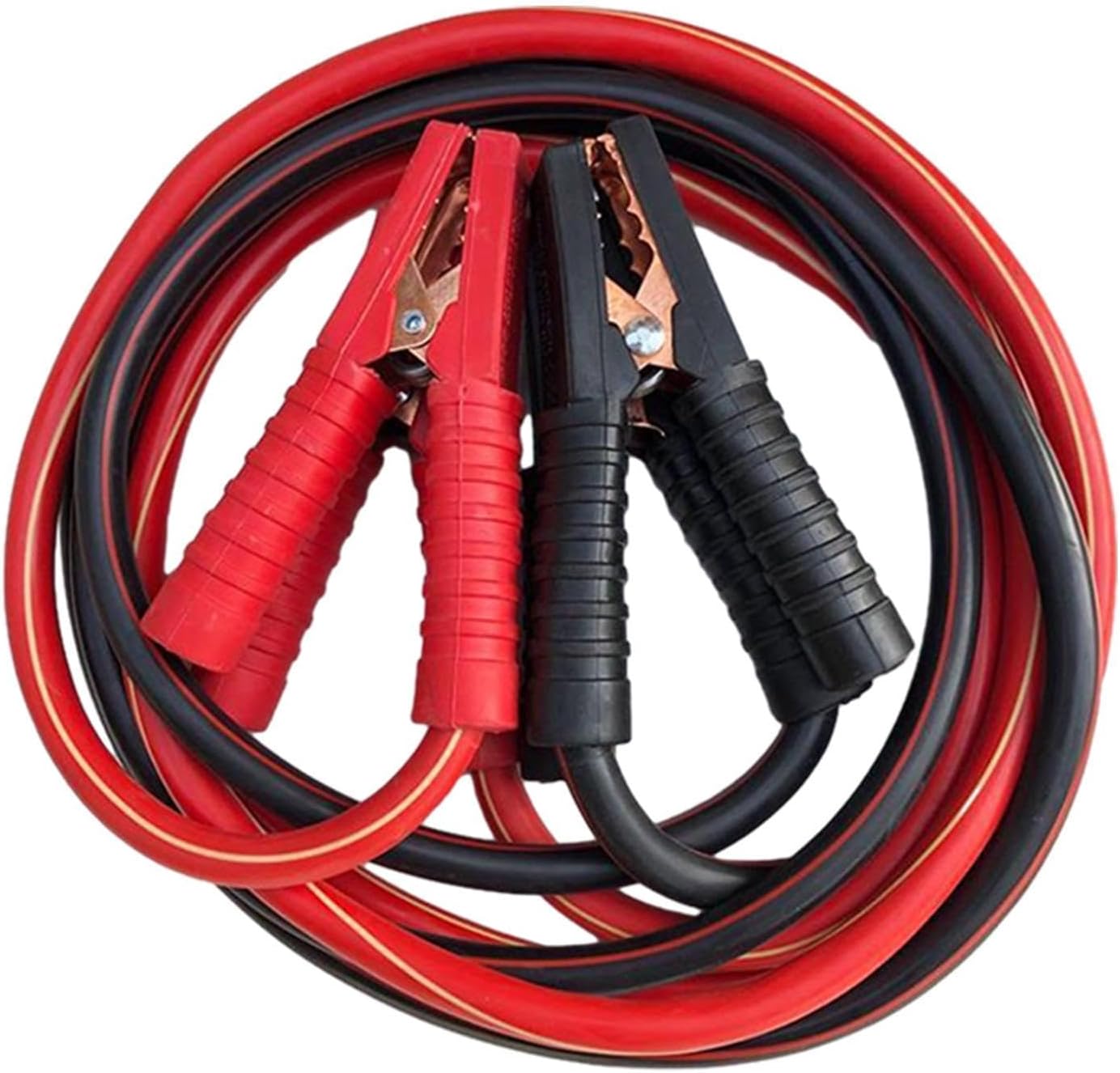
Traditional jumper cables require a second vehicle to provide the necessary charge, which means you depend entirely on a willing stranger stopping to help you. They are still extremely useful and should absolutely be in every trunk, with a minimum length of 12 to 16 feet for maximum reach between two parked vehicles.
Portable jump starters have become a revolutionary invention for modern drivers over the past decade. These compact lithium-ion devices can jump-start a full-size truck or SUV entirely without needing another car anywhere nearby.
A quality portable jump starter costs between $50 and $150 and fits easily inside a small bag in your trunk. Many modern versions also function as a USB power bank and a built-in LED flashlight, giving you multiple useful tools packed into one single compact device.
When purchasing traditional jumper cables, always choose cables with thicker gauge wire for best performance. A 4-gauge or 6-gauge cable is ideal because thinner cables can overheat under load and fail to deliver the current a larger engine needs to start.
Understanding the correct sequence for attaching jumper cables can also prevent electrical damage to either vehicle involved. Always connect positive to positive first, then negative to a bare metal ground on the dead vehicle rather than directly to the dead battery terminal itself.
3. Reflective Warning Triangles and Road Flares
Being stranded on a busy road at night is one of the most genuinely dangerous situations any driver can face. Thousands of secondary accidents occur every year because other motorists simply fail to see a disabled vehicle in time to stop or safely change lanes.
Reflective warning triangles are the international standard for marking a disabled vehicle on the roadside. They are lightweight, fold flat for easy storage, and can be set up in under a minute to alert approaching traffic from a considerable distance ahead.
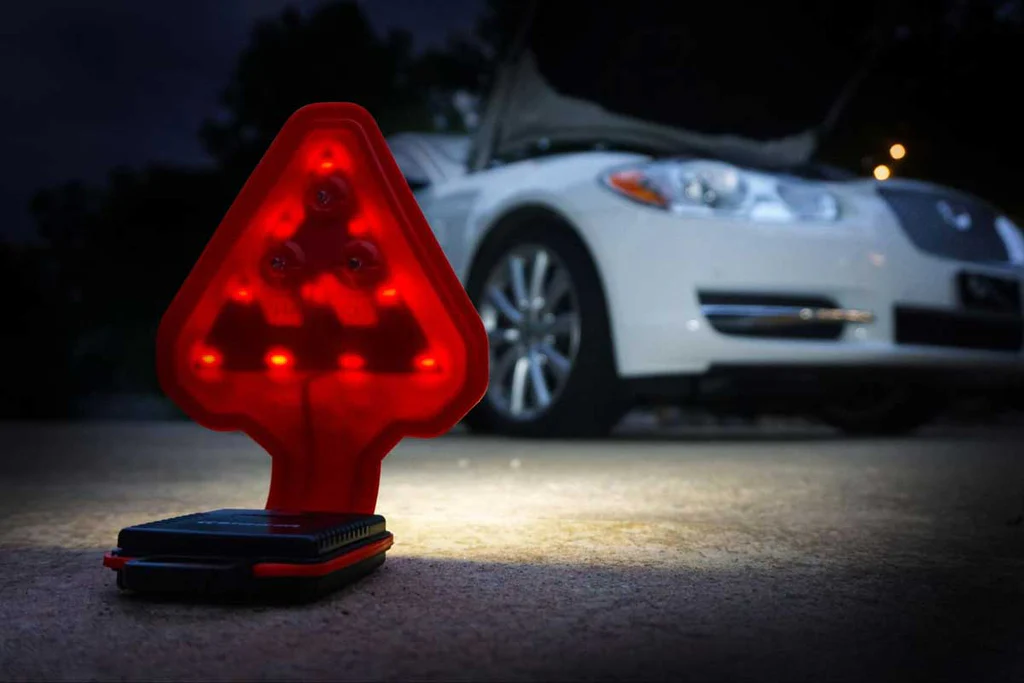
Road flares are the more powerful option, producing a brilliant red light that remains visible even through heavy rain, thick fog, or blinding snowstorms at night. Traditional pyrotechnic flares burn for 15 to 30 minutes, while modern electronic LED flares can flash for hours on a single set of replaceable batteries.
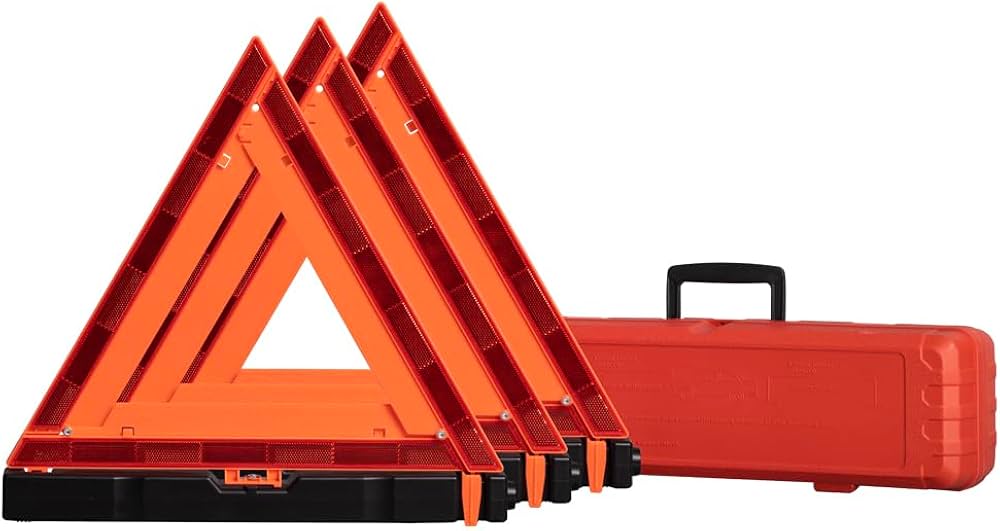
The general rule recommended by transportation safety authorities is to place warning devices at three specific locations on the road. Place one directly behind your vehicle, one approximately 50 feet back, and another roughly 150 feet further back in the lane of travel.
LED road flares are now widely preferred by safety professionals because they eliminate the fire risk associated with traditional burning flares entirely. They are especially critical to carry in dry, fire-prone regions where a burning flare near roadside grass could spark a serious and uncontrollable wildfire.
Carrying a minimum of three warning triangles or flares is the standard recommendation for covering all necessary distances adequately. Investing in a combined kit that includes both reflective triangles and LED flares gives you maximum flexibility across a wide range of different emergency scenarios.
4. Tire Pressure Gauge and Portable Air Compressor
Incorrect tire pressure is one of the most widely overlooked sources of danger on roads across the entire world. Underinflated tires reduce fuel efficiency significantly, cause premature and uneven tire wear, and dramatically increase the risk of a catastrophic blowout at highway speeds.
The U.S. Department of Transportation estimates that thousands of tire-related crashes occur annually, with underinflation cited as a significant contributing factor in a very large percentage of those incidents. A simple, inexpensive tire pressure gauge is one of the most powerful preventive tools a driver can own.
Digital tire pressure gauges are available for as little as $10 to $15 and provide highly accurate readings in both PSI and bar units for convenience. A traditional stick-type gauge also works perfectly well and carries the added advantage of having no battery to go dead in cold weather.
Your vehicle’s correct recommended tire pressure is printed on a sticker located on the driver’s side door jamb, not on the tire itself. The number molded into the tire sidewall represents the maximum pressure the tire structure can hold, which is an entirely different figure from the recommended operating pressure.
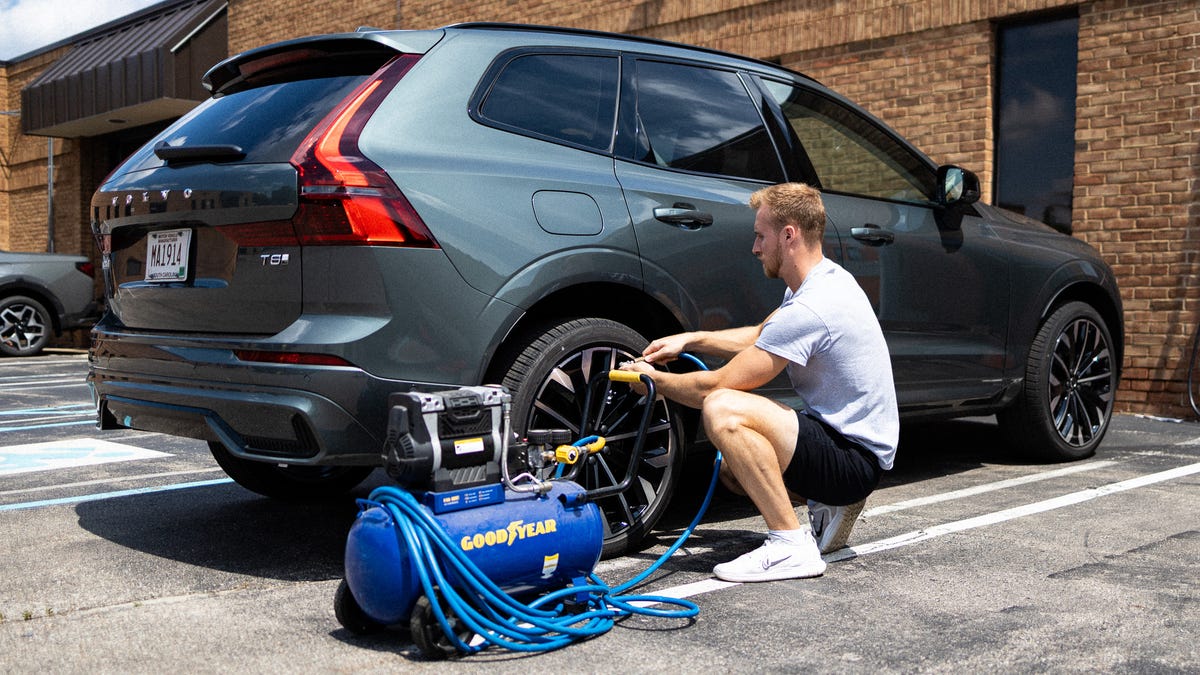
A portable 12-volt air compressor plugs directly into your car’s accessory outlet and can inflate a fully flat tire to proper pressure in under 10 minutes. Quality models are available for between $30 and $80 and are compact enough to fit comfortably in even a small or crowded trunk space.
Having a compressor means you can top up any tire that looks slightly low before it deteriorates into a serious and dangerous problem on the road. Many modern compressors include a built-in digital pressure gauge, neatly combining two essential tools into one convenient and space-saving device.
Tires naturally lose about one PSI of pressure per month under normal conditions, and cold weather accelerates this loss noticeably. For every 10-degree Fahrenheit drop in temperature, tires typically lose an additional one to two PSI of pressure automatically.
Checking tire pressure should become a monthly habit for every driver, regardless of how new or reliable their vehicle is. A quick three-minute inspection each month can extend tire life significantly, improve fuel economy, and, most importantly, keep you and your passengers safe on the road.
Also Read: How Many Miles the Average American Drives Per Year by States
5. Duct Tape and Zip Ties
Professional mechanics often joke that duct tape and zip ties are what hold the automotive world together between proper repairs. While that is obviously an exaggeration, these two humble products are genuinely invaluable for temporary roadside fixes that can get you safely from a breakdown point to a proper service station.
Duct tape can temporarily seal small cracks in hoses, secure loose body panels that have come free, and cover a shattered car window to keep out rain and wind. It is waterproof, extraordinarily strong, and adheres firmly to almost any surface in both extreme heat and freezing cold conditions.
Automotive-grade duct tape is preferable to standard household duct tape for trunk storage because it withstands engine heat and prolonged UV exposure far better. A single roll takes up almost no space and can address dozens of different unexpected problems that arise on the road.
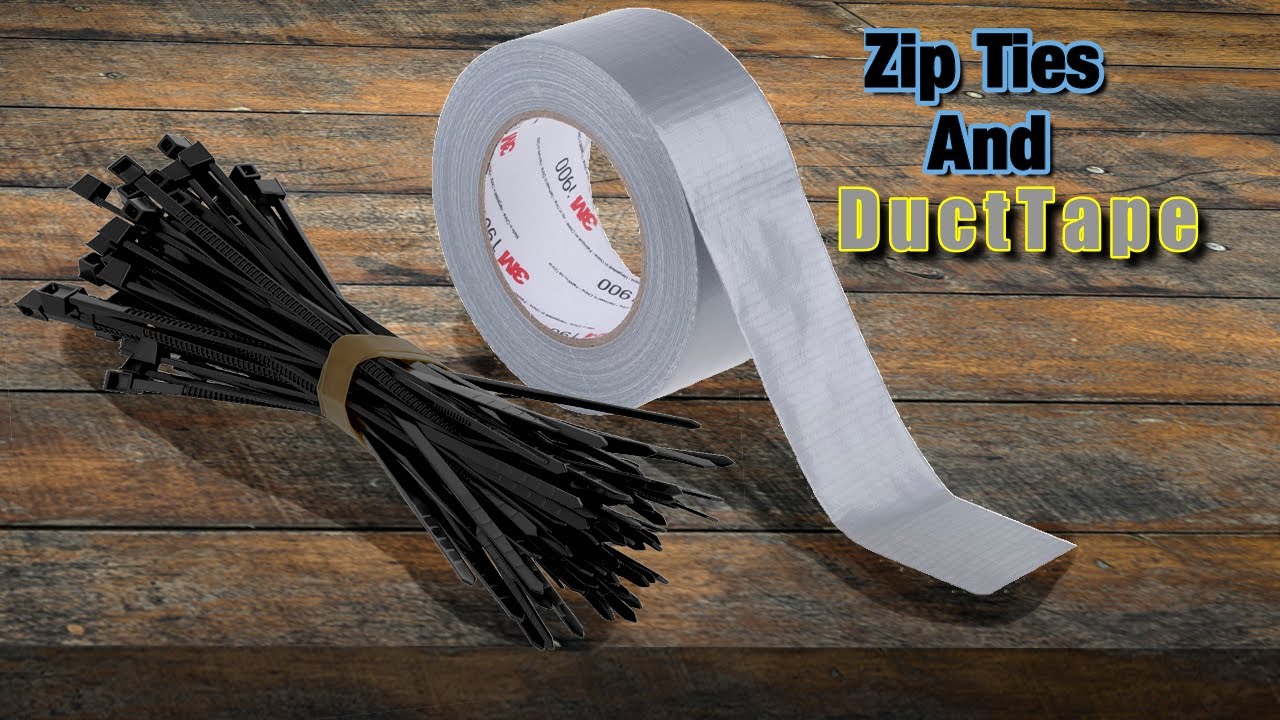
Zip ties are equally impressive in their versatility and simplicity as an emergency repair tool. They can reattach a sagging bumper, secure a loose exhaust heat shield, bundle together dangling wires, or temporarily hold a cracked plastic component in a stable position until a proper fix can be made.
Carrying an assortment of zip tie sizes is far more practical than carrying just one standard size. Small 4-inch ties are perfect for bundling cables, while larger 12-inch and 18-inch ties are needed for securing heavier components like bumpers and skid plates.
Never underestimate what a creative mind can accomplish with duct tape and zip ties in a genuine roadside emergency. Many drivers have completed journeys of hundreds of miles using nothing more than these two simple items, holding something critical in place just long enough to reach help.
6. First Aid Kit
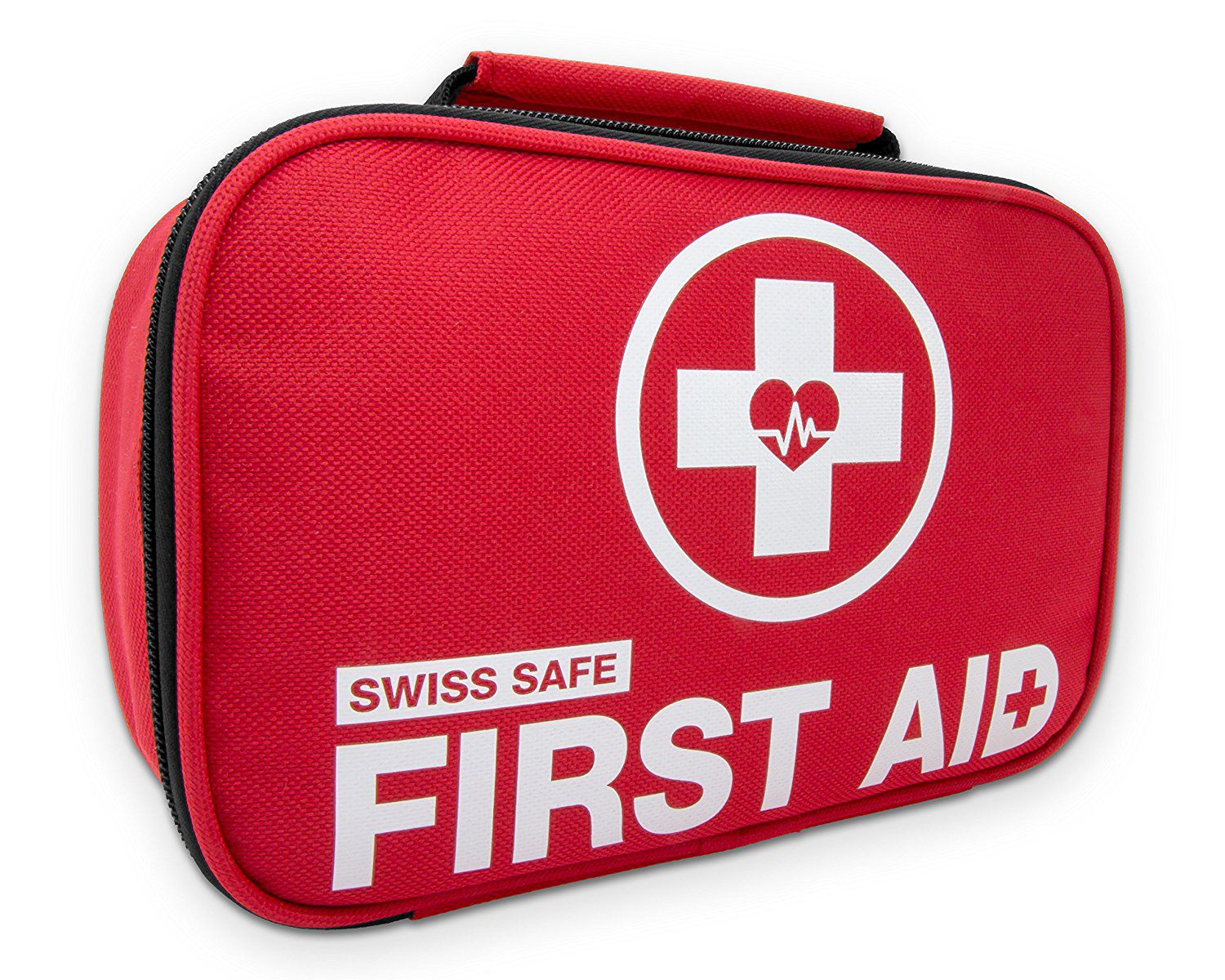
A well-stocked first aid kit is one of the most critically important items any vehicle can carry, yet it remains one of the most frequently forgotten additions to a trunk emergency kit. Road accidents and minor injuries can happen to anyone, and having the ability to provide basic medical care in the critical minutes before emergency services arrive can make a life-saving difference.
The Red Cross and most road safety organizations recommend keeping a kit that includes adhesive bandages in multiple sizes, sterile gauze pads, medical tape, antiseptic wipes, and disposable gloves as absolute minimum contents. These basic items address the vast majority of minor injuries that occur in and around vehicle accidents.
A good automotive first aid kit should also include a pair of trauma shears, which are specially designed scissors capable of cutting through seatbelts, clothing, and even light sheet metal in a rescue situation. Standard scissors are far less effective in the kinds of restricted spaces you encounter when helping an injured person in or near a vehicle.
Burn cream and blister treatments are also important inclusions that many standard kits overlook entirely. Engine fires, touching a hot exhaust component, or steam burns from a radiator are all realistic injury scenarios that drivers and passengers can face during roadside emergencies.
Including a space emergency blanket in or alongside your first aid kit is a wise decision, especially for drivers in colder climates. These thin Mylar sheets weigh almost nothing, fold to the size of a deck of cards, and can prevent dangerous hypothermia in an injured or stranded person waiting in cold weather conditions.
Regularly inspect and restock your first aid kit every six months to replace used or expired items before another emergency arises. A first aid kit with empty compartments or expired supplies can create a dangerous false sense of security during a moment when every second genuinely counts.
7. Flashlight or Headlamp with Extra Batteries
A powerful flashlight is absolutely indispensable for any nighttime breakdown or emergency situation that occurs after sunset. The built-in torch on a smartphone is simply not bright enough or durable enough to substitute for a proper dedicated flashlight when you are trying to change a tire or inspect an engine in total darkness.
LED flashlights have made tremendous advances in recent years, producing extraordinarily bright beams from compact and lightweight designs that fit easily in a glove box or trunk bag. A quality LED flashlight can produce between 500 and 1,000 lumens of light, which is more than sufficient to illuminate an entire engine bay or roadside work area safely.
A headlamp is actually superior to a traditional handheld flashlight for most roadside emergency tasks because it keeps both of your hands completely free while working. Changing a tire, reading a fuse diagram, or connecting jumper cables all require two hands, making a hands-free light source invaluable in those moments.
Battery-powered lights should always be accompanied by a complete set of fresh spare batteries stored in a waterproof bag nearby. Batteries left inside a flashlight for long periods can corrode and permanently damage the device, so removing them for separate storage is a smart practice for infrequently used tools.
Rechargeable flashlights with USB-C charging capability are an excellent modern option because they eliminate the need to stock spare batteries entirely. Simply charging the flashlight whenever you charge your phone keeps it perpetually ready for use without any additional effort or expense.
Some modern LED flashlights also function as power banks for charging mobile phones, adding yet another layer of usefulness during extended roadside situations. When your phone battery is dying, and you need to call for help, a flashlight that can provide an emergency charge becomes genuinely life-saving in the most literal sense.
8. Basic Tool Kit with Essential Hand Tools
A small but thoughtfully assembled hand tool kit can solve an enormous number of minor mechanical problems that would otherwise require an expensive tow truck and a long wait by the side of the road. Many roadside breakdowns involve nothing more serious than a loose bolt, a disconnected hose clamp, or a blown fuse that a simple tool can fix in minutes.
A compact automotive tool kit should include both flathead and Phillips head screwdrivers in multiple sizes, since these two types cover the vast majority of fasteners found on modern vehicles. Screwdrivers are used for everything from tightening a loose battery terminal connection to removing interior panels when chasing an electrical issue on the road.
A set of combination wrenches ranging from 8mm to 19mm covers the most commonly encountered fastener sizes on virtually every passenger vehicle sold today. Metric sizes are now standard across American, European, Asian, and all other vehicle manufacturers, making a metric set the universally practical choice for any emergency tool kit.
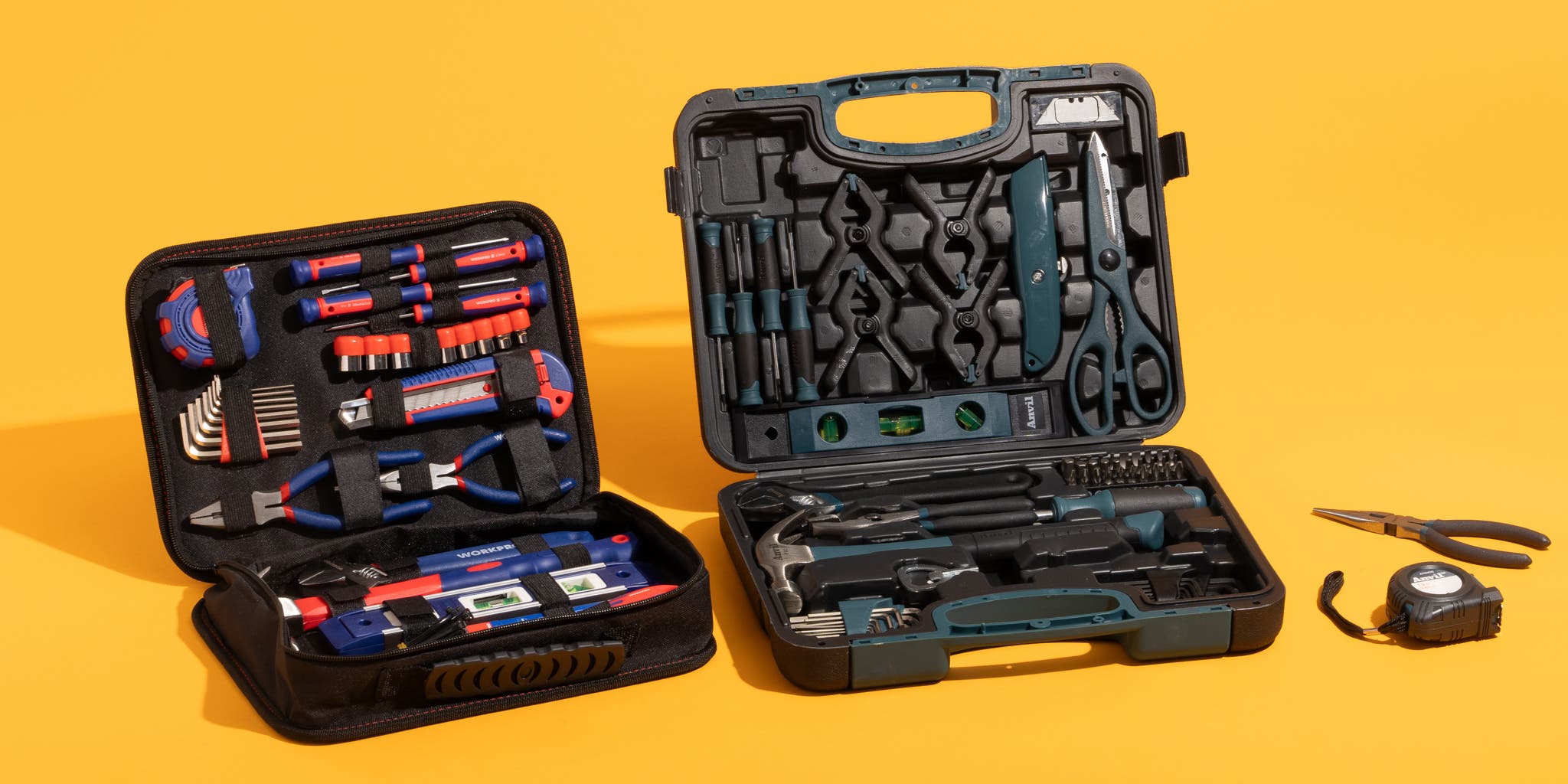
Pliers and needle-nose pliers are essential tools that belong in every trunk kit without exception. They are used for gripping, bending, and pulling components in tight engine bay spaces where fingers simply cannot reach or apply enough force to accomplish the task.
A multi-bit ratcheting screwdriver saves significant space compared to carrying an entire individual screwdriver set and is far faster to use when you need to switch between fastener types quickly. These compact tools accept interchangeable bits and can handle both driving and removal tasks with a simple direction-switch mechanism.
Keeping your tool kit organized in a dedicated roll pouch or zippered case prevents tools from rattling around loosely and damaging other items in your trunk. Knowing exactly where every tool is located also means you can find what you need quickly and calmly, even when you are stressed, it is dark, and the pressure is on.
9. Emergency Water and Basic Supplies
Water is one of the most overlooked but genuinely critical supplies that any prepared driver should keep stored in their vehicle at all times. Whether you are stranded in summer heat waiting for a tow, dealing with a steaming, overheated radiator, or simply stuck in an unexpected traffic standstill for hours, water addresses needs that no mechanical tool can substitute for.
Keeping at least two one-liter bottles of water sealed in the trunk provides a basic safety reserve for both personal hydration and minor cooling system emergencies. Radiator coolant should never be replaced with plain water as a permanent fix, but adding water in an emergency can get you far enough to reach proper mechanical assistance safely.
Overheating is one of the most common mechanical failures that drivers encounter, particularly during summer months and in stop-and-go urban traffic conditions. Always allow a steaming engine to cool completely for at least 30 minutes before attempting to open the radiator cap, since superheated coolant under pressure can cause severe burns.
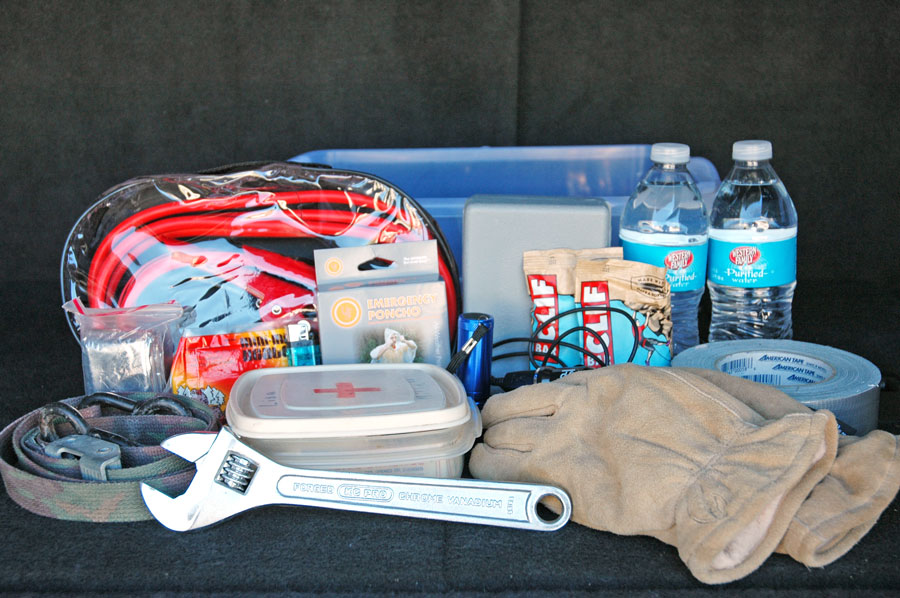
An emergency food supply is a secondary but valid addition to any trunk kit, particularly for drivers who regularly travel long distances or through remote and sparsely populated areas. A few high-calorie granola bars or energy bars weigh almost nothing but provide meaningful sustenance during an extended and unexpected wait for assistance.
A warm emergency blanket or a compact sleeping bag is essential trunk equipment for drivers living in or traveling through regions with harsh winters. Being stranded overnight in sub-freezing temperatures without any insulation is a life-threatening scenario that a simple foil emergency blanket can help you survive until morning comes.
Keeping supplies in a sealed waterproof container or bag prevents damage from trunk leaks, condensation, or accidental spills that occur over months and years of normal vehicle use. Rotating your food and water supplies every six to twelve months ensures that everything remains fresh and ready to perform when a real emergency finally arrives.
10. Fire Extinguisher
A fire extinguisher is arguably the single most underestimated piece of emergency equipment that a car owner can carry, yet very few private vehicles are equipped with one. Vehicle fires are far more common than most drivers realize, with the U.S. Fire Administration reporting approximately 173,000 highway vehicle fires occurring in America every single year.
Car fires can start from a variety of causes, including electrical faults, fuel line leaks, overheated braking systems, and catalytic converter failures that ignite dry grass or debris underneath the vehicle. The vast majority of these fires begin small and could be extinguished quickly with the right equipment if a driver acts within the first critical 30 to 60 seconds of ignition.
The correct type of fire extinguisher for automotive use is a dry chemical or clean agent extinguisher rated for Class B and Class C fires. Class B covers flammable liquid fires like burning gasoline or engine oil, while a Class C rating indicates the extinguisher is safe for use on live electrical fires without conducting current back to the user.
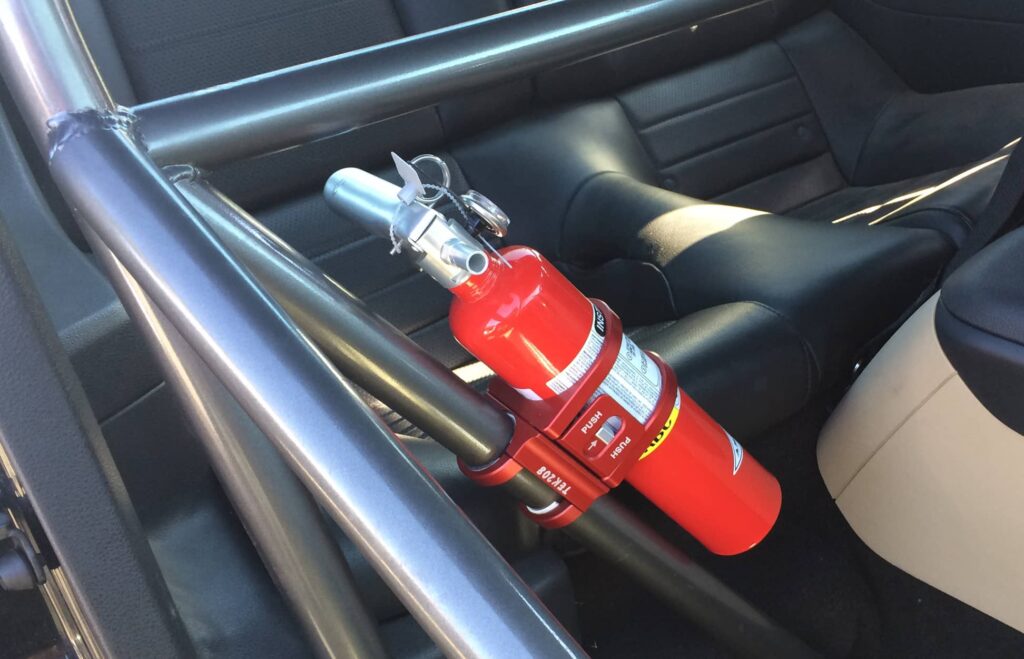
A 1-kilogram or 2-kilogram dry powder extinguisher is the ideal size for trunk storage because it is compact and light enough to handle easily in a high-stress situation. Larger extinguishers are certainly more capable but become cumbersome and heavy enough that a panicking driver may struggle to use them effectively in real conditions.
Mount your fire extinguisher in an accessible location rather than burying it beneath other items in the trunk where it cannot be reached quickly. Many drivers use a simple bracket mounted inside the trunk or behind a rear seat where the extinguisher can be grabbed in a single motion without digging through other supplies.
Never attempt to fight a vehicle fire that has grown beyond a very early stage, and always prioritize getting all passengers away from the vehicle and to a safe distance immediately. A car can be replaced, but the life-saving window for fighting a vehicle fire is narrow, and knowing when to step back and let emergency services handle the situation is just as important as knowing how to use the extinguisher itself.
Also Read: What Skipping Maintenance Really Costs You at Trade-In1
