
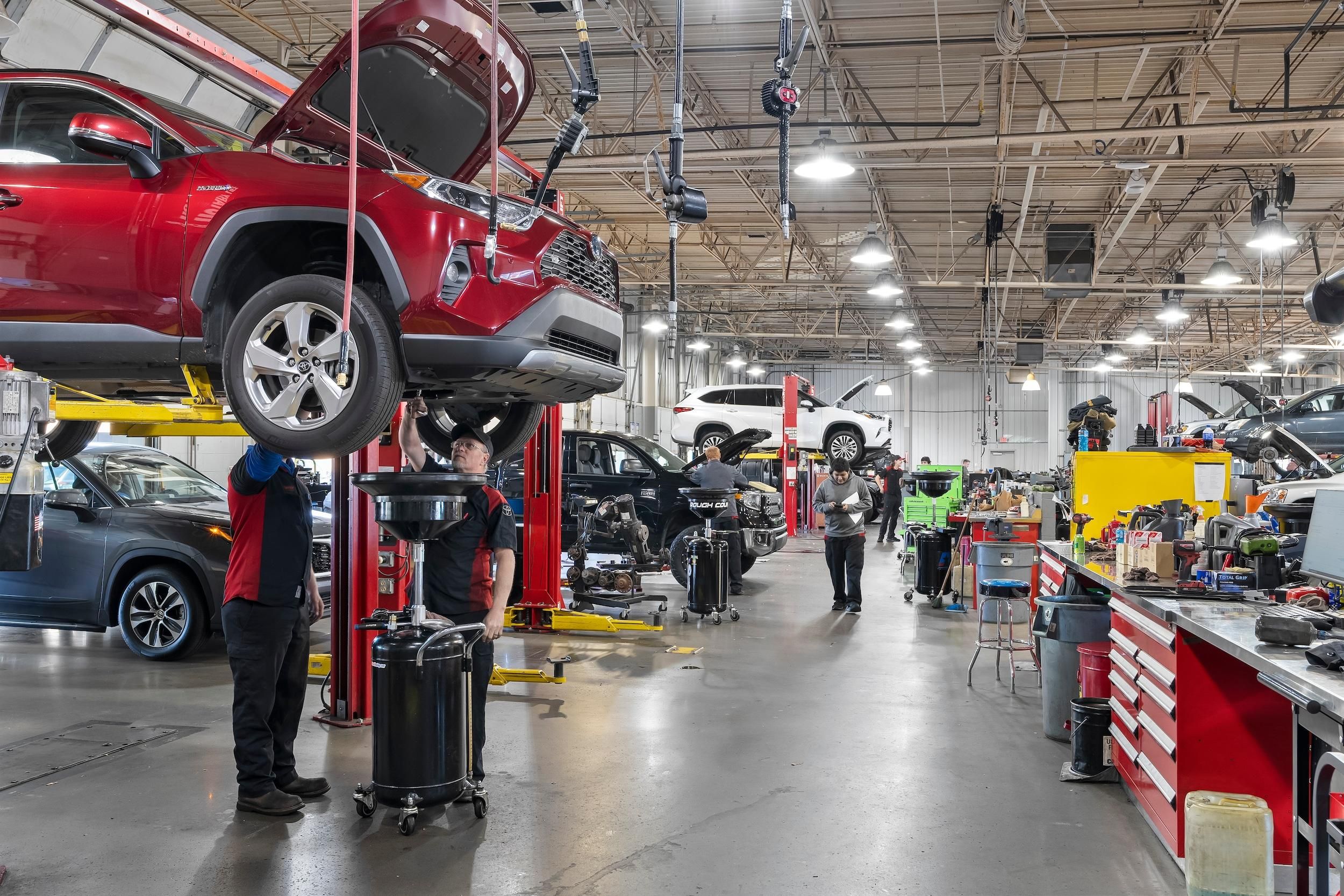
For many car buyers, the word “recall” immediately sounds like trouble. They expect delays, paperwork, and potentially expensive repairs. But recall data can tell a very different story. Some automakers make the process relatively simple and modern, while others still handle recalls with procedures that feel decades behind the times.
The pattern breaks assumptions in an interesting way. You don’t need to buy a six-figure luxury car to get fast recall service. NHTSA’s 2025 annual report found that nearly 80% of vehicle recalls have a final remedy available within 60 days of filing. That’s the industry baseline.
But some brands beat that number by a wide margin. Others miss it badly, taking hundreds of days on average for certain recalls. We pulled data from NHTSA’s own completion-rate filings and a landmark iSeeCars study covering three decades of recall history. We cross-checked which brands consistently show up on the “slow” list and which never do.
Then we matched that against pricing. Every brand below carries a reputation that suggests either luxury or hassle. None of them actually cost what people assume. Here are 8 brands that fix problems fast, and don’t charge a premium to do it.
1. Tesla
Tesla changed what a “recall” even means. Many of its recalls are pushed as over-the-air software updates. NHTSA’s data shows Tesla among the manufacturers using OTA updates to remedy recalls every year from 2021 through 2025. That’s a five-year streak.
No other traditional automaker matches that consistency. Most brands only started experimenting with OTA fixes recently. The historical numbers back this up too. A study by iSeeCars analyzing 31 years of NHTSA recall data found Tesla was the most timely automaker at 100%.
That same study found something else notable. Tesla also ranked as the most proactive manufacturer, largely because it maintains a more direct relationship with a smaller customer base.
Proactive matters more than it sounds. It means Tesla catches problems itself instead of waiting for regulators to force a recall. Now consider the price angle.
A Tesla still carries a “future luxury” image in most people’s heads. But the Model 3 starts in the low $40,000s. That’s below the average new car transaction price in the U.S. today.
You’re paying mainstream-sedan money. You’re getting recall turnaround that even legacy premium brands haven’t matched. The software advantage is real. A steering or battery-management bug can be patched overnight, with zero dealer visits.
That’s not true for a brake caliper or an airbag inflator. Physical parts still require a service appointment either way. Still, for the software side, Tesla’s speed is unmatched. It’s the closest thing to instant recall resolution the industry has.
2. Volvo
Volvo built its entire brand around safety. It turns out that reputation extends to how it handles recalls too. The iSeeCars study found Volvo was the most improved automaker in its most recent measured 5-year period, with timeliness jumping to 100% from 66% previously. That’s a dramatic swing.
Most manufacturers saw timeliness get worse over that same window. Volvo moved in the opposite direction entirely. Analysts tied this to Volvo’s broader reinvention, which began around the launch of the XC90 concept and reduced the company’s recall rate sharply. Fewer defects means fewer recalls to manage.
Fewer recalls to manage means faster resolution per recall. The two numbers reinforce each other. Volvo also shows up in NHTSA’s more recent OTA remedy data. The 2025 annual report lists Volvo among manufacturers issuing recall remedies through over-the-air software updates.
That puts Volvo in a small club. Most legacy automakers still rely entirely on physical dealer visits. Now the price piece. Volvo carries a Scandinavian-premium image, often mentally grouped with German luxury brands.
But the XC40 starts in the high $30,000s to low $40,000s. That undercuts comparable BMW and Audi crossovers by a real margin. You’re buying into a brand people assume costs more. The recall data suggests you’re also buying faster fixes.
For a family buying their first “premium-feeling” SUV, that combination matters. Safety reputation, quick recall handling, and a price tag that doesn’t sting.
3. Subaru
Subaru rarely makes headlines for recalls. That’s actually the point. Look at NHTSA’s list of manufacturers with the longest average remedy delays.
The 2025 annual report names Nissan, Forest River, FCA, Daimler Trucks, Ford, Volkswagen, BMW, Kia, General Motors, Mercedes-Benz, and Hyundai as the brands with the highest average days between recall filing and remedy availability, among manufacturers with at least 75 recalls filed.
Subaru isn’t on that list. Given how many recalls large automakers file yearly, an absence there is a meaningful data point. Subaru moves a lot of vehicles through recall completion reporting too. NHTSA’s own completion-rate charts specifically track Subaru among the manufacturers with the largest recalled populations from 2021 to 2024.
It’s tracked at scale. It just doesn’t show up flagged for delay. Subaru’s brand image skews toward rugged, outdoorsy, and dependable. People associate it with Colorado ski trips, not budget shopping.
But a Crosstrek starts around $25,000. An Outback, Subaru’s flagship wagon-SUV, starts in the high $20,000s. That’s compact-sedan pricing for a vehicle marketed as an adventure machine. The brand punches well above its price tag.
Subaru owners also tend to keep their cars a long time. Long ownership periods mean recall notices land on real, active customers. That matters for completion rates.
A car sitting abandoned in a junkyard never gets fixed and drags down a manufacturer’s numbers. Subaru’s loyal, engaged owner base likely helps its quiet consistency. Fewer lost owners means more completed repairs.
4. Buick
Buick occupies a strange spot in American car culture. It’s marketed as “near-luxury” but built on the same platforms as Chevrolet. That shared infrastructure actually helps recall speed. Buick benefits from General Motors’ recall and service network at scale.
The iSeeCars study found GM had the best recall timeliness of the major automakers over the full 31-year period analyzed, at 74.7%. That’s the best mark among large-volume legacy brands.
Researchers specifically noted that despite GM’s well-known ignition switch recall in 2014, its recalls have historically occurred within the first three years after production. Early detection tends to mean faster fixes.
Timeliness and completion speed aren’t identical metrics. But they’re closely related. A brand that catches problems early tends to build the internal processes to act on them fast. Buick rides on that same institutional muscle.
On pricing, Buick has one of the widest gaps between perception and reality. Many shoppers assume it costs closer to a Lexus or Acura. In practice, a Buick Encore GX starts in the high $20,000s. Even the larger Envision crosses into the low-to-mid $30,000s.
That’s a genuinely modest price for a badge that still reads “premium” to a lot of buyers. Grandparents bought Buicks for a reason. Combine that with GM’s above-average historical recall timeliness. You get a brand that looks expensive, isn’t, and doesn’t leave you waiting when something needs fixing.
5. Lexus
Lexus is Toyota wearing a tuxedo. Underneath the badge, it inherits Toyota’s manufacturing discipline and recall infrastructure. Toyota doesn’t appear on NHTSA’s list of the slowest-remedy manufacturers.
That 2025 list of automakers with the longest average filing-to-remedy times names Nissan, Forest River, FCA, Daimler Trucks, Ford, Volkswagen, BMW, Kia, General Motors, Mercedes-Benz, and Hyundai specifically.
Toyota, and by extension Lexus, sits outside that group. For a manufacturer that size, that’s notable. Industry-wide completion rates have hovered in a fairly narrow band for a decade.
NHTSA’s chart of average vehicle recall completion rates by year shows figures ranging roughly between 61.5% and 73.4% across 2014 through 2024.
Toyota’s recall population is tracked among the largest in that same data set. NHTSA specifically charts Toyota’s completion rate alongside BMW, Ford, GM, Honda, Hyundai, Kia, Mercedes-Benz, Nissan, Subaru, Tesla, and Volkswagen as the manufacturers with the largest recalled populations from 2021 to 2024.
That means Toyota’s numbers are held to the same scrutiny as everyone else’s. It’s not hiding behind a small sample size. Now think about what Lexus actually costs.
Most people assume a Lexus sedan starts near $60,000, matching mental images of German luxury cars. The ES sedan actually starts in the mid $40,000s. That’s tens of thousands below a comparable BMW 5 Series or Mercedes E-Class.
You get Toyota’s recall-handling backbone. You get a badge that reads “premium” at dinner parties. You pay closer to mainstream-sedan pricing. That gap between perception and reality is exactly the theme running through this whole list.
6. Honda
Honda faced one of the largest recall challenges in automotive history. The Takata airbag inflator crisis touched nearly every major manufacturer, and Honda had significant exposure.
Despite that scale, Honda doesn’t appear among NHTSA’s flagged slow performers. The 2025 annual report’s list of manufacturers with the longest average recall remedy delays does not include Honda, even though the list specifically tracks brands with 75 or more filed recalls.
That’s meaningful context. A brand managing a crisis at that scale, without landing on the “slowest” list, suggests real operational competence. Honda is also tracked directly in NHTSA’s completion-rate visualizations.
It appears among the manufacturers NHTSA charts specifically for average recall completion rate from 2021 to 2024, alongside BMW, Ford, GM, Hyundai, Kia, Mercedes-Benz, Nissan, Subaru, Tesla, Toyota, and Volkswagen.
Being tracked at that level and still avoiding the “slowest” flag is the point. Honda handles volume without falling behind. On price, Honda doesn’t scream luxury. But its reputation for engineering and resale value often makes people assume it costs more than it does.
A Civic starts around $24,000. The CR-V, one of the best-selling SUVs in America, starts in the low $30,000s. Those are working-class prices for a brand people associate with bulletproof reliability. Honda owners often brag about hitting 200,000 miles.
That reputation creates a mental price markup that doesn’t actually exist at the dealership. The recall data backs up the reliability story too. Fast turnaround, dependable engineering, and a price tag that stays grounded. That’s a rare combination in this industry.
7. Toyota
Toyota deserves its own entry separate from Lexus. The two share DNA, but Toyota’s mainstream volume tells its own story. Toyota moves an enormous number of vehicles every year. High volume usually correlates with messier, slower recall processes.
That’s not the pattern here. Toyota again avoids NHTSA’s specific callout list of manufacturers with the longest average time between recall filing and remedy availability. That list requires at least 75 filed recalls to qualify. Toyota easily clears that threshold in volume, yet still isn’t flagged.
NHTSA also notes that nearly 80% of all vehicle recalls industry-wide have a final remedy available within 60 days of filing. Toyota’s absence from the slow list suggests it sits at or above that baseline.
Toyota also shows up in NHTSA’s “recent recalls lacking available remedies” section, which is worth noting honestly. Even fast brands have individual campaigns that stall.
But a few stalled campaigns don’t define the whole brand. The aggregate data still favors Toyota over many large competitors. On price, Toyota carries an odd reputation. It’s not marketed as luxury, but its resale value and reliability perception make it feel like a premium purchase.
A Corolla starts around $22,000. A Camry, one of America’s best-selling sedans for decades, starts in the high $20,000s. That’s genuinely affordable.
The “you’ll never have to worry about this car” reputation makes people assume they’re paying more than they are. Combine strong recall handling with rock-bottom entry pricing. It’s a big reason Toyota remains one of the most trusted names on the road.
8. Nissan
Nissan is an interesting inclusion. It actually appears on NHTSA’s list of manufacturers with longer-than-average remedy delays, but with an important caveat.
Among the eleven manufacturers flagged for lengthy remedy times, Nissan posted the shortest average delay at 126 days across 24 recalls. Compare that to the worst performer on the same list.
Hyundai’s average on that same list stretched to 299 days across 13 recalls. That’s more than double Nissan’s number. Being flagged but still fastest-of-the-flagged is a specific, useful data point. It means when Nissan recalls do run long, they still resolve faster than peers in the same boat.
Nissan is also tracked directly in NHTSA’s OTA remedy chart, listed among manufacturers with recalls partially or fully fixed through over-the-air updates. That’s another point in its favor for software-based fixes.
Nissan doesn’t carry a “looks expensive” reputation the way Volvo or Lexus does. But it does carry a “trouble-prone” reputation in some corners of car culture, largely from CVT transmission complaints years ago.
That reputation doesn’t match this recall data. A brand people expect to be slow and inconsistent instead posts the best mark among its own flagged peer group.
Pricing reinforces the value angle. A Sentra starts around $21,000, and a Rogue, Nissan’s top-selling SUV, starts in the high $20,000s. Those are some of the lowest prices on this entire list.
You’re getting a brand that outperforms its own worst-case peer group, at a price that undercuts nearly every competitor mentioned above. For budget-conscious buyers who still want a manufacturer that resolves problems reasonably fast, Nissan’s numbers make a quiet but real case.
