
The past decade has been one of the most transformative periods in hypercar engineering, and McLaren has played a central role in shaping that evolution. While the brand has always been associated with innovation and motorsport influence, the years leading into 2026 have seen a clear acceleration in how it approaches performance, materials, and design philosophy.
Rather than following established patterns, McLaren has consistently challenged conventional ideas, introducing solutions that redefine what a hypercar can be.
One of the defining aspects of McLaren’s approach is its focus on lightweight construction. Carbon fiber structures have been a cornerstone of its engineering strategy, allowing the company to create cars that feel agile despite their immense power.
This emphasis on weight reduction has influenced not just speed, but also handling and efficiency, creating a balance that distinguishes McLaren from many of its competitors.
Another key development has been the integration of hybrid technology. Instead of using electrification purely for efficiency, McLaren has leveraged it to enhance performance.
Electric motors have been used to deliver instant torque, complementing traditional combustion engines and creating a more responsive driving experience. This combination has become a defining feature of modern hypercars, and McLaren has been at the forefront of its implementation.
Aerodynamics have also evolved significantly during this period. McLaren has introduced active systems that adapt to driving conditions, improving stability and performance without compromising design.
These innovations reflect a deeper understanding of how airflow can be managed, turning the car’s exterior into a functional component of its engineering.
The following list highlights ten McLaren models that have defined the last decade of hypercar engineering. Each one represents a different step in this ongoing evolution, showcasing how the brand has adapted to changing demands while maintaining its core identity.
Together, they illustrate a period of rapid progress, where technology, performance, and design have converged to create some of the most advanced cars ever produced.
Also Read: 8 Performance Sedans Quietly Dominating Track Days
1. McLaren P1
The McLaren P1 marked the beginning of a new era for the brand, introducing a hybrid system designed to enhance performance rather than simply reduce emissions. At the time of its release, this approach set it apart from many other high-performance cars, positioning it as a pioneer in the modern hypercar field.
Its twin-turbocharged V8 engine works in conjunction with an electric motor, creating a combined output that feels both immediate and sustained.
The electric component provides instant torque, filling power delivery gaps and ensuring consistent acceleration. This integration was not just about adding power, but about refining how that power is delivered.
The chassis of the P1 reflects McLaren’s commitment to lightweight construction. Built around a carbon fiber monocoque, it achieves a level of rigidity that enhances both performance and safety. This structure allows the car to respond quickly to inputs, creating a driving experience that feels precise and controlled.
Aerodynamics play a significant role in shaping the P1’s behavior. Active elements adjust based on speed and driving conditions, optimizing downforce and reducing drag. These systems allow the car to adapt dynamically, maintaining stability while maximizing performance.
Inside, the focus remains on the driver. The layout is clean and purposeful, avoiding unnecessary complexity. Controls are positioned for ease of use, ensuring that attention remains on the road. This approach reinforces the car’s identity as a performance-focused machine.
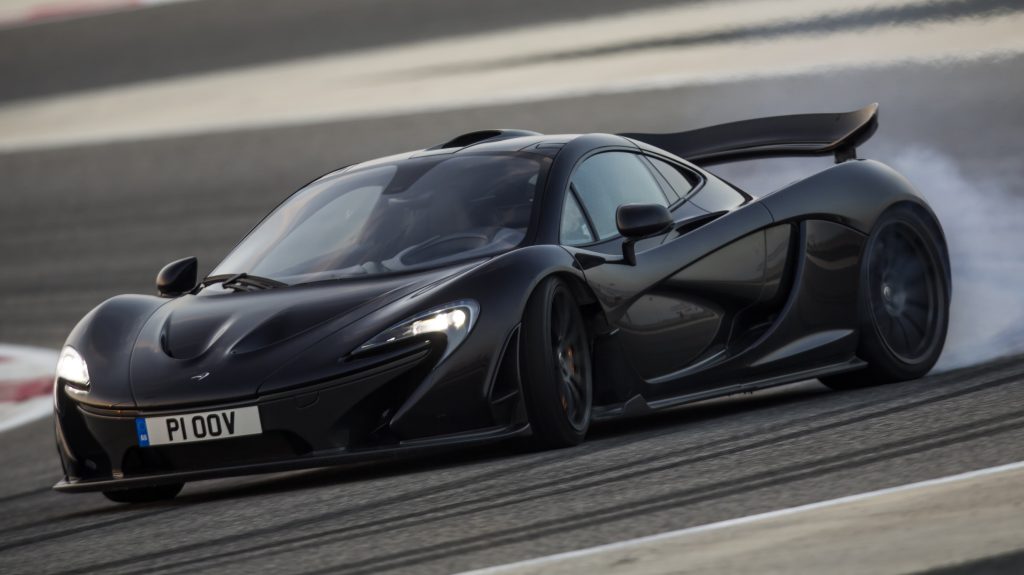
The P1’s influence extends beyond its own production run. It set a precedent for how hybrid technology could be used in hypercars, influencing the industry’s direction. Its combination of innovation and performance has secured its place as a defining model of the decade.
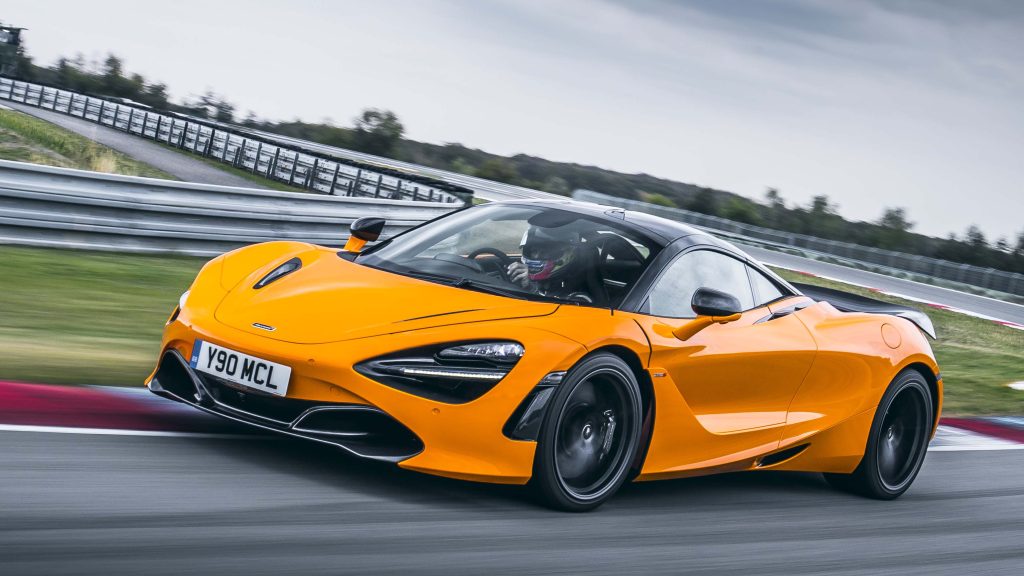
2. McLaren 720S
The McLaren 720S represents a shift in how performance and usability can coexist within a hypercar-inspired platform. While it is often categorized as a supercar, its engineering and capabilities place it firmly within the conversation of modern hypercar development.
It builds upon the foundation established by earlier models, refining key elements to create a more cohesive experience.
At the core of the 720S is a twin-turbocharged V8 engine that delivers strong and consistent power. The way this power is managed is what sets it apart. Acceleration feels smooth yet forceful, with the car maintaining composure even at higher speeds. This balance allows drivers to access its performance without feeling overwhelmed.
The design introduces a new approach to aerodynamics, integrating airflow management into the structure of the car. Large air channels and carefully shaped surfaces work together to improve efficiency and stability. These features are not immediately obvious, yet they play a crucial role in how the car performs.
Visibility is another area where the 720S stands out. The use of slim pillars and a glass-intensive design creates an environment that feels open and accessible. This contrasts with many high-performance cars, which often prioritize form over visibility. The result is a driving experience that feels less restrictive.
The suspension system contributes to the car’s versatility. It adapts to different driving conditions, allowing the 720S to transition between comfort and performance seamlessly. This flexibility makes it suitable for a wide range of uses, from daily driving to more demanding scenarios.
The interior reflects a modern approach, with digital displays and intuitive controls that enhance usability. It creates a space that feels advanced without becoming distracting.
The 720S demonstrates how McLaren has refined its engineering approach, creating a car that balances performance with accessibility. It stands as an example of how hypercar technology can influence more versatile models.
3. McLaren Senna
The McLaren Senna represents a departure from traditional hypercar thinking, focusing almost entirely on track performance rather than broad usability. Named after Ayrton Senna, it carries a philosophy rooted in precision and purpose. Every aspect of the car is designed to serve performance, often at the expense of comfort or practicality.
Power comes from a twin-turbocharged V8 engine, yet the defining feature is not just output but how effectively that power is used.
The Senna channels its performance through advanced aerodynamics and a lightweight structure, ensuring that it remains stable and responsive under demanding conditions. Acceleration feels immediate, but it is the car’s ability to maintain control that stands out.
Aerodynamics dominate the design. Large wings, aggressive vents, and carefully shaped surfaces work together to generate significant downforce.
This allows the car to remain planted even at high speeds, creating a level of confidence that encourages drivers to push further. The visual impact of these elements is striking, yet each component serves a clear function.
The chassis is built around a carbon fiber structure that prioritizes rigidity while minimizing weight. This combination enhances the car’s responsiveness, allowing it to react quickly to inputs. The suspension system is tuned for performance, providing precision that feels almost surgical in its execution.
Inside, the cabin reflects a stripped-down approach. Materials are chosen for weight reduction, and the layout focuses on essential controls. Visibility is enhanced through the use of glass panels, creating a sense of openness despite the car’s intense character.
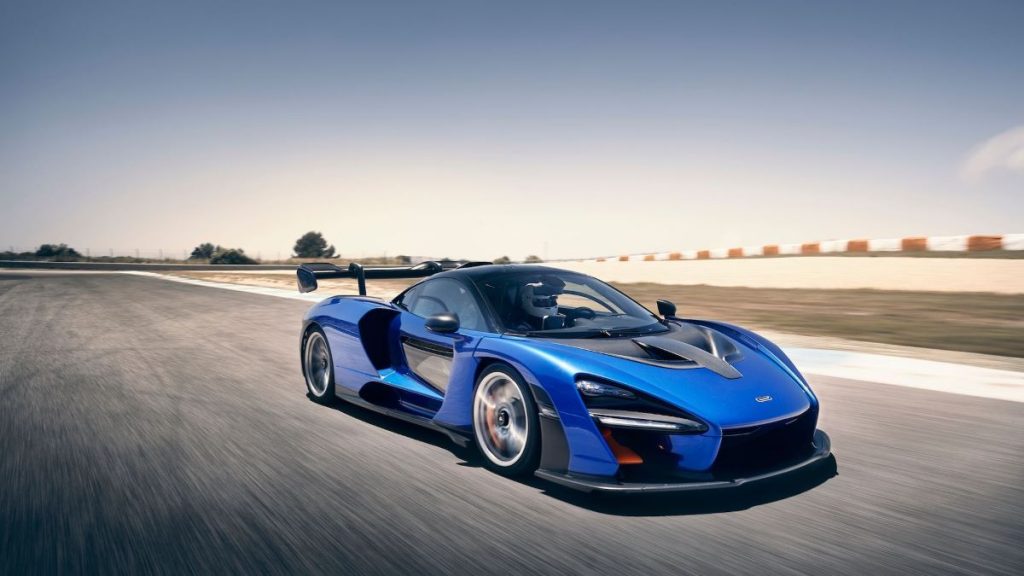
The Senna does not attempt to appeal to a wide audience. It is a specialized machine that rewards drivers who seek a focused and uncompromising experience. This clarity of purpose is what defines its place in hypercar engineering.
By prioritizing aerodynamics, weight reduction, and precision, the Senna demonstrates how far a hypercar can go when every decision is guided by performance.
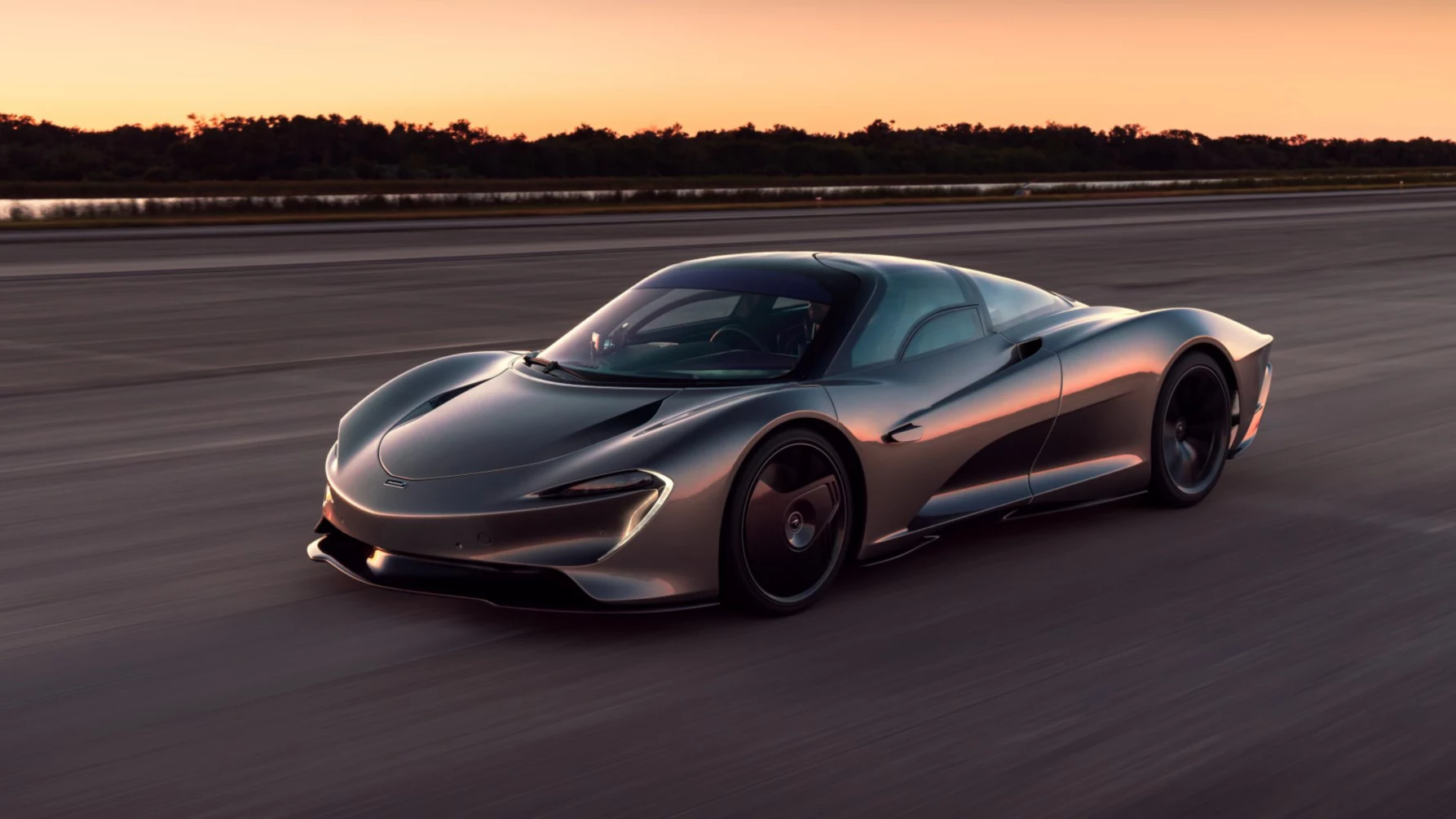
4. McLaren Speedtail
The McLaren Speedtail takes a completely different approach, emphasizing efficiency and maximum speed rather than track-focused performance. As part of McLaren’s Ultimate Series, it explores the idea of what a modern hypercar can achieve when aerodynamics and power delivery are optimized for straight-line capability.
At the heart of the Speedtail is a hybrid powertrain that combines a twin-turbocharged V8 engine with electric assistance. This setup delivers a seamless flow of power, allowing the car to reach extremely high speeds while maintaining stability.
The integration of electric components ensures that acceleration remains consistent across the entire range.
The design is shaped by the pursuit of aerodynamic efficiency. The elongated body reduces drag, allowing air to flow smoothly over the surface. Active elements adjust to maintain balance, ensuring that the car remains stable even as speeds increase.
This focus on airflow gives the Speedtail a distinctive appearance that sets it apart from more conventional designs.
One of the most notable features is its three-seat layout, with the driver positioned centrally. This arrangement provides a unique perspective, enhancing the sense of control and connection. It also reflects McLaren’s willingness to experiment with unconventional ideas in pursuit of performance.
The interior combines advanced technology with a clean design, creating an environment that feels futuristic without becoming overwhelming. Controls are integrated seamlessly, allowing drivers to focus on the experience rather than the interface.
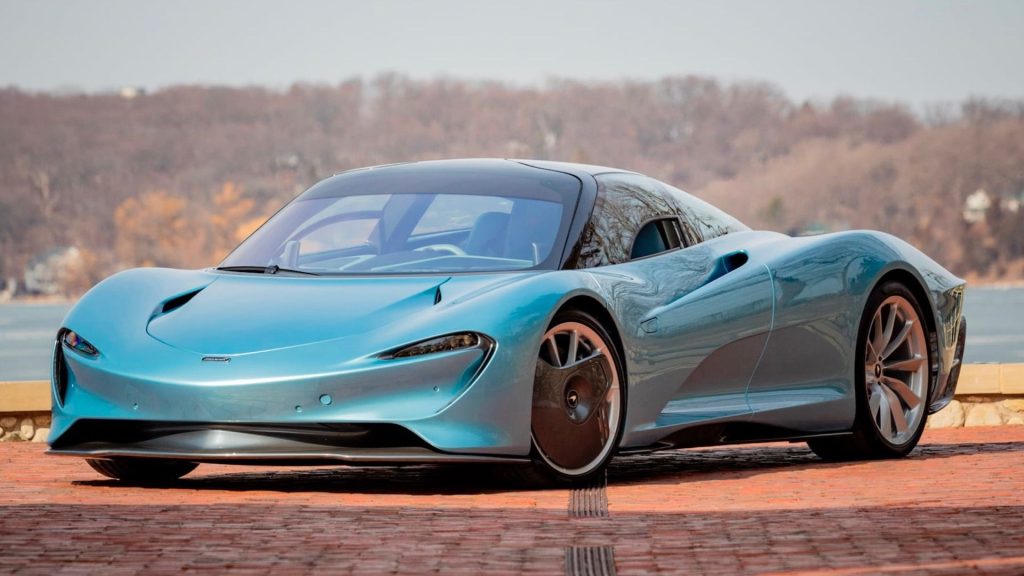
Unlike the Senna, which prioritizes cornering and track performance, the Speedtail is designed for a different kind of achievement. It represents the pursuit of maximum velocity in a controlled and refined manner.
The Speedtail highlights how hypercar engineering can take multiple directions, each defined by a clear objective. Its focus on aerodynamics, hybrid power, and innovative design ensures its place as a defining model of the last decade.
5. McLaren 765LT
The McLaren 765LT builds on an existing platform but transforms it into something far more focused. It belongs to the Longtail lineage, a name that signals intent rather than just specification.
In this case, the emphasis is on reducing weight, sharpening responses, and creating a machine that feels more connected to the driver. The result is a car that reflects how incremental changes can redefine an entire driving experience.
Power is delivered through a twin-turbocharged V8 engine that feels immediate and relentless. Yet the defining aspect is not simply the output but how the car channels it.
The rear-wheel-drive layout allows drivers to feel the transfer of power in a way that feels natural and engaging. This connection adds depth to the experience, making acceleration more than just a numerical achievement.
Weight reduction plays a central role in shaping the 765LT’s character. Extensive use of lightweight materials ensures that the car remains agile, responding quickly to inputs. This focus on reducing mass aligns with McLaren’s broader philosophy, demonstrating how efficiency can enhance performance rather than limit it.
The design reflects its purpose, with aerodynamic elements integrated into a form that appears aggressive yet functional. Airflow is carefully managed to improve stability, allowing the car to maintain composure even under demanding conditions. These features contribute to a sense of precision that defines the driving experience.
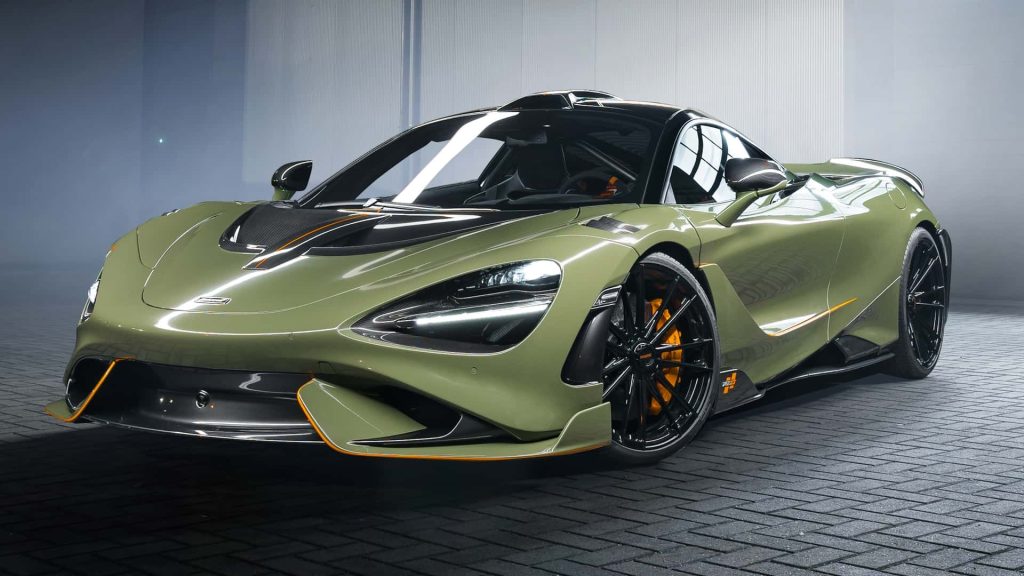
Inside, the cabin adopts a minimalist approach. Materials are chosen with performance in mind, and unnecessary elements are removed to maintain focus. The environment feels purposeful, reinforcing the car’s identity as a driver-oriented machine.
The 765LT illustrates how refinement and focus can take a car beyond its origins. It builds on established engineering principles and pushes them further, creating a hypercar that feels both familiar and distinctly evolved.
6. McLaren Artura
The McLaren Artura introduces a new direction, marking a shift toward hybridization as a core part of the brand’s engineering strategy.
Unlike earlier models where hybrid systems were reserved for flagship vehicles, the Artura integrates this technology into a more accessible platform. This change reflects a broader evolution in how performance is achieved.
Its powertrain combines a twin-turbocharged V6 engine with an electric motor, creating a system that delivers both immediate response and sustained power.
The electric component fills gaps in the power curve, ensuring that acceleration feels smooth and continuous. This integration represents a move toward efficiency without sacrificing engagement.
The structure of the Artura is built around a new lightweight architecture designed specifically for hybrid systems. This approach allows the car to maintain agility despite the additional components. By managing weight effectively, McLaren ensures that the driving experience remains consistent with its established identity.
Handling is shaped by a balance between precision and adaptability. The car responds quickly to inputs, yet it remains approachable, making it suitable for a wide range of driving scenarios. This versatility distinguishes it from more specialized models, highlighting a different aspect of hypercar engineering.
Design follows a clean and modern direction, with aerodynamic features integrated subtly into the car’s shape. The result is a vehicle that looks advanced without relying on dramatic visual elements. This restraint reflects a focus on function rather than spectacle.
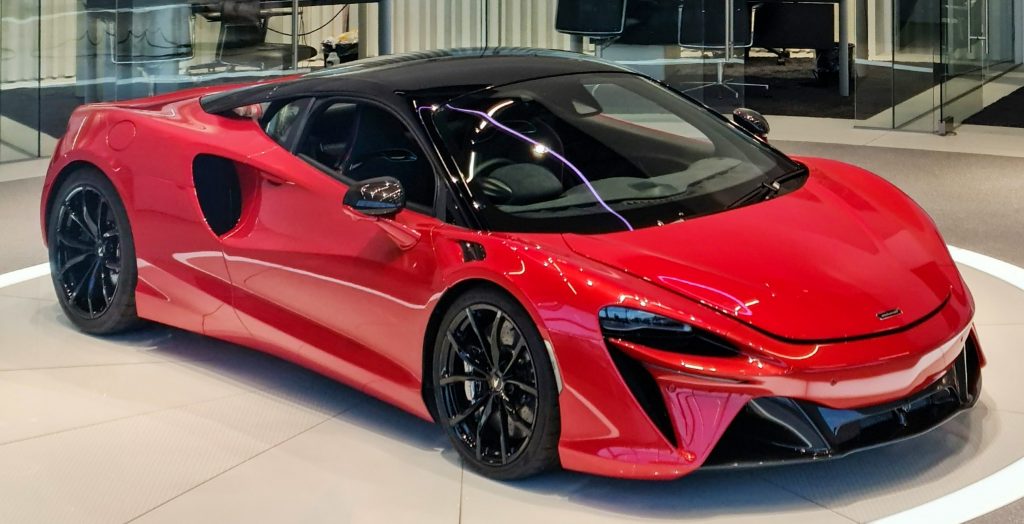
Inside, the cabin emphasizes usability and clarity. Digital interfaces provide access to information without overwhelming the driver, creating an environment that feels intuitive. This approach aligns with the car’s broader philosophy of combining innovation with practicality.
The Artura represents a step forward in McLaren’s evolution, showing how hybrid technology can be integrated into everyday performance. It captures a moment where efficiency and engagement begin to converge in a new way.
7. McLaren Elva
The McLaren Elva removes a fundamental element of automotive design and builds an identity around that absence. Without a traditional windshield or roof, it creates an experience that feels completely open, placing the driver directly in contact with the surrounding environment.
This decision is not a stylistic gesture but a core engineering concept that shapes how the car performs and how it is experienced.
Instead of relying on physical barriers, the Elva uses an advanced airflow management system to guide air over the cockpit. This allows occupants to remain relatively protected at speed while maintaining the sensation of openness.
The system demonstrates how aerodynamic innovation can replace conventional solutions, creating a new type of driving experience.
The powertrain centers around a twin-turbocharged V8 engine, delivering strong and immediate acceleration. Yet the defining aspect is how this power is perceived without the usual insulation.
Sound, vibration, and airflow all become part of the experience, intensifying the connection between driver and machine. The absence of enclosure amplifies every input, making even moderate speeds feel significant.
Lightweight construction plays a major role in the Elva’s character. By removing structural elements associated with a roof and windshield, the car achieves a level of agility that feels natural and responsive. The chassis maintains rigidity through careful engineering, ensuring that performance is not compromised.
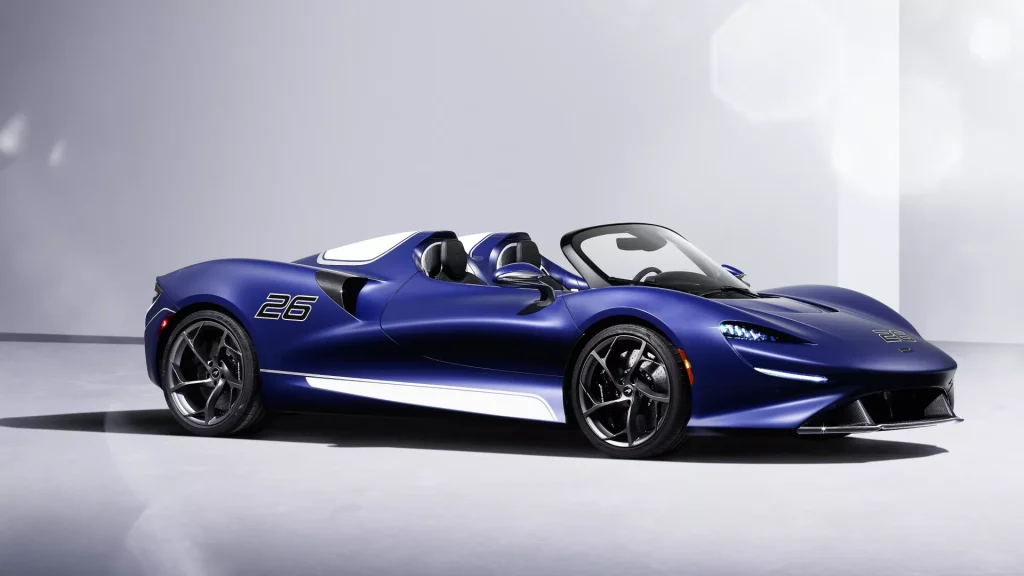
The design reflects its unconventional nature, with clean lines and minimal surfaces that emphasize its open structure. It does not attempt to mimic traditional hypercars, instead presenting a form that feels distinct and purposeful. This individuality contributes to its place within McLaren’s lineup.
Inside, the focus remains on simplicity. Controls are arranged to minimize distraction, and materials are chosen for both weight and durability. The environment supports the driving experience without adding unnecessary complexity.
The Elva illustrates how hypercar engineering can move beyond established norms, creating a vehicle that redefines interaction between driver and machine through innovation and bold design choices.
8. McLaren Sabre
The McLaren Sabre exists as a project shaped by a specific set of conditions rather than a global release. Developed for a limited group of clients, it reflects a tailored approach to hypercar engineering where exclusivity and customization take priority. This context influences every aspect of the car, from its performance to its design.
Its twin-turbocharged V8 engine delivers a level of power that feels both immediate and sustained. The tuning emphasizes responsiveness, ensuring that acceleration remains consistent across different driving scenarios. This approach creates a sense of control that complements its high performance.
Unlike models designed for multiple markets, the Sabre was developed without certain regulatory constraints. This allowed engineers to pursue performance targets more freely, resulting in a car that feels less restricted. The absence of these limitations contributes to its distinctive character, setting it apart from more standardized offerings.
The design reflects a focus on individuality. Each example features unique elements tailored to its owner, creating variations that go beyond typical customization. This attention to detail adds a personal dimension, making each car feel like a one-of-a-kind creation.
Aerodynamics are integrated into the design in a way that supports both performance and visual identity. Surfaces are shaped to manage airflow effectively, ensuring stability at higher speeds. These features are not exaggerated but are carefully balanced within the car’s form.
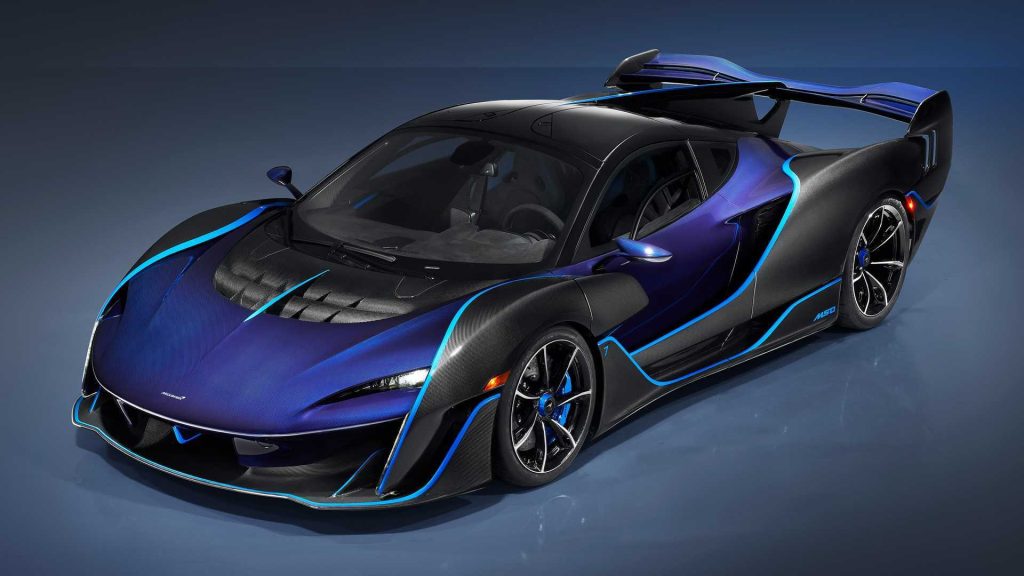
The interior continues the theme of personalization, with materials and layouts chosen to match individual preferences. Despite this customization, the focus remains on usability, ensuring that the driving experience is not compromised.
The Sabre represents a different direction within hypercar engineering, where exclusivity and client involvement become central elements. It shows how performance can be combined with personalization, creating a model that reflects both technological capability and individual expression.
9. McLaren Solus GT
The McLaren Solus GT represents a shift toward an uncompromised interpretation of hypercar engineering, where the usual boundaries between road and track are removed entirely. It is not designed to meet road regulations or daily usability expectations.
Instead, it exists purely to deliver performance in a controlled environment, allowing engineers to focus on what the car can achieve without limitation.
At the center of the Solus GT is a naturally aspirated V10 engine, developed to deliver a response that feels immediate and precise.
The absence of forced induction creates a direct connection between throttle input and acceleration, reinforcing the car’s purpose as a machine built for engagement. This approach contrasts with many modern hypercars, highlighting an alternative direction within the segment.
The driving position is one of its most distinctive features. Inspired by single-seater race cars, it places the driver centrally, creating a sense of alignment between the individual and the machine. This configuration enhances visibility and control, contributing to a more focused driving experience.
Aerodynamics play a dominant role in shaping the Solus GT’s behavior. Large wings, sculpted surfaces, and carefully managed airflow generate significant downforce, allowing the car to maintain stability at high speeds. These elements are not added for visual effect but are essential to its performance.
The structure is built around a lightweight carbon fiber chassis, ensuring rigidity while keeping mass under control. This combination allows the car to respond quickly to inputs, creating a sense of precision that defines its character.
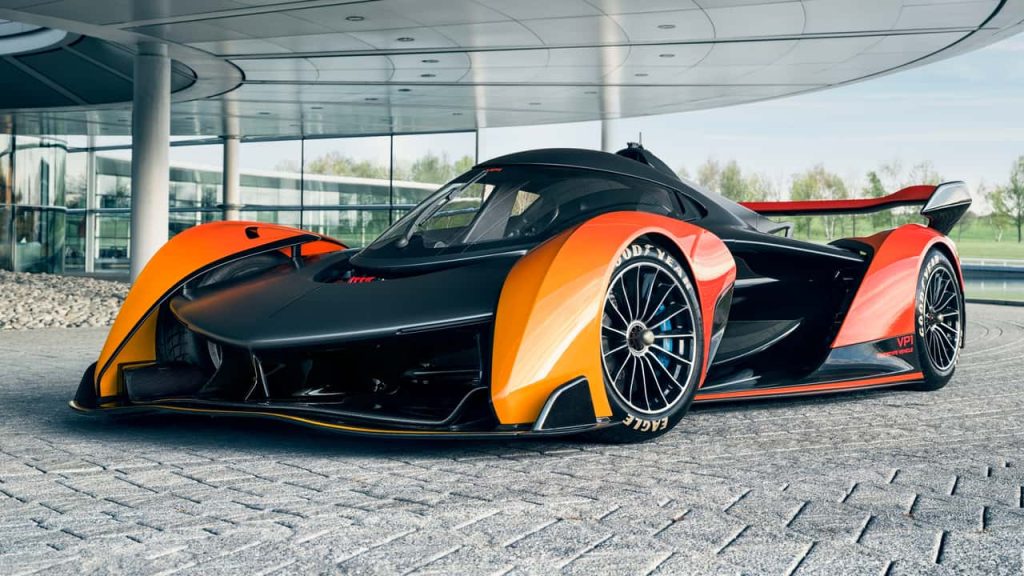
Every component is designed with performance in mind, resulting in a machine that feels cohesive and purposeful.
Inside, the environment is minimal and functional. There is no attempt to introduce comfort beyond what is necessary for control. This reinforces the car’s identity as a track-focused vehicle.
The Solus GT demonstrates how hypercar engineering can reach its peak when freed from conventional constraints, delivering an experience that is entirely focused on performance and driver involvement.
10. McLaren W1
The McLaren W1 represents the latest step in the brand’s ongoing evolution, bringing together lessons learned over the past decade into a single platform.
It reflects a forward-looking approach, where hybrid technology, lightweight construction, and advanced aerodynamics are integrated seamlessly to create a cohesive performance package.
Its powertrain combines a high-output internal combustion engine with electric assistance, delivering a level of responsiveness that feels immediate across all conditions.
The electric component enhances acceleration while also contributing to efficiency, creating a balance that aligns with modern expectations. This integration highlights how hybrid systems have become central to hypercar development.
The chassis is designed to manage both performance and weight effectively. By using advanced materials and construction techniques, the W1 maintains agility despite the complexity of its systems. This approach ensures that the driving experience remains consistent with McLaren’s emphasis on precision.
Aerodynamics are refined further, with active elements that adapt continuously to driving conditions. These systems optimize airflow, improving both stability and efficiency. The design reflects this focus, with surfaces shaped to support performance while maintaining a clean and modern appearance.
Inside, the cabin combines advanced technology with a driver-oriented layout. Digital interfaces provide access to information in a clear and intuitive manner, ensuring that the driver remains focused. The environment feels modern without becoming overwhelming, supporting the car’s broader philosophy.
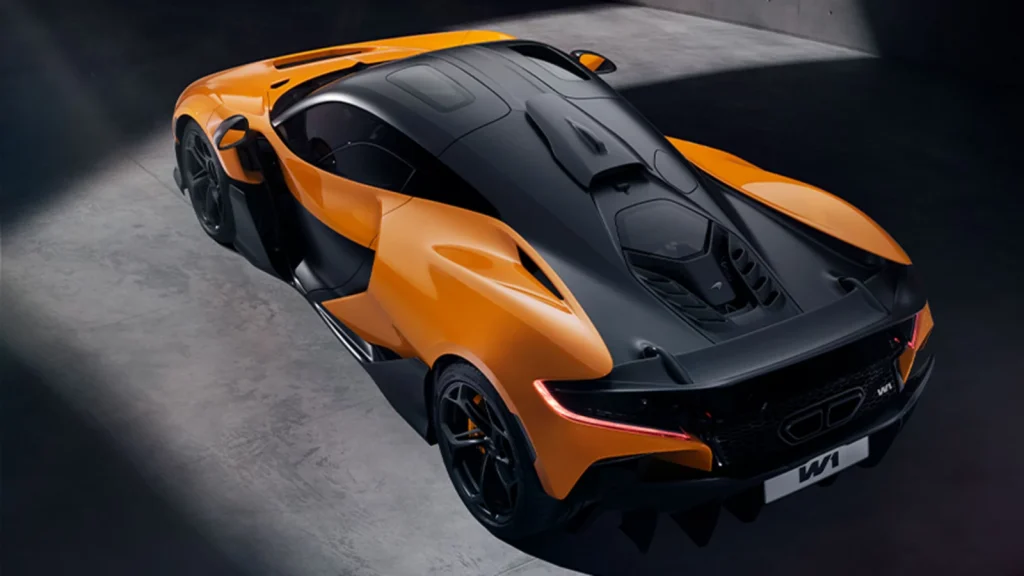
The W1 also reflects a shift toward sustainability within high-performance engineering. By integrating hybrid technology more deeply, it represents a step toward future developments while retaining the characteristics that define a hypercar.
As a culmination of recent advancements, the McLaren W1 captures the direction in which the segment is moving. It brings together innovation, performance, and efficiency, illustrating how hypercar engineering continues to evolve in response to changing demands.
Over the past decade, McLaren has redefined hypercar engineering through a combination of lightweight construction, advanced aerodynamics, and evolving powertrains. From the hybrid breakthrough of the P1 to the extreme track focus of the Senna and Solus GT, each model reflects a distinct approach to performance.
Cars like the Speedtail and Elva demonstrate how design and airflow can reshape driving experiences, while models such as the 765LT and 720S refine existing platforms into sharper, more responsive machines.
The introduction of hybrid systems in cars like the Artura and W1 highlights a shift toward combining efficiency with performance, rather than replacing one with the other. Meanwhile, exclusive creations like the Sabre show how personalization has become part of the hypercar equation.
Together, these models illustrate a period of rapid innovation where McLaren consistently pushed boundaries, blending tradition with new technology to shape the future of high-performance engineering.
Also Read: 8 Limited-Production Supercars Collectors Missed Their Chance At
