

Mercedes-Benz has spent more than a century producing some of the world’s finest automobiles, but a select group of models stands far above even its already prestigious lineup. These are not simply luxury cars with premium interiors or powerful engines.
They represent engineering milestones, ultra-limited collector pieces, coachbuilt masterpieces, and technological showcases that command prices measured in millions of dollars.
Whether sold new in extremely limited numbers or achieving astonishing values at prestigious auctions decades later, these Mercedes models have become some of the most expensive automobiles ever associated with the three-pointed star.
Many factors contribute to their extraordinary prices. Historical significance, racing pedigree, celebrity ownership, production rarity, handcrafted construction, and unmatched performance all play an important role.
Some were created specifically for motorsport domination before becoming priceless collector icons. Others were built as exclusive halo cars that demonstrated Mercedes-Benz’s engineering capabilities without concern for production costs.
In recent years, the collector market has upgraded several classic Mercedes models into record-breaking territory, proving that their appeal extends well beyond luxury transportation.
Ranking the most expensive Mercedes cars ever made requires considering both original exclusivity and modern collector values. From legendary racing machines to limited-production hypercars and bespoke grand tourers, each model tells a different chapter in Mercedes-Benz history.
These ten vehicles represent the pinnacle of craftsmanship, innovation, rarity, and desirability, making them some of the costliest automobiles ever produced by the German manufacturer.
Also Read: 10 Cars With The Best City MPG
1. Mercedes-Benz 300 SLR Uhlenhaut Coupé (1955)
No Mercedes-Benz has ever approached the financial and historical significance of the 300 SLR Uhlenhaut Coupé. Built in 1955 as a road-going evolution of the legendary 300 SLR racing program, only two examples were ever completed.
Named after Mercedes chief engineer Rudolf Uhlenhaut, the car was never intended for public sale, making it one of the rarest automobiles in existence. In 2022, one example sold privately for approximately $143 million, becoming the most expensive car ever sold anywhere in the world.
Its value extends far beyond rarity alone. The Uhlenhaut Coupé represented cutting-edge engineering for its era, featuring lightweight magnesium construction, advanced suspension technology, and direct inspiration from Mercedes’ dominant racing efforts.
The dramatic gullwing doors, sleek aerodynamic bodywork, and unmistakable proportions turned it into an automotive icon decades before hypercars became fashionable.
Power came from a naturally aspirated straight-eight engine derived directly from the 300 SLR race car. Producing remarkable performance for the mid 1950s, the car could exceed 180 mph, an astonishing achievement during a period when many family sedans struggled to reach half that speed.
Every component reflected Mercedes’ determination to build the ultimate engineering statement without compromise.
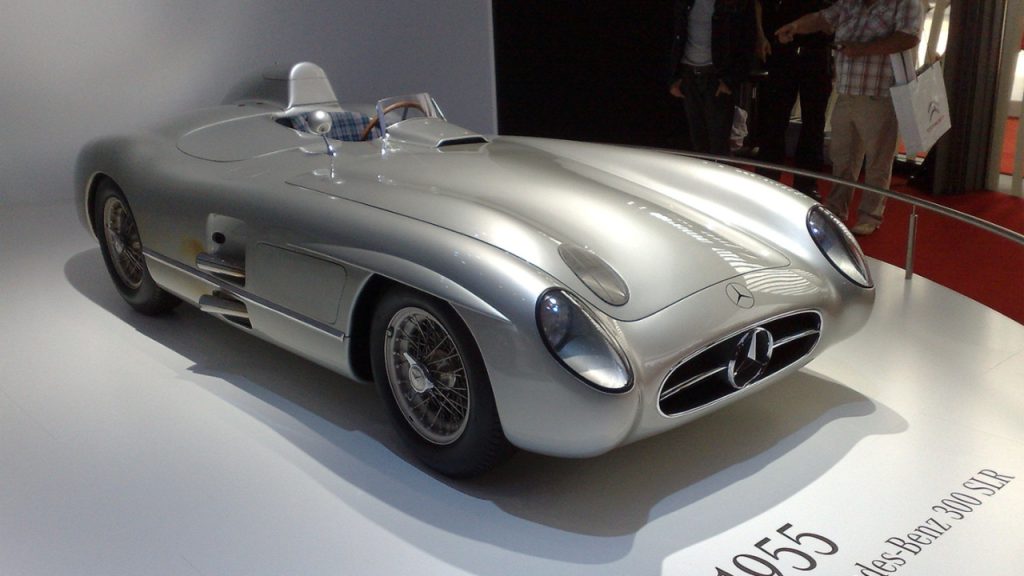
Today, the Uhlenhaut Coupé exists almost beyond traditional collector markets. Its combination of unmatched rarity, motorsport heritage, and historical importance places it in a category occupied by virtually no other automobile.
More than a valuable collector’s item, it represents one of the greatest engineering achievements in automotive history.
Specifications
- Engine: 3.0-liter naturally aspirated inline-8
- Torque: 234 lb-ft
- Horsepower: 310 hp
- Length/Width: 169.3 in / 68.5 in
2. Mercedes-Benz W196 R Formula One Car (1954)
Long before Formula One became a global commercial powerhouse, Mercedes-Benz introduced the revolutionary W196 R, a racing machine that transformed Grand Prix competition.
Developed for the 1954 Formula One season, the W196 R featured advanced engineering that placed it years ahead of many competitors.
Decades later, surviving examples have become some of the most valuable competition cars ever sold, with auction prices exceeding $29 million depending on provenance and racing history.
The W196 R’s significance comes from much more than limited production. It dominated international motorsport with legendary drivers such as Juan Manuel Fangio behind the wheel, helping Mercedes secure multiple World Championships.
Every victory added another layer to the car’s remarkable legacy, making surviving examples among the most desirable racing machines ever created.
Its engineering was revolutionary for the time. The fuel-injected straight-eight engine delivered exceptional performance, while innovative suspension and aerodynamic bodywork allowed the W196 R to outperform many rivals.
Mercedes engineers focused relentlessly on reducing weight, improving stability, and maximizing reliability during demanding Grand Prix events across Europe.
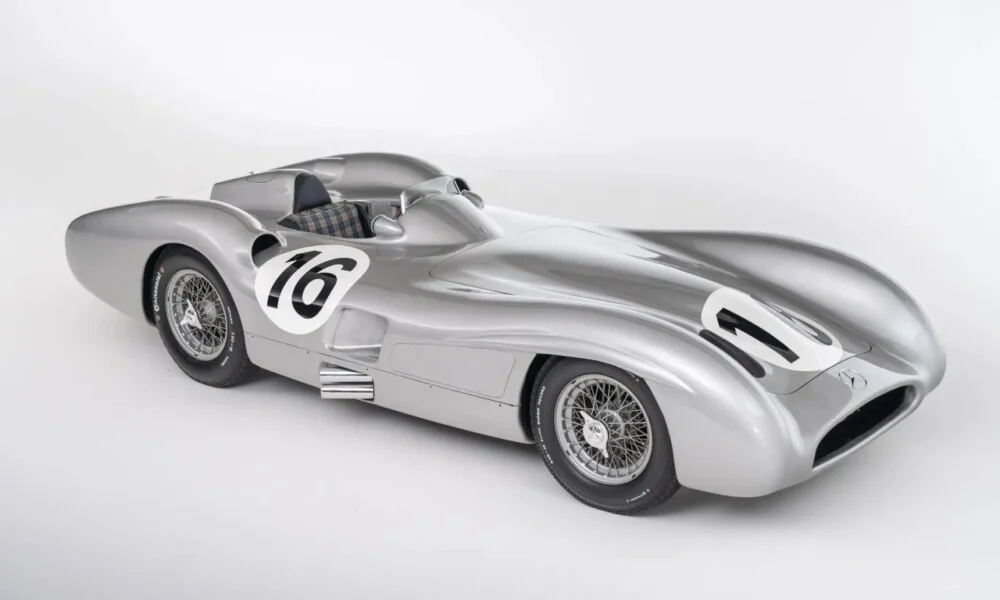
Collectors prize the W196 R because it represents one of the most significant chapters in both Mercedes-Benz and Formula One history. Every surviving chassis possesses its own unique historical importance, with a direct connection to legendary races and championship-winning achievements.
That combination of sporting success, technical innovation, and extraordinary rarity explains why the W196 R remains one of the most expensive Mercedes vehicles ever built.
Specifications
- Engine: 2.5-liter naturally aspirated inline 8
- Torque: Approximately 177 lb ft
- Horsepower: 290 hp
- Length/Width: 159.8 in / 61.4 in
3. Mercedes-Benz SLR McLaren Stirling Moss (2009)
Some limited-edition supercars become valuable because of their performance, while others achieve legendary status through exclusivity alone. The Mercedes-Benz SLR McLaren Stirling Moss extraordinarily combines both qualities.
Introduced as the final chapter of the SLR McLaren program, this dramatic speedster paid tribute to British racing legend Stirling Moss and his unforgettable victory in the 1955 Mille Miglia.
Production was limited to just 75 examples worldwide, and only existing SLR owners were invited to purchase one, making it an exceptionally exclusive automobile from the moment it debuted.
The Stirling Moss took an unconventional approach by eliminating both the roof and the windshield. Instead, occupants relied on specially designed wind deflectors and optional helmets while enjoying an open-air driving experience at speeds that very few production cars could achieve.
Its striking carbon fiber bodywork separated it visually from every other SLR variant, while extensive aerodynamic development ensured stability despite the unusual design.
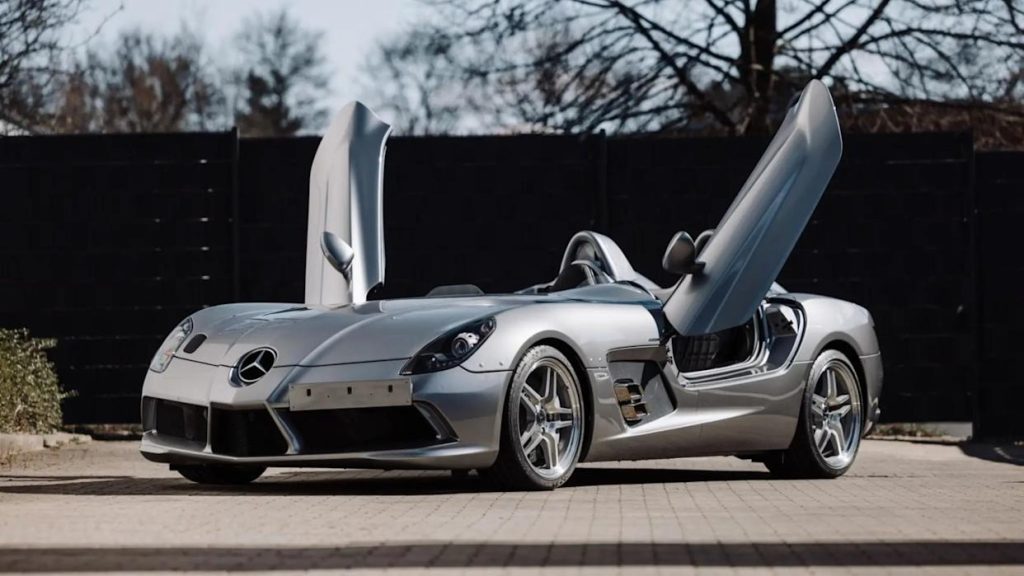
Power came from a hand-built supercharged V8 producing remarkable acceleration and a top speed exceeding 215 mph.
Carbon ceramic brakes, race-inspired suspension tuning, and lightweight construction transformed the car into one of the most focused road-legal Mercedes models ever created. Every drive delivered an experience closer to a competition machine than a traditional grand tourer.
Collectors continue to pursue the Stirling Moss because it represents the ultimate expression of the SLR lineage. Its combination of extreme rarity, historical inspiration, breathtaking performance, and unforgettable styling has steadily increased its value since production ended.
Today, pristine examples routinely command several million dollars, cementing the model’s reputation as one of the most expensive Mercedes-Benz road cars ever produced.
Specifications
- Engine: 5.4-liter supercharged V8
- Torque: 575 lb ft
- Horsepower: 641 hp
- Length/Width: 182.8 in / 74.8 in
4. Mercedes-AMG ONE (2023 to Present)
Turning Formula One technology into a street-legal production car had challenged manufacturers for decades, but Mercedes-AMG accomplished exactly that with the AMG ONE.
Years of engineering development were required to adapt a championship-winning hybrid powertrain for public roads while meeting emissions regulations and durability standards.
The result became one of the most technologically advanced road cars ever built, carrying a price exceeding $2.7 million before options and becoming one of Mercedes’ most ambitious projects.
At the heart of the AMG ONE lies a turbocharged 1.6-liter V6 derived directly from Mercedes’ Formula One program. Working alongside four electric motors, the hybrid system generates more than 1,000 horsepower while delivering astonishing acceleration and track-focused performance.
The AMG ONE stands apart from conventional hypercars by incorporating technology that closely mirrors a modern Grand Prix car. Its sophisticated energy recovery systems and high-revving engine architecture deliver an experience that is exceptionally close to Formula One engineering.
Aerodynamics plays an equally important role. Active front louvers, a hydraulically adjustable rear wing, underbody airflow management, and multiple driving modes constantly optimize downforce and efficiency depending on speed and road conditions.
Carbon fiber construction further reduces weight while increasing chassis rigidity, allowing the car to achieve exceptional handling characteristics.
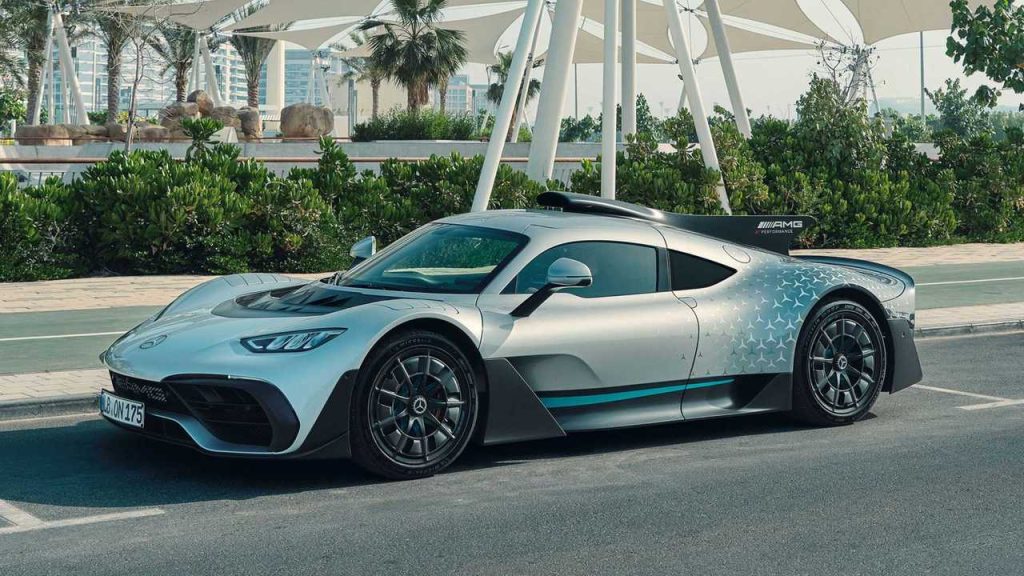
Demand dramatically exceeded production, ensuring instant collector status before the first customer deliveries even began. Every example was spoken for well in advance, and secondary market prices quickly climbed beyond the original sticker price.
The AMG ONE stands as one of the most technically sophisticated and financially valuable Mercedes-Benz models ever offered to the public, demonstrating the company’s ability to translate motorsport innovation into an extraordinary road-legal hypercar.
Specifications
- Engine: 1.6-liter turbocharged V6 hybrid with four electric motors
- Torque: Approximately 1,033 lb ft (combined system)
- Horsepower: 1,063 hp
- Length/Width: 187.0 in / 79.7 in
5. Mercedes-Maybach Exelero (2005)
Few concept cars have attracted as much attention as the Mercedes-Maybach Exelero. Rather than being built solely for auto show displays, the Exelero was a fully functional vehicle developed to showcase the high-speed capabilities of Fulda performance tires.
Created as a one-off automobile, it blended Maybach’s signature luxury with supercar-level performance, resulting in one of the most distinctive vehicles ever produced under the Mercedes-Benz umbrella.
Because only a single example exists, estimating its value is difficult, but experts have placed it well above $8 million, with some estimates reaching considerably higher due to its unmatched exclusivity.
Its dramatic proportions immediately separate it from conventional grand tourers. Stretching well over 19 feet in length, the Exelero features an aggressive fastback profile, oversized grille, muscular rear haunches, and handcrafted body panels that blend luxury with performance.
Every detail was designed to make a visual statement while supporting high-speed stability during tire testing.
Performance matched the bold styling. A twin-turbocharged V12 generated enormous power and effortless acceleration despite the car’s substantial size. The Exelero comfortably exceeded 215 mph during testing, proving that an ultra-luxurious coupe could also perform at genuine hypercar speeds.
Inside, the cabin combined premium leather, Alcantara, carbon fiber, and bespoke craftsmanship unavailable in production Mercedes vehicles.
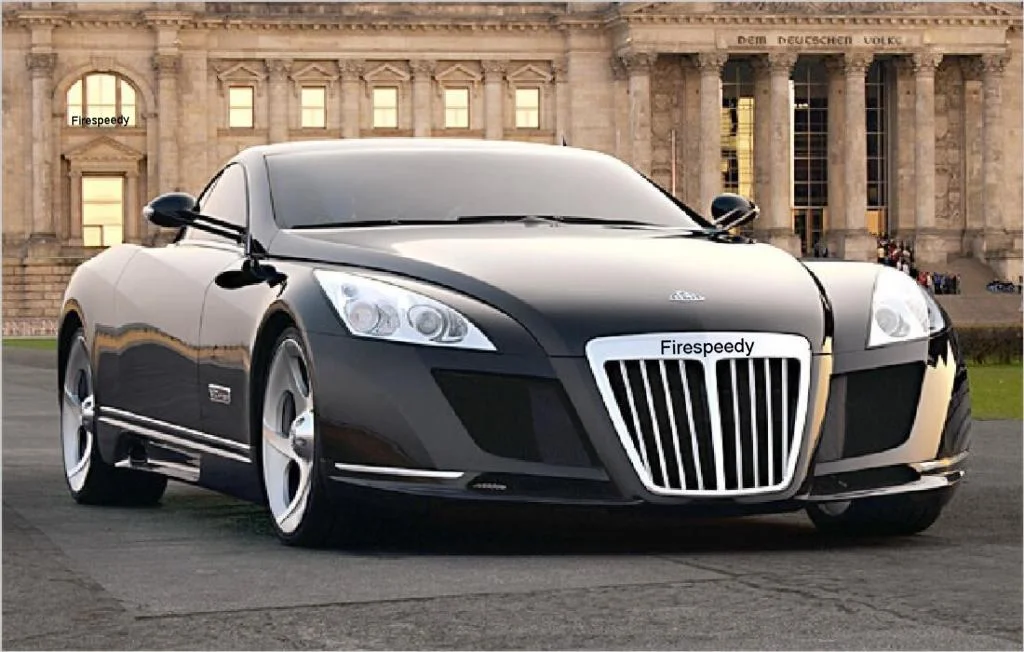
The Exelero has become one of the automotive world’s greatest curiosities because it exists entirely on its own. It is neither a production model nor a racing prototype but a singular engineering exercise that successfully blended elegance, speed, and technical capability.
That uniqueness guarantees its place among the most expensive Mercedes vehicles ever created and one of the rarest automobiles of the modern era.
Specifications
- Engine: 5.9-liter twin-turbocharged V12
- Torque: 752 lb ft
- Horsepower: 690 hp
- Length/Width: 232.3 in / 84.6 in
6. Mercedes-Benz CLK GTR Straßenversion (1998)
Homologation specials are often expensive, but very few approach the exclusivity of the Mercedes-Benz CLK GTR Straßenversion. Created to satisfy FIA GT Championship regulations, Mercedes was required to build a limited number of road-legal examples based on its championship-winning race car.
Only around 25 customer cars were produced, instantly making the CLK GTR one of the rarest production Mercedes vehicles ever offered for sale. At launch, it was among the world’s most expensive new automobiles, and surviving examples now regularly command prices exceeding $10 million.
The CLK GTR was engineered with technology carried over directly from its racing counterpart. Its carbon fiber monocoque chassis, race-developed suspension, advanced aerodynamics, and lightweight construction delivered a level of performance that was rarely found in a road-legal production car.
Driving the CLK GTR demanded commitment because it prioritized track performance ahead of everyday comfort.
Mounted behind the passenger compartment sat a naturally aspirated V12 delivering immense power with an unforgettable soundtrack.
Acceleration remained breathtaking even by today’s standards, while the car’s aerodynamic efficiency allowed exceptional stability at extremely high speeds. Every mechanical component reflected Mercedes’ determination to dominate endurance racing during the late 1990s.
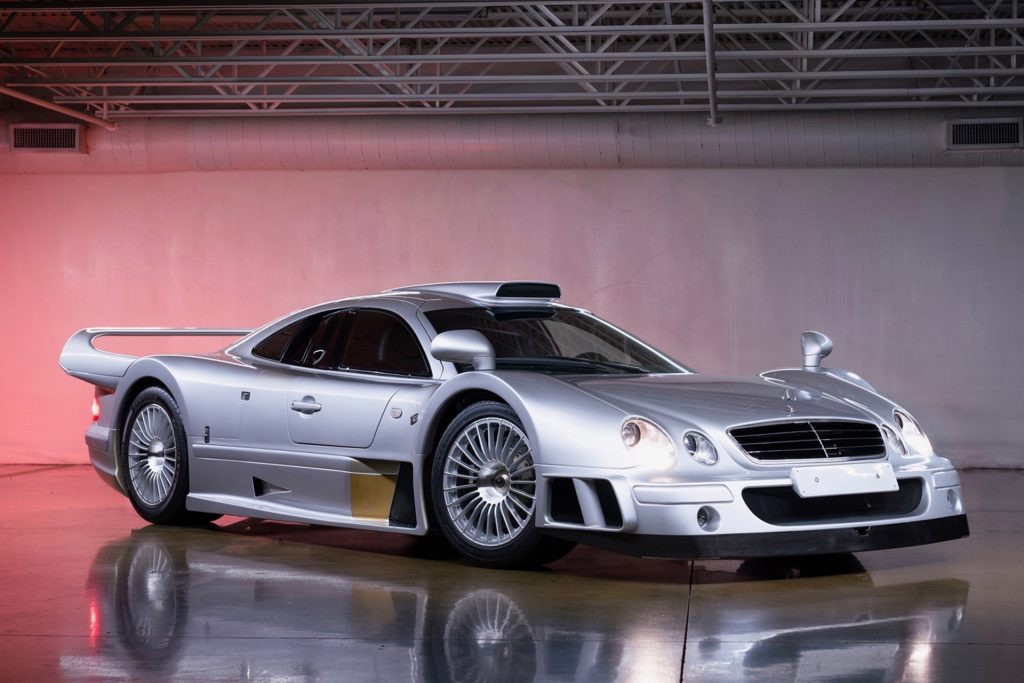
Collectors consider the CLK GTR one of the greatest homologation cars ever produced. Its rarity, direct connection to championship-winning race cars, and uncompromising engineering have steadily increased demand over the past two decades.
Very few owners ever part with their cars, making each auction appearance a significant event within the collector community. Its extraordinary market value firmly secures its position among the most expensive Mercedes-Benz automobiles ever built.
Specifications
- Engine: 6.9-liter naturally aspirated V12
- Torque: 572 lb ft
- Horsepower: 604 hp
- Length/Width: 191.3 in / 76.8 in
7. Mercedes-Benz CLK GTR Roadster (1999)
If the CLK GTR coupe was already exceptionally rare, the Roadster upgraded exclusivity to another level. Mercedes-Benz produced only six roadster versions, making it one of the rarest production cars ever to wear the three-pointed star.
Built after the success of the FIA GT Championship program, the open-top model retained nearly all of the race-derived engineering found in the coupe while adding an even greater level of desirability among collectors.
Because of its microscopic production numbers, auction values frequently exceed $10 million whenever one changes hands.
Removing the roof did little to soften the car’s uncompromising personality. The carbon fiber monocoque remained extraordinarily rigid, while the aggressive aerodynamic package continued to generate significant downforce at speed.
Every surface served a functional purpose, reflecting the vehicle’s motorsport origins rather than luxury styling trends. The low seating position, exposed carbon fiber, and minimalist cabin reminded drivers that this was fundamentally a racing machine adapted for public roads.
The naturally aspirated V12 delivered effortless acceleration and remarkable responsiveness. Combined with a sequential-style transmission and race-tuned suspension, the Roadster provided an experience unlike conventional supercars of its era.
High-speed stability, immediate steering response, and exceptional braking performance demonstrated how closely related the car remained to its championship-winning competition counterpart.
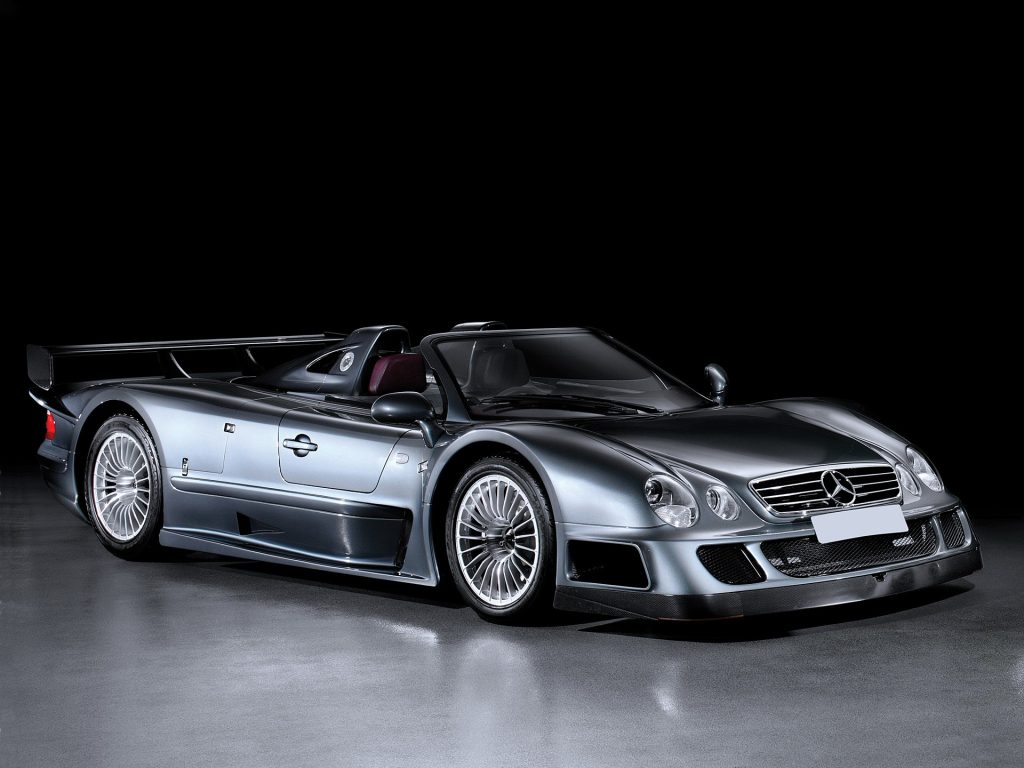
Owning a CLK GTR Roadster means possessing one of the rarest homologation specials ever produced by any manufacturer. It represents the peak of Mercedes-Benz’s late 1990s racing success while offering exclusivity that very few automobiles can match.
Its rarity alone would guarantee extraordinary value, but when combined with world-class engineering and historic significance, it easily earns a place among the most expensive Mercedes vehicles ever created.
Specifications
- Engine: 6.9-liter naturally aspirated V12
- Torque: 572 lb ft
- Horsepower: 604 hp
- Length/Width: 191.3 in / 76.8 in
8. Mercedes-Benz SLR McLaren 722 Edition (2006)
Special editions often bring cosmetic upgrades, but the SLR McLaren 722 Edition went much further. Created to commemorate Stirling Moss and Denis Jenkinson’s victory in the 1955 Mille Miglia with starting number 722, this limited production model received meaningful performance enhancements alongside distinctive styling revisions.
The result was one of the most desirable versions of the already exclusive SLR McLaren, with values steadily climbing well beyond its original price.
Mercedes and McLaren engineers revised the suspension, lowered the ride height, sharpened steering response, and upgraded aerodynamics to improve handling at high speeds.
Larger front air intakes, lightweight wheels, revised bodywork, and unique badging distinguished the 722 Edition from the standard SLR without sacrificing its grand touring comfort. These changes created a more focused driving experience while preserving everyday usability.
Beneath the long hood sat a hand-assembled supercharged V8 producing substantially more power than the standard model. Acceleration was immediate, while the combination of carbon ceramic brakes and refined chassis tuning inspired confidence on both road and track.
The engine’s unmistakable soundtrack became one of the defining characteristics of the car, reinforcing its performance credentials every time the throttle was opened.
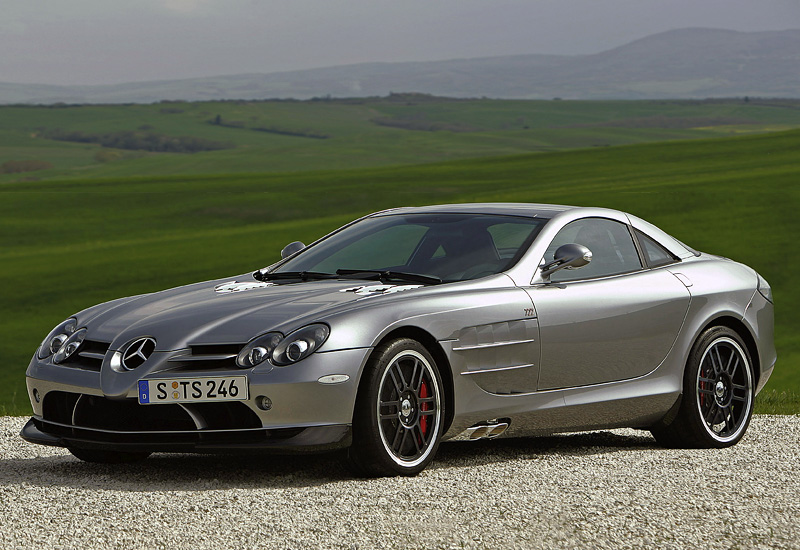
Collectors continue to seek the 722 Edition because it represents one of the finest collaborations between Mercedes-Benz and McLaren. Limited production, motorsport heritage, enhanced performance, and timeless styling have all contributed to rising market values over the years.
It remains one of the most coveted modern Mercedes models and a standout example of how carefully developed special editions can become highly valuable collector automobiles.
Specifications
- Engine: 5.4-liter supercharged V8
- Torque: 605 lb ft
- Horsepower: 641 hp
- Length/Width: 183.0 in / 74.6 in
9. Mercedes-Benz 300 SL Alloy Gullwing (1955 to 1957)
Among classic Mercedes-Benz models, few command greater admiration than the 300 SL Gullwing. While the standard steel-bodied version is already one of the world’s most valuable collector cars, the ultra-rare alloy Gullwing occupies an entirely different league.
Mercedes produced only 29 examples with lightweight aluminum bodywork, making it one of the scarcest production automobiles in the company’s history. Because of this extraordinary rarity, pristine examples have sold for well over $6 million, with values continuing to climb as collectors compete for the few surviving cars.
The aluminum body reduced weight significantly compared to the standard model, enhancing performance and agility while preserving the Gullwing’s unmistakable styling. Its upward-opening doors were not designed merely for dramatic appearance.
They were a practical solution to the high tubular spaceframe chassis, yet they became one of the most recognizable automotive design elements ever created. Even decades later, the silhouette remains instantly identifiable to enthusiasts around the world.
Under the long hood sat a fuel-injected straight-six engine that was revolutionary during the mid-1950s. At a time when fuel injection remained uncommon in passenger vehicles, Mercedes used advanced engineering to produce impressive performance and reliability.
Combined with the lightweight aluminum construction, the Alloy Gullwing became one of the fastest production cars of its generation while maintaining remarkable refinement for long-distance driving.

The Alloy Gullwing represents far more than an expensive classic. It symbolizes Mercedes-Benz’s postwar engineering excellence and willingness to push technological boundaries. With fewer than three dozen examples ever built, opportunities to acquire one are exceptionally rare.
That combination of innovation, beauty, historical importance, and unmatched scarcity secures its position among the most valuable Mercedes-Benz automobiles ever produced.
Specifications
- Engine: 3.0-liter naturally aspirated inline-6
- Torque: 203 lb ft
- Horsepower: 215 hp
- Length/Width: 178.7 in / 70.5 in
10. Mercedes-Benz SSK (1928 to 1932)
Concluding this ranking is a machine that helped establish Mercedes-Benz as one of the world’s premier performance manufacturers.
The SSK, short for Super Sport Kurz, arrived during the late 1920s as an uncompromising high-performance sports car engineered under the direction of Ferdinand Porsche before he founded his own company.
Built in extremely limited numbers, the SSK dominated racing events while becoming one of the most prestigious automobiles money could buy. Today, authentic examples regularly achieve auction prices exceeding $7 million, with exceptional cars valued even higher because so few remain.
The SSK combined immense mechanical strength with breathtaking performance for its era. Its enormous supercharged straight-six engine delivered extraordinary power at a time when most automobiles produced only a fraction of its output.
Engaging the Roots-type supercharger unleashed additional performance, giving the SSK acceleration and top speed that astonished competitors during the late 1920s and early 1930s. The car quickly earned a reputation for being one of the fastest road-legal vehicles in existence.
Its racing success further upgraded its legendary status. The SSK claimed victories in numerous hill climbs, endurance competitions, and international motorsport events, demonstrating both speed and durability under the most demanding conditions.
These accomplishments transformed the model into one of Mercedes-Benz’s earliest engineering icons and laid the foundation for decades of motorsport excellence.
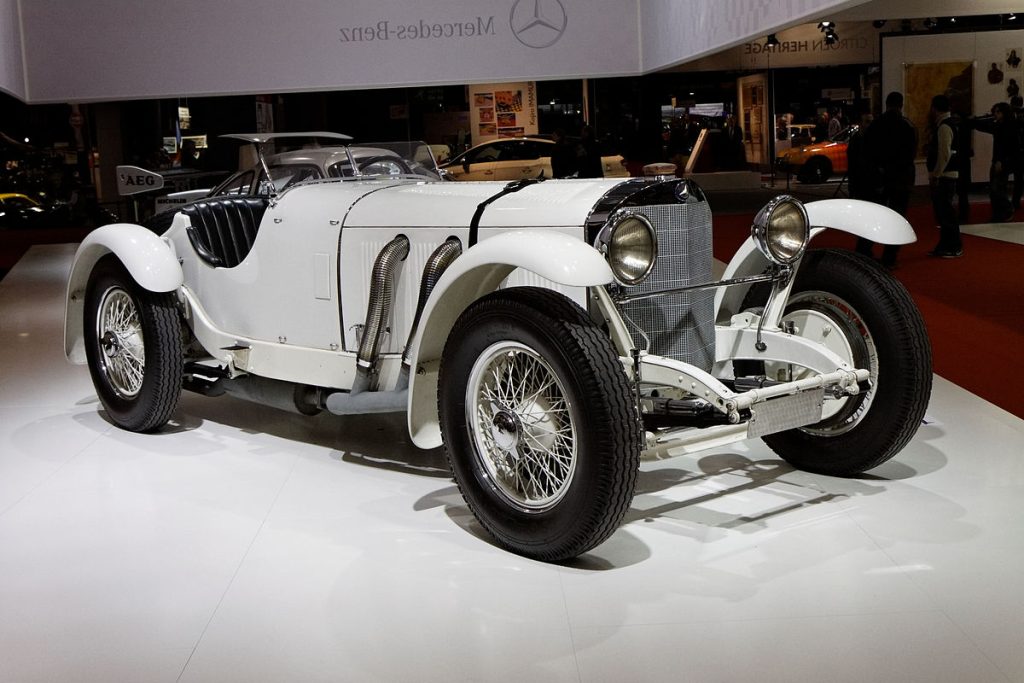
Collectors prize the SSK because it represents the beginning of Mercedes-Benz’s high-performance legacy.
Every surviving example carries enormous historical significance, combining prewar craftsmanship, racing pedigree, and extreme rarity into one remarkable automobile.
More than ninety years after production ended, the SSK remains one of the most desirable and expensive Mercedes-Benz cars ever built, completing a list that spans nearly a century of automotive excellence.
Specifications
- Engine: 7.1-liter supercharged inline 6
- Torque: Approximately 501 lb ft
- Horsepower: 300 hp
- Length/Width: 168.1 in / 67.7 in
Also Read: 10 Charging Mistakes That Shorten An EV Battery’s Life
