

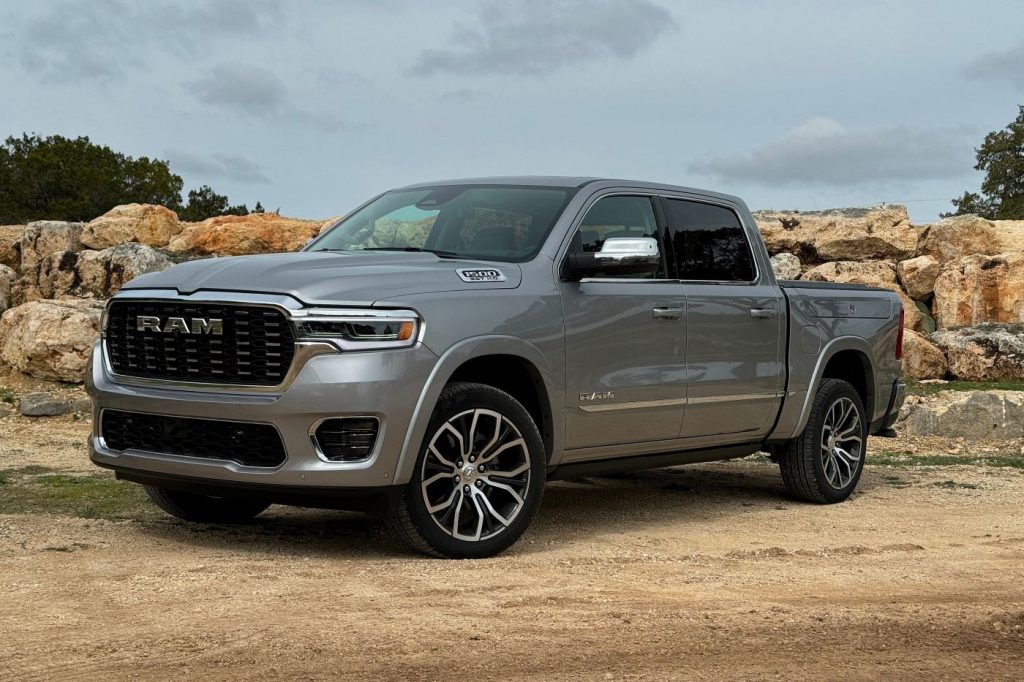
Ram Trucks is recalling more than 65,000 trucks in the United States due to a software defect that can cause dashboard displays to freeze while driving. The issue affects select 2025 and 2026 model-year vehicles, including the Ram 1500, 2500, and 3500, as well as certain chassis cab variants.
The defect involves the digital instrument cluster, a system that has become central to modern vehicle operation.
Unlike traditional analog gauges, these displays consolidate critical driving information such as speed, warning indicators, and system alerts into a single interface. When the system freezes or goes blank, drivers can temporarily lose access to essential data.
According to recall findings, the issue stems from a software fault that disrupts the display during vehicle operation.
In practical terms, this means drivers may be unable to view key information, including warning lights or vehicle status indicators, while the truck is in motion. This loss of visibility increases the potential for safety risks, particularly in situations requiring immediate driver awareness.
The recall reflects a broader industry trend. As automakers transition toward fully digital dashboards, they are also introducing new points of vulnerability.
Traditional instrument clusters relied on separate mechanical or electronic components, meaning failures were often isolated. In contrast, modern digital systems centralize multiple functions, so a single malfunction can affect the entire display environment.
Ram’s corrective action is straightforward. Affected vehicles will receive a software update, and in some cases, the instrument cluster may be replaced. Repairs will be carried out at no cost to owners through authorized dealerships.
While the technical fix is relatively simple, the implications are more significant. Software-related defects can be difficult to identify during development, as they often emerge only after vehicles are exposed to varied real-world conditions. This makes post-sale recalls an increasingly common method of addressing such issues.
For owners, the recommended course of action is to respond promptly to recall notifications and complete the necessary updates. Although the defect may not occur consistently, the potential loss of critical driving information justifies immediate attention.
More broadly, this recall underscores a structural shift in automotive design. Vehicles are becoming increasingly software-defined, with digital systems managing functions that were once purely mechanical. This transition offers greater flexibility and integration but also introduces new challenges in ensuring reliability.
The Ram recall serves as a clear example of this evolving space. As digital interfaces become standard across the industry, maintaining their stability and performance will be as important as traditional engineering in ensuring overall vehicle safety.
