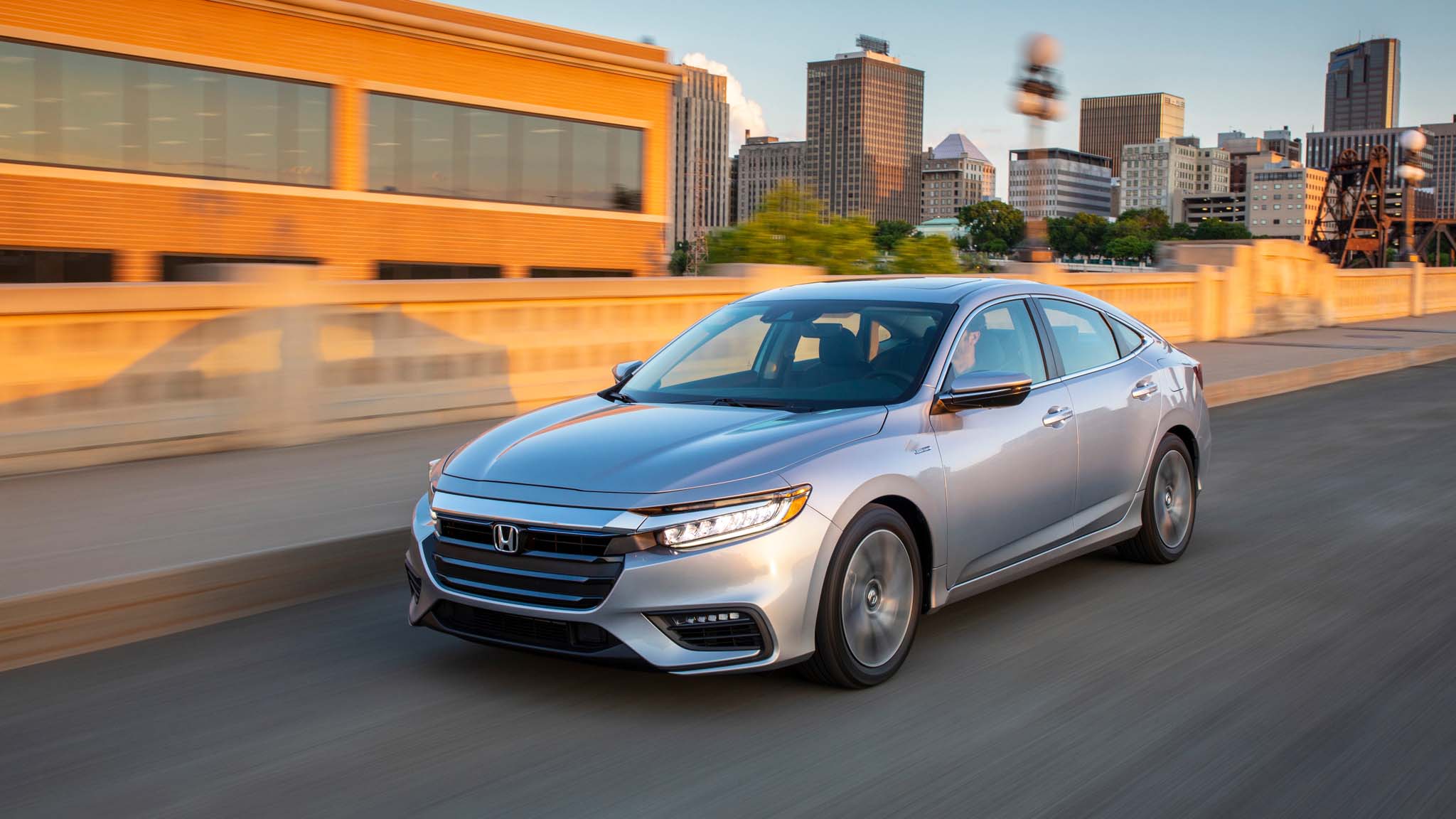
Honda is bringing the Insight name back, but not in the form many expected. The model returns as an all-electric crossover SUV, with orders opening in Japan on April 17 at a starting price of around $35,000. Despite the relatively accessible pricing, the new Insight EV will be produced in extremely limited numbers, significantly narrowing its real-world impact.
The Insight carries a long history within Honda’s lineup. It first launched in 1999 as the company’s first mass-produced hybrid and one of the earliest hybrids sold in North America.
Over time, it evolved from a compact two-seat hatchback into a more conventional five-seat sedan. However, Honda discontinued the model after the 2022 model year, shifting focus toward higher-volume vehicles like the Civic and CR-V, both of which now offer hybrid variants.
For its fourth generation, the Honda Insight undergoes a complete transformation. Honda now describes it as a newly developed electric crossover SUV. Underneath, the vehicle is closely related to the e: NS2, an electric model developed through Honda’s joint venture with Dongfeng Motor and already on sale in China since 2024.
In terms of performance and capability, the Insight EV aligns with that platform. It delivers a WLTP range of up to 535 km and supports fast charging that can replenish the battery to 80 percent in approximately 40 minutes.
While Honda has not officially confirmed battery specifications, it is expected to use a 68.8 kWh pack paired with a front-mounted electric motor producing 200 horsepower and 310 Nm of torque.
Inside, the Honda Insight’s cabin reflects a modern, tech-focused layout. A 12.8-inch central touchscreen is paired with a 9.4-inch digital instrument cluster, while a large head-up display serves as a primary source of driving information.
Additional features include ambient lighting, a 12-speaker Bose sound system, and an integrated aroma diffuser, signaling a move toward a more premium in-cabin experience.
Driving dynamics can be adjusted through four selectable modes: Normal, Sport, Econ, and Snow. Each mode modifies vehicle behavior based on conditions, with Sport Mode adding a synthetic engine sound through an Active Sound System to enhance driver feedback during acceleration and deceleration.
On the safety side, the Insight EV comes equipped with Honda SENSING, the brand’s advanced driver assistance suite. This includes features such as adaptive cruise control with low-speed follow, lane keeping assist, and automated parking support.
One notable aspect of the Honda Insight is its origin. The Insight EV will be manufactured in China, making it the first China-built electric vehicle from a Japanese automaker to be sold domestically in Japan. However, that distinction comes with limitations. Honda has confirmed production will be capped at just 3,000 units for the Japanese market.
That limited volume underscores the broader positioning of the vehicle. While the Honda Insight EV could eventually reach other international markets, a launch in the United States appears unlikely. Manufacturing location and shifting product strategies have already led Honda to scale back several EV plans for the US, leaving models like the Prologue as its primary offering for now.
Ultimately, the return of the Insight as an electric vehicle reflects Honda’s ongoing transition, but its restricted availability and regional focus suggest it is more of a strategic experiment than a mass-market breakthrough.