
Lucid Motors is entering a critical phase in its development, announcing a leadership change alongside a capital raise of more than $1 billion as it works to stabilize operations and navigate a challenging electric vehicle market.
The company has appointed a new chief executive, marking a shift in leadership strategy after a period of transition. The move follows the earlier departure of Peter Rawlinson, who had been closely associated with Lucid’s engineering-led identity and its early product success.
The new leadership is expected to bring a stronger emphasis on operational execution, cost control, and scaling production, areas that have become increasingly important as the company faces financial pressure.
At the same time, Lucid has secured fresh funding exceeding $1 billion. A significant portion of this capital is backed by Public Investment Fund, which remains the company’s largest shareholder. The funding package includes a mix of equity financing and strategic investment, providing Lucid with additional liquidity to sustain operations and support upcoming product programs.
The capital injection is essential for a company that has yet to reach profitability. Like many EV startups, Lucid has faced rising costs tied to manufacturing, supply chains, and product development. While its vehicles have been widely recognized for technological innovation, particularly in battery efficiency and range, translating those strengths into consistent financial performance has proven more difficult.
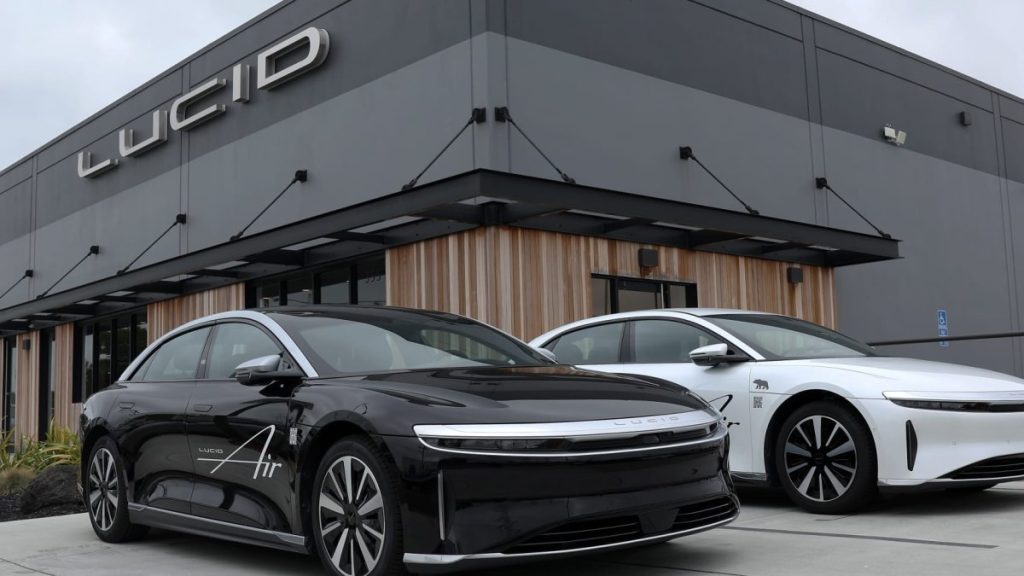
Lucid’s current lineup, led by the Lucid Air, has positioned the brand in the premium segment of the EV market. However, demand in this category is relatively limited compared to mass-market segments, and competition has intensified as established automakers expand their electric offerings.
Lucid is working to broaden its portfolio, including the rollout of the Gravity SUV and future midsize vehicles aimed at more accessible price points.
The leadership transition reflects this strategic shift. The new CEO is expected to prioritize efficiency and execution, focusing on improving production consistency and reducing costs. This approach is intended to create a more sustainable business model, particularly as investor sentiment toward EV startups becomes more cautious.
In addition to refining its core vehicle business, Lucid is also exploring partnerships and new revenue streams. The company has signaled interest in expanding into areas such as advanced mobility services, including potential collaborations related to autonomous driving and fleet applications. These initiatives align with broader industry trends, where automakers are increasingly looking beyond traditional vehicle sales to generate long-term value.
The broader EV market context adds urgency to Lucid’s efforts. Growth in electric vehicle adoption has begun to moderate in some regions, while supply chain challenges and fluctuating incentives continue to impact pricing and demand.
At the same time, competition from both legacy manufacturers and newer entrants, particularly from China, has intensified. These factors have created a more complex environment for companies attempting to scale quickly.
Despite these challenges, Lucid retains key technological advantages. Its proprietary battery and powertrain systems deliver some of the highest efficiency and range figures in the industry, providing a strong foundation for future products. Leveraging this technology across a wider range of vehicles will be critical to improving volume and profitability.
The combination of new leadership and fresh capital represents a reset point for the company. The funding provides near-term stability, allowing Lucid to continue investing in production capacity and product development. However, long-term success will depend on the company’s ability to execute its strategy effectively, expand its customer base, and manage costs in a competitive market.
Lucid’s next phase will likely determine whether it can transition from a promising startup into a sustainable automaker. The steps taken now, both in leadership and financing, indicate a clear recognition of the challenges ahead and a willingness to adapt.
