
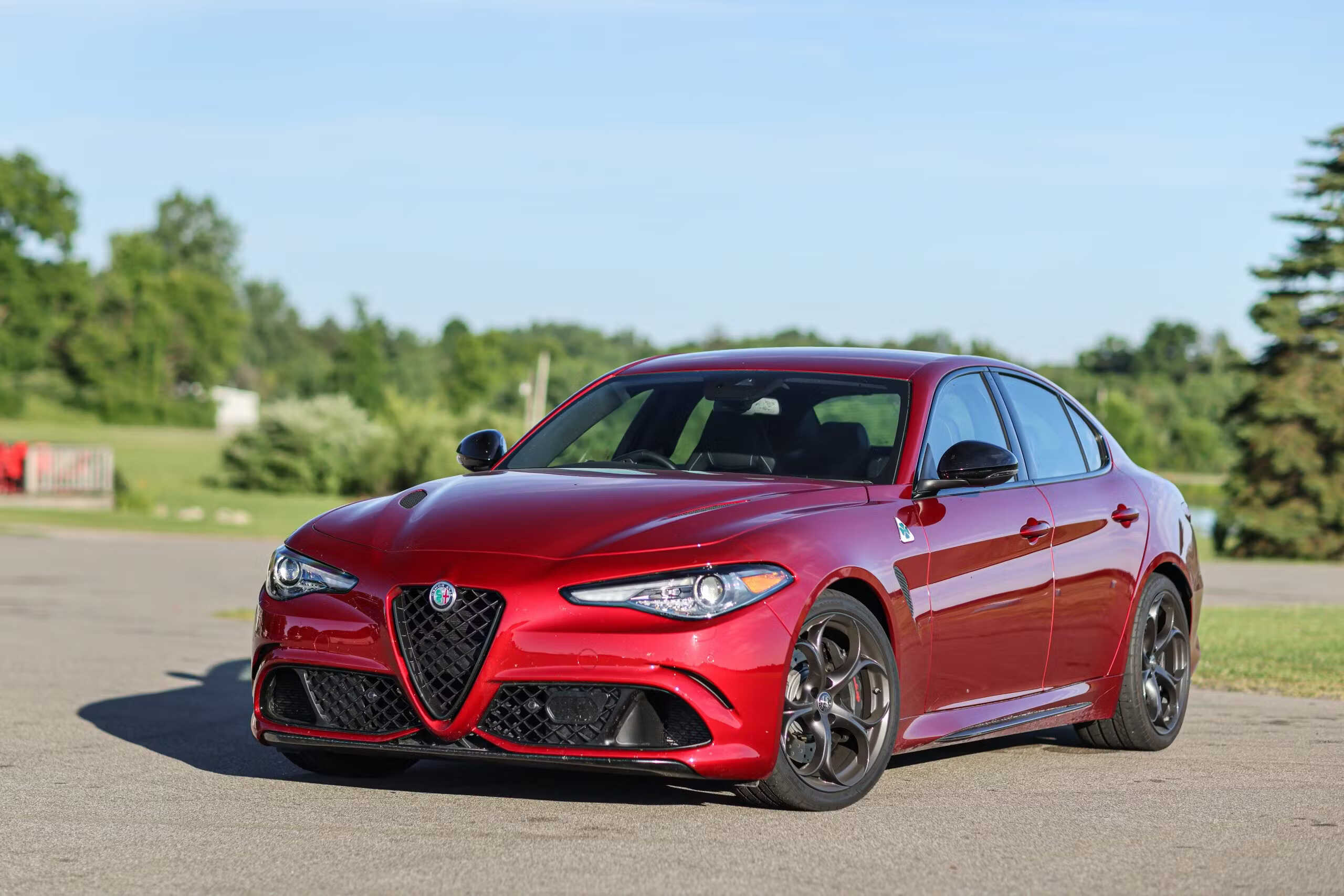
Alfa Romeo has reassured enthusiasts that two of its most important models, the Giulia and Stelvio, are not disappearing anytime soon. Yet the announcement came with an important catch that reveals the difficult position the Italian brand currently faces. New generations of both vehicles are coming, but customers should not expect them to arrive quickly.
The confirmation, delivered during the week of May 24, 2026, places Alfa Romeo’s two cornerstone nameplates in what many industry analysts now describe as a holding pattern.
While the company insists the Giulia sedan and Stelvio SUV remain central to its long-term strategy, shifting market conditions and Stellantis Group restructuring have forced Alfa Romeo to slow down and rethink parts of its future lineup.
For loyal Alfa Romeo buyers, the news brings both relief and frustration. The Giulia and Stelvio have become symbols of the brand’s attempted revival over the past decade. When they debuted, both models earned praise for delivering something many competitors lacked: genuine driving emotion.
The Giulia, in particular, was widely celebrated for its sharp steering, balanced chassis, and performance-focused personality that reminded enthusiasts why Alfa Romeo once held legendary status among sports sedan manufacturers.
The Stelvio carried much of that same DNA into the SUV segment, helping Alfa Romeo compete in one of the most profitable categories in the global luxury market. But despite critical acclaim, sales never consistently reached the levels Alfa Romeo hoped for.
Also Read: 8 Cars That Are Nearly Impossible to Steal
Alfa Romeo Faces a Difficult Transition
The automotive industry’s rapid shift toward electrification has complicated nearly every premium brand’s product planning, and Alfa Romeo is no exception.
Executives initially planned aggressive EV rollouts, with earlier reports suggesting future Giulia and Stelvio models could become fully electric. Now the company appears to be reevaluating those plans as global EV demand becomes less predictable in several markets.
That uncertainty has forced manufacturers across the industry to rethink timelines. Alfa Romeo CEO Santo Ficili recently clarified that both models still have a future within the company’s portfolio, but development schedules have been pushed further out than originally expected.
The delay reflects larger strategic adjustments happening inside Stellantis as the multinational automotive group recalibrates investments across its many brands.
The challenge for Alfa Romeo is especially complicated because the Giulia and Stelvio sit at the center of the company’s identity. Unlike larger luxury brands with dozens of high-volume products, Alfa Romeo relies heavily on a relatively small lineup. Any delay affecting core models immediately raises concerns about the brand’s momentum and long-term direction.
At the same time, Alfa Romeo cannot afford to rush replacements into a market that is rapidly changing. Luxury buyers are increasingly split between traditional combustion performance, hybrid technology, and fully electric vehicles.
Regulations differ sharply between Europe, North America, and China, making long-term planning extremely difficult. Automakers that commit too aggressively to one technology risk losing customers in another region. For Alfa Romeo, patience may now be more valuable than speed.
Giulia and Stelvio Still Carry Strong Brand Importance
Even with slower sales compared to German rivals, the Giulia and Stelvio continue to hold enormous emotional value for the brand. Enthusiasts often view the Giulia as one of the last sports sedans designed with true driver engagement as the priority rather than pure digital luxury.
That reputation matters. In an era where many vehicles feel increasingly similar, Alfa Romeo’s appeal has remained rooted in personality.
The Giulia Quadrifoglio especially earned admiration for combining Ferrari-influenced engineering with dramatic styling and emotional driving dynamics. The Stelvio Quadrifoglio brought similar energy into the performance SUV segment, standing apart from more clinically engineered competitors.
Those models helped Alfa Romeo rebuild credibility after years of inconsistent quality concerns and shrinking relevance.
The company clearly understands that abandoning those nameplates would damage more than sales figures. It would weaken Alfa Romeo’s identity itself.
Reports suggest future versions of both vehicles will likely ride on Stellantis’ STLA Large platform, an architecture designed to support multiple powertrain configurations, including internal combustion, hybrid, and fully electric systems. That flexibility may explain why development timelines are stretching longer than expected.
Instead of committing immediately to one direction, Alfa Romeo appears determined to preserve adaptability while monitoring market demand.
That approach could ultimately benefit buyers. The luxury EV market has become increasingly volatile over the past year, with several manufacturers scaling back ambitious electrification goals after softer-than-expected consumer adoption rates. High prices, charging concerns, and economic uncertainty have all contributed to slower growth in some regions.
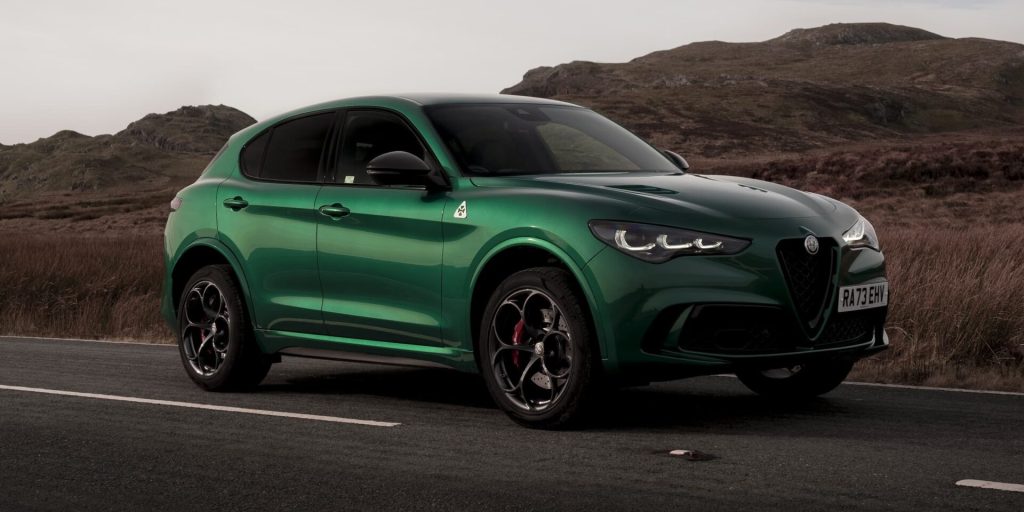
A cautious strategy may prevent Alfa Romeo from making costly mistakes during a period of industry instability.
The Waiting Period Creates New Challenges
Still, delays come with risks. The current Giulia and Stelvio are beginning to show their age against newer competitors packed with larger screens, more advanced software systems, and updated driver assistance technologies.
While many enthusiasts appreciate Alfa Romeo’s more driver-focused interiors, mainstream luxury buyers increasingly prioritize digital features and connectivity.
That creates a difficult balancing act. If Alfa Romeo waits too long, the Giulia and Stelvio could fall further behind rivals from BMW, Mercedes-Benz, Audi, Genesis, and Cadillac. Maintaining customer interest during an extended transition period will not be easy, especially as the luxury market becomes more crowded with new EV entries.
The company has attempted to maintain momentum through updated trims, refreshed interiors, and special editions, but those changes can only extend product lifecycles for so long.
Meanwhile, Alfa Romeo’s smaller Tonale crossover has taken on increased importance within the brand’s lineup.
The compact SUV was intended to help attract younger buyers while giving Alfa Romeo a more accessible entry point into the luxury market. Yet many enthusiasts still view the Giulia and Stelvio as the vehicles that define the company’s character.
Without fresh replacements arriving soon, Alfa Romeo faces the challenge of keeping those models relevant while larger competitors continue launching new generations at a faster pace. Despite the uncertainty, the company’s message remained clear this week. The Giulia and Stelvio are not dead.
That alone matters to loyal Alfa Romeo fans who feared the brand might abandon its performance roots completely in pursuit of electrification trends. Instead, Alfa Romeo appears to be buying time, carefully studying where the market is heading before committing fully to the next chapter.
Whether that patience proves wise or costly will become clearer over the next few years. For now, two of Alfa Romeo’s most iconic modern vehicles remain alive, but their future is arriving far more slowly than many expected.
Also Read: 8 Cars With the Highest Number of Owner Complaints Filed With NHTSA
