
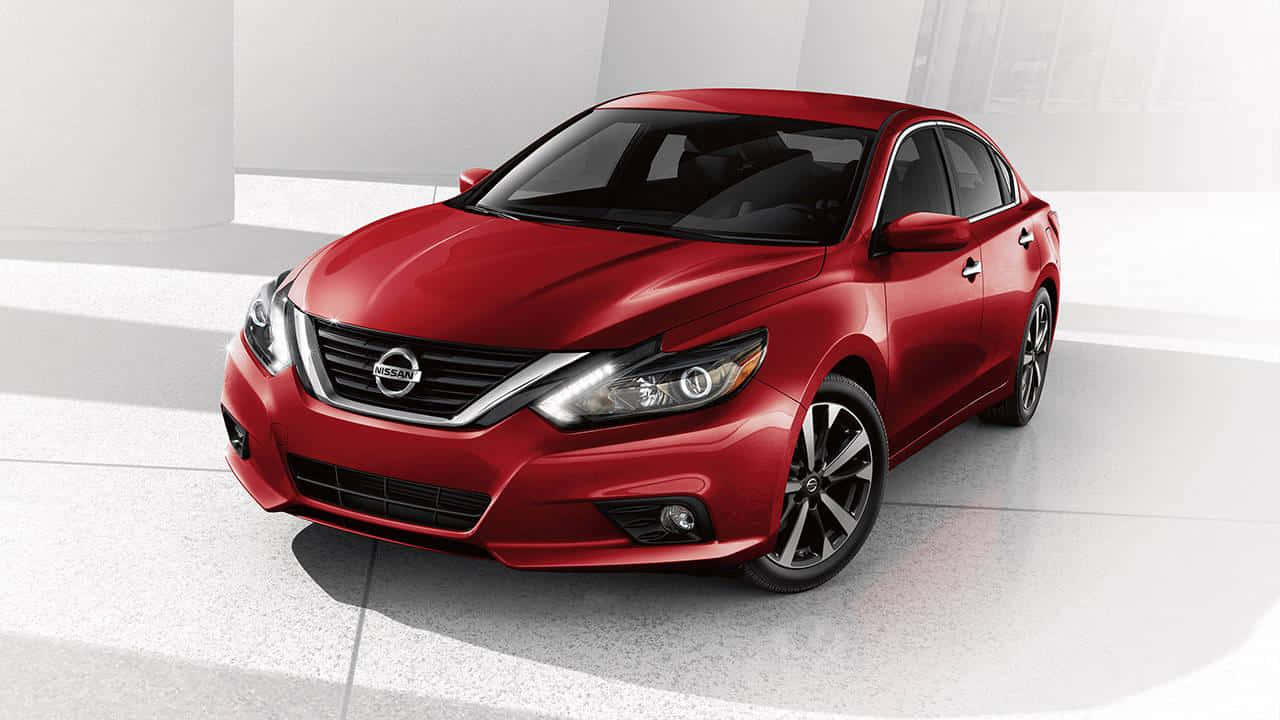
The Nissan Altima is ending its long run in the United States after more than three decades, closing the chapter on one of the country’s most familiar midsize sedans.
First introduced for the 1993 model year, the Altima grew from a modest replacement for the Nissan Stanza into a major volume seller that spent years competing directly with the Toyota Camry, Honda Accord, Ford Fusion, Chevrolet Malibu, Hyundai Sonata, and Kia Optima.
Its disappearance is not just the retirement of another sedan. It is another sign of how dramatically the American new-car market has changed. Buyers have moved in large numbers toward crossovers, SUVs, pickups, and electrified vehicles, leaving traditional four-door sedans with a smaller role than they held during the Altima’s peak years.
Nissan had previously indicated that the Altima could end after the 2025 model year, but the company kept it alive for 2026 with a reduced lineup. The final model is offered only in SV and SR trims, powered by a 2.5-liter four-cylinder engine and continuously variable transmission.
Nissan’s official pricing announcement listed the 2026 Altima from $27,580 before destination charges, while the range reached roughly $37,210 for a higher-specification SR AWD with available packages and accessories.
For a car that once represented Nissan’s mainstream American identity, the final Altima is leaving quietly. There is no major farewell edition, no performance revival, and no direct replacement confirmed under the Altima name.
Also Read: 10 Affordable EVs Targeting Under $30,000 by 2027
From Stanza Successor to Midsize Mainstay
The Altima entered the U.S. market as a 1993 model, replacing the Nissan Stanza. The first generation was initially called the Stanza Altima in some early materials, but Nissan soon established “Altima” as its own nameplate.
It was smaller than the midsize Altima buyers know today. The early car was positioned between the compact Sentra and the larger Maxima, using a 2.4-liter four-cylinder engine and offering a mix of practical family-car space with a more engaging driving character than some rivals.
The timing was important. During the 1990s, sedans were still the default choice for American families. SUVs existed, but they were usually truck-based, less comfortable, less efficient, and far less common than they are today.
A four-door sedan with good fuel economy, a comfortable cabin, and reasonable pricing could sell in large numbers.
Nissan gradually moved the Altima upward. The second-generation model became roomier, while the 2002 redesign turned the Altima into a full midsize sedan and introduced available V6 power. That generation helped make the Altima a serious contender against the Camry and Accord.
By the mid-2000s, the Altima had become one of Nissan’s most important U.S. products. The company expanded the lineup with a two-door Altima Coupe, a hybrid version, and increasingly powerful V6 models.
The Altima Coupe gave Nissan a stylish alternative to the Honda Accord Coupe, while the V6 sedan appealed to buyers who wanted stronger acceleration than the standard four-cylinder models offered.
At its peak, the Altima was not a niche vehicle. U.S. sales exceeded 300,000 units annually in several years, including more than 335,000 sales in 2014.
The Altima’s Strongest Years Came Before SUVs Took Over
The Altima succeeded because it offered a balance that mattered to mainstream buyers. It was generally less expensive than a Maxima, more spacious than a Sentra, and available with features that became increasingly important during the 2000s and 2010s.
Buyers could choose practical four-cylinder models, better-equipped luxury-oriented trims, or V6 versions with much stronger performance.
Nissan also gave the Altima a more expressive design than some conservative midsize sedan competitors. Certain generations used sharp headlights, sculpted body sides, and sportier wheel designs to attract buyers who did not want a car that looked purely functional.
The 2007 redesign was particularly important. It introduced a more dramatic body shape, a revised interior, and a 3.5-liter V6 that made the Altima one of the quickest mainstream midsize sedans of its era.
Nissan later added a coupe, a hybrid, and several special packages, attempting to broaden the car’s appeal while maintaining strong sales. However, the market was already changing.
Crossovers began replacing sedans because they offered higher seating positions, easier entry and exit, larger cargo areas, and an image that many buyers preferred.
The Nissan Rogue became one of the company’s most important U.S. models, while the Altima’s sales began falling as buyers shifted into compact and midsize SUVs.
The decline was not unique to Nissan. Ford discontinued the Fusion, Chevrolet ended the Malibu, Chrysler retired the 200, and several other traditional sedans disappeared. Toyota and Honda retained the Camry and Accord because of their enormous customer bases, but even those models no longer dominate the market as they once did.
The Final Altima Was a Simplified Car
The final 2026 Altima lineup showed Nissan’s changing priorities. Instead of offering a broad range of trims, Nissan reduced the sedan to SV and SR models. The base S and higher-end SL trims were dropped.
The turbocharged 2.0-liter VC-Turbo engine, once used to give the Altima a more distinctive performance option, had already disappeared after the 2024 model year.
The final car retained Nissan’s 2.5-liter naturally aspirated four-cylinder engine. In front-wheel-drive form, it produces 188 horsepower and 180 pound-feet of torque. All-wheel-drive versions produce 182 horsepower and 178 pound-feet. A continuously variable transmission remains standard across the lineup.
The decision to keep all-wheel drive available was one of the Altima’s strongest remaining selling points. Many midsize sedans still rely only on front-wheel drive, and Nissan used AWD to attract buyers in colder parts of the United States.
The 2026 SR also gained features previously associated with more expensive trims, including a 12.3-inch touchscreen, a wireless charging pad, an available Bose audio system, and a 360-degree camera system. The Midnight Edition added black exterior trim, black wheels, a black roof, dual-zone climate control, and a sunroof.
These updates made the final Altima more competitive on equipment, but they could not change the larger market reality. Nissan was selling a mature sedan in a segment that has been shrinking for years.
Why Nissan Is Letting the Altima Go
The Altima’s retirement is tied to Nissan’s broader restructuring and product strategy. Automakers have limited factory capacity, engineering budgets, and development resources.
Keeping an aging sedan alive requires continued spending on safety compliance, emissions rules, software, supplier contracts, parts inventories, and manufacturing support. That investment becomes harder to justify when demand is declining.
Nissan has already ended the Maxima, which had served as the brand’s larger, more premium sedan. The Versa has also faced an uncertain future in the United States. That leaves the Sentra as Nissan’s core conventional sedan, positioned below the Altima in price and size.
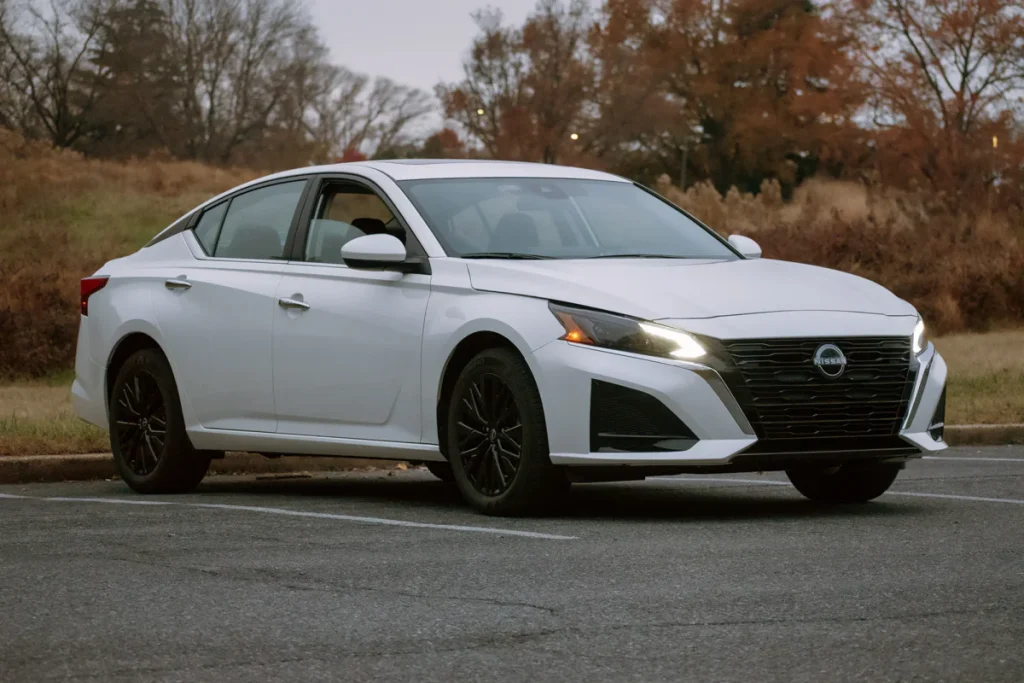
The redesigned Sentra is expected to take on greater importance as Nissan concentrates its sedan strategy around a more affordable, higher-volume model. Meanwhile, the Rogue, Murano, Pathfinder, Armada, Kicks, Ariya, and future electrified products are more closely aligned with where U.S. demand is moving.
The end of the Altima does not mean sedans have become irrelevant. They remain more efficient, lower to the ground, and often less expensive than comparable SUVs. They can also offer better highway comfort and handling.
But buyers have shown that practicality is not the only factor. Many consumers simply prefer the look and seating position of a crossover.
What the Altima Leaves Behind
The Altima will be remembered differently depending on the generation. For some owners, it was a reliable commuter car that delivered years of basic transportation. For others, it was a V6-powered family sedan with surprisingly strong performance.
Some will remember the Altima Coupe, which gave Nissan a distinctive two-door model during a period when mainstream coupes still had a place in the market.
The car also had a complicated reputation. Like many high-volume sedans, it was sold in enormous numbers, often to buyers with very different maintenance habits and financial circumstances.
That made it a commonly used car choice and, at times, a frequent subject of internet jokes. Yet its longevity is proof that Nissan built a vehicle with broad appeal.
More than 30 years after its debut, the Altima remains recognizable on American roads because millions were sold. It helped Nissan maintain a major presence in the family sedan segment through several market cycles.
Will the Final Altima Become Collectible?
Most final-year Altimas are unlikely to become collector cars simply because production ends. The strongest future interest may center on clean, low-mileage examples of the Altima Coupe, V6 sedan, or rare manual-transmission versions from earlier generations.
A final 2026 SR AWD in unusual condition or specification could appeal to dedicated Nissan enthusiasts, but mainstream sedans usually remain valued for practicality rather than collectibility.
For current owners, the end of production should not create immediate concern about service or replacement parts. Automakers are required to support vehicles for years after production ends, and the Altima shares many components with other Nissan products.
Parts availability may become more difficult only much later, as it does with any aging discontinued model.
The Nissan Altima’s departure ends a 30-plus-year run that began in 1993 and included some of the strongest sales years in Nissan’s American history.
Its final pricing range, from about $28,140 to $37,210, reflects how much the market changed around it. What began as an affordable sedan alternative became a well-equipped midsize car trying to survive in an SUV-driven industry.
The Altima did not disappear because it lacked history or usefulness. It disappeared because the type of vehicle it represented no longer carries the same priority for buyers or for Nissan.
For the millions of drivers who owned one, the Altima remains a familiar part of the American road.
Also Read: 10 Hidden Features In The Toyota Tacoma
