
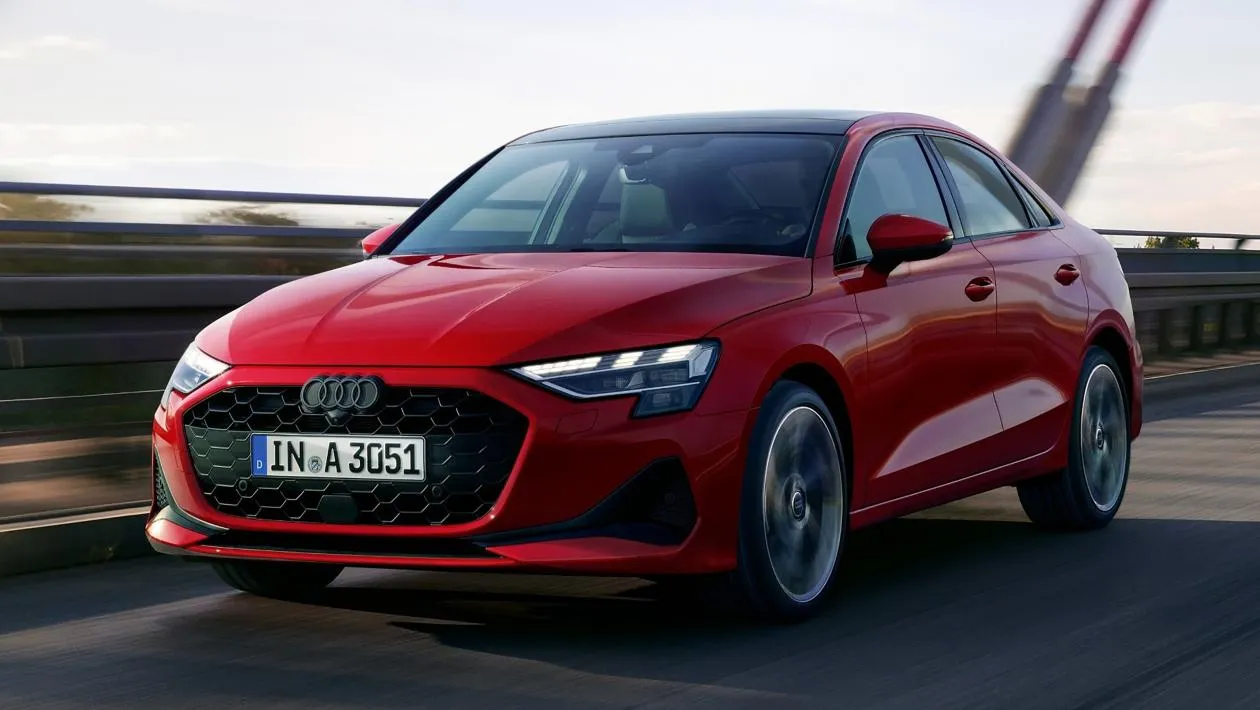
Audi is giving the A3 range a substantial interior and technology update, with the revised compact-car family scheduled to arrive at European dealerships in mid-September 2026. The changes affect the full lineup, including the A3 Sportback, A3 Sedan, A3 allstreet, S3, RS 3, and plug-in hybrid e-hybrid models.
The update is not a complete redesign. Audi refreshed the current-generation A3 only recently, so the exterior remains familiar.
Instead, the company has concentrated on the areas where premium compact cars are now judged most closely: display technology, cabin quality, software, charging convenience, driver-assistance systems, and the ability to keep a vehicle current as rivals add more digital features.
According to Audi’s official announcement, the revised A3 will be available from mid-September, with European pricing starting at €31,850 for the A3 Sportback. The e-hybrid begins at €45,350, while the S3 starts at €57,200 and the RS 3 at €68,500.
For Audi, the timing matters. The A3 remains the company’s entry point into the premium-car market in Europe, where it competes against the BMW 1 Series, Mercedes-Benz A-Class, Cupra Leon, Volkswagen Golf, and a growing group of compact electrified models.
The updated car is designed to keep the A3 relevant without waiting for a full next-generation replacement.
Also Read: 10 Affordable EVs Targeting Under $30,000 by 2027
A Curved Display Becomes the Centerpiece
The most visible change inside the updated A3 is a new curved panoramic display that combines the digital instrument cluster and central infotainment screen into one continuous visual unit.
The driver receives an 11.9-inch digital instrument display, while the central touchscreen grows to 12.8 inches. The arrangement replaces the previous separate-screen appearance and gives the A3 a cabin layout closer to Audi’s newer, more expensive models.
According to Audi, the redesigned display structure is intended to improve readability while giving the compact car a more modern, premium feel. The screen setup also reflects a wider industry move away from physical controls and toward software-based functions.
That shift will not please every driver. The A3 already relied heavily on touchscreen controls, and the latest revision removes more traditional buttons from the center console. Motor1 noted that the update brings a more screen-focused interior and fewer physical controls.
Audi has attempted to offset that concern with a redesigned center console, new steering-wheel controls, and a more carefully organized cabin layout. The company says the decorative trim strip now stretches farther across the dashboard and toward the passenger side, creating a wider visual effect.
Buyers will be able to choose different trim finishes, including carbon fiber, Dinamica microfiber, and textile-based materials. Those options are intended to give each version of the A3 a more distinct personality, from understated luxury to a more performance-oriented appearance in the S3 and RS 3.
A More Useful Cabin for Everyday Technology
Audi has also upgraded the A3’s everyday convenience features. A new inductive smartphone charging tray delivers up to 25 watts, a meaningful increase over the slower wireless charging systems used in many current vehicles.
The tray is designed to keep the phone in a more secure position while charging, reducing the chance that it slides during hard braking or cornering.
The revised A3 also receives upgraded audio options with virtual surround sound. Audi has not positioned the car as a rolling concert hall, but better sound quality matters in the premium compact segment, where buyers increasingly expect features once limited to larger luxury sedans.
The new cabin design is not just about screens. Audi is trying to make the A3 feel more mature and more expensive without changing the car’s basic dimensions. The A3 remains a compact vehicle, and rear-seat room will still be more limited than in an A4 or A5.
But the revised dashboard, wider trim treatment, improved lighting, and new material choices are intended to make the front cabin feel less like an entry-level compromise.
That strategy is important because compact luxury cars are often purchased by younger professionals, first-time premium-brand buyers, and customers who want a smaller car without giving up high-end technology.
Driver Assistance Takes a Major Step Forward
The biggest functional changes may be found in the updated driver-assistance systems. Audi has reorganized its assistance technology into three packages: Tech, Tech Plus, and Tech Pro. The new structure is intended to make it easier for buyers to understand what each level includes, although final package names and availability may vary by market.
The upgraded Adaptive Cruise Assist Plus combines adaptive cruise control with lane guidance at speeds up to 210 km/h, or about 130 mph. It can help maintain a selected following distance while assisting with lane positioning on suitable roads.
Audi says the system can now perform automated lane changes on highways when the driver confirms the maneuver. It can also use online information and swarm data from other vehicles to improve speed and lane guidance, even in situations where lane markings are weak or temporarily unclear.
One of the more notable new functions is the ability to brake automatically for red traffic lights and move off again when the light changes.
This does not make the A3 a self-driving car. The driver remains responsible for monitoring the road and taking control at all times. But it reflects how rapidly advanced driver-assistance systems are becoming more capable in ordinary urban traffic.
The parking technology has also been expanded. The updated A3 can use a 360-degree camera view, automated park assist, remote parking through a smartphone, and a trained parking function that can memorize and repeat a route of up to 50 meters.
That feature could be useful for drivers with narrow driveways, difficult garage entrances, or regular parking spaces that require a specific maneuver. The car can repeat the stored route, although the driver must still supervise the process.
According to a report from Welt, the upgraded parking system can independently park and exit spaces, while the remote function allows the process to be started from outside the vehicle.
The Plug-In Hybrid Is the Most Important Mechanical Update
While the interior upgrades will receive the most attention, the revised A3 e-hybrid may be the most significant version of the updated range.
Audi says the plug-in hybrid can now travel up to 143 kilometers, or about 89 miles, on electric power under the European WLTP test cycle. That is a major increase for a compact plug-in hybrid and could allow many European drivers to complete daily commuting, school runs, and local errands without using gasoline.
The e-hybrid will be offered in 204-horsepower and 272-horsepower versions. It also gains DC fast-charging capability, allowing the battery to recharge in roughly 30 minutes under suitable conditions.
WLTP range figures are usually more optimistic than real-world results, particularly in cold weather or at highway speeds. Still, the claimed 143-kilometer figure suggests that Audi has made the A3 e-hybrid much more usable as a short-distance electric car rather than simply a gasoline vehicle with limited electric assistance.
The plug-in hybrid’s towing capacity has also increased from 1,400 kilograms to 1,700 kilograms, making it more practical for buyers who need to tow small trailers, bikes, or leisure equipment.
For buyers who are not ready to move fully into an EV, this could be the most balanced A3 option. It offers electric driving for daily use while retaining a combustion engine for longer trips, where public charging infrastructure may still be inconvenient.
The Performance Models Remain Part of the update.
Audi has not limited the revision to mainstream A3 versions. The S3 and RS 3 receive the same updated cabin technology and assistance systems while retaining their performance-focused identities.
The S3 continues with 333 horsepower in European specification, while the RS 3 remains at the top of the range with a 400-horsepower, turbocharged five-cylinder engine.
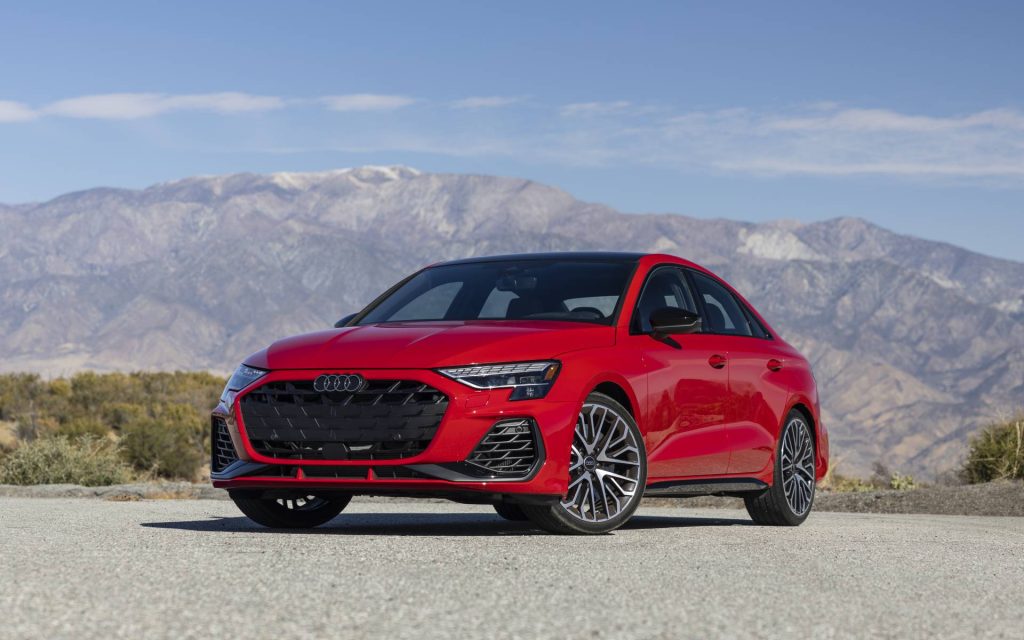
The RS 3 also retains its distinctive checkered-flag daytime running light signature, while the S 3 and RS 3 receive revised Singleframe badging and other visual details.
That matters because the A3 family serves several different customer groups. The standard Sportback and sedan appeal to buyers seeking a premium compact car. The AllStreet targets drivers who want a slightly raised crossover-style stance.
The e-hybrid serves customers looking for lower-emission commuting. The S3 and RS 3 remain enthusiast models for buyers who want high performance in a compact package.
By updating the entire range together, Audi avoids creating a visible gap between the mainstream and high-performance versions.
What It Means for U.S. Buyers
Audi has announced the update primarily for Europe, and not every feature is guaranteed to reach the United States.
The current U.S.-market 2026 A3 already uses a 2.0-liter turbocharged four-cylinder engine with 201 horsepower and 236 pound-feet of torque, paired with a seven-speed S tronic dual-clutch transmission and standard quattro all-wheel drive. Audi lists a 0 to 60 mph time of 6.0 seconds.
American buyers already receive a 12.3-inch Audi virtual cockpit display and a 10.1-inch MMI touchscreen in the current model. Whether the new 11.9-inch and 12.8-inch curved displays will arrive in the U.S. on the same schedule remains unconfirmed.
The same uncertainty applies to the e-hybrid. Audi does not currently sell the A3 plug-in hybrid in the United States, and there has been no official confirmation that the revised version will be introduced here.
Still, the European update offers a clear preview of Audi’s direction. The company is moving even its smallest premium cars toward larger screens, more advanced software, stronger driver-assistance systems, and electrified powertrains with useful real-world capability.
The 2026 Audi A3 update is a major technology refresh rather than a new generation. Its curved panoramic display, larger touchscreen, revised dashboard, upgraded wireless charging, enhanced driver-assistance systems, remote parking functions, and much-improved plug-in hybrid range give the compact Audi a more modern role in the premium market.
The update also shows how the definition of luxury is changing. Buyers still care about materials, design, and ride quality, but they now expect a compact luxury car to provide the same digital convenience and assistance technology found in larger, more expensive vehicles.
When the revised A3 reaches dealerships in mid-September, it will arrive as a more capable and more connected version of one of Audi’s most important entry-level models.
Also Read: 10 Hidden Features In The Toyota Tacoma
