
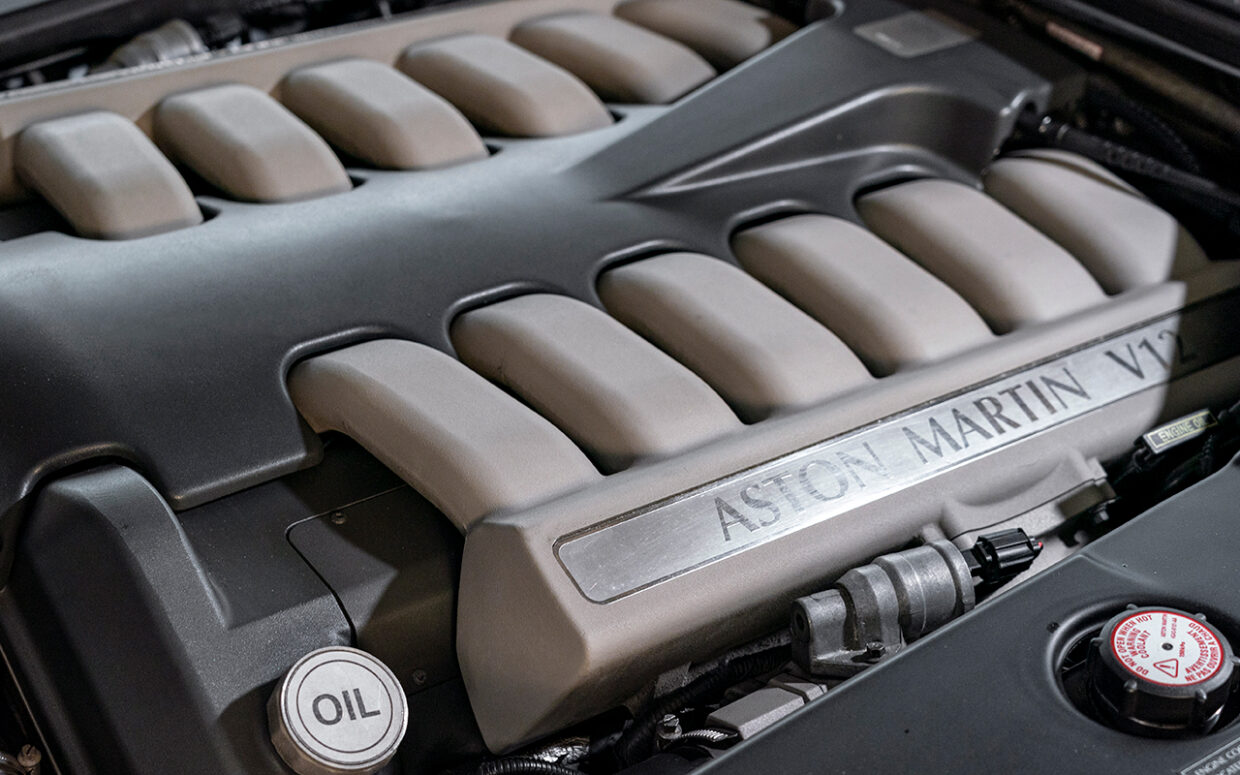
Aston Martin has revealed a strategy that could allow its iconic twin-turbocharged V12 engine to remain in production well into the next decade, despite increasingly strict emissions regulations in Europe and the United States.
At a time when many performance car manufacturers are retiring large-displacement engines in favor of hybrid or fully electric powertrains, Aston Martin has instead chosen to refine its flagship V12 and take advantage of regulatory exemptions available to low-volume manufacturers.
The announcement represents a significant victory for enthusiasts who feared the company’s 5.2-liter twin-turbo V12 was nearing the end of its lifecycle.
While tightening emissions standards have already forced several automakers to discontinue twelve-cylinder engines, Aston Martin believes engineering improvements and careful production planning will allow the powertrain to survive for several more years.
According to Car and Driver, Aston Martin CEO Adrian Hallmark confirmed that engineers have updated the V12 to comply with current European and U.S. emissions regulations.
More importantly, the company intends to keep annual V12 production below 1,000 units, allowing Aston Martin to qualify for low-volume manufacturer exemptions that can extend compliance until at least 2035.
Hallmark explained that this strategy will allow flagship and limited-production models to continue offering the V12 without violating future emissions requirements.
Also Read: 10 Longest-Running Automotive Engine Families Ever Built
Engineering Rather Than Eliminating the V12
Instead of abandoning its twelve-cylinder engine, Aston Martin has invested in improving its efficiency and emissions performance.
According to Hallmark, the company has carried out extensive engineering work to ensure the engine satisfies the latest regulatory standards in its key global markets.
Although Aston Martin has not disclosed every technical modification, industry analysts expect the updates to include revised engine calibration, improved exhaust after-treatment systems, more sophisticated emissions control technology, and refinements to combustion efficiency.
Unlike mass-market manufacturers that produce hundreds of thousands of vehicles annually, Aston Martin operates at comparatively low production volumes. That distinction provides access to regulatory provisions designed for niche manufacturers, allowing them to continue building specialty vehicles under specific production limits.
Hallmark emphasized that remaining below the 1,000-unit annual threshold is entirely consistent with Aston Martin’s business model. The company has traditionally reserved its V12 for halo products such as the Vanquish, Valour, and Valiant, rather than high-volume production models.
The V12 Remains Central to Aston Martin’s Identity
For Aston Martin, preserving the V12 is about far more than maintaining another engine option.
The twelve-cylinder powerplant has become one of the defining characteristics of the brand, representing the smooth power delivery, refinement, and emotional driving experience that distinguish Aston Martin from many competitors.
While turbocharged V8 engines continue to power several models, the V12 remains the flagship choice for the company’s highest-performance grand tourers and limited-edition vehicles.
Industry observers note that many Aston Martin customers specifically seek the exclusivity and character of the V12. As emissions regulations continue to reduce the availability of large-displacement engines throughout the industry, vehicles equipped with naturally aspirated or twin-turbo twelve-cylinder engines have become increasingly desirable among collectors.
Hallmark acknowledged that customer demand continues to justify the investment. Rather than replacing the V12 with a fully electric alternative immediately, Aston Martin believes maintaining the engine for niche production models allows the company to preserve an important part of its heritage while gradually expanding its electrification strategy.
A Balanced Approach to Electrification
The decision to preserve the V12 does not mean Aston Martin is abandoning electrification. According to Hallmark, the company is simultaneously developing an all-new modular vehicle architecture capable of supporting future battery-electric models while continuing to accommodate high-performance combustion-powered vehicles.
However, unlike several competitors, Aston Martin has decided not to pursue plug-in hybrid powertrains for its future lineup.
Instead, the company plans to introduce 48-volt hybrid technology to improve fuel efficiency and provide modest performance gains without adding the complexity and weight associated with plug-in hybrid systems.
Hallmark explained that changing European regulations and real-world customer usage convinced Aston Martin that conventional hybridization represents a more practical solution for its product range.
Preserving Heritage While Preparing for the Future
Aston Martin’s decision to extend the life of its V12 engine reflects a broader challenge facing many low-volume luxury and performance car manufacturers. Around the world, governments continue introducing stricter emissions standards designed to reduce greenhouse gas emissions and accelerate the transition toward electrified transportation.
While large automakers have invested billions of dollars in battery-electric platforms, niche manufacturers must balance those regulatory requirements with customer expectations and the unique character that defines their brands.
For Aston Martin, the V12 is more than a powertrain. It represents decades of engineering heritage and has become one of the company’s strongest selling points in the ultra-luxury performance segment.
Buyers investing in flagship Aston Martin models often seek a driving experience built around the sound, smoothness, and effortless power delivery that only a twelve-cylinder engine can provide. Industry analysts believe eliminating the V12 too quickly could weaken one of the brand’s most recognizable competitive advantages.
The company’s strategy also demonstrates how regulatory flexibility can benefit specialty manufacturers. Because Aston Martin produces relatively small numbers of V12-powered vehicles each year, it can continue refining the engine rather than replacing it immediately with a fully electric alternative.
This approach allows engineers to focus on incremental improvements in efficiency, emissions control, and fuel consumption while maintaining the emotional appeal that has attracted enthusiasts for generations.
Luxury Performance Brands Face Similar Decisions
Aston Martin is not the only manufacturer attempting to preserve large-displacement engines during the industry’s transition toward electrification. Several ultra-luxury brands continue evaluating ways to maintain iconic powertrains for limited-production vehicles while simultaneously investing in electric technologies for future product lines.
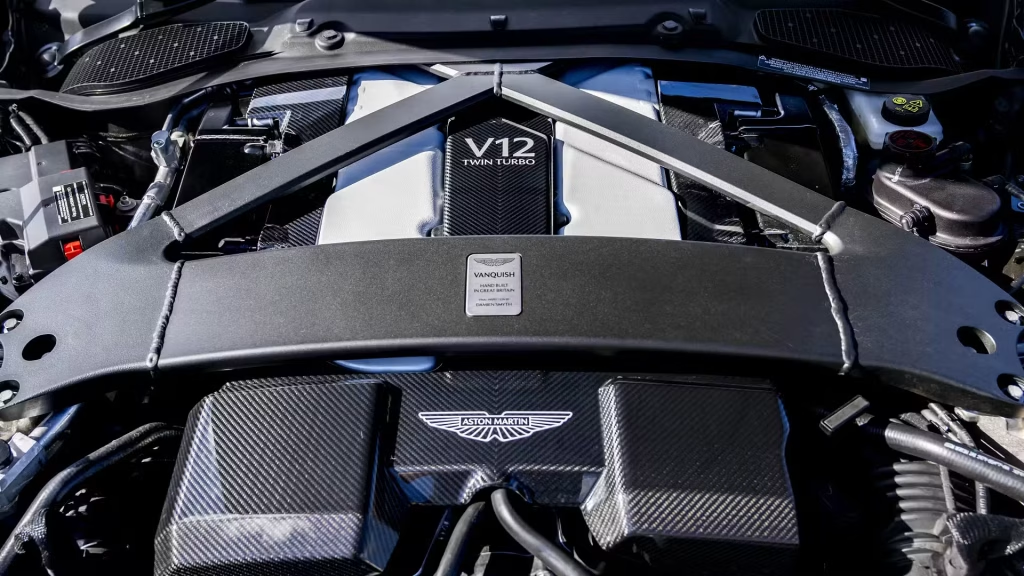
Industry observers note that customers purchasing six-figure or seven-figure performance cars often prioritize exclusivity and driving emotion over maximum efficiency. That demand has encouraged manufacturers to pursue engineering solutions that extend the life of internal combustion engines wherever regulations permit.
Advanced engine management systems, improved catalytic converters, particulate filters, refined turbocharging technology, and mild-hybrid systems are all helping manufacturers reduce emissions without fundamentally changing the driving experience.
At the same time, no manufacturer expects traditional combustion engines to remain the sole focus indefinitely. Aston Martin has repeatedly confirmed that electric vehicles will eventually become an important part of its future lineup.
The company is developing next-generation vehicle architectures capable of supporting battery-electric technology while ensuring that future models continue delivering the craftsmanship, luxury, and performance expected by Aston Martin customers.
The Future of the V12
Industry analysts believe the coming decade will represent a transitional period rather than an immediate end for high-performance combustion engines.
While mainstream passenger vehicles are expected to become increasingly electrified, limited-production supercars and grand tourers may continue using specialized engines under regulatory exemptions available to smaller manufacturers.
For collectors, Aston Martin’s announcement is particularly significant. Vehicles powered by V12 engines are becoming increasingly rare as manufacturers discontinue large-capacity powerplants in response to emissions legislation.
Preserving the engine for future flagship models ensures that Aston Martin continues offering a distinctive alternative within the ultra-luxury market while maintaining the exclusivity associated with twelve-cylinder performance.
Looking ahead, the company is expected to continue refining its engineering approach as regulations evolve. Advances in synthetic fuels, cleaner combustion technology, lightweight materials, and hybrid assistance could further extend the viability of internal combustion engines in specialized applications.
Although the automotive industry’s long-term direction clearly favors electrification, Aston Martin believes there remains room for carefully engineered combustion-powered halo models that comply with modern environmental standards.
Aston Martin’s strategy highlights the delicate balance between innovation and tradition. Rather than abandoning one of the most recognizable engines in modern automotive history, the company has chosen to adapt it through engineering improvements and intelligent production planning.
That decision allows Aston Martin to preserve an important part of its identity while preparing for an electrified future, demonstrating that heritage and technological progress do not necessarily have to exist in opposition.
For enthusiasts, it also means the unmistakable character of a handcrafted Aston Martin V12 is likely to remain part of the automotive landscape for several more years, even as the industry continues moving toward a new era of cleaner and more efficient mobility.
