
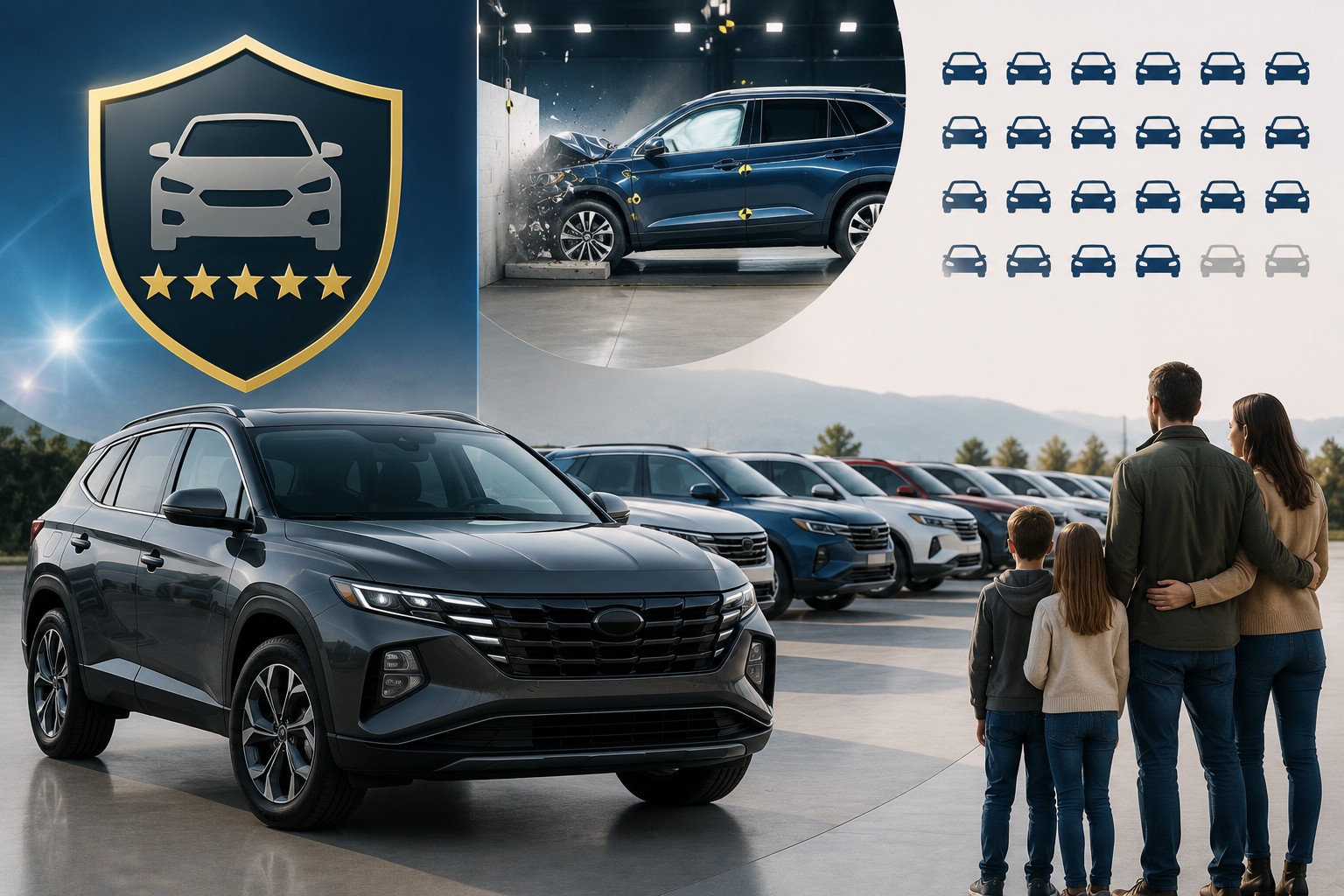
The 2026 IIHS awards season has delivered a clear message. SUVs are no longer just popular. They are also winning safety races. The Insurance Institute for Highway Safety released its 2026 Top Safety Pick and Top Safety Pick+ results.
SUVs dominated the list again, accounting for 35 of the 45 Top Safety Pick+ winners and 12 of the 18 Top Safety Pick models. That is a massive share of the total winners.
SUVs accounted for 47 of the 63 vehicles that earned a spot on the 2026 IIHS Top Safety Pick and Top Safety Pick+ awards list. This shows a clear trend across the industry. Automakers are pouring engineering resources into their SUV lineups.
Even with tougher criteria, 63 vehicles qualified for IIHS awards so far this year, up from 48 at the same point last year. The bar keeps rising every year. Yet more vehicles are clearing it.
This article breaks down why SUVs are leading. It also explains what the awards actually mean. And it gives you a must-have list of the safest SUVs on sale today.
Why SUVs Dominated the 2026 Safety Awards
SUVs have structural advantages over smaller cars. Their height and mass often provide better crash protection. Larger, heavier vehicles generally afford more protection than smaller, lighter ones. This basic physics principle favors SUVs and trucks. It has shaped IIHS results for years.
But size alone does not win awards anymore. The Institute is pushing automakers to improve their crash avoidance systems and demanding superior protection for back seat passengers in the 2026 award season. Engineering quality now matters just as much as size.
IIHS President David Harkey explained the shift. He said the institute wants automakers to make excellent back-seat protection the norm this year. He also stressed stronger crash avoidance requirements.
Automakers responded quickly to these demands. Many SUV models were redesigned with reinforced structures. Rear-seat safety became a priority in new platforms.
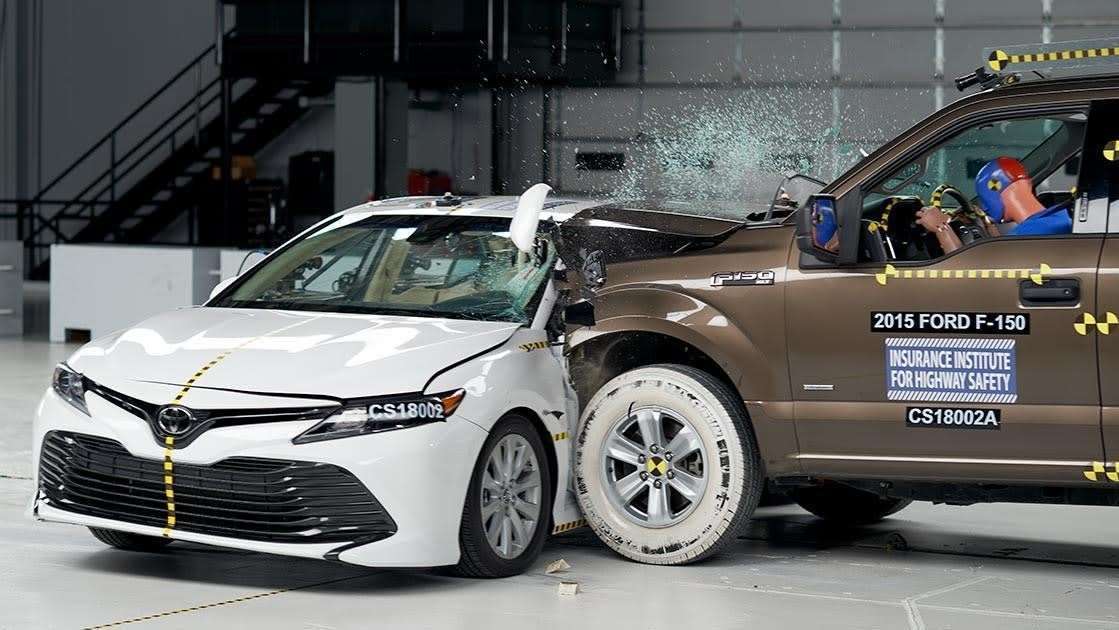
Not every vehicle category kept pace. IIHS pointed out that no minicars, minivans, or small pickups earned any awards this year. That absence stands out sharply against SUV success.
Minivans faced particular criticism. Harkey called it disappointing that minivans continue to struggle with rear-seat protection, especially since they are marketed as family vehicles. This is a notable blow to that segment.
Pickup trucks fared little better this year. Only two large pickups qualified for any award: the Tesla Cybertruck and the Toyota Tundra crew cab. That is a very small number. SUVs filled the gap left by these struggling categories. Buyers wanting both space and safety naturally gravitated toward SUVs. The awards data now reflects that shift clearly.
Small SUVs showed mixed results in testing. Only four of the 18 small SUVs tested earned a Good rating, including the Audi Q3, Hyundai Ioniq 5, Subaru Forester, and Toyota RAV4. Nine other models still managed acceptable scores. This shows that not every SUV is automatically safe. Buyers still need to check specific models. The badge “SUV” alone guarantees nothing.
What It Takes to Win a Top Safety Pick+ Award
The IIHS raised its standards significantly for 2026. Winning an award is harder than ever before. Vehicles need a good rating in the small overlap front test and the moderate overlap front test to qualify. They also need a good side-test score. These crash tests simulate real-world collision scenarios.
Headlights matter too, surprisingly enough. All trims must come standard with acceptable or good-rated headlights. Poor visibility at night has long been an overlooked safety risk.
Crash avoidance technology became a bigger focus this year. Top Safety Pick+ requires a good pedestrian front crash prevention rating and an acceptable or good rating in the new vehicle-to-vehicle front crash prevention test. This test is brand new for 2026.
The vehicle-to-vehicle test is far more demanding than before. It examines performance at 31, 37, and 43 mph, using a passenger car, a motorcycle, and a semitrailer as targets. Previous tests only used passenger car targets at lower speeds.
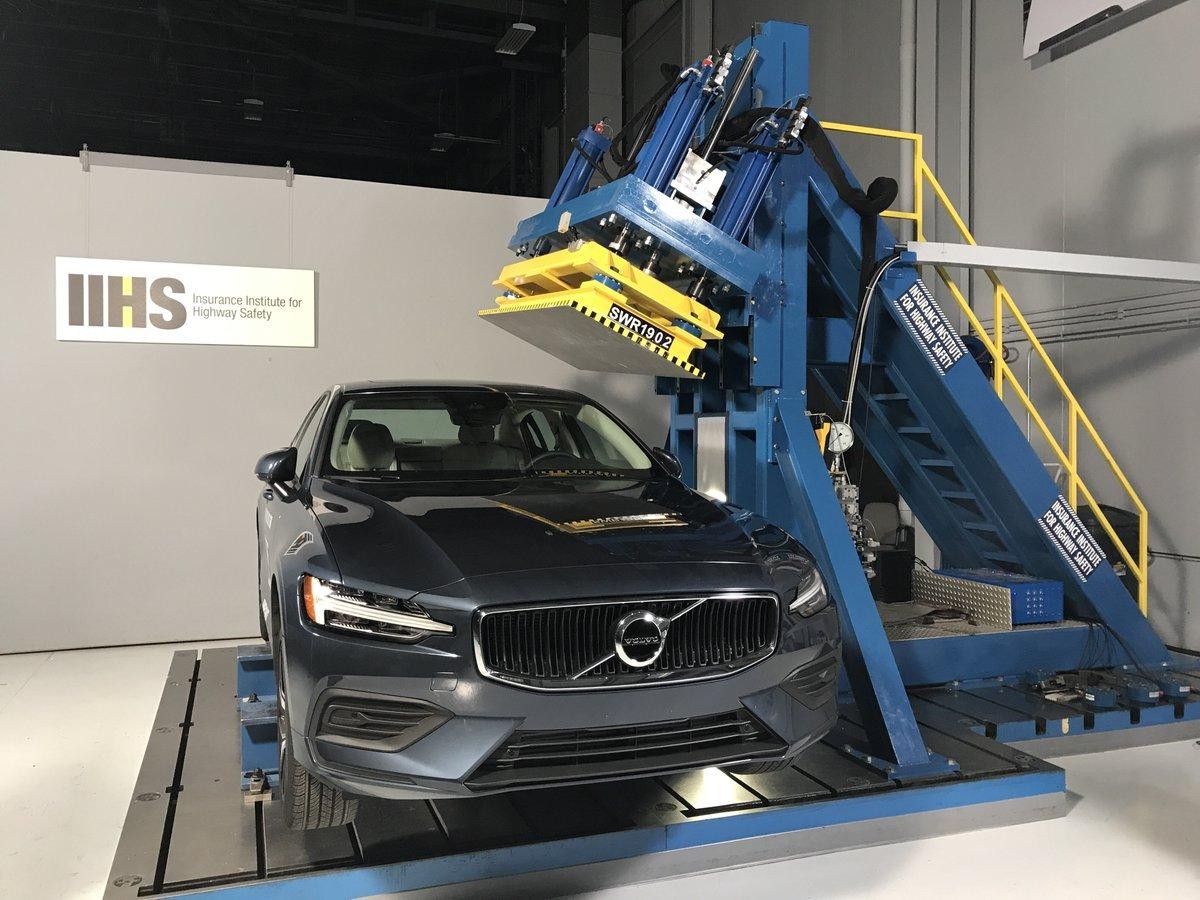
Results from this new test have been encouraging. More than 77% of 2026 models tested so far meet the acceptable-or-good standard, up from over 70% last year. Automakers are clearly adapting fast.
Standard equipment now plays a bigger role in scoring. Qualifying front crash prevention systems must be standard equipment, not optional add-ons, to earn either award in 2026. This closes a loophole that once let expensive trims win awards while base models lacked safety tech.
Pricing data reveals an encouraging pattern this year. More than a dozen Top Safety Pick+ winners start under $30,000, with the Kia K4 priced at just $22,290. Safety and affordability are not mutually exclusive.
Buyers should still read the fine print carefully. Some awards apply only to vehicles built after specific dates. Production changes mid-year can affect eligibility.
For instance, certain SUVs only qualify with later build dates. The BMW X3, Kia Sportage, and Ford Explorer earned Top Safety Pick+ status only for units built after specific dates following manufacturer modifications. Always check your exact build date before assuming an award applies.
Next year’s criteria will be even stricter. A new requirement for speed-limiting technologies and other risky-behavior detection systems will become part of the Top Safety Pick+ criteria in 2027. Expect the winner’s list to shrink again next year.
Must-Have List: The Safest SUVs to Consider in 2026
Based on the latest IIHS results, several SUVs stand out clearly. These models combine strong crash protection with modern safety technology.
Here is a curated list of notable 2026 Top Safety Pick+ SUV winners:
- Genesis GV60 – A luxury electric SUV with excellent crash test scores.
- Honda HR-V – A compact SUV offering strong value and safety together.
- Hyundai Ioniq 5 – An award-winning electric SUV with top-tier ratings.
- Hyundai Kona – One of the most affordable SUVs to make the cut, starting around $25,500.
- Hyundai Tucson – A popular compact SUV with consistent safety performance.
- Kia Sportage – Qualifies for vehicles built after May 2025 specifically.
- Mazda CX-30 – A small SUV known for solid structural ratings.
- Mazda CX-50 – A slightly larger sibling with similarly strong scores.
- Subaru Forester – One of only four small SUVs to earn a Good rating across the board.
- Toyota RAV4 – Another top performer among small SUVs tested this year.
- Volvo EX90 – A large electric SUV built around safety-first engineering.
- Buick Enclave – Qualifies for models built after January 2025.
- Hyundai Santa Fe – Applies to vehicles built after November 2024.
- Kia Sorento – Eligible for units built after September 2025.
- Rivian R1S – Qualifies for vehicles built after August 2024.
- BMW X3 – Qualifies thanks to improved headlight ratings following manufacturer modifications.
- Ford Explorer – Also newly added, following similar headlight upgrades.
- Audi Q6 Sportback e-tron – A new electric addition to the winner list.
- Hyundai Ioniq 9 – A larger electric SUV recently added to the roster.
- Audi Q3 – Another small SUV that earned a top Good rating.
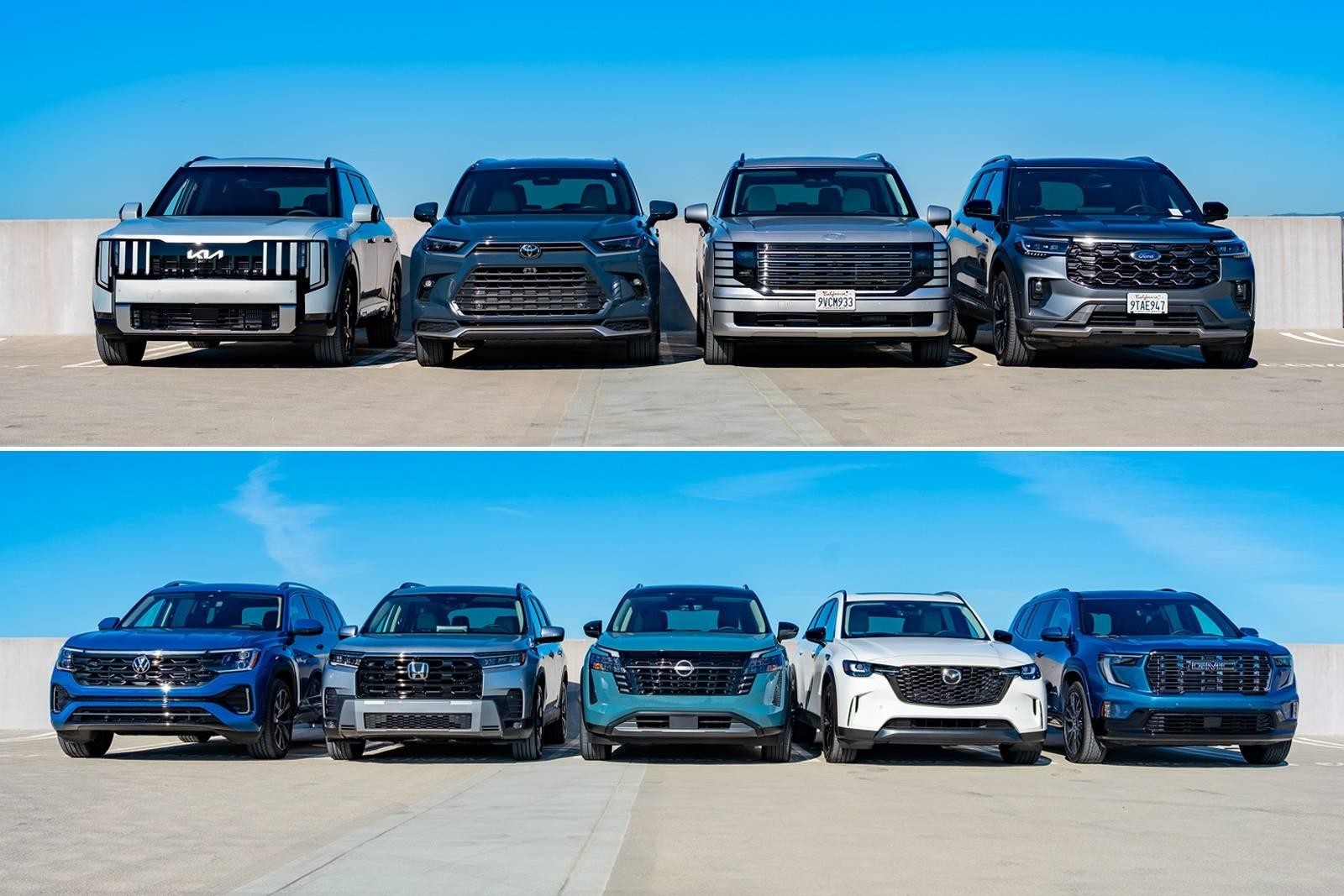
This list spans budget-friendly models and luxury electric SUVs alike. There is genuinely something here for most buyers. Price is no longer a barrier to strong safety scores.
Families cross-shopping minivans should take special note. Harkey suggested that parents may want to consider some of the more affordable sedans and SUVs that earn awards instead. Given the minivan shutout this year, that advice carries real weight.
It is worth remembering that missing an award is not a safety failure. Missing an IIHS award doesn’t mean a vehicle is unsafe or should be avoided. It simply means that vehicle did not meet every single updated criterion.
Still, an award offers useful shorthand for busy buyers. It condenses complex crash data into one trusted label. That makes shopping considerably easier.
Buyers should also compare trims within a single model. Some SUVs only earn top honors on higher trims. Shoppers may need to step up to a higher trim just to access proven safety tech like blind spot warning.
Electric SUVs are becoming safety leaders, too. Several EVs made this year’s winner list. Their added weight from batteries appears to help crash performance.
However, not every EV passed easily. Subpar performance in the moderate overlap test eliminated the Audi Q4 e-tron, Q4 Sportback e-tron, Kia EV6, and Toyota 4Runner from consideration. Electric powertrains alone do not guarantee safety awards.
The trend is unmistakable this year. SUVs have become the benchmark for automotive safety. Both gas-powered and electric models are leading the charge.
For anyone shopping in 2026, the message is simple. Consider an SUV from this winner’s list first. You will likely get strong protection without paying a premium.
Safety technology keeps evolving rapidly across the industry. Next year’s criteria will push automakers even further. But for now, SUVs sit clearly at the top of the safety ladder.
