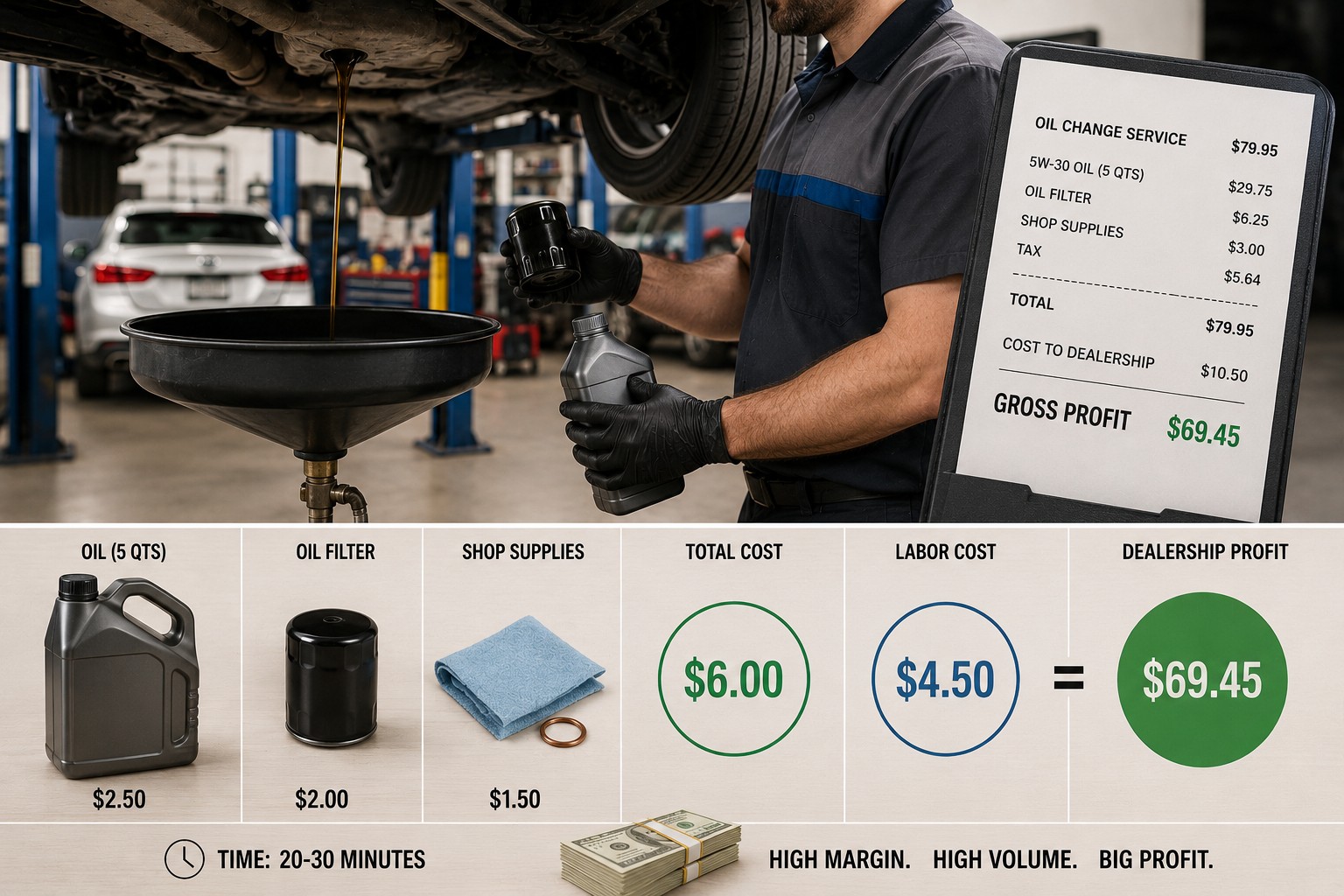
Oil changes seem like a small, routine service. Yet for auto dealerships and repair shops, they are a surprisingly important source of profit. Many people assume oil changes are a “loss leader,” meaning shops barely break even just to get customers in the door. The truth is more interesting than that.
Industry data shows oil changes often carry a strong profit margin, sometimes over 30 percent per job. One industry survey found the average profit margin per oil change job was 35 percent.
That margin comes from a mix of marked-up parts, bulk-priced oil, and labor charges. It also comes from the additional services shops recommend during the visit.
Service departments have become a major profit center for dealerships, not just an afterthought. Service departments now generate about 49 percent of a dealership’s total gross profit, up from 45 percent a few years earlier.
This article breaks down exactly where that oil change money goes. We’ll look at pricing, parts markup, labor costs, and the upsell strategies that turn a simple task into real revenue.
The Real Cost Versus the Sticker Price
The price customers pay for an oil change is rarely close to what it actually costs the shop. That gap is where most of the profit hides. At a typical shop, an oil change might be billed between $25 and $55. Simple oil changes generally average between $25 and $55 across the industry.
Dealerships tend to charge more than independent shops for the same basic service. A dealership oil change might cost around $80 while an independent shop charges closer to $40 for the same job.
Bulk oil purchasing is a big reason margins stay healthy. Shops buy oil by the drum, not the quart, which drastically lowers their per-car cost. According to one mechanic’s breakdown, bulk synthetic blend oil can cost shops as little as $5 a gallon.
Bulk synthetic blend oil can cost as little as five dollars per gallon, with full synthetic running ten to fifteen dollars per gallon when purchased in volume.
Filters follow the same pattern of retail markup. A basic oil filter might cost a shop just a few dollars but gets billed at a much higher rate. One breakdown noted that oil filters can be marked up over 200 percent from wholesale cost.
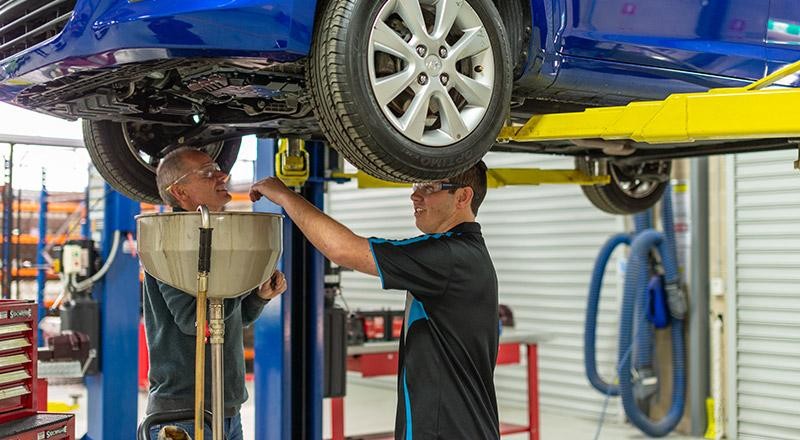
An oil filter costing around eight dollars wholesale can be billed to the customer at roughly twenty-five dollars, a markup of over 200 percent. This pattern isn’t unique to oil filters either. Air filters and other small parts see similarly steep markups across most dealership service departments.
The broader parts pricing strategy applies here too. Parts are typically marked up around 10 percent or more over their wholesale cost, though some dealerships mark parts up by roughly 30 percent. So even before labor is added, the parts alone generate meaningful profit. The oil, the filter, and any small fluid top-offs all carry built-in margin.
This is why an $80 oil change bill doesn’t reflect $80 worth of materials. Often, less than half of that price covers the physical cost of parts and fluids. The rest is split between labor, overhead, and pure profit. That structure is what keeps oil changes financially worthwhile for shops.
Annual numbers make this clearer at scale. By offering oil change services, an average dealer earns roughly an additional twenty-one thousand dollars annually from this single service line.
That’s a meaningful number for something many customers view as a minor, low-cost errand. Multiply that across hundreds of dealerships, and it becomes a significant industry revenue stream.
Nationally, the scale is even larger. The oil change services market is valued at roughly seven billion dollars in the United States. More recent market analysis puts the broader oil change services industry even higher. Industry revenue is expected to reach about 12.6 billion dollars in 2025, reflecting steady demand growth.
That same analysis noted ongoing profit pressure from rising costs. Industry profit is projected around 18.5 percent as tariffs on imported crude oil raise feedstock costs for service providers.
Even with tighter margins from higher feedstock costs, oil changes remain a dependable revenue stream. Demand doesn’t disappear during economic downturns the way discretionary purchases do.
Labor Charges and the Real Math Behind the Bill
Parts markup is only half the profit picture. Labor charges make up the other significant portion of what a shop earns per oil change. Shops typically bill labor by a set hourly rate, even if the job itself takes far less time. This is one of the most important profit mechanics in the industry.
An oil change usually takes a technician somewhere between fifteen and thirty minutes to complete. Yet the customer might be billed for a full hour of shop labor time.
That gap between billed time and actual time worked adds real money to the ticket. It’s a standard practice across most repair shops and dealerships alike.
One mechanic’s breakdown of shop economics illustrates how labor dollars get divided. When a shop charges around one hundred dollars per labor hour, that amount gets split between the technician, the service advisor, and shop overhead.
So even a straightforward oil change contributes to paying multiple staff members. The labor charge isn’t pure profit, but a meaningful portion of it typically is.

Comparing oil changes to bigger repairs helps put this in perspective. Large jobs, like transmission or engine work, actually carry thinner margins despite higher price tags.
That’s because big repairs require expensive parts and more skilled labor hours. Dealerships generally don’t profit much on major operations like engine or transmission replacements, since these require expensive parts and longer mechanic time.
Meanwhile, smaller, quicker jobs carry disproportionately higher profit percentages. Smaller service operations cost customers less, but they generate a much higher percentage of profit for the shop compared to major repairs.
Oil changes fall squarely into that smaller, high-margin category. They’re quick, they use cheap bulk materials, and they require minimal specialized labor.
This explains why service advisors are often trained to keep oil change bays full. Volume matters more than any single ticket size for this type of service.
A shop running a steady stream of oil changes throughout the day compounds these smaller profits. Ten quick jobs can outperform one large repair in daily profitability.
That’s also why many shops offer aggressive oil change discounts or coupons to draw people in. Even discounted, the service usually still turns a profit due to low material costs. The real value of the visit isn’t always the oil change itself, though. It’s what gets recommended once the technician has the car up on the lift.
The Upsell: Where the Bigger Money Actually Comes From
Most service departments don’t rely on the oil change price alone to make their real money. The multi-point inspection performed during the visit is where extra revenue gets generated.
Technicians routinely check tires, brakes, fluids, belts, hoses, and the battery while the car is already in the bay. Anything found worn or due for service becomes an upsell opportunity.
This inspection process is central to service department profitability. Shops make much of their real money through the multi-point inspection performed during an oil change, which covers tires, brakes, fluids, battery, wipers, hoses, and belts.
If a customer needs a $200 transmission flush in addition to their oil change, the combined ticket becomes far more profitable. A transmission flush might cost a shop around sixty-eight dollars, leaving roughly one hundred thirty-two dollars in profit on that single add-on.
Combine that with the oil change ticket and the total profit per visit rises sharply. Combining an oil change with a transmission flush can generate a shop roughly one hundred forty-eight dollars in total profit for under two hours of work.

Dealerships also use service intervals as another lever for repeat visits and add-on sales. Recommended service schedules sometimes exceed what the manufacturer’s owner manual actually requires.
This has been a long-standing point of criticism in the industry. Dealer-recommended service schedules have, in some cases, nearly doubled the service frequency listed in the owner’s manual for the same vehicle.
More frequent visits mean more chances to inspect, recommend, and sell additional services. That strategy directly boosts long-term revenue from each customer relationship.
Parts markup extends well beyond oil filters into every commonly replaced component. A dealership air filter might cost forty-five dollars compared to fifteen dollars aftermarket, while dealership brake pads can run around one hundred eighty dollars versus sixty dollars aftermarket.
These markups, often in the range of 200 percent, apply across dozens of small parts. Each one adds incremental profit whenever it’s recommended during a service visit.
Extended service contracts represent another related profit stream tied to the service department. These contracts are sold with heavy markups and low actual claim rates.
The economics here can be dramatic. A service contract that costs the dealership around one thousand dollars to purchase might be sold to the customer for twenty-five hundred dollars.
Customer retention is the underlying strategic goal behind all of this. Keeping people coming back for oil changes builds trust that leads to bigger repair and contract sales later. Dealership service teams understand that the entry-level oil change is really a relationship-building tool.
Understanding how service departments generate profits through labor rates, parts markups, and service contracts explains why dealerships value customers long after the initial vehicle sale. In short, the oil change itself is profitable, but modestly so on its own. The bigger financial win comes from everything a shop sells around it.