
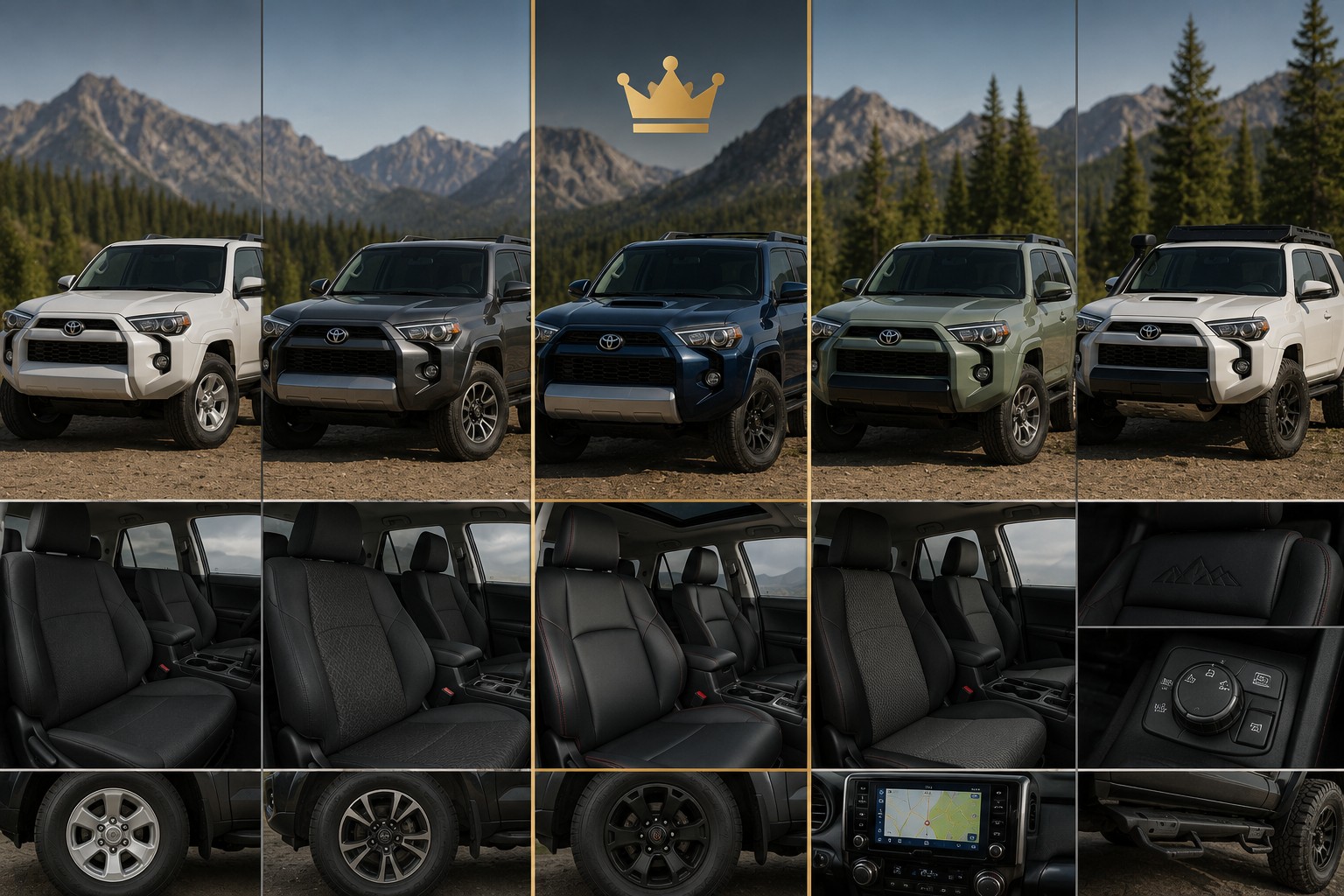
The Toyota 4Runner has always been the SUV people buy when they want something that lasts. It skips flashy trends and sticks to a simple formula: body-on-frame toughness, real off-road ability, and long-term reliability.
For 2026, Toyota offers the 4Runner in nine distinct trims, starting around $41,570 and climbing past $68,000. That is a huge spread, and it can make shopping confusing fast.
Every trim shares the same bones. You get a body-on-frame platform, a choice of turbocharged four-cylinder or hybrid power, and Toyota Safety Sense as standard equipment.
Where trims differ is in suspension tuning, interior materials, and off-road hardware. Some are built for pavement comfort, others for rock crawling, and a few try to do both.
This guide breaks down the lineup by value tier. We will look at the entry-level choices, the mid-range sweet spot, and the premium off-road flagships. By the end, you should have a clear sense of which 4Runner trim actually earns its price tag, and which ones are paying extra just for a badge.
Entry-Level Trims: SR5 and TRD Sport
The SR5 is the base trim, and it starts at $41,570 before destination fees. It is also, according to current inventory data, the easiest trim to find and negotiate on. Despite being the base model, the SR5 is not stripped down. It includes Toyota Safety Sense 3.0, a modern infotainment screen, and wireless smartphone integration standard.
If you want four-wheel drive, the SR5 Part-Time 4WD version adds roughly $1,200 to the price. Buyers are reportedly paying close to $165 below MSRP for it right now. That combination makes the SR5 4WD one of the smartest picks in the lineup. You get genuine capability without paying for features you may never use.
The standard engine across most trims is a 2.4-liter turbocharged four-cylinder. It produces up to 278 horsepower and 317 lb-ft of torque, which is plenty for daily driving.
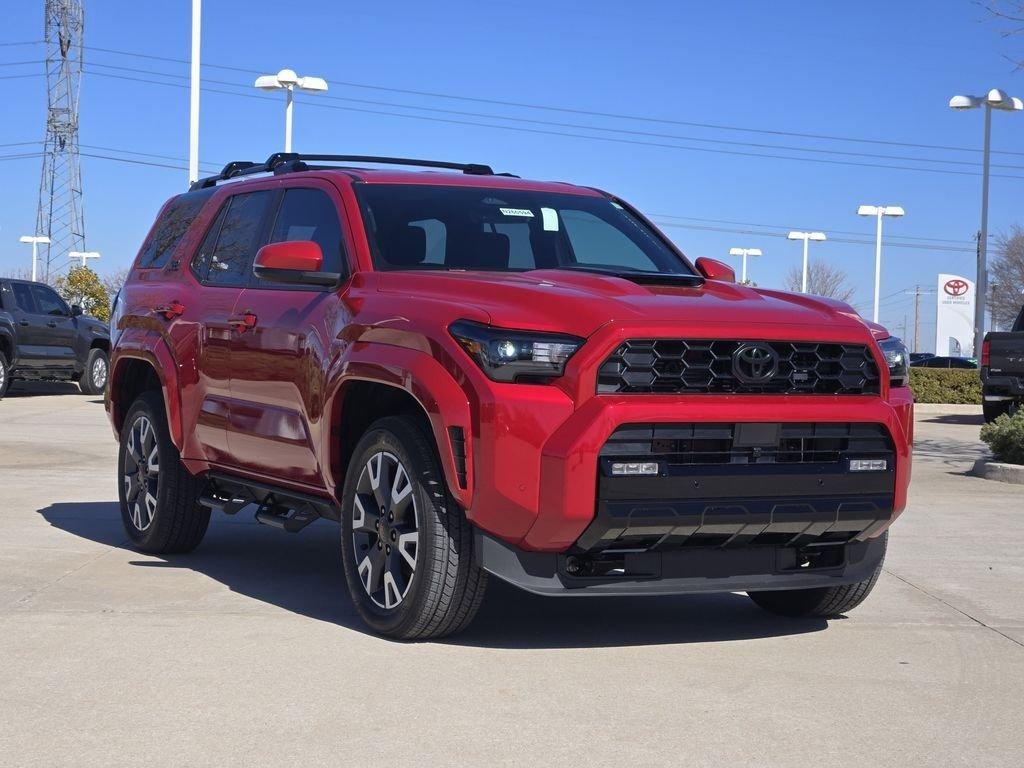
Fuel economy on RWD models with this engine comes in around 20 mpg city and 26 mpg highway. That is a solid improvement over the outgoing fifth-generation 4Runner. Above the SR5 sits the TRD Sport, which leans into styling rather than trail capability. It adds unique wheels, badging, and a sportier suspension tune for street driving.
The TRD Sport is not meant for serious off-roading. It is closer to a lifestyle trim, appealing to buyers who want the look without needing rock-crawling hardware. TRD Sport Premium builds on that with added comfort features. Think upgraded seating, extra tech, and a nicer cabin experience for daily commuting.
Honestly, this is where value starts to get shakier. You are paying more money mostly for appearance and comfort, not increased capability. If your priority is looks and daily comfort, TRD Sport Premium can make sense. If you actually want to go off-road, your money is better spent elsewhere in the lineup.
For most everyday buyers, the SR5 remains the strongest value entry point. It delivers the core 4Runner experience without unnecessary markup. Dealers currently hold thousands of SR5 units in stock nationwide. That inventory depth gives buyers real negotiating leverage compared to rarer trims.
The SR5 is the trim to start with unless you have a specific reason to move up. It is proof that Toyota still understands the meaning of a value trim.
Mid-Range Trims: TRD Off-Road and Limited
The TRD Off-Road trim is where the 4Runner starts to show its true purpose. It is the first trim genuinely built for serious terrain, not just the appearance of ruggedness. This trim adds skid plates protecting the oil pan, transfer case, and fuel tank. It also includes running boards, which help shorter drivers climb into the cabin.
Pricing for TRD Off-Road crosses the $50,000 mark once four-wheel drive and destination charges are included. That is a meaningful jump from the SR5, but it buys real functionality.
Stepping up to TRD Off-Road Premium adds Toyota’s Multi-Terrain Monitor. This system uses the 360-degree camera setup to assist with obstacle detection and precise wheel placement off-road.
For 2026, Toyota also made the electronically disconnecting anti-roll bars optional on this trim. Previously, that feature was reserved only for the range-topping TRD Pro and Trailhunter models.
That change alone makes TRD Off-Road Premium far more interesting this year. It lets buyers access serious trail hardware without jumping to the priciest trims. If off-roading is your actual hobby rather than an aesthetic, this is likely your sweet spot. You get meaningful capability without paying for luxury features you will not use in the dirt.
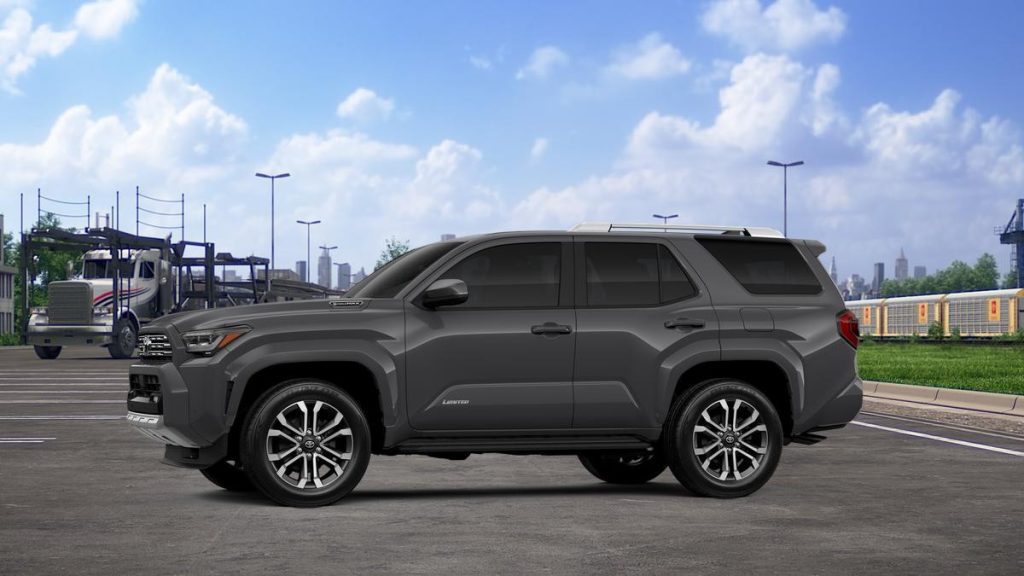
The Limited trim takes a completely different direction. Instead of off-road hardware, it focuses on comfort, refinement, and everyday livability. Limited buyers get leather-trimmed heated and ventilated seats standard. The cabin materials feel noticeably more upscale compared to the TRD-focused trims below it.
Pricing for Limited starts around $58,850, which puts it firmly in near-luxury territory. That is a steep price for what is still fundamentally a body-on-frame SUV. The Limited is also available with the hybrid i-FORCE MAX powertrain as an option. That combination raises output to 326 horsepower and 465 lb-ft of torque.
However, fuel economy on the Limited actually dips slightly compared to other trims, at 20 mpg city and 24 mpg highway. The added weight and luxury features come with a small efficiency penalty.
For buyers who want off-road capability, TRD Off-Road Premium is the better dollar-for-dollar choice. For buyers who want comfort first, Limited delivers, but at a real premium.
The honest verdict here is that TRD Off-Road Premium likely offers the best blend of value and capability in the entire lineup. It sits right at the point where hardware improvements start outweighing cost increases. Limited buyers are essentially paying for badge prestige and interior polish. That is a valid choice, but it is not where the smartest money goes.
Premium and Off-Road Flagships: Platinum, Trailhunter, and TRD Pro
At the top of the lineup sits the Platinum trim, priced around $63,660. This is Toyota’s answer to luxury-focused SUV buyers who still want 4Runner durability underneath. Platinum includes 20-inch gloss-black wheels and a dark chrome tri-bar grille. It also adds a standard head-up display, which no lower trim offers.
Heated second-row outboard seats come standard on Platinum as well. The i-FORCE MAX hybrid powertrain is also standard here, not optional like it is on lower trims.
This is a genuinely impressive package for buyers cross-shopping against luxury SUVs. But it is worth remembering you are still driving a body-on-frame off-roader underneath the polish.
If luxury features matter more to you than trail capability, Platinum delivers convincingly. Just know you are paying a premium for comfort features that will rarely see actual off-road use.
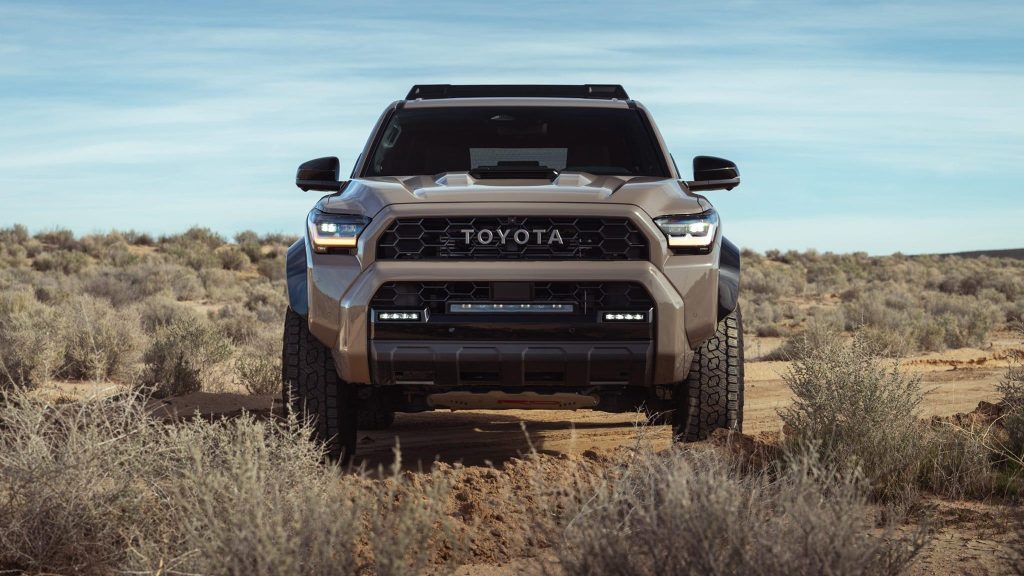
The Trailhunter trim tells a completely different story. This is Toyota’s dedicated overlanding build, designed for people who genuinely camp and travel far from paved roads.
Trailhunter rides on Old Man Emu 2.5-inch forged monotube shocks with remote reservoirs. That suspension setup alone represents a serious upgrade over standard TRD Off-Road dampers.
It also includes an ARB roof rack and an onboard air compressor standard. Few factory SUVs offer this level of overlanding-ready equipment straight from the dealer lot. Additional Trailhunter features include a low-profile high-mount air intake and rock rails. Steel skid plates protect vulnerable underbody components during serious trail use.
Both Trailhunter and TRD Pro share 33-inch Toyo all-terrain tires and widened overfenders. They also both come with a heritage TOYOTA grille featuring an integrated LED light bar. For buyers who actually plan multi-day off-grid trips, Trailhunter is arguably the best value at the top of the lineup. Every dollar spent maps directly to real capability.
TRD Pro, meanwhile, leans slightly more toward performance-oriented off-roading rather than overlanding. It shares much of Trailhunter’s hardware but with a different suspension character and styling focus.
Pricing for these flagship trims reaches as high as $68,200 depending on configuration. That is a significant sum, roughly $27,000 more than a base SR5.
Every 4Runner, regardless of trim, tows up to 6,000 pounds when properly equipped. That consistency across the lineup is reassuring for buyers who need towing capability without overspending.
Warranty coverage is also identical across trims. Toyota backs every 4Runner with a 36-month basic warranty and a 60-month powertrain warranty. Hybrid components carry an 8-year, 100,000-mile warranty. The hybrid battery itself is covered for 10 years or 150,000 miles, which matters given the added complexity.
So which trim is actually worth the money? For most everyday buyers, the SR5 with four-wheel drive remains the smartest financial choice. For genuine off-road enthusiasts who do not need overlanding gear, TRD Off-Road Premium hits the best value ratio. It delivers real capability without flagship pricing.
For dedicated overlanders and long-distance trail travelers, Trailhunter justifies its price through genuinely useful hardware. It is not just badges and styling. Platinum and Limited make sense only if luxury and comfort are your priority over capability. They are good SUVs, just not the best value picks in this lineup.
The 4Runner competes against the Ford Bronco, Jeep Wrangler, and even Toyota’s own Land Cruiser. Compared to those rivals, the 4Runner still wins on long-term reliability reputation.
The “best” trim depends entirely on how you actually plan to use the vehicle. But if pure value for money is your goal, the SR5 and TRD Off-Road Premium stand out as the two smartest picks in the 2026 lineup.
Also Read: 8 Problems a Clean Carfax Will Not Show You
